Curated recipes from 193 countries  •  New seasonal Mediterranean issue out now

Overview

Azerbaijani Badimcan Dolma

Badimcan Dolmasi, Three Sisters Dolma, Stuffed Aubergine Tomato Pepper

This azerbaijani dolma recipe is Badimcan Dolmasi, the 'three sisters': small aubergines, firm tomatoes and green sweet peppers, hollowed out and stuffed with seasoned lamb mince, rice, split chickpeas and a big handful of fresh herbs, then packed into one wide pot and braised gently in their own juices with butter and tomato. The vegetables themselves are the wrappers, and they turn meltingly tender while the filling stays juicy and fragrant. One serving is about 450 g.

Dolma means 'stuffed' in Azerbaijani, and Azerbaijanis stuff almost anything when summer vegetables are plentiful — aubergines, tomatoes, peppers, potatoes, onions, quince and even apples. The best-loved combination is the 'three sisters': aubergine, tomato and sweet pepper cooked together in the same pot, so their juices mingle as they braise. Unlike the leaf-wrapped dolma of neighbouring cuisines, Badimcan Dolmasi uses the vegetables themselves as the wrappers, and the filling always includes split chickpeas — called lepe — alongside the rice, lamb and fresh herbs. It is the dish of high summer, cooked when the garden is at its fullest.

Pairs well with: Garlic yogurt, fresh herbs & warm lavash

Provenance

Azerbaijan flag Azerbaijan

Baku Heritage

Nordic & European

Time Dedication

1h 30m

35m prep • 55m cook

Batch Yield

4 Servings

710 kcal per serving

1 serving ≈ 450 g

Technical Skill

Intermediate

Medium (Stuffing & Braising)

Meal Timing & Digestive Fit

Breakfast

Not Advised

Lunch

Hearty Midday Main

Dinner

Ideal Hearty Main

Snack & Tea

Inappropriate

Occasions: Summer family lunch, garden gatherings, weekend dinner, celebrations Cost: Moderate — about $4–5 per serving at home
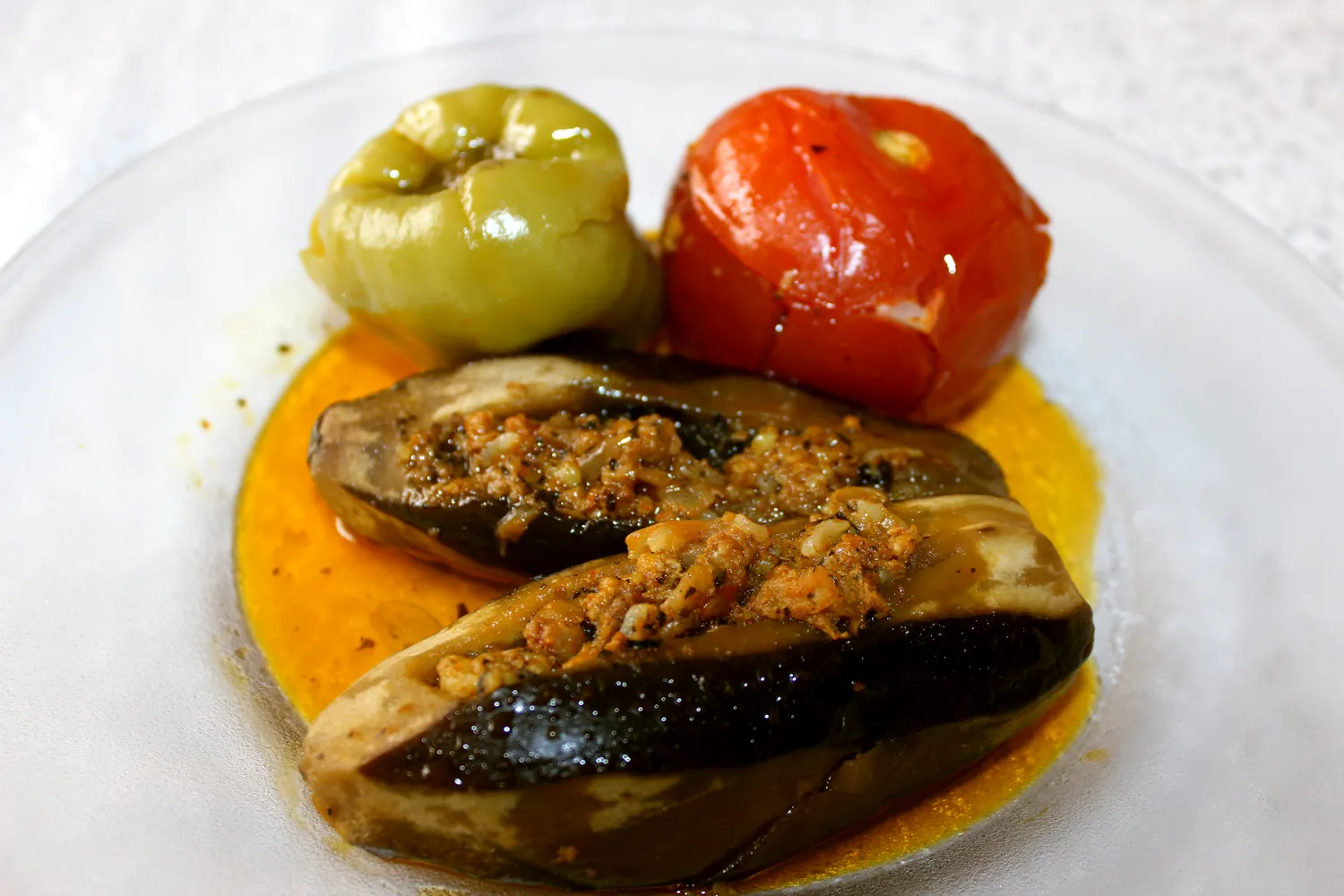
Azerbaijani badimcan dolma — stuffed aubergines, a stuffed green pepper and a stuffed tomato on a plate

Baku Heritage

Photo: Urek Meniashvili, CC BY-SA 3.0, via Wikimedia Commons

The Heritage Formulary

Measured Ingredients

Estimated cost: Moderate — about $4–5 per serving at home (USD)
A true Badimcan Dolmasi is judged by vegetables that hold their shape yet cut with a spoon, and a filling that is juicy, herby and never dry.

Execution Methodology & Culinary Technique

Step-by-Step Cooking Guide

Active 1h 30m
P

Prep Stage: Hollow the Three Sisters

35 Mins • Knife Work

Wash the aubergines, tomatoes and peppers. Slit the aubergines along one side and scoop out the flesh, leaving a 1 cm shell; chop the flesh and set it aside. Cut the tops off the tomatoes and peppers, keep them as lids, and scoop out the tomato pulp and pepper seeds. Salt the insides of the vegetables lightly and leave them upside down to drain for 10 minutes while you chop the onion and herbs.

Maestro Tip: Salting the hollowed vegetables and letting them drain keeps the finished dolma from turning watery.

  1. 1

    Make the Filling

    10 Mins Medium-high heat, ~190°C (375°F)

    Heat the oil in a wide pan over medium-high heat. Cook the onion and the chopped aubergine flesh for 4–5 minutes until soft, then add the lamb mince and garlic and brown for 5 minutes, breaking it up with a spoon. Take off the heat and stir in the parboiled rice, split chickpeas, tomato paste, turmeric, salt, pepper and all the chopped herbs.

    Let the pan cool for a few minutes before adding the herbs, so they stay bright green and fragrant.

    Done when: Filling is mixed and fragrant; the mince is browned but not fully cooked — it finishes inside the vegetables.

  2. 2

    Stuff the Vegetables

    10 Mins No heat

    Fill each aubergine, tomato and pepper loosely with the lamb and rice mixture — about three-quarters full, because the rice swells as it cooks. Put the tomato and pepper lids back on, and lay the stuffed aubergines slit-side up. Pack all the vegetables snugly into a wide, heavy pot so they hold each other upright.

    Do not overfill: rice that has nowhere to expand bursts the vegetables open.

    Done when: Vegetables are filled three-quarters full and packed snugly upright in the pot.

  3. 3

    Braise in the Pot

    45 Mins Gentle simmer, ~95°C (200°F)

    Pour in 200 ml water and the reserved tomato pulp around the vegetables, dot the butter over the top, and bring to a gentle simmer. Cover with a tight lid and braise for 40–45 minutes on low heat until the vegetables are meltingly tender and the filling inside reaches at least 71°C (160°F).

    Keep the simmer gentle and the lid tight — the vegetables cook in their own steam and juices.

    Done when: Vegetables are soft enough to cut with a spoon; the filling is steaming hot and reaches 71°C (160°F).

  4. 4

    Rest & Serve

    5 Mins Off the heat

    Rest the pot off the heat for 5 minutes, then lift the vegetables out onto a platter and spoon the buttery pan juices over them. Serve hot with garlic yogurt and fresh herbs.

    A short rest lets the juices settle back into the filling instead of running out when you lift the vegetables.

    Done when: Dolma is served hot, glossy with pan juices, with yogurt on the side.

Finishing Touches & Plating

Serve the three sisters hot on one platter, glossy with their buttery braising juices, with a bowl of garlic yogurt and warm lavash alongside. Each person takes one aubergine, one tomato and one pepper — that is the Azerbaijani way.

Nutritional Physiology & Benefits

Nutrition

Energy

710

kcal / serving

Protein

30g

Complete AA

Carbs

56g

Complex

Fats

42g

Healthy

Per serving (4 servings · 1 serving ≈ 450 g)
Energy710 kcal
Protein30 g
Carbohydrates56 g
Fat42 g
Fibre11.7 g
Sugar15.1 g
Sodium744 mg
Per 100g
Energy158 kcal
Protein6.7 g
Carbohydrates12.4 g
Fat9.3 g
Fibre2.6 g
Sugar3.4 g
Sodium165 mg

Nutrition values are estimated — calculated from USDA FoodData Central values for the listed ingredients.

Vitamins & minerals: Vitamin C (sweet pepper and tomato), vitamin K and folate (fresh herbs), iron and zinc (lamb), potassium (aubergine and tomato). Nutrition values are estimated.

Three Vegetables, One Pot

Aubergine, tomato and pepper bring fibre, vitamin C and potassium, and the vegetables themselves are the wrappers — nothing wasted.

Protein, Rice & Herbs Together

Lamb mince, rice and split chickpeas make a complete, filling meal with protein, slow carbohydrate and fibre in every serving.

Fresh Herbs in Every Bite

Parsley, coriander, dill and mint are mixed through the filling, not sprinkled on top, so their flavour runs through the whole dish.

Food Pairings

What to Eat With

To optimize nutrient absorption and elevate the sensory depth, pair with these authentic accompaniments:

Sauces

Garlic Yogurt (Qatiq)

Cool, tangy yogurt with crushed garlic is dolma's classic partner: its acidity cuts the rich lamb and butter, and its coolness balances the hot vegetables.

Sides

Warm Lavash

Soft lavash is served for scooping up the filling and mopping up the buttery pan juices — no sauce should be left on the plate.

Vegetables

Fresh Herb Plate

Extra coriander, dill and mint on the side add a cool, green crunch that refreshes the palate between rich, braised bites.

Drinks

Ayran

Cold, lightly salted yogurt drink ayran cools the rich lamb and helps wash down the braised vegetables.

Complete menu

Serve the three sisters hot on one platter with garlic yogurt, warm lavash and a plate of fresh herbs; follow with fresh fruit and hot tea.

Digestive Guardrails

What NOT to Combine

To prevent digestive distress, sluggishness, or palate clash, avoid pairing the dish with these elements:

Packing the Vegetables Too Loosely

Vegetables left rattling around the pot fall over and burst during braising; packing them snugly upright is what keeps them whole. This is general cooking advice, not medical advice.

Very Spicy Hot Sauce

Fierce chilli sauce overwhelms the delicate herb and lamb flavours of the filling; the traditional partner is cool garlic yogurt, not heat. This is general information, not medical advice.

General information only, not medical advice — consult a doctor for personal dietary decisions.

Who Should Eat It

Who Should Eat

  • General adultsA complete summer dinner — stuffed vegetables with lamb, rice and herbs in a generous serving.
  • ChildrenChildren usually enjoy the sweet pepper and tomato; cut the aubergine and filling into small pieces and check for the tomato and pepper lids, which can be a choking hazard for very young children.
  • ElderlySoft braised vegetables and tender mince are easy to chew; serve a smaller portion, as it is rich.
  • Pregnant womenLamb mince cooked to at least 71°C (160°F) and served hot is fine; keep portions moderate and ask your clinician about rich meals if unsure.
  • Breastfeeding womenA filling, protein-rich meal that suits breastfeeding; the vegetables and herbs add fibre and vitamins.
  • AthletesHigh in protein and moderate in carbohydrate, so it refuels well after training — but eat it a few hours before exercise, not right before.
  • Weight gainEnergy-dense with lamb mince, butter and oil, so it suits people who need extra calories.
  • Weight lossRich in fat from lamb and butter, so keep the portion modest, eat more of the vegetables than the filling, and skip the extra butter.

Health Conditions — Adjust or Avoid

Conditions

  • DiabetesModerate in carbohydrate from the rice; the vegetables add fibre, which slows digestion — keep the rice-heavy filling modest and ask your clinician about portions.
  • High blood pressureContains about 745 mg sodium per serving from salt and butter; use unsalted butter and less salt if you need to limit sodium, and ask your clinician.
  • Kidney diseaseRich in protein and potassium from lamb and tomato; people with kidney disease should watch portion size and ask their clinician.
  • GoutLamb is moderate in purines; a large rich portion may not suit people prone to gout — ask your clinician.
  • Stomach issuesMild and not spicy, with soft braised vegetables that are usually gentle on the stomach; the butter and lamb fat can feel heavy, so keep portions small if your stomach is sensitive.
  • Cardiovascular diseaseHigh in saturated fat from lamb mince and butter, so people with cardiovascular disease should eat a smaller portion with plenty of yogurt and herbs; ask your clinician.
  • Fatty liverRich and high in fat, so keep portions modest and balance the plate with yogurt and fresh herbs; ask your clinician.
  • Food allergiesContains lamb and chickpeas (a legume). No gluten, egg, milk or nuts in the dish itself — but the yogurt on the side contains milk. If you have any food allergy, check every ingredient and ask your clinician.
  • Special therapeutic dietsNot suitable as a low-fat or low-sodium therapeutic diet without changes (leaner mince, less butter, less salt); discuss adaptations with your clinician or dietitian.

If you have a medical condition, consult your doctor before changing your diet.

Storage & Use

Storage & Use

How to store
Cool quickly and store in an airtight container with the pan juices spooned over the top.
In the fridge
Dolma 3 days.
In the freezer
Up to 2 months.
How to reheat
Reheat gently, covered, with a splash of water, until steaming hot throughout, to 74°C (165°F).
Freezing recommended
Yes, up to 2 months; the vegetables soften a little on thawing.
Signs it has spoiled
Sour or off smell, slimy vegetables, or mould.

More recipes to explore

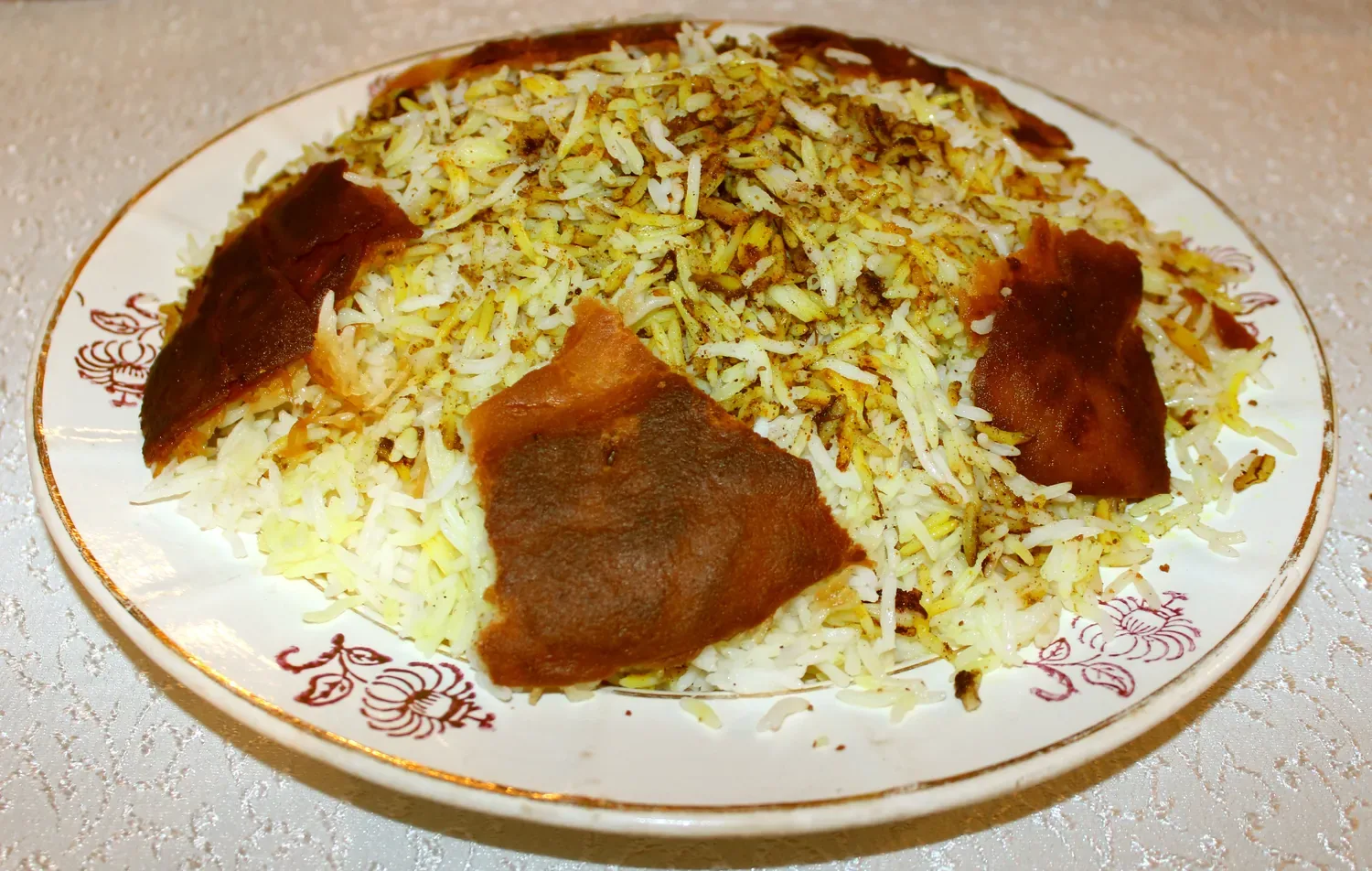
Azerbaijani plov — a mound of golden saffron rice topped with crisp qazmaq crust on a patterned plate Azerbaijan flag Azerbaijan 2h 15m
Dinner •Baku Heritage

Azerbaijani Plov

This azerbaijani plov recipe is Azerbaijan's national dish: saffron-scented basmati rice steamed in layers over a rich lamb, dried apricot, raisin, sour plum and chestnut topping called gara, with a golden, crisp qazmaq crust at the bottom of the pot. The rice is parboiled, drained and steamed — never boiled to mush — so every grain stays separate and fragrant, and the sweet-tart fruit and buttery chestnuts make it taste like a celebration. One serving is about 400 g.

Celebration Rice

Saffron basmati steamed in layers with lamb, dried apricots, raisins, sour plums and chestnuts — Azerbaijan's national dish, served for weddings and Nowruz.

Pairs Well With
Fresh herbs, pickled vegetables & hot black tea
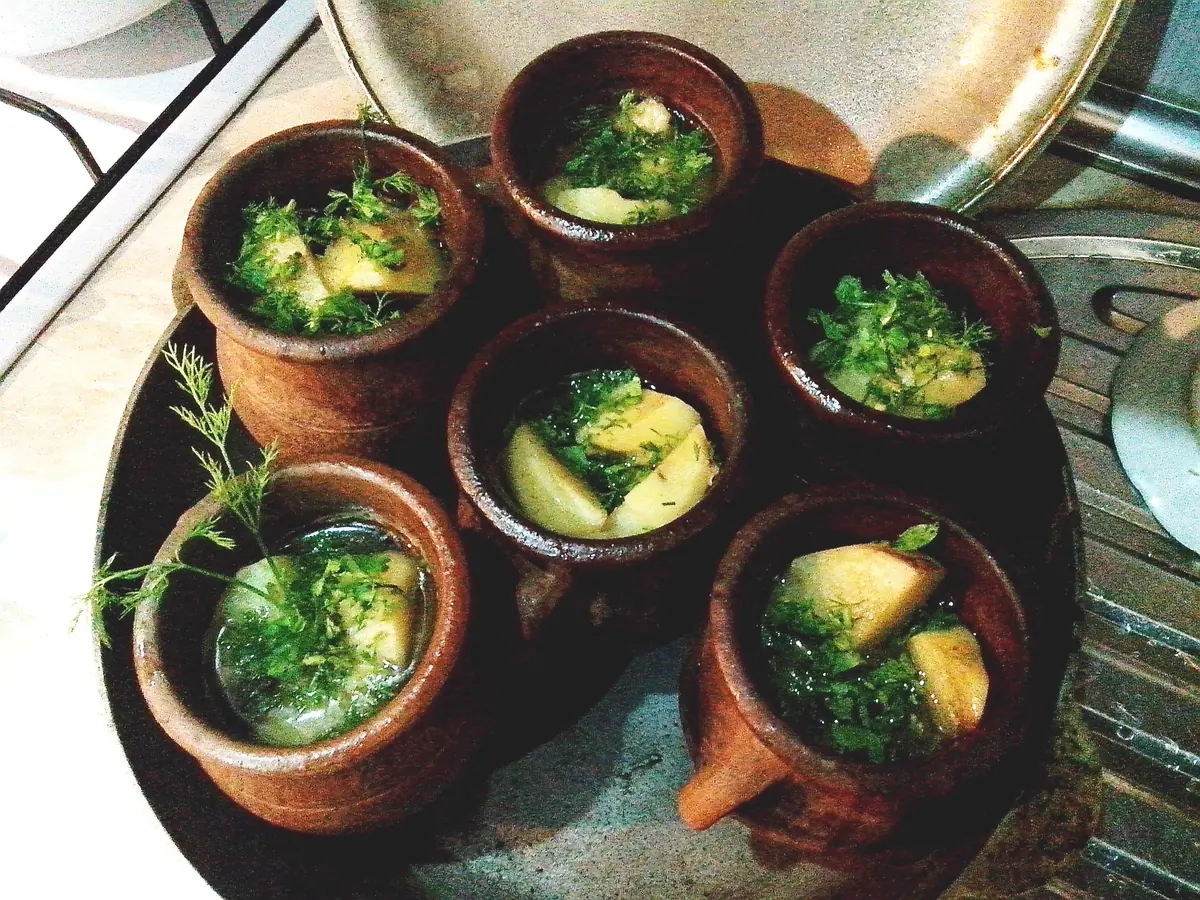
Piti soup — small clay pots of lamb and chickpea soup topped with herbs, served on a tray Azerbaijan flag Azerbaijan 2h 50m
Lunch •Sheki Heritage

Piti Soup

This piti soup recipe is Sheki Piti, the slow-cooked lamb and chickpea soup of Sheki in the foothills of the Caucasus: lamb, soaked chickpeas, potato, chestnuts, sour plums and a whole onion layered into individual clay pots called dopu, sealed with a cap of tail fat and cooked low and slow until the meat falls apart and the broth turns golden with saffron. It is eaten in two steps — first the broth poured over crumbled bread, then the meat and vegetables mashed together — which makes one pot feel like two courses. One serving is about 670 g.

Slow Sunday Lunch

Lamb, chickpeas, chestnuts and sour plums slow-cooked in individual clay pots — Sheki's signature soup, eaten in two steps with crumbled bread.

Pairs Well With
Crumbled lavash, sumac onions & fresh herbs
Soups & Broths • High Protein
Bœuf bourguignon — French beef braised in red wine France flag France 4h
Dinner •Burgundy Terroir

Bœuf Bourguignon

Beef braised gently in red wine until the connective tissue melts into a velvet, gelatin-rich sauce — the classic Burgundy Sunday dinner.

Cellular Repair

Beef braised in red wine until spoon-tender, with mushrooms and pearl onions.

Pairs Well With
Parsnip Purée & Steamed French Haricots Verts
High Protein
Vietnamese braised pork belly with golden eggs in caramel sauce Vietnam flag Vietnam 1h 45m
Dinner •One Pot

Vietnamese Braised Pork and Eggs

Pork belly slowly braised in coconut water and caramel until meltingly tender, with golden eggs that soak up the sweet-savoury sauce — the Vietnamese family dish that tastes better the next day.

Comfort & Sustained Energy

Slow-braised pork belly and eggs in coconut water and caramel.

Pairs Well With
Steamed rice & pickled mustard greens
High Protein

The Dinner Gazette

Never wonder what’s for dinner again

One email a week with easy dinner ideas from around the world — ingredients, steps and nutrition, tested in our kitchen first.

Delivered every Thursday morning. Unsubscribe anytime.