Curated recipes from 193 countries  •  New seasonal Mediterranean issue out now

Overview

Babenda

Burkinabé Greens and Rice, Soumbala Greens

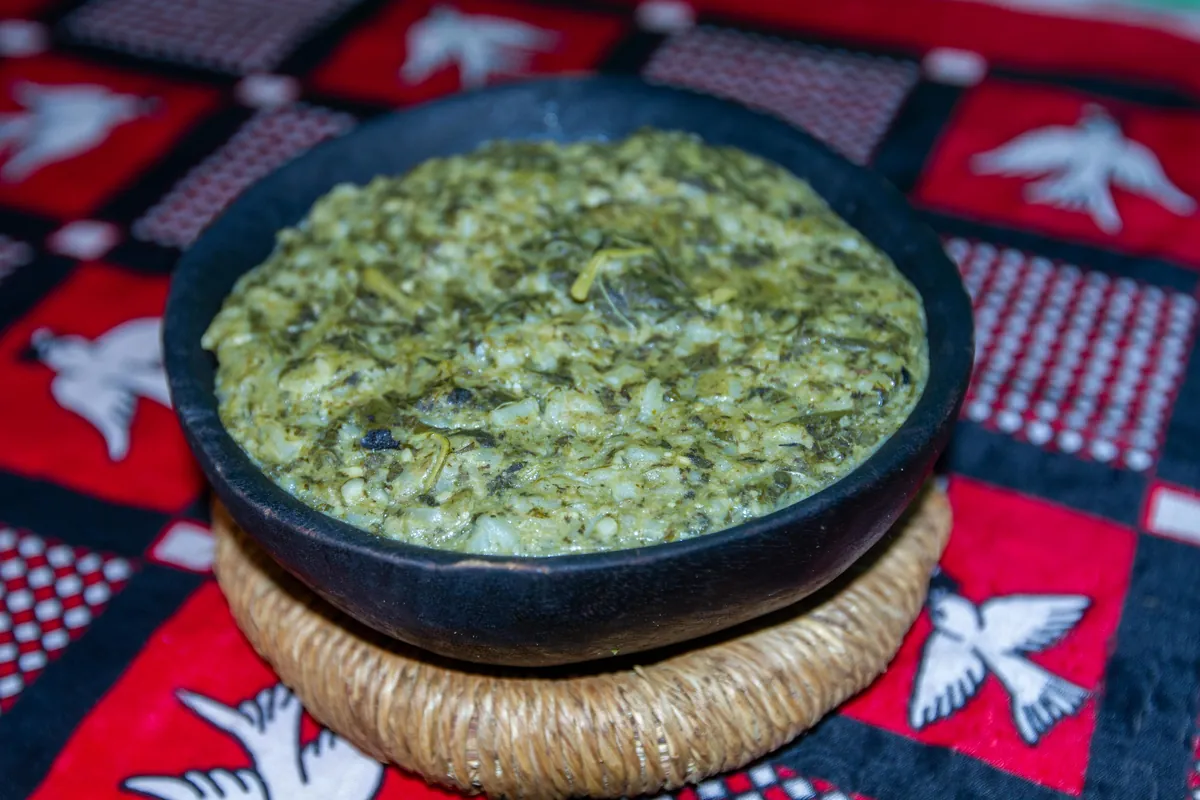
This babenda recipe is Burkina Faso's beloved one-pot of leafy greens: spinach and sorrel braised soft with broken rice, ground peanuts and soumbala, the fermented locust beans that give the dish its deep, funky, almost cheese-like savour. It is humble, filling and completely plant-based, and it tastes like nothing else you have cooked. One serving is about 375 g.

Babenda began as a famine food of Burkina Faso, made from bean leaves, sorrel and millet boiled together, and it has grown into a national dish eaten in towns and at ceremonies. A 2020 study of babenda sold in five Burkinabé cities found it a good source of calcium and other minerals, and today it is made with leafy greens such as hibiscus and amaranth, peanuts, rice and soumbala.

Pairs well with: Tô (millet porridge), grilled fish & fresh tomato salad

Provenance

Burkina Faso flag Burkina Faso

Mossi Home Cooking

African Heritage

Time Dedication

1h

20m prep • 40m cook

Batch Yield

4 Servings

392 kcal per serving

1 serving ≈ 375 g

Technical Skill

Easy

Easy (One Pot)

Meal Timing & Digestive Fit

Breakfast

Not Advised

Lunch

Hearty Midday Main

Dinner

Ideal Hearty Main

Snack & Tea

Inappropriate

Occasions: Family dinners, everyday meals, ceremonies, vegan nights Cost: Low — about $2 per serving at home
A black bowl of babenda, Burkinabé greens and rice, on a woven mat

Mossi Home Cooking

Photo: Masséni Héma, CC BY-SA 4.0, via Wikimedia Commons

The Heritage Formulary

Measured Ingredients

Estimated cost: Low — about $2 per serving at home (USD)

A true babenda is judged by its texture: one soft, thick, spoonable mass of greens and rice, never watery and never dry.

Execution Methodology & Culinary Technique

Step-by-Step Cooking Guide

Active 1h
P

Prep Stage: Wash, Chop, Grind

20 Mins • Knife Work

Wash the spinach and sorrel in several changes of cold water until no grit remains, strip the tough stems and chop roughly. Grind the peanuts to a coarse meal, crush the soumbala to a powder, chop the onion and mince the garlic. Rinse the broken rice once and set everything by the stove.

Maestro Tip: Wash the greens properly — grit is the one thing that can spoil this dish, and it hides in the folds of the leaves.

  1. 1

    Soften the Onion

    5 Mins Medium heat, about 175°C (350°F)

    Heat the oil in a large heavy pot over medium heat. Add the onion and garlic and cook for 4–5 minutes, stirring, until soft and translucent but not browned.

    Browning the onion here makes the whole pot bitter — keep it pale and sweet.

    Done when: The onion is soft, pale and sweet-smelling.

  2. 2

    Wilt the Greens

    10 Mins Medium heat, about 175°C (350°F)

    Add the chopped spinach and sorrel a handful at a time, stirring as each handful wilts down. Add 500 ml of the water, the salt and the baking soda if using, and the whole scotch bonnet. Cover and simmer for 10 minutes until the greens are completely soft and dark.

    The pot looks impossibly full at first — greens collapse to a quarter of their volume in minutes.

    Done when: The greens are dark, soft and reduced, with liquid bubbling around them.

  3. 3

    Add Soumbala and Peanuts

    5 Mins Simmer, about 95°C (200°F)

    Stir in the crushed soumbala and the ground peanuts. The pot will smell strong and funky — that is exactly right. Simmer for 5 minutes, stirring, until the peanuts thicken the liquid into a creamy sauce around the greens.

    If the smell worries you, remember it mellows as it cooks, just like a strong cheese softens in a sauce.

    Done when: The sauce coats the greens and smells deep and savoury rather than raw.

  4. 4

    Add the Rice

    20 Mins Low simmer, about 95°C (200°F)

    Sprinkle in the broken rice and the remaining 300 ml of water, and stir well so the rice is spread through the greens. Cover, lower the heat to the gentlest simmer and cook for 18–20 minutes, stirring once halfway, until the rice is soft and has absorbed most of the liquid into a thick, porridge-like mass.

    Broken rice drinks up water fast — if the pot looks dry before the rice is soft, add a splash of hot water.

    Done when: The rice is soft and the pot holds together as one thick, spoonable mass.

  5. 5

    Rest and Taste

    5 Mins Resting, about 70°C (160°F)

    Take the pot off the heat, remove the whole chilli, and rest covered for 5 minutes. Taste and adjust the salt — soumbala varies, so season at the end, not the start. Serve hot in bowls.

    The flavour deepens as it rests; the first spoonful straight from the boil is never the best one.

    Done when: The babenda is thick, soft and savoury, with the rice and greens in one mass.

Finishing Touches & Plating

Spoon the babenda into bowls while it is still steaming, and eat it as it is, or with a ball of tô for scooping. A drizzle of shea butter or peanut oil over the top is the traditional finish.
Nutritional Physiology & Benefits

Nutrition

Energy

392

kcal / serving

Protein

15g

Complete AA

Carbs

53g

Complex

Fats

15g

Healthy

Per serving (4 servings · 1 serving ≈ 375 g)
Energy392 kcal
Protein15 g
Carbohydrates53 g
Fat15 g
Fibre6.6 g
Sugar2.8 g
Sodium651 mg
Per 100g
Energy104 kcal
Protein4 g
Carbohydrates14.1 g
Fat4.1 g
Fibre1.8 g
Sugar0.7 g
Sodium174 mg

Nutrition values are estimated — calculated from USDA FoodData Central values for the listed ingredients.

Vitamins & minerals: Vitamin A and K, folate and iron (leafy greens), calcium (greens and peanuts), vitamin E (peanuts), vitamin C (sorrel and greens).

Greens in Bulk

Six hundred grams of leafy greens per pot bring vitamin A, vitamin K, folate and iron, plus about 6.6 g of fibre per serving.

Plant Protein, No Meat Needed

Peanuts and soumbala together give about 15 g of protein per serving, which makes this a genuinely filling vegan main.

Gentle and Filling

Soft, slow-cooked greens and rice are easy to digest, and the dish is naturally low in fat and free of dairy.

Food Pairings

What to Eat With

To optimize nutrient absorption and elevate the sensory depth, pair with these authentic accompaniments:

Sides

Tô (Millet Porridge)

The firm, neutral millet ball is the traditional scoop for babenda — it carries the savoury greens without competing with them.

Grilled Fish

A small piece of grilled or dried fish on the side is the classic non-vegan addition; its smoky saltiness matches the soumbala note for note.

Vegetables

Fresh Tomato & Onion Salad

Raw tomato and onion add brightness and crunch against the soft, dark greens, and the acidity lifts the funky soumbala.

Drinks

Bissap or Water

A cold, tart hibiscus drink or plain water lets the unusual flavour of the dish speak for itself.

Complete menu

Serve the babenda in bowls with a ball of tô for scooping, a fresh tomato and onion salad on the side, and chilled bissap to drink.

Digestive Guardrails

What NOT to Combine

To prevent digestive distress, sluggishness, or palate clash, avoid pairing the dish with these elements:

Strong Cheese on the Side

Soumbala already brings a powerful fermented flavour; a strong cheese alongside it doubles the same note until neither can be tasted properly. Keep the sides fresh and simple. This is general food information, not medical advice.

Raw or Undercooked Greens

Leafy greens must be cooked right through — simmer them until fully soft, and reheat leftovers until steaming, with the centre reaching 74°C (165°F). This is general food-safety information, not medical advice.

General information only, not medical advice — consult a doctor for personal dietary decisions.

Who Should Eat It

Who Should Eat

  • General adultsA light, filling vegan dinner — greens, rice and peanuts in one pot.
  • ChildrenSuitable from age 3+ with the chilli left out; the soft texture is easy to eat, but the strong flavour is an acquired taste for children.
  • ElderlyExcellent — soft, easy to chew, and rich in iron and folate; keep the salt moderate.
  • Pregnant womenGenerally suitable; the greens bring folate and iron. Skip the baking soda if your clinician has advised a low-sodium diet.
  • Breastfeeding womenGenerally suitable; iron and folate support recovery — keep the salt moderate.
  • AthletesA useful light meal after training, though it is modest in protein — add an extra handful of peanuts or a boiled egg on the side.
  • Weight gainA good choice — take a generous serving and add extra peanuts or a boiled egg.
  • Weight lossAn excellent choice — filling, high in fibre, and modest in calories at about 392 kcal per serving.

Health Conditions — Adjust or Avoid

Conditions

  • DiabetesThe rice is the main carbohydrate; keep the portion to about one bowl and load up on extra greens. Ask your clinician about portion sizes.
  • High blood pressureThe salt and baking soda add sodium — leave the baking soda out and season lightly. Ask your clinician if you follow a low-sodium diet.
  • Kidney diseaseGreens are high in potassium and the dish is salty; eat a modest portion and ask your clinician about potassium and sodium limits.
  • GoutPlant-based and low in purines, so it is generally a good choice; ask your clinician if you have gout.
  • Stomach issuesThe dish is soft and usually gentle, but the soumbala and chilli can be strong — leave the chilli out if your stomach is sensitive. Ask your clinician if symptoms persist.
  • Cardiovascular diseaseNaturally low in fat and rich in fibre; a good choice in a balanced diet. Ask your clinician for personalised guidance.
  • Fatty liverLow in fat and high in fibre with modest calories; a good choice. Ask your clinician for personalised guidance.
  • Food allergiesContains peanuts — a major allergen. Soumbala is a legume; people with legume allergies should check with their clinician. Ask your clinician if you have a food allergy.
  • Special therapeutic dietsIf you follow a prescribed low-sodium or low-potassium diet, leave out the baking soda, season lightly, and check with your clinician.

If you have a medical condition, consult your doctor before changing your diet.

Storage & Use

Storage & Use

How to store
Cool within 2 hours and store in an airtight container.
In the fridge
3 days.
In the freezer
2 months (the greens freeze well; the rice softens a little).
How to reheat
Reheat gently in a covered pan with a splash of water, stirring, until steaming and the centre reaches 74°C (165°F).
Freezing recommended
Yes — babenda freezes well for up to 2 months.
Signs it has spoiled
Sour or sharply off smell beyond its normal fermented aroma, slimy texture, or mould.

More recipes to explore

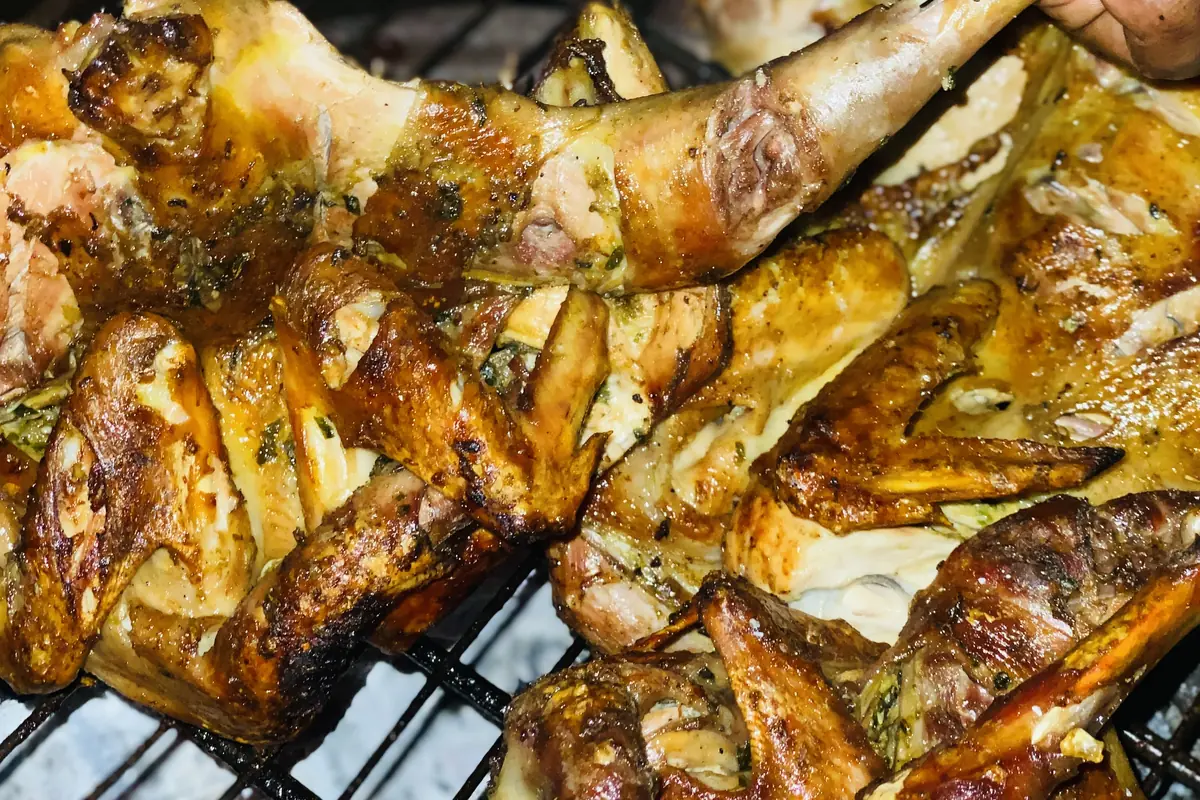
Grilled poulet bicyclette chicken pieces on a charcoal grill in Burkina Faso Burkina Faso flag Burkina Faso 2h 5m
Dinner •Ouagadougou Street Grill

Poulet Bicyclette

This poulet bicyclette recipe grills a whole free-range chicken over charcoal after a long soak in a punchy marinade of mustard, garlic, ginger, lemon and scotch bonnet, with a crushed bouillon cube for the savoury depth street vendors are known for. The skin turns crisp and dark at the edges while the meat stays juicy, and the whole bird is carved at the table. One serving is about 290 g.

Hearty & Satisfying

Char-grilled free-range chicken in a mustard, garlic and chilli marinade, served hot off the grill.

Pairs Well With
Riz gras, grilled plantain & a sharp onion salad
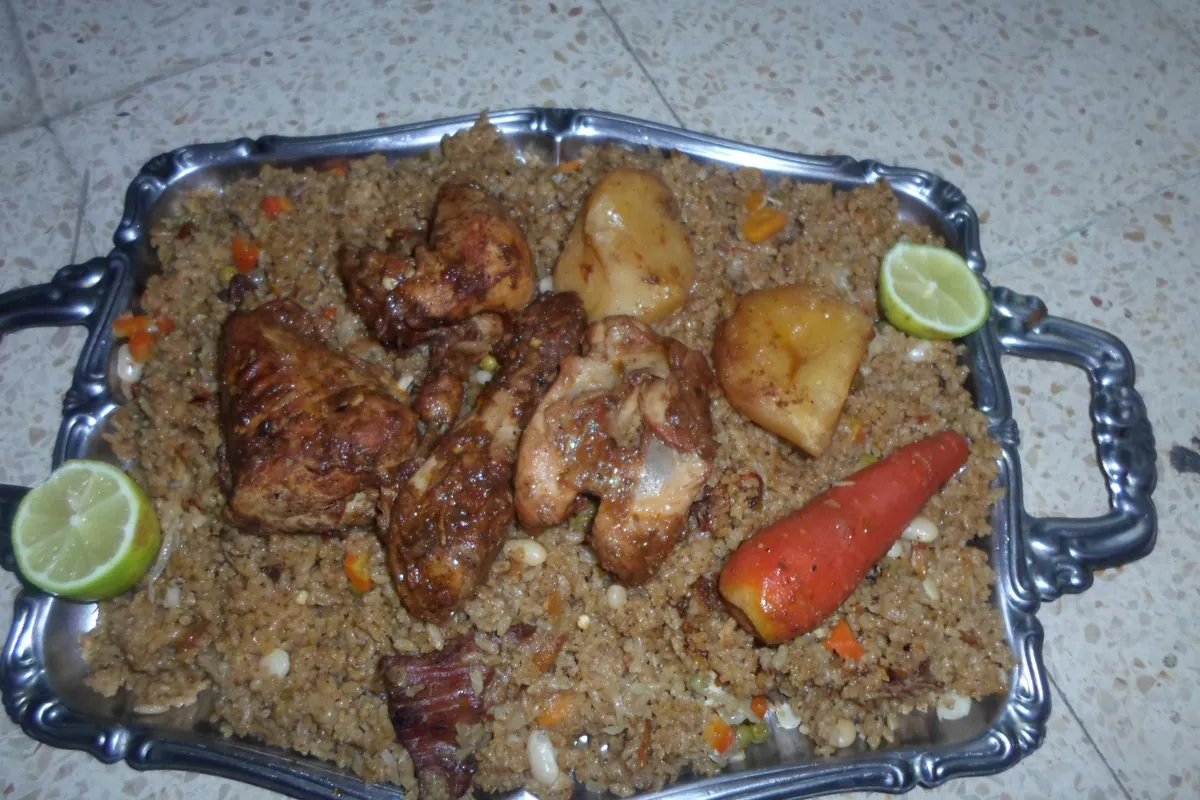
A platter of riz gras with chicken, potato, carrot and lime wedges Burkina Faso flag Burkina Faso 1h 15m
Lunch •Burkinabé Celebration Table

Riz Gras

This riz gras burkina faso recipe is the national dish of Burkina Faso: long-grain rice simmered in a rich tomato, onion and stock base with bone-in chicken, carrots, cabbage, eggplant and peppers, until every grain is stained orange-red and the vegetables sit proudly on top. It is a party dish, cooked in one big pot and served straight from it. One serving is about 490 g.

Comfort & Sharing

One-pot tomato rice cooked with chicken and vegetables, made to feed a crowd from a single pot.

Pairs Well With
Fried plantain, cucumber salad & chilled bissap
Bœuf bourguignon — French beef braised in red wine France flag France 4h
Dinner •Burgundy Terroir

Bœuf Bourguignon

Beef braised gently in red wine until the connective tissue melts into a velvet, gelatin-rich sauce — the classic Burgundy Sunday dinner.

Cellular Repair

Beef braised in red wine until spoon-tender, with mushrooms and pearl onions.

Pairs Well With
Parsnip Purée & Steamed French Haricots Verts
High Protein
Vietnamese braised pork belly with golden eggs in caramel sauce Vietnam flag Vietnam 1h 45m
Dinner •One Pot

Vietnamese Braised Pork and Eggs

Pork belly slowly braised in coconut water and caramel until meltingly tender, with golden eggs that soak up the sweet-savoury sauce — the Vietnamese family dish that tastes better the next day.

Comfort & Sustained Energy

Slow-braised pork belly and eggs in coconut water and caramel.

Pairs Well With
Steamed rice & pickled mustard greens
High Protein

The Dinner Gazette

Never wonder what’s for dinner again

One email a week with easy dinner ideas from around the world — ingredients, steps and nutrition, tested in our kitchen first.

Delivered every Thursday morning. Unsubscribe anytime.