-
1
Soak the Glutinous Rice
4 Hours (Passive)
Room temperature, ~20–25°C (68–77°F)
Rinse the glutinous rice in several changes of cold water until the water runs clear. Tip it into a large bowl, cover with cold water by about 5 cm, and leave to soak for 4 hours or overnight. Drain well before cooking. Soaking is passive time and is not included in the 105-minute total — start it in the morning for an afternoon snack.
If you are short on time, soak in hot water for 1 hour instead — the grains will soften faster, though overnight soaking gives the most even result.
Done when: Rice grains look plump and chalky white, and one breaks cleanly between your fingernails.
-
2
Half-Cook the Rice in Coconut Milk
15 Mins
Medium heat, ~175°C (350°F)
Tip the drained rice into a wide, heavy pot with the coconut milk, water, salt and the knotted pandan leaves. Bring to a gentle boil over medium heat, then turn the heat down and stir constantly for about 15 minutes, until the rice has absorbed almost all the liquid and looks glossy and half-cooked. Take the pot off the heat and lift out the pandan.
Keep stirring — glutinous rice catches and burns on the bottom of the pot in seconds once the liquid starts to disappear.
Done when: Rice has absorbed the liquid and is swollen and glossy, but still firm and chalky in the centre.
-
3
Soften & Cut the Leaves
10 Mins
Boiling water, 100°C (212°F)
While the rice cooks, soften the leaves: pour boiling water over them in a wide tray and leave for 2 minutes, or pass each leaf quickly over a low flame until it turns pliable. Wipe each leaf dry and cut into rectangles about 20 x 25 cm. Keep a little salted water nearby to dampen your hands while wrapping.
Stiff, dry leaves split when you roll them — if a leaf cracks, soften it again rather than forcing it.
Done when: Leaves bend without cracking and feel supple, not stiff.
-
4
Wrap the Parcels
15 Mins
Room temperature, ~20°C (68°F)
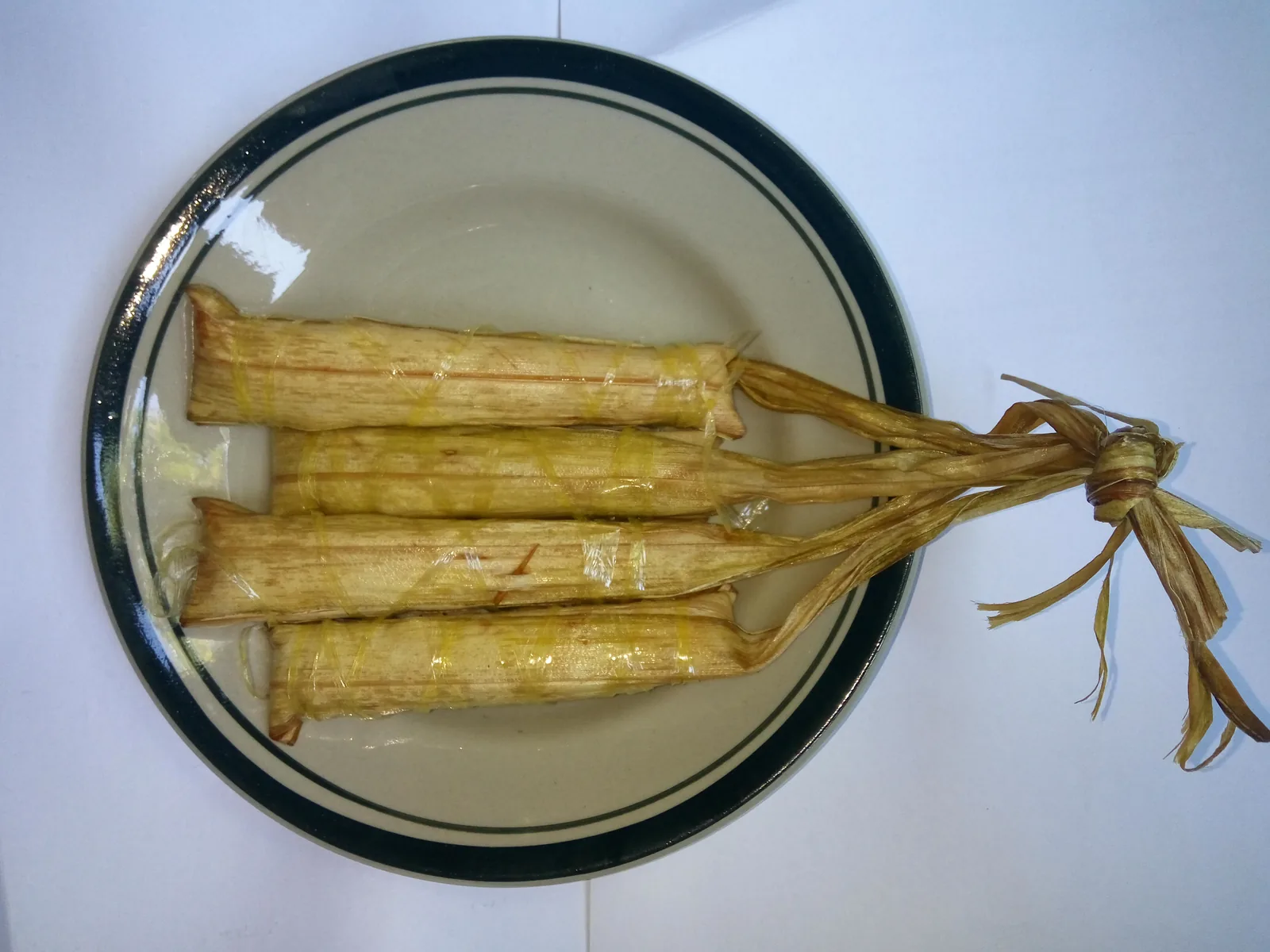
Lay a leaf rectangle shiny-side down. Spoon about 2 heaped tablespoons of the half-cooked rice (about 90 g) into the centre and shape it into a log. Roll the leaf around the rice, fold both ends under, and tie firmly with a length of string. Repeat until you have 12 parcels — work quickly while the rice is still warm and pliable.
Do not overfill — a parcel that is too fat will burst its leaf in the steamer. Two heaped tablespoons is the right amount.
Done when: Each parcel is a firm, even roll with the ends tucked in and no rice showing.
-
5
Steam Until Tender
40 Mins
Boiling water, 100°C (212°F)
Set a steamer over boiling water and pack the parcels in a single layer, seam-side down, leaving a little space between them for the steam. Cover and steam for 40 minutes, topping up the water if the pot runs low. The parcels are done when the rice is soft, glossy and translucent all the way through and the parcels are steaming hot throughout.
If you have no steamer, use a large pot with a small upturned bowl or a colander set above the water, and a tight-fitting lid.
Done when: Rice is soft, glossy and translucent to the centre; a parcel unwrapped to check holds its shape and is steaming hot.
-
6
Rest & Serve Warm
10 Mins
Off the heat
Lift the parcels out and rest them for 10 minutes before serving, so the rice firms up just enough to hold its roll shape when unwrapped. Serve warm, still in their leaves, with sambal, rendang or peanut sauce on the side.
Kelupis is best the day it is made — if you must wait, keep the parcels wrapped and re-steam them before serving.
Done when: Parcels are warm and firm enough to unwrap cleanly without the rice falling apart.
auto_awesome Finishing Touches & Plating
Rest the kelupis for 10 minutes after steaming so the rice firms up just enough to hold its roll shape when unwrapped. Serve warm, still in their leaves, with sambal and rendang on the side — part of the pleasure is peeling the leaf open at the table.
 Brunei
1h
 Spain
 Vietnam