Curated recipes from 193 countries  •  New seasonal Mediterranean issue out now

Overview

Char Kway Teow

Char Kuey Teow; Char Koay Teow; Fried Kway Teow

This char kway teow recipe tosses wide flat rice noodles in a blazing-hot wok with garlic, soy sauce, chilli paste, prawns, cockles, Chinese sausage, egg, bean sprouts and garlic chives, so the noodles pick up the smoky char called wok hei. Cook one plate at a time, exactly like a hawker stall, and eat it straight from the wok. One serving is about 475 g.

Char kway teow takes its name from Hokkien, where chha-koe-tiau means stir-fried flat rice noodles. The dish traces back to Chaozhou in China's Guangdong province and was carried to the Malay Peninsula by Teochew and Hokkien migrants from the late 1800s into the early 1900s, where it became cheap, fast fuel for labourers. In Penang it grew into the island's signature street food: fishermen and cockle-gatherers are said to have moonlighted as hawkers in the evening, frying the noodles with the day's cockles, and Penang's version stays lighter than Singapore's, with less dark soy sauce and sometimes a duck egg in place of a chicken egg.

Pairs well with: Pickled green chillies, cucumber slices, and iced lime tea or teh o ais

Provenance

Malaysia flag Malaysia

Penang Street-Food Icon

East & South Asia

Time Dedication

25m

15m prep • 10m cook

Batch Yield

2 Servings

592 kcal per serving

1 serving ≈ 475 g

Technical Skill

Intermediate

Medium (High-Heat Wok)

Meal Timing & Digestive Fit

Breakfast

Not Advised

Lunch

Hearty Midday Main

Dinner

Ideal Hearty Main

Snack & Tea

Inappropriate

Pasta & NoodlesQuick Prep (<30m) Occasions: Hawker-style dinner, weeknight dinner, street-food night, dinner with friends Cost: Low — about $3–4 per serving at home
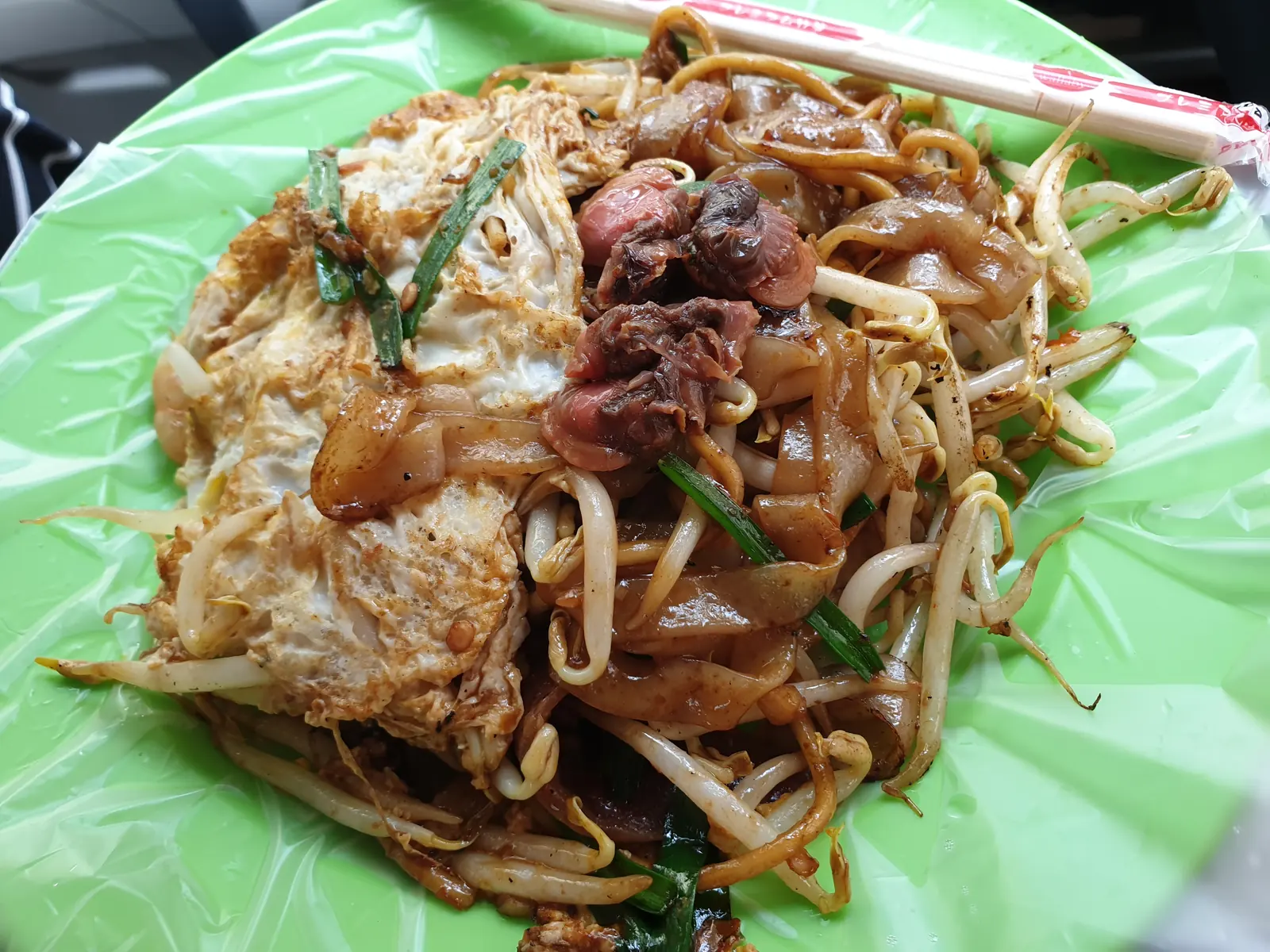
Char kway teow on a green plate — glossy flat rice noodles with fried egg, cockles, bean sprouts and garlic chives

Penang Street-Food Icon

Photo: Foodi-elaine, CC BY-SA 4.0, via Wikimedia Commons

The Heritage Formulary

Measured Ingredients

Estimated cost: Low — about $3–4 per serving at home (USD)

A good char kway teow is cooked one plate at a time in a smoking-hot wok, so the noodles are smoky and lightly charred, never steamed or clumped.

Execution Methodology & Culinary Technique

Step-by-Step Cooking Guide

Active 25m
P

Prep Stage: Loosen the Noodles and Mix the Sauce

15 Mins

Gently separate the fresh flat rice noodles into loose strands with your hands — do not rinse them, or they will turn gummy. Peel and devein the prawns, rinse the shucked cockles, and slice the Chinese sausage thinly on the diagonal. Whisk the light soy sauce, dark soy sauce, fish sauce, sugar and a pinch of salt in a small bowl, and set the bean sprouts, chives and beaten eggs beside the stove in the order you will use them.

Maestro Tip: Have everything within arm's reach before the wok heats up — once the noodles go in, there is no time to chop or measure.

  1. 1

    Heat the Wok Until It Smokes

    2 Mins Wok over highest heat, about 230°C (450°F)

    Put a large wok over the highest heat your stove can give and let it heat for 2 minutes until a drop of water sizzles away instantly and the wok just begins to smoke. Add the oil and swirl it around the wok — it should shimmer and smoke lightly at once.

    If your stove is weak, use a flat-bottomed wok or a large cast-iron pan, and cook only one plate at a time. A wok that is not hot enough is the single biggest reason home char kway teow turns out soggy.

    Done when: The wok is smoking faintly and the oil runs thin and shimmers.

  2. 2

    Fry the Sausage, Garlic and Chilli

    2 Mins Highest heat, about 230°C (450°F)

    Add the sliced Chinese sausage and fry for 1 minute until the edges crisp and the fat renders. Add the minced garlic and the chilli paste and stir-fry for 30 seconds until the garlic smells fragrant and the chilli darkens slightly — do not let the garlic burn.

    Keep the wok moving the whole time. Garlic goes from fragrant to bitter in seconds at this heat.

    Done when: The sausage edges are crisp and the garlic is golden and fragrant.

  3. 3

    Add the Prawns and Cockles

    2 Mins Highest heat, about 230°C (450°F)

    Add the prawns in a single layer and let them sit untouched for 30 seconds so they sear, then toss. Add the cockles and stir-fry for 1 minute until the prawns turn pink and opaque and the cockles are hot through.

    Do not overcook the prawns here — they finish cooking with the noodles in the next step.

    Done when: The prawns are pink and opaque all the way through (at least 63°C / 145°F) and the cockles are hot.

  4. 4

    Add the Noodles and Sauce for Wok Hei

    3 Mins Highest heat, about 230°C (450°F)

    Add the loosened noodles and pour the sauce evenly over them. Toss and flip with a spatula for 2–3 minutes, pressing the noodles against the hot wok and letting them sit for a few seconds between tosses so the edges char. The noodles should turn glossy and lightly browned, with a faint smoky smell rising from the wok.

    Press, rest, toss — the short rests against the hot metal are what build the wok hei. Constant stirring just steams the noodles.

    Done when: The noodles are hot through, glossy, lightly charred at the edges, and smell faintly smoky.

  5. 5

    Egg, Sprouts and Chives — Then Serve at Once

    2 Mins Highest heat, about 230°C (450°F)

    Push the noodles to one side of the wok, pour the beaten eggs into the empty space and scramble them for 20 seconds until just set. Fold the egg through the noodles, add the bean sprouts and garlic chives, and toss for 30 seconds until the chives wilt and the sprouts are just warmed but still crisp. Plate immediately.

    The egg should be in soft ribbons through the noodles, not a dry omelette — fold it in the moment it sets.

    Done when: The egg is fully set with no runny parts, the chives have wilted, and the sprouts are still crisp.

Finishing Touches & Plating

Tip the noodles straight onto warm plates the moment the chives wilt — char kway teow waits for nobody, and the wok hei fades as it sits. Scatter over a few extra raw bean sprouts for crunch and serve with pickled green chillies on the side.
Nutritional Physiology & Benefits

Nutrition

Energy

592

kcal / serving

Protein

39g

Complete AA

Carbs

61g

Complex

Fats

22g

Healthy

Per serving (2 servings · 1 serving ≈ 475 g)
Energy592 kcal
Protein39 g
Carbohydrates61 g
Fat22 g
Fibre2.8 g
Sugar5.7 g
Sodium1665 mg
Per 100g
Energy125 kcal
Protein8.2 g
Carbohydrates12.8 g
Fat4.6 g
Fibre0.6 g
Sugar1.2 g
Sodium351 mg

Nutrition values are estimated — calculated from USDA FoodData Central values for the listed ingredients.

Vitamins & minerals: Vitamin B12 and selenium (prawns, cockles), vitamin C and folate (bean sprouts, chives), iron (cockles, egg). Nutrition is estimated.

Serious Staying Power

About 39 g of protein per serving from the prawns, cockles, egg and sausage, with 61 g of carbohydrate from the noodles — a dinner that genuinely fills you up.

Fresh Crunch in Every Bite

The bean sprouts and garlic chives are added at the very end, so they stay crisp and bring vitamin C and folate to a rich, savoury plate.

Iron from the Sea

Cockles and prawns are a natural source of iron, vitamin B12 and selenium, nutrients that are easy to miss in a noodle-only dinner.

Food Pairings

What to Eat With

To optimize nutrient absorption and elevate the sensory depth, pair with these authentic accompaniments:

Vegetables

Pickled Green Chillies

Sharp, vinegary chillies cut through the rich soy and lard-like smokiness of the noodles and reset your palate between bites — the classic hawker-stall accompaniment.

Sides

Cucumber Slices

Cool, watery cucumber is the simplest possible contrast to a hot, salty, smoky plate, and it needs no cooking at all.

Drinks

Iced Lime Tea or Teh O Ais

A cold, lightly sweet citrus tea or a black iced tea cools the chilli heat and washes down the salty soy flavours without adding heaviness.

Soups

A Light Clear Soup

A small bowl of clear pork-rib or vegetable soup on the side balances the dry, fried noodles with something warm and brothy, the way a hawker meal is usually rounded out.

Full Menus

Full Hawker Menu

Serve the noodles as the main plate with pickled chillies, cucumber and iced lime tea — a complete Malaysian hawker-centre dinner for two.

Complete menu

Serve the char kway teow as the main plate with pickled green chillies and cucumber slices on the side, a small bowl of clear soup, and iced lime tea to drink.

Digestive Guardrails

What NOT to Combine

To prevent digestive distress, sluggishness, or palate clash, avoid pairing the dish with these elements:

A Crowded, Lukewarm Wok

Doubling the recipe in one pan drops the wok temperature, so the noodles steam and clump instead of searing — and lukewarm seafood spends longer in the danger zone. Cook one plate at a time in a smoking-hot wok, and make sure the prawns reach 63°C (145°F) and the egg is fully set. This is general guidance, not medical advice.

Raw Cockles from an Unknown Source

Cockles are filter feeders and can carry bacteria if they come from polluted water, so buy shucked cockles only from a trusted fishmonger, keep them cold, and cook them through in the hot wok. If you cannot find a reliable source, leave them out rather than risking it. This is general guidance, not medical advice.

General information only, not medical advice — consult a doctor for personal dietary decisions.

Who Should Eat It

Who Should Eat

  • General adultsA satisfying hawker dinner — high in protein, with fresh crunch from the sprouts and chives. Watch the salt if you eat it often.
  • ChildrenSuitable from about age 3 if you leave out the chilli paste and cut the prawns and sausage small; the noodles are soft and easy to chew.
  • ElderlySuitable in a modest portion — the noodles, egg and prawns are soft and easy to eat. Keep the chilli out and go easy on the soy sauce.
  • Pregnant womenGenerally suitable if the prawns and cockles are cooked right through until opaque and hot, and the egg is fully set. Skip the cockles if you are unsure of their source.
  • Breastfeeding womenGenerally suitable; the protein and iron from the seafood help keep you full. Drink plenty of water with such a salty plate.
  • AthletesA strong post-training dinner — about 39 g of protein and 61 g of carbohydrate per serving to refuel. Add an extra egg if you need more protein.
  • Weight gainA good choice — take a second helping of noodles and an extra egg, and use the full amount of oil.
  • Weight lossFilling, but energy-dense and salty — keep to one serving, load up on the bean sprouts and cucumber, and use half the oil.

Health Conditions — Adjust or Avoid

Conditions

  • DiabetesThe noodles are the main carbohydrate source at about 61 g per serving, so watch the portion and pair it with extra cucumber and sprouts; ask your clinician about a suitable portion.
  • High blood pressureOne serving carries about 1,665 mg of sodium, mostly from the soy sauces and fish sauce — use half the soy sauce and skip the extra salt, and ask your clinician about a suitable portion.
  • Kidney diseaseLimit the portion — the noodles, seafood and soy sauces add protein, potassium and sodium; ask your clinician about portion size.
  • GoutEat in a modest portion — prawns and cockles are rich in purines, so keep it to an occasional small serving and ask your clinician if unsure.
  • Stomach issuesUsually filling but heavy — the chilli paste, garlic and fried oil can irritate a sensitive stomach, so leave out the chilli and eat a modest portion.
  • Cardiovascular diseaseA reasonable occasional choice — rich in seafood protein, but salty and fried; use vegetable oil, keep the sausage small, and keep the portion modest.
  • Fatty liverKeep the portion modest, use half the oil, and favour the bean sprouts and cucumber over a second helping.
  • Food allergiesContains shellfish (prawns, cockles), egg, gluten and soy (soy sauces), and pork (Chinese sausage). Check before serving to anyone with a shellfish, egg, wheat, soy or pork allergy.
  • Special therapeutic dietsIf you follow a prescribed low-sodium diet, halve the soy sauces and fish sauce and skip the salt, and check with your clinician.

If you have a medical condition, consult your doctor before changing your diet.

Storage & Use

Storage & Use

How to store
Cool the noodles within 1 hour and store in an airtight container in the fridge. Keep the pickled chillies and cucumber separate.
In the fridge
2 days at 4°C (40°F) or below.
In the freezer
Not recommended — the rice noodles turn hard and crumbly after freezing and thawing.
How to reheat
Reheat in a hot wok or large pan over high heat for 3–4 minutes, stirring constantly, until steaming hot all the way through to 74°C (165°F). Add a splash of water if the noodles have dried out.
Freezing recommended
No — the flat rice noodles lose their chew and the bean sprouts go limp after freezing.
Signs it has spoiled
Sour or fishy smell, slimy noodles or prawns, or any grey discolouration on the seafood.

More recipes to explore

Nasi lemak — coconut rice with crispy fried chicken, red sambal, omelette, peanuts and cucumber in a takeaway box Malaysia flag Malaysia 1h 10m
Breakfast •Malaysian Heritage

Nasi Lemak

This nasi lemak recipe brings Malaysia's national breakfast to your own table: rice steamed in coconut milk with pandan, a dark, sweet-hot sambal, golden turmeric fried chicken, and the classic little pile of crispy anchovies, roasted peanuts, boiled egg and cool cucumber. One serving is about 465 g.

Hearty & Satisfying

A full Malaysian breakfast plate — fragrant coconut rice with sambal, crispy chicken, egg, anchovies, peanuts and cucumber.

Pairs Well With
A spoonful of hot sambal and cool cucumber slices, with teh tarik or iced lime tea.
A white bowl of curry laksa in orange coconut curry broth with tofu puffs, fish balls, spring onions and fried shallots Malaysia flag Malaysia 50m
Lunch •Malaysian Hawker Classic

Curry Laksa

This curry laksa recipe simmers a spiced rempah paste with coconut milk and chicken stock into a rich orange broth, then pours it over rice vermicelli and egg noodles with shredded chicken, tofu puffs and crisp bean sprouts. One serving is about 703 g.

Comfort & Warmth

A rich, spiced coconut curry noodle soup with chicken, tofu puffs and bean sprouts.

Pairs Well With
Cool cucumber salad and a glass of iced lime tea
Soups & Broths • Pasta & Noodles
Bœuf bourguignon — French beef braised in red wine France flag France 4h
Dinner •Burgundy Terroir

Bœuf Bourguignon

Beef braised gently in red wine until the connective tissue melts into a velvet, gelatin-rich sauce — the classic Burgundy Sunday dinner.

Cellular Repair

Beef braised in red wine until spoon-tender, with mushrooms and pearl onions.

Pairs Well With
Parsnip Purée & Steamed French Haricots Verts
High Protein
Vietnamese braised pork belly with golden eggs in caramel sauce Vietnam flag Vietnam 1h 45m
Dinner •One Pot

Vietnamese Braised Pork and Eggs

Pork belly slowly braised in coconut water and caramel until meltingly tender, with golden eggs that soak up the sweet-savoury sauce — the Vietnamese family dish that tastes better the next day.

Comfort & Sustained Energy

Slow-braised pork belly and eggs in coconut water and caramel.

Pairs Well With
Steamed rice & pickled mustard greens
High Protein

The Dinner Gazette

Never wonder what’s for dinner again

One email a week with easy dinner ideas from around the world — ingredients, steps and nutrition, tested in our kitchen first.

Delivered every Thursday morning. Unsubscribe anytime.