
Curated recipes from 193 countries  •  New seasonal Mediterranean issue out now

Overview

Curanto

Curanto en hoyo, Curanto en olla, Pulmay, Chilote curanto

This curanto recipe brings Chiloe's famous pit feast to the home kitchen as a pot-steamed pulmay: mussels, clams and shrimp layered with chicken, longaniza sausage, potatoes, milcao and chapalele under cabbage leaves. One serving is about 460 g and carries 565 calories. Serve it straight from the pot, piled into bowls, with the broth spooned over.

Curanto takes its name from the Mapudungun word kurantu, meaning stony: the traditional Chiloe feast cooks food on heated rocks buried in an earth pit, covered with pangue leaves and turf. Archaeological remains of the method on the Greater Island of Chiloe are more than eleven thousand years old, and the preparation has been documented since the 16th century. Seafood, potatoes, milcao and chapalele are the heart of it, with meats and sausages added on top. The home version here cooks the same layers in a large pot — curanto en olla, also called pulmay — instead of a pit dug in the ground.

Pairs well with: A glass of Chilean white wine or chicha, with pebre salsa on the side.

Provenance

Chile flag Chile

Chiloe Pit-Feast Classic

Latin America & Caribbean

Time Dedication

2h 15m

70m prep • 65m cook

Batch Yield

8 Servings

565 kcal per serving

1 serving ≈ 460 g

Technical Skill

Advanced

Advanced (Feast Pot)

Meal Timing & Digestive Fit

Breakfast

Not Advised

Lunch

Hearty Midday Main

Dinner

Ideal Hearty Main

Snack & Tea

Inappropriate

High Protein Occasions: Family gatherings, summer feasts, Chilean Independence Day (Fiestas Patrias), weekend celebrations Cost: Moderate — about $5–6 per serving at home
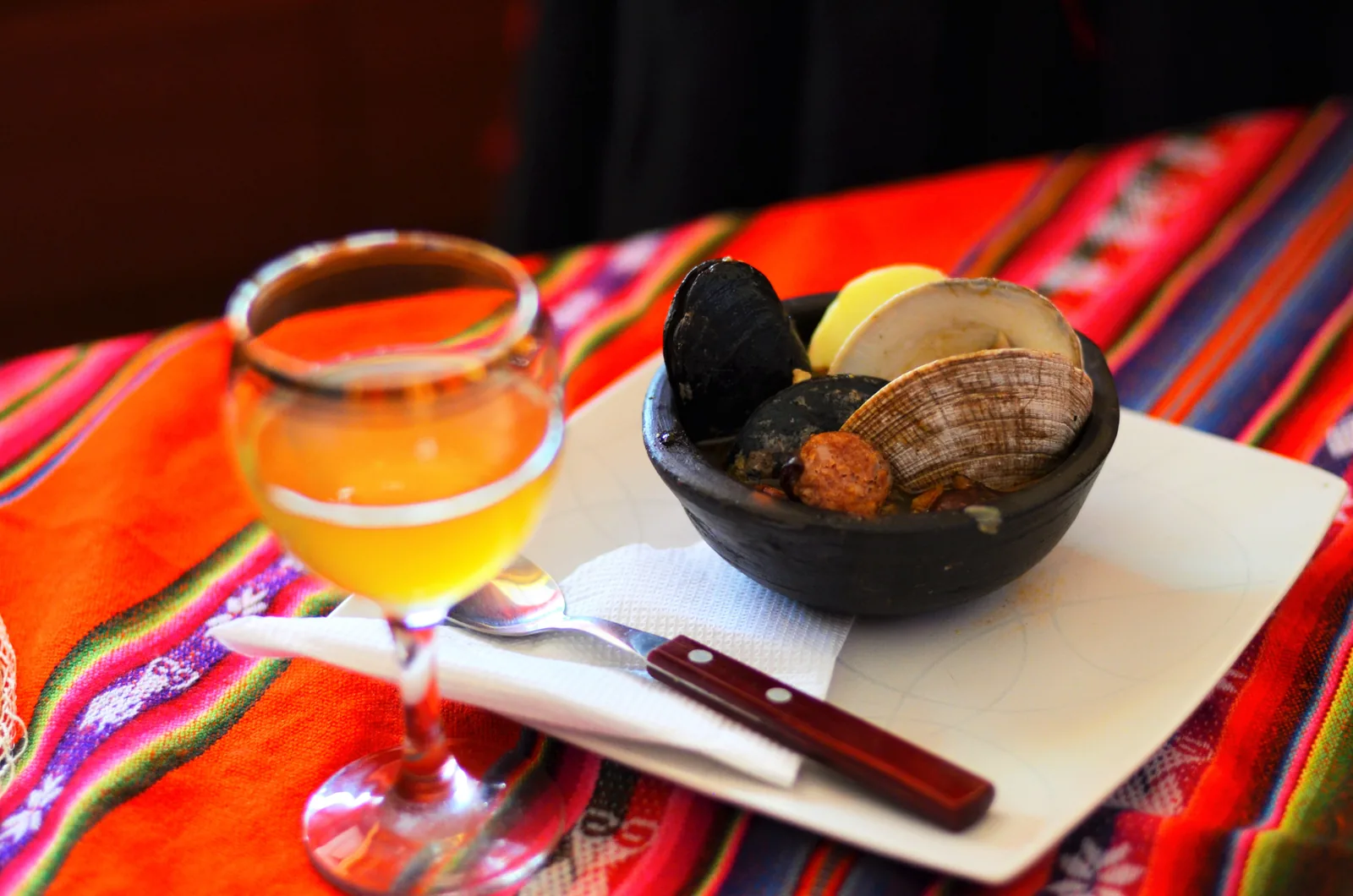
A black clay bowl of curanto with mussels, clams, sausage and potato beside a glass of white wine on a colourful woven cloth

Chiloe Pit-Feast Classic

Photo: Ranstevens, CC BY-SA 4.0, via Wikimedia Commons

The Heritage Formulary

Measured Ingredients

Estimated cost: Moderate — about $5–6 per serving at home (USD)

This home version cooks the feast in a large pot (curanto en olla, also called pulmay) instead of an earth pit, keeping the same layers, leaves and potato breads.

Execution Methodology & Culinary Technique

Step-by-Step Cooking Guide

Active 2h 15m
P

Prep Stage: Shellfish, Meats and Potato Breads

70 Mins • Shellfish, Meats and Potato Breads

Scrub the mussels and clams, soak the clams, and peel the shrimp. Cut the chicken into large pieces and slice the longaniza into thick rounds. Scrub the whole potatoes. Make the milcao by mixing the grated raw potato with 100g of the mashed potato, the melted lard and 1g of salt, then shaping 8 flat cakes. Make the chapalele by kneading the flour with the remaining 100g of mashed potato, 2g of salt and 2 to 3 tablespoons of water for 5 minutes, then shaping 8 flat discs. Slice the onion and mince the garlic.

Maestro Tip: Do the shellfish first and keep everything cold until the pot is ready — warm shellfish spoil fast, and cold shellfish steam better.

  1. 1

    Layer the pot

    10 Mins Room temperature, about 20°C (68°F)

    Line a very large pot (at least 8 litres) with half the cabbage leaves. Layer in the whole potatoes, chicken, longaniza, onion and garlic, then the mussels, clams and shrimp on top. Pour in the wine and water, sprinkle over the remaining salt and the merken, and lay the milcao cakes and chapalele discs on top. Cover everything with the remaining cabbage leaves.

    Pack the layers snugly so the steam has to work its way through the whole pot — gaps let the steam escape without cooking the food.

    Done when: Layers are snug, the breads sit on top, and leaves cover everything.

  2. 2

    Steam the feast

    60 Mins Boiling steam, 100°C (212°F)

    Put the lid on tightly and set the pot over high heat until you hear it steaming, then turn it down to medium-low and steam for 60 minutes. Do not lift the lid for the first 45 minutes. The chicken must reach 74°C (165°F) inside, and fish and shellfish must reach 63°C (145°F).

    If steam escapes around the lid, lay a clean damp cloth between the pot and the lid — the seal is what cooks the feast.

    Done when: Mussels and clams are wide open, the chicken reads 74°C (165°F), and the potatoes pierce easily.

  3. 3

    Rest and check

    5 Mins Off the heat, about 20°C (68°F)

    Take the pot off the heat and let it rest, lid on, for 5 minutes. Lift the leaves and throw away any mussels or clams that stayed closed — they were not safe to eat.

    Closed shellfish after a full hour of steaming are dead, not shy — never force them open and eat them.

    Done when: All served shellfish are open; closed ones are in the bin.

  4. 4

    Serve from the pot

    10 Mins Serving hot, above 60°C (140°F)

    Lift out the leaves and pile the shellfish, chicken, sausage, potatoes, milcao and chapalele into deep bowls. Spoon the hot broth from the bottom of the pot over each bowl and serve at once with pebre on the side.

    Serve the milcao and chapalele first — they soak up the broth best while they are still hot.

    Done when: Bowls are piled high and steaming, with broth spooned over.

Finishing Touches & Plating

Lift the leaves, pile the shellfish, chicken, sausage, potatoes and golden potato breads into deep bowls, and spoon the hot broth over everything. Eat with your hands, with pebre on the side.

Nutritional Physiology & Benefits

Nutrition

Energy

565

kcal / serving

Protein

45g

Complete AA

Carbs

49g

Complex

Fats

20g

Healthy

Per serving (8 servings · 1 serving ≈ 460 g)
Energy565 kcal
Protein45 g
Carbohydrates49 g
Fat20 g
Fibre5.2 g
Sugar3.4 g
Sodium936 mg
Per 100g
Energy123 kcal
Protein9.8 g
Carbohydrates10.6 g
Fat4.4 g
Fibre1.1 g
Sugar0.7 g
Sodium204 mg

Nutrition values are estimated — calculated from USDA FoodData Central values for the listed ingredients.

Vitamins & minerals: Vitamin B12 and iron (mussels, clams), selenium and zinc (shellfish), vitamin C and potassium (potatoes, cabbage), vitamin B6 and niacin (chicken).

Shellfish Protein and Minerals

Mussels, clams and shrimp give lean protein plus vitamin B12, iron, zinc and selenium — the minerals that make shellfish such a useful food, in a single pot.

Potatoes and Cabbage for Fibre

Potatoes and cabbage bring fibre, potassium and vitamin C to the feast, so each serving carries about 5 g of fibre alongside its 45 g of protein.

A Feast That Fuels

With about 45 g of protein and slow-release carbohydrate from the potatoes and potato breads, one serving keeps you full for hours — this is celebration food that works as a real meal.

Food Pairings

What to Eat With

To optimize nutrient absorption and elevate the sensory depth, pair with these authentic accompaniments:

Drinks

Chilean White Wine or Chicha

A dry Chilean white wine, or a glass of chicha, cuts through the richness of the sausage and the shellfish broth and is what Chiloe drinks with the feast.

Mote con Huesillo

The sweet wheat-and-peach drink of Chilean summer fairs makes a gentle, refreshing finish after the salty, savoury feast.

Sides

Crusty Bread

Crusty bread is for the broth at the bottom of the bowl — it soaks up the shellfish and wine liquor that is too good to leave behind.

Sauces

Pebre Salsa

Fresh pebre — tomato, onion, coriander and chilli — adds a sharp, herby bite that lifts the rich steamed meats and shellfish.

Complete menu

Serve the curanto piled into deep bowls with its broth, pebre salsa and crusty bread, followed by fresh fruit and mote con huesillo.

Digestive Guardrails

What NOT to Combine

To prevent digestive distress, sluggishness, or palate clash, avoid pairing the dish with these elements:

Raw or Undercooked Shellfish

Shellfish must be steamed until the shells open wide; raw or undercooked shellfish can carry bacteria and viruses that cause serious food poisoning. This is general food-safety information, not medical advice.

Leaving the Pot Out for Hours

A rich seafood feast spoils quickly at room temperature — get leftovers into the fridge within 2 hours and eat them within 2 days. This is general food-safety information, not medical advice.

General information only, not medical advice — consult a doctor for personal dietary decisions.

Who Should Eat It

Who Should Eat

  • General adultsA hearty feast serving — one bowl with broth is a full dinner.
  • ChildrenServe the chicken, sausage and potatoes first and skip the shellfish for young children, who are more sensitive to shellfish.
  • ElderlySoft, easy to chew and rich in protein; serve a modest bowl and keep the merken out.
  • Pregnant womenFine when everything is steamed through and eaten fresh; avoid shellfish that stayed closed and leftovers kept overnight.
  • Breastfeeding womenA filling, protein-rich dinner that travels well in a lunchbox as chicken, sausage and potatoes.
  • AthletesExcellent after training: about 565 calories with 45 g of protein per serving, plus carbohydrate from the potatoes.
  • Weight gainA good choice — energy-dense, satisfying, and easy to eat a generous bowl of.
  • Weight lossBest as one bowl with plenty of cabbage and broth; the sausage and potato breads are rich, so keep the portion to a single serving.

Health Conditions — Adjust or Avoid

Conditions

  • DiabetesAbout 49 g of carbohydrate per serving, mostly from potatoes and potato breads — take one serving and load the bowl with shellfish and cabbage; ask a clinician about portion size.
  • High blood pressureSodium is about 936 mg per serving, mostly from the sausage and the salt — keep the salt as written and skip extra salty sides; ask a clinician for personal advice.
  • Kidney diseaseShellfish, sausage and chicken add protein, potassium and phosphorus, which some kidney diets limit — ask a clinician about portion size before eating it regularly.
  • GoutShellfish and sausage are purine-rich foods, so a large serving can raise uric acid — keep the portion modest and ask a clinician if you have questions about your overall diet.
  • Stomach issuesRich, fatty sausage and a large mixed meal can bother sensitive stomachs; a smaller bowl, well steamed, is usually easier — ask a clinician if symptoms persist.
  • Cardiovascular diseaseAbout 20 g of fat per serving, with sausage and lard — enjoy occasionally and favour the shellfish and chicken over the sausage; ask a clinician about your overall eating pattern.
  • Fatty liverEnergy-dense and rich; keep it an occasional feast and favour a modest bowl with plenty of cabbage — ask a clinician for personal guidance.
  • Food allergiesContains shellfish (mussels, clams, shrimp) and gluten (wheat flour in the chapalele). Naturally free of egg, nuts and soy.
  • Special therapeutic dietsNot suitable for low-protein, low-sodium or shellfish-free diets as written; if you follow a restricted diet, ask a clinician or dietitian before adapting it.

If you have a medical condition, consult your doctor before changing your diet.

Storage & Use

Storage & Use

How to store
Cool quickly, pick the meat from the shells and store the meat, chicken, sausage and breads in sealed containers with a little broth.
In the fridge
2 days in the fridge at 4°C (39°F) or below.
In the freezer
Up to 1 month; shellfish texture softens on thawing, so freeze the meats and breads rather than whole shells.
How to reheat
Reheat gently in a covered pot with a splash of water until steaming hot, about 74°C (165°F); do not reheat more than once.
Freezing recommended
Partly — freeze the meats and potato breads; eat the shellfish fresh.
Signs it has spoiled
Sour or ammonia smell, slimy shellfish meat, or mould on the breads — discard it.

More recipes to explore

Machas a la parmesana — razor clams in their shells topped with melted golden Parmesan, garnished with greens and a cherry tomato Chile flag Chile 35m
Lunch •Valparaíso Coast Heritage

Machas a la Parmesana

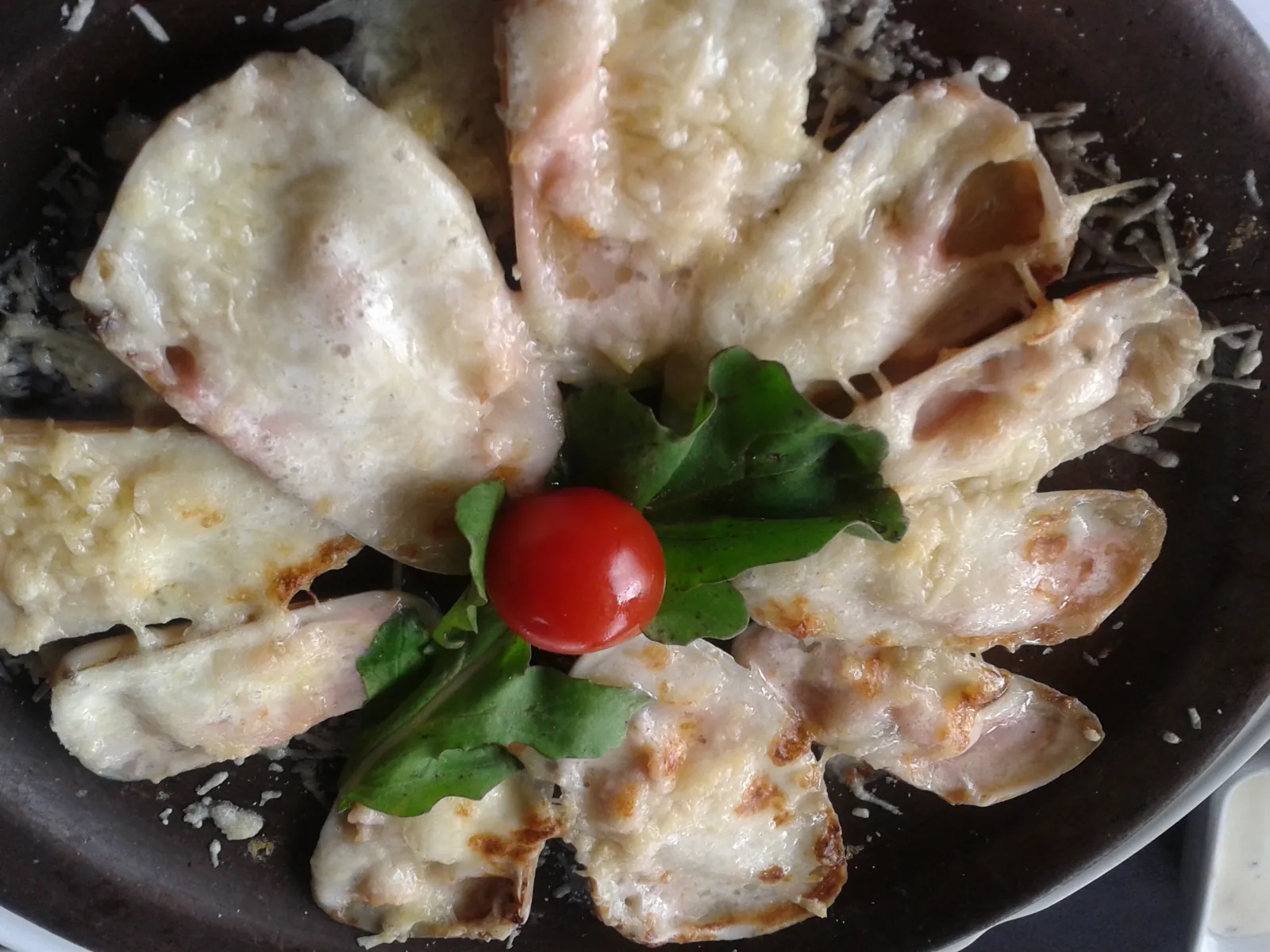
This machas a la parmesana recipe bakes sweet Chilean razor clams in their own shells with garlic butter, a splash of dry white wine and a blanket of grated Parmesan that turns golden under the grill. It is the classic starter of the Valparaíso coast: briny, buttery and ready in minutes. One serving is about 200 g, six shells per person.

Coastal & Savory

Sweet razor clams baked in their shells with garlic butter, white wine and a golden Parmesan crust.

Pairs Well With
Crusty bread and lemon wedges, with a glass of dry white wine.
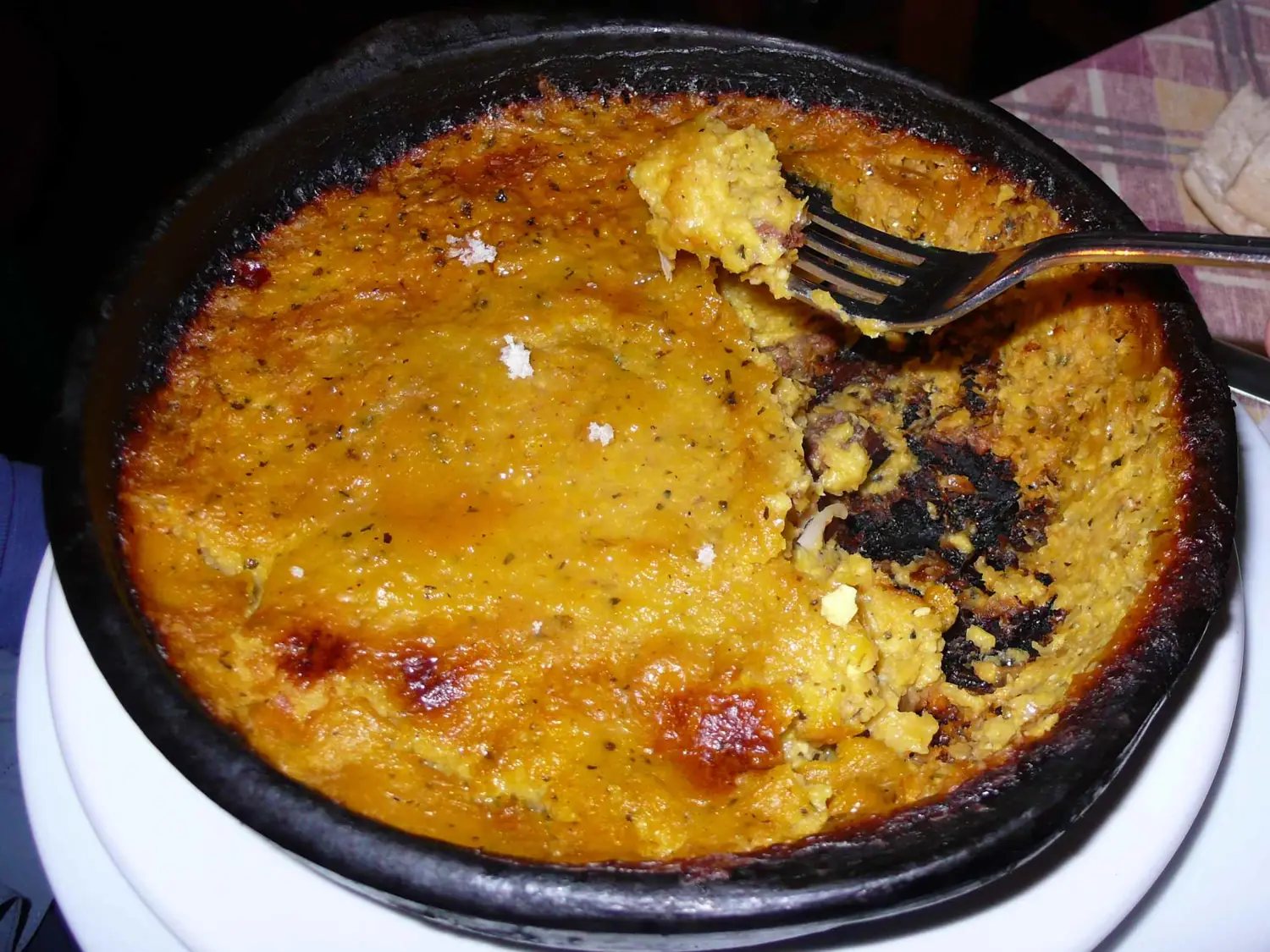
Pastel de choclo in a black clay dish, golden corn topping with a fork lifting a bite of the meat filling Chile flag Chile 1h 25m
Dinner •Chilean Countryside Heritage

Pastel de Choclo

This pastel de choclo recipe is Chile's beloved baked corn pie: a savoury filling of seasoned ground beef, chicken, hard-boiled egg, black olives and raisins, covered with a sweet, basil-flecked corn topping and baked until golden. Sweet meets savoury in every spoonful, and the clay dish it bakes in keeps it hot to the table. One serving is about 340 g.

Hearty & Satisfying

Sweet corn and basil topping over a savoury beef and chicken filling with egg, olives and raisins.

Pairs Well With
A fresh tomato salad and a glass of Chilean red wine.
Cazuela chilena — a bowl of chicken soup with a whole potato, a piece of pumpkin, corn on the cob and rice in a golden broth Chile flag Chile 1h 20m
Lunch •Chilean Home Kitchen Heritage

Cazuela Chilena

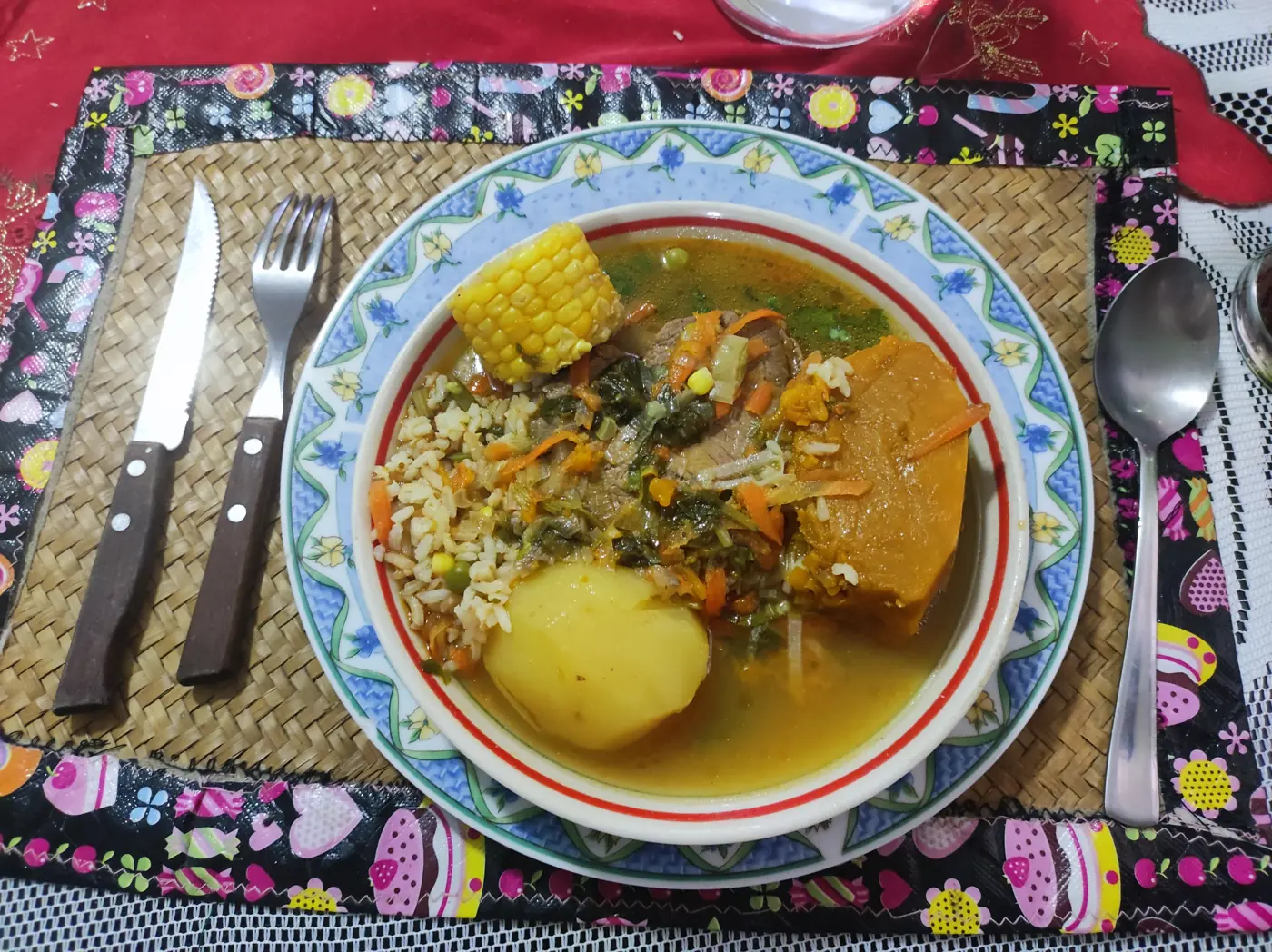
This cazuela chilena recipe is Chile's home-cooked comfort soup, and its identity is unmistakable: a big piece of orange pumpkin, a chunk of corn on the cob, a potato and a scoop of rice, all simmered with chicken in a clear, savoury broth. The pumpkin sweetens the broth as it cooks, the corn stays sweet and firm, and the rice turns the soup into a full lunch. One serving is about 750 g, broth and all.

Comfort & Warmth

Chicken simmered with pumpkin, corn, potato and rice in a light, cilantro-scented broth.

Pairs Well With
Crusty bread and pebre salsa, with the rice spooned into the bowl.
Soups & Broths
A completo chileno in a soft bun loaded with mashed avocado, mayonnaise and a mustard zigzag, with tomato peeking out at one end Chile flag Chile 25m
Snack & Tea •Chilean Street Food

Completo Chileno

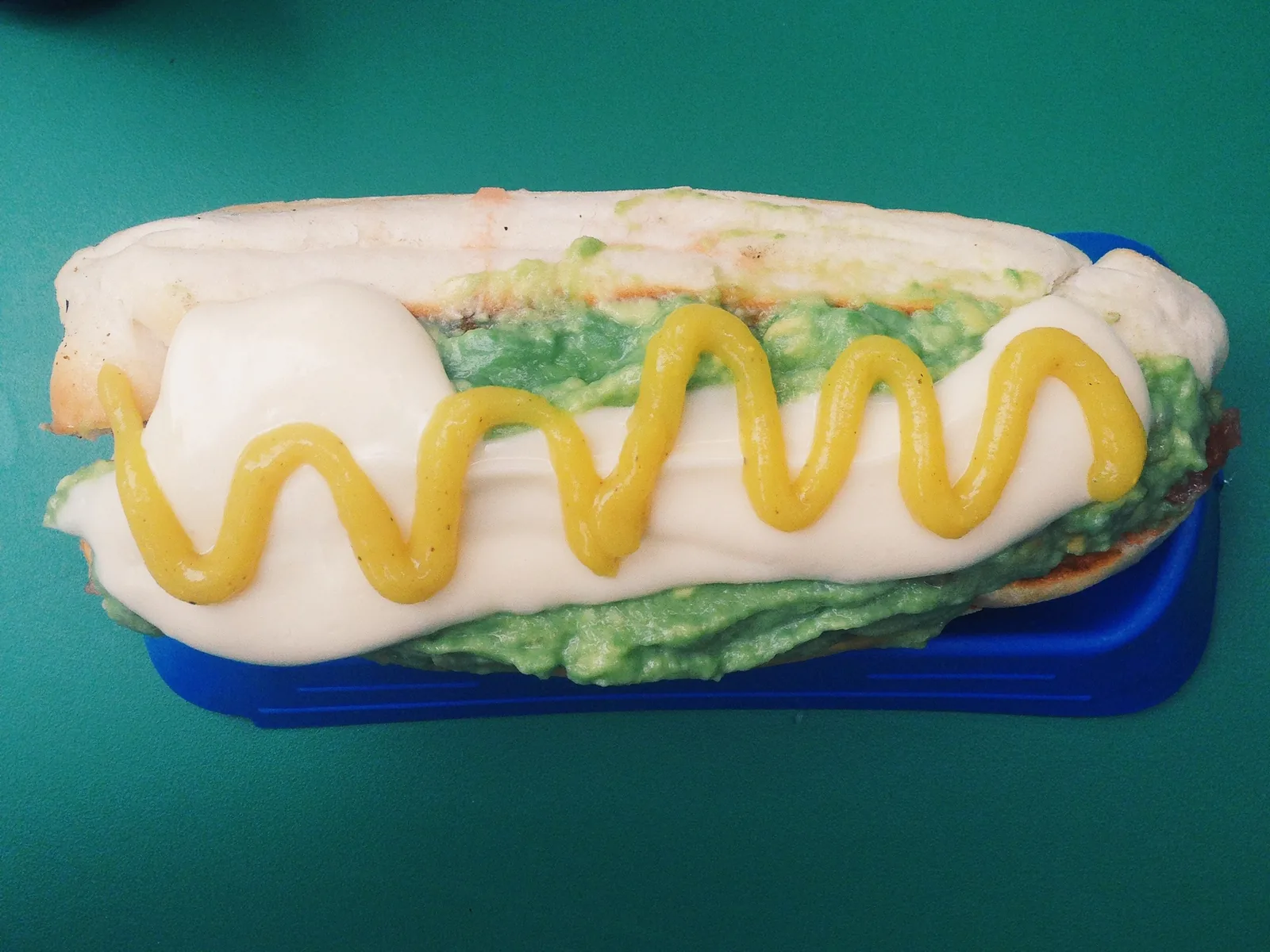
A completo chileno is Chile's answer to the hot dog: a pork frankfurter in a soft bun, buried under diced tomato, a thick layer of mashed avocado and a generous ribbon of mayonnaise. It is salty, creamy and gloriously messy, and it is eaten standing up, with both hands and no cutlery. One serving is about 229 g.

Quick & Satisfying

A pork frankfurter in a soft bun, loaded with tomato, mashed avocado and mayonnaise.

Pairs Well With
Crispy fries, a cold lemonade or a lager

The Dinner Gazette

Never wonder what’s for dinner again

One email a week with easy dinner ideas from around the world — ingredients, steps and nutrition, tested in our kitchen first.

Delivered every Thursday morning. Unsubscribe anytime.