Curated recipes from 193 countries  •  New seasonal Mediterranean issue out now

Overview

Empanada de Pino

Empanadas Chilenas de Pino, Chilean Beef Empanadas

This empanada de pino recipe bakes Chile's most loved empanada: a flaky lard pastry folded around pino, a juicy filling of ground beef and slow-cooked onions seasoned with paprika and cumin, finished inside with a wedge of hard-boiled egg, a black olive and a few raisins. One serving is about 246 g — one big, golden empanada.

Empanadas reached Chile with Spanish settlers and became the country's national dish, eaten above all at the Fiestas Patrias in September. The word pino is often traced to the Mapuche word pinu, and the filling is defined by equal weights of beef and onion, slow-cooked with paprika and cumin, with a wedge of hard-boiled egg, a black olive and a few raisins tucked inside each pastry. Baked empanadas are sealed with a folded edge, while fried ones take the rope crimp — a distinction Chilean cooks still keep.

Pairs well with: Pebre sauce, Chilean salad & a glass of red wine

Provenance

Chile flag Chile

Chile Heritage

Latin America & Caribbean

Time Dedication

1h 35m

60m prep • 35m cook

Batch Yield

8 Servings

605 kcal per serving

1 serving ≈ 246 g

Technical Skill

Intermediate

Intermediate (Pastry & Filling)

Meal Timing & Digestive Fit

Breakfast

Not Advised

Lunch

Prime Metabolic Fit

Dinner

Ideal Hearty Main

Snack & Tea

Inappropriate

Occasions: Fiestas Patrias (18 September), family lunches, picnics, street food, winter lunches Cost: Moderate — about $2–3 per serving at home
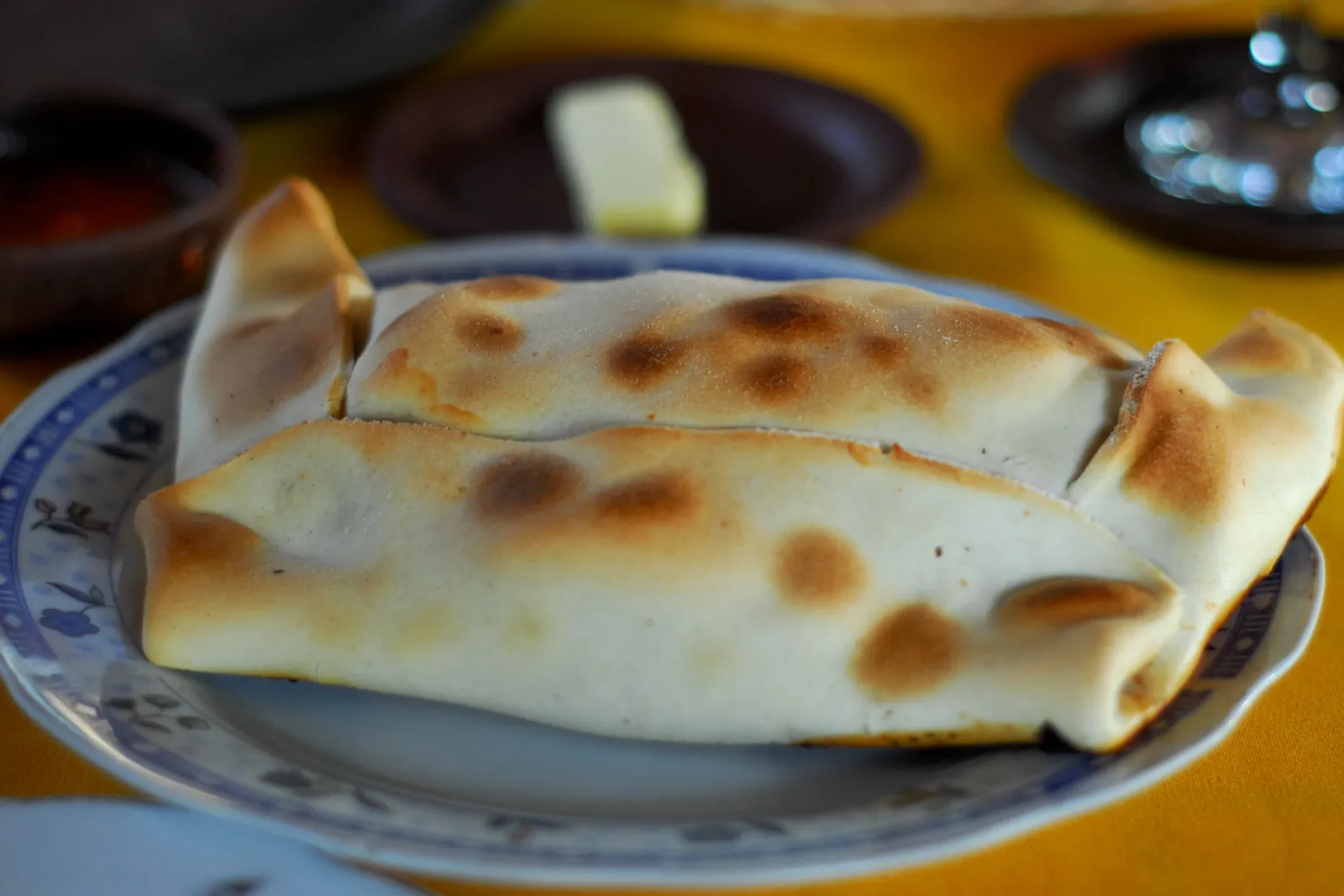
Two golden baked empanadas de pino on a blue-patterned plate, with a small bowl of pebre sauce behind them

Chile Heritage

Photo: J B from Champaign, IL, USA, CC BY 2.0, via Wikimedia Commons

The Heritage Formulary

Measured Ingredients

Estimated cost: Moderate — about $2–3 per serving at home (USD)

A traditional Chilean baked empanada: lard pastry around slow-cooked beef and onion pino, with egg, olive and raisins.

Execution Methodology & Culinary Technique

Step-by-Step Cooking Guide

Active 1h 35m
P

Cook the pino and rest the dough

60 minutes (plus chilling the pino, ideally overnight)

Dice the onions small and cook them low and slow with the beef, paprika, cumin and oregano until the onions melt into a glossy, savoury filling — that is the pino. While it cools, rub the warm lard into the flour, add the warm milk, water, salt and beaten egg, and knead into a soft, smooth dough. Rest the dough under a cloth while the pino cools completely.

Maestro Tip: Make the pino the day before if you can. Cold pino is firm, so it fills neatly and never makes the pastry soggy — this is the single most important secret of a good empanada de pino.

  1. 1

    Cook the pino

    25 minutes Medium heat, about 160°C (320°F)

    Heat the olive oil in a wide pan over medium heat and cook the diced onions, stirring often, for about 10 minutes until soft and translucent. Add the ground beef, breaking it up with a spoon, and cook for 10 minutes more until browned. Stir in the paprika, cumin, oregano, black pepper and salt, cook for 5 minutes until the mixture smells fragrant and the onions have melted into the beef, then take off the heat and cool completely.

    Cook the onions properly before the beef goes in — raw-tasting onion is the most common fault in a pino. The filling should look glossy, never watery.

    Done when: Onions are soft and sweet, beef is browned, and the filling is fragrant and glossy.

  2. 2

    Make the dough

    15 minutes Warm liquid, about 40°C (104°F)

    Put the flour and 10 g of the salt in a large bowl. Pour in the warm melted lard and rub it into the flour with your fingers until it looks like coarse crumbs. Add the beaten egg, then the warm milk and warm water a little at a time, kneading for about 5 minutes until you have a soft, smooth dough that does not stick to your hands. Cover with a clean cloth and rest for 20 minutes.

    Warm liquid, not hot, is the trick — hot liquid melts the fat and makes a tough pastry. The dough should feel soft like an earlobe.

    Done when: Dough is smooth, soft and no longer sticky.

  3. 3

    Roll and cut the rounds

    15 minutes No heat — room temperature, about 20°C (68°F)

    Divide the rested dough into 8 equal balls. On a lightly floured surface, roll each ball into a thin round about 20 cm (8 inches) across and about 3 mm thick. Keep the rounds covered with a cloth so they do not dry out.

    Roll from the centre outwards and turn the round a quarter-turn between rolls — that keeps it even and round without stretching.

    Done when: Eight even, thin rounds, about 20 cm across.

  4. 4

    Fill and fold

    15 minutes No heat — room temperature, about 20°C (68°F)

    Spoon about 3 tablespoons of the cold pino just below the centre of each round. Lay a quarter of a hard-boiled egg, one black olive and 5 or 6 raisins on top of the filling. Brush the edge with water, fold the dough over into a half-moon and press firmly to seal. Fold the edge over in small pleats, or pinch it into the classic Chilean fold, so the seam sits flat and tight.

    Cold filling, a dry edge and a firm seal are what stop leaks. If the edge feels greasy, wipe it with a damp cloth before folding.

    Done when: Each empanada is sealed tight with no gaps and no filling escaping.

  5. 5

    Egg wash and bake

    30 minutes 190°C (375°F)

    Heat the oven to 190°C (375°F). Set the empanadas on a baking tray lined with parchment, leaving space between them. Brush each one all over with the beaten egg wash. Bake for about 30 minutes until deep golden brown and puffed, and the filling inside reaches 71°C (160°F).

    Do not open the oven for the first 15 minutes — the pastry needs steady heat to puff. The egg wash is what gives the deep golden shine.

    Done when: Empanadas are deep golden, puffed and crisp; filling is piping hot.

  6. 6

    Rest and serve

    5 minutes Serving hot, above 60°C (140°F)

    Lift the empanadas onto a wire rack and rest for 5 minutes so the filling settles and the pastry stays crisp. Serve hot, one per person, with pebre sauce on the side.

    Cutting into one too soon lets the juices run out and softens the base — five minutes is enough.

    Done when: Empanadas hold their shape when picked up and steam gently when bitten.

Finishing Touches & Plating

Eat them hot, with pebre spooned over each bite or on the side. The sweet-savoury pino, the salty olive and the soft egg are meant to meet in the same mouthful.

Nutritional Physiology & Benefits

Nutrition

Energy

605

kcal / serving

Protein

28g

Complete AA

Carbs

61g

Complex

Fats

28g

Healthy

Per serving (8 servings · 1 serving ≈ 246 g)
Energy605 kcal
Protein28 g
Carbohydrates61 g
Fat28 g
Fibre3.7 g
Sugar7.5 g
Sodium711 mg
Per 100g
Energy246 kcal
Protein11.2 g
Carbohydrates24.7 g
Fat11.2 g
Fibre1.5 g
Sugar3 g
Sodium289 mg

Nutrition values are estimated — calculated from USDA FoodData Central values for the listed ingredients.

Vitamins & minerals: Beef and egg supply protein, iron, zinc and vitamin B12, the onions add vitamin C and folate, and the pastry supplies energy from wheat flour. All nutrition values are estimated.

A complete, filling lunch

One empanada carries about 28 g of protein and 605 calories, so a single pastry with a salad works as a full lunch that keeps you going for hours.

Onion-rich filling

The pino is half onion by weight, so each empanada brings the fibre, vitamin C and folate of a generous serving of slow-cooked onion along with the beef.

Baked, not fried

These empanadas are baked, so the pastry stays light and crisp without the extra oil of frying, and the lard pastry needs no added fat beyond the wash.

Food Pairings

What to Eat With

To optimize nutrient absorption and elevate the sensory depth, pair with these authentic accompaniments:

Sauces

Pebre sauce

Chile's fresh tomato, onion, cilantro and chilli sauce is the classic partner — its sharp, herby bite cuts through the rich beef pastry and wakes up the pino.

Vegetables

Ensalada chilena (tomato and onion salad)

Thinly sliced tomato and onion with a little oil and salt is the traditional side; its cool acidity balances the warm, fatty pastry in every bite.

Drinks

Chilean red wine or chicha

A glass of Chilean red wine is the Fiestas Patrias pairing — its tannins stand up to the beef and lard pastry, while chicha is the festive, traditional alternative.

Full Menus

A light soup starter

A small bowl of clear vegetable soup before the empanada makes a full lunch without overloading the plate, since the pastry itself is already rich and filling.

Complete menu

Serve one hot empanada de pino per person with pebre sauce, ensalada chilena on the side and a glass of Chilean red wine; finish with fresh fruit.

Digestive Guardrails

What NOT to Combine

To prevent digestive distress, sluggishness, or palate clash, avoid pairing the dish with these elements:

Very salty sides

One empanada already carries about 711 mg of sodium, so salty cured meats, salty cheese or extra soy sauce on the same plate can push sodium far higher. This is general information, not medical advice — ask a clinician about your own sodium limits.

Heavy, creamy desserts straight after

The lard pastry and beef filling are rich and filling on their own. A heavy cream dessert straight after often feels too much; fresh fruit is a lighter finish. This is general information, not medical advice.

General information only, not medical advice — consult a doctor for personal dietary decisions.

Who Should Eat It

Who Should Eat

  • General adultsOne empanada with a salad is a complete lunch. It is rich and salty, so balance the rest of the day with lighter foods.
  • ChildrenSuitable from about age 3 in a half portion, with the olive and raisins easy to pick out if a child dislikes them. Skip the pebre for young children and let the empanada cool a little first.
  • ElderlySoft, easy to chew once cooled slightly, and a good source of protein and iron. Cut into halves and serve with salad rather than a whole empanada if appetite is small.
  • Pregnant womenSafe when the beef filling is cooked through to 71°C (160°F) and the empanada is served hot. The hard-boiled egg must be fully cooked; ask your clinician if you have concerns about salt or listeria-safe reheating.
  • Breastfeeding womenA nourishing, energy-rich meal that fits well during breastfeeding. Drink water alongside it and keep to one empanada because of the salt.
  • AthletesGood after training: about 28 g of protein and 61 g of carbohydrates per empanada support recovery. Add the tomato salad and a second empanada if you need more energy.
  • Weight gainA good choice — energy-dense, protein-rich and easy to eat. Two empanadas with salad make a substantial lunch.
  • Weight lossWorkable at about 605 calories each, but the pastry is filling and the raisins add sugar. Take one empanada, load the plate with tomato salad, and skip a second one if you are counting calories.

Health Conditions — Adjust or Avoid

Conditions

  • DiabetesAbout 61 g of carbohydrates per empanada, mostly from the pastry, so portion size matters and blood sugar should be monitored. One empanada with plenty of salad is easier to manage than two; ask your clinician or dietitian for a portion that fits your plan.
  • High blood pressureAt about 711 mg of sodium per serving, this is a salty dish. Skip extra salty sides and keep to one empanada. Ask your clinician about your sodium limit.
  • Kidney diseaseThe dish is high in protein and sodium, and the beef adds potassium and phosphorus, all of which may need limiting in kidney disease. This dish may not fit a renal diet — ask your clinician or renal dietitian before eating it.
  • GoutBeef is moderate in purines, so people prone to gout should keep portions moderate and not eat empanadas every day; ask your clinician for personal guidance.
  • Stomach issuesThe rich lard pastry and the onion-heavy filling can feel heavy and may trigger reflux or bloating. Eat a small portion slowly and skip the spicy pebre during a flare-up; ask your clinician if symptoms persist.
  • Cardiovascular diseaseThe pastry is made with lard and the filling is beef, so saturated fat is significant. An occasional empanada fits most patterns, but it is not an everyday food; ask your clinician about your portion and frequency limits.
  • Fatty liverA rich pastry with beef and lard is high in saturated fat and energy, so keep the portion to one empanada with plenty of salad; ask your clinician or dietitian for guidance.
  • Food allergiesContains gluten (wheat flour), egg and milk. The filling also contains olives and raisins. If you have a food allergy, confirm every ingredient before eating.
  • Special therapeutic dietsContains gluten, egg and milk, so it does not fit gluten-free, egg-free or dairy-free diets, and the salt needs adjusting for low-sodium plans. Ask your clinician or dietitian to adapt the recipe for your diet.

If you have a medical condition, consult your doctor before changing your diet.

Storage & Use

Storage & Use

How to store
Cool completely, then store in an airtight container.
In the fridge
3–4 days in the refrigerator.
In the freezer
Up to 3 months, unbaked or baked; wrap individually and freeze flat.
How to reheat
Reheat in a 180°C (350°F) oven for 10–12 minutes until hot through, to 74°C (165°F); a microwave softens the pastry.
Freezing recommended
Yes — freeze unbaked for the best pastry, then bake from frozen for 5 extra minutes.
Signs it has spoiled
Sour smell, soft or slimy pastry, or mould on the surface.

More recipes to explore

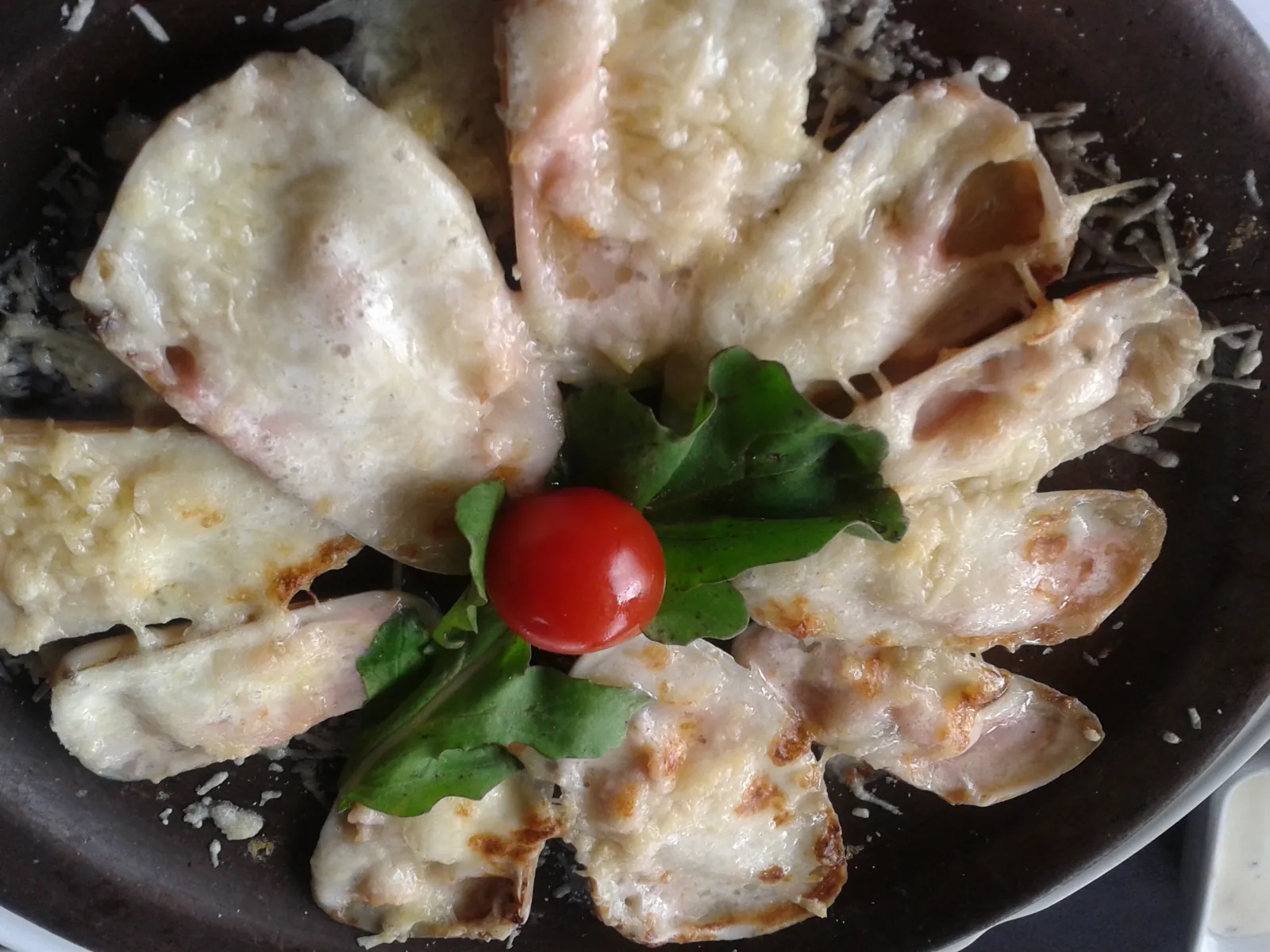
Machas a la parmesana — razor clams in their shells topped with melted golden Parmesan, garnished with greens and a cherry tomato Chile flag Chile 35m
Lunch •Valparaíso Coast Heritage

Machas a la Parmesana

This machas a la parmesana recipe bakes sweet Chilean razor clams in their own shells with garlic butter, a splash of dry white wine and a blanket of grated Parmesan that turns golden under the grill. It is the classic starter of the Valparaíso coast: briny, buttery and ready in minutes. One serving is about 200 g, six shells per person.

Coastal & Savory

Sweet razor clams baked in their shells with garlic butter, white wine and a golden Parmesan crust.

Pairs Well With
Crusty bread and lemon wedges, with a glass of dry white wine.
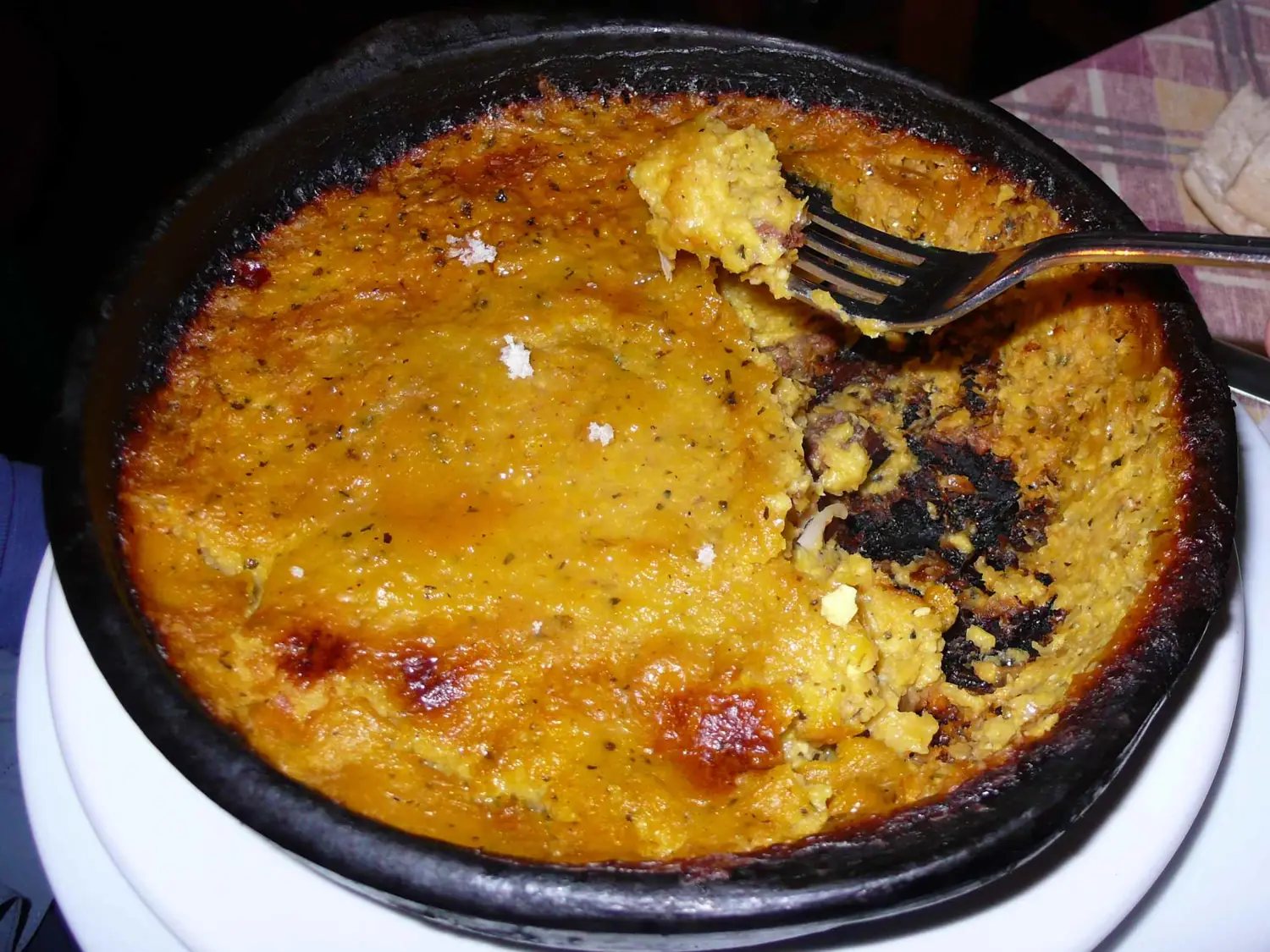
Pastel de choclo in a black clay dish, golden corn topping with a fork lifting a bite of the meat filling Chile flag Chile 1h 25m
Dinner •Chilean Countryside Heritage

Pastel de Choclo

This pastel de choclo recipe is Chile's beloved baked corn pie: a savoury filling of seasoned ground beef, chicken, hard-boiled egg, black olives and raisins, covered with a sweet, basil-flecked corn topping and baked until golden. Sweet meets savoury in every spoonful, and the clay dish it bakes in keeps it hot to the table. One serving is about 340 g.

Hearty & Satisfying

Sweet corn and basil topping over a savoury beef and chicken filling with egg, olives and raisins.

Pairs Well With
A fresh tomato salad and a glass of Chilean red wine.
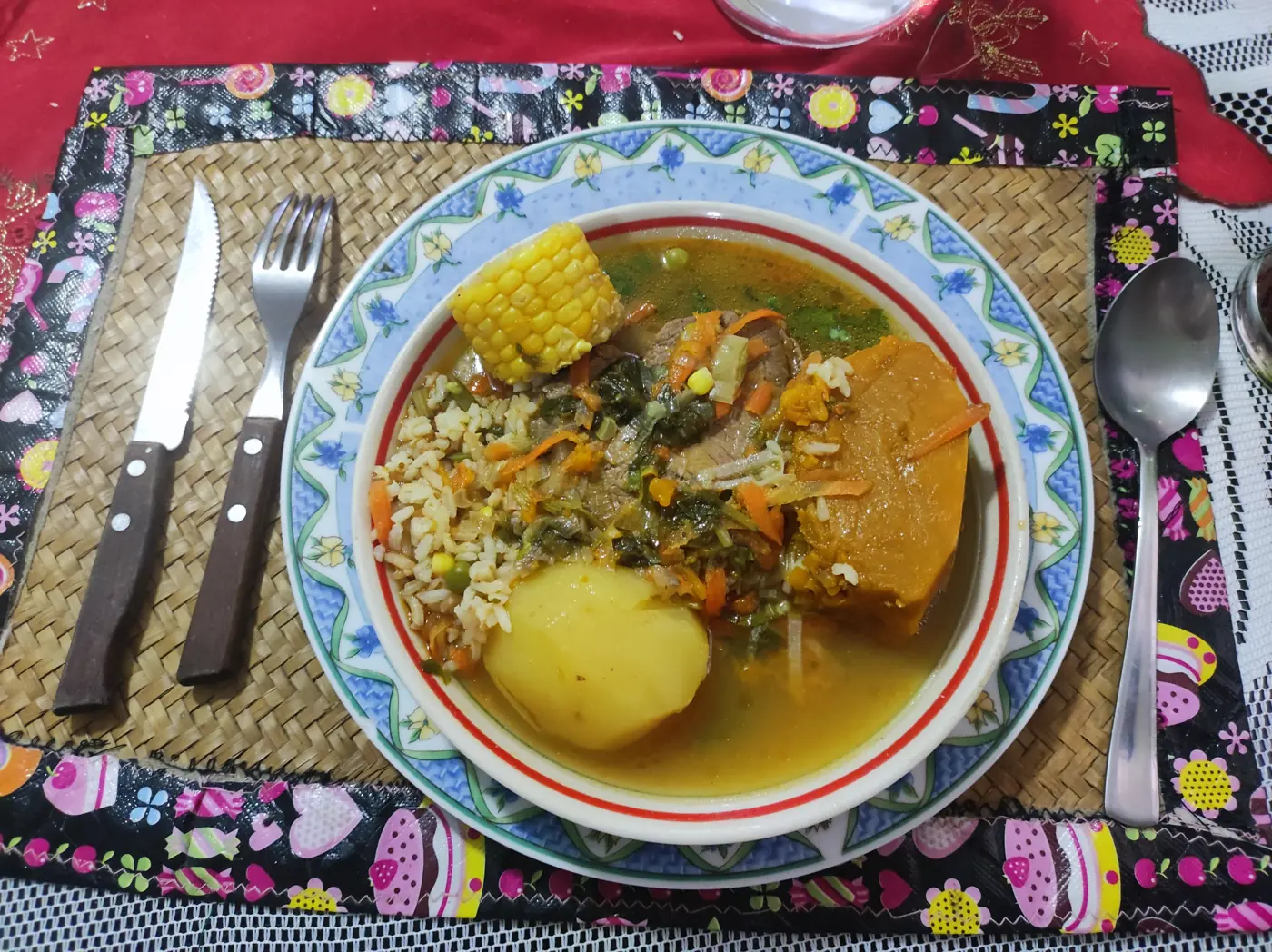
Cazuela chilena — a bowl of chicken soup with a whole potato, a piece of pumpkin, corn on the cob and rice in a golden broth Chile flag Chile 1h 20m
Lunch •Chilean Home Kitchen Heritage

Cazuela Chilena

This cazuela chilena recipe is Chile's home-cooked comfort soup, and its identity is unmistakable: a big piece of orange pumpkin, a chunk of corn on the cob, a potato and a scoop of rice, all simmered with chicken in a clear, savoury broth. The pumpkin sweetens the broth as it cooks, the corn stays sweet and firm, and the rice turns the soup into a full lunch. One serving is about 750 g, broth and all.

Comfort & Warmth

Chicken simmered with pumpkin, corn, potato and rice in a light, cilantro-scented broth.

Pairs Well With
Crusty bread and pebre salsa, with the rice spooned into the bowl.
Soups & Broths
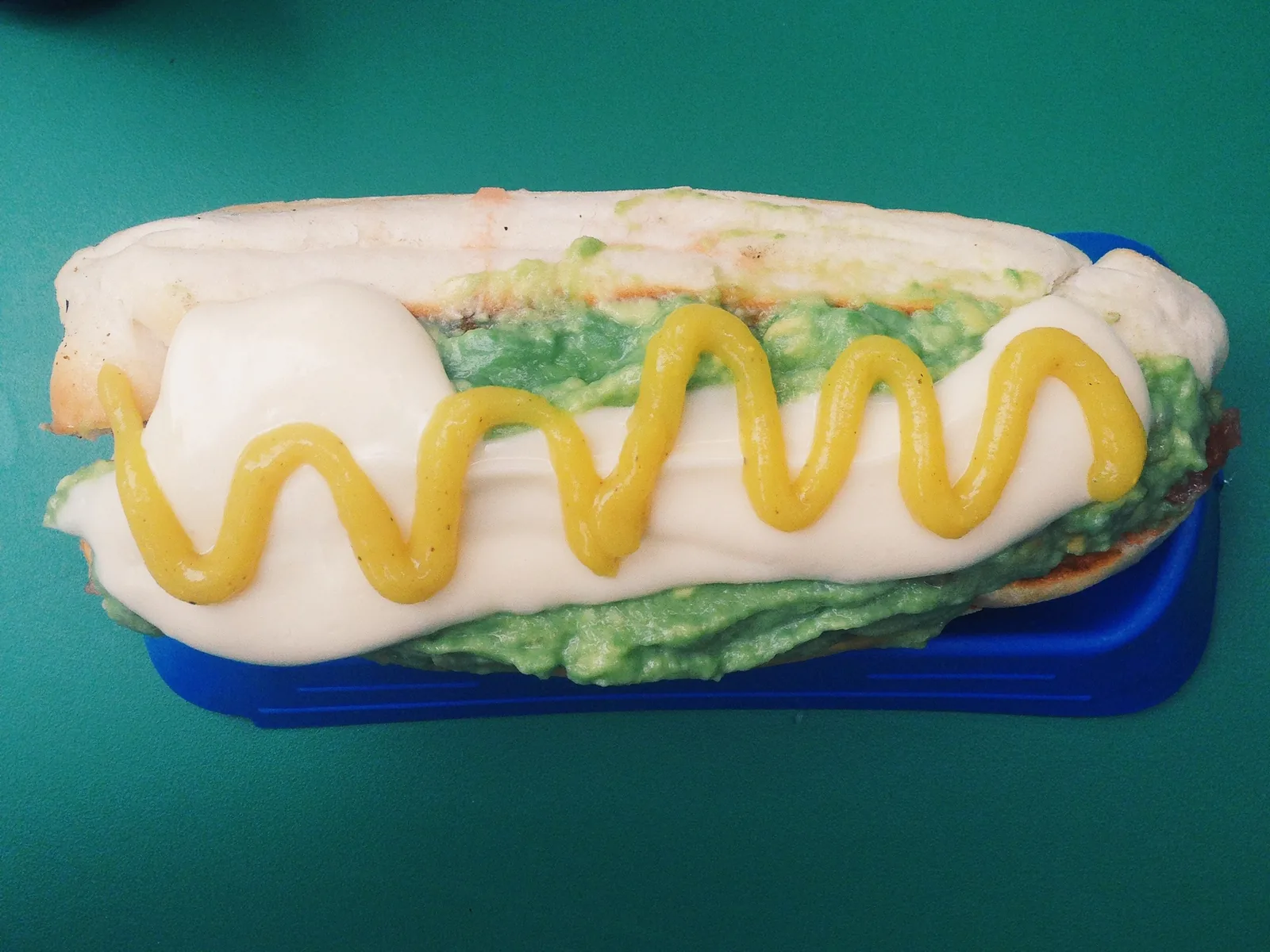
A completo chileno in a soft bun loaded with mashed avocado, mayonnaise and a mustard zigzag, with tomato peeking out at one end Chile flag Chile 25m
Snack & Tea •Chilean Street Food

Completo Chileno

A completo chileno is Chile's answer to the hot dog: a pork frankfurter in a soft bun, buried under diced tomato, a thick layer of mashed avocado and a generous ribbon of mayonnaise. It is salty, creamy and gloriously messy, and it is eaten standing up, with both hands and no cutlery. One serving is about 229 g.

Quick & Satisfying

A pork frankfurter in a soft bun, loaded with tomato, mashed avocado and mayonnaise.

Pairs Well With
Crispy fries, a cold lemonade or a lager

The Dinner Gazette

Never wonder what’s for dinner again

One email a week with easy dinner ideas from around the world — ingredients, steps and nutrition, tested in our kitchen first.

Delivered every Thursday morning. Unsubscribe anytime.