Curated recipes from 193 countries  •  New seasonal Mediterranean issue out now

Overview

Feijoada Santomense

São Tomé Bean and Pork Stew

This feijoada santomense recipe is São Tomé's slow pot of black beans, pork shoulder, beef, smoked sausage and bacon, simmered with onion, garlic, bay leaf and a spoonful of red palm oil until the beans are tender and the broth is thick. It is the island's take on the Portuguese bean stew, rich, smoky and made for sharing. One serving is about 320 g.

Feijoada came to São Tomé and Príncipe with Portuguese rule, and the islands made it their own: a slow pot of beans with pork, beef and sausages, enriched with red palm oil and island spices, and served with rice. Travel guides call it the island's wholesome bean stew, made with either pork or fish and often served with seasoned rice, and it is found in most local eateries. Island versions vary — some use white beans, some add fish — but the heart of the dish is the same everywhere: dried beans simmered for hours with whatever pork the household has, until the broth turns thick and dark.

Pairs well with: Steamed rice, fried plantain and orange slices

Provenance

São Tomé and Príncipe flag São Tomé and Príncipe

São Tomé Island Stew

African Heritage

Time Dedication

2h 50m

20m prep • 150m cook

Batch Yield

6 Servings

779 kcal per serving

1 serving ≈ 320 g

Technical Skill

Intermediate

Medium (Slow Pot)

Meal Timing & Digestive Fit

Breakfast

Not Advised

Lunch

Hearty Midday Main

Dinner

Ideal Hearty Main

Snack & Tea

Inappropriate

High Protein Occasions: Family Sundays, celebrations, big gatherings, cold evenings Cost: Moderate — about $4–5 per serving at home
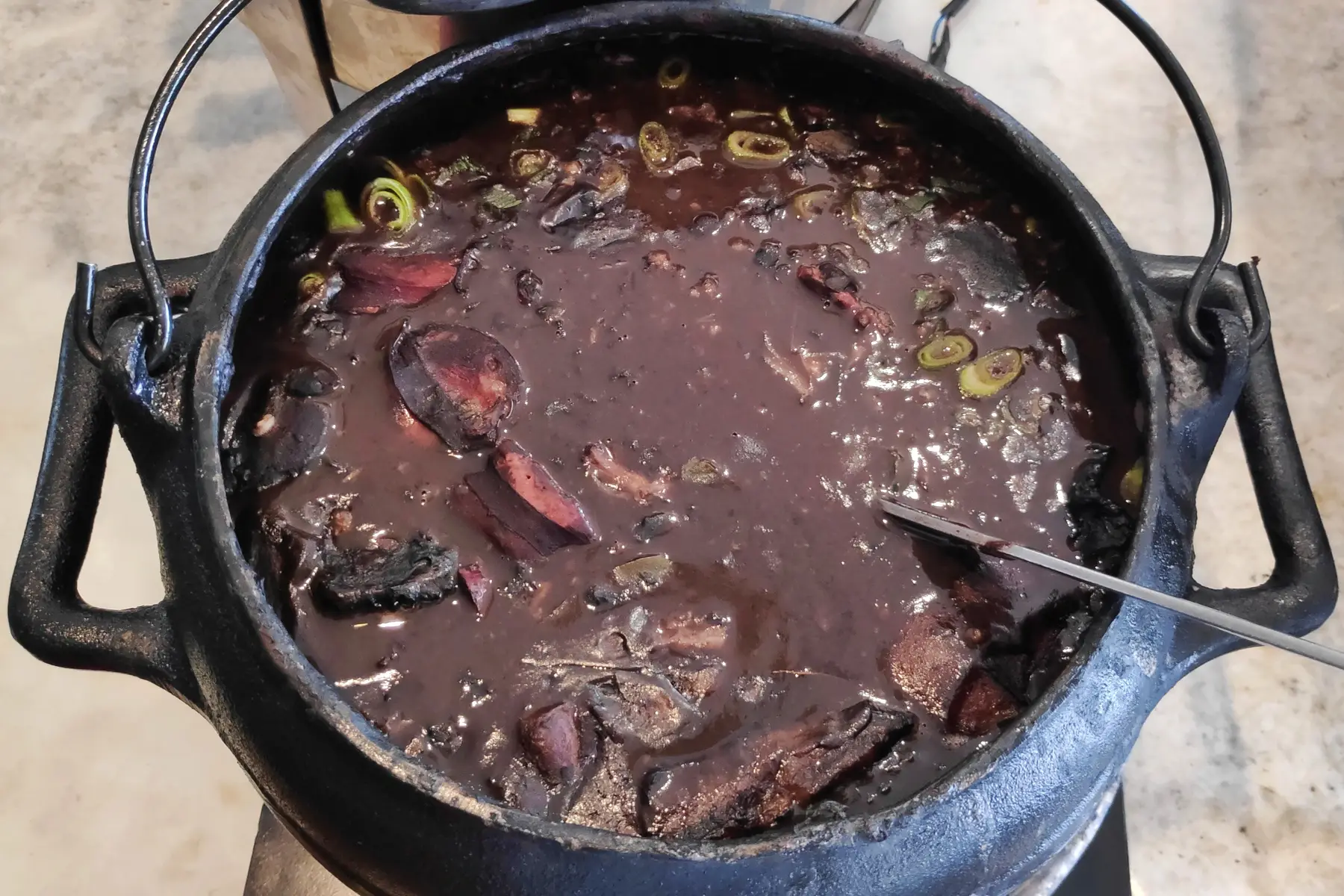
A black pot of feijoada, a dark bean and meat stew with pieces of sausage and pork

São Tomé Island Stew

Photo: Melsj, CC BY-SA 4.0, via Wikimedia Commons

The Heritage Formulary

Measured Ingredients

Estimated cost: Moderate — about $4–5 per serving at home (USD)

A good feijoada santomense is judged by its broth: thick enough to coat a spoon, dark and glossy, with the beans tender but still whole.

Execution Methodology & Culinary Technique

Step-by-Step Cooking Guide

Active 2h 50m
P

Prep Stage: Soak the Beans, Cut the Meats

20 Mins • Knife Work (plus overnight soaking)

The night before, pick over the beans, rinse them and soak in plenty of cold water. On the day, drain and rinse the beans, cut the pork and beef into chunks, slice the sausage, dice the bacon, and chop the onion and garlic. Everything else is measured and ready before the pot goes on the heat.

Maestro Tip: Do not skip the overnight soak: soaked beans cook evenly and in half the time, and the soaking water, which is discarded, takes some of the compounds that cause gas with it.

  1. 1

    Soak the Beans

    8 Hours Room temperature, about 20°C (68°F)

    Pick over the dried beans and throw out any stones or broken ones. Rinse, cover with plenty of cold water, and leave to soak overnight, at least 8 hours. Drain and rinse well before cooking.

    Soak in a big bowl — the beans will more than double in size, and a small bowl will overflow.

    Done when: The beans are plump and doubled in size, with no stones left.

  2. 2

    Brown the Meats

    15 Mins Medium-high heat, about 180°C (350°F)

    Heat the red palm oil in a large heavy pot over medium-high heat. Brown the pork and beef chunks in batches for about 8 minutes, until coloured on all sides, then add the bacon and fry for 3 more minutes. Lift the meats out and set aside.

    Brown in batches: a crowded pot steams the meat instead of browning it, and browned meat is where the flavour comes from.

    Done when: The meats are browned on the outside, with a dark, sticky fond on the bottom of the pot.

  3. 3

    Build the Pot and Simmer

    2 Hours Gentle simmer, about 95°C (200°F)

    Add the onion to the same pot and fry for 5 minutes until soft, scraping up the browned bits. Add the garlic and cook for 1 minute, then return the meats to the pot with the drained beans, the bay leaves and enough water to cover by 3 cm. Bring to a gentle simmer, cover, and cook for about 2 hours, topping up the water if the beans start to show.

    Keep the pot at a gentle simmer, not a rolling boil — boiling splits the beans and clouds the broth.

    Done when: The beans are tender and creamy inside, the meats are falling apart, and the broth is dark and rich.

  4. 4

    Thicken and Add the Sausage

    30 Mins Gentle simmer, about 95°C (200°F)

    Lift out a ladleful of beans, mash them roughly with a fork, and stir them back into the pot — this thickens the broth. Add the sliced sausage and simmer for 30 more minutes, uncovered, until the stew is thick enough to coat a spoon. The meats must be above 74°C (165°F) throughout.

    Mashing a ladleful of beans is the traditional way to thicken feijoada; it gives body without flour or starch.

    Done when: The stew is thick and glossy, the sausage is heated through, and the beans hold their shape.

  5. 5

    Season and Rest

    10 Mins Hot, about 80°C (176°F)

    Fish out the bay leaves. Taste and add salt a little at a time — the sausage and bacon are already salty — then the pepper. Rest the pot, covered, for 10 minutes before serving so the flavours settle.

    Salt at the end, never at the start: salted cooking water toughens bean skins and slows their cooking.

    Done when: The stew tastes rich, smoky and well seasoned, with the beans tender and the broth thick.

Finishing Touches & Plating

Serve the feijoada hot in deep bowls, with steamed rice, fried plantain and orange slices on the side. The orange is the traditional fresh note against the rich stew, and the rice soaks up the broth.
Nutritional Physiology & Benefits

Nutrition

Energy

779

kcal / serving

Protein

48g

Complete AA

Carbs

47g

Complex

Fats

44g

Healthy

Per serving (6 servings · 1 serving ≈ 320 g)
Energy779 kcal
Protein48 g
Carbohydrates47 g
Fat44 g
Fibre11.1 g
Sugar1.6 g
Sodium975 mg
Per 100g
Energy244 kcal
Protein15.1 g
Carbohydrates14.7 g
Fat13.7 g
Fibre3.5 g
Sugar0.5 g
Sodium305 mg

Nutrition values are estimated — calculated from USDA FoodData Central values for the listed ingredients.

Vitamins & minerals: Iron and folate (black beans), vitamin B12 and zinc (pork and beef), vitamin B6 (pork). Nutrition values are estimated.

High in Protein and Fibre

One serving gives about 48 g of protein and 11 g of fibre from the beans and meats, which helps keep you full for hours.

Iron and Folate

Black beans are a natural source of iron and folate, nutrients the body uses to make red blood cells.

Slow Food, Real Ingredients

Beans, pork, beef and sausage simmered in one pot — a short list of real ingredients, with the body of the stew coming from the beans themselves, not from flour or thickeners.

Food Pairings

What to Eat With

To optimize nutrient absorption and elevate the sensory depth, pair with these authentic accompaniments:

Sides

Steamed Rice

Plain steamed rice is the classic partner: it soaks up the thick bean broth and turns the stew into a complete, filling meal.

Orange Slices

Fresh orange is the traditional fresh note with feijoada: its acidity cuts through the richness and refreshes the palate.

Vegetables

Fried Plantain

Sweet fried plantain balances the salty, smoky stew with a caramel note, and its softness contrasts with the firm beans.

Drinks

Cold Beer or Sparkling Water

A cold beer is the table choice with a rich stew; sparkling water with lime does the same job of cutting the richness.

Complete menu

Serve the feijoada as the main dish with steamed rice, fried plantain and orange slices; a cold beer on the side and a slice of bolo de banana to finish.

Digestive Guardrails

What NOT to Combine

To prevent digestive distress, sluggishness, or palate clash, avoid pairing the dish with these elements:

A Second Heavy, Salty Course

One serving already carries about 975 mg of sodium, so skip salty sides or a second rich course with it. This is general information, not medical advice.

Salting the Beans at the Start

Salt added early toughens bean skins and can double the cooking time; season the pot only at the end, once the beans are tender.

General information only, not medical advice — consult a doctor for personal dietary decisions.

Who Should Eat It

Who Should Eat

  • General adultsA hearty, filling dinner — rich and smoky, about 779 kcal per serving with rice on the side.
  • ChildrenSuitable from age 5+ in a small portion; the beans are soft and the meats are tender, though the stew is rich.
  • ElderlyGood in a modest portion — the beans and meats are soft and easy to chew; serve with rice.
  • Pregnant womenGenerally suitable if the meats are cooked right through; the beans add iron and folate.
  • Breastfeeding womenGenerally suitable; the protein, iron and folate support recovery — keep the portion moderate.
  • AthletesA strong post-training meal: about 48 g protein and 47 g carbohydrate per serving with rice.
  • Weight gainA good choice — a generous serving with rice and fried plantain.
  • Weight lossKeep the serving small and the rice portion modest; the stew is energy-dense at about 779 kcal.

Health Conditions — Adjust or Avoid

Conditions

  • DiabetesOne serving carries about 47 g of carbohydrate, mostly from the beans; keep the rice portion small. Ask your clinician about your carbohydrate target.
  • High blood pressureOne serving carries about 975 mg of sodium, so keep the portion modest and skip salty sides. Ask your clinician about your daily sodium limit.
  • Kidney diseaseBeans and meats are high in protein and potassium, so keep the portion small if your clinician has advised limits, and ask about portion size.
  • GoutEat occasionally and in smaller portions — pork, beef and sausage are high in purines. Ask your clinician if gout flares are frequent.
  • Stomach issuesBeans can cause gas and bloating; the overnight soak and discarding the soaking water help, and a small portion is easier to digest.
  • Cardiovascular diseaseThe pork, sausage and bacon add saturated fat and sodium, so enjoy occasionally and keep the portion modest. Ask your clinician about how often it fits your diet.
  • Fatty liverKeep the portion modest and occasional; the stew is rich in fat and sodium. Ask your clinician about frequency.
  • Food allergiesContains pork and beef. Do not serve to anyone with a pork or beef allergy; the stew is not suitable for vegetarians.
  • Special therapeutic dietsIf you follow a prescribed low-sodium diet, use unsmoked sausage, leave out the bacon and use half the salt, and check with your clinician.

If you have a medical condition, consult your doctor before changing your diet.

Storage & Use

Storage & Use

How to store
Cool quickly and store in an airtight container.
In the fridge
4 days at 4°C (39°F) or below; the stew tastes even better the next day.
In the freezer
Up to 3 months in portions.
How to reheat
Reheat in a pan over medium heat, stirring, until steaming hot throughout, to 74°C (165°F); add a splash of water if it has thickened too much.
Freezing recommended
Yes — it freezes very well in portions.
Signs it has spoiled
Sour smell, slimy surface, or mould on top.

More recipes to explore

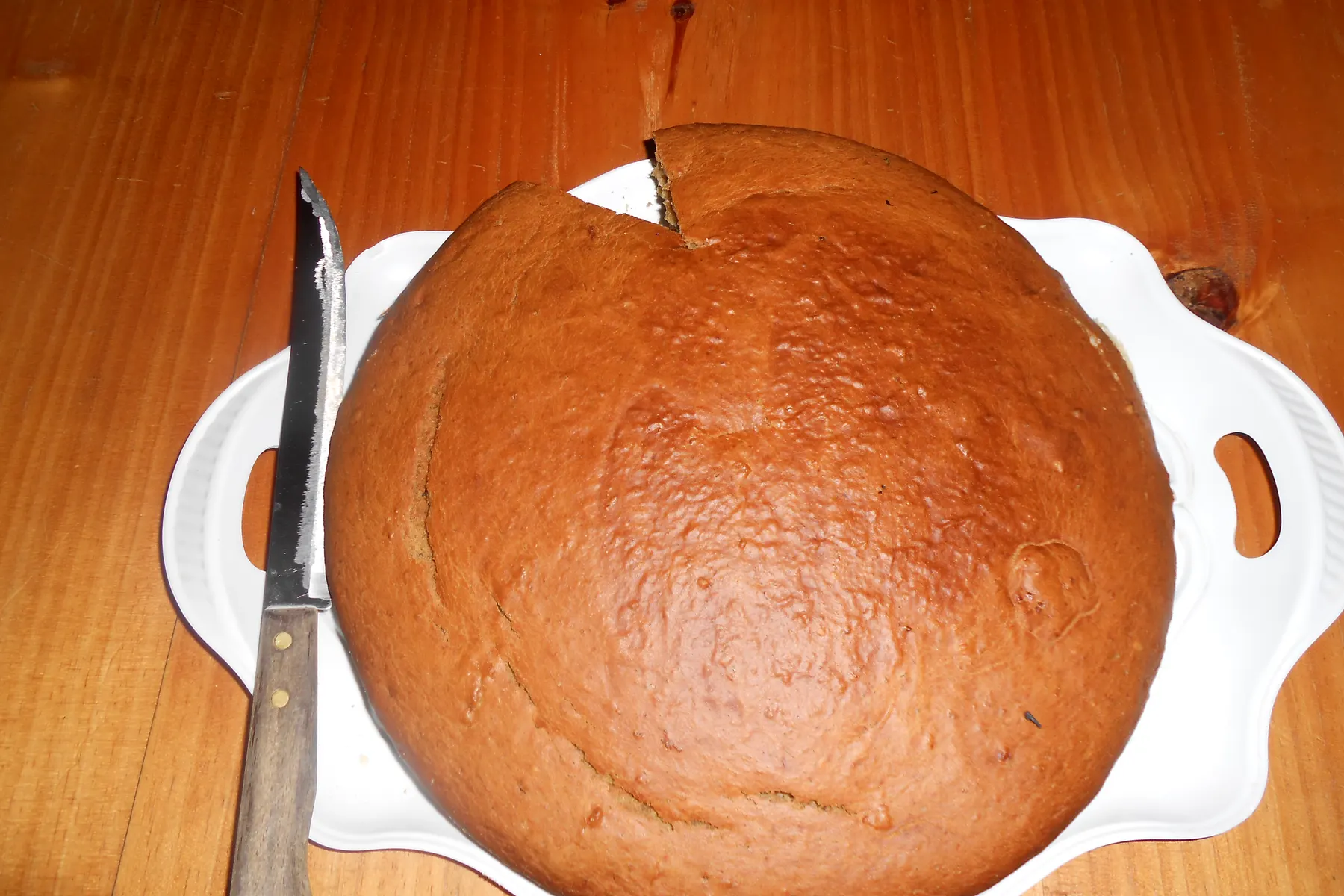
A whole round golden-brown banana cake on a white serving plate with a knife beside it, on a wooden table São Tomé and Príncipe flag São Tomé and Príncipe 1h 10m
Snack & Tea •São Tomé Island Dessert

São Tomé Bolo de Banana

This bolo de banana recipe makes a soft, golden banana sponge cake, baked in a round pan and served in slices. Ripe bananas are mashed straight into the batter, so every slice is moist and full of banana flavour, with a little cinnamon and nutmeg warming it through. The top bakes plain and golden brown, and the cake is at its best served warm or at room temperature with coffee. One serving is about 110 g.

Sweet & Spiced

A soft, golden banana sponge cake, spiced with cinnamon and nutmeg.

Pairs Well With
Warm with a cup of São Tomé coffee or a scoop of vanilla ice cream
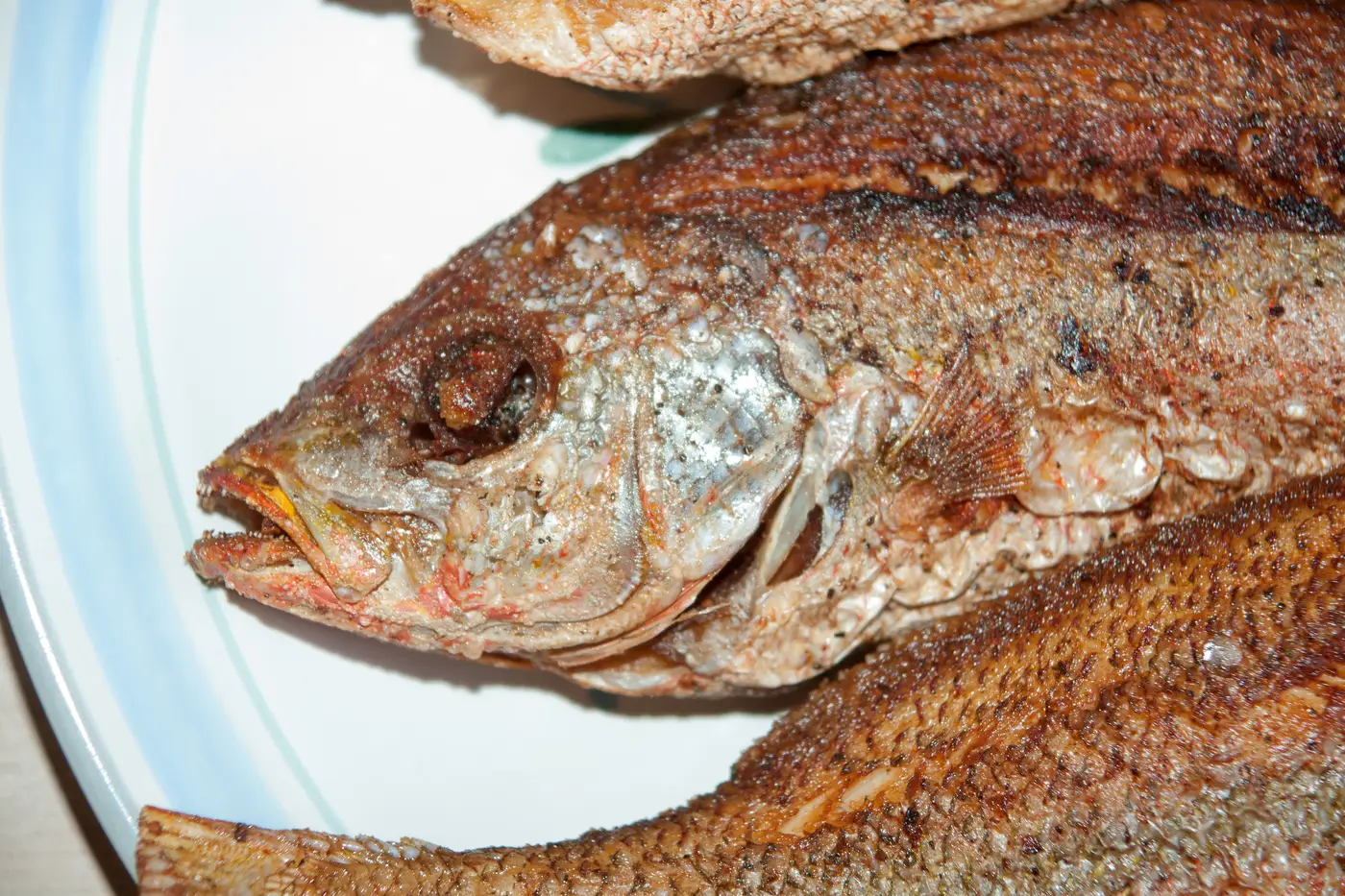
Three whole golden fried red snapper on a plate, crisp and ready to eat São Tomé and Príncipe flag São Tomé and Príncipe 35m
Dinner •São Tomé Island Fish Supper

São Tomé Fried Fish with Molho Cru

This sao tome fried fish recipe fries red snapper fillets until golden and crisp, then spoons over molho cru — a raw sauce of onion, tomato, malagueta chilli, lime and olive oil that is never cooked. The hot, crunchy fish and the cool, sharp sauce belong together, and the whole plate comes together in about 35 minutes. One serving is about 270 g.

Crisp & Zesty

Golden fried snapper fillets served with a raw onion, tomato and chilli sauce that cuts through the richness.

Pairs Well With
Steamed rice, fried plantain and a cold beer
High Protein
Bœuf bourguignon — French beef braised in red wine France flag France 4h
Dinner •Burgundy Terroir

Bœuf Bourguignon

Beef braised gently in red wine until the connective tissue melts into a velvet, gelatin-rich sauce — the classic Burgundy Sunday dinner.

Cellular Repair

Beef braised in red wine until spoon-tender, with mushrooms and pearl onions.

Pairs Well With
Parsnip Purée & Steamed French Haricots Verts
High Protein
Vietnamese braised pork belly with golden eggs in caramel sauce Vietnam flag Vietnam 1h 45m
Dinner •One Pot

Vietnamese Braised Pork and Eggs

Pork belly slowly braised in coconut water and caramel until meltingly tender, with golden eggs that soak up the sweet-savoury sauce — the Vietnamese family dish that tastes better the next day.

Comfort & Sustained Energy

Slow-braised pork belly and eggs in coconut water and caramel.

Pairs Well With
Steamed rice & pickled mustard greens
High Protein

The Dinner Gazette

Never wonder what’s for dinner again

One email a week with easy dinner ideas from around the world — ingredients, steps and nutrition, tested in our kitchen first.

Delivered every Thursday morning. Unsubscribe anytime.