
Curated recipes from 193 countries  •  New seasonal Mediterranean issue out now

Overview

Fijian Lovo

Lovo, Fijian Earth-Oven Feast

This lovo recipe brings Fiji's earth-oven feast into a home kitchen: pork shoulder and chicken jointed and rubbed with garlic and salt, wrapped in banana leaves with taro, cassava, sweet potato and coconut-cream palusami parcels, then slow-roasted until everything is tender and smoky. Traditionally the parcels are buried over white-hot river stones in a pit dug in the ground; here a low oven and foil do the same job, and the recipe says so plainly. One serving is about 591 g.

The lovo is Fiji's earth oven, and it predates written records: pits lined with coconut husks and heated river stones, food wrapped in leaves and buried to cook, were already the Fijian way of feasting when the missionaries Thomas Williams and James Calvert described them in Fiji and the Fijians in 1860. Archaeological fieldwork on Nayau Island in Lau in 2001–2003 found lovo ash and bones from prehistoric times. Today the lovo is still the centre of Fijian celebrations — weddings, funerals, Christmas and village feasts — where pork, chicken, fish, taro, cassava and palusami are cooked together and shared from banana leaves.

Pairs well with: Kokoda to start, with rourou or a crisp salad and cold coconut water on the side

Provenance

Fiji flag Fiji

Fiji's Celebration Feast

Oceania & Pacific

Time Dedication

4h

60m prep • 180m cook

Batch Yield

8 Servings

920 kcal per serving

1 serving ≈ 591 g

Technical Skill

Advanced

Advanced (Slow Roast)

Meal Timing & Digestive Fit

Breakfast

Not Advised

Lunch

Hearty Midday Main

Dinner

Ideal Hearty Main

Snack & Tea

Inappropriate

High Protein Occasions: Weddings, Christmas, village feasts, Sunday family gatherings, celebrations Cost: Low — about $4–5 per serving at home
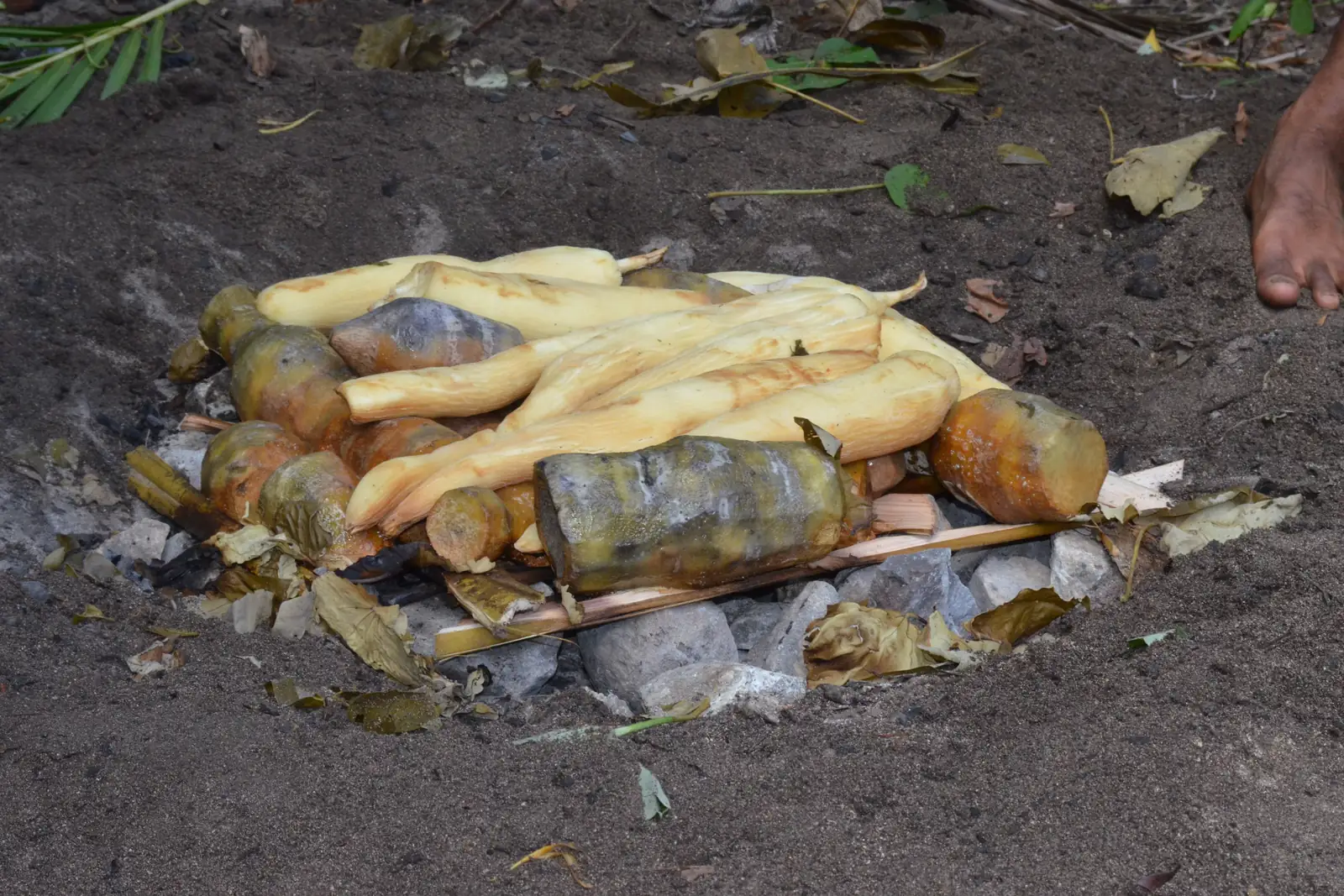
Freshly unearthed Fijian lovo — cooked cassava and taro piled on hot stones in the earth oven, with banana leaves

Fiji's Celebration Feast

Photo: Jaejay77, CC BY-SA 4.0, via Wikimedia Commons

The Heritage Formulary

Measured Ingredients

Estimated cost: Low — about $4–5 per serving at home (USD)

A good lovo is judged by the meat: it should be so tender it falls apart, and the roots should be soft right through, with the faint smoky flavour of the leaves.

Execution Methodology & Culinary Technique

Step-by-Step Cooking Guide

Active 4h
P

Prep Stage: Season, Peel & Wrap

60 Mins • Knife Work & Wrapping

Rub the pork and chicken with the garlic-salt paste and set aside. Peel and cut the taro, cassava and sweet potato into large chunks — big pieces stay moist and hold their shape through the long roast. Build the palusami parcels from taro leaves, coconut cream and onion, then wrap everything in banana leaves and foil. Heat the oven while you wrap so it is ready the moment the parcels are sealed.

Maestro Tip: Cut the roots big. Small pieces turn to mush after three hours; chunks the size of a fist come out tender but intact.

  1. 1

    Season the Meats

    15 Mins Room temperature

    Mix the crushed garlic with most of the salt and the chopped onion. Rub the paste all over the pork chunks and the chicken pieces, working it into every fold. Leave the seasoned meat at room temperature while you prepare the roots — no more than 30 minutes — so it goes into the oven evenly tempered.

    Season generously: a lovo feeds a crowd, and the roots underneath are unseasoned, so the meat carries the salt for the whole plate.

    Done when: Every piece is coated in the garlic-salt rub.

  2. 2

    Build the Palusami Parcels

    15 Mins Room temperature

    Lay 3 taro leaves flat, overlapping, shiny side down. Spoon 3 tablespoons of coconut cream into the centre with a few onion rings and a pinch of salt. Fold the leaves over the filling to make a neat parcel, then wrap the parcel in foil. Repeat to make 4 parcels. Taro leaves must be cooked right through, so never eat them raw or undercooked.

    Fold the leaves like an envelope and tuck the edges under — a tight parcel keeps the coconut cream inside instead of leaking into the pan.

    Done when: 4 firm, sealed parcels, with no cream leaking out.

  3. 3

    Wrap Everything in Leaves and Foil

    15 Mins Oven preheating to 160°C (320°F)

    Lay a sheet of foil flat, place a banana leaf on it, and arrange a share of pork, chicken and root vegetables in the centre. Fold the leaf over the food, then seal the foil tightly around it, crimping the edges. Make 4 parcels this way, dividing the food evenly. Put the parcels seam-side up in a large deep roasting pan and pour in 120 ml (½ cup) of water — the steam keeps the leaves from scorching. Meanwhile, heat the oven to 160°C (320°F). In a traditional lovo, this is the moment the parcels go onto white-hot river stones in a pit and are buried under leaves and earth; the oven version below is the home adaptation.

    Seal the foil well. A loose parcel dries out; a tight one steams in its own juices, which is exactly how a buried lovo cooks.

    Done when: 4 sealed parcels, snug in the pan with a little water underneath.

  4. 4

    Roast Low and Slow

    165 Mins 160°C (320°F)

    Cover the pan tightly with a lid or a double layer of foil and roast at 160°C (320°F) for 2 hours 45 minutes. Do not open the pan for the first 2 hours — every peek lets out the steam that does the cooking. The pork and chicken must reach at least 74°C (165°F) at the thickest part, and the roots should be tender all the way through when pierced with a knife.

    If the pan looks dry when you finally check, add another 120 ml (½ cup) of hot water around the parcels, not over them, and reseal quickly.

    Done when: Meat reads 74°C (165°F) or higher; pork pulls apart easily and roots are soft to the centre.

  5. 5

    Rest, Unwrap and Serve

    30 Mins Resting, then serving hot

    Take the pan out of the oven and let the parcels rest, still sealed, for 15 minutes — the juices settle back into the meat and the roots finish softening. Then open the parcels carefully (hot steam escapes), lift the food onto a large platter or fresh banana leaves, and pour any juices from the foil over the top. Serve the palusami parcels alongside, opened at the table. Eat hot, with your hands or with serving spoons, the way a Fijian feast is shared.

    Open the foil away from your face: three hours of trapped steam is hotter than it looks.

    Done when: Meat is juicy and falling apart, roots are tender, palusami is soft and creamy.

Finishing Touches & Plating

Taste a piece of taro and a piece of pork before serving — if the roots need salt, sprinkle a little over the platter, not into the parcels. Serve the lovo piled high on banana leaves, with the palusami parcels opened at the table so everyone can help themselves.

Nutritional Physiology & Benefits

Nutrition

Energy

920

kcal / serving

Protein

51g

Complete AA

Carbs

84g

Complex

Fats

42g

Healthy

Per serving (8 servings · 1 serving ≈ 591 g)
Energy920 kcal
Protein51 g
Carbohydrates84 g
Fat42 g
Fibre9.8 g
Sugar6.5 g
Sodium624 mg
Per 100g
Energy156 kcal
Protein8.7 g
Carbohydrates14.1 g
Fat7.2 g
Fibre1.7 g
Sugar1.1 g
Sodium106 mg

Nutrition values are estimated — calculated from USDA FoodData Central values for the listed ingredients.

Vitamins & minerals: Vitamin C (sweet potato, taro leaves), vitamin A (sweet potato, taro leaves), B vitamins, iron and zinc (pork, chicken), potassium (taro, cassava, sweet potato).

Serious Protein for a Feast

Each serving carries about 51 g of protein from pork and chicken, so a lovo plate keeps you full for hours — the reason it is the meal Fijians cook when a crowd needs feeding.

Slow Cooking, Whole Foods

Nothing here is fried or processed: meat, root vegetables, leaves and coconut cream, cooked slowly in their own steam. The roots add about 10 g of fibre per serving, which is rare for a roast dinner.

Potassium and Vitamin C

Taro, cassava and sweet potato are rich in potassium, and sweet potato and taro leaves add vitamin C and vitamin A — everyday nutrients from the garden, not from a bottle.

Food Pairings

What to Eat With

To optimize nutrient absorption and elevate the sensory depth, pair with these authentic accompaniments:

Full Menus

Kokoda as a Starter

Fiji's national dish of raw fish cured in lime and coconut milk is the classic cold, tangy opener — it wakes the palate before the rich, smoky lovo arrives.

Chilled Fruit Salad to Finish

Pawpaw, pineapple and banana served cold give a light, fresh ending after a heavy roast — the contrast is what makes the feast feel complete rather than overwhelming.

Vegetables

Rourou (Taro Leaves in Coconut Milk)

Soft, creamy taro leaves in coconut milk echo the palusami in the lovo and add a silky green vegetable to a plate that is otherwise meat and roots.

Drinks

Fresh Coconut Water

Cold coconut water is the traditional drink with a lovo: it replaces fluid on a hot day and its mild sweetness balances the salt and smoke of the feast without adding heaviness.

Complete menu

Start with kokoda and lime wedges, follow with the lovo feast — pork, chicken, taro, cassava and palusami served on banana leaves — with rourou and fresh coconut water, and finish with a chilled tropical fruit salad.

Digestive Guardrails

What NOT to Combine

To prevent digestive distress, sluggishness, or palate clash, avoid pairing the dish with these elements:

Undercooked Cassava and Taro Leaves

Raw cassava contains cyanogenic glycosides and raw taro (root and leaves) contains needle-like calcium oxalate crystals that irritate the mouth and throat. Both are safe only when cooked right through — the long roast in this recipe does that, but never taste the roots or leaves raw, and never shorten the cooking time. This is general information, not medical advice.

Leaving a Big Roast Out Too Long

A lovo makes a lot of food, and a large pile of meat cools slowly through the temperature range where bacteria grow fastest. Serve within 2 hours of cooking, refrigerate leftovers promptly at 4°C (39°F) or below, and reheat them to 74°C (165°F). Discard anything left at room temperature longer than that — do not taste-test to decide. This is general information, not medical advice.

A Very Rich, Salty Plate

This is a celebration meal, not an everyday one: about 920 kcal and 624 mg of sodium per serving, with 42 g of fat. If you watch your salt, fat or energy intake, take a smaller portion and fill the rest of the plate with salad or fruit. This is general information, not medical advice.

General information only, not medical advice — consult a doctor for personal dietary decisions.

Who Should Eat It

Who Should Eat

  • General adultsA generous feast plate: ideal for celebrations and big family dinners, and best enjoyed as an occasional meal rather than a weekly roast.
  • ChildrenFine for children once everything is cooked right through and cooled enough to eat — serve small pieces of meat and roots, and open the palusami for them, as the leaves can be stringy.
  • ElderlyChoose the tenderest pieces and cut the roots small; the long roast makes the meat soft, but the plate is rich, so a modest portion with plenty of vegetables suits most older diners.
  • Pregnant womenSafe when the pork and chicken reach 74°C (165°F) and the cassava and taro leaves are cooked right through. Skip any piece you are unsure about and eat it freshly cooked and hot.
  • Breastfeeding womenA good energy-rich meal while breastfeeding — the protein and calories are genuinely useful. Keep portions sensible and drink plenty of water or coconut water with it.
  • AthletesExcellent after heavy training: about 51 g of protein and 84 g of carbs per serving. Eat it within a couple of hours of training and add fruit for quick energy.
  • Weight gainOne of the easiest ways to add energy: a full plate is about 920 kcal, and the roots and coconut cream add calories without feeling as heavy as fried food.
  • Weight lossEnjoy a smaller plate — mostly chicken and roots, less pork and palusami — and load up on salad. A full serving is too energy-dense for a regular weight-loss meal.

Health Conditions — Adjust or Avoid

Conditions

  • DiabetesThe roots are starchy (about 84 g of carbs per serving), so portions matter more than the meat. Take half a serving of roots and fill the plate with salad or rourou instead; ask your clinician about your carbohydrate target.
  • High blood pressureAbout 624 mg of sodium per serving, mostly from the added salt. Use less salt in the rub and skip extra salty sides; ask your clinician about your sodium target.
  • Kidney diseaseHigh in protein (about 51 g) and potassium from taro, cassava and sweet potato, which some kidney diets limit — keep the portion small and ask your clinician before making it a regular meal.
  • GoutPork and chicken are sources of purines, so eat lovo occasionally and in modest portions if you have gout; ask your clinician about your personal limit.
  • Stomach issuesThe long, slow roast makes the meat and roots easy to digest, but the meal is rich and fatty — if your stomach is unsettled, choose chicken and roots over pork and palusami. Ask your clinician if symptoms persist.
  • Cardiovascular diseaseThe fat is mostly from pork and coconut cream, so balance the plate: more chicken and roots, less pork and palusami, and a big salad on the side. Ask your clinician about your fat intake.
  • Fatty liverHigh in energy and saturated fat, so it suits a fatty-liver eating pattern only as an occasional feast in a small portion, with vegetables doing most of the work on the plate; ask your clinician for guidance.
  • Food allergiesContains coconut (a tree nut for labelling purposes in some countries). Naturally gluten-free and dairy-free. Taro and cassava must be cooked right through, as raw they irritate the mouth and throat.
  • Special therapeutic dietsIf you follow a prescribed low-sodium, low-purine, low-saturated-fat or carbohydrate-counted diet, adjust the salt, meat choices and root portions and check with your clinician first.

If you have a medical condition, consult your doctor before changing your diet.

Storage & Use

Storage & Use

How to store
Cool leftovers quickly, then store meat and roots separately in covered containers in the fridge; keep palusami in its own container.
In the fridge
Up to 3 days at 4°C (39°F) or below.
In the freezer
Cooked pork and chicken freeze well for up to 3 months; roots turn watery and grainy after freezing, so freeze the meat only.
How to reheat
Reheat to 74°C (165°F) throughout — covered in the oven at 160°C (320°F) with a splash of water, or in a pan with a lid. Do not reheat more than once.
Freezing recommended
Yes for the meats; no for the roots and palusami.
Signs it has spoiled
Sour or off smell, slimy meat, grey or mouldy roots, or coconut cream that has separated and smells sour.

More recipes to explore

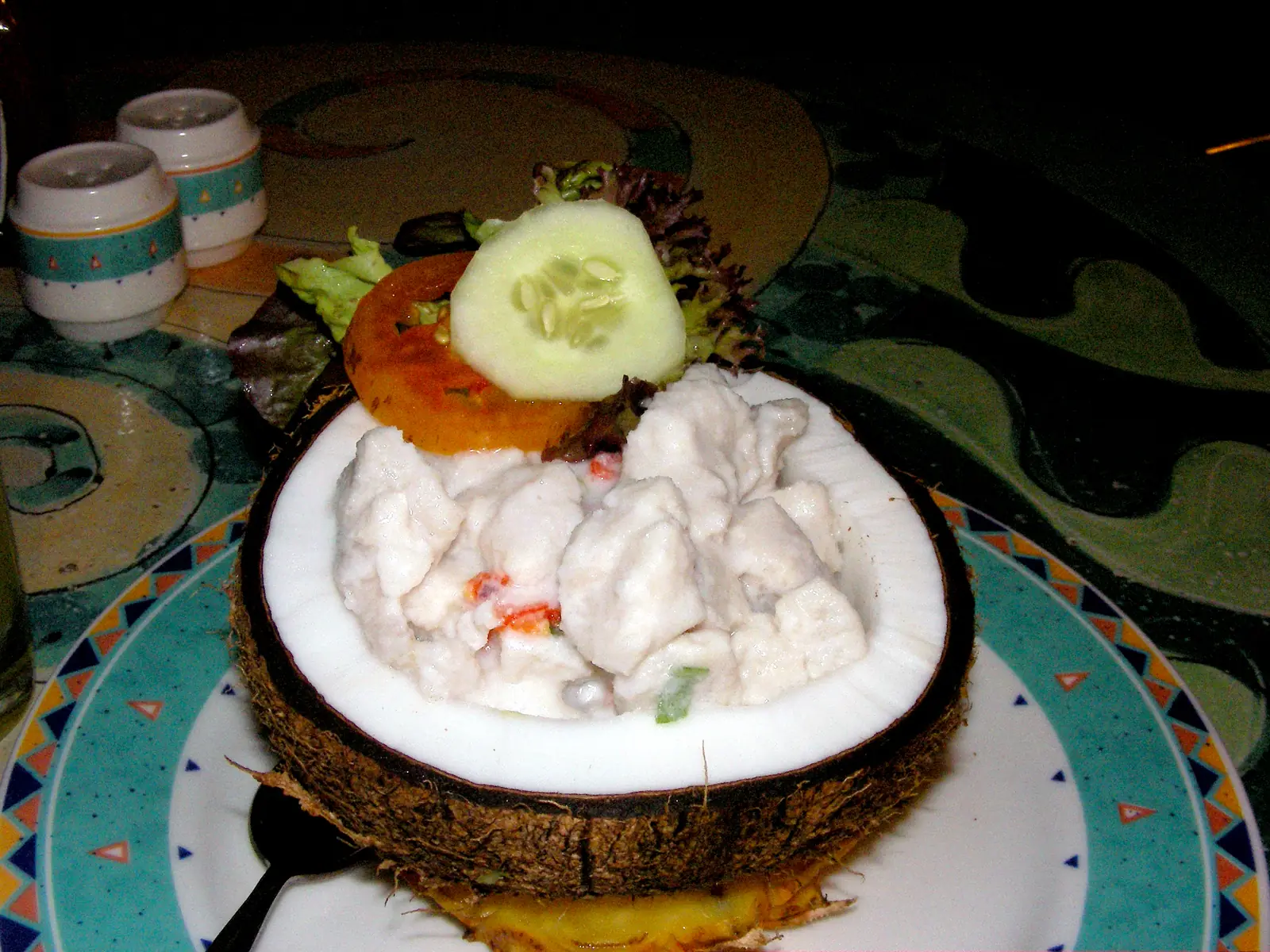
Fijian kokoda — cubes of white fish in creamy coconut milk served in a halved coconut shell, garnished with tomato and cucumber Fiji flag Fiji 1h 35m
Lunch •Fiji's National Dish

Fijian Kokoda

This kokoda recipe cures fresh mahi-mahi in lime juice until the edges turn opaque, then folds it through creamy coconut milk with tomato, red onion, cucumber and chilli. It is Fiji's national dish — bright, cool and rich all at once, and it needs no cooking at all. One serving is about 284 g.

Light & Refreshing

Raw fish cured in lime and finished with coconut milk, served cold — high in protein and light on the stomach.

Pairs Well With
Steamed taro or cassava, with lime wedges and an icy drink
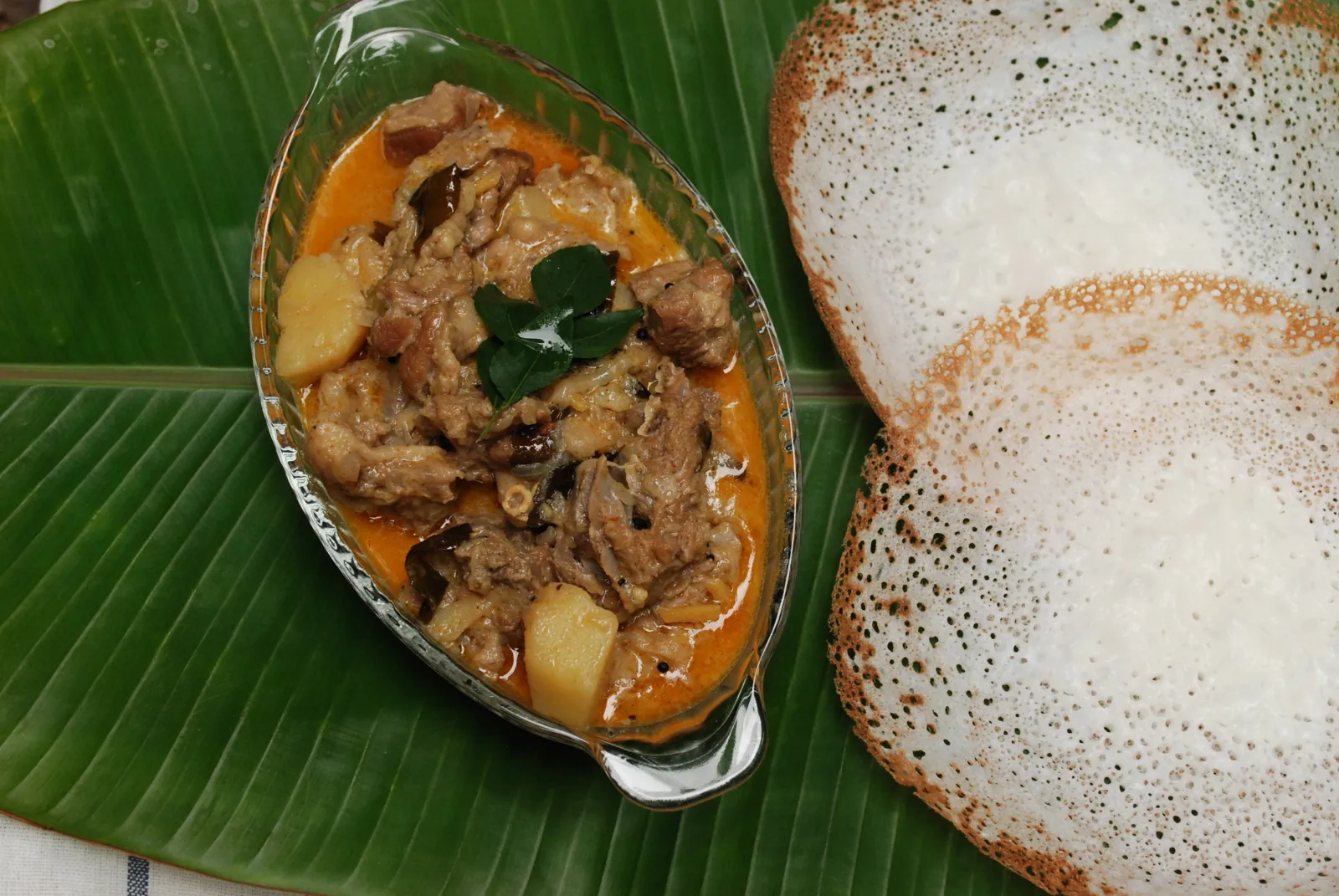
Lamb curry in a golden coconut milk sauce with potatoes and curry leaves, served on a banana leaf with appam Fiji flag Fiji 1h 40m
Dinner •Indo-Fijian Heritage

Fijian Lamb Curry

This fijian lamb curry recipe is Fiji's Indo-Fijian classic: lamb shoulder simmered slowly with Fiji masala, turmeric, mustard seeds, curry leaves, tomato and potato in a rich coconut milk sauce, until the meat is spoon-tender and the gravy turns golden. It is the curry Fijian-Indian families cook for Sundays and celebrations — warming, fragrant and deeply savoury, with fresh coriander and lemon to finish. One serving is about 450 g, without rice.

Island Comfort

Lamb pieces simmered slowly in a spiced coconut milk sauce with potato, tomato and curry leaves — the Indo-Fijian curry served at family gatherings across Fiji.

Pairs Well With
Steamed rice, roti & cucumber salad
High Protein
Bœuf bourguignon — French beef braised in red wine France flag France 4h
Dinner •Burgundy Terroir

Bœuf Bourguignon

Beef braised gently in red wine until the connective tissue melts into a velvet, gelatin-rich sauce — the classic Burgundy Sunday dinner.

Cellular Repair

Beef braised in red wine until spoon-tender, with mushrooms and pearl onions.

Pairs Well With
Parsnip Purée & Steamed French Haricots Verts
High Protein
Vietnamese braised pork belly with golden eggs in caramel sauce Vietnam flag Vietnam 1h 45m
Dinner •One Pot

Vietnamese Braised Pork and Eggs

Pork belly slowly braised in coconut water and caramel until meltingly tender, with golden eggs that soak up the sweet-savoury sauce — the Vietnamese family dish that tastes better the next day.

Comfort & Sustained Energy

Slow-braised pork belly and eggs in coconut water and caramel.

Pairs Well With
Steamed rice & pickled mustard greens
High Protein

The Dinner Gazette

Never wonder what’s for dinner again

One email a week with easy dinner ideas from around the world — ingredients, steps and nutrition, tested in our kitchen first.

Delivered every Thursday morning. Unsubscribe anytime.



