
Curated recipes from 193 countries  •  New seasonal Mediterranean issue out now

Overview

Israeli Hummus

Hummus BeTehina

This israeli hummus recipe is the Jerusalem hummusiya way: chickpeas simmered until they are falling apart, then whipped with tehini and ice water into a pale, silky cream that is served warm, not cold. It is swirled onto a plate and finished with warm whole chickpeas, a hard-boiled egg, paprika and olive oil. One serving is about 205 g.

Hummus has been eaten across the Levant for centuries, and every country around the eastern Mediterranean claims it. In Israel it grew into something of its own: the hummusiya, a small restaurant that serves little else but hummus, where the plate arrives warm from the blender, swirled with tehini and topped with whole chickpeas, and where regulars argue over whose hummus is the smoothest in Jerusalem. There it is a meal in itself, scooped up with warm pita, not a cold dip on a mezze table.

Pairs well with: Warm pita, Israeli salad and pickles

Provenance

Israel flag Israel

Jerusalem Hummusiya Plate

Middle Eastern

Time Dedication

1h

15m prep • 45m cook

Batch Yield

4 Servings

477 kcal per serving

1 serving ≈ 205 g

Technical Skill

Easy

Easy (Blender)

Meal Timing & Digestive Fit

Breakfast

Not Advised

Lunch

Inappropriate

Dinner

Inappropriate

Snack & Tea

Ideal Light Bite

Quick Prep (<30m) Occasions: Light lunch, snack, mezze table, weekend brunch Cost: Low — about $2–3 per serving at home
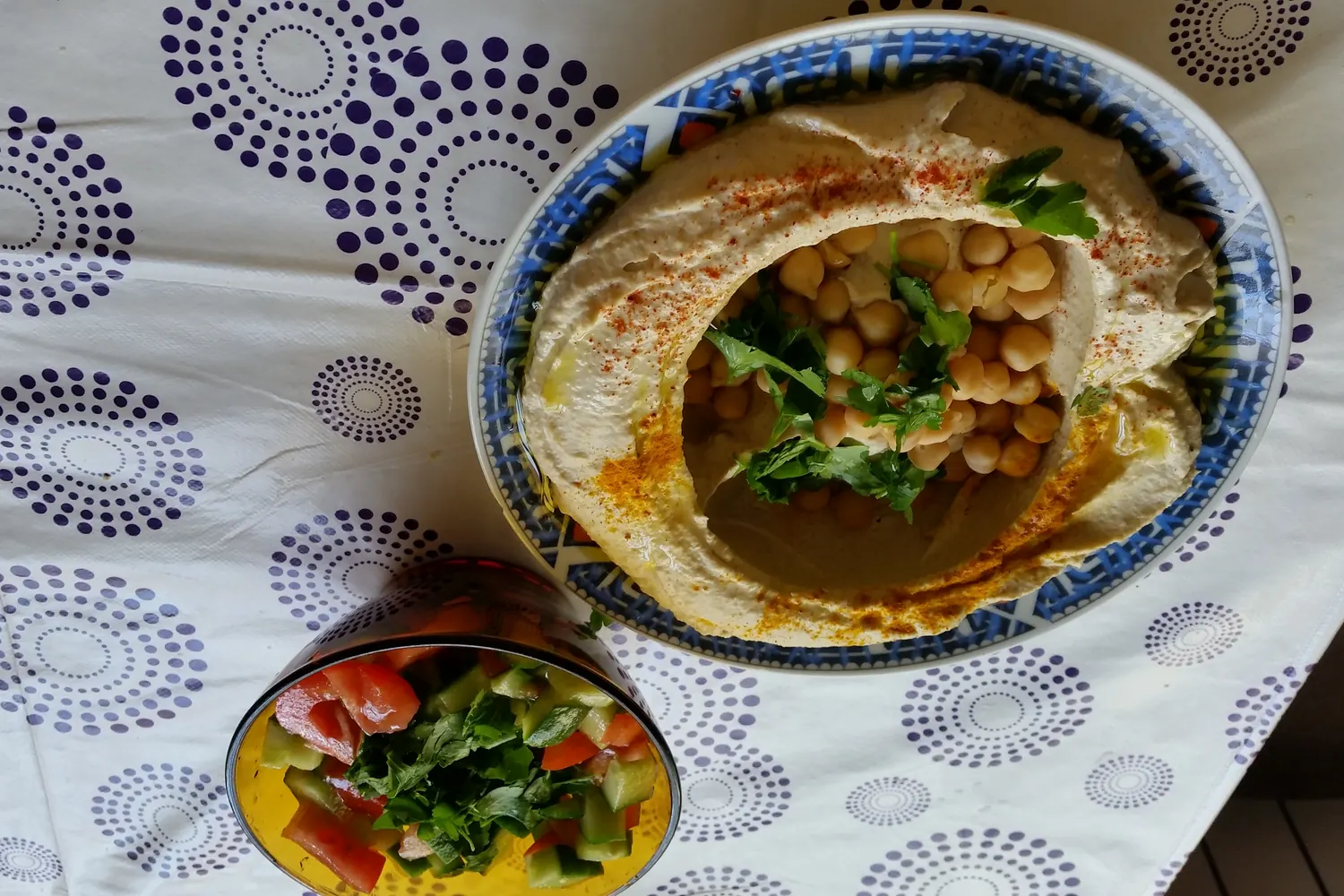
A plate of smooth swirled hummus topped with whole chickpeas, parsley and paprika, with a small bowl of Israeli salad beside it

Jerusalem Hummusiya Plate

Photo: Vikingit, CC BY-SA 4.0, via Wikimedia Commons

The Heritage Formulary

Measured Ingredients

Estimated cost: Low — about $2–3 per serving at home (USD)

Good Israeli hummus is served warm, whipped silky-smooth, and eaten with warm pita, never a knife and fork.

Execution Methodology & Culinary Technique

Step-by-Step Cooking Guide

Active 1h
P

Prep Stage: Soak the Chickpeas and Boil the Egg

8–12 Hrs Soak + 15 Mins

Put the dried chickpeas in a large bowl, cover with plenty of cold water, and leave them overnight. Drain and rinse. Put the egg in a small pan of cold water, bring to a boil, and cook for 10 minutes, then cool, peel and cut into quarters.

Maestro Tip: Dried chickpeas, soaked and simmered until very soft, are what make the hummus silky — canned chickpeas never get quite as smooth.

  1. 1

    Simmer the Chickpeas Until Very Soft

    45 Mins Boil at 100°C (212°F), then simmer at ~95°C (203°F)

    Put the drained chickpeas in a large pan, cover with plenty of cold water, and bring to a boil at 100°C (212°F). Skim off the foam, then simmer gently at about 95°C (203°F) for 40–45 minutes until the chickpeas are falling apart and the skins slip off when you rub them. Scoop out about 80 g of whole chickpeas for the topping and keep them warm in a little of the cooking water.

    Do not salt the water — salt firms the skins. The chickpeas should be much softer than you would ever serve whole.

    Done when: The chickpeas crush easily between your fingers and the skins slip off.

  2. 2

    Whip the Hummus Silky-Smooth

    10 Mins No heat — blender, ~20°C (68°F)

    Drain the chickpeas and put them in a blender with the tehini, lemon juice, garlic and salt. Blend for 2 minutes, then add the ice water a spoonful at a time while the blender runs, until the hummus turns pale, fluffy and silky. Taste and add more lemon or salt if it needs it.

    Keep blending past the point where it looks done — 2 full minutes of blending is what makes it silky, not grainy.

    Done when: The hummus is pale, glossy and smooth, and it ribbons off the spoon.

  3. 3

    Warm the Plate and the Topping

    5 Mins Warm plate, ~60°C (140°F)

    Warm the serving plate in a low oven or under hot water so the hummus stays warm on the table. Warm the reserved whole chickpeas in a small pan with a spoonful of their cooking water until they are hot through.

    A warm plate matters — cold china steals the heat from the hummus in a minute.

    Done when: The plate is warm to the touch and the topping chickpeas are steaming.

  4. 4

    Swirl, Top and Serve Warm

    5 Mins Serve warm, ~60°C (140°F)

    Spoon the hummus onto the warm plate and swirl it into a wide well with the back of a spoon. Fill the middle with the warm whole chickpeas, lay the egg quarters on top, dust with paprika and cumin, and drizzle with olive oil. Serve at once with warm pita for scooping.

    Serve it the moment it is plated — warm hummus firms and dulls as it cools.

    Done when: The plate is warm, the swirls are glossy with oil, and the chickpeas sit hot in the middle.

Finishing Touches & Plating

Spoon the warm hummus onto a plate, swirl it into a wide well with the back of a spoon, and fill the middle with the warm chickpeas. Lay the egg quarters on top, dust with paprika and cumin, drizzle with olive oil, and serve at once with warm pita.

Nutritional Physiology & Benefits

Nutrition

Energy

477

kcal / serving

Protein

19g

Complete AA

Carbs

46g

Complex

Fats

27g

Healthy

Per serving (4 servings · 1 serving ≈ 205 g)
Energy477 kcal
Protein19 g
Carbohydrates46 g
Fat27 g
Fibre14.0 g
Sugar7.2 g
Sodium328 mg
Per 100g
Energy233 kcal
Protein9.3 g
Carbohydrates22.5 g
Fat12.9 g
Fibre6.8 g
Sugar3.5 g
Sodium160 mg

Nutrition values are estimated — calculated from USDA FoodData Central values for the listed ingredients.

Vitamins & minerals: Folate and iron (chickpeas), vitamin E (tahini, olive oil), choline (egg).

Protein and Fibre That Fill You Up

Chickpeas and tahini together give about 19 g of protein and 14 g of fibre per serving — a snack that behaves like a small meal.

Good Fats from Tahini and Olive Oil

The creaminess comes from sesame tahini and olive oil, both rich in monounsaturated fat, not from butter or cream.

Served Warm, Eaten Slowly

Warm hummus scooped with pita is a slow, sociable plate — it is a meal in itself, not a dip you rush through.

Food Pairings

What to Eat With

To optimize nutrient absorption and elevate the sensory depth, pair with these authentic accompaniments:

Sides

Warm Pita Bread

Warm, soft pita torn into pieces is the only proper spoon for hummus — it scoops the swirls clean off the plate.

Vegetables

Israeli Salad

Finely diced tomato, cucumber and onion add crunch and sharpness against the soft, rich hummus.

Full Menus

Falafel and Pickles

A few hot falafel balls and a pile of pickles turn the hummus plate into a full mezze lunch.

Drinks

Mint Tea

Hot mint tea is the classic hummusiya drink — it cleanses the palate between rich, oily spoonfuls.

Complete menu

Serve the warm hummus plate with pita, Israeli salad and pickles, and a pot of mint tea.

Digestive Guardrails

What NOT to Combine

To prevent digestive distress, sluggishness, or palate clash, avoid pairing the dish with these elements:

Undercooked Chickpeas

Chickpeas that are only just tender blend into a grainy, dull paste. Simmer them until they are falling apart and the skins slip off — softness is what makes the hummus silky. This is general guidance, not medical advice.

Blending Without Ice Water

Blending the chickpeas dry or with warm water gives a thick, heavy paste. Ice water, added a spoonful at a time while the blender runs, whips the hummus pale, light and smooth.

General information only, not medical advice — consult a doctor for personal dietary decisions.

Who Should Eat It

Who Should Eat

  • General adultsA light, satisfying plate — protein, fibre and good fats, eaten with warm pita.
  • ChildrenVery suitable from age 2+; smooth, mild and easy to scoop. Leave the egg off for very young children if you prefer.
  • ElderlyVery suitable — soft, warm and easy to eat, with no chewing difficulty.
  • Pregnant womenGenerally suitable; chickpeas add folate and iron. Use a freshly boiled egg and eat the plate while it is warm.
  • Breastfeeding womenGenerally suitable; the protein, iron and calcium support recovery — eat a full portion.
  • AthletesA good recovery snack with pita — protein plus carbs. Add a second egg for extra protein.
  • Weight gainA good choice — take more pita and an extra drizzle of olive oil.
  • Weight lossFilling and high in fibre — keep the olive oil drizzle light and scoop with cucumber and salad as well as pita.

Health Conditions — Adjust or Avoid

Conditions

  • DiabetesChickpeas are high in fibre and slow to digest — the pita is the main carb source, so watch the bread portion and ask your clinician about it.
  • High blood pressureMost of the sodium comes from added salt; season lightly and ask your clinician about a suitable portion.
  • Kidney diseaseLimit the portion — chickpeas and tahini add protein and potassium; ask your clinician about portion size.
  • GoutEat in a modest portion — chickpeas are moderate in purines, so keep the serving modest and ask your clinician if unsure.
  • Stomach issuesUsually gentle and easy to digest; if raw garlic bothers you, use half a clove or leave it out.
  • Cardiovascular diseaseA reasonable choice — rich in fibre and monounsaturated fat from olive oil and tahini.
  • Fatty liverKeep the portion modest and go light on the olive oil drizzle.
  • Food allergiesContains sesame (tahini) and egg (optional topping). Not suitable for sesame allergy; leave the egg off for egg allergy.
  • Special therapeutic dietsIf you follow a prescribed low-sodium or low-potassium diet, use less salt and a smaller portion, and check with your clinician.

If you have a medical condition, consult your doctor before changing your diet.

Storage & Use

Storage & Use

How to store
Cool quickly and store in an airtight container with a thin layer of olive oil on top to stop it drying out. Store the toppings separately.
In the fridge
Hummus 3 days; boiled egg 2 days.
In the freezer
Hummus 1 month (texture softens a little on thawing).
How to reheat
Warm gently in a pan over low heat, stirring, until it reaches 74°C (165°F). Do not boil it — it thickens and dulls.
Freezing recommended
Only the plain hummus — freeze it without the chickpea topping or egg.
Signs it has spoiled
Sour smell, dark surface, or a fizzy taste.

More recipes to explore

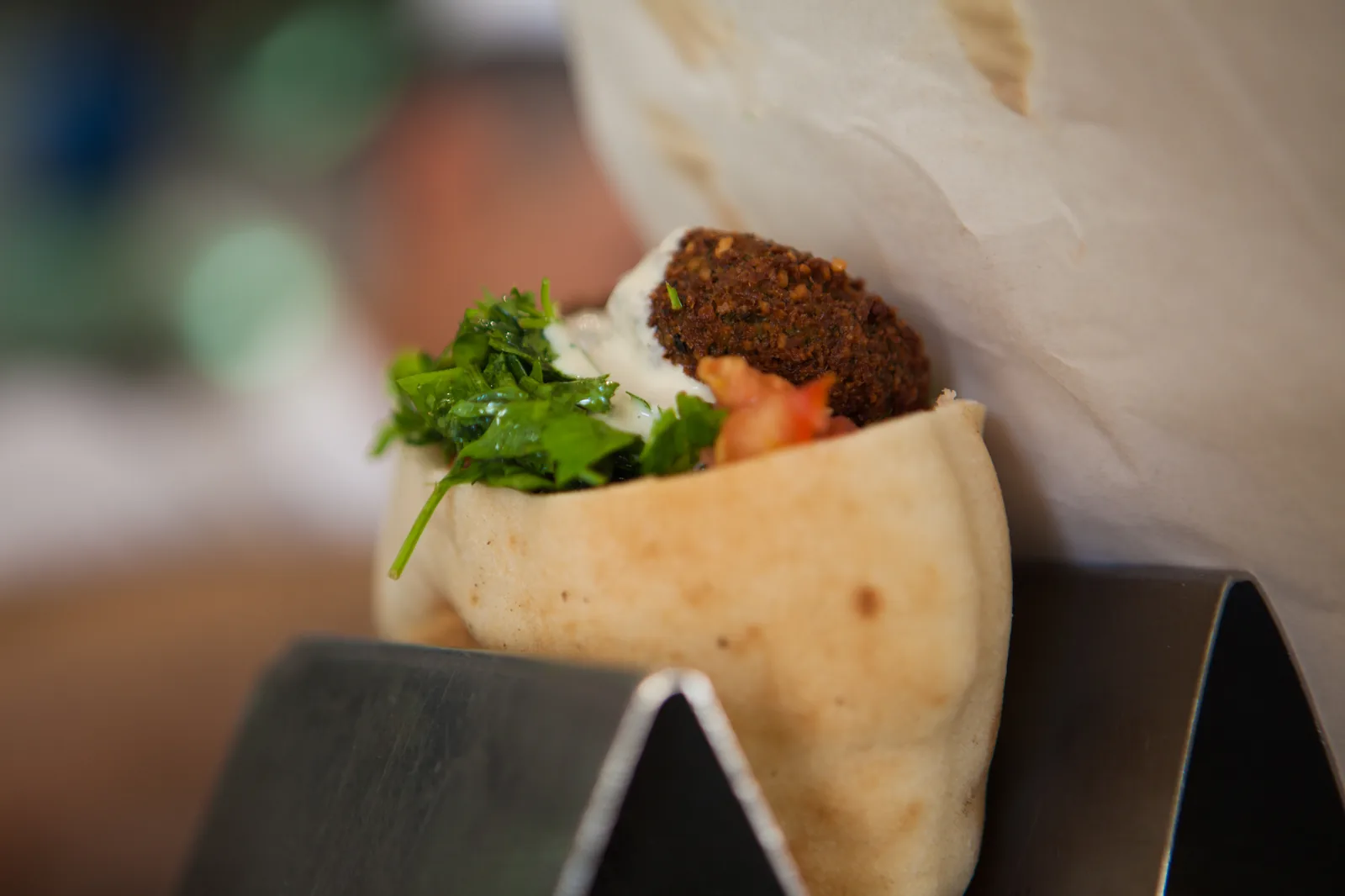
Falafel balls in a pita pocket with chopped salad, pickles and tahini Israel flag Israel 40m
Lunch •Tel Aviv Street Food

Israeli Falafel

This israeli falafel recipe starts with dried chickpeas soaked overnight — never canned — blended with onion, garlic, parsley and cilantro into a green, fragrant mix, then rolled into balls and fried until deep golden and crisp. One serving is about 180 g (five fritters with pita on the side).

Plant-Based Protein

Crisp chickpea fritters with herbs, tucked into warm pita with salad and tahini.

Pairs Well With
Warm pita, Israeli salad, tahini sauce and pickles
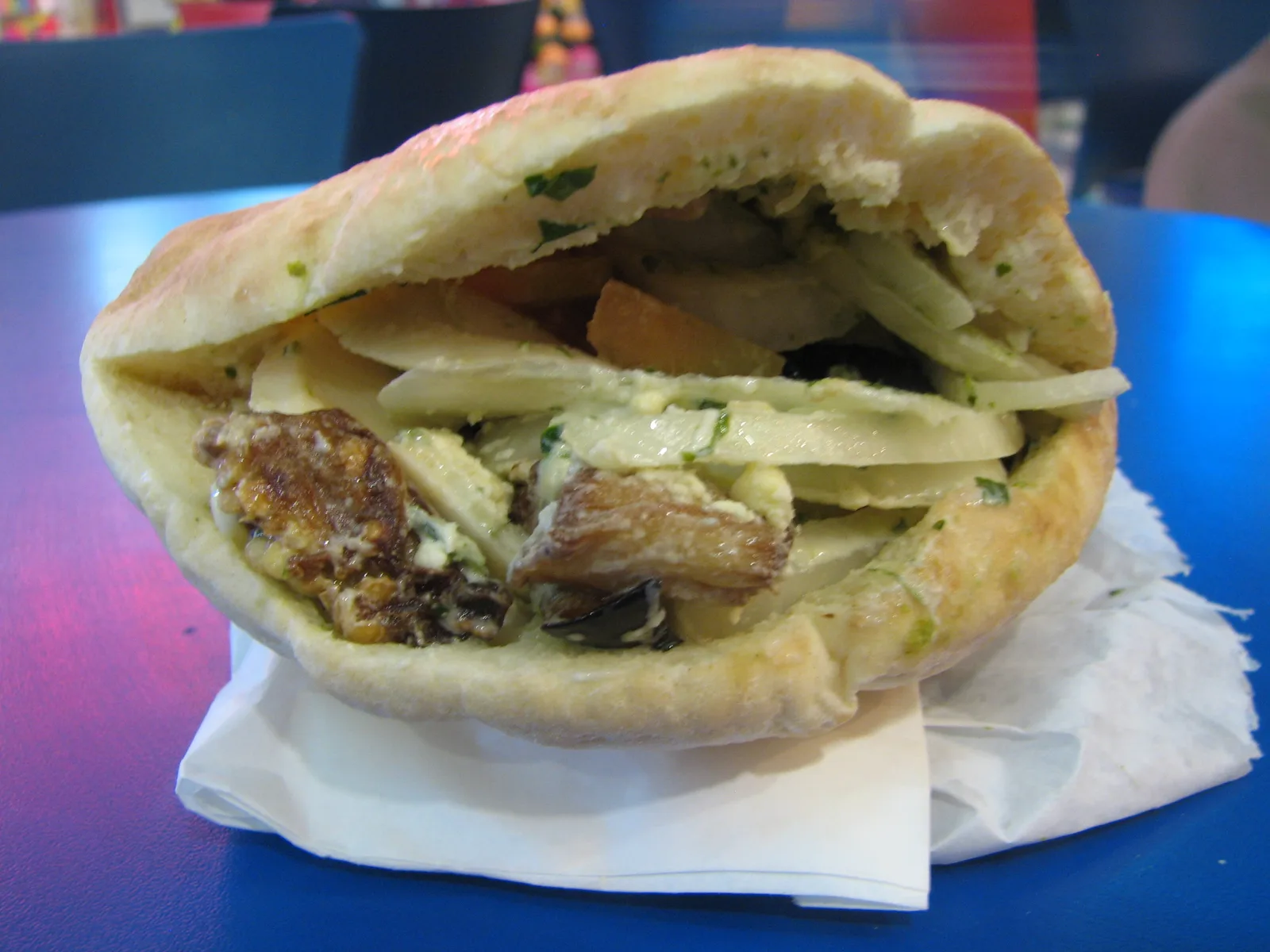
Sabich pita sandwich stuffed with fried eggplant, sliced hard-boiled egg, salad and tahini Israel flag Israel 45m
Lunch •Iraqi-Jewish Street Food

Sabich

This sabich recipe starts with salted, golden-fried eggplant, hard-boiled eggs, a crisp tomato-cucumber salad, hummus and lemony tahini sauce, all tucked into warm pita with a spoon of tangy amba. One serving is about 425 g (one generously stuffed pita).

Hearty Vegetarian Lunch

Fried eggplant and hard-boiled egg in warm pita with hummus, tahini, Israeli salad and amba.

Pairs Well With
Israeli salad, pickles, amba and tahini sauce, with mint tea or lemonade
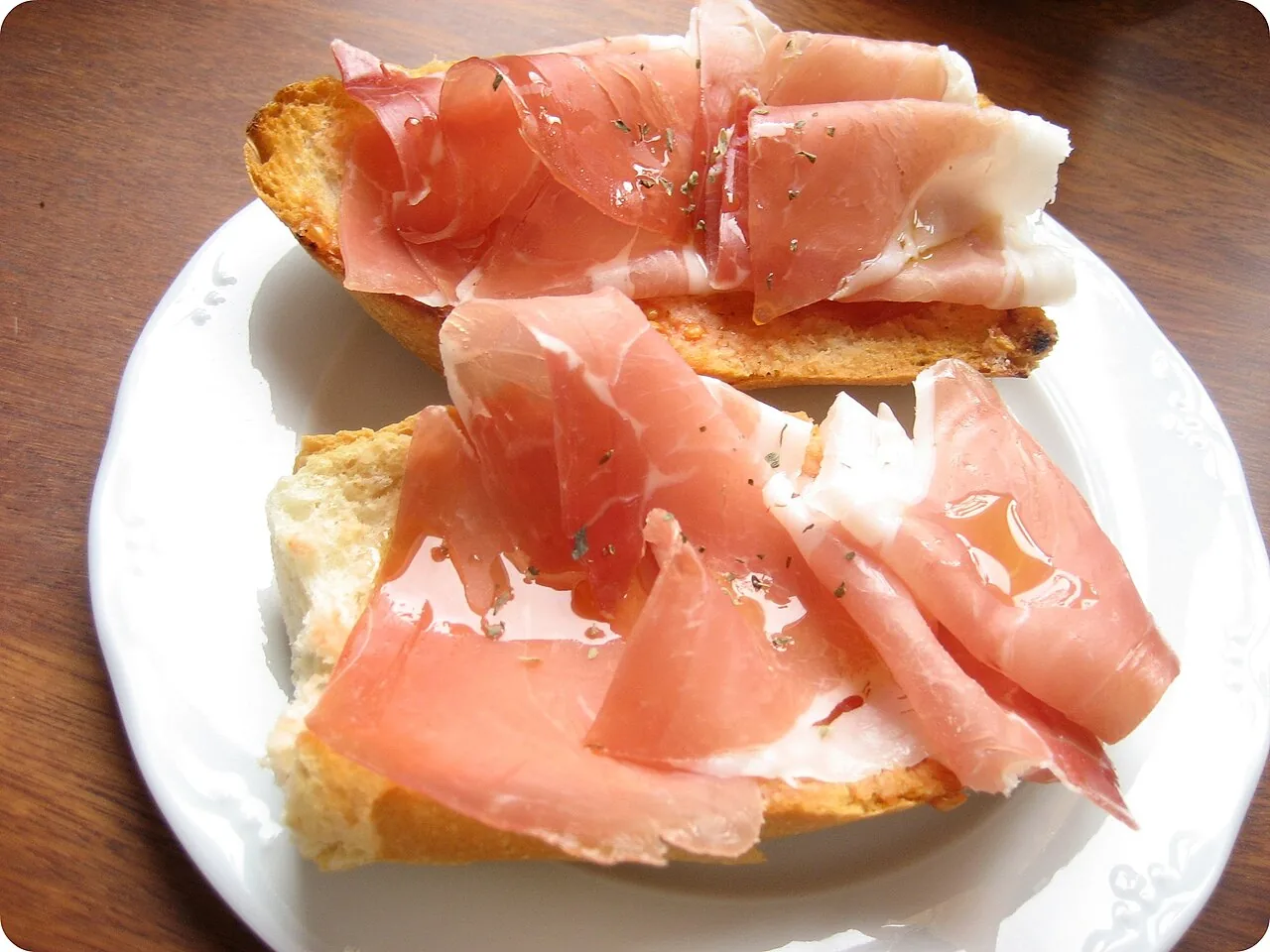
Pan con tomate with jamón ibérico on toasted bread Spain flag Spain 15m
Snack & Tea •Catalan Aperitivo

Pan con Tomate & Jamón Ibérico

Country bread rubbed with ripe Ramallet tomato, drizzled with cold-pressed Arbequina olive oil and topped with jamón ibérico.

Vascular Health

Toasted tomato bread with jamón ibérico, olive oil and olives.

Pairs Well With
Castelvetrano Olives & Sparkling Mineral Water
Quick Prep (<30m)
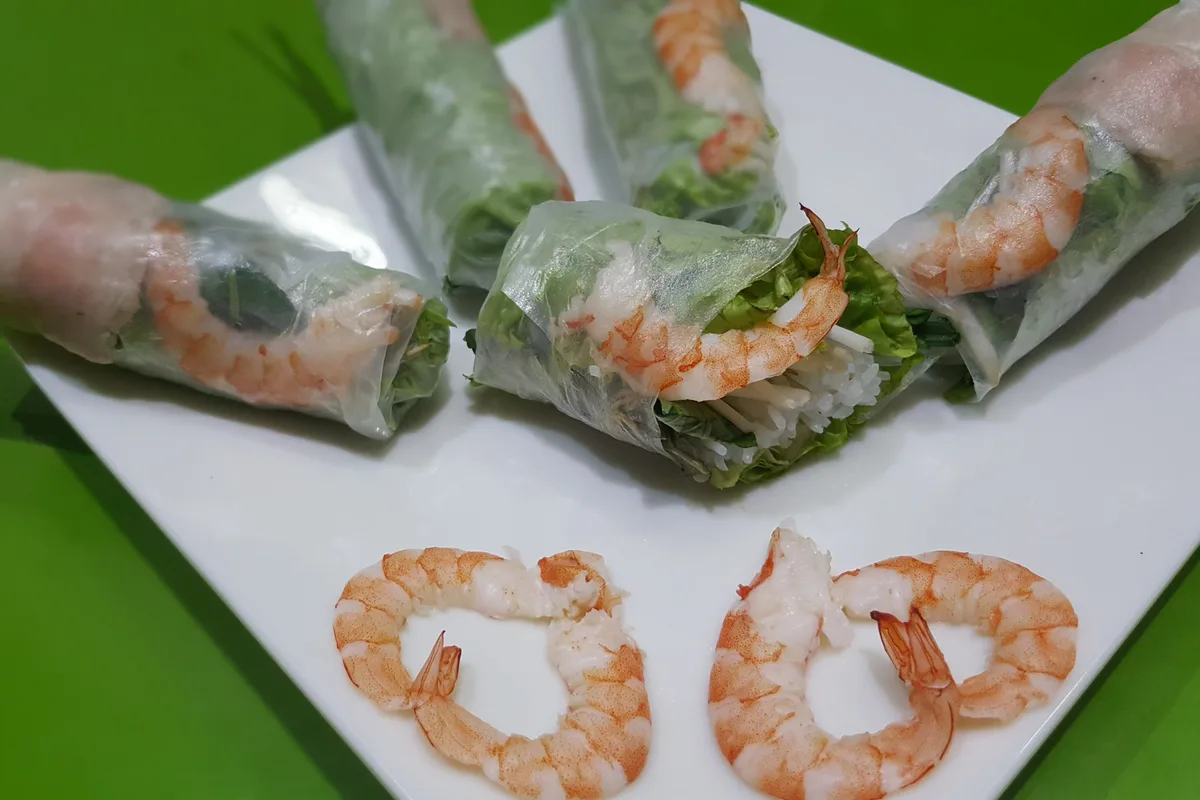
Gỏi cuốn — Vietnamese fresh spring rolls with prawn and pork Vietnam flag Vietnam 1h 5m
Snack & Tea •Saigon Refresh

Gỏi Cuốn Tôm Thịt

Fresh rice paper rolls filled with poached prawns, tender pork, rice vermicelli, lettuce, herbs and carrot, served with a peanut dipping sauce.

Light Digestion

Nothing is fried, so the rolls stay light and fresh — a cool, herb-filled snack for hot days.

Pairs Well With
Artisanal Peanut Dip & Fresh Lotus Root Water
High Protein

The Dinner Gazette

Never wonder what’s for dinner again

One email a week with easy dinner ideas from around the world — ingredients, steps and nutrition, tested in our kitchen first.

Delivered every Thursday morning. Unsubscribe anytime.