
Curated recipes from 193 countries  •  New seasonal Mediterranean issue out now

Overview

Jasha Maru

Jasha Maru — Bhutanese Spicy Chicken Stew, Jasha Maroo, Bjasha Maroo

Jasha maru is Bhutan's warming chicken stew: diced chicken simmered with ginger, garlic, chillies, leek and tomato until the broth turns fragrant and the meat is tender. Ginger is the flavour you remember, and the stew is always ladled over Bhutanese red rice. One serving is about 355 g.

Jasha maru — jasha means chicken and maru means stew in Dzongkha — is one of the everyday dishes of Bhutan, cooked in homes across the Himalayan kingdom. Unlike the cheese-rich datshi dishes, it is a light, brothy stew where ginger leads and chillies follow, and it is almost always served with the red rice grown in Bhutan's valleys.

Pairs well with: Bhutanese red rice and ema datshi

Provenance

Bhutan flag Bhutan

Bhutanese Himalayan Classic

East & South Asia

Time Dedication

55m

20m prep • 35m cook

Batch Yield

4 Servings

364 kcal per serving

1 serving ≈ 355 g

Technical Skill

Intermediate

Medium (One Pot)

Meal Timing & Digestive Fit

Breakfast

Not Advised

Lunch

Hearty Midday Main

Dinner

Ideal Hearty Main

Snack & Tea

Inappropriate

Soups & BrothsHigh Protein Occasions: Family dinners, cold-weather dinners, festive meals, everyday dinner Cost: Medium — about $4–5 per serving at home
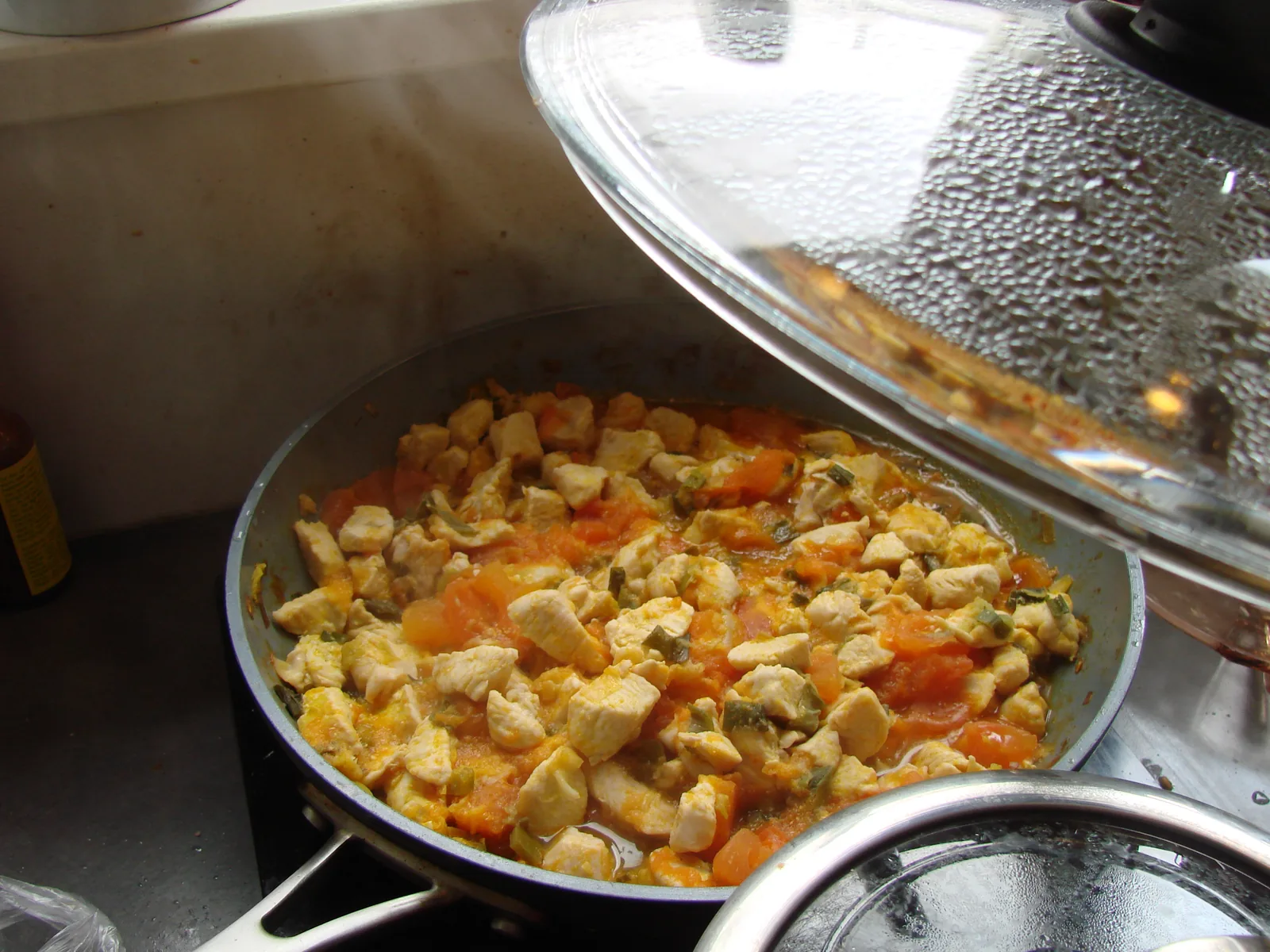
Jasha maru, diced chicken with tomato, ginger and chillies, simmering in a pan

Bhutanese Himalayan Classic

Photo: Matyáš Havel, CC BY-SA 3.0, via Wikimedia Commons

The Heritage Formulary

Measured Ingredients

Estimated cost: Medium — about $4–5 per serving at home (USD)

Cooked the traditional way: aromatics fried first, chicken browned, then simmered in stock until tender.

Execution Methodology & Culinary Technique

Step-by-Step Cooking Guide

Active 55m
P

Prep Stage: Chicken Diced, Aromatics Ready

20 Mins • Knife & Bowls

Dice the chicken into small cubes, chop the onion, leek and tomatoes, grate the ginger, mince the garlic and slice the chillies. Jasha maru cooks fast once the pot is hot, so have everything within reach.

Maestro Tip: Cut the chicken small and even — 2 cm cubes cook through quickly and soak up the broth.

  1. 1

    Fry the ginger, garlic and chillies

    4 Mins Medium-high heat, about 190°C (375°F)

    Heat the oil in a heavy pot. Add the ginger, garlic, green chillies and dried red chillies and fry for 2 minutes until fragrant, then add the onion and leek and cook for 2 minutes more until softened.

    Do not let the garlic brown — browned garlic turns bitter and spoils the broth.

    Done when: Aromatics fragrant, onion and leek just softened.

  2. 2

    Brown the chicken

    6 Mins High heat, about 200°C (400°F)

    Add the diced chicken and fry, stirring often, until the pieces turn white on the outside and lightly golden at the edges, about 5 minutes.

    A hot pot and small pieces mean the chicken browns instead of stewing grey.

    Done when: Chicken white outside with golden edges.

  3. 3

    Add tomato and stock

    5 Mins High heat to the boil, 100°C (212°F)

    Stir in the tomatoes and cook for 2 minutes until they start to break down, then pour in the chicken stock and salt. Bring to a boil, scraping up anything stuck to the pot.

    The tomatoes give the broth its colour and a gentle sourness that balances the ginger heat.

    Done when: Tomatoes softened, stock boiling, pot scraped clean.

  4. 4

    Simmer into a stew

    20 Mins Low simmer, about 95°C (200°F)

    Lower the heat, cover loosely and simmer for 20 minutes until the chicken is cooked through to 74°C (165°F) and the broth has thickened slightly.

    A loose lid lets the broth reduce a little while the chicken stays tender.

    Done when: Chicken tender at 74°C (165°F), broth lightly thickened.

  5. 5

    Finish with coriander

    2 Mins Off the heat, about 95°C (200°F)

    Take the pot off the heat, stir in the chopped coriander and rest for 2 minutes. Taste and adjust the salt, then ladle over red rice.

    Coriander goes in last so its fresh flavour stays bright.

    Done when: Broth fragrant with ginger and coriander, ready to serve.

Finishing Touches & Plating

Ladle the jasha maru over hot red rice in deep bowls, spooning plenty of broth over the top — the broth is meant to soak into the rice.

Nutritional Physiology & Benefits

Nutrition

Energy

364

kcal / serving

Protein

49g

Complete AA

Carbs

16g

Complex

Fats

11g

Healthy

Per serving (4 servings · 1 serving ≈ 355 g)
Energy364 kcal
Protein49 g
Carbohydrates16 g
Fat11 g
Fibre2.7 g
Sugar5.4 g
Sodium616 mg
Per 100g
Energy103 kcal
Protein13.9 g
Carbohydrates4.4 g
Fat3.1 g
Fibre0.8 g
Sugar1.5 g
Sodium174 mg

Nutrition values are estimated — calculated from USDA FoodData Central values for the listed ingredients.

Vitamins & minerals: Provides niacin and vitamin B6 from the chicken, vitamin C from the chillies and tomato, and vitamin K from the coriander and leek.

High Protein

With about 48 g of protein per serving, this stew is a genuinely filling main that supports muscle recovery.

Ginger Warmth

Fresh ginger gives the stew its warming character and is traditionally valued for settling the stomach.

Light and Brothy

A stock-based stew rather than a creamy curry, so it feels warming without being heavy.

Food Pairings

What to Eat With

To optimize nutrient absorption and elevate the sensory depth, pair with these authentic accompaniments:

Sides

Bhutanese Red Rice

The essential partner — the nutty red rice soaks up the ginger broth beautifully.

Ema Datshi

A spoonful of chilli cheese alongside makes the classic Bhutanese pairing of stew and datshi.

Vegetables

Stir-Fried Greens

Simple greens add freshness and crunch against the soft, brothy chicken.

Drinks

Butter Tea (Suja)

Salty butter tea is the traditional Himalayan drink with a warming stew.

Full Menus

Bhutanese Dinner Menu

Serve jasha maru as the main of a Bhutanese dinner with red rice, ema datshi and greens.

Complete menu

Serve jasha maru as the main of a Bhutanese dinner with red rice, a spoonful of ema datshi and stir-fried greens.

Digestive Guardrails

What NOT to Combine

To prevent digestive distress, sluggishness, or palate clash, avoid pairing the dish with these elements:

Undercooked Chicken

Chicken must reach 74°C (165°F) throughout; pink centres are not safe to eat. This is general food guidance, not medical advice.

Too Much Chilli for Sensitive Stomachs

This stew is genuinely spicy — people with reflux or gastritis should use fewer chillies and more tomato.

General information only, not medical advice — consult a doctor for personal dietary decisions.

Who Should Eat It

Who Should Eat

  • General adultsA warming, spicy stew — perfect for a cold evening with a big bowl of red rice.
  • ChildrenToo spicy for most children; make a mild version with no chillies and extra tomato, and serve with rice.
  • ElderlySoft, tender chicken in a light broth — easy to eat, but use fewer chillies.
  • Pregnant womenFine when the chicken is fully cooked to 74°C (165°F); keep the chilli moderate if you have heartburn, and check with your clinician.
  • Breastfeeding womenA nourishing, protein-rich stew; very spicy food can sometimes unsettle a baby's stomach.
  • AthletesAn excellent post-training meal — very high in protein with rice for carbohydrate recovery.
  • Weight gainA good choice — add an extra ladle of broth and a generous mound of rice.
  • Weight lossOne of the better stews for weight loss — lean chicken in a light broth, so keep the rice portion moderate.

Health Conditions — Adjust or Avoid

Conditions

  • DiabetesThe stew itself is low in carbohydrate — keep the rice portion to about one cup and check with your clinician.
  • High blood pressureWatch the stock and added salt; use low-sodium stock and taste before seasoning.
  • Kidney diseaseChicken is high in protein and the broth is salty — keep the portion small and ask your clinician.
  • GoutChicken contains moderate purines; enjoy occasionally in a modest portion and ask your clinician.
  • Stomach issuesGinger can help settle the stomach, but chillies can worsen reflux — use fewer chillies if sensitive.
  • Cardiovascular diseaseLean chicken breast in a stock broth is a lighter choice; keep the oil modest and enjoy with vegetables.
  • Fatty liverA lean, stock-based stew is a reasonable choice; keep the rice portion moderate.
  • Food allergiesContains no gluten, egg, dairy or nuts; check your stock label if you have a soy or celery allergy.
  • Special therapeutic dietsNaturally gluten-free and dairy-free with a gluten-free stock; ask your clinician or dietitian about fitting it to a prescribed diet.

If you have a medical condition, consult your doctor before changing your diet.

Storage & Use

Storage & Use

How to store
Cool quickly and store in a covered container in the fridge.
In the fridge
Keeps 3 days in the fridge at 4°C (40°F) or below.
In the freezer
Freezes well for up to 3 months in portion containers.
How to reheat
Reheat gently in a covered pan until steaming hot throughout, to 74°C (165°F).
Freezing recommended
Yes — it freezes very well, up to 3 months.
Signs it has spoiled
Sour smell, slimy chicken, or visible mould.

More recipes to explore

Ema datshi, green chillies in melted cheese sauce, served with red rice Bhutan flag Bhutan 40m
Dinner •Bhutanese National Dish

Ema Datshi

Ema datshi is Bhutan's national dish, and it is not shy: whole green chillies are the vegetable, simmered in water with onion and tomato until soft, then folded into melting cheese that turns into a rich, fiery sauce. It is eaten with red rice at nearly every Bhutanese meal. One serving is about 250 g.

Comfort & Warmth

Whole green chillies simmered in melted cheese — Bhutan's fiery national dish.

Pairs Well With
Bhutanese red rice and butter tea
Kewa datshi, potato batons in melted cheese sauce with green chillies, served in a patterned bowl Bhutan flag Bhutan 40m
Dinner •Bhutanese Home Cooking

Kewa Datshi

Kewa datshi is Bhutan's beloved potato and cheese stew: chunks of potato simmer in water with onion, tomato and a few green chillies, then soft cheese melts in to make a creamy, lightly spiced sauce. Kewa means potato and datshi means cheese, and unlike ema datshi — where chillies are the main event — here the potato leads and the chilli is only a warm background note. One serving is about 350 g.

Comfort & Warmth

Tender potatoes simmered in melted cheese — Bhutan's gentle, potato-led cousin of ema datshi.

Pairs Well With
Bhutanese red rice and butter tea
Bœuf bourguignon — French beef braised in red wine France flag France 4h
Dinner •Burgundy Terroir

Bœuf Bourguignon

Beef braised gently in red wine until the connective tissue melts into a velvet, gelatin-rich sauce — the classic Burgundy Sunday dinner.

Cellular Repair

Beef braised in red wine until spoon-tender, with mushrooms and pearl onions.

Pairs Well With
Parsnip Purée & Steamed French Haricots Verts
High Protein
Vietnamese braised pork belly with golden eggs in caramel sauce Vietnam flag Vietnam 1h 45m
Dinner •One Pot

Vietnamese Braised Pork and Eggs

Pork belly slowly braised in coconut water and caramel until meltingly tender, with golden eggs that soak up the sweet-savoury sauce — the Vietnamese family dish that tastes better the next day.

Comfort & Sustained Energy

Slow-braised pork belly and eggs in coconut water and caramel.

Pairs Well With
Steamed rice & pickled mustard greens
High Protein

The Dinner Gazette

Never wonder what’s for dinner again

One email a week with easy dinner ideas from around the world — ingredients, steps and nutrition, tested in our kitchen first.

Delivered every Thursday morning. Unsubscribe anytime.