Curated recipes from 193 countries  •  New seasonal Mediterranean issue out now

Overview

Matoke

Matooke, Steamed Green Bananas

This matoke recipe is Uganda's national dish: green cooking bananas peeled, wrapped in banana leaves and steamed until tender, then mashed into a soft, pale-yellow mound. The leaves give the bananas a gentle, earthy aroma that no pot of boiling water can match. One serving is about 380 g.

Cooking bananas have been grown around Lake Victoria for centuries, and in Uganda the green fruit became the country's staple food and national dish. The Baganda people of central Uganda cook them the traditional way: peeled, wrapped in the plant's own leaves and steamed in a pot over banana stalks, then mashed while hot and steamed once more. Served in a mound with groundnut sauce, beef stew or greens, matoke is the centre of everyday meals and of celebrations alike — weddings, funerals and family gatherings are all fed with it.

Pairs well with: Groundnut sauce, beef stew & steamed greens

Provenance

Uganda flag Uganda

Buganda Heritage

African Heritage

Time Dedication

2h 25m

25m prep • 120m cook

Batch Yield

4 Servings

480 kcal per serving

1 serving ≈ 380 g

Technical Skill

Intermediate

Intermediate (Steaming)

Meal Timing & Digestive Fit

Breakfast

Not Advised

Lunch

Hearty Midday Main

Dinner

Ideal Hearty Main

Snack & Tea

Inappropriate

Occasions: Family dinners, weddings, funerals, Sunday lunch, celebrations Cost: Low — about $2–3 per serving at home
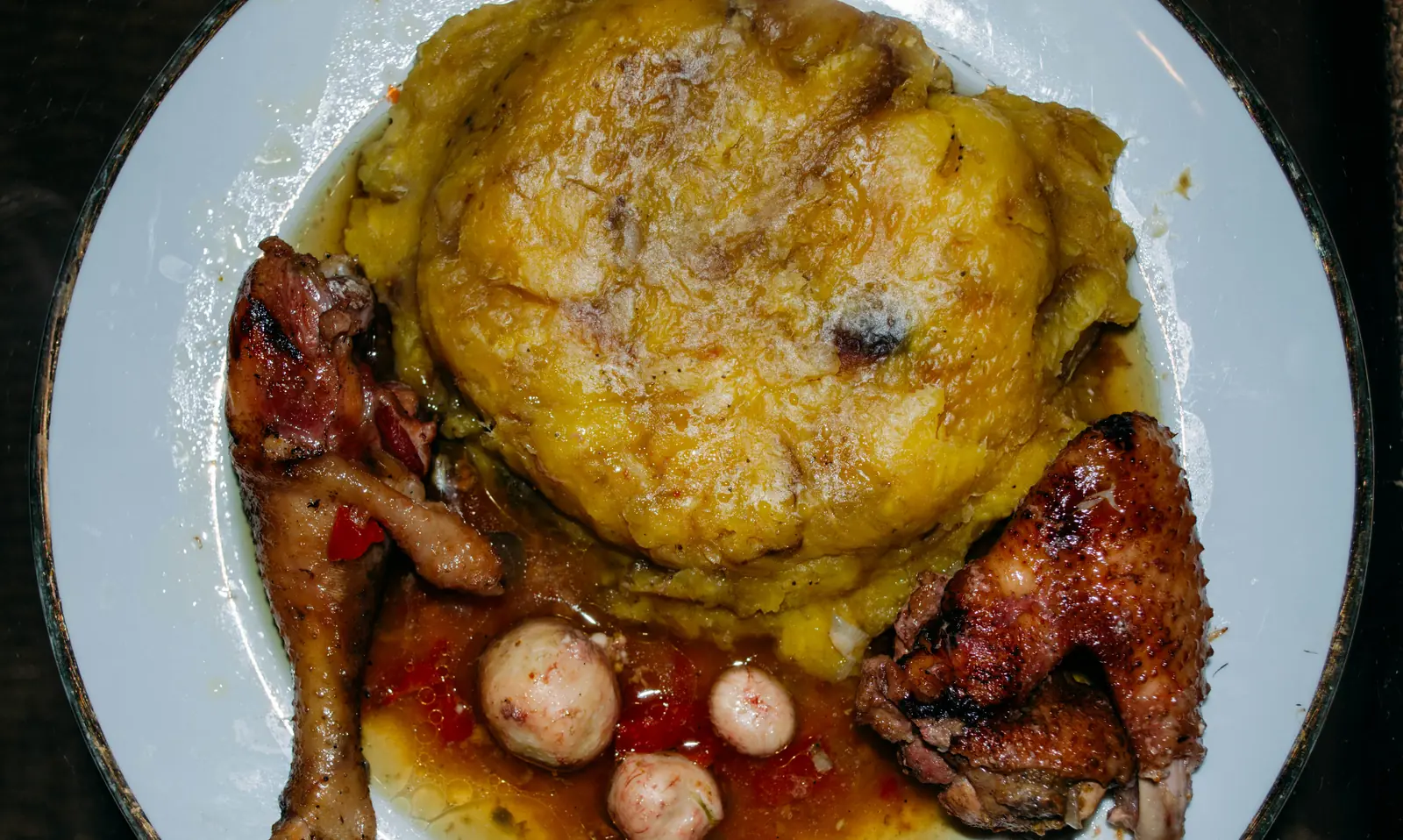
A mound of mashed steamed matooke served with roasted chicken drumsticks on a plate

Buganda Heritage

Photo: Namuganyi, CC BY-SA 4.0, via Wikimedia Commons

The Heritage Formulary

Measured Ingredients

Estimated cost: Low — about $2–3 per serving at home (USD)

Good matoke is judged by its texture: soft and smooth, holding together in a mound, with a gentle banana-leaf aroma.

Execution Methodology & Culinary Technique

Step-by-Step Cooking Guide

Active 2h 25m
P

Prep Stage: Peel, Wrap & Build the Pot

25 Mins • Knife Work

Peel the green bananas, rubbing a little oil on your hands first so the sticky sap does not stain your skin. Wash the banana leaves, remove their tough central ribs and soften them briefly in hot water. Slice the onion, chop the tomato and mince the garlic, and set a large pot with a steamer rack or a bed of chopped banana stalks at the bottom, with 500 ml of water underneath.

Maestro Tip: Oil on your hands stops the banana sap from staining your skin and sticking to your fingers.

  1. 1

    Peel the Bananas

    15 Mins No heat — room temperature

    Cut off both ends of each banana, slit the skin lengthways with a sharp knife and pull it away in strips. Rinse the peeled bananas in cold water and set them aside. Work quickly and keep the peeled bananas covered with a damp cloth so they do not darken.

    A shallow slit is enough — cut too deep and you lose good banana flesh with the skin.

    Done when: Bananas are fully peeled, pale and firm, with no green skin left.

  2. 2

    Wrap in Banana Leaves

    10 Mins No heat — room temperature

    Overlap two large banana leaves and lay the peeled bananas in the centre. Fold the leaves over them from the sides, then fold in the ends to make a tight parcel, and tie it with banana fibre or kitchen string. Set the parcel on the rack or stalk bed in the pot, above the water, and cover the pot with its lid.

    The parcel must sit above the water, not in it — the bananas steam, they do not boil.

    Done when: Parcel is snug and tied, sitting on the rack with water below it.

  3. 3

    Steam the Bananas

    90 Mins Gentle steam, ~95°C (203°F)

    Bring the water to a boil, then lower the heat so the pot steams steadily. Cover tightly and steam for 90 minutes, checking the water level every 30 minutes and topping up with boiling water so the pot never boils dry. The bananas are ready when they yield easily to a fork pressed through the leaf.

    Keep a kettle of boiling water nearby — cold top-ups drop the temperature and slow the cooking.

    Done when: Bananas are completely tender and yield easily when pressed.

  4. 4

    Mash While Hot

    5 Mins Off the heat, residual heat ~90°C (194°F)

    Lift the parcel into a large bowl and open it carefully, watching for escaping steam. Mash the hot bananas thoroughly with a potato masher or a sturdy wooden spoon until smooth, pressing out every lump. The mash should be soft and hold together.

    Mash while the bananas are hot — once they cool they stiffen and will never turn smooth.

    Done when: Mash is smooth and lump-free, soft enough to shape with a spoon.

  5. 5

    Finish with Ghee & Onion

    5 Mins Medium heat, ~170°C (340°F)

    Warm the ghee in a small pan, soften the sliced onion and garlic for 2 minutes, then add the tomato and cook for 2 more minutes until it just softens. Fold this mixture and the salt through the hot mash so the flavour runs through the whole mound.

    Do not brown the onion — it should soften and sweeten, not colour.

    Done when: Mash is evenly flecked with onion and tomato and tastes seasoned throughout.

  6. 6

    Rewrap & Steam Again

    20 Mins Gentle steam, ~95°C (203°F)

    Spoon the mash back into the centre of a fresh banana leaf, fold it into a neat parcel and return it to the pot over the steaming water. Cover and steam for 20 minutes more, then lift it out and rest it, still wrapped, for 5 minutes before serving.

    This second steam is what gives matoke its famous soft, even texture.

    Done when: Matoke is hot all the way through, soft and holding together in a mound.

Finishing Touches & Plating

Unwrap the matoke onto a warm serving plate and shape it into a smooth mound with the back of a wet spoon. Serve hot, with groundnut sauce or your favourite stew spooned alongside — never on top, so the mash stays fluffy.
Nutritional Physiology & Benefits

Nutrition

Energy

480

kcal / serving

Protein

5g

Complete AA

Carbs

101g

Complex

Fats

11g

Healthy

Per serving (4 servings · 1 serving ≈ 380 g)
Energy480 kcal
Protein5 g
Carbohydrates101 g
Fat11 g
Fibre8.0 g
Sugar47.4 g
Sodium500 mg
Per 100g
Energy126 kcal
Protein1.3 g
Carbohydrates26.6 g
Fat3 g
Fibre2.1 g
Sugar12.5 g
Sodium132 mg

Nutrition values are estimated — calculated from USDA FoodData Central values for the listed ingredients.

Vitamins & minerals: Potassium and vitamin B6 (green bananas), vitamin C (tomato), vitamin A (onion and tomato). Nutrition values are estimated.

Steady Energy

A serving is mostly slow-digesting starch from the green bananas, giving steady energy that keeps you full for hours — the reason matoke anchors a Ugandan lunch.

Gentle on the Stomach

Steamed and mashed with no frying, matoke is soft, mild and easy to digest, and the gentle cooking keeps the bananas' potassium and vitamin B6 intact.

Potassium & Vitamin B6

Green cooking bananas are a good source of potassium and vitamin B6, and the tomato and onion folded through the mash add vitamin C and vitamin A.

Food Pairings

What to Eat With

To optimize nutrient absorption and elevate the sensory depth, pair with these authentic accompaniments:

Sauces

Groundnut Sauce

The classic partner: a creamy groundnut sauce adds protein, fat and a nutty richness that turns the mild, starchy mash into a complete meal.

Sides

Beef Stew

A slow-cooked beef stew spooned beside the matoke gives the plate its savoury depth, and the mash soaks up the gravy beautifully.

Fresh Avocado

Slices of ripe avocado add creamy fat and a cool contrast to the hot mash, and they are served with matoke all over Uganda.

Vegetables

Steamed Greens (Dodo)

A small pile of steamed amaranth leaves adds colour, fibre and a mild bitterness that balances the soft sweetness of the bananas.

Complete menu

Serve the matoke as a mound on the plate with groundnut sauce, a beef stew and steamed dodo greens on the side, and finish with fresh avocado and hot black tea.

Digestive Guardrails

What NOT to Combine

To prevent digestive distress, sluggishness, or palate clash, avoid pairing the dish with these elements:

Very Sweet Drinks With the Meal

Sugary sodas add a large dose of sugar to an already starchy meal; water or unsweetened tea is the better match. This is general information, not medical advice.

Boiling the Bananas in Water

Boiling waterlogs the bananas and washes out their flavour. Steaming in leaves keeps them firm, fragrant and dry enough to mash into a mound.

General information only, not medical advice — consult a doctor for personal dietary decisions.

Who Should Eat It

Who Should Eat

  • General adultsA complete, filling dinner — starchy bananas with a rich sauce on the side.
  • ChildrenSuitable from age 2+; the mash is soft and easy to chew. Keep the chilli out of their portion.
  • ElderlyGood — soft and easy to chew, with steady energy; keep the portion modest.
  • Pregnant womenGenerally suitable; the bananas are well cooked and the dish is mild. Ask your clinician about portion size.
  • Breastfeeding womenGenerally suitable; the potassium and vitamin B6 support recovery — keep portions moderate.
  • AthletesA strong carbohydrate base for refuelling; pair it with a protein-rich sauce such as groundnut or beef stew.
  • Weight gainA good choice — a generous serving with groundnut sauce and avocado.
  • Weight lossKeep the banana portion modest, load up on steamed greens, and go easy on the ghee.

Health Conditions — Adjust or Avoid

Conditions

  • DiabetesHigh in carbohydrate from the bananas, so keep the portion modest and add extra greens; ask your clinician about portions.
  • High blood pressureKeep the added salt to the recipe amount and skip stock cubes; most sodium here is the salt. Ask your clinician about your daily sodium limit.
  • Kidney diseaseThe bananas are high in potassium; keep the portion modest if your clinician has advised a low-potassium diet, and ask about portion size.
  • GoutBananas are low in purines and the dish is plant-based as written; add meat sauces in modest portions if gout flares are frequent. Ask your clinician if flares are common.
  • Stomach issuesUsually gentle — soft, mild and steamed — but eat slowly and avoid very hot servings if your stomach is sensitive.
  • Cardiovascular diseaseSteamed, not fried, with a measured amount of ghee; the fat is moderate for a starchy staple. Ask your clinician about how often it fits your diet.
  • Fatty liverKeep the portion modest and fill the plate with steamed greens. Ask your clinician about portion size.
  • Food allergiesContains no common allergens as written. Naturally gluten-free and dairy-free if you use oil instead of ghee.
  • Special therapeutic dietsIf you follow a prescribed low-sodium diet, use less salt and a smaller portion, and check with your clinician.

If you have a medical condition, consult your doctor before changing your diet.

Storage & Use

Storage & Use

How to store
Cool quickly and store in an airtight container, still wrapped in its leaf if possible.
In the fridge
Mashed matoke 2 days.
In the freezer
Up to 1 month.
How to reheat
Reheat covered with a splash of water until steaming hot throughout, to 74°C (165°F).
Freezing recommended
Yes, up to 1 month; the texture softens slightly on thawing.
Signs it has spoiled
Sour smell, grey colour, or slimy surface.

More recipes to explore

Chicken luwombo opened in its banana leaf, showing stewed chicken in a rich sauce Uganda flag Uganda 2h 30m
Dinner •Buganda Royal Heritage

Luwombo

This luwombo recipe is Uganda's celebration stew: chicken thighs simmered in a tomato and groundnut sauce with carrots and potatoes, then wrapped in smoked banana leaves and steamed until meltingly tender. Opening the leaf at the table releases a wave of smoky, savoury steam. One serving is about 358 g.

Celebration Stew

Chicken and vegetables steamed inside smoked banana leaves — the Buganda royal dish, now Uganda's celebration stew.

Pairs Well With
Steamed matooke, posho & steamed greens
High Protein
Two Ugandan rolex wraps cut in half on a white plate with lime wedges Uganda flag Uganda 40m
Lunch •Kampala Street Food

Ugandan Rolex

This ugandan rolex recipe is Kampala's famous street wrap: a thin omelette studded with cabbage, tomato and onion, laid on a soft homemade chapati and rolled into a log. The name comes from 'rolled eggs', said fast — and the wrap is just as quick to eat. One serving is about 395 g.

Street-Food Favourite

A vegetable omelette rolled in a soft chapati — Kampala's beloved street-food wrap, ready in 40 minutes.

Pairs Well With
Chai, fresh fruit & chilli sauce
Quick Prep (<30m)
Bœuf bourguignon — French beef braised in red wine France flag France 4h
Dinner •Burgundy Terroir

Bœuf Bourguignon

Beef braised gently in red wine until the connective tissue melts into a velvet, gelatin-rich sauce — the classic Burgundy Sunday dinner.

Cellular Repair

Beef braised in red wine until spoon-tender, with mushrooms and pearl onions.

Pairs Well With
Parsnip Purée & Steamed French Haricots Verts
High Protein
Vietnamese braised pork belly with golden eggs in caramel sauce Vietnam flag Vietnam 1h 45m
Dinner •One Pot

Vietnamese Braised Pork and Eggs

Pork belly slowly braised in coconut water and caramel until meltingly tender, with golden eggs that soak up the sweet-savoury sauce — the Vietnamese family dish that tastes better the next day.

Comfort & Sustained Energy

Slow-braised pork belly and eggs in coconut water and caramel.

Pairs Well With
Steamed rice & pickled mustard greens
High Protein

The Dinner Gazette

Never wonder what’s for dinner again

One email a week with easy dinner ideas from around the world — ingredients, steps and nutrition, tested in our kitchen first.

Delivered every Thursday morning. Unsubscribe anytime.