Curated recipes from 193 countries  •  New seasonal Mediterranean issue out now

Overview

Mosterdsoep

Groningen Mustard Soup, Dutch Mustard Soup, Groninger Mosterdsoep

This mosterdsoep recipe makes the creamy mustard soup of Groningen: leeks and onion soften in butter, a flour roux thickens vegetable stock, and coarse wholegrain mustard and cream go in at the end so the tang stays bright. One serving is about 388 g and carries 361 calories. Serve it hot with crisp croutons and spring onion, the way the northern Dutch do.

Mosterdsoep is the mustard soup of the northern Netherlands, most closely tied to Groningen, where coarse-grained mustard has been milled for centuries — the town's mustard makers gave the soup its name and its bite. The recipe is simple on purpose: a butter-and-flour roux, stock, leek and onion, and a generous spoonful of wholegrain mustard stirred in at the end with cream, so the heat of the mustard stays bright instead of cooking away. Older versions often came with bacon lardons, and some cooks add a diced apple; this version keeps it vegetarian, the way many Groningen kitchens serve it today, with crisp croutons and spring onion on top. It tastes like mustard, of course — but mellowed by butter and cream into something gentle and warming rather than sharp.

Pairs well with: Dark rye bread with aged Gouda, and a crisp green salad

Provenance

Netherlands flag Netherlands

Groningen Classic

Nordic & European

Time Dedication

42m

15m prep • 27m cook

Batch Yield

4 Servings

361 kcal per serving

1 serving ≈ 388 g

Technical Skill

Easy

Easy (One Pot)

Meal Timing & Digestive Fit

Breakfast

Not Advised

Lunch

Prime Metabolic Fit

Dinner

Ideal Hearty Main

Snack & Tea

Inappropriate

Soups & Broths Occasions: Cold winter lunches, rainy-day suppers, starter for a Dutch dinner, cosy weekends Cost: Low — about $2–3 per serving at home
A bowl of creamy mosterdsoep mustard soup with spring onion and a side bowl of croutons

Groningen Classic

Photo: Cristian Bortes www.eyeem.com/bortescristian from Cluj-Napoca, Romania, CC BY 2.0, via Wikimedia Commons

The Heritage Formulary

Measured Ingredients

Estimated cost: Low — about $2–3 per serving at home (USD)

This version is vegetarian, made with vegetable stock and no bacon; many Groningen recipes add bacon lardons, but the mustard, leek and cream carry the flavour on their own.

Execution Methodology & Culinary Technique

Step-by-Step Cooking Guide

Active 42m
P

Prep Stage: Slice, Cube and Warm the Stock

15 Mins • Slicing and Measuring

Slice the leek and onion, mince the garlic, and cut the bread into 1 cm cubes for the croutons. Warm the vegetable stock in a separate pan so it goes into the roux hot and keeps the soup smooth. Measure out the flour, mustard and cream so they are ready to add in turn.

Maestro Tip: Rinse the sliced leek in a bowl of water and lift it out — grit sinks to the bottom, and sandy soup cannot be fixed later.

  1. 1

    Soften the leek and onion

    5 Mins Medium heat, about 160°C (320°F)

    Melt the butter in a large pot over medium heat. Add the sliced leek, onion and garlic with a pinch of salt and cook gently for about 5 minutes, stirring often, until soft and sweet-smelling but not browned.

    Keep the heat gentle: browned onion turns the soup bitter, and mustard cannot hide it.

    Done when: Vegetables are soft, glossy and sweet-smelling, with no browning.

  2. 2

    Make the roux and add the stock

    5 Mins Gentle simmer, about 95°C (203°F)

    Stir the flour into the softened vegetables and cook for 1 minute, stirring constantly, until it forms a pale paste. Pour in the warm vegetable stock a little at a time, whisking as you go so no lumps form, then bring the soup to a gentle simmer.

    Warm stock is the secret to a lump-free roux — cold stock makes the flour seize.

    Done when: The soup is smooth, with no lumps, and just beginning to bubble.

  3. 3

    Simmer the soup and toast the croutons

    10 Mins Soup at a gentle simmer, about 95°C (203°F); oven at 200°C (400°F)

    Turn the heat down and simmer the soup for about 10 minutes until the leek is completely tender and the soup has thickened slightly. While it simmers, toss the bread cubes with the olive oil, spread them on a baking tray, and toast in a hot oven until golden and crisp.

    Shake the tray once halfway through so the croutons brown on all sides.

    Done when: Leek is fully tender; croutons are golden and crisp all the way through.

  4. 4

    Finish with mustard and cream

    5 Mins Off the heat, about 80°C (175°F)

    Take the soup off the heat. Stir in the wholegrain mustard and the cream, then season with the salt and pepper and taste. The mustard should be clearly present but not aggressive — add a little more if you like it sharper. Do not let the soup boil once the cream is in, or it may split.

    Mustard goes in last because long boiling dulls its flavour; the cream goes in off the heat for the same reason.

    Done when: The soup is creamy, pale gold, and tastes clearly of mustard without being sharp.

  5. 5

    Serve with croutons on the side

    2 Mins Serving temperature, about 70°C (158°F)

    Ladle the soup into warm bowls. Scatter the spring onion over the top and set the bowl of croutons on the table so everyone can add their own — they stay crisp that way. Serve at once with rye bread and Gouda.

    Warm the bowls with hot water first — cream soup cools fast in a cold bowl.

    Done when: Soup is steaming hot, croutons are crisp, and the spring onion is bright green.

Finishing Touches & Plating

Serve the soup hot, ladled into warm bowls, with the croutons in a small bowl on the side so they stay crisp, and spring onion scattered over the top just before eating.


Nutritional Physiology & Benefits

Nutrition

Energy

361

kcal / serving

Protein

6g

Complete AA

Carbs

30g

Complex

Fats

26g

Healthy

Per serving (4 servings · 1 serving ≈ 388 g)
Energy361 kcal
Protein6 g
Carbohydrates30 g
Fat26 g
Fibre2.7 g
Sugar7.9 g
Sodium1111 mg
Per 100g
Energy93 kcal
Protein1.4 g
Carbohydrates7.7 g
Fat6.6 g
Fibre0.7 g
Sugar2 g
Sodium286 mg

Nutrition values are estimated — calculated from USDA FoodData Central values for the listed ingredients.

Vitamins & minerals: Vitamin K and folate (leek, spring onion), vitamin C (leek, onion), calcium (cream), vitamin A (butter).

Fibre and Folate from Vegetables

Leeks and onions cook into the soup with fibre, folate and vitamin K, so the flavour comes from vegetables rather than from extra salt.

Steady Energy

A bowl with bread gives steady energy for a cold afternoon — the fat in the cream slows digestion, so the warmth lasts.

Light and Low-Waste

The soup is vegetarian and uses just a handful of everyday ingredients, which makes it a light, low-waste lunch.

Food Pairings

What to Eat With

To optimize nutrient absorption and elevate the sensory depth, pair with these authentic accompaniments:

Sides

Rye Bread and Aged Gouda

Dark rye bread with aged Gouda is the northern Dutch table's answer to this soup — the nutty cheese and dense bread turn a light soup into a real lunch.

Buttery Croutons

The croutons are not a garnish but part of the dish — their crunch against the velvety soup is what makes each spoonful interesting.

Vegetables

Crisp Green Salad

A sharp, lemony green salad lightens the creamy soup and gives the plate the fresh crunch it needs.

Drinks

Dry White Wine or Lager

A small glass of dry white wine or a light lager cuts through the cream and echoes the mustard's tang.

Complete menu

Serve the soup with the croutons on the side and a slice of dark rye bread with aged Gouda, followed by a simple apple tart with coffee.

Digestive Guardrails

What NOT to Combine

To prevent digestive distress, sluggishness, or palate clash, avoid pairing the dish with these elements:

Very Sweet Drinks With the Soup

Very sweet drinks or sweet wine clash with the tangy mustard and make the soup taste sharp; dry white wine, water or a light lager are better. This is general nutrition information, not medical advice.

Leaving Cream Soup Out for Hours

Cream soups left at room temperature for more than 2 hours can grow harmful bacteria; refrigerate leftovers promptly and reheat them until steaming hot, about 74°C (165°F), without letting the soup boil hard. This is general food-safety information, not medical advice.

General information only, not medical advice — consult a doctor for personal dietary decisions.

Who Should Eat It

Who Should Eat

  • General adultsA warming, creamy lunch soup — one bowl with bread is a light meal.
  • ChildrenMild and creamy once the mustard is stirred in; start with a small bowl and hold back the spring onion for very young children.
  • ElderlySoft, warm and easy to eat; the mustard gives it flavour without needing much salt.
  • Pregnant womenFine when made with pasteurised cream and eaten hot and fresh; keep the portion to one bowl.
  • Breastfeeding womenA warm, energy-rich soup that suits a quick lunch — eat it fresh and hot.
  • AthletesGood after training with bread and cheese on the side, though the soup itself is light on protein — add a boiled egg or cheese to make it a full recovery meal.
  • Weight gainA good choice — creamy, energy-dense, and easy to finish with bread and croutons.
  • Weight lossBest as a smaller bowl with a big salad; the cream and butter make it rich, so skip the second helping of croutons.

Health Conditions — Adjust or Avoid

Conditions

  • DiabetesAbout 30 g of carbohydrate per bowl, mostly from flour, bread and stock — take a smaller bowl and fewer croutons, and ask a clinician about portion size.
  • High blood pressureSodium is about 1,111 mg per serving, mostly from the mustard and stock — use low-sodium stock and no extra salt, and ask a clinician for personal advice.
  • Kidney diseaseThe mustard, stock and cream all add sodium and potassium, which some kidney diets limit — ask a clinician about portion size before eating it regularly.
  • GoutNo purine-rich meat here as written, and the soup is vegetarian — ask a clinician if you have questions about your overall diet.
  • Stomach issuesMustard and cream can bother sensitive stomachs; a smaller bowl, less mustard and no raw spring onion is usually easier — ask a clinician if symptoms persist.
  • Cardiovascular diseaseAbout 26 g of fat per bowl, mostly saturated fat from butter and cream — enjoy occasionally and keep to one bowl; ask a clinician about your overall eating pattern.
  • Fatty liverCreamy and energy-dense; keep it an occasional treat and favour a half bowl with plenty of salad — ask a clinician for personal guidance.
  • Food allergiesContains gluten (flour, croutons), milk (butter, cream) and mustard. Naturally free of egg, nuts, fish and soy.
  • Special therapeutic dietsVegetarian as written, but not vegan, gluten-free or low-sodium; if you follow a restricted diet, ask a clinician or dietitian before adapting it.

If you have a medical condition, consult your doctor before changing your diet.

Storage & Use

Storage & Use

How to store
Cool quickly and store the soup in an airtight container; keep the croutons in a separate sealed bag at room temperature.
In the fridge
3 days in the fridge at 4°C (39°F) or below.
In the freezer
Up to 2 months without the croutons; thaw overnight in the fridge.
How to reheat
Reheat gently in a pan over low heat until steaming hot, about 74°C (165°F); do not boil, or the cream may split.
Freezing recommended
Yes — the soup base freezes well for up to 2 months; make fresh croutons to serve.
Signs it has spoiled
Sour or off smell, a skin that will not stir back in, or mould — discard it.

More recipes to explore

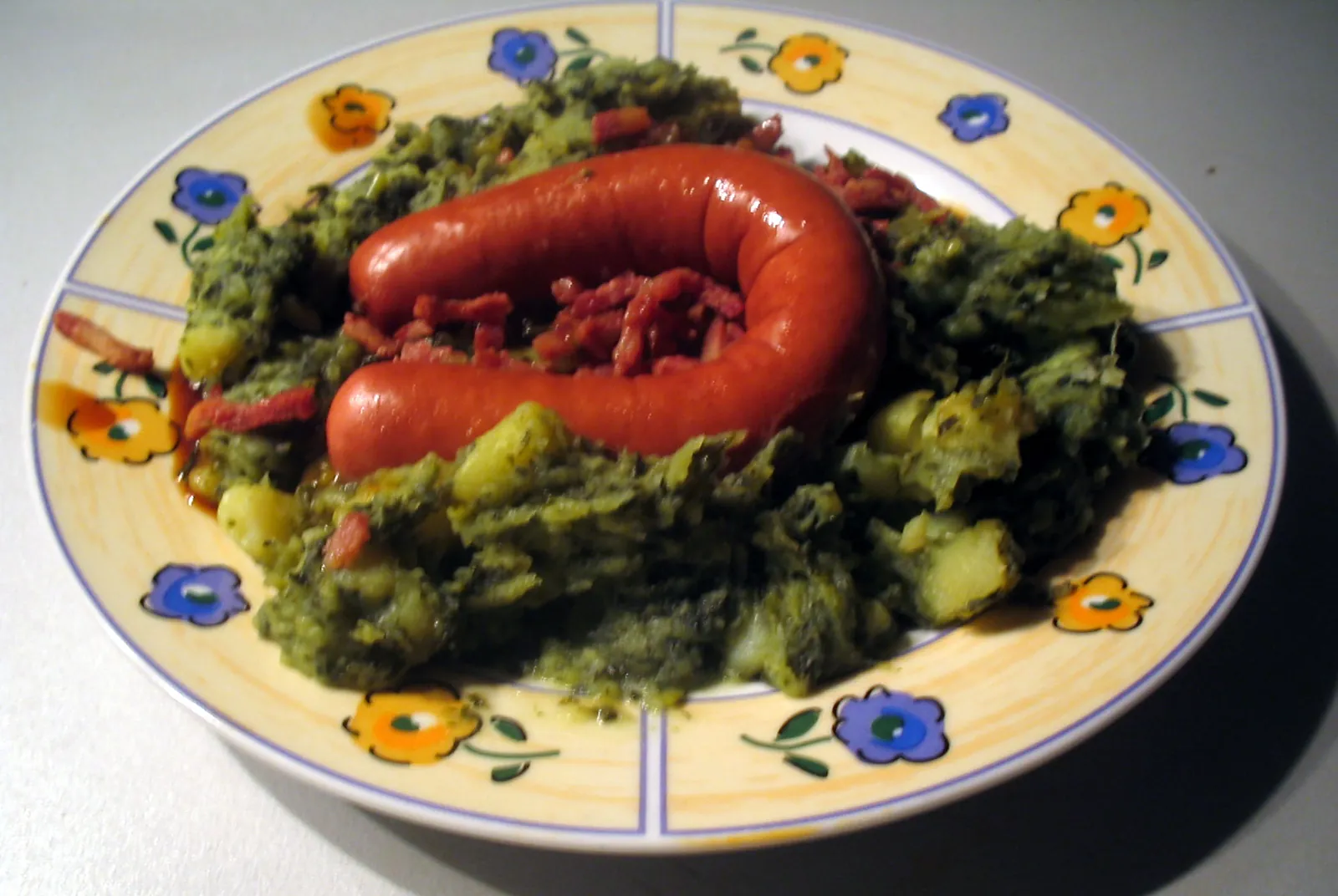
A plate of green boerenkool stamppot with a smoked sausage and bacon bits Netherlands flag Netherlands 45m
Dinner •Dutch Heritage

Stamppot

This stamppot recipe boils floury potatoes with curly kale, mashes them with butter and warm milk into a soft, green-flecked mash, and serves it with a smoked rookworst sausage, crisp bacon bits and mustard. One serving is about 480 g.

Comfort & Warmth

Floury potatoes mashed with kale, butter and milk, served with smoked sausage and bacon.

Pairs Well With
Smoked sausage, bacon bits & mustard
Six golden bitterballen with a small pot of mustard on a white plate Netherlands flag Netherlands 55m
Snack & Tea •Dutch Heritage

Bitterballen

This bitterballen recipe cooks beef slowly in stock until tender, binds it into a thick, creamy ragout with butter and flour, chills it firm, then rolls it into balls, crumbs them and fries them until the outside shatters and the inside turns molten. One serving is about 300 g, six bitterballen with mustard.

Comfort & Warmth

Crisp deep-fried balls of creamy beef ragout, served hot with mustard.

Pairs Well With
Dijon mustard & a cold beer
A plate of round golden stroopwafels showing their waffle pattern and syrup layer Netherlands flag Netherlands 1h
Snack & Tea •Dutch Heritage

Stroopwafels

This stroopwafels recipe bakes thin waffles in a hot iron, splits each one while it is still warm, and spreads it with a buttery caramel syrup spiced with cinnamon. The syrup softens the waffle just enough to make it chewy at the edges and crisp in the middle. One serving is about 155 g, three stroopwafels.

Comfort & Warmth

Thin, crisp waffle rounds split and filled with warm caramel syrup.

Pairs Well With
Coffee, tea & a glass of milk
A plate of golden poffertjes dusted with powdered sugar, with melting butter and a fork. Netherlands flag Netherlands 1h 15m
Breakfast •Dutch Market Day Classic

Poffertjes

Poffertjes are the Netherlands' most beloved sweet snack: dozens of tiny, puffy yeast pancakes cooked in a dimpled pan, served hot with melting butter and a snowfall of powdered sugar. One serving is about 195 g, roughly 20 little pancakes.

Sweet Morning Treat

Tiny yeast-raised pancakes, golden outside and soft inside, served with butter and powdered sugar.

Pairs Well With
Serve hot with butter and powdered sugar, and a cup of coffee or hot chocolate.

The Dinner Gazette

Never wonder what’s for dinner again

One email a week with easy dinner ideas from around the world — ingredients, steps and nutrition, tested in our kitchen first.

Delivered every Thursday morning. Unsubscribe anytime.