
Curated recipes from 193 countries  •  New seasonal Mediterranean issue out now

Overview

Pierogi

Pierogi Ruskie, Polish Dumplings, Pierogi with Potato and Cheese

This pierogi recipe makes soft, half-moon dumplings filled with mashed potato and twaróg cheese, boiled until they float, then fried golden in butter with onions. They are the classic Polish pierogi ruskie, the version most Polish families make at home, and they arrive at the table with a spoonful of sour cream. One serving is about 340 g, roughly ten pierogi with sour cream.

Pierogi are Poland's best-known dumpling, and the name comes from the old Slavic word for a feast, a hint that they were once party food. Potato and cheese pierogi, known as pierogi ruskie, come from the eastern borderlands once called Ruthenia, where potato and curd cheese were the everyday filling. A meatless version is still the centrepiece of the Christmas Eve supper in many Polish homes, and families gather to fold them together by hand.

Pairs well with: Sour cream and fried onions, with a crisp cucumber salad on the side.

Provenance

Poland flag Poland

Polish Heritage

Nordic & European

Time Dedication

1h 25m

60m prep • 25m cook

Batch Yield

4 Servings

720 kcal per serving

1 serving ≈ 340 g

Technical Skill

Intermediate

Medium (Filled Dumplings)

Meal Timing & Digestive Fit

Breakfast

Not Advised

Lunch

Hearty Midday Main

Dinner

Ideal Hearty Main

Snack & Tea

Inappropriate

Occasions: Family dinners, Christmas Eve, weekend cooking, winter suppers Cost: Low — about $2–3 per serving at home
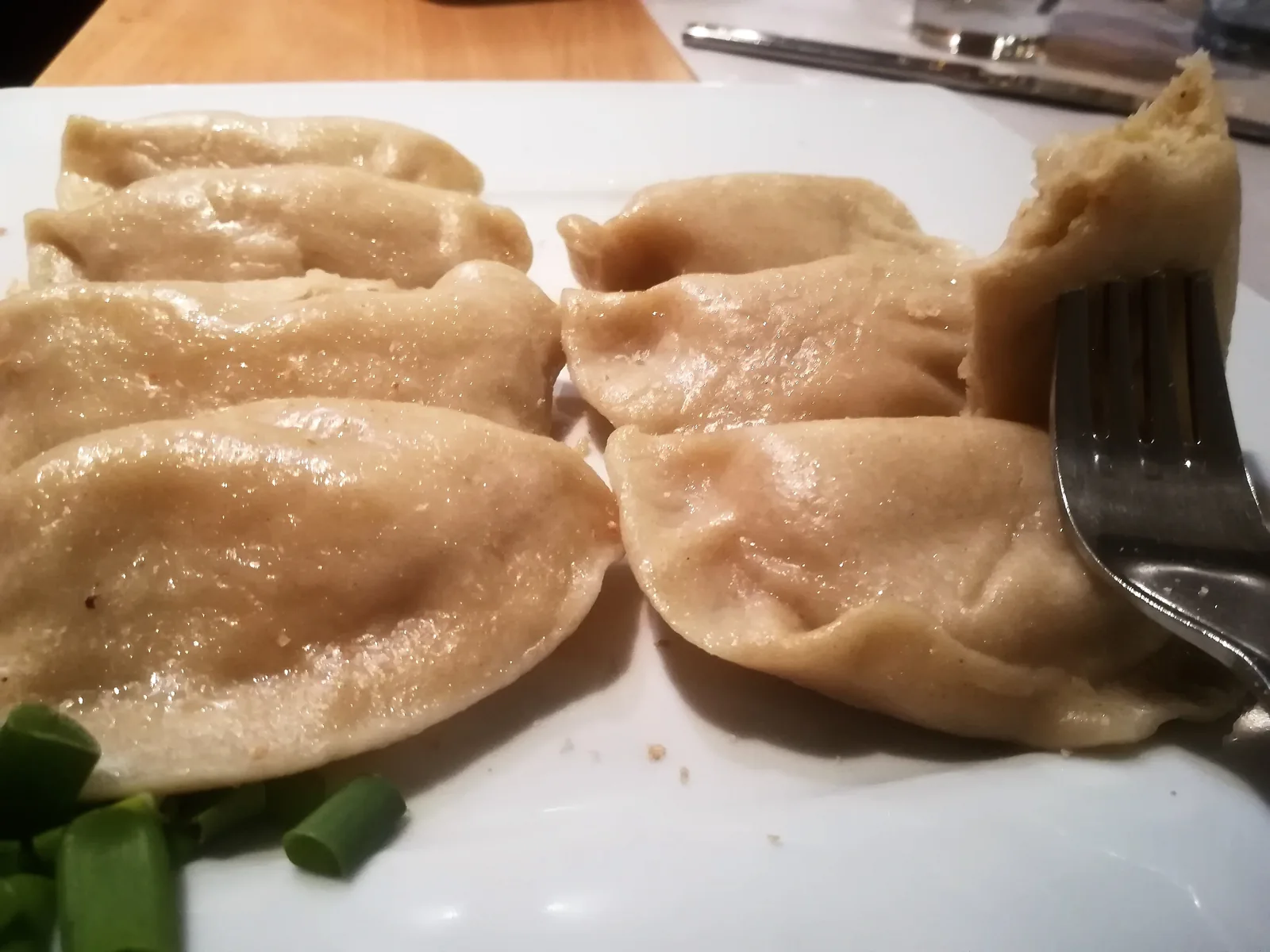
A plate of golden pierogi ruskie dumplings, one cut open on a fork showing the potato and cheese filling, with chopped spring onions

Polish Heritage

Photo: MOs810, CC BY-SA 4.0, via Wikimedia Commons

The Heritage Formulary

Measured Ingredients

Estimated cost: Low — about $2–3 per serving at home (USD)

Made the home way: soft wheat dough, potato and twaróg filling, boiled until they float and finished in butter.

Execution Methodology & Culinary Technique

Step-by-Step Cooking Guide

Active 1h 25m
P

Prep Stage: Dough, Filling & Onions

35 Mins • Kneading & Mashing

Knead the flour, warm water, egg, salt and oil into a soft, smooth dough and rest it under a bowl for 30 minutes. Meanwhile boil the potatoes until tender, mash them hot with the crumbled twaróg, and fry the onion gently in 25 g butter until golden. Stir the onion into the potato and cheese and season with salt and pepper.

Maestro Tip: Resting the dough is not optional — a rested dough rolls thin without springing back and seals without tearing.

  1. 1

    Make the Dough

    15 Mins No heat

    Mix the flour and 5 g salt in a large bowl, make a well, and add the warm water, beaten egg and oil. Stir with a fork, then knead on a floured surface for about 8 minutes until the dough is smooth, soft and slightly tacky. Cover with a bowl and rest for 30 minutes.

    If the dough feels stiff, wet your hands and knead the water in — adding flour makes tough pierogi.

    Done when: A smooth, soft dough that springs back slowly when poked.

  2. 2

    Cook the Potato & Cheese Filling

    20 Mins Boiling water, 100°C (212°F)

    Boil the potatoes in salted water for about 18 minutes until they break apart easily. Drain well, return to the hot pan for a minute to dry, then mash with the crumbled twaróg. Fry the onion in 25 g butter over medium heat for about 8 minutes until golden, stir it into the mash with 3 g salt and the pepper, and leave to cool.

    Mash the potatoes while they are hot — cold potato goes gluey and the filling turns heavy.

    Done when: A thick, dry-ish mash that holds its shape on a spoon.

  3. 3

    Roll, Fill & Seal

    25 Mins No heat

    Roll the rested dough out to about 3 mm thick and cut rounds with a 7 cm cutter or a glass. Place a heaped teaspoon of filling in the centre of each round, fold over, and pinch the edges firmly shut, pressing out any air. Crimp the edge with your fingers or a fork.

    Work with small batches and keep the rest of the dough covered — dry dough will not seal and the pierogi burst in the water.

    Done when: Neat half-moons with tightly pinched, air-free edges.

  4. 4

    Boil the Pierogi

    10 Mins Boiling water, 100°C (212°F)

    Drop the pierogi into a large pan of boiling salted water in batches, stir once gently so they do not stick, and cook for 3 to 4 minutes after they float to the surface. Lift them out with a slotted spoon and drain briefly.

    Do not crowd the pan — pierogi that touch each other stick and tear.

    Done when: Pierogi floating on the surface, plump and tender.

  5. 5

    Fry in Butter & Serve

    10 Mins Medium heat, ~175°C (350°F)

    Melt the remaining 30 g butter in a wide frying pan and fry the boiled pierogi in a single layer for 2 to 3 minutes per side until golden and lightly crisp. Serve hot with sour cream and a scattering of chives.

    Let the pan get hot before the pierogi go in, or they soak up butter instead of crisping.

    Done when: Golden, lightly crisp spots on both sides, steaming hot inside.

Finishing Touches & Plating

Pile the pierogi on a warm plate, spoon the sour cream over the top, and scatter the chives and any leftover fried onion across them before serving.

Nutritional Physiology & Benefits

Nutrition

Energy

720

kcal / serving

Protein

22g

Complete AA

Carbs

104g

Complex

Fats

24g

Healthy

Per serving (4 servings · 1 serving ≈ 340 g)
Energy720 kcal
Protein22 g
Carbohydrates104 g
Fat24 g
Fibre5.9 g
Sugar5.0 g
Sodium1133 mg
Per 100g
Energy212 kcal
Protein6.6 g
Carbohydrates30.6 g
Fat6.9 g
Fibre1.7 g
Sugar1.5 g
Sodium333 mg

Nutrition values are estimated — calculated from USDA FoodData Central values for the listed ingredients.

Vitamins & minerals: Potatoes supply vitamin C and potassium, the cheese adds calcium, and the egg in the dough adds vitamin B12.

Steady Energy

One serving gives a good amount of carbohydrate from potato and wheat, a slow-burning fuel that keeps you going through a long evening.

Fibre from Potato

The potato filling supplies fibre, and the onion adds more, which supports normal digestion.

Calcium & Potassium

The twaróg cheese adds calcium and protein, while the potato is a useful source of potassium and vitamin C.

Food Pairings

What to Eat With

To optimize nutrient absorption and elevate the sensory depth, pair with these authentic accompaniments:

Sauces

Sour Cream

Cool, tangy sour cream is the classic partner — it cuts through the butter the pierogi were fried in and the contrast is the whole point of the dish.

Vegetables

Fried Onions

Sweet, golden onions fried in butter echo the filling and add a soft, savoury note on top of each dumpling.

Cucumber & Dill Salad

A crisp, vinegary cucumber salad refreshes the palate between rich, buttery bites and keeps the plate from feeling heavy.

Drinks

Black Tea with Lemon

Hot black tea cleanses the palate after a rich, starchy plate, and lemon adds a bright note that matches the sour cream.

Complete menu

Start with a cucumber and dill salad, serve the pierogi hot with sour cream and fried onions, and finish with black tea and a slice of apple cake.

Digestive Guardrails

What NOT to Combine

To prevent digestive distress, sluggishness, or palate clash, avoid pairing the dish with these elements:

Extra Butter on Top

The pierogi are already fried in butter, so pouring more melted butter over them pushes one serving far higher in saturated fat without adding flavour. This is general food information, not medical advice.

Heavy Cream Sauces

A thick cream sauce doubles the richness of an already buttery dish and hides the delicate potato and cheese filling. This is general food information, not medical advice.

General information only, not medical advice — consult a doctor for personal dietary decisions.

Who Should Eat It

Who Should Eat

  • General adultsA satisfying main course — about 22.3 g protein and 5.9 g fibre per serving, best eaten hot and in a sensible portion.
  • ChildrenChildren usually love pierogi — soft, mild and fun to eat with sour cream for dipping; cut them in half for small children.
  • ElderlySoft and easy to chew, and the potato and cheese filling is gentle; serve a modest portion with cucumber salad rather than extra butter.
  • Pregnant womenFine as an occasional meal when every ingredient is cooked right through; keep the portion modest. Ask your clinician about portions.
  • Breastfeeding womenA comforting, energy-rich meal; the protein and B vitamins are useful, but one serving is enough because the dish is filling.
  • AthletesGood fuel for recovery, with about 22.3 g protein and plenty of carbohydrate per serving — pair it with vegetables rather than extra fat.
  • Weight gainEnergy-dense and easy to eat in a good amount, so it suits weight gain when served with its usual rich accompaniments.
  • Weight lossTasty but starchy and butter-fried at 720 kcal a serving; keep to one serving, go light on the sour cream, and fill half the plate with cucumber salad.

Health Conditions — Adjust or Avoid

Conditions

  • DiabetesPotato and wheat dough are both starchy, so keep to the stated 340 g serving and skip sweet accompaniments; the cheese adds a little protein to slow the rise. Ask your clinician about portions.
  • High blood pressureOne serving carries about 1133 mg sodium, so keep other salty foods out of the same meal and do not add extra salt at the table. Ask your clinician about portions.
  • Kidney diseasePortions should stay modest, and the salt and protein content matter for some kidney diets. Ask your clinician about portions.
  • GoutMeat is the main purine source here, so keep to one modest serving and drink water with the meal. Ask your clinician about portions.
  • Stomach issuesA rich, fatty dish can be heavy on a sensitive stomach; eat slowly, take a smaller portion, and skip rich sauces if they bother you. Ask your clinician about portions.
  • Cardiovascular diseaseThe dish is rich in fat, so one modest serving with a big plate of vegetables is a better balance than a second helping. Ask your clinician about portions.
  • Fatty liverThe dish is energy-dense, so keep portions modest and avoid eating it late at night. Ask your clinician about portions.
  • Food allergiesContains wheat flour (gluten), milk (cheese, butter, sour cream) and egg. People with wheat, milk or egg allergy should not eat it unless a safe substitute is used; a gluten-free flour blend can replace the wheat flour. Ask your clinician about safe alternatives.
  • Special therapeutic dietsNot suitable for a low-fat therapeutic diet as written; any lighter version changes the dish and should be discussed with a clinician.

If you have a medical condition, consult your doctor before changing your diet.

Storage & Use

Storage & Use

How to store
Cool quickly; store cooked pierogi in a single layer in an airtight container with a little oil so they do not stick.
In the fridge
Cooked pierogi keep 3 days in the fridge at 4°C (40°F) or below.
In the freezer
Uncooked pierogi freeze best, up to 3 months on a tray, then bagged; cook from frozen, adding 2 minutes to the boil.
How to reheat
Reheat in a buttered pan over medium heat for 3 to 4 minutes until crisp and steaming hot throughout, to 74°C (165°F).
Freezing recommended
Yes — freeze uncooked pierogi, not cooked ones.
Signs it has spoiled
Sour smell, slimy surface, or a grey, sticky dough.

More recipes to explore

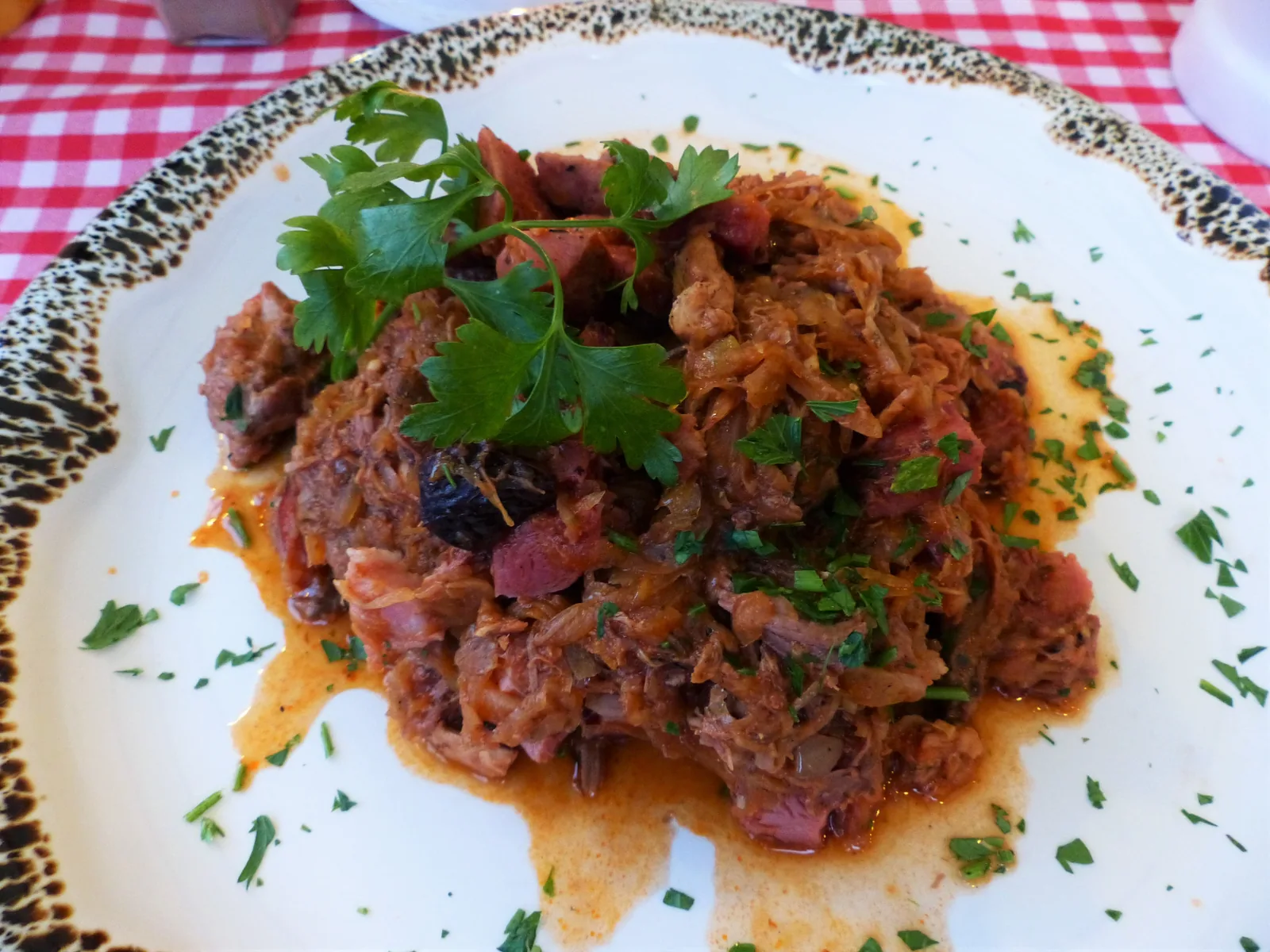
A plate of bigos, the Polish hunter's stew of sauerkraut and mixed meats, garnished with parsley on a checked tablecloth Poland flag Poland 3h 30m
Dinner •Polish Heritage

Bigos

This bigos recipe slow-cooks sauerkraut and fresh cabbage with pork, sausage, smoked ham and bacon, with dried mushrooms and prunes for depth. It is Poland's hunter's stew, a dish that was made to use up leftover meats and that improves every time it is reheated. One serving is about 430 g, served with rye bread.

Comfort & Warmth

A slow, sour stew of sauerkraut, fresh cabbage and mixed meats that tastes better the next day.

Pairs Well With
Dark rye bread and a cold beer, with pickled cucumbers on the side.
High Protein
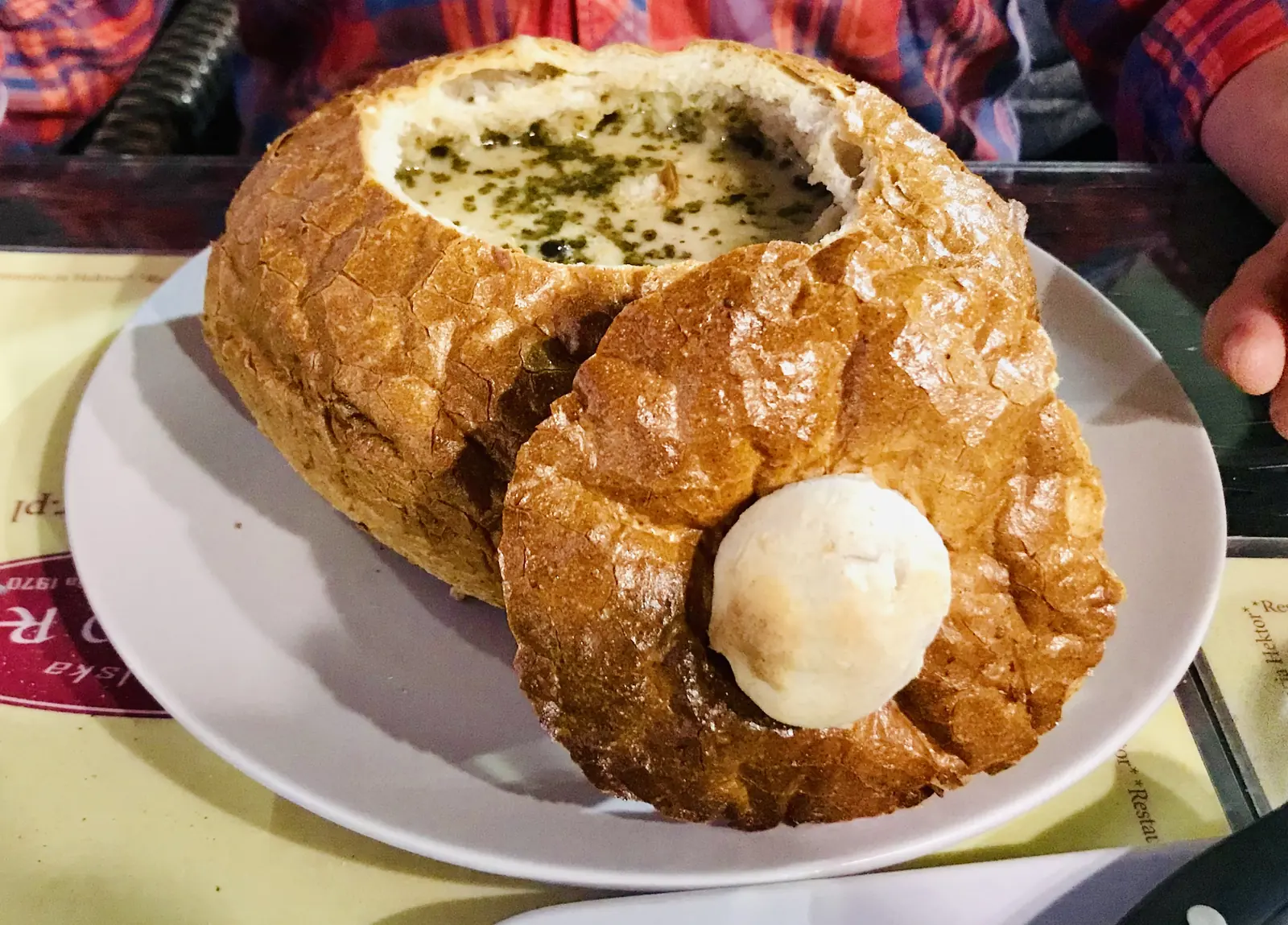
Żurek sour rye soup served in a hollowed bread bowl, creamy with herbs, on a white plate Poland flag Poland 1h
Lunch •Polish Heritage

Żurek

This zurek soup recipe turns fermented rye starter, smoked sausage and potato into Poland's tangy sour soup, finished with a boiled egg and a spoonful of sour cream. It is ladled into a hollowed-out bread loaf, so the bowl itself becomes part of lunch. One serving is about 520 g, soup and bread together.

Comfort & Warmth

A tangy sour-rye soup with sausage, potato and egg, served in a bread bowl.

Pairs Well With
A hollowed rye bread loaf as the bowl, with extra sausage on the side.
Soups & Broths
Bœuf bourguignon — French beef braised in red wine France flag France 4h
Dinner •Burgundy Terroir

Bœuf Bourguignon

Beef braised gently in red wine until the connective tissue melts into a velvet, gelatin-rich sauce — the classic Burgundy Sunday dinner.

Cellular Repair

Beef braised in red wine until spoon-tender, with mushrooms and pearl onions.

Pairs Well With
Parsnip Purée & Steamed French Haricots Verts
High Protein
Vietnamese braised pork belly with golden eggs in caramel sauce Vietnam flag Vietnam 1h 45m
Dinner •One Pot

Vietnamese Braised Pork and Eggs

Pork belly slowly braised in coconut water and caramel until meltingly tender, with golden eggs that soak up the sweet-savoury sauce — the Vietnamese family dish that tastes better the next day.

Comfort & Sustained Energy

Slow-braised pork belly and eggs in coconut water and caramel.

Pairs Well With
Steamed rice & pickled mustard greens
High Protein

The Dinner Gazette

Never wonder what’s for dinner again

One email a week with easy dinner ideas from around the world — ingredients, steps and nutrition, tested in our kitchen first.

Delivered every Thursday morning. Unsubscribe anytime.



