
Curated recipes from 193 countries  •  New seasonal Mediterranean issue out now

Overview

Porotos con Riendas

Porotos con Rienda, Chilean Beans with Reins, Beans and Spaghetti Stew

This porotos con riendas recipe is Chile's winter bean stew: pinto beans simmered with orange pumpkin until creamy, then finished with spaghetti broken into short strands — the 'reins' that give the dish its name — and a sofrito of onion, tomato, garlic and paprika. It is a one-pot meal, thick, warming and meat-free as written, with longaniza sausage as the traditional addition. One serving is about 440 g.

Porotos con riendas is one of the most traditional main dishes of Chilean home cooking, and its name is a peasant metaphor: the spaghetti strands laid over the beans look like the reins of a horse. In its origins the 'reins' were strips of pigskin cooked with the beans; today the dish is usually made with longaniza sausage, or meat-free as here, and it is considered a traditional winter meal. The beans, pumpkin and pasta all cook in one pot, and the stew is served with pebre and pickled onions.

Pairs well with: Serve hot with pebre and a Chilean tomato salad, and a glass of red wine or sparkling water.

Provenance

Chile flag Chile

Chilean Winter Heritage

Latin America & Caribbean

Time Dedication

1h 15m

15m prep • 60m cook

Batch Yield

4 Servings

410 kcal per serving

1 serving ≈ 440 g

Technical Skill

Easy

Easy (One Pot)

Meal Timing & Digestive Fit

Breakfast

Not Advised

Lunch

Prime Metabolic Fit

Dinner

Ideal Hearty Main

Snack & Tea

Inappropriate

Soups & BrothsPasta & Noodles Occasions: Winter lunches, family weekends, cold days, meat-free Mondays Cost: Low — about $2–3 per serving at home
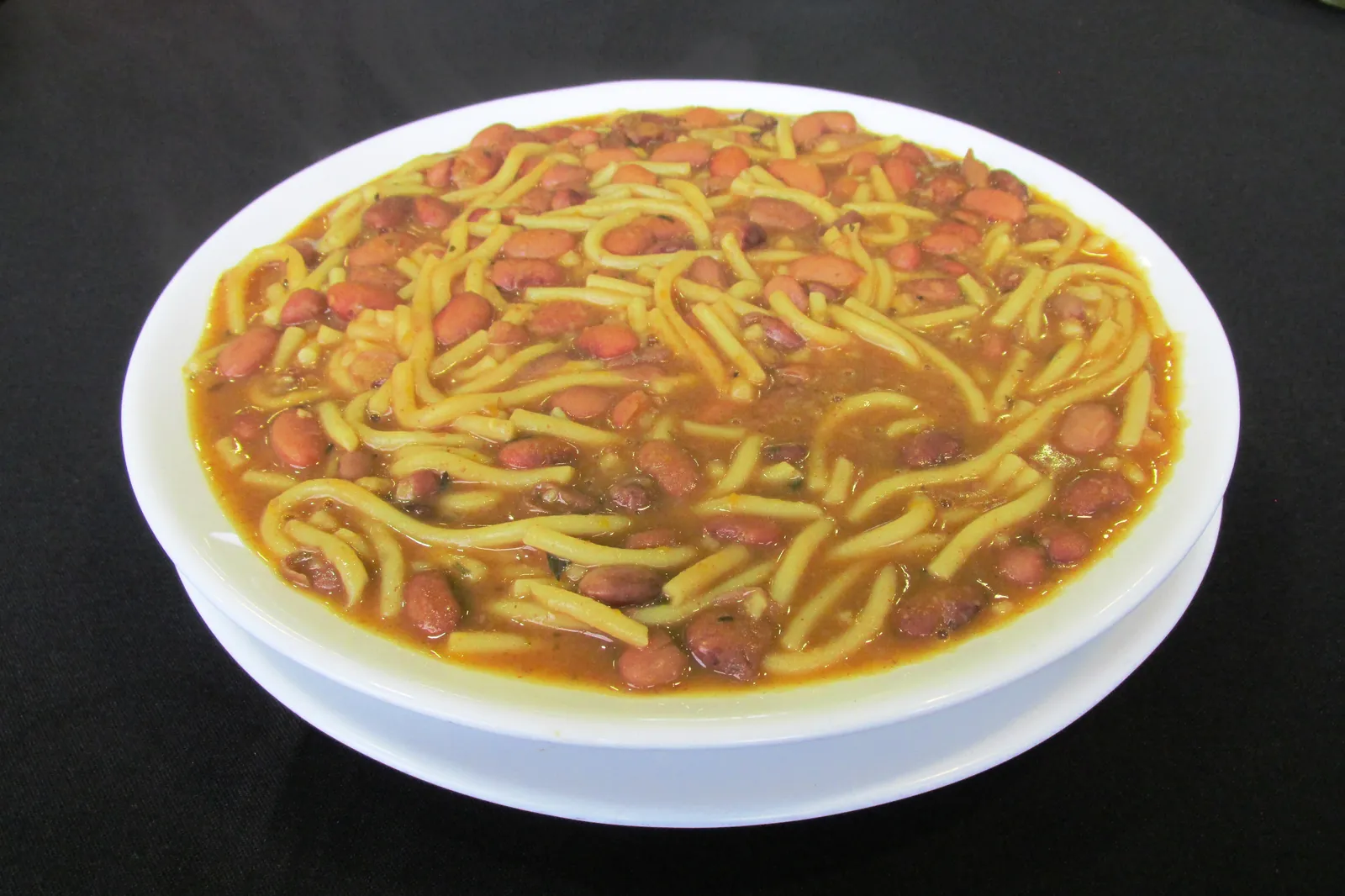
A white bowl of porotos con riendas, red pinto beans and pale spaghetti strands in a rich orange broth, on a black tablecloth

Chilean Winter Heritage

Photo: Marco Antonio Correa Flores, CC BY-SA 4.0, via Wikimedia Commons

The Heritage Formulary

Measured Ingredients

Estimated cost: Low — about $2–3 per serving at home (USD)

Good porotos con riendas have creamy beans, soft pumpkin and spaghetti with a little bite, in a thick orange broth — never watery, never mushy.

Execution Methodology & Culinary Technique

Step-by-Step Cooking Guide

Active 1h 15m
P

Prep Stage: Soak the Beans Overnight, Then Cube the Pumpkin & Chop the Sofrito

15 Mins active + overnight soak • Soaking & Chopping

The night before, rinse the pinto beans, pick out any stones, and cover them with cold water — they swell to about twice their dried weight, so give them room. The next day, drain and rinse them, peel and cube the pumpkin, dice the onion and tomatoes, mince the garlic and measure the broth, oil, cumin, paprika, oregano and salt so everything is ready before the pot gets hot.

Maestro Tip: Salt goes in at the end, not at the start — salting dried beans early can keep their skins tough.

  1. 1

    Simmer the Beans and Pumpkin

    45 Mins Gentle simmer, ~90°C (195°F)

    Put the drained beans and the pumpkin cubes in a large pot with the 500 ml of vegetable broth and enough cold water to cover everything by about 3 cm. Bring to a gentle simmer, skim off any foam, cover partway and cook for 40 to 45 minutes until the beans are tender and creamy inside and the pumpkin is soft enough to break with a spoon.

    Keep it at a lazy simmer — a hard boil splits the beans and clouds the broth.

    Done when: Beans tender and creamy; pumpkin breaks easily with a spoon.

  2. 2

    Make the Sofrito

    8 Mins Medium heat, ~175°C (350°F)

    While the beans simmer, heat the olive oil in a small pan over medium heat. Cook the onion for 5 minutes until soft and translucent, then add the garlic, cumin, paprika and oregano and cook for 1 minute more, stirring all the time. Stir in the diced tomatoes with their juice and cook for 2 minutes until the mixture looks saucy.

    Bloom the spices in the oil for a full minute — it wakes up their flavour and colours the whole stew.

    Done when: Onion soft and sweet-smelling; tomato cooked down into a thick sauce.

  3. 3

    Add the Sofrito to the Beans

    5 Mins Gentle simmer, ~90°C (195°F)

    Tip the whole sofrito into the pot with the beans and pumpkin and stir it through. The broth should turn a warm orange-red. Taste the beans now: if they are still firm in the middle, give them 10 minutes more before the pasta goes in.

    The pasta cannot wait for undercooked beans, so check the beans before this step, not after.

    Done when: Broth coloured orange-red; beans fully tender.

  4. 4

    Add the Spaghetti 'Reins'

    12 Mins Gentle simmer, ~90°C (195°F)

    Break the spaghetti in half and drop the strands into the simmering pot, stirring at once so they do not stick together. Simmer uncovered for 10 to 12 minutes, stirring now and then, until the pasta is tender but still has a little bite and the stew has thickened. Season with the salt and black pepper.

    Stir the pasta in the first minute — strands dropped in and left alone glue themselves into a clump.

    Done when: Spaghetti tender with a slight bite; stew thick and spoonable.

  5. 5

    Rest and Serve

    5 Mins Off the heat, covered, ~70°C (160°F)

    Take the pot off the heat and leave it covered for 5 minutes. The pasta finishes cooking gently, the pumpkin melts a little further into the broth, and the stew thickens. Ladle into deep bowls, making sure every bowl gets beans, pumpkin and pasta, and serve at once, above 60°C (140°F).

    Serve promptly after the rest — the pasta keeps drinking up broth and the stew thickens as it sits.

    Done when: Stew thick, hot and well seasoned; pasta tender.

Finishing Touches & Plating

Serve the stew the moment it comes off its rest, with pebre and a Chilean salad on the table. A fried longaniza sausage on the side is the traditional addition for anyone who wants meat.

Nutritional Physiology & Benefits

Nutrition

Energy

410

kcal / serving

Protein

19g

Complete AA

Carbs

74g

Complex

Fats

6g

Healthy

Per serving (4 servings · 1 serving ≈ 440 g)
Energy410 kcal
Protein19 g
Carbohydrates74 g
Fat6 g
Fibre17.2 g
Sugar6.3 g
Sodium647 mg
Per 100g
Energy93 kcal
Protein4.4 g
Carbohydrates16.7 g
Fat1.3 g
Fibre3.9 g
Sugar1.4 g
Sodium147 mg

Nutrition values are estimated — calculated from USDA FoodData Central values for the listed ingredients.

Vitamins & minerals: Provides folate, iron and magnesium from the beans, vitamin A from the pumpkin, vitamin C from the tomato, and potassium from the beans and pumpkin. Nutrition values are estimated.

Fibre from the Beans

One serving gives about 17.2 g of fibre from the beans, pumpkin and pasta, which is why a bowl of porotos con riendas keeps you full for hours.

Folate, Iron and Magnesium

Pinto beans are a natural source of folate, iron and magnesium, and the tomato helps the body use the iron from the beans.

Filling, Plant-Based and Low in Fat

With about 5.6 g of fat per serving and no meat at all, this is a hearty winter main that stays light.

Food Pairings

What to Eat With

To optimize nutrient absorption and elevate the sensory depth, pair with these authentic accompaniments:

Sides

Pebre (Chilean Tomato Salsa)

The sharp, herby pebre cuts through the soft, starchy stew, which is why no Chilean table serves porotos without it.

Chilean Salad (Tomato, Onion & Coriander)

Cold tomato, onion and coriander give crunch and acidity against the hot, creamy beans and pasta — the classic pairing.

Crusty Bread

A slice of crusty bread is made for mopping up the thick orange broth at the bottom of the bowl.

Drinks

Red Wine or Sparkling Water

A glass of light red wine or sparkling water with lemon stands up to the rich bean stew without making the meal heavy.

Complete menu

One bowl of porotos con riendas with pebre, Chilean salad and crusty bread makes a complete Chilean winter lunch.

Digestive Guardrails

What NOT to Combine

To prevent digestive distress, sluggishness, or palate clash, avoid pairing the dish with these elements:

Do Not Add the Pasta Too Early

Spaghetti dropped into the pot before the beans are tender overcooks into mush while you wait for the beans to catch up. Cook the beans fully first, then add the pasta for its own 10 to 12 minutes. This is general cooking guidance, not medical advice.

Do Not Skip Soaking the Beans

Unsoaked dried beans cook unevenly and take far longer, and soaking and rinsing also washes away some of the compounds that cause gas. Soak them overnight. This is general cooking guidance, not medical advice.

General information only, not medical advice — consult a doctor for personal dietary decisions.

Who Should Eat It

Who Should Eat

  • General adultsA hearty, filling lunch — about 410 kcal and 19.4 g of protein per serving.
  • ChildrenVery suitable; the beans are soft, the pasta is familiar and the flavours are gentle. Cut the pumpkin small for younger children.
  • ElderlyVery suitable — everything is soft, the stew is easy to swallow and the fibre helps digestion.
  • Pregnant womenGenerally suitable; the beans supply folate and iron. Ask your clinician about portions.
  • Breastfeeding womenGenerally suitable; the protein, iron and fibre are all useful, and the dish is filling.
  • AthletesA good recovery lunch with about 73.5 g of carbohydrate and 19.4 g of protein per serving — add bread for more energy.
  • Weight gainA gentle choice — have a full bowl with bread and an extra spoon of olive oil.
  • Weight lossA strong choice — a full bowl with salad is filling for about 410 kcal. Ask your clinician about portions.

Health Conditions — Adjust or Avoid

Conditions

  • DiabetesOne serving carries about 73.5 g of carbohydrate, mostly slow starch from the beans and pasta, and the fibre slows digestion. Keep to one bowl and ask your clinician about portions.
  • High blood pressureOne serving carries about 647 mg of sodium — use low-sodium broth and do not add extra salt. Ask your clinician about your daily sodium limit.
  • Kidney diseaseBeans are high in potassium and the dish is fairly high in protein; keep to one bowl and ask your clinician whether it fits your plan.
  • GoutBeans are moderate in purines; a normal bowl is usually fine, but ask your clinician if gout flares are frequent.
  • Stomach issuesBeans and pasta can cause gas; soak the beans overnight and eat slowly. The dish is otherwise gentle. Ask your clinician if symptoms persist.
  • Cardiovascular diseaseA heart-friendly choice — no meat, low fat, high fibre and plant protein. Ask your clinician about how often it fits your diet.
  • Fatty liverA good choice — low in fat and rich in fibre. Ask your clinician about portions.
  • Food allergiesContains gluten (wheat spaghetti). Naturally free of dairy, egg, nuts and shellfish. Check the broth label if you have a soy or celery allergy.
  • Special therapeutic dietsIf you follow a prescribed low-sodium diet, use water instead of broth and skip the added salt, and check with your clinician before eating a full bowl.

If you have a medical condition, consult your doctor before changing your diet.

Storage & Use

Storage & Use

How to store
Cool quickly and store in an airtight container; keep the pebre and salad separate.
In the fridge
Keeps 3 days in the fridge at 4°C (40°F) or below; the pasta keeps absorbing broth, so add a splash of water when reheating.
In the freezer
Freezes well for up to 3 months, but the pasta goes soft; freeze before adding the pasta if you can.
How to reheat
Reheat gently on the stove until steaming hot throughout, to 74°C (165°F); add a splash of water if it has thickened.
Freezing recommended
Yes, up to 3 months, ideally before the pasta is added.
Signs it has spoiled
Sour smell, slimy beans, or a grey film on the surface — discard if any appear.

More recipes to explore

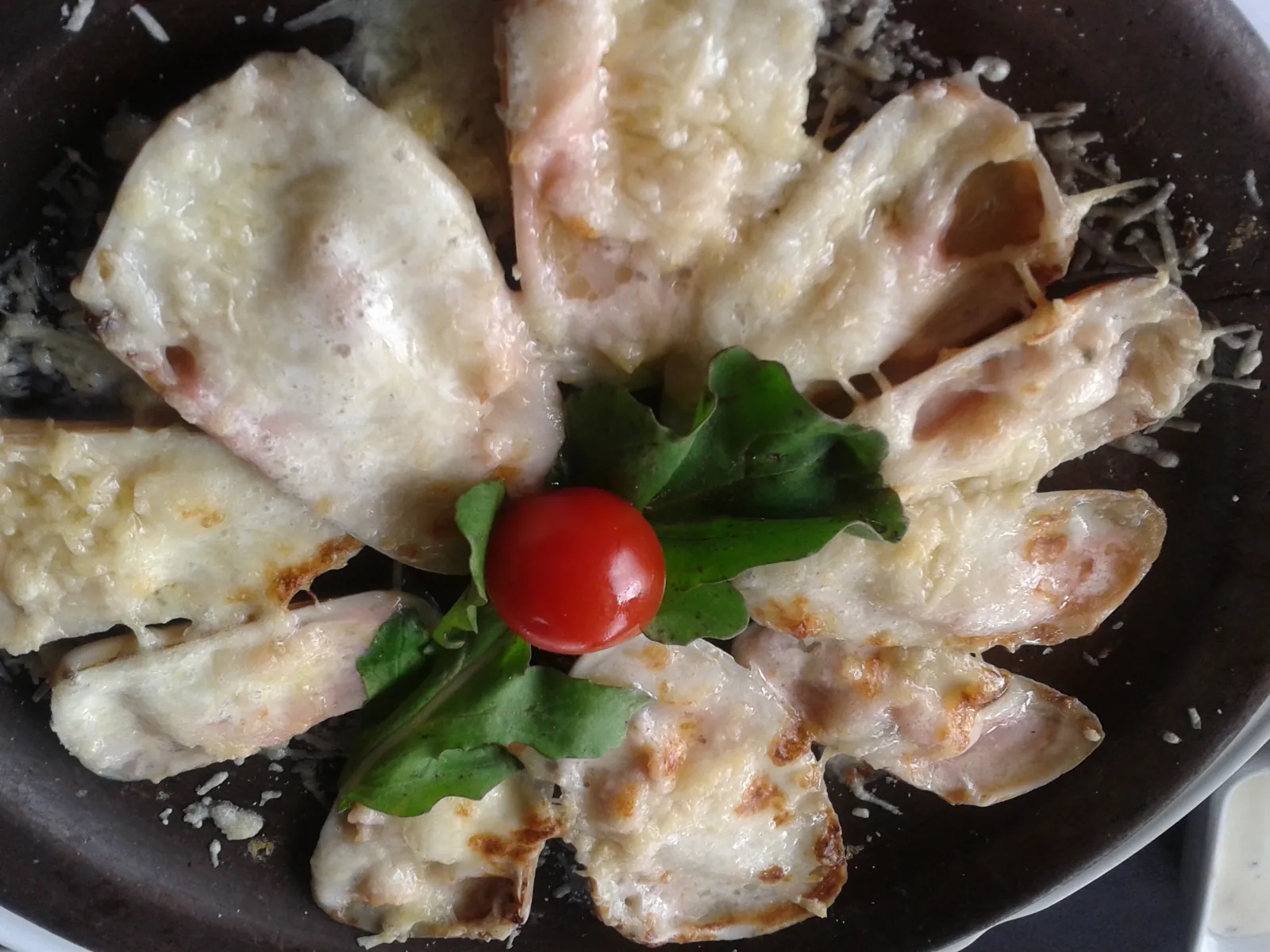
Machas a la parmesana — razor clams in their shells topped with melted golden Parmesan, garnished with greens and a cherry tomato Chile flag Chile 35m
Lunch •Valparaíso Coast Heritage

Machas a la Parmesana

This machas a la parmesana recipe bakes sweet Chilean razor clams in their own shells with garlic butter, a splash of dry white wine and a blanket of grated Parmesan that turns golden under the grill. It is the classic starter of the Valparaíso coast: briny, buttery and ready in minutes. One serving is about 200 g, six shells per person.

Coastal & Savory

Sweet razor clams baked in their shells with garlic butter, white wine and a golden Parmesan crust.

Pairs Well With
Crusty bread and lemon wedges, with a glass of dry white wine.
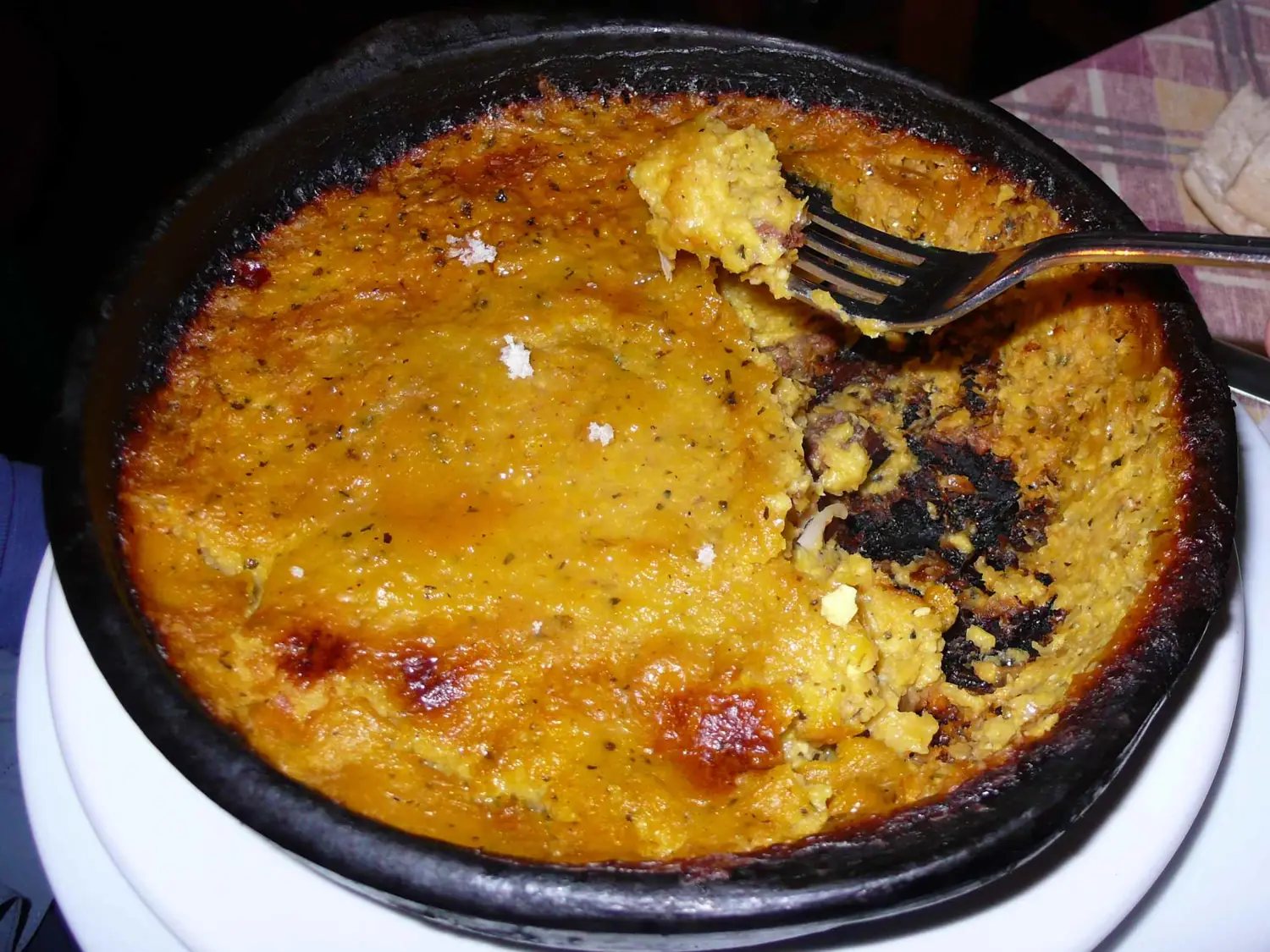
Pastel de choclo in a black clay dish, golden corn topping with a fork lifting a bite of the meat filling Chile flag Chile 1h 25m
Dinner •Chilean Countryside Heritage

Pastel de Choclo

This pastel de choclo recipe is Chile's beloved baked corn pie: a savoury filling of seasoned ground beef, chicken, hard-boiled egg, black olives and raisins, covered with a sweet, basil-flecked corn topping and baked until golden. Sweet meets savoury in every spoonful, and the clay dish it bakes in keeps it hot to the table. One serving is about 340 g.

Hearty & Satisfying

Sweet corn and basil topping over a savoury beef and chicken filling with egg, olives and raisins.

Pairs Well With
A fresh tomato salad and a glass of Chilean red wine.
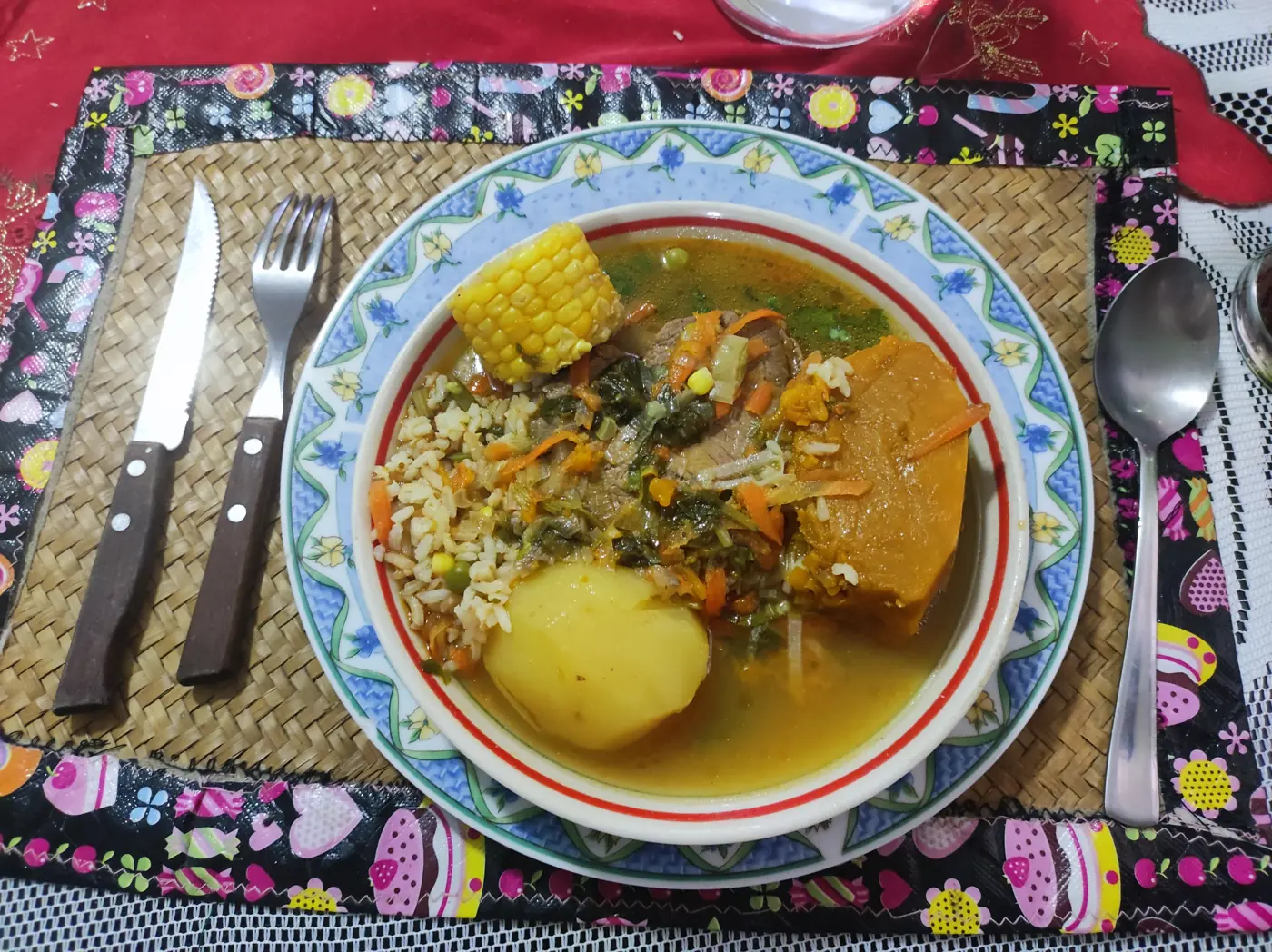
Cazuela chilena — a bowl of chicken soup with a whole potato, a piece of pumpkin, corn on the cob and rice in a golden broth Chile flag Chile 1h 20m
Lunch •Chilean Home Kitchen Heritage

Cazuela Chilena

This cazuela chilena recipe is Chile's home-cooked comfort soup, and its identity is unmistakable: a big piece of orange pumpkin, a chunk of corn on the cob, a potato and a scoop of rice, all simmered with chicken in a clear, savoury broth. The pumpkin sweetens the broth as it cooks, the corn stays sweet and firm, and the rice turns the soup into a full lunch. One serving is about 750 g, broth and all.

Comfort & Warmth

Chicken simmered with pumpkin, corn, potato and rice in a light, cilantro-scented broth.

Pairs Well With
Crusty bread and pebre salsa, with the rice spooned into the bowl.
Soups & Broths
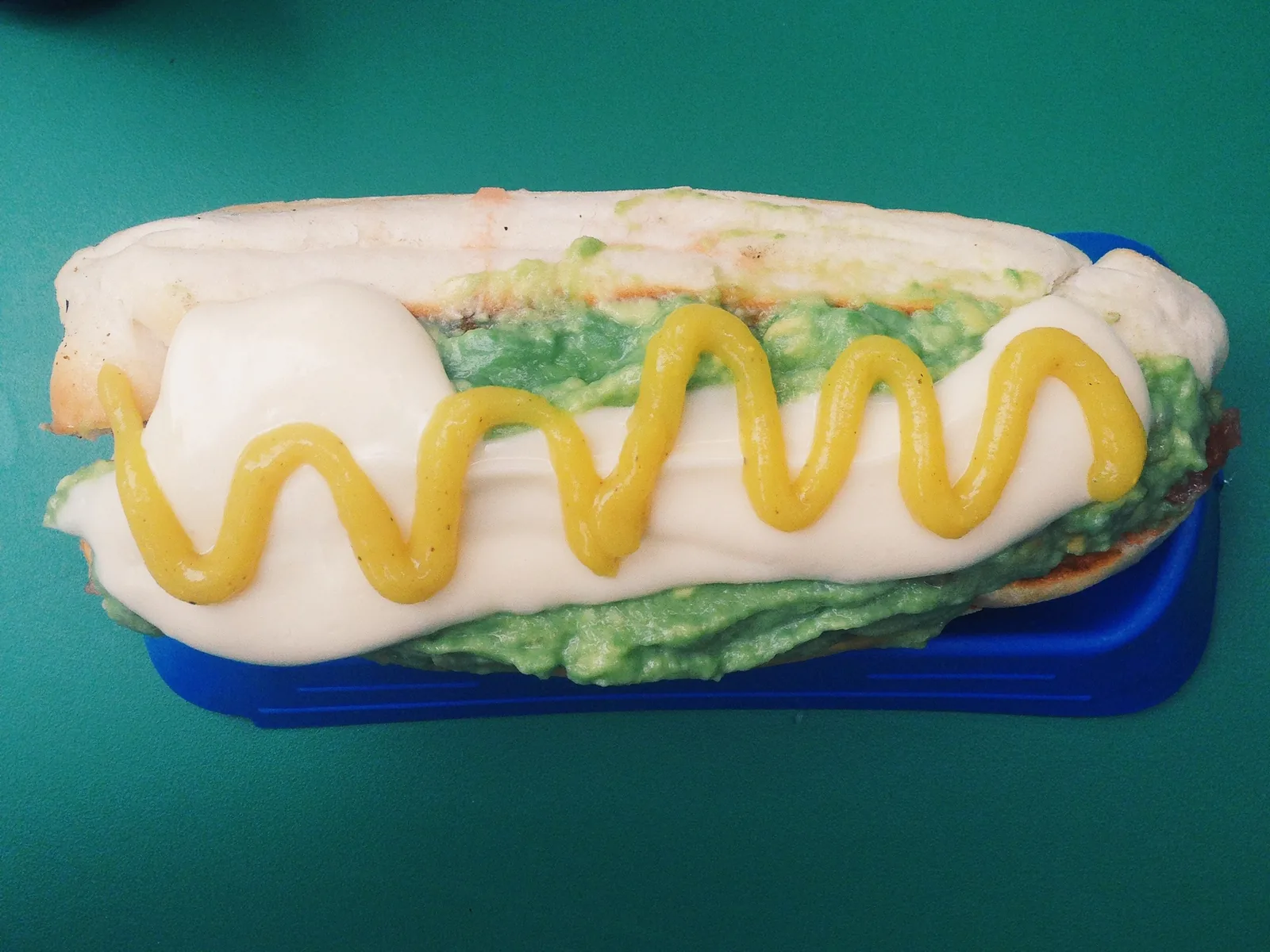
A completo chileno in a soft bun loaded with mashed avocado, mayonnaise and a mustard zigzag, with tomato peeking out at one end Chile flag Chile 25m
Snack & Tea •Chilean Street Food

Completo Chileno

A completo chileno is Chile's answer to the hot dog: a pork frankfurter in a soft bun, buried under diced tomato, a thick layer of mashed avocado and a generous ribbon of mayonnaise. It is salty, creamy and gloriously messy, and it is eaten standing up, with both hands and no cutlery. One serving is about 229 g.

Quick & Satisfying

A pork frankfurter in a soft bun, loaded with tomato, mashed avocado and mayonnaise.

Pairs Well With
Crispy fries, a cold lemonade or a lager

The Dinner Gazette

Never wonder what’s for dinner again

One email a week with easy dinner ideas from around the world — ingredients, steps and nutrition, tested in our kitchen first.

Delivered every Thursday morning. Unsubscribe anytime.