
Curated recipes from 193 countries  •  New seasonal Mediterranean issue out now

Overview

Tavë Kosi

Elbasan Tava; Yogurt Casserole

Tavë kosi is Albania's national dish: tender lamb and rice baked under a thick layer of yoghurt, eggs and butter that sets into a golden, gently tangy crust. It comes from Elbasan, an hour east of Tirana, and it is the dish Albanian families cook when guests come to the table. One serving is about 465 g.

Tavë kosi is said to come from Elbasan, a city in central Albania, and it is widely regarded as the country's national dish — lamb and rice baked under yoghurt, eggs and butter. The combination is an old one in the Balkans, where yoghurt has long been used to enrich baked dishes, and the Elbasan version became the one every Albanian restaurant serves.

Pairs well with: Crusty white bread & a simple tomato-cucumber salad

Provenance

Albania flag Albania

Elbasan Heritage

Nordic & European

Time Dedication

1h 55m

20m prep • 95m cook

Batch Yield

4 Servings

841 kcal per serving

1 serving ≈ 465 g

Technical Skill

Intermediate

Intermediate (Slow Bake)

Meal Timing & Digestive Fit

Breakfast

Not Advised

Lunch

Hearty Midday Main

Dinner

Ideal Hearty Main

Snack & Tea

Inappropriate

Occasions: Family dinners, Sunday lunch, guests and celebrations, cold evenings Cost: Moderate — about $4–5 per serving at home
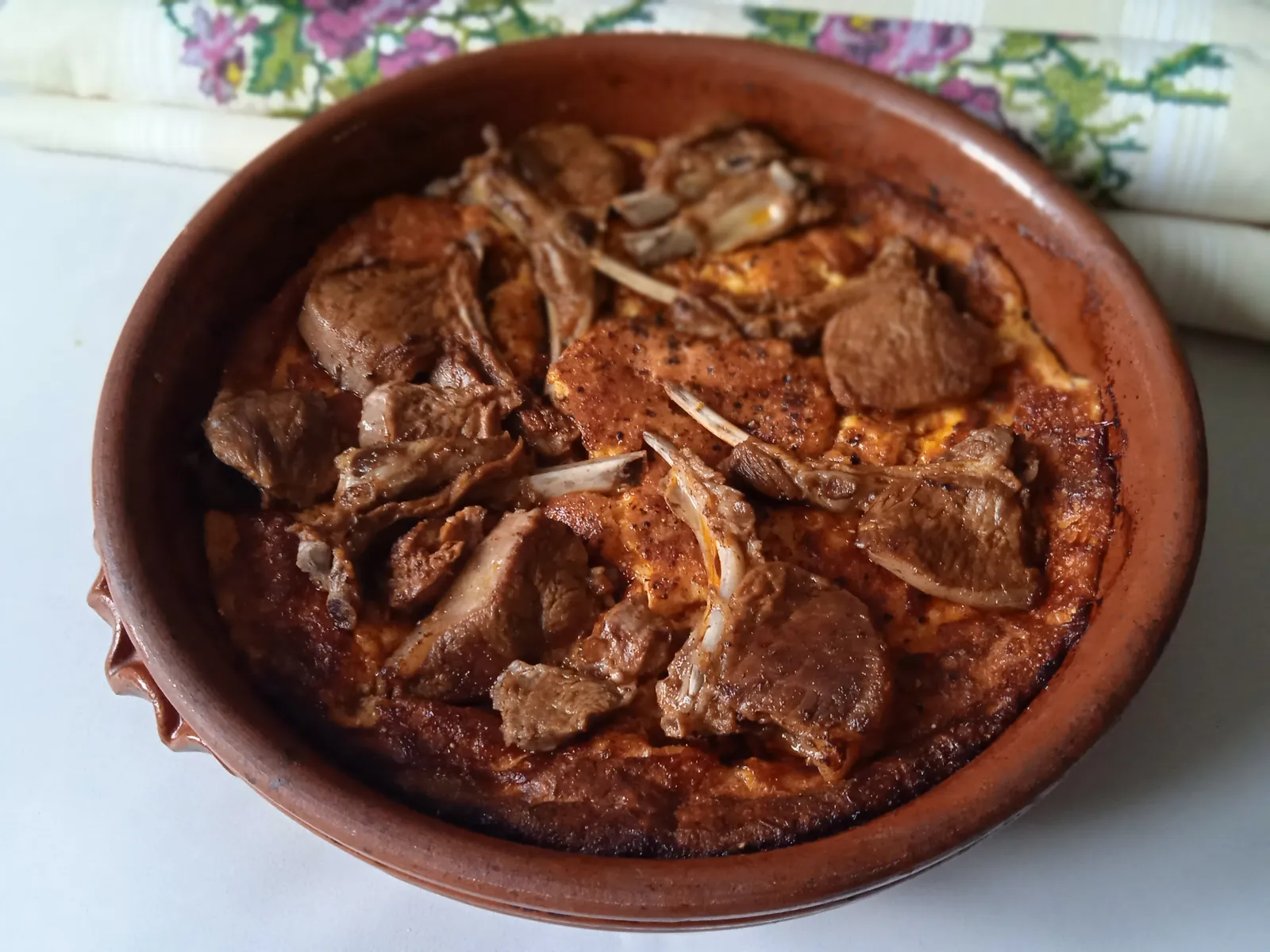
Tavë kosi in a clay baking dish — lamb pieces over a golden baked yoghurt crust

Elbasan Heritage

Photo: Violeta Myftari Gatimet Shqiptare, CC BY-SA 4.0, via Wikimedia Commons

The Heritage Formulary

Measured Ingredients

Estimated cost: Moderate — about $4–5 per serving at home (USD)

A true tavë kosi is judged by its crust: golden, puffed and gently tangy, never split or watery.

Execution Methodology & Culinary Technique

Step-by-Step Cooking Guide

Active 1h 55m
P

Prep Stage: Lamb Browned, Yoghurt at Room Temperature

20 Mins • Knife Work

Cut the lamb into chunks and season it, rinse the rice, and set the yoghurt out to lose its fridge chill. Whisk the yoghurt with the beaten eggs and sifted flour until completely smooth — any lump now becomes a lump in the finished crust.

Maestro Tip: Cold yoghurt straight from the fridge is the main reason the sauce splits; give it 20 minutes on the counter.

  1. 1

    Brown the Lamb

    15 Mins • High Heat Medium-high heat, about 190°C (375°F) in the pan

    Melt the butter in a wide pot over medium-high heat. Brown the lamb chunks on all sides in batches, about 3 minutes per batch, then set them aside. Do not crowd the pan — crowded meat steams instead of browning.

    Browning builds the deep flavour that carries the whole dish; pale lamb makes a pale tavë.

    Done when: Lamb is browned on the outside, still pink inside.

  2. 2

    Simmer Lamb and Rice

    60 Mins • Gentle Simmer Low simmer, about 95°C (203°F)

    In the same pot, soften the onion and garlic for 3 minutes, then return the lamb, add the rinsed rice, 500 ml (2 cups) of water and the oregano. Cover and simmer gently for 50–60 minutes until the lamb is tender and the rice has absorbed most of the liquid.

    Keep the heat low — a hard boil toughens the lamb and turns the rice to mush.

    Done when: Lamb yields to a fork; rice is tender with a little liquid left in the pot.

  3. 3

    Mix the Yoghurt Topping

    5 Mins Room temperature

    While the lamb simmers, whisk the room-temperature yoghurt with the beaten eggs, sifted flour, a pinch of nutmeg and a little salt until silky smooth. Taste it: it should be tangy and lightly salted.

    Whisk the flour into the yoghurt first, then add the eggs — flour added last always clumps.

    Done when: The mixture pours like thick cream, with no lumps.

  4. 4

    Assemble and Bake

    35 Mins • Baking 200°C (400°F)

    Heat the oven to 200°C (400°F). Tip the lamb and rice into a greased clay or ceramic baking dish, spread it level, and pour the yoghurt mixture evenly over the top. Bake for 30–35 minutes until the top is golden with browned spots and the edges bubble. Rest for 10 minutes before serving — the sauce needs that time to set.

    If the top browns too fast, lay a sheet of foil loosely over the dish for the last 10 minutes.

    Done when: Top is golden-brown and puffed; a knife inserted in the centre comes out hot and the sauce holds its shape when scooped. Lamb must reach at least 63°C (145°F) inside — it will be well past that after the simmer.

Finishing Touches & Plating

Spoon the tavë kosi straight from the dish at the table, making sure each serving gets lamb, rice and a good share of the golden crust. A little extra cracked pepper over the top wakes up the yoghurt's tang.

Nutritional Physiology & Benefits

Nutrition

Energy

841

kcal / serving

Protein

48g

Complete AA

Carbs

53g

Complex

Fats

47g

Healthy

Per serving (4 servings · 1 serving ≈ 465 g)
Energy841 kcal
Protein48 g
Carbohydrates53 g
Fat47 g
Fibre1.3 g
Sugar5.9 g
Sodium702 mg
Per 100g
Energy181 kcal
Protein10.3 g
Carbohydrates11.4 g
Fat10.1 g
Fibre0.3 g
Sugar1.3 g
Sodium151 mg

Nutrition values are estimated — calculated from USDA FoodData Central values for the listed ingredients.

Vitamins & minerals: Vitamin B12 and iron (lamb), calcium and B2 (yoghurt), selenium (eggs), vitamin C (onion).

High-Quality Protein

Lamb, eggs and yoghurt together supply complete protein with all essential amino acids, supporting muscle maintenance and repair.

Slow, Steady Energy

Rice and lamb fat release energy gradually, so one serving keeps you full for hours without a heavy crash.

Calcium and B12

The yoghurt topping is a real source of calcium, and lamb is rich in vitamin B12 and iron, nutrients many diets run short on.

Food Pairings

What to Eat With

To optimize nutrient absorption and elevate the sensory depth, pair with these authentic accompaniments:

Sides

Crusty White Bread

Bread is made for this dish — the soft crumb soaks up the yoghurt sauce and the lamb juices that pool at the bottom of the dish.

Vegetables

Tomato and Cucumber Salad

Crisp, acidic vegetables cut through the rich yoghurt crust, and the vinegar in the dressing refreshes the palate between bites of lamb.

Drinks

Ayran or Light White Wine

A cold, salty yoghurt drink matches the dish's own tang, while a dry white wine's acidity balances the butter and lamb fat.

Full Menus

Pickled Peppers to Start

A small plate of pickled peppers before the main dish wakes up the appetite and sets up the yoghurt's sour note.

Complete menu

Serve the tavë kosi straight from its clay dish with crusty bread for scooping, a tomato and cucumber salad with a little vinegar, and a glass of yoghurt drink or light white wine on the side.

Digestive Guardrails

What NOT to Combine

To prevent digestive distress, sluggishness, or palate clash, avoid pairing the dish with these elements:

Very Sweet Desserts Right After

A rich, fatty main followed immediately by a very sweet dessert can leave the stomach feeling heavy and slow digestion; a piece of fruit or a light sorbet is a kinder finish. This is general information, not medical advice.

Low-Fat Yoghurt in the Sauce

Low-fat yoghurt has more water and less fat to stabilise it, so it is far more likely to split and turn grainy in the oven. This is a cooking note, not a health warning — use full-fat yoghurt for the texture the dish needs.

General information only, not medical advice — consult a doctor for personal dietary decisions.

Who Should Eat It

Who Should Eat

  • General adultsA complete, satisfying dinner — protein, carbs and calcium in one dish.
  • ChildrenSuitable from age 3+; the yoghurt crust is mild and the lamb is soft. Cut the meat small and skip the extra pepper.
  • ElderlyGood — soft, warm and easy to chew; keep the portion moderate because it is rich.
  • Pregnant womenGenerally suitable — the lamb is cooked well through and the yoghurt is pasteurised. Use pasteurised yoghurt and make sure the lamb is piping hot.
  • Breastfeeding womenGenerally suitable; the protein, calcium and iron support recovery — eat a full portion.
  • AthletesA strong recovery meal: about 48 g protein per serving with rice for glycogen.
  • Weight gainA good choice — the combination of lamb, rice and full-fat yoghurt is energy-dense; eat a full serving with bread.
  • Weight lossEat a smaller portion, load the plate with the tomato-cucumber salad, and skip the bread.

Health Conditions — Adjust or Avoid

Conditions

  • DiabetesReduce the rice to about 30 g dry per serving and fill the plate with salad; the yoghurt and lamb themselves are low in carbohydrate. Ask your clinician about portion size.
  • High blood pressureUse unsalted butter, halve the added salt, and keep the portion moderate — the dish is naturally salty. Ask your clinician about portion size.
  • Kidney diseaseThis dish is high in protein, potassium and sodium, so portion size matters; ask your clinician before eating a full serving.
  • GoutEat occasionally and in smaller portions — lamb and rich meat dishes are high in purines.
  • Stomach issuesThe yoghurt is usually gentle, but the dish is rich and fatty; eat slowly and keep the portion modest if your stomach is sensitive.
  • Cardiovascular diseaseChoose the leanest lamb you can, trim visible fat, and keep portions modest; the butter and lamb fat are high in saturated fat. Ask your clinician about portion size.
  • Fatty liverKeep the portion modest, favour the rice and salad over extra lamb, and skip the bread. Ask your clinician about portion size.
  • Food allergiesContains milk (yoghurt, butter), egg and gluten (flour). Not suitable for people with dairy, egg or wheat allergy unless adapted with substitutes.
  • Special therapeutic dietsIf you follow a prescribed low-sodium, low-fat or low-purine diet, use less salt and butter and a smaller lamb portion, and check with your clinician.

If you have a medical condition, consult your doctor before changing your diet.

Storage & Use

Storage & Use

How to store
Cool within 2 hours, then cover the dish tightly or move portions to airtight containers.
In the fridge
3 days, covered.
In the freezer
2 months; the yoghurt crust softens on thawing.
How to reheat
Reheat in a 180°C (350°F) oven until piping hot all the way through, to 74°C (165°F); cover with foil so the top does not burn.
Freezing recommended
Possible, but the crust loses its crisp top — best eaten fresh or from the fridge.
Signs it has spoiled
Sour smell beyond the normal yoghurt tang, slimy surface, or mould on the crust.

More recipes to explore

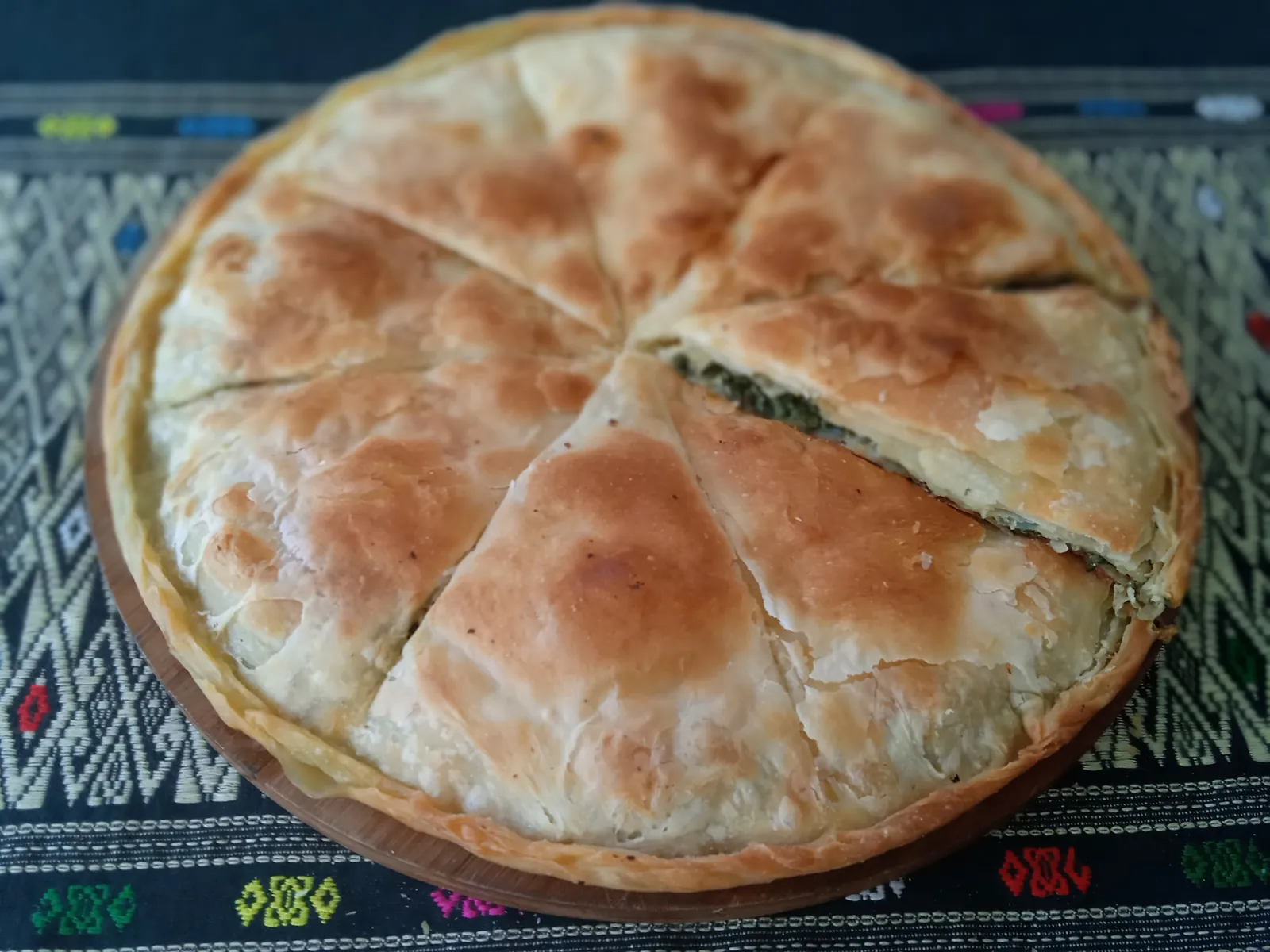
Albanian byrek — a round golden spinach and cheese filo pie, cut into wedges Albania flag Albania 1h 15m
Lunch •Albanian Bakery Classic

Byrek

Byrek is the pie Albania runs on: paper-thin filo brushed with oil and butter, layered over a filling of spinach, salty feta-style cheese and egg, baked until the top shatters and the inside stays soft and savoury. Sold warm from every byrektore in the country, it is breakfast, lunch and afternoon snack in one. One serving is about 250 g.

Everyday Energy

Crisp golden filo layered with spinach, feta and egg — the pie Albania eats at any hour.

Pairs Well With
Ayran (yoghurt drink) & pickled peppers
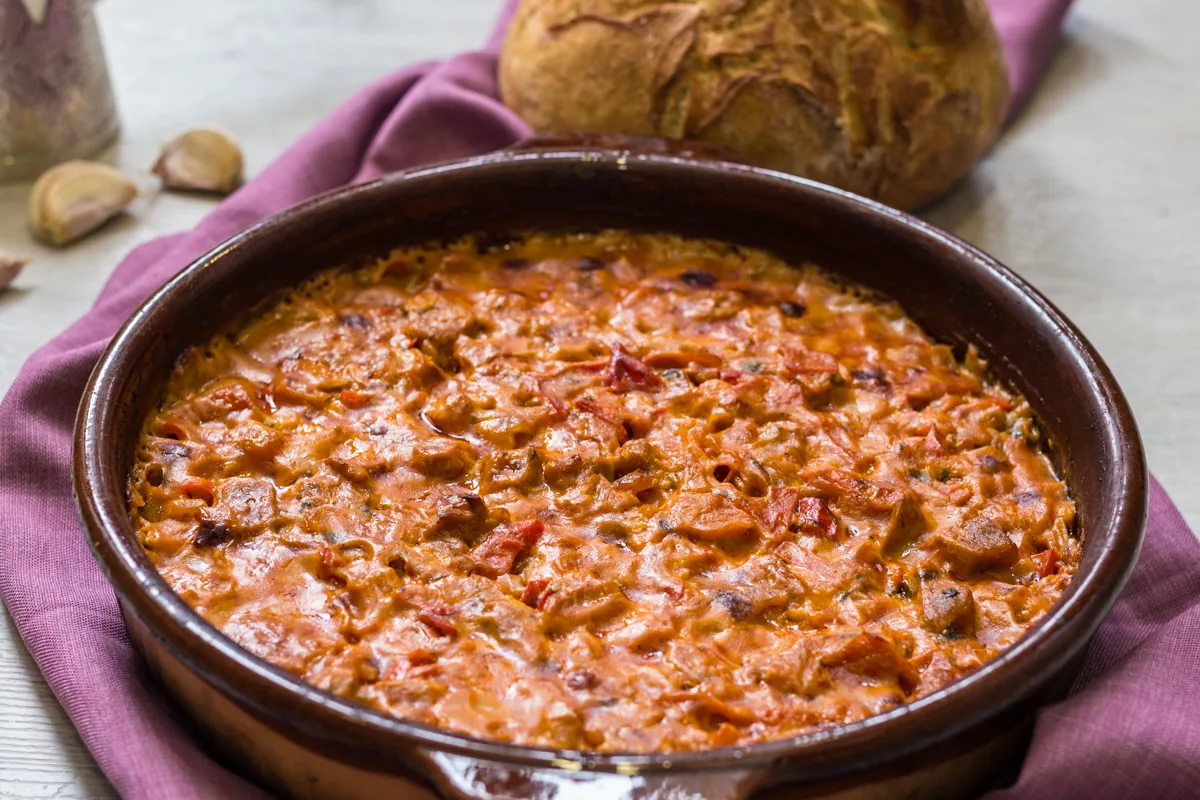
Fërgesë in a clay baking dish — baked red peppers, tomatoes and cheese, with bread Albania flag Albania 1h
Dinner •Tirana Heritage

Fërgesë

Fërgesë is Tirana's home-cooking classic: sweet peppers and tomatoes cooked down with onion and garlic, then baked in a clay dish with crumbled feta, gjizë curd cheese and a little egg until the top turns golden and the edges bubble. It is scooped up with bread, straight from the dish, and it tastes like a long Albanian summer evening. One serving is about 410 g.

Slow Comfort

Sweet peppers and tomatoes baked with feta and gjizë until soft, bubbling and golden.

Pairs Well With
Crusty village bread & a glass of red wine
Bœuf bourguignon — French beef braised in red wine France flag France 4h
Dinner •Burgundy Terroir

Bœuf Bourguignon

Beef braised gently in red wine until the connective tissue melts into a velvet, gelatin-rich sauce — the classic Burgundy Sunday dinner.

Cellular Repair

Beef braised in red wine until spoon-tender, with mushrooms and pearl onions.

Pairs Well With
Parsnip Purée & Steamed French Haricots Verts
High Protein
Vietnamese braised pork belly with golden eggs in caramel sauce Vietnam flag Vietnam 1h 45m
Dinner •One Pot

Vietnamese Braised Pork and Eggs

Pork belly slowly braised in coconut water and caramel until meltingly tender, with golden eggs that soak up the sweet-savoury sauce — the Vietnamese family dish that tastes better the next day.

Comfort & Sustained Energy

Slow-braised pork belly and eggs in coconut water and caramel.

Pairs Well With
Steamed rice & pickled mustard greens
High Protein

The Dinner Gazette

Never wonder what’s for dinner again

One email a week with easy dinner ideas from around the world — ingredients, steps and nutrition, tested in our kitchen first.

Delivered every Thursday morning. Unsubscribe anytime.



