Curated recipes from 193 countries  •  New seasonal Mediterranean issue out now

Overview

Trinidad Dhalpuri Roti

Dhal Puri, Dalpuri, Dhalpourie, Dhalpurie Roti

This trinidad dhalpuri roti recipe makes four soft, golden flatbreads, each one stuffed with a savoury filling of ground yellow split peas seasoned with garlic, geera (cumin) and hot pepper. The filling is sealed inside the dough, the roti is rolled thin and cooked on a hot griddle until it puffs and freckles, then it is folded around curry and eaten warm. One serving is about 250 g.

Dhalpuri grew out of the stuffed flatbreads brought to Trinidad by Indian indentured labourers, who first arrived on 30 May 1845 and carried their food traditions onto the sugar estates. In Trinidad the bread took on a local character: yellow split peas ground with garlic, geera and hot pepper, sealed inside soft flour dough and cooked on a tawa. Today it is the roti most Trinidadians reach for first, sold in roti shops across both islands and folded around curry as a wrap.

Pairs well with: Warm dhalpuri roti wrapped around curry channa and aloo, with pumpkin talkari and pepper sauce

Provenance

Trinidad and Tobago flag Trinidad and Tobago

Trinidadian Heritage

Latin America & Caribbean

Time Dedication

1h 30m

25m prep • 65m cook

Batch Yield

4 Servings

613 kcal per serving

1 serving ≈ 250 g

Technical Skill

Intermediate

Medium (Stuffed Flatbread)

Meal Timing & Digestive Fit

Breakfast

Not Advised

Lunch

Prime Metabolic Fit

Dinner

Ideal Hearty Main

Snack & Tea

Inappropriate

Occasions: Family lunches, Sunday lunch, festive gatherings, street-food days, comfort food days Cost: Low — about $1–2 per serving at home
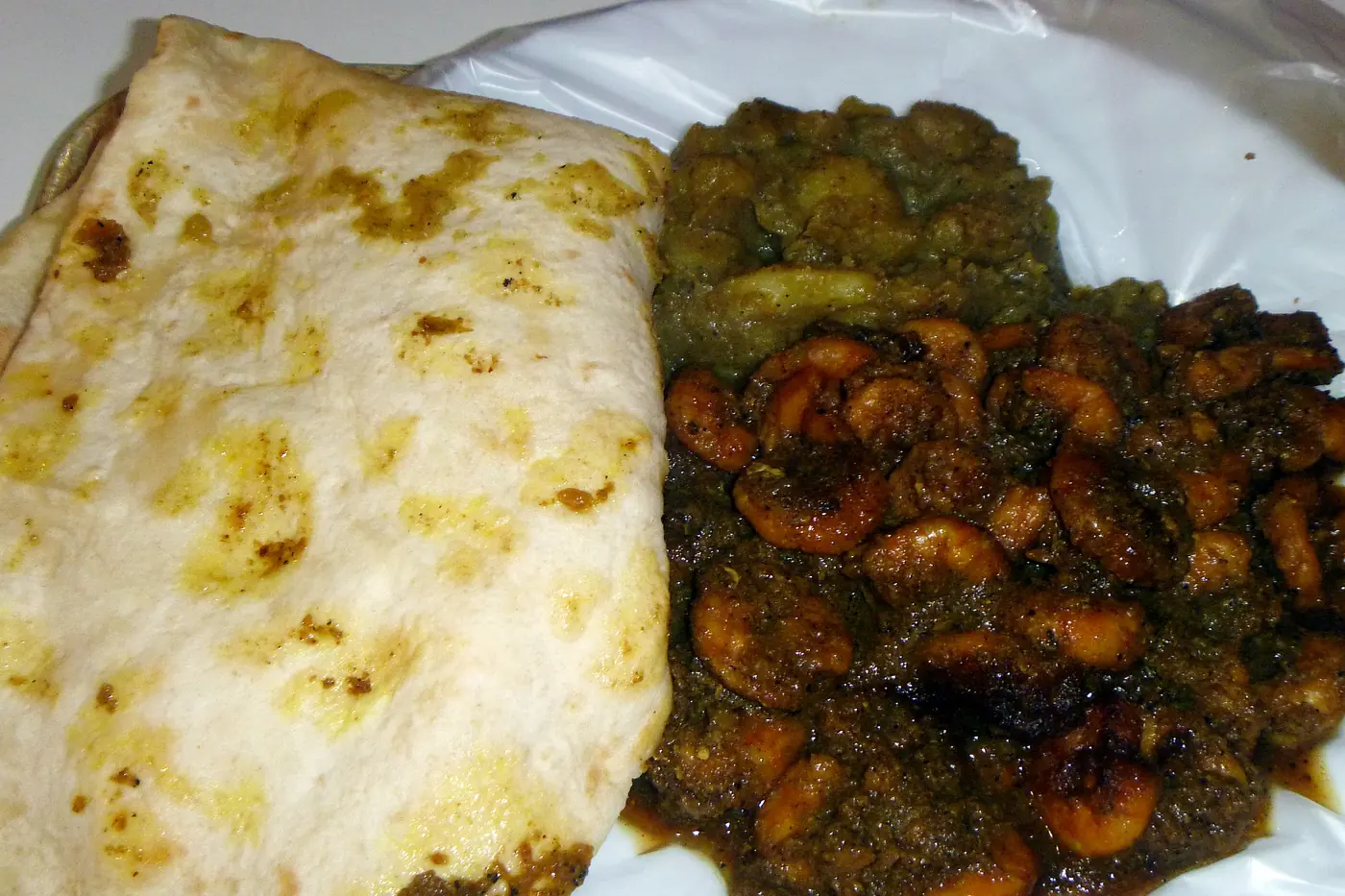
A folded Trinidad dhalpuri roti beside curry channa and potato and curry shrimp on a plate

Trinidadian Heritage

Photo: Kalamazadkhan, CC BY-SA 3.0, via Wikimedia Commons

The Heritage Formulary

Measured Ingredients

Estimated cost: Low — about $1–2 per serving at home (USD)

A good dhalpuri is soft and pliable enough to fold without cracking, with the seasoned dhal spread in a thin, even layer right to the edges.

Execution Methodology & Culinary Technique

Step-by-Step Cooking Guide

Active 1h 30m
P

Prep Stage: Split Peas, Filling Seasonings & Dough

25 Mins • Boiling, Mixing & Resting

Rinse 200 g yellow split peas and set them to boil. While they cook, measure out the flour, baking powder, salt, oil and warm water, and crush the garlic and chop the pepper and coriander for the filling. Mix the dough, knead it smooth and rest it while the peas finish cooking.

Maestro Tip: Start the peas first: they need the longest time, and the dough rests happily while they boil.

  1. 1

    Boil the Split Peas Until Tender

    25 Mins Rolling boil, about 100°C (212°F)

    Rinse 200 g yellow split peas in cold water, then put them in a pot with plenty of water and bring to a rolling boil. Cook for about 25 minutes until the peas are completely tender and break apart when pressed between your fingers. Drain in a colander and leave for 5 minutes so every drop of water runs off — a wet filling makes the roti tear.

    Do not add salt to the boiling water: it can keep the peas firm. Salt goes in with the seasonings after grinding.

    Done when: Peas are soft all the way through and crumble easily; the colander is dry underneath.

  2. 2

    Grind the Seasoned Dhal Filling

    10 Mins Room temperature, about 22°C (72°F)

    Grind the drained peas in a food processor, a mill or with a mortar until they form a dry, crumbly powder — it should feel like damp sand, not a paste. Mix in the crushed garlic, 2 tsp ground cumin (geera), 1 tsp turmeric, 3 g salt, the finely chopped Scotch bonnet and the chopped coriander. Taste and add a little more salt or pepper if you like. Divide the filling into 4 equal balls.

    If the filling clumps into a paste, the peas were too wet. Spread it on a tray for 10 minutes to dry out before stuffing.

    Done when: The filling is dry, crumbly and evenly speckled with green and gold; it holds together when squeezed but breaks apart easily.

  3. 3

    Mix and Rest the Dough

    10 Mins + 20 Mins Rest Room temperature, about 22°C (72°F)

    Combine 400 g flour, 1 tsp baking powder and 3 g salt in a bowl. Rub in 20 ml oil, then add 220 ml warm water a little at a time, mixing until a soft dough forms. Knead on a clean surface for 5 minutes until smooth, cover with a damp cloth and rest for 20 minutes.

    The dough should feel soft like an earlobe, not stiff. Add water a spoonful at a time if it feels dry.

    Done when: Dough is smooth, soft and no longer sticky.

  4. 4

    Stuff and Seal Each Roti

    15 Mins Room temperature, about 22°C (72°F)

    Divide the rested dough into 4 balls. Flatten one ball into a cup shape in your palm, place one ball of dhal filling in the centre, then pull the dough up and around the filling and pinch it firmly shut, like closing a dumpling. Press the sealed ball flat with your palm, then set it seam-side down. Repeat with the other three. This sealed pocket of split-pea filling is what makes a dhalpuri different from a plain paratha, which has no filling at all.

    Pinch the seam really well and keep the filling in the middle: any filling that escapes will burn on the griddle and tear the roti.

    Done when: Each ball is sealed shut with no filling showing and no cracks in the dough.

  5. 5

    Roll Thin and Griddle-Cook

    20 Mins Hot dry tawa or frying pan, about 200°C (400°F)

    On a lightly floured surface, roll each stuffed ball gently into a round about 25 cm across, turning it often and using light, even pressure so the filling spreads in a thin layer without breaking through. Cook one at a time in a hot dry pan for 1-2 minutes per side, pressing gently with a folded cloth, until golden spots appear and the roti puffs slightly. Brush lightly with the remaining oil and stack under a cloth to stay soft.

    Roll from the centre outwards and do not press hard in one spot — that is how the filling bursts through. If a little filling shows, that roti is still good to eat; cook it first.

    Done when: Golden-brown spots on both sides, soft and pliable, with a faint yellow tint from the dhal inside.

  6. 6

    Serve Wrapped Around Curry

    5 Mins Serve hot; curry above 60°C (140°F)

    Lay a warm dhalpuri flat, spoon curry channa and aloo or pumpkin talkari down the middle, fold the roti over the filling like a wrap and eat it straight away. Or serve the roti flat on the plate with the curry on the side and tear off pieces to scoop it up.

    Wrap it while the roti is still warm and soft — a cold dhalpuri cracks instead of folding.

    Done when: Roti is warm, soft and folds without cracking; the curry is steaming.

Finishing Touches & Plating

Serve at once while the rotis are warm and soft, with pepper sauce on the side for those who want extra heat. Any leftover dhalpuri reheats well in a dry pan and is even better the next day, once the geera has settled into the filling.

Nutritional Physiology & Benefits

Nutrition

Energy

613

kcal / serving

Protein

23g

Complete AA

Carbs

111g

Complex

Fats

9g

Healthy

Per serving (4 servings · 1 serving ≈ 250 g)
Energy613 kcal
Protein23 g
Carbohydrates111 g
Fat9 g
Fibre15.9 g
Sugar4.5 g
Sodium690 mg
Per 100g
Energy245 kcal
Protein9.1 g
Carbohydrates44.3 g
Fat3.5 g
Fibre6.4 g
Sugar1.8 g
Sodium276 mg

Nutrition values are estimated — calculated from USDA FoodData Central values for the listed ingredients.

Vitamins & minerals: B vitamins, iron and folate (split peas, flour), vitamin C (hot pepper, coriander) and potassium (split peas). Nutrition values are estimated.

Sustained Energy

Split peas and flour together supply slow-release carbohydrate and about 16 g of fibre per roti, so one dhalpuri keeps you full for hours.

Plant Protein and Fibre

About 23 g of protein per serving, mostly from the split-pea filling, with plenty of fibre to support digestion as part of a balanced diet.

Naturally Plant-Based

Made from flour, split peas, garlic and spices, this roti is vegan as written and carries no dairy or egg.

Food Pairings

What to Eat With

To optimize nutrient absorption and elevate the sensory depth, pair with these authentic accompaniments:

Sides

Curry Channa and Aloo

Chickpeas and potato in Trinidad curry are the classic dhalpuri partner: the soft roti wraps around the saucy filling and soaks up every drop.

Vegetables

Pumpkin Talkari

Sweet, soft pumpkin curry balances the earthy, peppery dhal filling and adds colour and vitamin A to the plate.

Drinks

Iced Mauby or Ginger Beer

A cold, lightly sweet Caribbean drink cools the palate between bites of the warm, geera-seasoned roti.

Sauces

Pepper Sauce

A few drops of Trinidad pepper sauce let each person set their own heat level without changing the roti itself.

Complete menu

Start with a warm dhalpuri wrapped around curry channa and aloo, add pumpkin talkari and a cucumber salad on the side, and finish with fresh mango and iced ginger beer.

Digestive Guardrails

What NOT to Combine

To prevent digestive distress, sluggishness, or palate clash, avoid pairing the dish with these elements:

Very Hot Pepper on an Empty Stomach

The Scotch bonnet in the filling can irritate a sensitive stomach, especially on an empty stomach. Use half a pepper or leave it out if you are sensitive. This is general food information, not medical advice.

Sugary Drinks with a Filling Meal

Very sweet drinks add a lot of sugar to an already filling meal. Water or unsweetened iced tea is a lighter match. This is general food information, not medical advice.

General information only, not medical advice — consult a doctor for personal dietary decisions.

Who Should Eat It

Who Should Eat

  • General adultsA complete, filling lunch: one roti with curry gives protein, carbohydrate and fibre in a single wrap.
  • ChildrenSuitable with the Scotch bonnet left out; tear the roti into small pieces and serve with mild curry channa and aloo.
  • ElderlyGood, soft and easy to eat; keep the spice mild and serve the roti warm so it stays pliable.
  • Pregnant womenGenerally suitable; the split peas supply folate and iron. Keep the pepper mild and eat the roti freshly cooked.
  • Breastfeeding womenGenerally suitable; the protein and iron support recovery. Very hot chilli can upset some babies, so keep it mild.
  • AthletesA strong post-training lunch: about 23 g of protein with plenty of carbohydrate for glycogen.
  • Weight gainA good choice: eat the full wrap with a generous portion of curry and an extra spoonful of pumpkin.
  • Weight lossTake one roti instead of two, load up on vegetables and salad, and keep the curry sauce modest.

Health Conditions — Adjust or Avoid

Conditions

  • DiabetesThe flour and split peas are the main carbohydrate; take one roti and fill up on vegetables and salad. Ask your clinician about portions.
  • High blood pressureThis roti is moderately salty (about 690 mg sodium per serving); use half the salt in the dough and filling, and ask your clinician about portions.
  • Kidney diseaseHigh in protein and potassium from the split peas; keep the portion modest and ask your clinician about portion size.
  • GoutEat occasionally and in smaller portions; split peas and legumes are moderately high in purines. Ask your clinician if unsure.
  • Stomach issuesSkip the Scotch bonnet and go easy on the geera if your stomach is sensitive; the plain roti and well-cooked dhal are usually gentle.
  • Cardiovascular diseaseLow in fat as written, with fibre from the split peas; measure the oil rather than pouring freely. Ask your clinician about portions.
  • Fatty liverKeep the portion to one roti, favour vegetables over extra bread, and skip sugary drinks. Ask your clinician about portions.
  • Food allergiesContains wheat (gluten) in the roti. The filling itself is free of the major allergens, but check any curry served with it for nuts, shellfish or dairy. Ask your clinician if you have a food allergy.
  • Special therapeutic dietsIf you follow a prescribed low-sodium or low-carbohydrate diet, use less salt and a smaller roti, and check with your clinician.

If you have a medical condition, consult your doctor before changing your diet.

Storage & Use

Storage & Use

How to store
Cool completely, then stack the rotis with baking paper between them in an airtight container or sealed bag.
In the fridge
2 days, wrapped, in an airtight container.
In the freezer
1 month, stacked with baking paper between them in a sealed bag.
How to reheat
Warm in a dry pan over medium heat, about 180°C (350°F), for 30 seconds per side until soft and hot, to 74°C (165°F) if reheating with curry.
Freezing recommended
Yes — dhalpuri freezes well; thaw at room temperature before reheating.
Signs it has spoiled
Sour smell, stiff or slimy texture, or mould spots on the roti.

More recipes to explore

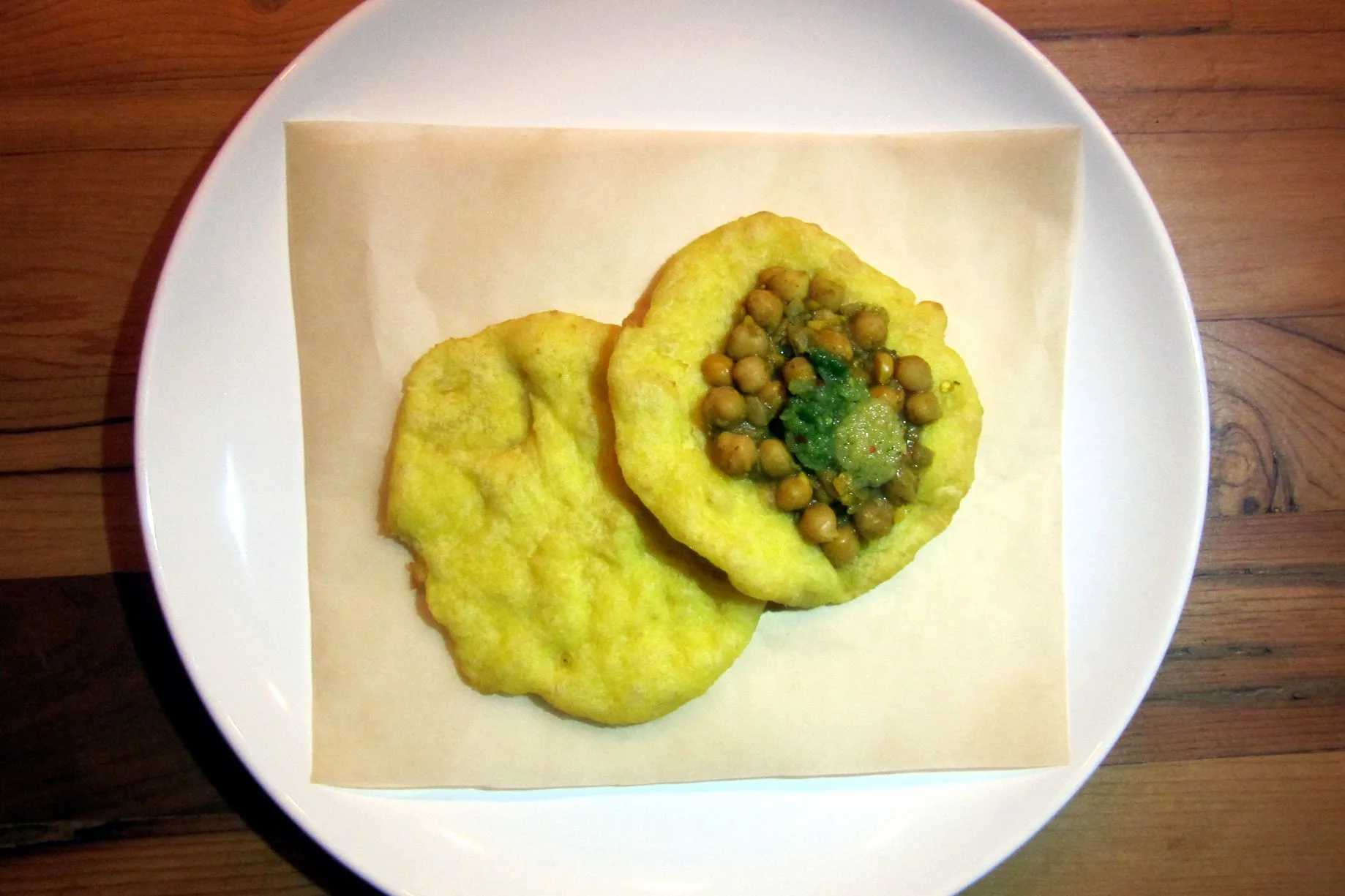
Two golden fried bara flatbreads on a white plate, one topped with curried chickpeas and green chutney Trinidad and Tobago flag Trinidad and Tobago 1h 35m
Breakfast •Princes Town Heritage

Doubles

This doubles recipe makes the Trinidad street-food classic at home: soft, golden bara flatbreads fried until puffed, filled with warm curried chickpeas (channa), then finished with tamarind chutney, cucumber and hot pepper sauce. The name comes from the two baras in every serving, and the contrast is the whole point — crisp, turmeric-yellow bread against soft, spicy chickpeas and sharp, sweet chutney. One serving is about 385 g (2 doubles).

Street Food & Breakfast

Two golden fried bara flatbreads filled with warm curried chickpeas and bright chutneys, the breakfast Trinidad lines up for at roadside stalls.

Pairs Well With
Tamarind chutney, cucumber chutney & a cold sorrel drink
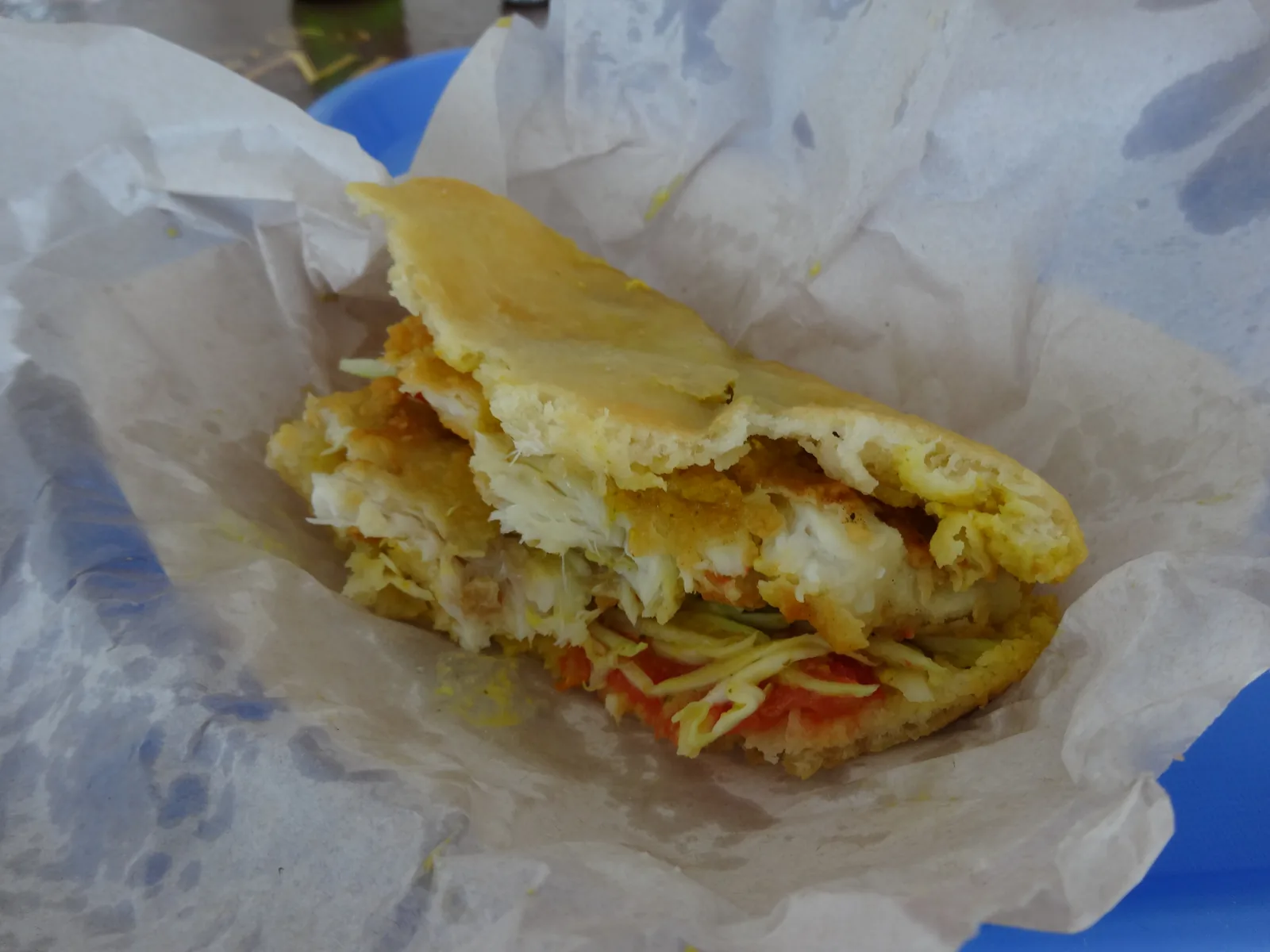
A golden fried bake split open and filled with fried shark, shredded cabbage and tomato at Maracas Bay, Trinidad Trinidad and Tobago flag Trinidad and Tobago 1h
Lunch •Maracas Beach Street Food

Bake and Shark

Bake and shark is Trinidad and Tobago's most famous beach sandwich: a puffy fried bake split open and filled with crisp, green-seasoned fried shark, shredded cabbage, lettuce, tomato, cucumber and pineapple, finished with garlic sauce, tamarind sauce and pepper sauce. One serving is about 400 g.

Comfort & Satisfaction

Golden fried bake stuffed with seasoned fried shark, fresh salad and tangy sauces.

Pairs Well With
Coleslaw, pineapple chunks and an ice-cold Carib beer or fresh coconut water
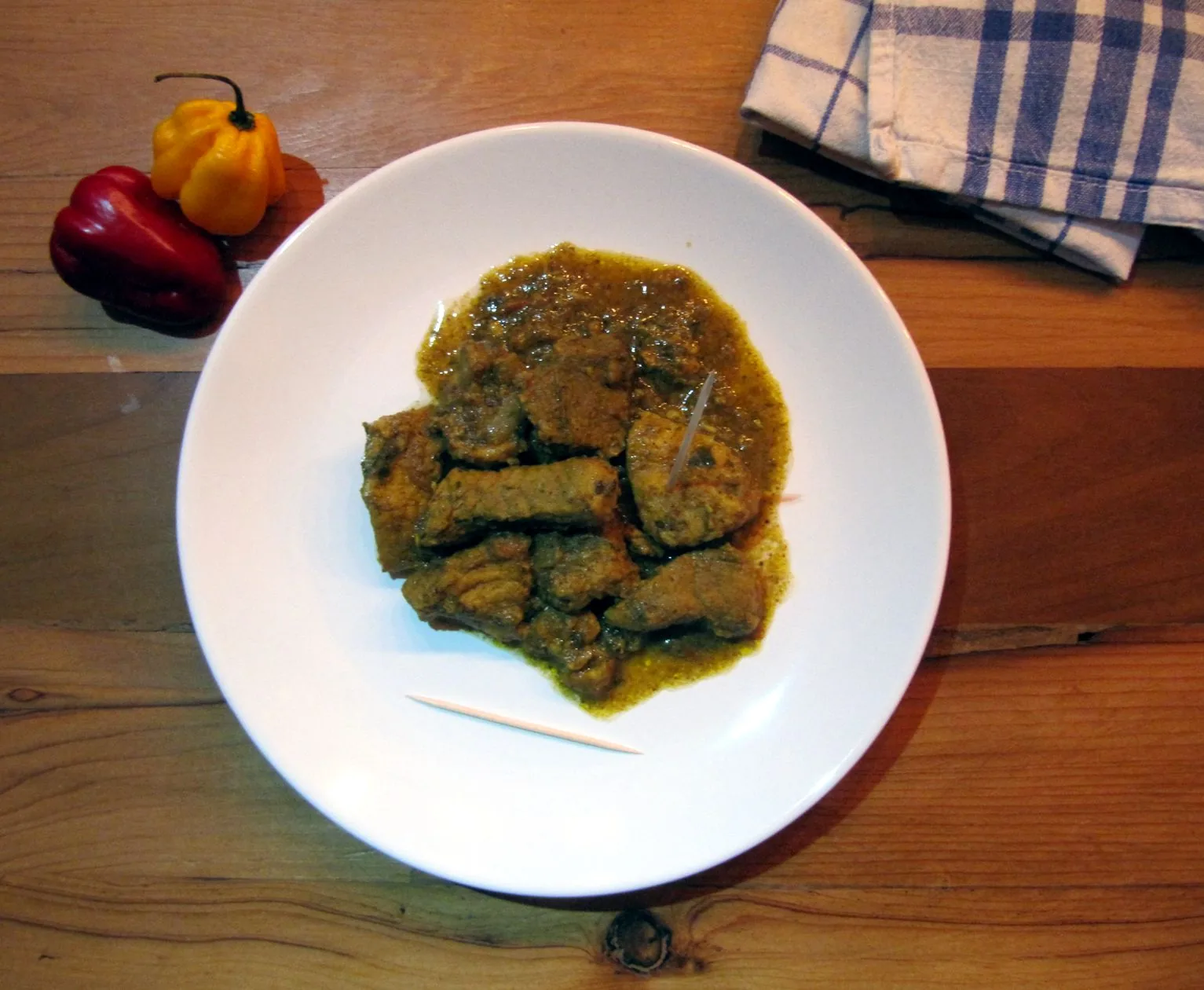
A white plate of browned cumin-coated geera pork pieces with a toothpick, with red and yellow Scotch bonnet peppers beside the plate on a wooden table Trinidad and Tobago flag Trinidad and Tobago 2h 25m
Dinner •Trinidad Heritage

Trinidad Geera Pork

This trinidad geera pork recipe turns boneless pork shoulder into Trinidad's favourite bar snack and weeknight main: small cubes washed in lime juice, rubbed with green seasoning, garlic and hot pepper, then simmered in their own juices and finished with a heavy dusting of roasted ground cumin. Geera is the Trinidadian name for cumin, from the Hindi jeera, and it is the whole point of the dish — warm, earthy and slightly smoky, it clings to every piece of pork. Unlike a wet curry, there is no sauce to spoon; the pork comes out dark, dry-ish and intensely spiced, made to be picked up with a toothpick or piled beside rice. One serving is about 255 g.

Bold & Spicy Comfort

Tender pork cubes coated in roasted cumin and green seasoning, simmered until the juices turn into a dark, fragrant glaze.

Pairs Well With
Steamed rice, dhal & a cold sorrel drink
High Protein
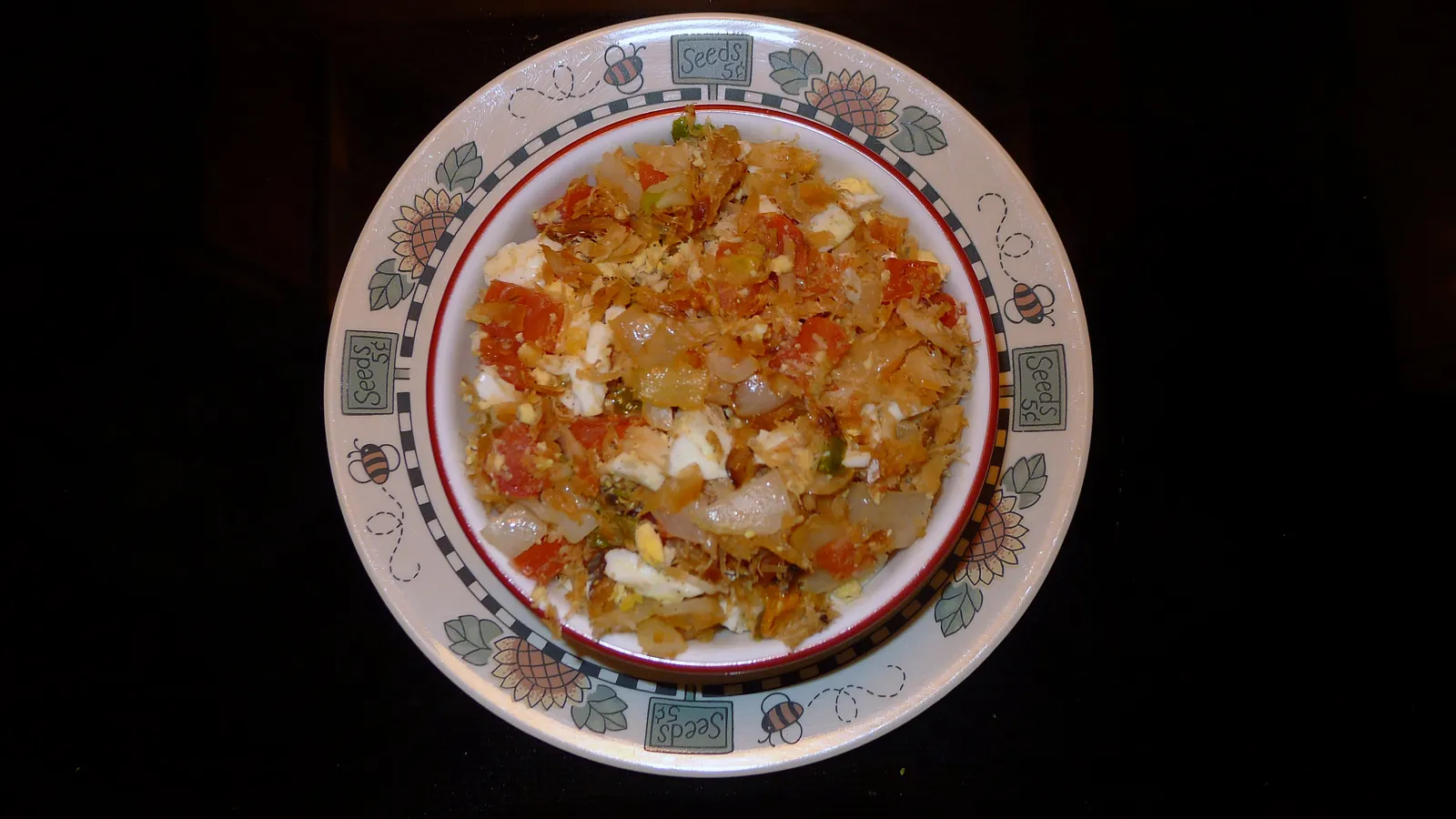
A bowl of Trinidad saltfish buljol — flaked salt cod tossed with diced tomato, onion and pepper, with pieces of boiled egg Trinidad and Tobago flag Trinidad and Tobago 35m
Breakfast •Trinidad Heritage

Trinidad Saltfish Buljol

This Trinidad saltfish buljol recipe makes the island's beloved breakfast salad: flakes of desalted cod tossed — never stewed — with onion, tomato, sweet pepper and hot pepper, dressed with lime juice and olive oil and left to rest until it reaches room temperature. It is eaten with hot bake or hops bread, often with boiled egg and avocado on the side. One serving is about 250 g.

Fresh & Protein-Rich

Flaked salt cod tossed with onion, tomato and sweet pepper, dressed with lime and olive oil and served at room temperature — a light, salty, protein-rich Trinidad breakfast.

Pairs Well With
Hot fried bake or hops bread, sliced avocado, and a cup of cocoa tea.
High Protein

The Dinner Gazette

Never wonder what’s for dinner again

One email a week with easy dinner ideas from around the world — ingredients, steps and nutrition, tested in our kitchen first.

Delivered every Thursday morning. Unsubscribe anytime.