
Curated recipes from 193 countries  •  New seasonal Mediterranean issue out now

Overview

Argentine Country Bread

Pan Casero Argentino, Pan de Campo, Argentine Homemade Bread

This Argentine country bread recipe makes one golden pan casero: eight soft, slightly sweet rolls with a crisp crust and a tender crumb, baked in a home oven. One serving is about 97 g — one warm roll — and the bread is best the day it is baked, torn open and eaten warm with butter or dulce de leche.

Pan casero — literally 'homemade bread' — is the everyday loaf of Argentina, baked at home or in village bakeries and eaten with nearly every meal, from breakfast mate to the asado. Argentine country breads traditionally used lard for softness, but home bakers today often use a spoonful of oil instead; the loaf stays the same at heart: flour, water, yeast and salt, shaped into rounds and baked until the crust sings. It is the bread that turns a plate of cold cuts or a bowl of stew into a meal.

Pairs well with: Salted butter and dulce de leche

Provenance

Argentina flag Argentina

Argentine Country Kitchen

Latin America & Caribbean

Time Dedication

2h 35m

120m prep • 35m cook

Batch Yield

8 Servings

260 kcal per serving

1 serving ≈ 97 g

Technical Skill

Intermediate

Medium (Knead, Rise & Bake)

Meal Timing & Digestive Fit

Breakfast

Not Advised

Lunch

Prime Metabolic Fit

Dinner

Ideal Hearty Main

Snack & Tea

Inappropriate

Occasions: Family breakfasts, asados, mate circles, picnics, everyday lunches Cost: Low — about $0.50–1 per serving at home
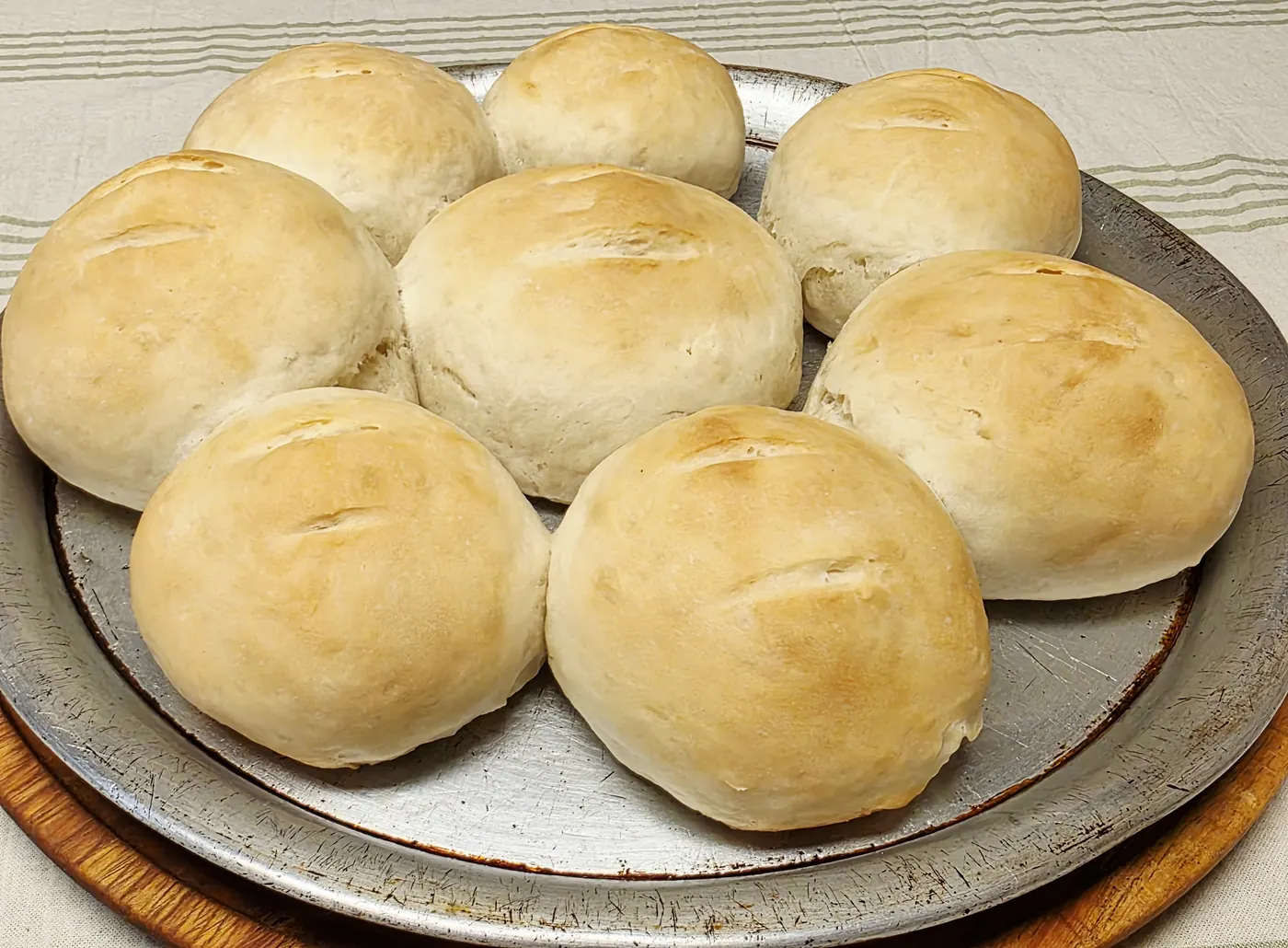
Eight golden round loaves of Argentine country bread cooling on a metal tray

Argentine Country Kitchen

Photo: Horacio Cambeiro, CC BY-SA 3.0, via Wikimedia Commons

The Heritage Formulary

Measured Ingredients

Estimated cost: Low — about $0.50–1 per serving at home (USD)

A good pan casero has a crisp, singing crust and a soft, even crumb — never dense, never doughy in the middle.

Execution Methodology & Culinary Technique

Step-by-Step Cooking Guide

Active 2h 35m
P

Prep Stage: Mix, Knead and Rise the Dough

120 Mins

Dissolve the yeast and sugar in the warm water and leave it for 10 minutes until foamy — this proves the yeast is alive. Mix the flour and salt in a large bowl, pour in the yeast water and olive oil, and stir to a shaggy dough. Knead on a lightly floured worktop for 10 minutes until smooth and elastic, then cover and leave in a warm place for 90 minutes until doubled in size.

Maestro Tip: Water at 40°C (104°F) wakes yeast; water above 50°C (122°F) kills it. If the water feels hot on your wrist, it is too hot.

  1. 1

    Wake the Yeast

    10 Mins Water 40°C (104°F)

    Stir the yeast and sugar into the warm water and leave the bowl undisturbed for 10 minutes. The surface should turn foamy and smell faintly of beer — that foam is the proof your yeast is alive.

    If nothing happens in 10 minutes, the yeast is dead: throw it out and start again with a fresh packet rather than baking a brick.

    Done when: A thick cap of foam across the water.

  2. 2

    Mix and Knead

    15 Mins Room temperature, ~20°C (68°F)

    Tip the flour and salt into a large bowl and make a well in the middle. Pour in the foamy yeast water and the olive oil, and stir with a wooden spoon until a shaggy dough forms. Turn it onto a lightly floured worktop and knead for 10 minutes — push, fold, turn — until the dough is smooth, springy and no longer sticky.

    Knead until the dough springs back when poked; under-kneaded dough bakes dense and heavy.

    Done when: A smooth, elastic dough that springs back when pressed.

  3. 3

    First Rise

    90 Mins Warm place, ~25°C (77°F)

    Shape the dough into a ball, put it in a lightly oiled bowl, and cover with a damp cloth or cling film. Leave in a warm, draught-free place for about 90 minutes, until doubled in size.

    A turned-off oven with the light on is the warmest draught-free spot in most kitchens.

    Done when: Doubled in size, and a fingertip dent stays put instead of springing back.

  4. 4

    Shape and Second Rise

    35 Mins Warm place, ~25°C (77°F)

    Knock the air out of the dough and divide it into 8 equal pieces, about 110 g each. Shape each into a tight round ball, pulling the surface taut, and set them on a floured tray with space between them. Cover and rest for 30 minutes until puffy, then score a shallow slash across the top of each roll.

    A taut surface is what makes a round roll rise up instead of spreading flat.

    Done when: Puffy rolls, visibly risen, with a scored top.

  5. 5

    Bake Until Golden

    35 Mins Oven 220°C (425°F), then 200°C (400°F)

    Heat the oven to 220°C (425°F) with a small ovenproof dish of water on the bottom shelf — the steam makes the crust crisp. Bake the rolls for 20 minutes, then reduce the heat to 200°C (400°F) and bake for 15 minutes more, until deep golden and the bottoms sound hollow when tapped. The centre should reach 96°C (205°F).

    Do not open the oven in the first 15 minutes: the steam and heat are doing the rising.

    Done when: Deep golden crust, hollow tap on the base, and a 96°C (205°F) centre.

Finishing Touches & Plating

Cool the rolls on a wire rack for at least 20 minutes before tearing one open — the crumb is still setting while the bread is hot, and cutting too soon makes it gummy.

Nutritional Physiology & Benefits

Nutrition

Energy

260

kcal / serving

Protein

8g

Complete AA

Carbs

48g

Complex

Fats

3g

Healthy

Per serving (8 servings · 1 serving ≈ 97 g)
Energy260 kcal
Protein8 g
Carbohydrates48 g
Fat3 g
Fibre1.8 g
Sugar0.2 g
Sodium487 mg
Per 100g
Energy268 kcal
Protein8.4 g
Carbohydrates49.6 g
Fat3.5 g
Fibre1.9 g
Sugar0.2 g
Sodium502 mg

Nutrition values are estimated — calculated from USDA FoodData Central values for the listed ingredients.

Vitamins & minerals: B vitamins and iron (enriched bread flour), vitamin E (olive oil). All nutrition values are estimated.

Steady Energy from Complex Carbs

Bread flour supplies slow, steady carbohydrate energy — about 48.1 g per roll — which is why bread anchors a meal.

Simple, Honest Ingredients

Flour, water, yeast, salt and a spoonful of oil: nothing processed, nothing artificial, and no preservatives.

Low in Fat

One roll carries only about 3.4 g of fat, because this version uses olive oil instead of the traditional lard.

Food Pairings

What to Eat With

To optimize nutrient absorption and elevate the sensory depth, pair with these authentic accompaniments:

Sides

Salted Butter

Warm bread and cold salted butter is the simplest Argentine breakfast — the butter melts into the open crumb.

More Pairings

Dulce de Leche

Sweet, caramelised milk spread on a warm roll is the classic Argentine sweet bite; the bread's mild flavour lets the dulce de leche shine.

Drinks

Mate

Bitter mate and soft bread are the everyday Argentine pairing — the bread softens the mate's edge.

Full Menus

Locro Stew

A thick locro needs bread for mopping; the rolls' soft crumb soaks up the stew without falling apart.

Complete menu

Serve warm rolls with salted butter and dulce de leche for breakfast, or beside locro stew and grilled meats at an asado.

Digestive Guardrails

What NOT to Combine

To prevent digestive distress, sluggishness, or palate clash, avoid pairing the dish with these elements:

Slicing While Piping Hot

Cutting into a roll straight from the oven squeezes out steam and leaves a gummy, doughy crumb — the inside is still setting. Wait at least 20 minutes. This is general information, not medical advice.

Storing Bread in the Fridge

The fridge makes bread stale faster, not slower: cold speeds up the starch changes that dry bread out. Keep rolls at room temperature for 2 days, or freeze them. This is general information, not medical advice.

General information only, not medical advice — consult a doctor for personal dietary decisions.

Who Should Eat It

Who Should Eat

  • General adultsA warm roll or two is a satisfying part of lunch for most adults — best with protein alongside.
  • ChildrenSoft, easy to chew and mild — suitable from age 1+; tear into small pieces for toddlers.
  • ElderlySoft crumb, easy to chew; serve warm with butter and keep portions modest.
  • Pregnant womenFreshly baked bread is fine in pregnancy in normal portions. Ask your clinician about any concerns.
  • Breastfeeding womenA comforting, energy-rich food that fits well into a breastfeeding diet. Ask your clinician about any concerns.
  • AthletesAbout 48.1 g of carbohydrate per roll makes it a useful pre- or post-training energy food with protein.
  • Weight gainEasy to eat in large portions — add a second roll with butter and dulce de leche.
  • Weight lossOne roll is about 260 kcal, so keep to one roll and fill the rest of the plate with salad or vegetables.

Health Conditions — Adjust or Avoid

Conditions

  • DiabetesOne roll carries about 50 g of carbohydrate — count it in your meal plan and keep to one roll. Ask your clinician about portion size.
  • High blood pressureSodium is about 487 mg per roll from the salt in the dough — keep the portion to one roll and skip salty spreads. Ask your clinician about portion size.
  • Kidney diseaseBread adds potassium and phosphorus in modest amounts; keep the portion to one roll. Ask your clinician.
  • GoutBread is low in purines, so one roll is fine as an occasional food. Ask your clinician.
  • Stomach issuesFresh bread is usually gentle on the stomach; eat slowly and chew well. Ask your clinician if symptoms persist.
  • Cardiovascular diseaseLow in saturated fat, but the salt adds up — one roll with vegetables is the better plate. Ask your clinician about portion size.
  • Fatty liverKeep the portion to one roll and pair it with salad or vegetables rather than a second roll. Ask your clinician about portion size.
  • Food allergiesContains gluten (wheat) — do not serve to anyone with coeliac disease or a wheat allergy. Ask your clinician.
  • Special therapeutic dietsIf you follow a prescribed low-sodium diet, this bread is salty — have a small portion rarely, or bake a low-salt version; check with your clinician before eating.

If you have a medical condition, consult your doctor before changing your diet.

Storage & Use

Storage & Use

How to store
Cool completely on a wire rack, then store in a paper bag or bread box at room temperature.
In the fridge
Do not refrigerate — bread stales faster in the fridge.
In the freezer
Up to 3 months, sliced and wrapped in cling film and foil.
How to reheat
Warm in a 180°C (350°F) oven for 8–10 minutes until the crust crisps; heat to 74°C (165°F) right through.
Freezing recommended
Yes — freeze sliced rolls for up to 3 months.
Signs it has spoiled
Mould spots, a sour smell, or a hard, dry crumb.

More recipes to explore

Golden baked Argentine beef empanadas with crimped edges on a plate Argentina flag Argentina 1h 25m
Lunch •Buenos Aires Heritage

Argentine Empanadas

Argentine empanadas are half-moon pastries of short, flaky wheat pastry — no yeast, no puff — folded over a savoury filling of seasoned ground beef, onion, hard-boiled egg, green olives and a few raisins, then sealed with the classic rope crimp called the repulgue and baked until deep gold. This is the beef empanada de carne found in bakeries and rotisseries across Buenos Aires. One serving (two empanadas) is about 260 g.

Hearty & Satisfying

Golden baked pastry wrapped around spiced beef, olive and egg — the hand-held lunch Argentina runs on.

Pairs Well With
Chimichurri & a simple green salad
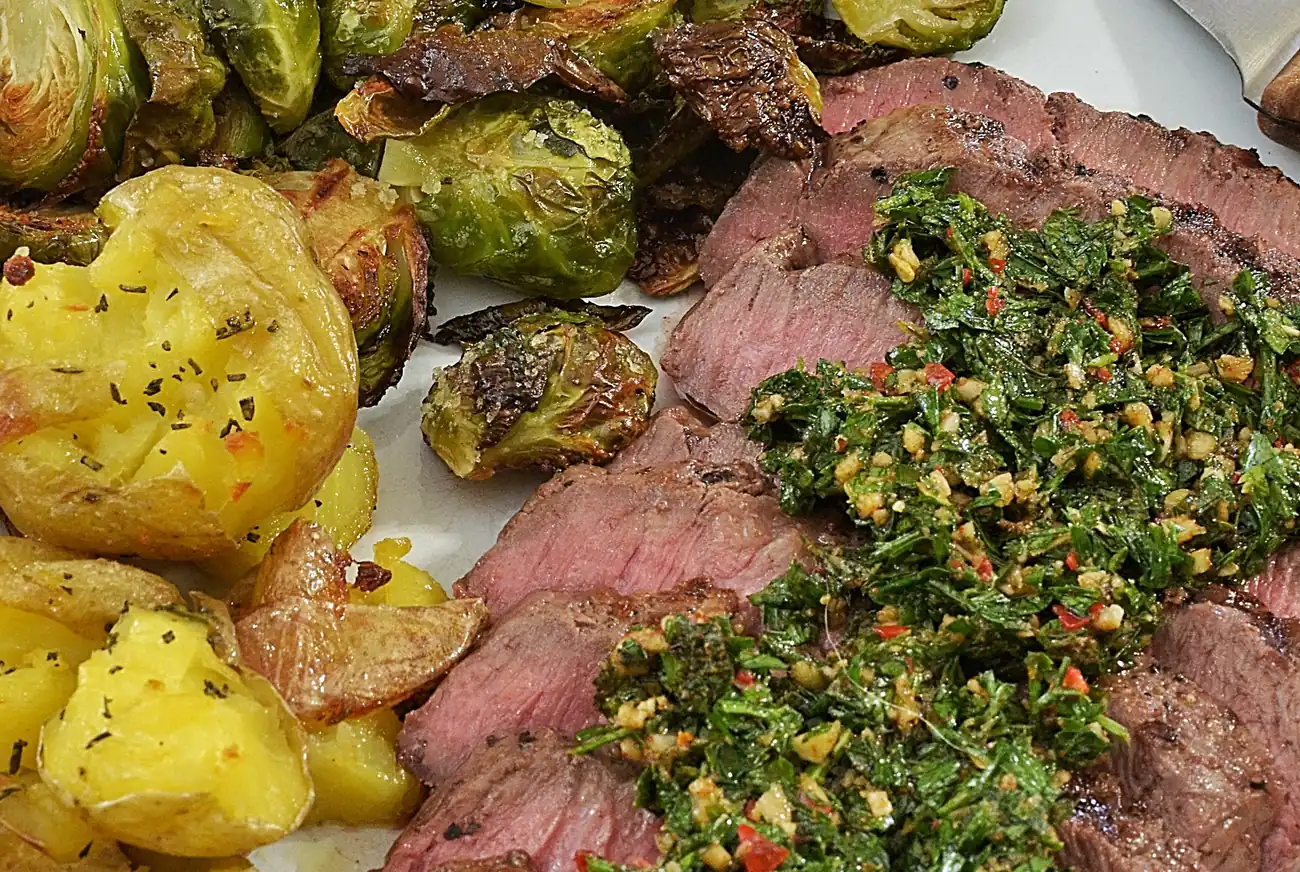
Sliced flat iron steak topped with green chimichurri on a plate Argentina flag Argentina 32m
Dinner •Pampas Asado Heritage

Chimichurri Steak

Chimichurri steak is the centrepiece of the Argentine asado: a thick sirloin grilled over high heat until charred outside and juicy inside, rested, sliced, and served with chimichurri — the raw sauce of parsley, garlic, oregano, red wine vinegar and olive oil that Argentina puts on almost everything grilled. The sauce is made first so its flavours can meld while the steak cooks. One serving is about 215 g.

High-Protein & Satisfying

A thick grilled sirloin, rested and sliced, drowned in bright garlicky chimichurri — the heart of the Argentine asado.

Pairs Well With
Roasted potatoes & grilled vegetables
High Protein
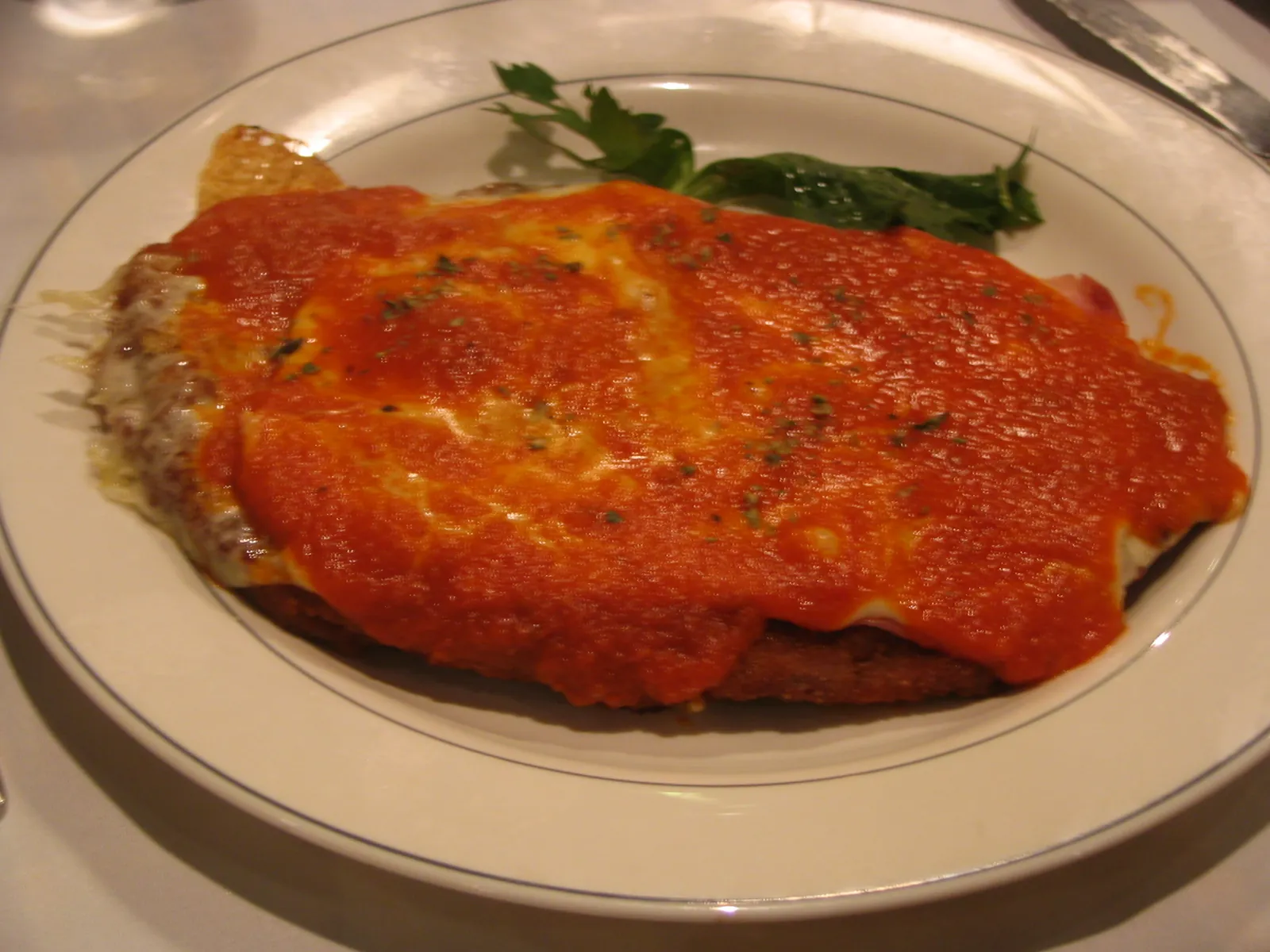
Breaded milanesa steak topped with tomato sauce and melted cheese Argentina flag Argentina 45m
Dinner •Buenos Aires Heritage

Milanesa a la Napolitana

Milanesa a la napolitana starts as a milanesa — a thin beef steak pounded flat, dredged in flour and egg, coated in breadcrumbs and fried until crisp — and then becomes something else entirely: topped with tomato sauce, a slice of ham and a blanket of mozzarella, it goes back into the oven until the cheese bubbles. It is the dish Argentine families order at the neighbourhood bodegon, always with French fries. One serving is about 350 g, before the fries.

Comforting & Satisfying

A crisp breaded steak, fried golden, then finished in the oven under tomato sauce, ham and bubbling mozzarella — Argentina's favourite comfort plate.

Pairs Well With
French fries & a green salad
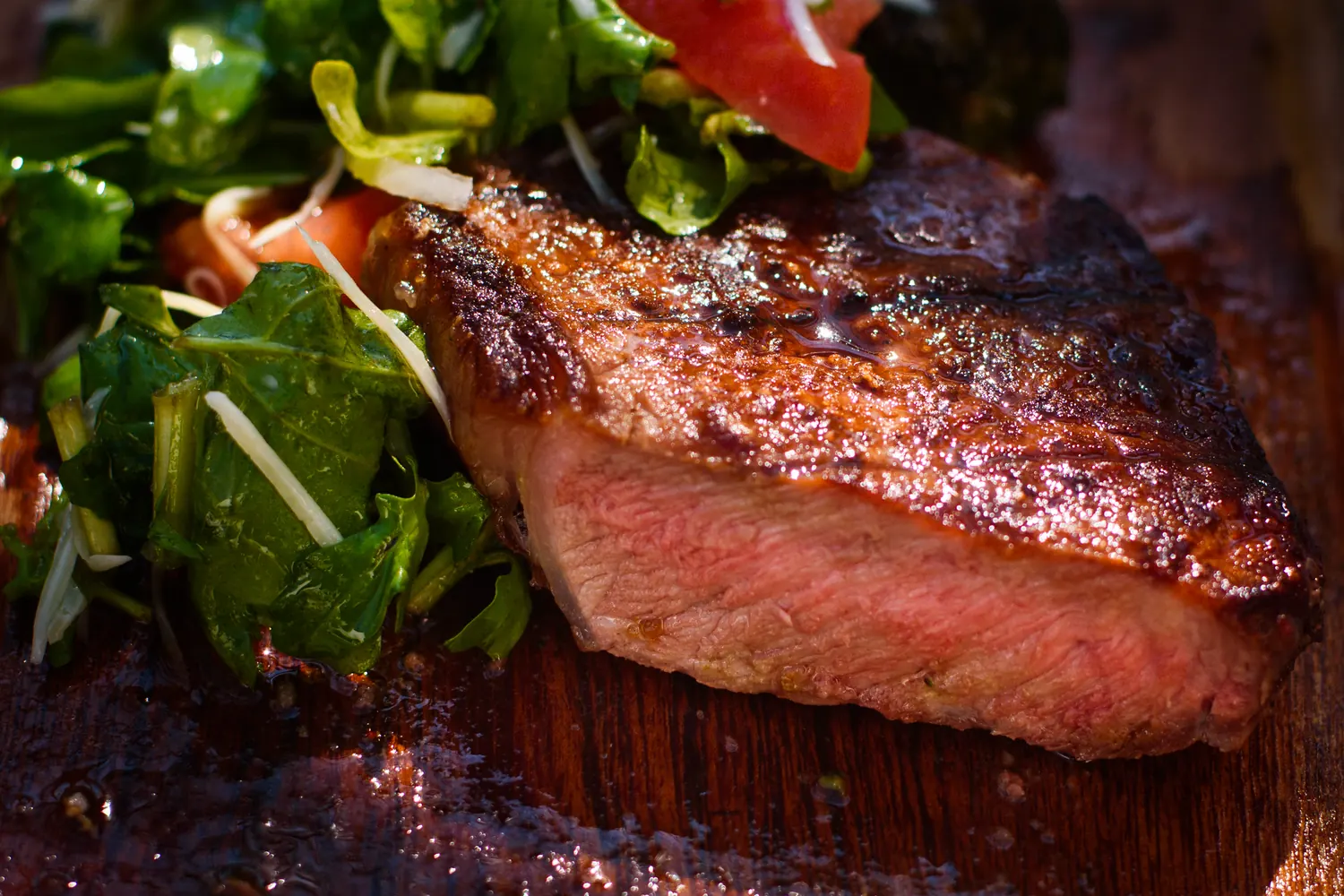
A grilled bife de chorizo steak, pink inside, with green salad on a wooden board Argentina flag Argentina 2h 30m
Dinner •Buenos Aires Parrilla Heritage

Argentine Asado

This argentine asado recipe is the full Sunday parrillada: tira de asado, vacio, entrana and bife de chorizo, plus chorizo, morcilla, mollejas and chinchulines, all cooked slowly over quebracho charcoal embers and seasoned with nothing but coarse salt. It opens with provoleta, grilled provolone with oregano, and the meat is served piece by piece as each cut is ready, with chimichurri and salsa criolla on the table. One serving is about 460 g.

High-Protein & Satisfying

A slow mixed grill of beef cuts, chorizo, morcilla and achuras over quebracho embers, opened with grilled provoleta and served with chimichurri and salsa criolla.

Pairs Well With
Chimichurri, salsa criolla & Malbec
High Protein

The Dinner Gazette

Never wonder what’s for dinner again

One email a week with easy dinner ideas from around the world — ingredients, steps and nutrition, tested in our kitchen first.

Delivered every Thursday morning. Unsubscribe anytime.