

Curated recipes from 193 countries  •  New seasonal Mediterranean issue out now

Overview

Baked Mac and Cheese

Macaroni and Cheese, Mac 'n' Cheese, Southern Baked Macaroni and Cheese

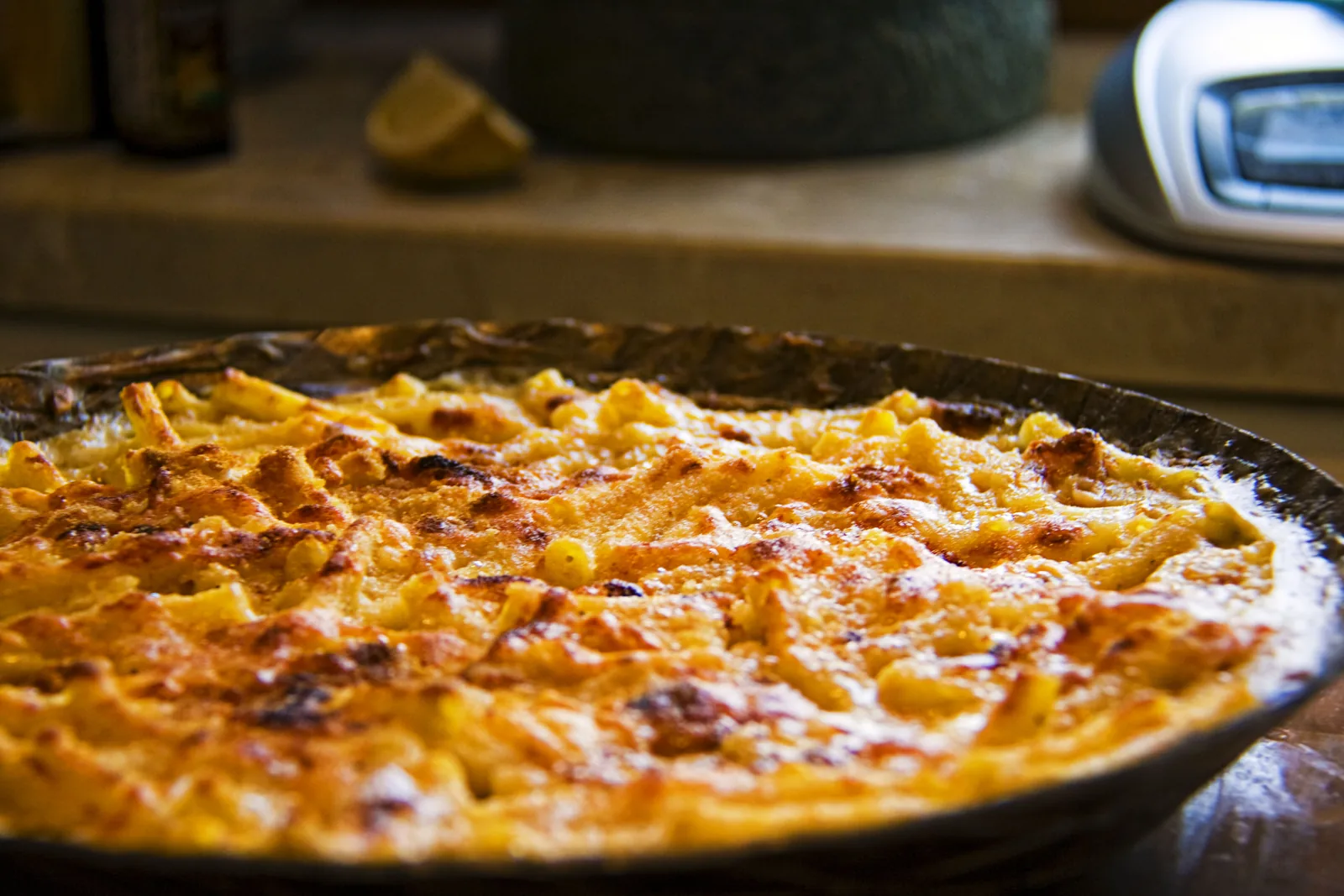
This baked mac and cheese recipe layers elbow macaroni in a smooth béchamel sauce made with sharp cheddar and Gruyère, then bakes it under a golden, buttered panko crust until the top is crisp and the sauce bubbles at the edges. It is the American comfort dish that turns up at family dinners, Thanksgiving tables and potlucks all over the country. One serving is about 290 g.

Macaroni and cheese has been an American favourite for more than two centuries. Thomas Jefferson served a macaroni pie at a White House dinner in 1802, and Mary Randolph's The Virginia House-Wife, published in 1824, printed one of the first American recipes for macaroni baked with cheese. The dish became a household staple in 1937, when Kraft launched its boxed macaroni and cheese dinner during the Great Depression, and the baked, breadcrumb-topped version has been the centrepiece of family dinners, Thanksgiving tables and church potlucks ever since.

Pairs well with: Roasted broccoli & green salad

Provenance

United States flag United States

American Heritage

North America

Time Dedication

1h 5m

20m prep • 45m cook

Batch Yield

8 Servings

617 kcal per serving

1 serving ≈ 290 g

Technical Skill

Intermediate

Easy (Baked Casserole)

Meal Timing & Digestive Fit

Breakfast

Not Advised

Lunch

Hearty Midday Main

Dinner

Ideal Hearty Main

Snack & Tea

Inappropriate

Occasions: Family dinners, Thanksgiving, potlucks, game nights, holiday gatherings Cost: Low — about $2–3 per serving at home
Baked mac and cheese in a baking dish with a golden-brown crust

American Heritage

Photo: Martin, CC BY 2.0, via Wikimedia Commons

The Heritage Formulary

Measured Ingredients

Estimated cost: Low — about $2–3 per serving at home (USD)

A true baked mac and cheese is judged by its contrast: a crisp, golden panko top over a sauce that stays creamy and coats every elbow.

Execution Methodology & Culinary Technique

Step-by-Step Cooking Guide

Active 1h 5m
P

Prep Stage: Grate, Measure & Heat the Oven

20 Mins • Grating & Measuring

Heat the oven to 190°C (375°F) and grease a deep 23 x 33 cm baking dish with butter. Grate the cheddar and Gruyère and mix them together. Measure the milk, flour, dry mustard, cayenne, paprika, salt, pepper and nutmeg. Toss the panko with the melted butter and Parmesan for the topping.

Maestro Tip: Grate the cheese yourself — pre-grated cheese is coated so it does not melt smoothly, and this sauce needs a smooth melt.

  1. 1

    Cook the Elbow Macaroni

    8 Mins Rolling boil, 100°C (212°F)

    Bring a large pot of salted water to a rolling boil. Add the elbow macaroni and cook for 7–8 minutes until just firm — slightly underdone, as it will cook more in the oven. Drain well and set aside.

    Undercook the pasta on purpose — fully cooked macaroni turns to mush in the oven.

    Done when: Macaroni is just firm (al dente), not soft.

  2. 2

    Make the Roux & Béchamel

    10 Mins Simmer, about 82°C (180°F)

    Melt the 45 g of butter in a large saucepan over medium heat. Stir in the flour and cook for 2 minutes, stirring constantly, until it smells nutty but has not browned. Whisk in the milk a little at a time, then add the dry mustard, cayenne, nutmeg, salt and black pepper. Simmer gently for 4–5 minutes, stirring, until the sauce coats the back of a spoon.

    Add the milk slowly and whisk constantly — pouring it all in at once is how lumps happen.

    Done when: Sauce is smooth and thick enough to coat a spoon.

  3. 3

    Melt the Cheese & Combine

    5 Mins Off the heat, about 70°C (158°F)

    Take the pan off the heat and stir in the grated cheddar and Gruyère a handful at a time, stirring until each handful melts before adding the next. Fold in the drained macaroni until every elbow is coated in cheese sauce.

    Melt the cheese off the heat — boiling a cheese sauce makes it grainy and oily.

    Done when: Cheese is fully melted and every elbow is coated in a smooth, glossy sauce.

  4. 4

    Top & Bake Until Golden

    30 Mins 190°C (375°F)

    Tip the mixture into the greased baking dish and spread it into an even layer. Scatter the buttered panko and Parmesan over the top with the paprika. Bake in the preheated oven at 190°C (375°F) for 25–30 minutes, until the top is deep golden and crisp and the sauce bubbles at the edges. The centre must reach at least 74°C (165°F).

    If the top browns too fast, cover loosely with foil for the last 10 minutes.

    Done when: Top is deep golden and crisp; sauce bubbles at the edges; centre is steaming hot.

  5. 5

    Rest & Serve

    10 Mins Off the heat

    Take the dish out of the oven and rest it for 10 minutes before serving so the sauce thickens. Scoop into bowls or onto plates and serve hot with salad or roasted broccoli.

    The rest is what turns a runny scoop into a proper serving — do not skip it.

    Done when: Sauce has thickened and each scoop holds together on the plate.

Finishing Touches & Plating

Rest the dish for 10 minutes before serving so the sauce thickens and each scoop holds together. Serve hot in generous scoops with a crisp green salad or roasted broccoli on the side.

Nutritional Physiology & Benefits

Nutrition

Energy

617

kcal / serving

Protein

28g

Complete AA

Carbs

57g

Complex

Fats

30g

Healthy

Per serving (8 servings · 1 serving ≈ 290 g)
Energy617 kcal
Protein28 g
Carbohydrates57 g
Fat30 g
Fibre2.5 g
Sugar5.0 g
Sodium811 mg
Per 100g
Energy213 kcal
Protein9.8 g
Carbohydrates19.7 g
Fat10.4 g
Fibre0.9 g
Sugar1.7 g
Sodium280 mg

Nutrition values are estimated — calculated from USDA FoodData Central values for the listed ingredients.

Vitamins & minerals: Calcium (cheddar, Gruyère, milk), vitamin B12 (cheese, milk), vitamin A (cheese, butter), phosphorus (cheese, milk). Nutrition values are estimated.

Cheesy, Protein-Rich Comfort Food

A serving brings about 28 g of protein from the cheddar, Gruyère and milk, with calcium from the cheese and milk.

Big Flavour from Small Amounts

The flavour comes from sharp cheddar, Gruyère, dry mustard and a pinch of cayenne — small amounts of big-flavour ingredients, not extra fat.

Crisp Top, Creamy Inside

Baking the dish under a buttered panko crust gives a crisp golden top while the sauce underneath stays creamy, so no extra sauce is needed at the table.

Food Pairings

What to Eat With

To optimize nutrient absorption and elevate the sensory depth, pair with these authentic accompaniments:

Vegetables

Green Salad

A crisp green salad with a sharp vinaigrette cuts through the richness of the cheese sauce, and the fresh crunch is the perfect contrast to the soft, creamy pasta.

Roasted Broccoli

Roasted broccoli brings a slightly bitter, charred edge that balances the rich cheese, and its firm bite stands up to the soft macaroni.

Soups

Tomato Soup

Tomato soup is the classic diner partner for mac and cheese — the bright acidity of the tomato lifts the richness of the cheese sauce.

Drinks

Iced Tea or Lemonade

Cold iced tea or lemonade refreshes the palate between rich, cheesy spoonfuls, and its lightness keeps the heavy dish from feeling too much.

Complete menu

Serve a generous scoop of baked mac and cheese with roasted broccoli and a crisp green salad, and a glass of iced tea — the classic American comfort-dinner plate.

Digestive Guardrails

What NOT to Combine

To prevent digestive distress, sluggishness, or palate clash, avoid pairing the dish with these elements:

Very Sweet Desserts Straight After

Mac and cheese is already rich and salty, so a very sweet or heavy dessert straight after adds a large dose of sugar on top of it; fresh fruit is the lighter finish. This is general information, not medical advice.

Serving It Before It Rests

Cutting into the dish the second it leaves the oven makes the sauce run everywhere — it needs 10 minutes to rest so the sauce thickens and the scoop holds together. This is general cooking advice, not medical advice.

General information only, not medical advice — consult a doctor for personal dietary decisions.

Who Should Eat It

Who Should Eat

  • General adultsA rich, cheesy comfort dish — best as a generous scoop with a crisp salad or green vegetable to balance the richness.
  • ChildrenChildren usually love mac and cheese; serve a modest scoop and leave the cayenne out for young children.
  • ElderlySoft and easy to eat, but rich and salty; serve a modest scoop with plenty of salad or steamed vegetables.
  • Pregnant womenBaked to at least 74°C (165°F) throughout and served hot, it is fine; keep portions moderate and ask your clinician about rich, high-fat meals if unsure.
  • Breastfeeding womenA filling, energy-rich dish that suits breastfeeding; the cheese and milk add protein and calcium.
  • AthletesHigh in carbohydrate and protein, so it refuels well after training — but it is heavy, so eat it a few hours before, not right before, exercise.
  • Weight gainEnergy-dense with pasta, cheese, butter and milk, so it suits people who need extra calories.
  • Weight lossVery energy-dense, so keep the scoop modest, use a lighter cheddar and load the plate with salad or broccoli.

Health Conditions — Adjust or Avoid

Conditions

  • DiabetesHigh in carbohydrate from the pasta, so keep the scoop modest and add extra salad or broccoli; ask your clinician about portions.
  • High blood pressureContains about 811 mg sodium per serving from cheese, butter and salt; use less salt and a lower-sodium cheese if you need to limit sodium, and ask your clinician.
  • Kidney diseaseHigh in protein and potassium from the cheese and milk; people with kidney disease should watch portion size and ask their clinician.
  • GoutCheese and milk are low in purines, so this dish is generally better tolerated than meat dishes, but keep portions moderate and ask your clinician.
  • Stomach issuesThe dish is rich and the cayenne can irritate a sensitive stomach; leave the cayenne out if your stomach is sensitive.
  • Cardiovascular diseaseHigh in saturated fat from cheese, butter and whole milk, so people with cardiovascular disease should eat a smaller scoop with plenty of vegetables; ask your clinician.
  • Fatty liverRich and high in fat and carbohydrate, so keep portions modest and balance the plate with salad; ask your clinician.
  • Food allergiesContains gluten (macaroni, flour, panko breadcrumbs) and dairy (cheese, milk, butter). If you have any food allergy, check every ingredient and ask your clinician.
  • Special therapeutic dietsNot suitable as a low-fat, low-sodium or gluten-free therapeutic diet without changes (lighter cheese, gluten-free pasta, no breadcrumbs); discuss adaptations with your clinician or dietitian.

If you have a medical condition, consult your doctor before changing your diet.

Storage & Use

Storage & Use

How to store
Cool quickly and store covered in the fridge.
In the fridge
Cooked mac and cheese 3–4 days.
In the freezer
Up to 2 months.
How to reheat
Reheat in a 160°C (325°F) oven until steaming hot throughout, to 74°C (165°F); cover with foil so the top does not dry out, and add a splash of milk if the sauce has thickened.
Freezing recommended
Yes, up to 2 months; freeze in portions and thaw overnight in the fridge. The topping softens on freezing — crisp it under the grill for a few minutes after reheating.
Signs it has spoiled
Sour smell, slimy texture, or mould on the surface.

More recipes to explore

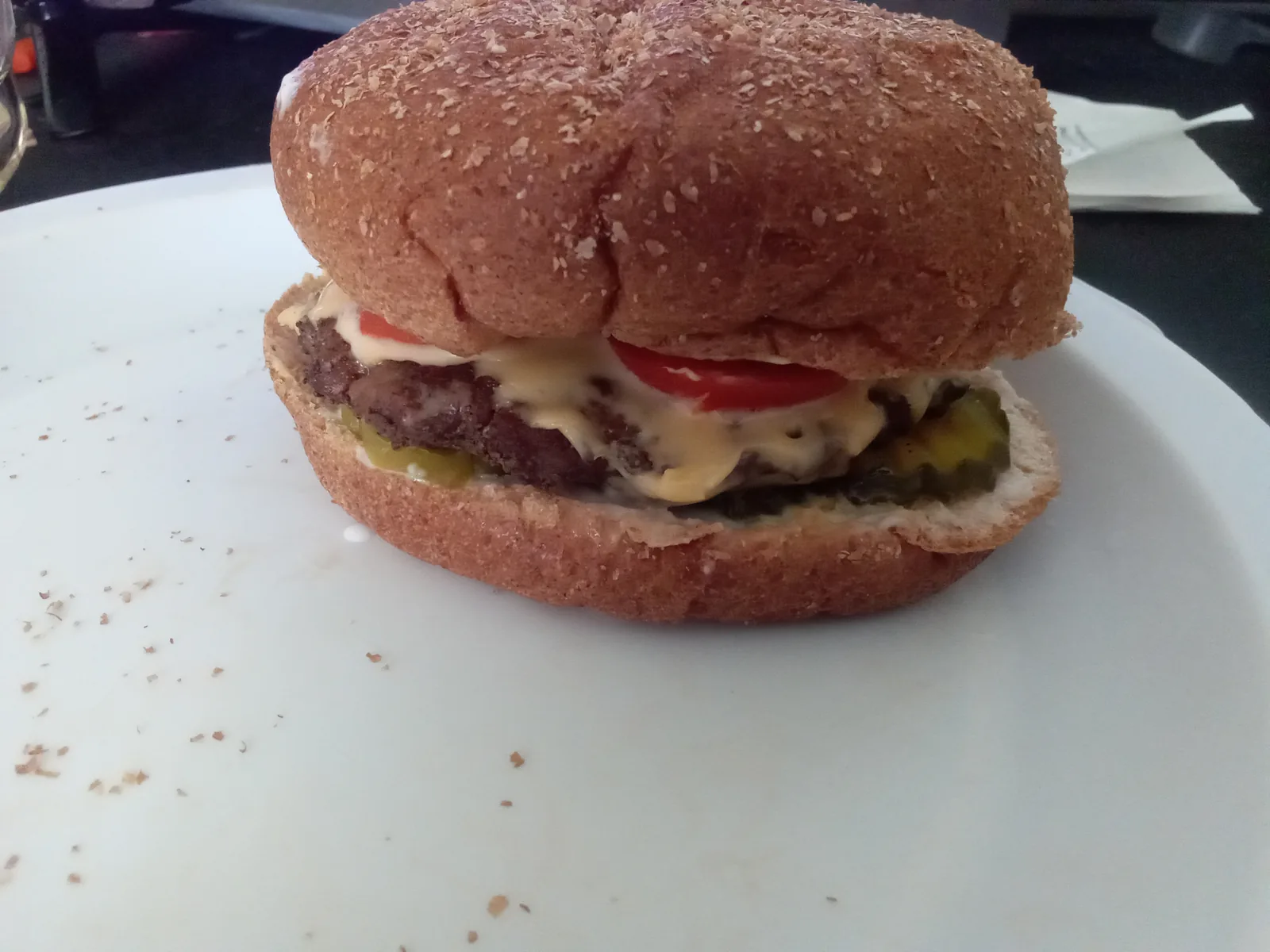
An American cheeseburger with a beef patty, melted cheese, tomato and pickles in a wholemeal bun on a white plate United States flag United States 35m
Lunch •American Heritage

American Cheeseburger

This american cheeseburger recipe turns a thick, well-seasoned beef patty, a slice of sharp cheddar and a soft toasted bun into the classic American lunch. The cheese melts over the hot patty, the pickles and tomato cut through the richness, and the whole thing comes together in about 35 minutes. One serving is about 340 g, one full burger.

Comfort & Satisfaction

A juicy grilled beef patty with melted cheddar, fresh tomato, lettuce and pickles in a soft toasted bun.

Pairs Well With
Crisp french fries or a simple coleslaw, with an ice-cold cola or lemonade.
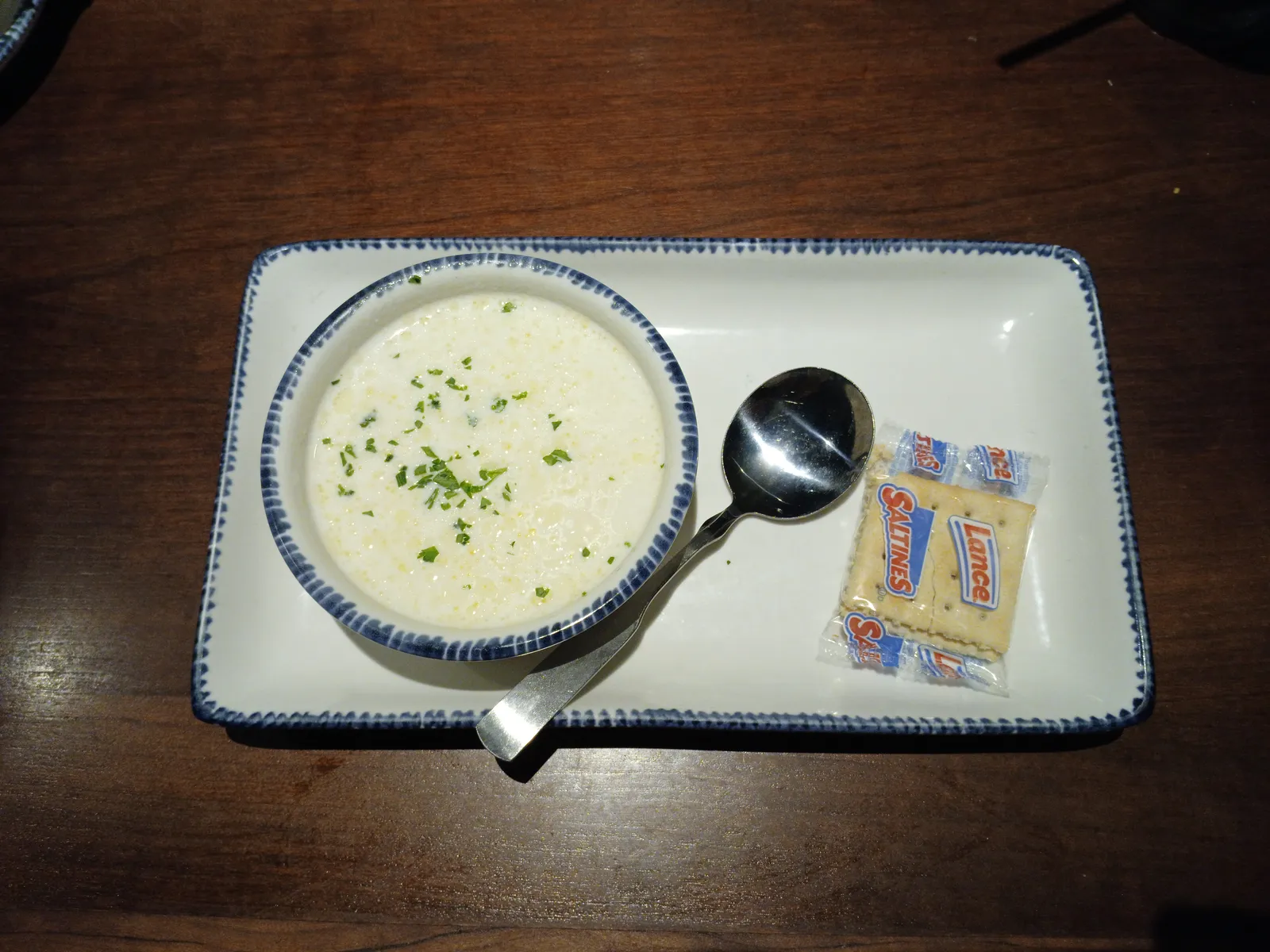
A cup of creamy white clam chowder with chopped parsley, served on a plate with saltine crackers and a spoon United States flag United States 55m
Lunch •New England Heritage

New England Clam Chowder

This new england clam chowder recipe turns fresh clam meat, potatoes, onion and celery into the creamy white soup New England is known for, with crisp bacon and a splash of cream at the end. It is a proper lunch in a bowl, best eaten with oyster crackers crumbled over the top. One serving is about 450 g.

Comfort & Warmth

A creamy white chowder of tender clams, potatoes and bacon, thickened lightly and served steaming hot with crackers.

Pairs Well With
Oyster crackers and a buttered slice of sourdough, with a cold glass of lemonade or iced tea.
Soups & Broths
Bœuf bourguignon — French beef braised in red wine France flag France 4h
Dinner •Burgundy Terroir

Bœuf Bourguignon

Beef braised gently in red wine until the connective tissue melts into a velvet, gelatin-rich sauce — the classic Burgundy Sunday dinner.

Cellular Repair

Beef braised in red wine until spoon-tender, with mushrooms and pearl onions.

Pairs Well With
Parsnip Purée & Steamed French Haricots Verts
High Protein
Vietnamese braised pork belly with golden eggs in caramel sauce Vietnam flag Vietnam 1h 45m
Dinner •One Pot

Vietnamese Braised Pork and Eggs

Pork belly slowly braised in coconut water and caramel until meltingly tender, with golden eggs that soak up the sweet-savoury sauce — the Vietnamese family dish that tastes better the next day.

Comfort & Sustained Energy

Slow-braised pork belly and eggs in coconut water and caramel.

Pairs Well With
Steamed rice & pickled mustard greens
High Protein

The Dinner Gazette

Never wonder what’s for dinner again

One email a week with easy dinner ideas from around the world — ingredients, steps and nutrition, tested in our kitchen first.

Delivered every Thursday morning. Unsubscribe anytime.



