-
1
Blend the Spice Paste (Rempah)
15 Mins
No heat
Put the shallots, garlic, ginger, galangal, sliced lemongrass, chillies, turmeric, coriander, cumin and nutmeg in a blender with 3 tablespoons of water and blend to a smooth, thick paste, stopping to scrape down the sides. Season the paste with 1 teaspoon of the salt.
Add water a spoonful at a time — the paste should be thick enough to hold its shape, not runny.
Done when: The paste is smooth, fragrant and evenly coloured, with no visible chunks of lemongrass or galangal.
-
2
Fry the Paste and Brown the Beef
15 Mins
Medium heat, about 160°C (320°F) in the pan
Heat the oil in a heavy, wide pot over medium heat. Add the spice paste, cinnamon stick, star anise, cardamom, cloves and the bruised lemongrass stalk and fry, stirring constantly, for 5–7 minutes until the paste darkens a shade and the oil starts to glisten at the edges. Add the beef cubes and the torn kaffir lime leaves and stir for 5 minutes until the meat is coated and lightly coloured on the outside.
Do not rush the frying — a paste fried until fragrant and dark is what keeps the finished rendang from tasting raw and harsh.
Done when: The paste smells deeply fragrant and the beef is coated all over with no pink showing.
-
3
Add Coconut Milk and Bring to a Simmer
30 Mins
Gentle simmer, about 95°C (203°F)
Pour in the coconut milk and water, add the tamarind paste and palm sugar, and stir well, scraping the bottom of the pot. Bring to a gentle simmer — the surface should shudder, never boil hard — then put the lid on slightly ajar and cook for 30 minutes, stirring every 10 minutes so nothing catches.
A hard boil splits coconut milk into grainy curds; keep it at the gentlest simmer you can manage.
Done when: The liquid is a rich golden-brown and the beef is starting to soften.
-
4
Slow-Braise Until Tender
2 Hours
Low simmer, about 90–95°C (194–203°F)
Keep the pot at a low simmer with the lid ajar for about 2 hours, stirring every 15–20 minutes and adding a splash of hot water only if the pot looks in danger of drying out before the beef is tender. The sauce will slowly thicken and darken as the coconut milk reduces.
This is a patient dish — if the beef is still tough at 2 hours, give it another 30 minutes rather than turning the heat up. High heat toughens beef and burns the coconut milk.
Done when: A cube of beef yields easily when pressed with a spoon and pulls apart with no resistance.
-
5
Reduce to the Dry Rendang Stage
45 Mins
Low heat, about 90°C (194°F)
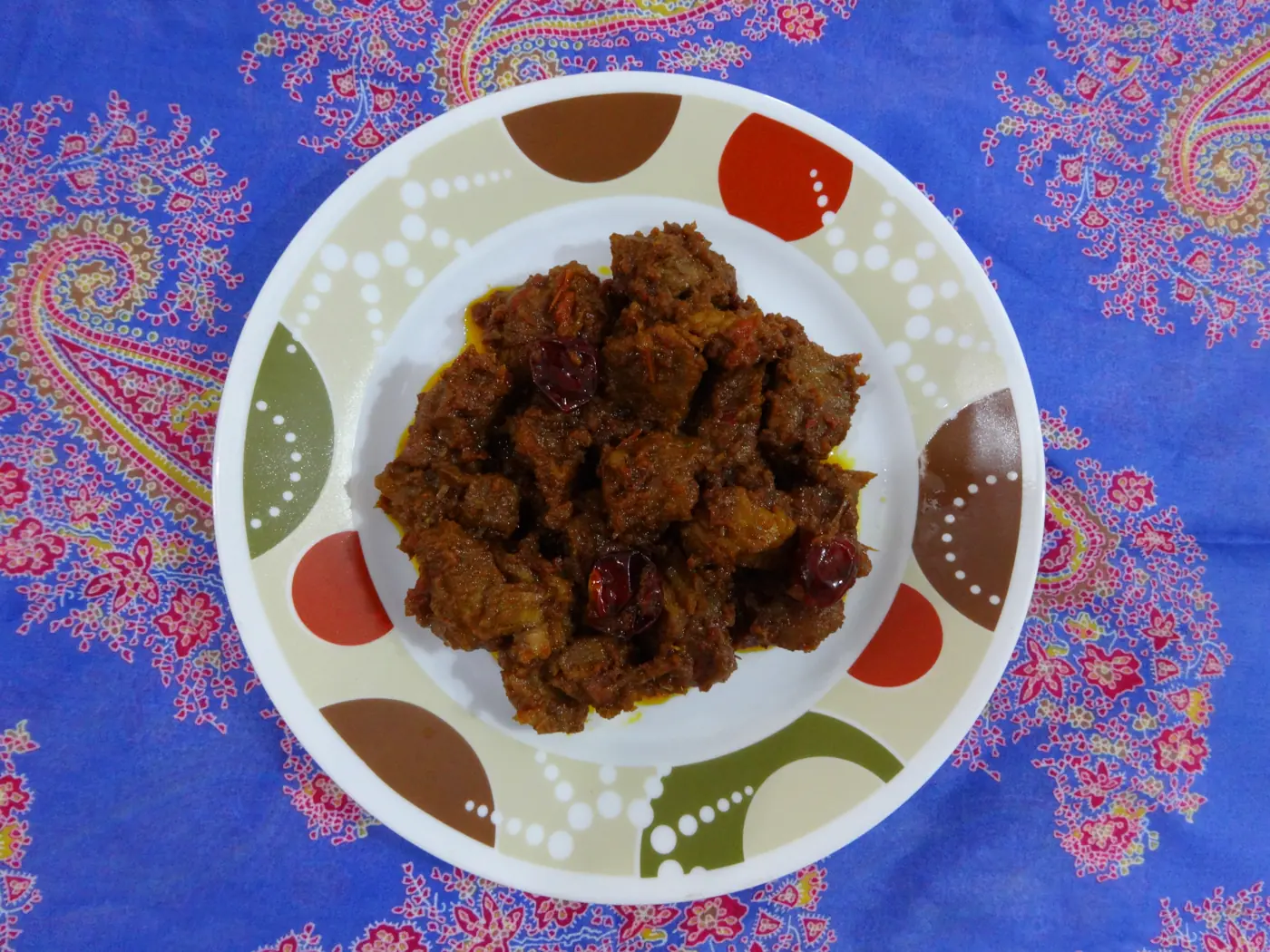
Take the lid off and keep cooking on low heat, stirring more and more often as the sauce thickens. The oil will separate from the paste and the beef will start to fry gently in its own spiced oil — this is the defining moment of rendang, and the one that sets it apart from a saucy curry or stew. Keep going until the beef is coated in a dark brown, almost dry paste with just a sheen of oil, then taste and add the remaining salt if needed.
Do not walk away now: the paste can catch and burn in minutes once the liquid is gone. Stir constantly for the last 10 minutes.
Done when: The beef is dark brown and coated in a dry, crumbly spice paste with a glossy sheen of oil; no pool of sauce remains.
-
6
Rest and Serve
10 Mins
Rest off the heat; reheat leftovers to 74°C (165°F)
Remove the cinnamon stick, star anise, cloves and lemongrass stalk. Let the rendang rest for 10 minutes so the spice paste settles onto the meat, then serve hot with steamed jasmine rice and pickled cucumber.
Rendang tastes even better the next day — the flavours deepen overnight, which is why it is traditionally cooked a day ahead for celebrations.
Done when: The meat is glossy, dark and tender, and the paste clings to every piece.
auto_awesome Finishing Touches & Plating
Fish out the whole spices, rest the rendang for 10 minutes, and serve hot with steamed jasmine rice. A spoonful of pickled cucumber on the side cuts through the richness.
 Indonesia
35m

 France

 Vietnam