Curated recipes from 193 countries  •  New seasonal Mediterranean issue out now

Overview

Belgian Boudin Blanc

Boudin Blanc de Liège, Belgian White Sausage, White Pudding

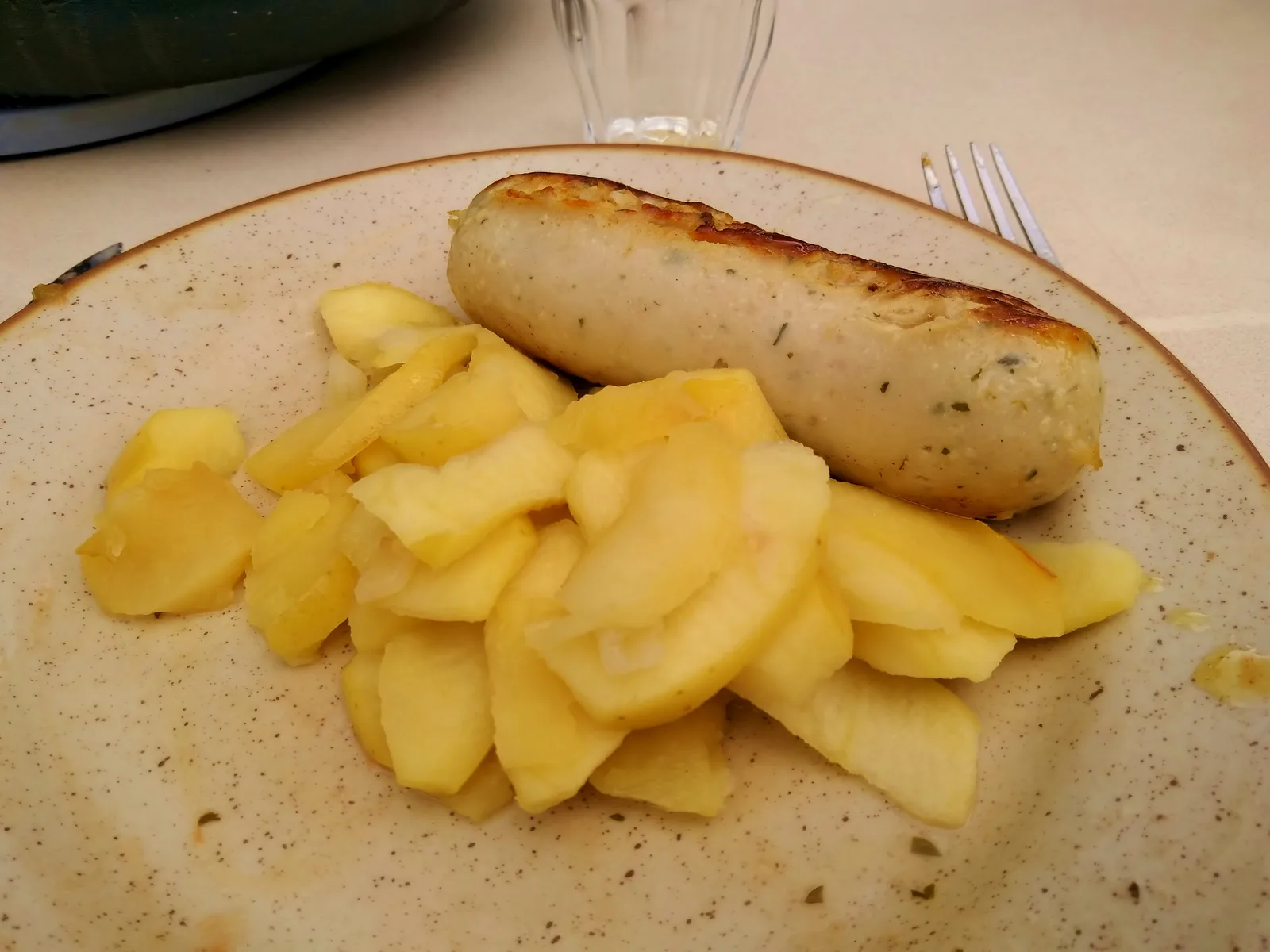
This belgian boudin blanc recipe makes the delicate white sausage of Liège: finely ground pork and chicken blended with cream, milk-soaked breadcrumbs and egg, stuffed into casings, poached gently and then pan-fried until golden. One serving is about 350 g: two sausages with caramelised apples. It is the mild, creamy sausage of Belgian butchers — white, not dark, and nothing like the black pudding it is often confused with.

Boudin blanc is the white sausage of France and Belgium, a medieval recipe in which light-coloured meat is ground fine with milk, cream, breadcrumbs and egg to make a sausage that stays pale instead of turning brown. In Belgium it is a speciality of Liège, where butchers make it with pork and chicken or veal, and it is a traditional Christmas Eve dish in the region. It is often confused with boudin noir, the black pudding made with blood, but the two could hardly be more different: boudin blanc is mild, creamy and delicate, served pan-fried with caramelised apples or mashed potatoes, while boudin noir is dark, rich and strongly flavoured. The French town of Rethel in the Ardennes is also famous for its own boudin blanc, made since the 17th century.

Pairs well with: Caramelised apples and mashed potatoes are the classic partners for the mild, creamy sausage.

Provenance

Belgium flag Belgium

Liège Butcher's Classic

Nordic & European

Time Dedication

1h 50m

60m prep • 50m cook

Batch Yield

4 Servings

745 kcal per serving

1 serving ≈ 350 g

Technical Skill

Advanced

Hard (Stuff and Poach)

Meal Timing & Digestive Fit

Breakfast

Not Advised

Lunch

Hearty Midday Main

Dinner

Ideal Hearty Main

Snack & Tea

Inappropriate

Occasions: Festive dinners, Christmas Eve, family dinners, Belgian food nights Cost: Moderate — about $4–5 per serving at home
A golden-brown boudin blanc white sausage with caramelised apple slices on a speckled plate, a fork and glass behind

Liège Butcher's Classic

Photo: Skimel, CC BY-SA 4.0, via Wikimedia Commons

The Heritage Formulary

Measured Ingredients

Estimated cost: Moderate — about $4–5 per serving at home (USD)

The sausages are poached gently at 80°C (176°F) until the centre reaches 71°C (160°F), then pan-fried briefly for a golden skin — never boiled hard, or the casings burst.

Execution Methodology & Culinary Technique

Step-by-Step Cooking Guide

Active 1h 50m
P

Grind and Mix the Sausage

1 hour

Melt the butter and soften the finely chopped onion until transparent, about 5 minutes, then cool. Soak the breadcrumbs in the warm whole milk until soft. Grind the chilled pork and chicken through the fine plate of a mincer, then mix in the soaked breadcrumbs, onion, heavy cream, beaten eggs, salt, white pepper and nutmeg until the paste is smooth and sticky. Chill the mix for 30 minutes so it firms up for stuffing.

Maestro Tip: Keep everything cold — warm sausage meat smears instead of grinding, and the boudin turns grainy. Chill the bowl and the mincer parts too. Never taste raw sausage meat; cook a small patty to check the seasoning.

  1. 1

    Soften the Onion and Soak the Breadcrumbs

    10 Minutes Low heat, about 120°C (250°F)

    Melt the 20 g butter in a small pan and cook the finely chopped onion over low heat for about 5 minutes until soft and transparent, not browned. Set aside to cool. Warm the whole milk until lukewarm and soak the breadcrumbs in it for 5 minutes until soft.

    Browning the onion would darken the sausage — keep the heat low and stop as soon as it turns transparent.

    Done when: The onion is soft and glassy, and the breadcrumbs have swollen into a soft paste.

  2. 2

    Grind and Mix the Sausage Meat

    15 Minutes Active, 30 Minutes Chilling Chill, 4°C (39°F)

    Grind the chilled pork shoulder and chicken breast through the fine plate of a mincer into a cold bowl. Add the soaked breadcrumbs, cooled onion, heavy cream, beaten eggs, salt, white pepper and nutmeg, and mix with cold hands or a spatula until the paste is smooth, sticky and uniform. Cover and chill for 30 minutes.

    Mix just until uniform — over-mixing makes the sausage rubbery. If the paste feels warm, chill it again before stuffing.

    Done when: The paste is smooth, pale and sticky, and holds together when you lift a spoonful.

  3. 3

    Stuff the Casings and Twist the Links

    15 Minutes Room temperature, about 21°C (70°F)

    Rinse the soaked pork casings and slide one onto the stuffing tube. Fill steadily, easing the casing off the tube as it fills, and twist into 8 links of about 15 cm (6 in) each. Prick any air bubbles with a clean pin.

    Fill loosely, not tight — the sausages swell as they poach, and overfilled casings burst. Tie the ends well.

    Done when: Each link is plump and even, with no air pockets and no paste leaking from the ends.

  4. 4

    Poach Gently Until Cooked Through

    30 Minutes Poaching water, 80°C (176°F); sausage must reach 71°C (160°F)

    Heat a large pot of water to 80°C (176°F) — steaming, never boiling. Lower the sausages in and poach for 30 minutes, keeping the water below a simmer, until the centre of the thickest sausage reaches 71°C (160°F). Lift out and cool briefly.

    Boiling water bursts the casings in seconds — if you see bubbles rising, turn the heat down at once.

    Done when: The sausages are firm to the touch and pale white, and the centre of the thickest one reaches 71°C (160°F) on a meat thermometer.

  5. 5

    Fry the Apples and Brown the Sausages

    12 Minutes Medium heat, about 175°C (350°F)

    While the sausages poach, melt the 20 g butter in a wide pan and fry the apple slices with the sugar over medium heat for about 8 minutes, turning once, until golden and tender. Set aside and keep warm. Melt the 15 g butter in the same pan and fry the poached sausages for about 8 minutes, turning often, until the skins are golden brown all over.

    Fry the sausages gently — a fierce heat splits the skins. Roll them often so they brown evenly.

    Done when: The apples are golden and tender, and the sausages are evenly browned with a crisp skin.

  6. 6

    Serve the Boudin Blanc

    2 Minutes Serving temperature, about 60°C (140°F)

    Lay two sausages on each warm plate with a spoonful of caramelised apples, and serve at once with mashed potatoes or a green salad on the side.

    Serve the sausages hot from the pan — they cool fast, and cold boudin blanc turns heavy and greasy.

    Done when: The plate shows golden sausages with glossy apples, and the sausage is pale and steaming when cut.

Finishing Touches & Plating

Lift the fried sausages onto warm plates with the caramelised apples, and serve at once with mashed potatoes or a green salad. Cut into a sausage at the table — the inside should be pale, smooth and steaming, never pink or grey.

Nutritional Physiology & Benefits

Nutrition

Energy

745

kcal / serving

Protein

46g

Complete AA

Carbs

31g

Complex

Fats

49g

Healthy

Per serving (4 servings · 1 serving ≈ 350 g)
Energy745 kcal
Protein46 g
Carbohydrates31 g
Fat49 g
Fibre3.3 g
Sugar16.6 g
Sodium870 mg
Per 100g
Energy213 kcal
Protein13.2 g
Carbohydrates8.9 g
Fat13.9 g
Fibre0.9 g
Sugar4.7 g
Sodium249 mg

Nutrition values are estimated — calculated from USDA FoodData Central values for the listed ingredients.

Vitamins & minerals: Provides iron, zinc and vitamin B12 from the pork and chicken, vitamin C from the apples, and vitamin B6 from the onion. Nutrition is estimated.

High in Protein

About 46.1 g of protein per serving from the pork and chicken, which supports muscle maintenance and keeps a rich dinner filling for hours.

Iron, Zinc and Vitamin B12

Pork and chicken are naturally rich in iron, zinc and vitamin B12, which the body uses to make healthy red blood cells.

Apples Add Fibre and Vitamin C

The caramelised apples add fibre and vitamin C to the plate, and their gentle sweetness balances the rich sausage without any extra sauce.

Food Pairings

What to Eat With

To optimize nutrient absorption and elevate the sensory depth, pair with these authentic accompaniments:

Sides

Caramelised Apples

Sweet, buttery apples are the traditional partner: their gentle acidity cuts through the rich sausage and their softness matches its texture.

Mashed Potatoes

Creamy mashed potatoes soak up the pan juices and turn two sausages into a proper Belgian dinner.

Vegetables

Green Salad with Mustard Dressing

A sharp green salad with a mustard dressing refreshes the palate between bites of the rich sausage.

Drinks

Belgian Blond Ale or White Wine

A Belgian blond ale or a glass of white wine balances the richness of the sausage without overpowering its mild flavour.

Complete menu

Serve the boudin blanc with caramelised apples, mashed potatoes and a glass of Belgian blond ale for a complete Liège dinner.

Digestive Guardrails

What NOT to Combine

To prevent digestive distress, sluggishness, or palate clash, avoid pairing the dish with these elements:

Pork, Milk, Wheat and Egg Allergy — Do Not Serve

Boudin blanc is made with pork, milk, cream, breadcrumbs and egg, so anyone with a pork, milk, wheat or egg allergy must not eat it — there is no substitute that keeps it boudin blanc. This is general information, not medical advice.

Extra Mustard and Sweet Sauces

One serving carries about 870 mg of sodium and the apples add about 17 g of sugar, so piling on salty mustard or sweet sauces pushes both up fast — keep the accompaniments plain. This is general information, not medical advice.

Undercooked Pork

Fresh sausages spoil quickly, and undercooked pork can carry harmful bacteria. Always poach the boudin until the centre reaches 71°C (160°F), and never eat raw sausage meat. This is general information, not medical advice.

General information only, not medical advice — consult a doctor for personal dietary decisions.

Who Should Eat It

Who Should Eat

  • General adultsA rich, satisfying dinner — two white sausages with caramelised apples and mashed potatoes make a complete Belgian main course.
  • ChildrenThe mild, creamy sausage suits children well, but cut it into small pieces and serve it with the apples, not the mustard, for younger children.
  • ElderlySoft, mild and easy to chew, boudin blanc suits older eaters — serve it with soft mashed potatoes and well-cooked apples.
  • Pregnant womenSafe when the sausages are poached and then fried right through to 71°C (160°F) with no pink centre — eat them freshly cooked and hot.
  • Breastfeeding womenA filling, protein-rich dinner; the mild spices pass no strong flavour into breast milk, so enjoy it as you like.
  • AthletesAbout 46 g of protein per serving makes this a strong post-training dinner — add mashed potatoes to top up carbohydrate.
  • Weight gainAdd an extra sausage and a second spoonful of mashed potatoes to lift the energy of the meal.
  • Weight lossThe sausages are rich, so keep to one sausage, go easy on the butter-fried apples, and fill the plate with green salad.

Health Conditions — Adjust or Avoid

Conditions

  • DiabetesThe caramelised apples and breadcrumbs add about 31 g of carbohydrate per serving, so keep to the stated portion and favour the green salad; ask your clinician about portions.
  • High blood pressureThis dish is salty — about 870 mg of sodium per serving, mostly from the salt and the pork — so keep the mustard light and skip extra salt; ask your clinician about portions.
  • Kidney diseaseHigh in protein, sodium and potassium, so it may not suit a restricted kidney diet; ask your clinician before eating it.
  • GoutPork is a red meat with a moderate purine load, so keep the portion to one sausage and do not eat it often during a flare; ask your clinician for advice.
  • Stomach issuesThe rich, fatty sausage can sit heavily on a sensitive stomach — eat a small portion, chew well, and skip the fried apples if they trouble you; ask your clinician if symptoms flare.
  • Cardiovascular diseasePork, cream and butter make this dish rich in saturated fat, so keep portions moderate and balance the plate with vegetables; ask your clinician about portions.
  • Fatty liverThe fatty sausage and butter-fried apples add up, so keep the portion small and serve it with salad instead of mashed potatoes; ask your clinician about portions.
  • Food allergiesContains pork, milk (including cream and butter), wheat (breadcrumbs) and egg. Check the casings and breadcrumbs labels if you need them gluten-free; ask your clinician if you are unsure.
  • Special therapeutic dietsHigh-protein and soft in texture, but rich, salty and fatty — it can be adapted by cutting the cream and butter, but ask your clinician or dietitian before relying on it for a therapeutic diet.

If you have a medical condition, consult your doctor before changing your diet.

Storage & Use

Storage & Use

How to store
Cool the poached sausages quickly and store them in an airtight container; keep the apples in a separate container.
In the fridge
Poached sausages 3–4 days; caramelised apples 2 days.
In the freezer
Poached sausages (before frying) up to 2 months; do not freeze the caramelised apples.
How to reheat
Reheat the sausages by pan-frying in butter until steaming hot throughout, to 74°C (165°F); warm the apples gently in a pan.
Freezing recommended
Yes for the poached sausages; the apples are best made fresh.
Signs it has spoiled
Sour or off smell, slimy surface on the sausages, or mould on the apples.

More recipes to explore

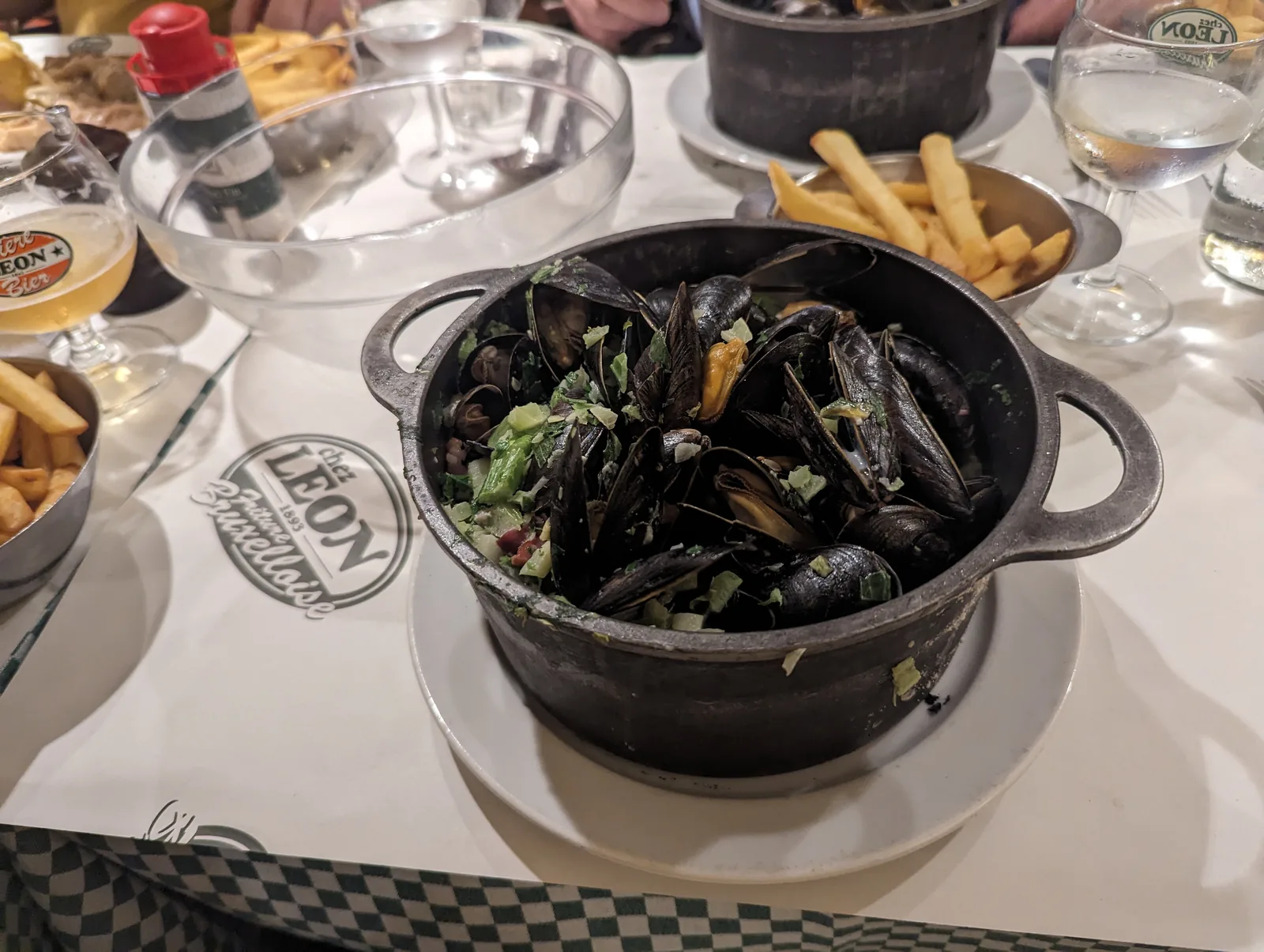
Moules-frites — a black pot of steamed mussels with herbs, served with golden fries at a Brussels brasserie Belgium flag Belgium 1h
Dinner •Brussels Brasserie Classic

Moules-Frites

This moules frites recipe makes the plate Belgium is proudest of: a black pot of mussels steamed open in white wine, shallots and cream, served with a heap of crisp, twice-cooked fries and a pot of mayonnaise. The mussels are sweet and briny, the broth is made for dipping, and the fries stay crisp if you keep them out of the pot. One serving is about 350 g.

Seaside Comfort

Sweet mussels steamed in white wine and cream, piled next to golden twice-cooked fries.

Pairs Well With
Crisp Belgian lager & mayonnaise
High Protein
Belgian waffles — a golden Brussels waffle topped with whipped cream and icing sugar on a white plate Belgium flag Belgium 1h 35m
Breakfast •Brussels Bakery Classic

Belgian Waffles

This Belgian waffles recipe makes the light, yeasted kind: a risen batter cooked in a hot iron until the outside is crisp and golden and the inside stays soft and airy. The deep pockets hold butter, syrup or berries, and a dusting of icing sugar is all they really need. This recipe makes 8 waffles; one serving is 2 waffles, about 210 g. Nutrition is for the plain waffles, before toppings.

Weekend Breakfast Treat

Light, yeasted Brussels waffles with deep pockets, crisp outside and soft inside.

Pairs Well With
Strong coffee & fresh berries
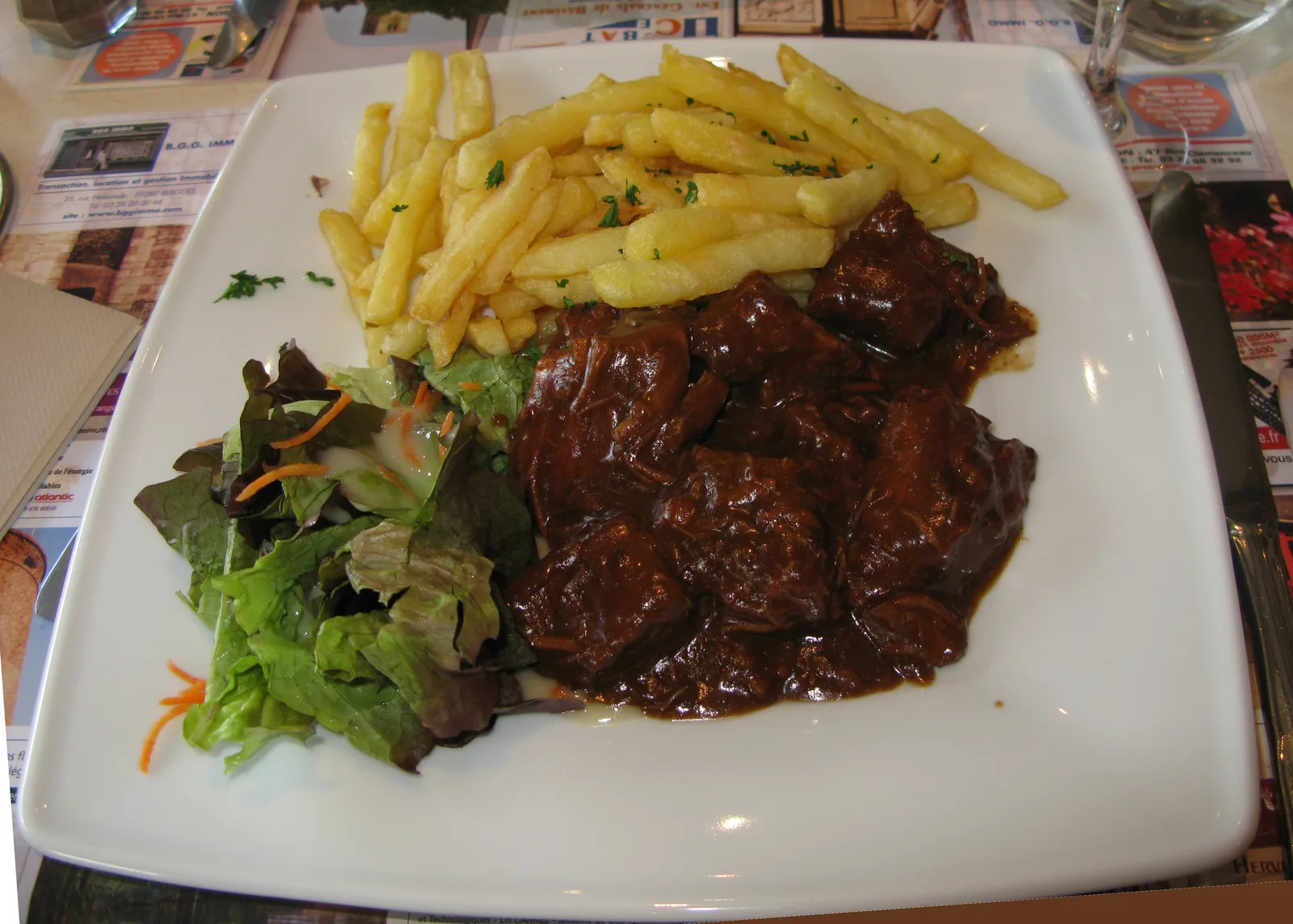
Carbonade flamande — dark beer-braised beef stew with fries and a small salad on a white plate Belgium flag Belgium 2h 55m
Dinner •Flemish Farmhouse Classic

Carbonade Flamande

This carbonade flamande recipe is Flanders' answer to the French beef stew: chunks of beef braised for hours in dark Belgian ale with sweet caramelised onions, thyme and bay, thickened the old way with slices of bread spread with mustard. The sauce turns dark, glossy and sweet-sour, and the beef goes spoon-tender. One serving is about 250 g, not counting the fries or potatoes served alongside.

Slow Sunday Comfort

Beef braised low and slow in dark Belgian ale with onions and mustard bread.

Pairs Well With
Dark Belgian ale & fries
High Protein
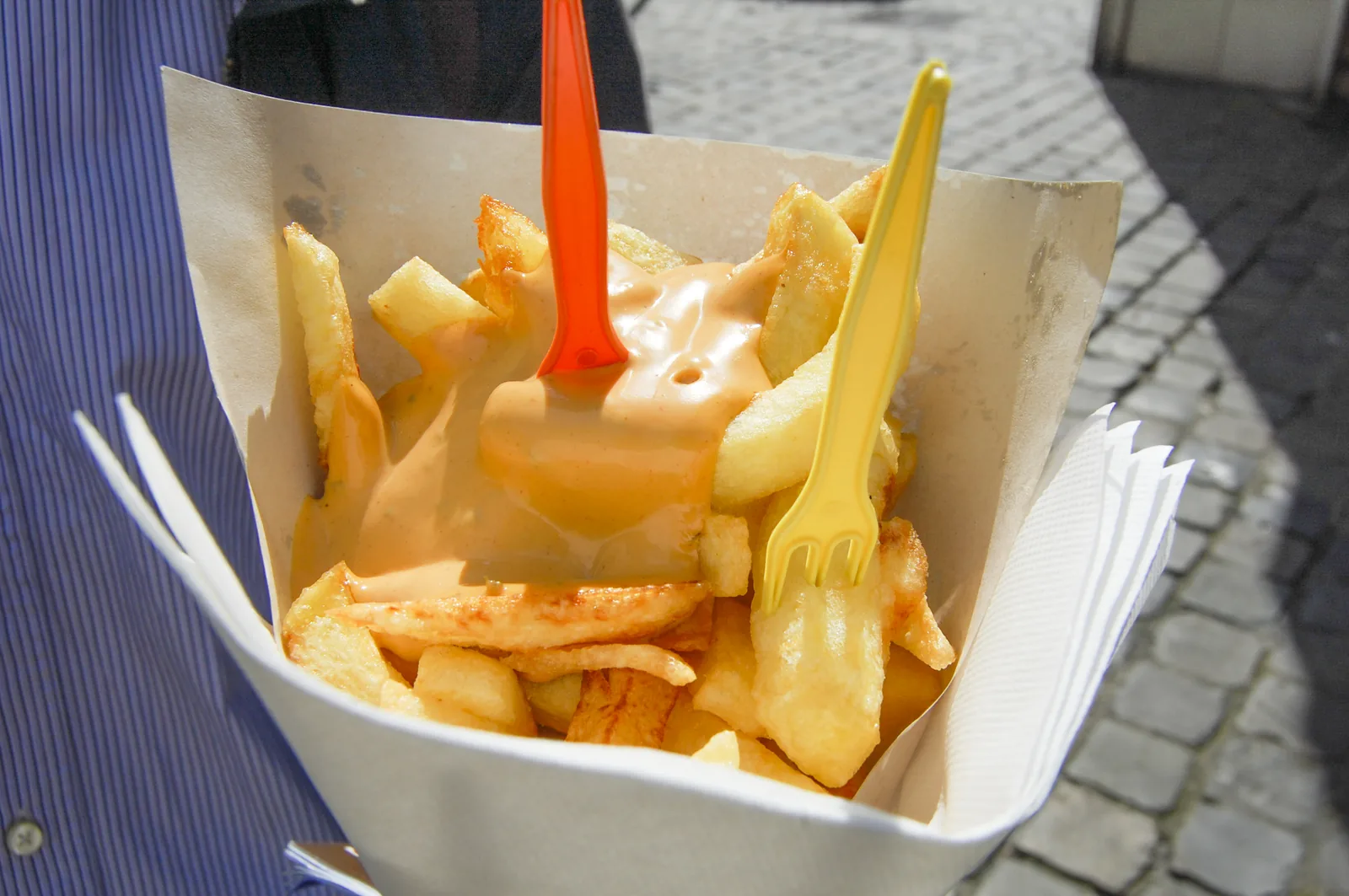
A paper cone of golden Belgian fries topped with andalouse sauce and two small plastic forks. Belgium flag Belgium 55m
Snack & Tea •Brussels Friterie Classic

Belgian Fries

Belgian fries are the real thing: thick batons of floury potato, fried twice — once gently to cook them through, once hot to shatter the outside — and served in a paper cone with andalouse sauce. One serving is about 253 g.

Crisp & Golden

Thick-cut potatoes fried twice in vegetable oil — crisp outside, fluffy inside, with andalouse sauce.

Pairs Well With
Serve hot in a paper cone with andalouse sauce and a cold lager.
Quick Prep (<30m)

The Dinner Gazette

Never wonder what’s for dinner again

One email a week with easy dinner ideas from around the world — ingredients, steps and nutrition, tested in our kitchen first.

Delivered every Thursday morning. Unsubscribe anytime.