Curated recipes from 193 countries  •  New seasonal Mediterranean issue out now

Overview

Moules-Frites

Moules et Frites; Mussels and Fries; Belgian Mussels

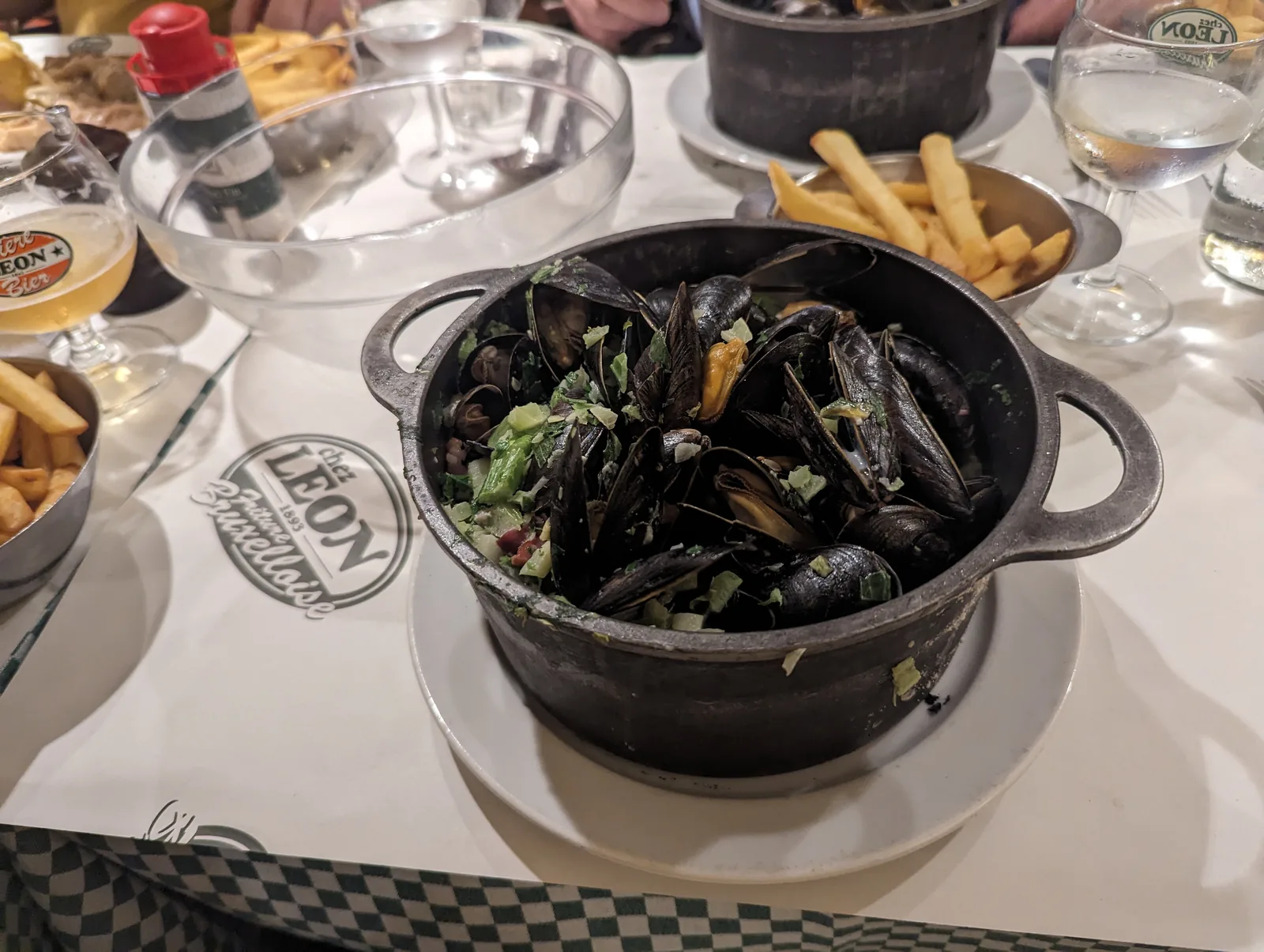
This moules frites recipe makes the plate Belgium is proudest of: a black pot of mussels steamed open in white wine, shallots and cream, served with a heap of crisp, twice-cooked fries and a pot of mayonnaise. The mussels are sweet and briny, the broth is made for dipping, and the fries stay crisp if you keep them out of the pot. One serving is about 350 g.

Moules-frites is widely described as the national dish of Belgium. Mussels were a cheap, plentiful food for coastal families around the North Sea, and fries became their standard partner as friteries spread across Belgium in the 19th century. Brussels brasseries such as Chez Léon, founded in 1893, made the black mussel pot with fries a fixture of the city's tables.

Pairs well with: Crisp Belgian lager & mayonnaise

Provenance

Belgium flag Belgium

Brussels Brasserie Classic

Nordic & European

Time Dedication

1h

25m prep • 35m cook

Batch Yield

4 Servings

656 kcal per serving

1 serving ≈ 350 g

Technical Skill

Intermediate

Intermediate (Two Pots at Once)

Meal Timing & Digestive Fit

Breakfast

Not Advised

Lunch

Hearty Midday Main

Dinner

Ideal Hearty Main

Snack & Tea

Inappropriate

High Protein Occasions: Friday-night brasserie dinner, seaside holidays, sharing suppers, Belgian National Day (21 July) Cost: Moderate — about $6–7 per serving at home
Moules-frites — a black pot of steamed mussels with herbs, served with golden fries at a Brussels brasserie

Brussels Brasserie Classic

Photo: Edward, CC BY-SA 4.0, via Wikimedia Commons

The Heritage Formulary

Measured Ingredients

Estimated cost: Moderate — about $6–7 per serving at home (USD)

Mussels are cooked only until their shells open; any that stay shut are discarded.

Execution Methodology & Culinary Technique

Step-by-Step Cooking Guide

Active 1h
P

Prep Stage: Mussels Cleaned, Potatoes Soaked

25 Mins • Knife Work

Scrub the mussels, pull the beards and discard any that stay open after a tap. Cut the potatoes into 1 cm batons, soak them in cold water for 30 minutes and dry them thoroughly — wet potatoes spit in hot oil and never crisp. Chop the shallots, garlic, celery and parsley, and measure the wine and cream so everything is within reach.

Maestro Tip: Dry potatoes are the whole secret of crisp fries. Pat them in a clean tea towel until no water shows.

  1. 1

    Clean and Debeard the Mussels

    10 Mins • Hands On Cold water, about 10°C (50°F)

    Scrub each mussel under cold running water and tug the beard (the hairy tuft) toward the hinge until it comes away. Tap any open mussel on the bench — if it does not close, throw it away. Rinse in a second change of cold water and set aside in a colander.

    Do this last, just before cooking, so the mussels never sit around wet and warm.

    Done when: Mussels are clean, bearded, and all open ones that refused to close are discarded.

  2. 2

    First Fry the Potatoes

    12 Mins • Frying 160°C (320°F) oil

    Heat the oil to 160°C (320°F). Fry the dried potato batons in small batches for 5–6 minutes until pale and soft but not coloured. Lift out, drain on paper, and leave to cool — this first fry cooks the inside.

    Fry in batches. A crowded pan drops the oil temperature and the fries go limp.

    Done when: Fries are pale gold, soft inside, and cool enough to handle.

  3. 3

    Steam the Mussels

    8 Mins • Stovetop Rolling boil, about 100°C (212°F)

    Melt the butter in a large pot over medium-high heat and soften the shallots, garlic and celery for 2 minutes. Pour in the wine, bring to a rolling boil, tip in the mussels, lid on, and shake the pot once or twice. Cook 5–6 minutes until every shell has opened, then stir in the cream and parsley.

    Do not overcook — mussels turn rubbery in a minute. As soon as the shells open, they are done.

    Done when: All shells are open and the meat is plump; any mussel that stayed shut goes in the bin.

  4. 4

    Second Fry for Crispness

    5 Mins • Frying 180°C (350°F) oil

    While the mussels rest, heat the oil to 180°C (350°F) and fry the potatoes again in batches for 2–3 minutes until deep gold and crackling. Drain well, salt at once, and toss.

    Salt fries the moment they leave the oil — salt sticks to hot fries and slides off cold ones.

    Done when: Fries are deep gold, crisp outside, fluffy inside, and salted while hot.

  5. 5

    Serve in the Pot

    3 Mins • Plating Serve hot, about 65°C (150°F)

    Ladle the mussels and their broth into wide bowls or serve the pot at the table with an empty bowl for shells. Pile the fries alongside — never on top of the mussels, or they steam soft. Put mayonnaise on the table and eat with your fingers and a fork.

    Serve the broth in the bowl with the mussels; it is half the dish. Crusty bread for dipping is never wrong.

    Done when: Mussels steaming in their broth, fries crisp and golden on the side.

Finishing Touches & Plating

Eat the mussels straight from the pot with the fries on the side and the broth for dipping — that is how a Brussels brasserie serves it, and it needs nothing else.
Nutritional Physiology & Benefits

Nutrition

Energy

656

kcal / serving

Protein

35g

Complete AA

Carbs

50g

Complex

Fats

32g

Healthy

Per serving (4 servings · 1 serving ≈ 350 g)
Energy656 kcal
Protein35 g
Carbohydrates50 g
Fat32 g
Fibre5.3 g
Sugar3.7 g
Sodium832 mg
Per 100g
Energy187 kcal
Protein10 g
Carbohydrates14.2 g
Fat9.3 g
Fibre1.5 g
Sugar1.1 g
Sodium238 mg

Nutrition values are estimated — calculated from USDA FoodData Central values for the listed ingredients.

Vitamins & minerals: Vitamin B12, iron and selenium (mussels), vitamin C (parsley, celery), potassium (potatoes).

Lean Protein From the Sea

Mussels deliver about 35 g of protein per serving with very little saturated fat, and they are one of the richest natural sources of vitamin B12.

Iron and Selenium in Every Pot

A serving covers a large share of the day's iron and selenium, two minerals mussels are especially rich in.

Potatoes for Steady Energy

The fries bring potassium and slow-release carbohydrate, which is why this plate keeps you full for hours.

Food Pairings

What to Eat With

To optimize nutrient absorption and elevate the sensory depth, pair with these authentic accompaniments:

Drinks

Crisp Belgian Lager

A cold lager cuts through the cream and the fried potatoes, and its bitterness matches the briny mussels — the pairing every Brussels brasserie relies on.

Sauces

Mayonnaise for the Fries

Belgian fries are eaten with mayonnaise, not ketchup: the rich, tangy sauce clings to hot fries and balances their salt.

Vegetables

Simple Green Salad

A sharp vinaigrette salad on the side resets the palate between rich mouthfuls of mussels and fries.

Sides

Crusty Bread

Bread is for the broth, which is too good to leave — a crusty slice soaks up the white wine and cream.

Complete menu

Start with a small green salad, then moules-frites with mayonnaise and a crisp lager, and finish with a light fruit dessert.

Digestive Guardrails

What NOT to Combine

To prevent digestive distress, sluggishness, or palate clash, avoid pairing the dish with these elements:

Mussels That Stay Shut

A mussel that does not open after steaming may have been dead before cooking and should be discarded, not forced open. This is general food-safety information, not medical advice.

Piling Fries Onto the Mussels

Fries heaped on steaming mussels go soft in seconds. Serve them alongside so they stay crisp. This is a cooking note, not medical advice.

General information only, not medical advice — consult a doctor for personal dietary decisions.

Who Should Eat It

Who Should Eat

  • General adultsA satisfying, protein-rich dinner — watch the salt from the fries and the broth.
  • ChildrenChildren usually love the fries; serve mussels shelled and check for shell fragments.
  • ElderlySoft, easy to chew and rich in B12 — serve the mussels shelled and the fries well cooked.
  • Pregnant womenMussels are a good source of iron and B12; make sure they are freshly cooked and steaming hot, and ask your clinician about shellfish in pregnancy.
  • Breastfeeding womenA nourishing, iron-rich meal; keep portions moderate and the fries lightly salted.
  • AthletesHigh protein and carbohydrate make it a solid post-training dinner; add a salad for extra vegetables.
  • Weight gainEnergy-dense with fries and cream — a generous, filling plate for those needing extra calories.
  • Weight lossRich and filling; keep the fries to a small portion, skip the extra cream, and load the plate with salad.

Health Conditions — Adjust or Avoid

Conditions

  • DiabetesAbout 50 g of carbohydrate per serving, mostly from the fries — keep the fries to one small portion and ask your clinician about portion size.
  • High blood pressureThe broth and fries carry a fair amount of salt — go light on added salt and skip extra salty sauces. Ask your clinician about portion size.
  • Kidney diseaseMussels are rich in protein and minerals; the cream and salt are the main concerns — keep portions modest. Ask your clinician about portion size.
  • GoutShellfish is high in purines, so this is a dish to enjoy occasionally and in a modest portion. Ask your clinician about portion size.
  • Stomach issuesThe cream and fried potatoes can be heavy on a sensitive stomach — a smaller portion with more salad is gentler. Ask your clinician about portion size.
  • Cardiovascular diseaseMussels are lean and rich in omega-3s, but the fries and cream add saturated fat — keep the fried portion small. Ask your clinician about portion size.
  • Fatty liverA rich, fried dish — enjoy it occasionally and in a modest portion, with salad on the side. Ask your clinician about portion size.
  • Food allergiesContains shellfish (mussels), milk (butter, cream) and possibly gluten (beer-battered or bread accompaniments). Check every label. Ask your clinician about portion size.
  • Special therapeutic dietsNot suitable for low-sodium or low-fat therapeutic diets without changes — reduce the cream and salt and bake the potatoes. Ask your clinician about portion size.

If you have a medical condition, consult your doctor before changing your diet.

Storage & Use

Storage & Use

How to store
Cool the mussels in their broth quickly; store fries separately so they do not steam soft.
In the fridge
Mussels in broth: 1 day, covered. Fries: 1 day (they will soften).
In the freezer
Not recommended — cooked mussels turn rubbery and fries go soggy.
How to reheat
Reheat mussels gently in their broth until steaming hot, to 74°C (165°F); re-crisp fries in a 200°C (400°F) oven for 5 minutes.
Freezing recommended
No — the texture of both mussels and fries suffers badly.
Signs it has spoiled
Sour or ammonia smell, slimy mussel meat, or shells that were shut before cooking and stayed shut.

More recipes to explore

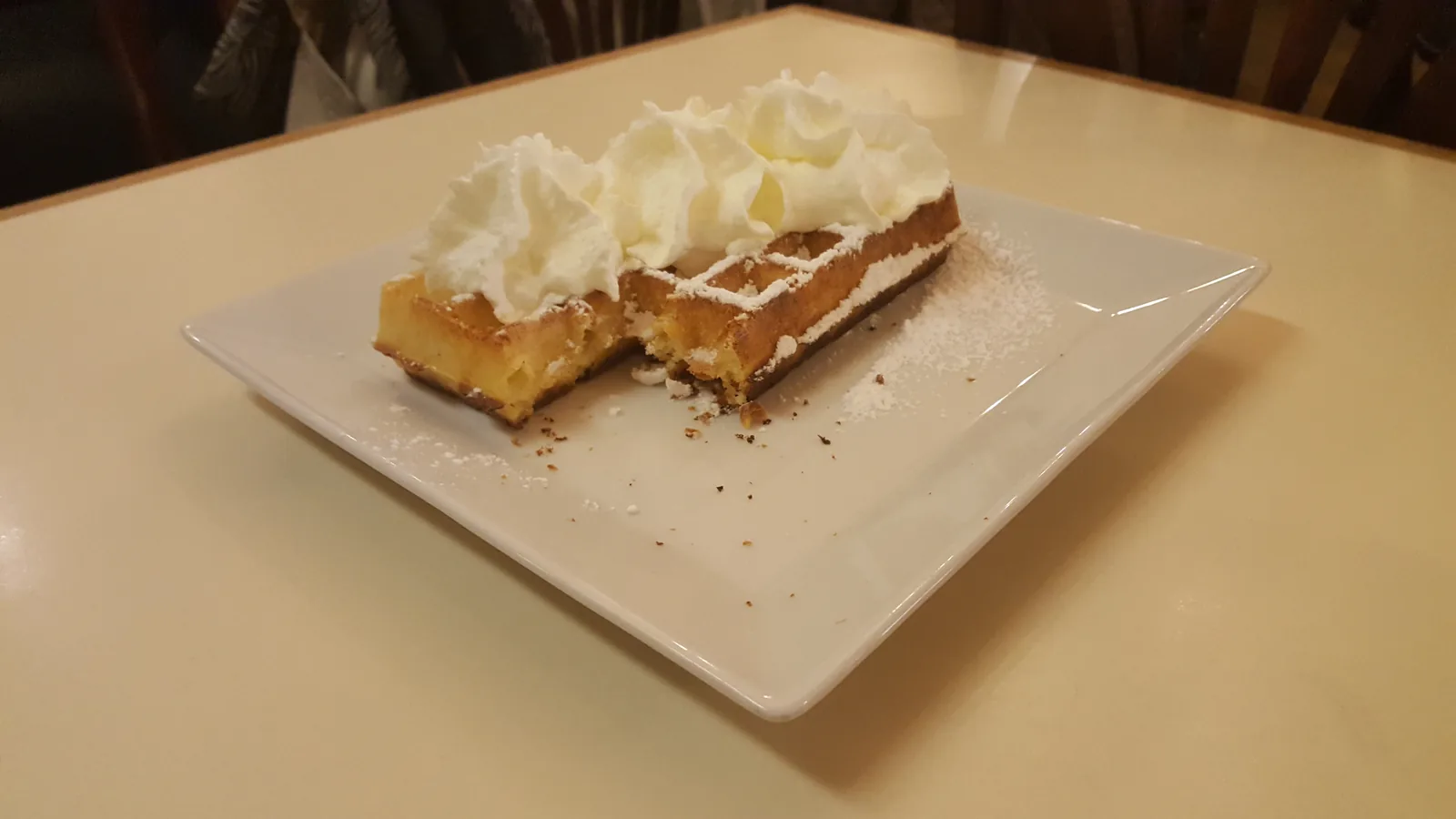
Belgian waffles — a golden Brussels waffle topped with whipped cream and icing sugar on a white plate Belgium flag Belgium 1h 35m
Breakfast •Brussels Bakery Classic

Belgian Waffles

This Belgian waffles recipe makes the light, yeasted kind: a risen batter cooked in a hot iron until the outside is crisp and golden and the inside stays soft and airy. The deep pockets hold butter, syrup or berries, and a dusting of icing sugar is all they really need. This recipe makes 8 waffles; one serving is 2 waffles, about 210 g. Nutrition is for the plain waffles, before toppings.

Weekend Breakfast Treat

Light, yeasted Brussels waffles with deep pockets, crisp outside and soft inside.

Pairs Well With
Strong coffee & fresh berries
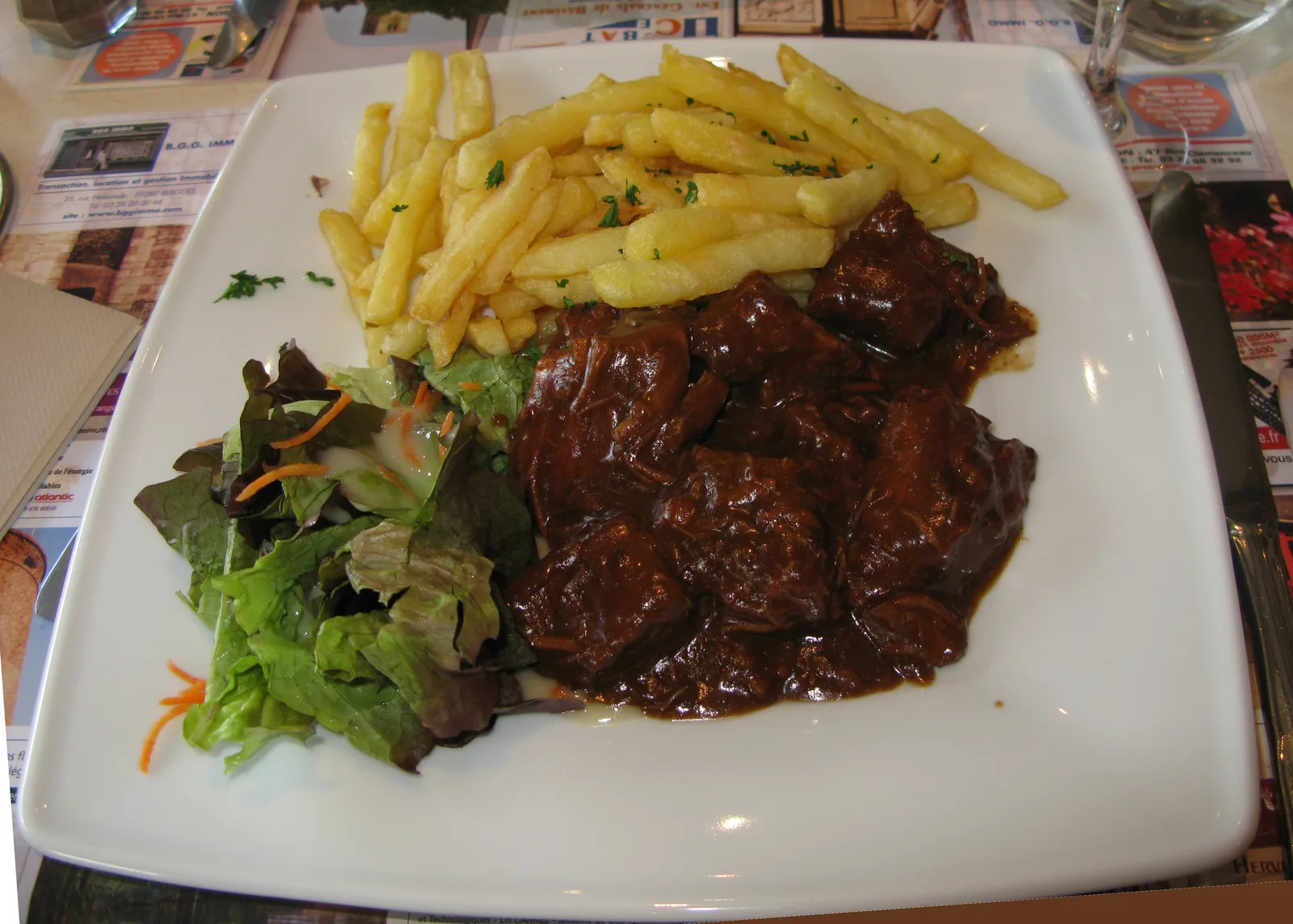
Carbonade flamande — dark beer-braised beef stew with fries and a small salad on a white plate Belgium flag Belgium 2h 55m
Dinner •Flemish Farmhouse Classic

Carbonade Flamande

This carbonade flamande recipe is Flanders' answer to the French beef stew: chunks of beef braised for hours in dark Belgian ale with sweet caramelised onions, thyme and bay, thickened the old way with slices of bread spread with mustard. The sauce turns dark, glossy and sweet-sour, and the beef goes spoon-tender. One serving is about 250 g, not counting the fries or potatoes served alongside.

Slow Sunday Comfort

Beef braised low and slow in dark Belgian ale with onions and mustard bread.

Pairs Well With
Dark Belgian ale & fries
High Protein
Bœuf bourguignon — French beef braised in red wine France flag France 4h
Dinner •Burgundy Terroir

Bœuf Bourguignon

Beef braised gently in red wine until the connective tissue melts into a velvet, gelatin-rich sauce — the classic Burgundy Sunday dinner.

Cellular Repair

Beef braised in red wine until spoon-tender, with mushrooms and pearl onions.

Pairs Well With
Parsnip Purée & Steamed French Haricots Verts
High Protein
Vietnamese braised pork belly with golden eggs in caramel sauce Vietnam flag Vietnam 1h 45m
Dinner •One Pot

Vietnamese Braised Pork and Eggs

Pork belly slowly braised in coconut water and caramel until meltingly tender, with golden eggs that soak up the sweet-savoury sauce — the Vietnamese family dish that tastes better the next day.

Comfort & Sustained Energy

Slow-braised pork belly and eggs in coconut water and caramel.

Pairs Well With
Steamed rice & pickled mustard greens
High Protein

The Dinner Gazette

Never wonder what’s for dinner again

One email a week with easy dinner ideas from around the world — ingredients, steps and nutrition, tested in our kitchen first.

Delivered every Thursday morning. Unsubscribe anytime.