Curated recipes from 193 countries  •  New seasonal Mediterranean issue out now

Overview

Belgian Pistolets

Brussels Pistolets; Pistolets Bruxellois; Belgian Bread Rolls

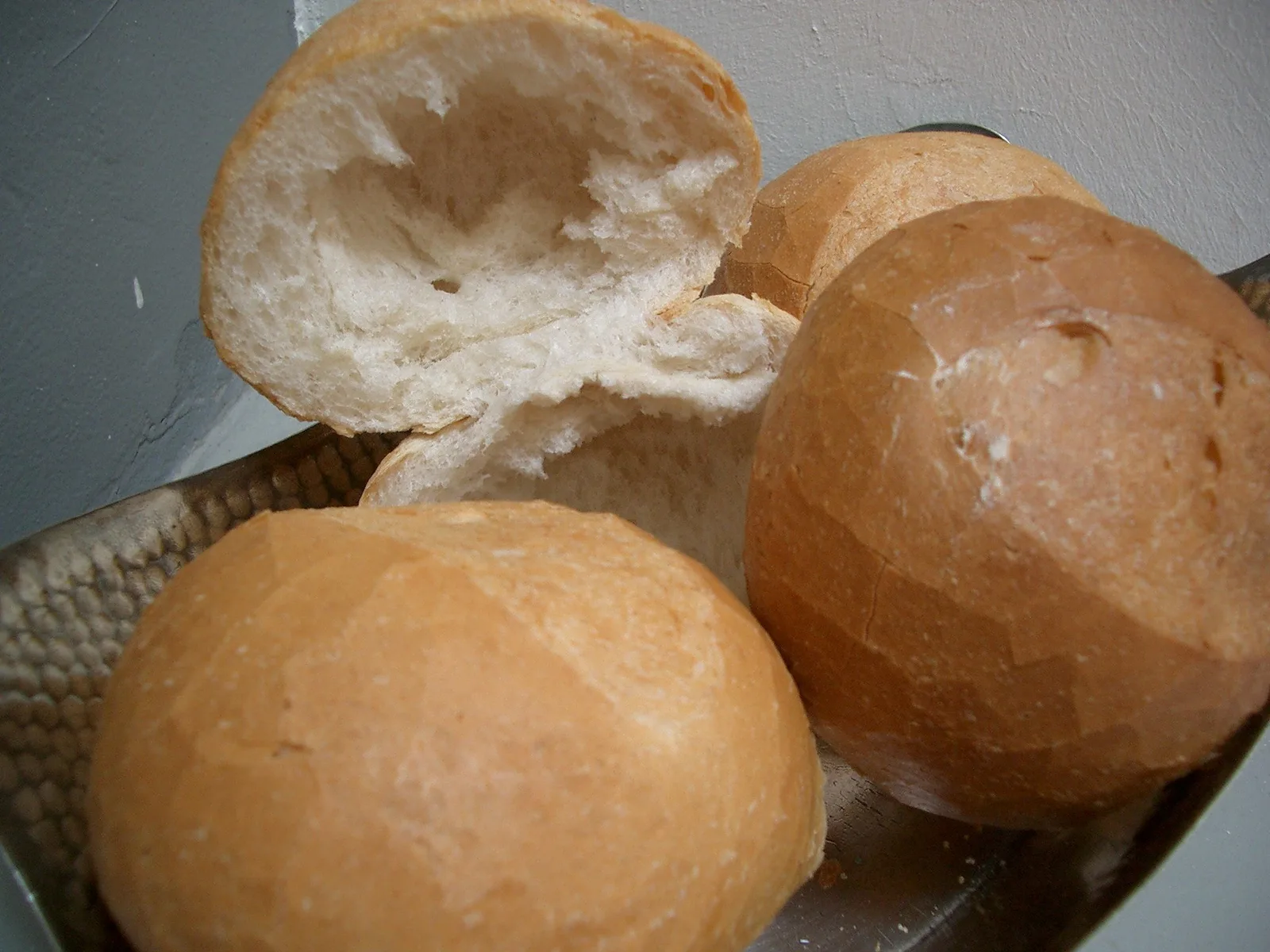
Belgian pistolets are crusty oval bread rolls from Brussels, with a deep split down the middle and a soft, fluffy crumb inside. This Belgian pistolets recipe makes 8 rolls from a simple yeasted dough, with two rises and a tray of steam in the oven for a crackling crust. One serving is one roll, about 105 g.

Pistolets are the everyday roll of Brussels bakeries, and the split down the middle — pressed in with a wooden spoon handle before baking — is their signature. Brussels lore traces the name to the pistole, a small coin that once bought a roll. In the city's cafés they are split and filled, with ham, cheese, shrimp or pâté, and eaten as a working lunch.

Pairs well with: Split warm and spread with salted butter, or fill with ham and cheese.

Provenance

Belgium flag Belgium

Brussels Bakery Classic

Nordic & European

Time Dedication

2h 55m

140m prep • 35m cook

Batch Yield

8 Servings

289 kcal per serving

1 serving ≈ 105 g

Technical Skill

Intermediate

Intermediate (Yeasted Dough)

Meal Timing & Digestive Fit

Breakfast

Not Advised

Lunch

Prime Metabolic Fit

Dinner

Ideal Hearty Main

Snack & Tea

Inappropriate

Occasions: Weekday lunches, picnics, bakery breakfasts, sandwich nights Cost: Low — about $0.25–0.35 per roll at home
Four golden Belgian pistolets in a basket, one torn open to show the soft white crumb

Brussels Bakery Classic

Photo: Égoïté, CC BY 3.0, via Wikimedia Commons

The Heritage Formulary

Measured Ingredients

Estimated cost: Low — about $0.25–0.35 per roll at home (USD)

A true pistolet is crusty outside, fluffy inside, and split down the middle with a spoon handle before baking.

Execution Methodology & Culinary Technique

Step-by-Step Cooking Guide

Active 2h 55m
P

Prep Stage: Dough Mixed, Risen and Shaped

140 Mins • Mixing, Rising and Shaping

Bloom the yeast in the warm water with the sugar until foamy, then mix in the flour, milk powder, salt and oil and knead for 10 minutes until smooth and slightly sticky. Cover and leave in a warm place for 60 minutes until doubled. Divide into 8 pieces, shape into ovals, press the signature split down the middle with a floured wooden spoon handle, and leave to rise again for 45 minutes until puffy.

Maestro Tip: The split is the pistolet's signature — press the spoon handle firmly, almost to the tray, but do not cut all the way through.

  1. 1

    Mix and Knead the Dough

    20 Mins • Mixing Warm water, about 37°C (98°F)

    Stir the sugar into the warm water, sprinkle over the yeast and leave 10 minutes until foamy. Tip in the flour, milk powder, salt and oil and mix until a shaggy dough forms. Knead on a lightly floured surface for 10 minutes until smooth, soft and slightly sticky — it should spring back when poked.

    Resist adding extra flour while kneading; a slightly sticky dough bakes into a lighter roll.

    Done when: Dough is smooth, elastic, and springs back when pressed with a fingertip.

  2. 2

    First Rise

    60 Mins • Resting Warm place, about 24°C (75°F)

    Shape the dough into a ball, place it in a lightly oiled bowl and turn it once to coat. Cover with a clean cloth or cling film and leave in a warm, draught-free place for 60 minutes until doubled in size.

    A turned-off oven with the light on is the perfect warm spot in a cold kitchen.

    Done when: Dough has doubled and holds a dent when poked gently.

  3. 3

    Shape and Split the Rolls

    15 Mins • Shaping Room temperature, about 21°C (70°F)

    Turn the dough onto a lightly floured surface and press out the air gently. Divide into 8 equal pieces, about 118 g each, and shape each into a smooth oval about 12 cm long. Place on a lined baking tray, dust lightly with flour, then press the handle of a floured wooden spoon firmly down the centre of each roll, almost to the tray, to make the deep split that marks a pistolet.

    Flour the spoon handle well or it will stick and drag the dough.

    Done when: Eight even ovals, each with a clear split running down the middle.

  4. 4

    Second Rise

    45 Mins • Resting Warm place, about 24°C (75°F)

    Cover the shaped rolls loosely with a cloth and leave in a warm place for 45 minutes until puffy and about half as big again. Meanwhile, place a deep tray on the bottom shelf of the oven and boil a kettle of water for steam.

    Do not let the cloth touch the rolls or it will stick to the split; tent it loosely instead.

    Done when: Rolls look puffy and spring back slowly when poked.

  5. 5

    Bake with Steam

    25 Mins • Baking 220°C (425°F) oven

    Heat the oven to 220°C (425°F). Slide the tray of rolls onto the middle shelf, pour the boiling water into the tray on the bottom shelf, and shut the door quickly to trap the steam. Bake for 20–25 minutes until deep gold and crackling, with a hollow sound when tapped underneath. The crumb inside should reach 93°C (200°F).

    Do not open the oven in the first 15 minutes — the steam is what builds the crisp crust.

    Done when: Crust is deep gold and crisp; the base sounds hollow when tapped.

  6. 6

    Cool on a Rack

    10 Mins • Cooling Room temperature, about 21°C (70°F)

    Lift the rolls onto a wire rack and leave for at least 10 minutes before tearing one open. The crumb is still setting inside, and cutting too soon makes it gummy.

    Cooling on a rack, not the tray, keeps the base crisp instead of steaming soft.

    Done when: Rolls are warm but comfortable to hold; the crumb is set and fluffy.

Finishing Touches & Plating

Eat the pistolets warm, split open and spread with salted butter, or fill them generously — ham and cheese is the Brussels classic. They are at their best on the day they are baked.

Nutritional Physiology & Benefits

Nutrition

Energy

289

kcal / serving

Protein

8g

Complete AA

Carbs

55g

Complex

Fats

3g

Healthy

Per serving (8 servings · 1 serving ≈ 105 g)
Energy289 kcal
Protein8 g
Carbohydrates55 g
Fat3 g
Fibre2.1 g
Sugar1.8 g
Sodium496 mg
Per 100g
Energy275 kcal
Protein7.9 g
Carbohydrates52.8 g
Fat3.1 g
Fibre2 g
Sugar1.7 g
Sodium472 mg

Nutrition values are estimated — calculated from USDA FoodData Central values for the listed ingredients.

Vitamins & minerals: Enriched flour provides B vitamins (thiamine, niacin and folate) and iron, and the milk powder adds a little calcium. All nutrition values are estimated.

Slow-Release Energy

Each roll carries about 55 g of carbohydrate from wheat flour, giving steady energy that suits an active lunch.

B Vitamins From Enriched Flour

Enriched flour brings thiamine, niacin and folate, which support normal energy metabolism as part of a varied diet.

Simple, Honest Ingredients

Eight ingredients you can name — flour, water, yeast, milk powder, oil, salt and sugar — with no preservatives or flavourings.

Food Pairings

What to Eat With

To optimize nutrient absorption and elevate the sensory depth, pair with these authentic accompaniments:

Sides

Salted Butter

Butter melting into the warm, fluffy crumb is the simplest Brussels way to eat a pistolet — the salt sharpens the plain bread.

Full Menus

Ham and Mature Cheese

Sliced ham and a mature cheese fill the split perfectly and turn the roll into a proper lunch, the way Brussels cafés serve it.

Vegetables

Crisp Green Salad

A sharp, vinegary salad cuts the richness of a buttered or filled roll and keeps the lunch light.

Drinks

Strong Coffee

Black coffee is the classic Brussels breakfast and lunch companion — its bitterness balances the mild, milky crumb.

Complete menu

Serve one pistolet split and filled with ham and mature cheese, with a crisp green salad and a strong coffee, for a classic Brussels lunch.

Digestive Guardrails

What NOT to Combine

To prevent digestive distress, sluggishness, or palate clash, avoid pairing the dish with these elements:

Slicing While Piping Hot

Cutting a roll straight from the oven lets the steam escape and leaves a gummy, compressed crumb. Wait at least 10 minutes for the crumb to set. This is a cooking note, not medical advice.

Storing Warm Rolls in Plastic

Sealing warm rolls traps steam, which softens the crisp crust and encourages mould. Cool completely on a rack first. This is a cooking note, not medical advice.

General information only, not medical advice — consult a doctor for personal dietary decisions.

Who Should Eat It

Who Should Eat

  • General adultsA classic lunch roll — enjoy one filled with ham, cheese or salad.
  • ChildrenSoft inside and easy to hold; split and fill with cheese or jam for a lunchbox.
  • ElderlyThe crumb is soft and easy to chew once the crust is removed; serve warm with soup.
  • Pregnant womenFreshly baked and served hot; the dough contains no raw egg. Ask your clinician about portion size.
  • Breastfeeding womenA filling, energy-giving roll; pair with protein and salad for a fuller lunch.
  • AthletesGood carbohydrate before or after training; fill with lean ham or egg for extra protein.
  • Weight gainEnergy-dense and easy to eat in quantity; add butter and cheese for extra calories.
  • Weight lossOne roll is about 289 kcal — keep to one, skip the butter, and fill with salad and lean protein.

Health Conditions — Adjust or Avoid

Conditions

  • DiabetesAbout 55 g of carbohydrate per roll — keep to one roll and fill with salad and lean protein rather than jam. Ask your clinician about portion size.
  • High blood pressureSalt is the main concern at about 496 mg of sodium per roll — keep to one roll and skip salty fillings. Ask your clinician about portion size.
  • Kidney diseaseWheat protein and salt are the concerns — keep portions modest and avoid salty fillings. Ask your clinician about portion size.
  • GoutPlain bread is low in purines; the filling matters more than the roll — choose cheese or egg over cured meats. Ask your clinician about portion size.
  • Stomach issuesFresh, warm bread can sit heavily for some people — eat slowly and let the roll cool for 10 minutes first. Ask your clinician about portion size.
  • Cardiovascular diseaseThe roll itself is low in fat — keep fillings lean and skip extra butter. Ask your clinician about portion size.
  • Fatty liverA starchy, energy-dense food — one roll with a light filling is the sensible portion. Ask your clinician about portion size.
  • Food allergiesContains wheat (gluten) and milk (milk powder). Not suitable for coeliac disease or milk allergy. Check every label. Ask your clinician about portion size.
  • Special therapeutic dietsNot suitable for gluten-free or low-sodium therapeutic diets without changes — a gluten-free flour blend and less salt would be needed. Ask your clinician about portion size.

If you have a medical condition, consult your doctor before changing your diet.

Storage & Use

Storage & Use

How to store
Cool completely on a rack, then store in a paper bag inside a sealed container.
In the fridge
3 days, sealed; the crust will soften.
In the freezer
3 months, wrapped individually; thaw at room temperature.
How to reheat
Reheat in a 190°C (375°F) oven for 5 minutes until hot all the way through, to 74°C (165°F); the oven restores the crispness — the microwave will not.
Freezing recommended
Yes — they freeze well and re-crisp in the oven.
Signs it has spoiled
Mould, sour smell, or a crumb that has turned hard and dry.

More recipes to explore

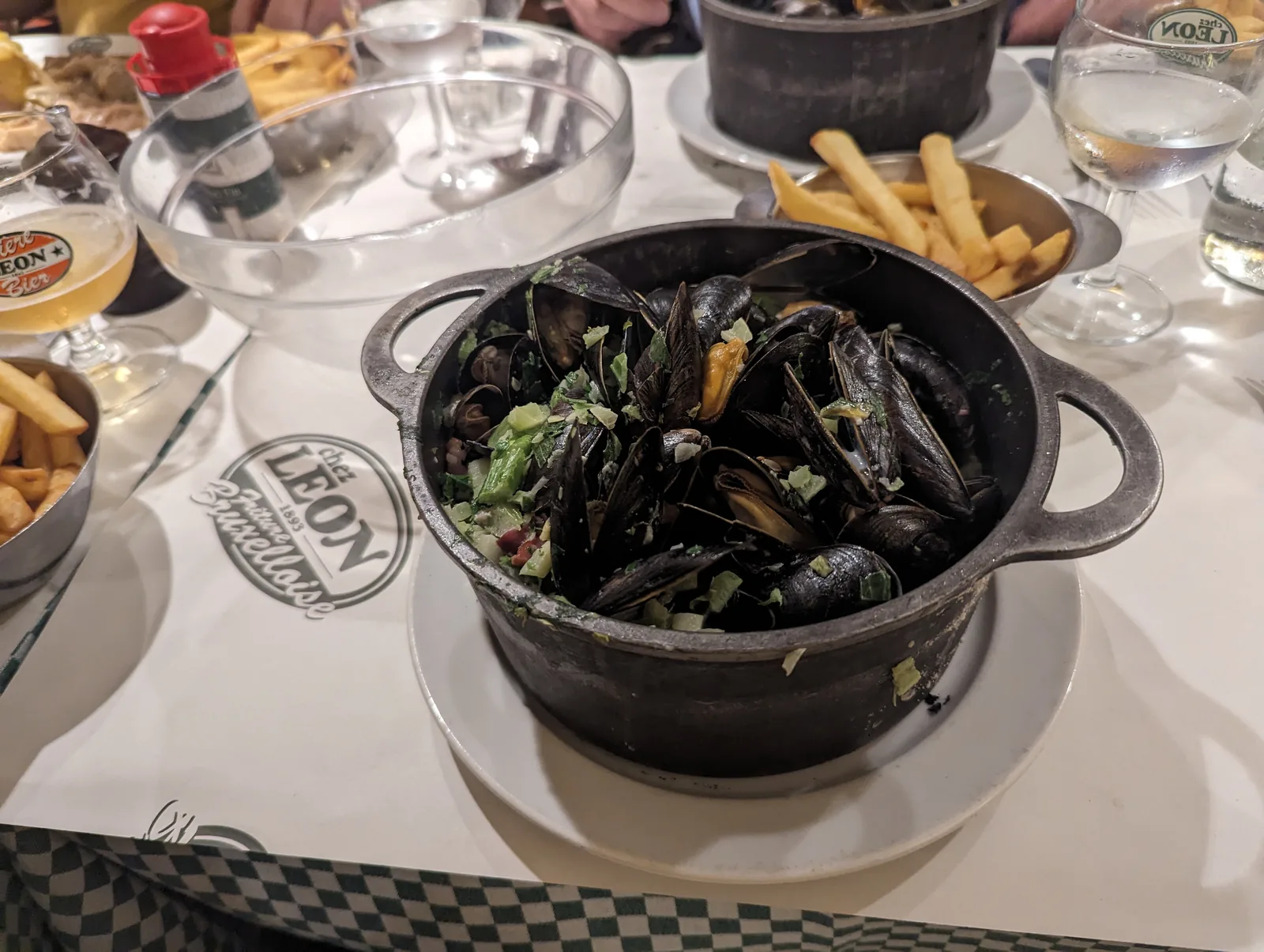
Moules-frites — a black pot of steamed mussels with herbs, served with golden fries at a Brussels brasserie Belgium flag Belgium 1h
Dinner •Brussels Brasserie Classic

Moules-Frites

This moules frites recipe makes the plate Belgium is proudest of: a black pot of mussels steamed open in white wine, shallots and cream, served with a heap of crisp, twice-cooked fries and a pot of mayonnaise. The mussels are sweet and briny, the broth is made for dipping, and the fries stay crisp if you keep them out of the pot. One serving is about 350 g.

Seaside Comfort

Sweet mussels steamed in white wine and cream, piled next to golden twice-cooked fries.

Pairs Well With
Crisp Belgian lager & mayonnaise
High Protein
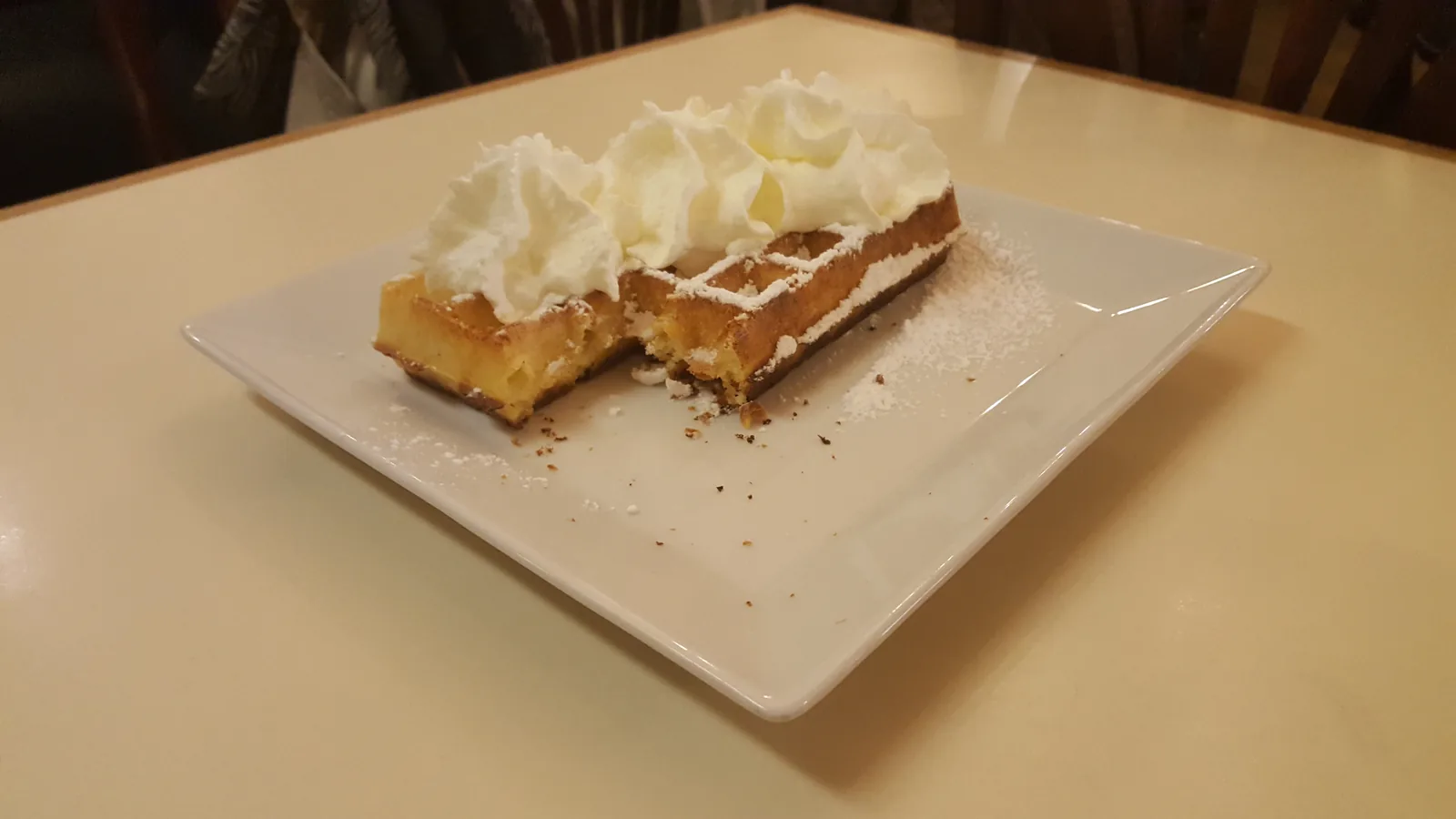
Belgian waffles — a golden Brussels waffle topped with whipped cream and icing sugar on a white plate Belgium flag Belgium 1h 35m
Breakfast •Brussels Bakery Classic

Belgian Waffles

This Belgian waffles recipe makes the light, yeasted kind: a risen batter cooked in a hot iron until the outside is crisp and golden and the inside stays soft and airy. The deep pockets hold butter, syrup or berries, and a dusting of icing sugar is all they really need. This recipe makes 8 waffles; one serving is 2 waffles, about 210 g. Nutrition is for the plain waffles, before toppings.

Weekend Breakfast Treat

Light, yeasted Brussels waffles with deep pockets, crisp outside and soft inside.

Pairs Well With
Strong coffee & fresh berries
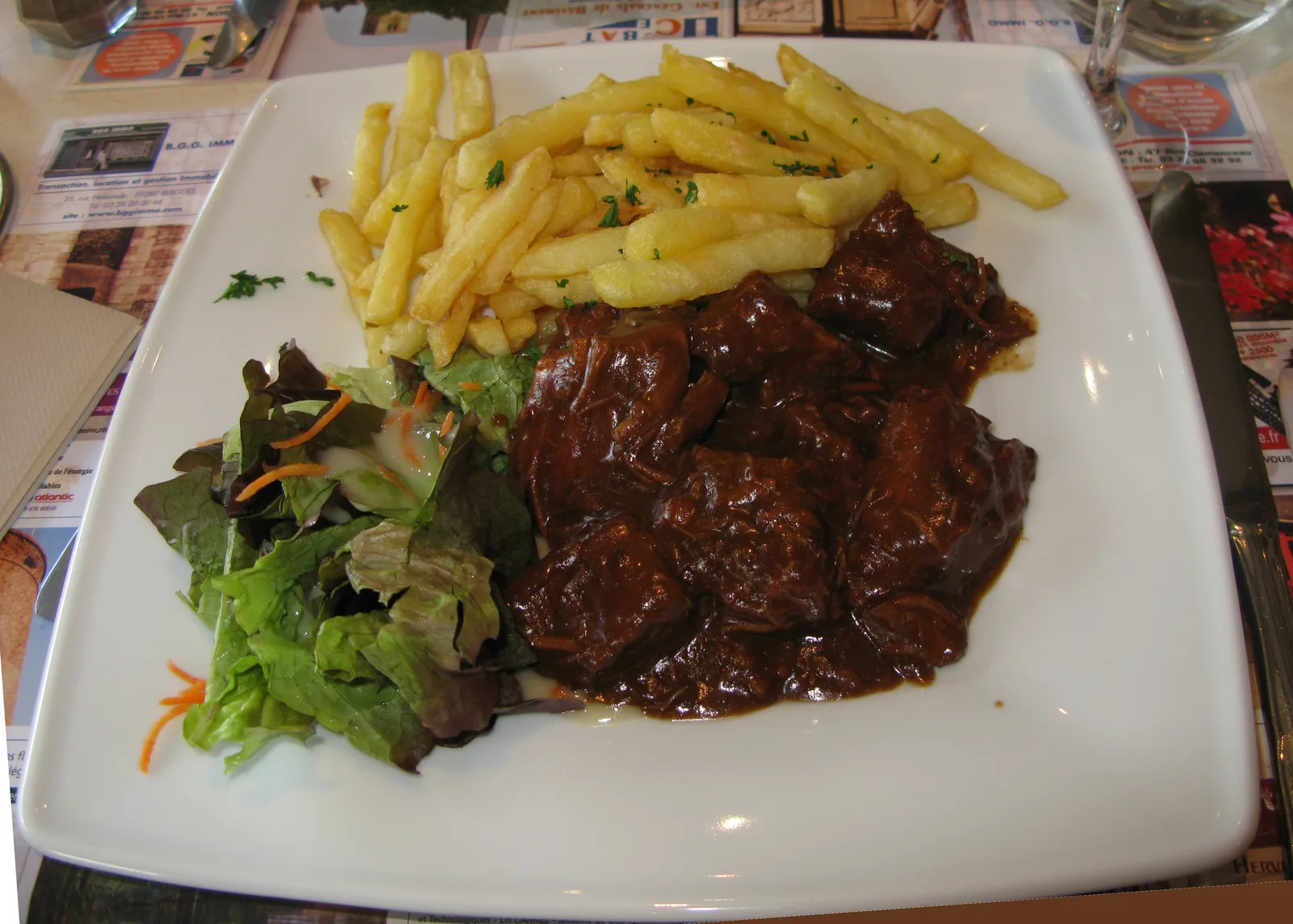
Carbonade flamande — dark beer-braised beef stew with fries and a small salad on a white plate Belgium flag Belgium 2h 55m
Dinner •Flemish Farmhouse Classic

Carbonade Flamande

This carbonade flamande recipe is Flanders' answer to the French beef stew: chunks of beef braised for hours in dark Belgian ale with sweet caramelised onions, thyme and bay, thickened the old way with slices of bread spread with mustard. The sauce turns dark, glossy and sweet-sour, and the beef goes spoon-tender. One serving is about 250 g, not counting the fries or potatoes served alongside.

Slow Sunday Comfort

Beef braised low and slow in dark Belgian ale with onions and mustard bread.

Pairs Well With
Dark Belgian ale & fries
High Protein
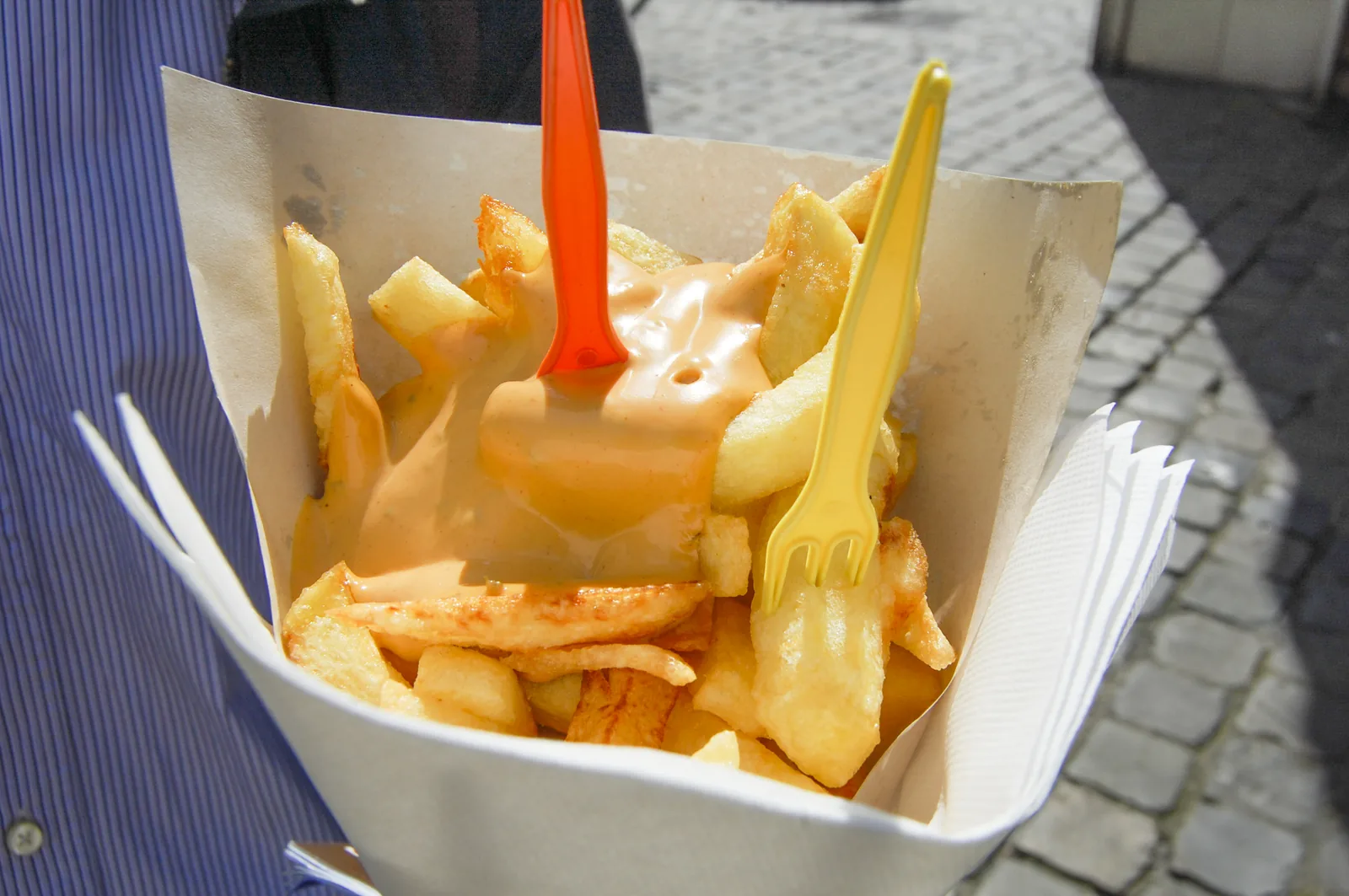
A paper cone of golden Belgian fries topped with andalouse sauce and two small plastic forks. Belgium flag Belgium 55m
Snack & Tea •Brussels Friterie Classic

Belgian Fries

Belgian fries are the real thing: thick batons of floury potato, fried twice — once gently to cook them through, once hot to shatter the outside — and served in a paper cone with andalouse sauce. One serving is about 253 g.

Crisp & Golden

Thick-cut potatoes fried twice in vegetable oil — crisp outside, fluffy inside, with andalouse sauce.

Pairs Well With
Serve hot in a paper cone with andalouse sauce and a cold lager.
Quick Prep (<30m)

The Dinner Gazette

Never wonder what’s for dinner again

One email a week with easy dinner ideas from around the world — ingredients, steps and nutrition, tested in our kitchen first.

Delivered every Thursday morning. Unsubscribe anytime.