Curated recipes from 193 countries  •  New seasonal Mediterranean issue out now

Overview

Bratkartoffeln

German Fried Potatoes, Bratkartoffeln mit Speck

This bratkartoffeln recipe turns boiled waxy potatoes into golden, crisp slices fried with smoky bacon, sweet onion and chives. It is the classic German potato side — crunchy outside, soft inside, and ready in 55 minutes. One serving is about 250 g.

Bratkartoffeln means simply fried potatoes — from braten, to fry, and Kartoffeln, potatoes — and it is the dish German home cooks reach for when yesterday's boiled potatoes need using up. Potatoes became a German staple in the 18th century, and frying the cold, sliced leftovers in bacon fat with onion became the standard way to turn them into a second meal. A much-told story credits a Viennese housewife named Henriette Braths, who is said to have submitted a fried potato recipe to a newspaper cooking competition in 1907, but the dish itself is older than any single inventor: it is everyday German home cooking, served beside roast meat, fish or a fried egg.

Pairs well with: A fried egg and a crisp green salad with sharp vinaigrette

Provenance

Germany flag Germany

German Home Cooking

Nordic & European

Time Dedication

55m

30m prep • 25m cook

Batch Yield

4 Servings

373 kcal per serving

1 serving ≈ 250 g

Technical Skill

Easy

Easy (One Pan)

Meal Timing & Digestive Fit

Breakfast

Not Advised

Lunch

Prime Metabolic Fit

Dinner

Ideal Hearty Main

Snack & Tea

Inappropriate

Quick Prep (<30m) Occasions: Weekday lunches, Sunday roasts, breakfast-for-dinner, using up leftover potatoes, Oktoberfest-style meals Cost: Low — about $2–3 per serving at home
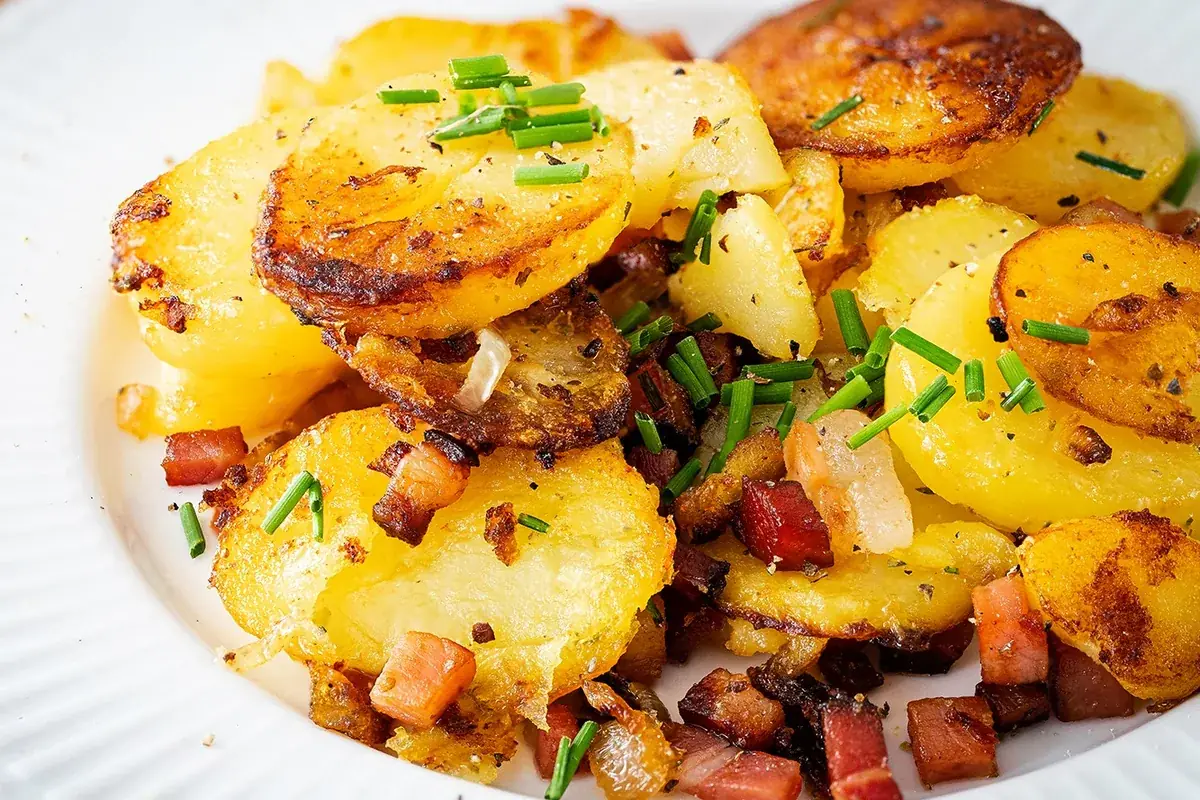
Golden crisp bratkartoffeln potato slices with bacon, onion and chives on a white plate

German Home Cooking

Photo: Einfachkartoffel, CC BY-SA 4.0, via Wikimedia Commons

The Heritage Formulary

Measured Ingredients

Estimated cost: Low — about $2–3 per serving at home (USD)

A good bratkartoffeln is crisp and golden on both sides with a soft centre, smoky from bacon and sweet from onion — never pale, soggy or stirred into mash. A cook following this recipe produces pan-fried sliced potatoes, not grated potato fritters (kartoffelpuffer) and not cold dressed potato salad.

Execution Methodology & Culinary Technique

Step-by-Step Cooking Guide

Active 55m
P

Prep Stage: Boil, Cool and Slice

30 Mins • Pot and Board

Boil the 800g waxy potatoes in their skins in salted water for about 20 minutes until just tender — a knife should slide in with slight resistance. Drain, leave until cool enough to handle, then peel and slice into rounds about 5 mm thick. Dice the 120g bacon into 1 cm cubes and slice the 150g onion into thin half-moons, ready by the stove.

Maestro Tip: Boil the potatoes the day before and chill them overnight if you can — cold potatoes slice cleanly and crisp far better than warm ones.

  1. 1

    Crisp the Bacon

    5 Mins Medium heat, about 160°C (320°F)

    Put the 10ml sunflower oil and the 20g butter in a large, heavy frying pan over medium heat. When the butter foams, add the 120g diced bacon and fry for about 5 minutes, stirring now and then, until the cubes are crisp at the edges and the fat has rendered out.

    Lift the bacon out with a slotted spoon and set it aside if your pan is small — it goes back in at the end, and the potatoes need the room.

    Done when: The bacon cubes are crisp and golden at the edges, with plenty of fat in the pan.

  2. 2

    Soften the Onion in the Bacon Fat

    3 Mins Medium heat, about 160°C (320°F)

    Add the 150g sliced onion to the bacon fat in the pan and fry over medium heat for about 3 minutes, stirring, until soft and turning golden at the edges. Scoop the onion out with the bacon and set both aside in a bowl.

    Do not let the onion brown deeply now — it will finish cooking with the potatoes and would turn bitter.

    Done when: The onion is soft, sweet and lightly golden, not browned or burnt.

  3. 3

    Fry the Potatoes Without Stirring

    8 Mins Medium-high heat, about 180°C (350°F)

    Turn the heat to medium-high and add the sliced potatoes to the pan in as close to a single layer as you can. Leave them completely alone for about 8 minutes so the undersides turn deep golden and crisp.

    Do not stir — every stir breaks the crust. If the potatoes do not fit in one layer, fry them in two batches instead of piling them up.

    Done when: The undersides are deep golden brown and release easily from the pan when nudged.

  4. 4

    Turn and Crisp the Other Side

    7 Mins Medium-high heat, about 180°C (350°F)

    Turn the potato slices over one by one with a spatula and fry the second side for about 7 minutes, again without stirring, until crisp and golden. Sprinkle over the 1g dried marjoram as they finish.

    Work gently — waxy potatoes hold their shape, but rough stirring still breaks the slices into crumbs.

    Done when: Both sides are crisp and golden, and the centres are soft and fluffy when pierced.

  5. 5

    Season, Toss and Serve

    2 Mins Medium-high heat, about 180°C (350°F)

    Return the bacon and onion to the pan, add the 2g salt and the 1g black pepper, and toss everything together for about 2 minutes so the bacon and onion warm through and coat the potatoes. Scatter the 10g snipped chives over the top and serve at once.

    Taste before adding more salt — the bacon is salty, and most batches need no more than the half teaspoon listed.

    Done when: Everything is hot through, the bacon is crisp, the onion is mixed through, and the potatoes are golden on both sides.

Finishing Touches & Plating

Serve the bratkartoffeln straight from the pan, scattered with fresh chives and a last grind of black pepper. A good batch is deeply golden and crisp at the edges, never pale, soggy or greasy.

Nutritional Physiology & Benefits

Nutrition

Energy

373

kcal / serving

Protein

8g

Complete AA

Carbs

44g

Complex

Fats

19g

Healthy

Per serving (4 servings · 1 serving ≈ 250 g)
Energy373 kcal
Protein8 g
Carbohydrates44 g
Fat19 g
Fibre4.3 g
Sugar3.4 g
Sodium753 mg
Per 100g
Energy149 kcal
Protein3.2 g
Carbohydrates17.5 g
Fat7.5 g
Fibre1.7 g
Sugar1.4 g
Sodium301 mg

Nutrition values are estimated — calculated from USDA FoodData Central values for the listed ingredients.

Vitamins & minerals: Vitamin C and potassium (potatoes), vitamin B6 (potatoes and bacon), vitamin K (chives), thiamin (bacon).

Steady Energy From Potatoes

Waxy potatoes give slow-digesting starch, so a serving with bacon and onion keeps you full for hours without a heavy main course.

Simple, Honest Ingredients

Just potatoes, bacon, onion, butter, salt and chives — a short, honest ingredient list with no additives or sauces from a jar.

Potassium and Vitamin C

Potatoes supply potassium and vitamin C, onions add flavour without calories, and fresh chives bring vitamin K to the plate.

Food Pairings

What to Eat With

To optimize nutrient absorption and elevate the sensory depth, pair with these authentic accompaniments:

Sides

Fried Egg

A fried egg on top turns the potatoes into a full meal: the runny yolk coats the crisp slices and the extra protein makes the plate far more filling.

Dark Rye Bread

A slice of dark rye bread is the traditional partner: it soaks up the bacon fat left in the pan and adds a sour, chewy contrast to the crisp potatoes.

Vegetables

Green Salad With Vinaigrette

A sharp green salad with vinaigrette cuts through the bacon fat and butter, so the rich potatoes taste lighter and the meal feels balanced.

Drinks

Sparkling Water With Lemon

A cold glass of sparkling water with lemon refreshes the palate between bites of salty, buttery potatoes without adding sugar.

Complete menu

Serve a generous spoonful of bratkartoffeln beside a fried egg and a crisp green salad with a sharp vinaigrette, and finish with a cold glass of sparkling water with lemon.

Digestive Guardrails

What NOT to Combine

To prevent digestive distress, sluggishness, or palate clash, avoid pairing the dish with these elements:

Another Rich, Salty Side on the Same Plate

Bratkartoffeln are already rich in fat and salt from the bacon and butter, so a second salty, fatty side such as sausages or creamy mayonnaise on the same plate can leave the meal very heavy. A sharp green salad balances it far better. This is general information, not medical advice.

Eating Them Cold or Microwaved

Cold bratkartoffeln lose their crisp crust and the bacon fat sets, so they taste greasy rather than golden. Reheat them in a hot pan, not the microwave, and eat them fresh from the pan. This is general information, not medical advice.

General information only, not medical advice — consult a doctor for personal dietary decisions.

Who Should Eat It

Who Should Eat

  • General adultsA satisfying lunch side — one serving of about 250 g with a salad or a fried egg makes a full plate.
  • ChildrenSuitable from age 3+; serve a small portion and cut the bacon pieces small, as the dish is salty.
  • ElderlyGood choice when served soft and warm; keep the portion modest because bacon and butter make it rich.
  • Pregnant womenGenerally suitable when the bacon is cooked until crisp right through and the potatoes are piping hot; keep portions moderate.
  • Breastfeeding womenGenerally suitable; the potatoes and bacon give steady energy. Keep portions moderate and drink water with the meal.
  • AthletesA useful post-training side: starchy potatoes for glycogen plus protein from the bacon. Eat within a couple of hours of training.
  • Weight gainA good choice — eat a full serving with a fried egg on top and a second helping of potatoes if you are still hungry.
  • Weight lossEat a half serving with a large green salad, and ask for the bacon left out or halved — the potatoes alone are far lighter.

Health Conditions — Adjust or Avoid

Conditions

  • DiabetesOne serving has 43.8 g of carbohydrate, so keep the portion to half a serving with salad and check with your clinician about how it fits your meal plan.
  • High blood pressureOne serving has 753 mg of sodium, mostly from the bacon, so keep salty accompaniments small; check with your clinician if you follow a low-sodium diet.
  • Kidney diseasePotatoes are high in potassium and bacon is high in sodium, so keep the portion small; check with your clinician about portion size and frequency.
  • GoutBacon is a purine-rich cured meat, so eat this dish occasionally and in a small portion; check with your clinician if you are on a strict low-purine plan.
  • Stomach issuesFried potatoes and bacon can be heavy on a sensitive stomach; eat a small portion, chew well, and skip it on bad days. Check with your clinician if symptoms persist.
  • Cardiovascular diseaseBacon and butter raise the saturated fat of this dish, so treat it as an occasional side with a salad rather than a daily habit; check with your clinician about your overall diet.
  • Fatty liverKeep the portion to half a serving, leave out the butter, and eat it with vegetables rather than a second fried side; check with your clinician about how often it fits your diet.
  • Food allergiesContains milk (butter). Free of gluten, egg, nuts and fish as written; check with your clinician about safe substitutes for the butter.
  • Special therapeutic dietsIf you follow a prescribed low-sodium, low-potassium or vegetarian diet, this recipe does not fit as written — check with your clinician before adapting it.

If you have a medical condition, consult your doctor before changing your diet.

Storage & Use

Storage & Use

How to store
Cool completely, then store in a sealed container in the fridge.
In the fridge
2 days in a sealed container.
In the freezer
Not recommended — the potatoes go watery and the bacon turns rubbery when thawed.
How to reheat
Reheat in a hot, lightly oiled pan over medium-high heat for 4–5 minutes until crisp again and hot through; reheat until steaming hot.
Freezing recommended
No — the crisp texture does not survive freezing.
Signs it has spoiled
Sour smell, slimy surface, or grey discolouration — discard if any appear.

More recipes to explore

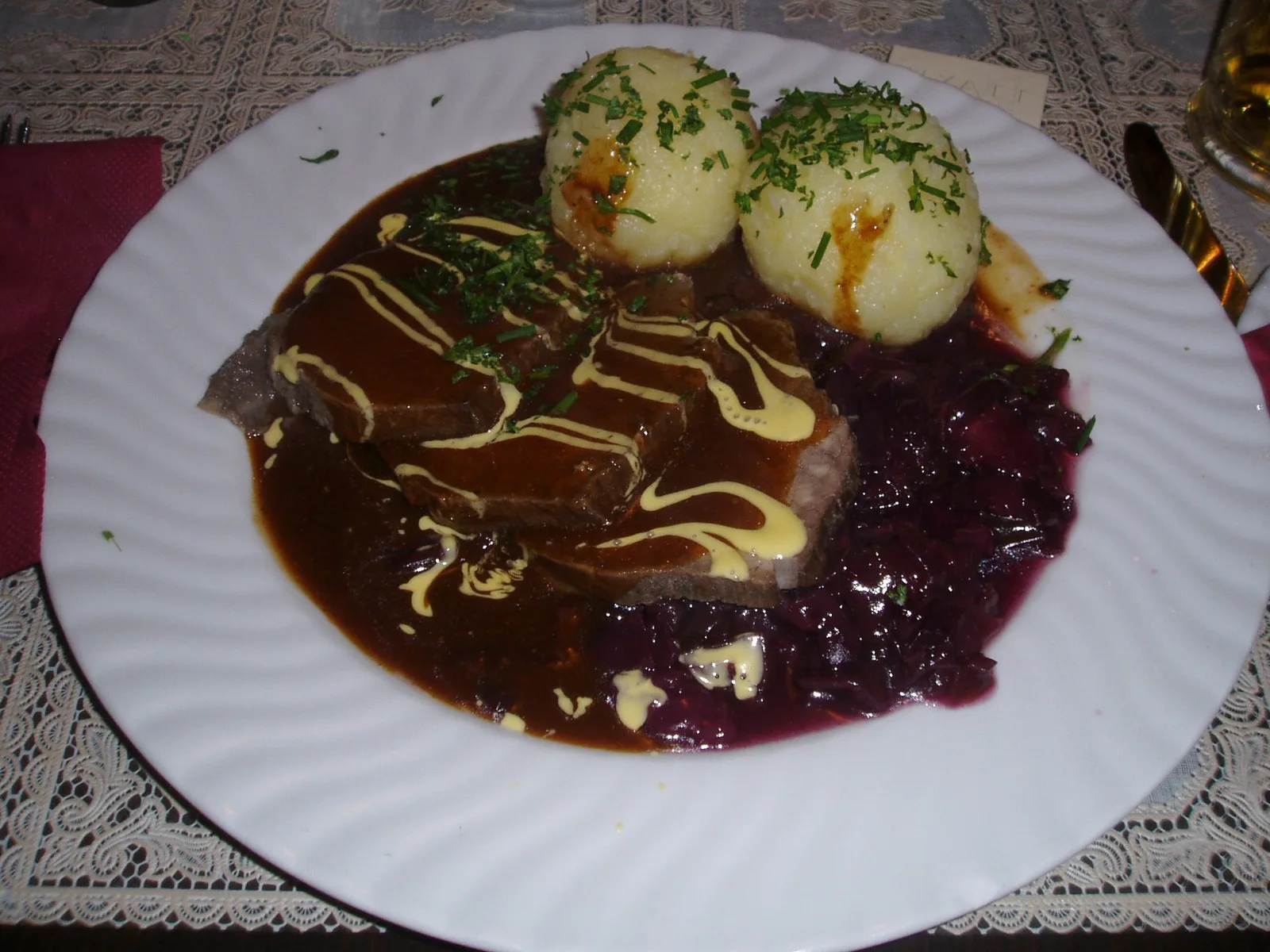
Sliced sauerbraten in dark sweet-sour gravy with potato dumplings and braised red cabbage on a white plate Germany flag Germany 3h 30m
Dinner •Rhineland Heritage

Sauerbraten

This sauerbraten recipe starts with a beef chuck roast steeped for three days in red wine vinegar, red wine and warm spices, then braised slowly until it slices like butter. The marinade becomes a dark, sweet-sour gravy thickened with crushed gingersnaps and studded with raisins, the Rhineland way. One serving is about 300 g, with gravy.

Comfort & Warmth

A slow-braised German pot roast in a sweet-sour vinegar gravy, sliced thick and served hot with potato dumplings and red cabbage.

Pairs Well With
Potato dumplings, braised red cabbage & a glass of Spätburgunder
High Protein
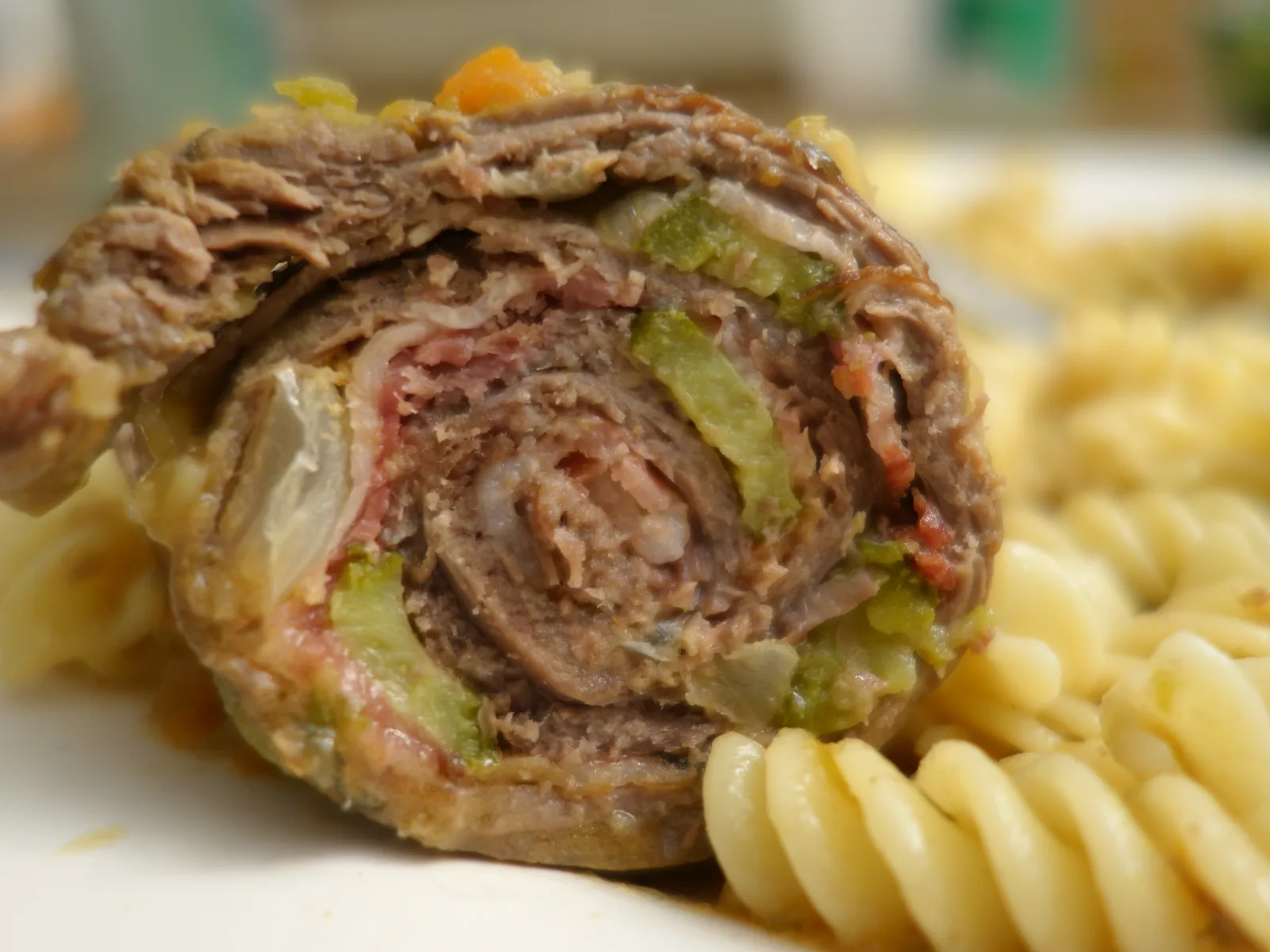
A sliced German beef roulade showing the spiral of beef, bacon and dill pickle, served with pasta Germany flag Germany 2h 10m
Dinner •German Sunday Heritage

Rouladen

This rouladen recipe spreads thin slices of top round with mustard, then rolls them around smoky bacon, dill pickles and onion into neat parcels. The rolls are browned, then braised slowly in red wine and beef stock until tender, and the braising liquid becomes a rich gravy. One serving is about 375 g — two rolls with gravy.

Comfort & Warmth

Thin beef rolls stuffed with bacon, dill pickle and onion, braised in red wine gravy and served hot with dumplings.

Pairs Well With
Potato dumplings, braised red cabbage & a German lager
High Protein
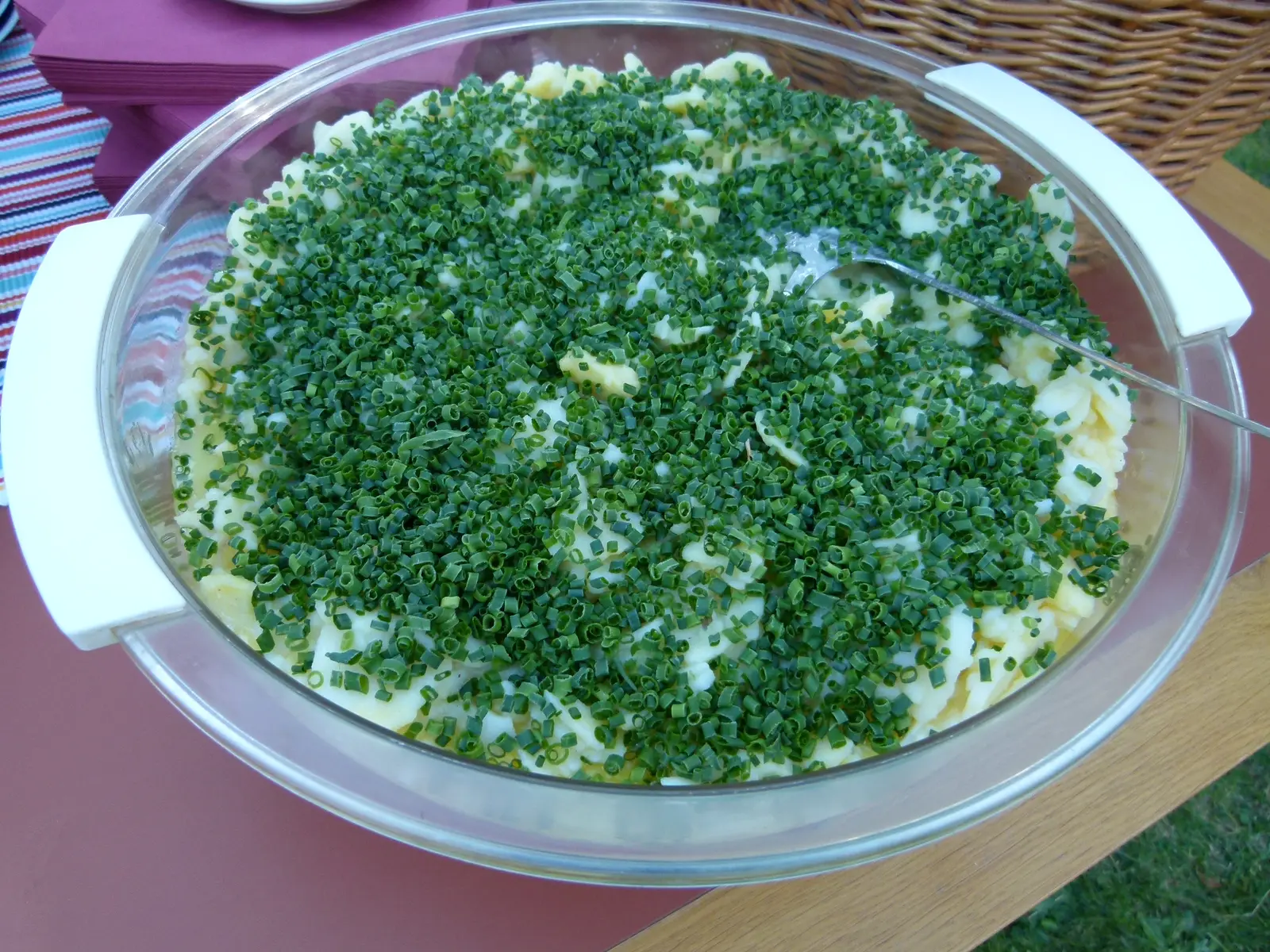
A glass bowl of warm Swabian potato salad topped with chopped chives Germany flag Germany 45m
Lunch •Swabian Heritage

German Potato Salad

This german potato salad recipe is the warm Swabian kind: waxy potatoes sliced while still hot, tossed with crisp bacon, soft onion and sliced egg, then dressed with hot beef stock, vinegar and mustard so every slice drinks up the tangy dressing. No mayonnaise anywhere — the potatoes stay light, glossy and warm. One serving is about 292 g.

Comfort & Warmth

Warm waxy potatoes in a bacon, mustard and vinegar dressing, served straight from the bowl while still steaming.

Pairs Well With
Grilled sausages, schnitzel & a cold German lager
Quick Prep (<30m)
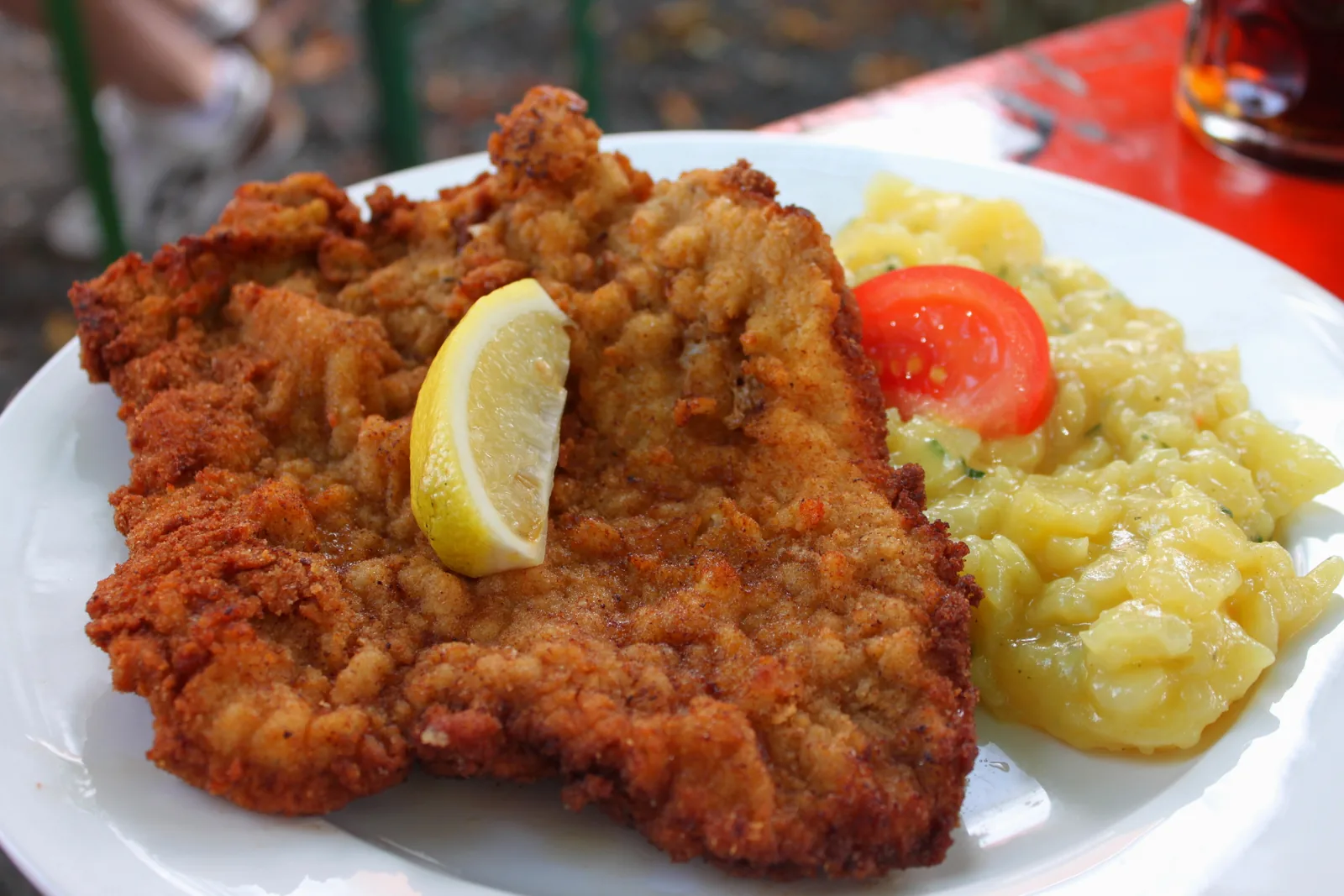
Golden breaded pork schnitzel with a lemon wedge and potato salad on a white plate Germany flag Germany 40m
Dinner •German Heritage

German Pork Schnitzel

German pork schnitzel is the everyday hero of German cooking: a pork cutlet pounded thin, coated in flour, egg and breadcrumbs, and fried in butter until it turns deep golden and crisp. This german schnitzel recipe follows the German way — real pork, a loose crumb, and a wedge of lemon on the side, with potato salad to mop up. One serving is about 200 g.

Classic Comfort

A golden, crisp pork cutlet with lemon and potato salad — a satisfying, protein-rich German dinner.

Pairs Well With
Warm potato salad, cucumber salad and a cold lager.
High Protein

The Dinner Gazette

Never wonder what’s for dinner again

One email a week with easy dinner ideas from around the world — ingredients, steps and nutrition, tested in our kitchen first.

Delivered every Thursday morning. Unsubscribe anytime.