-
1
Make the Marinade & Start the Soak
15 Mins + 3 Days
Bring to a simmer, ~95°C (200°F), then cool to fridge temperature, 4°C (40°F)
Put the vinegar, red wine, water, onions, carrots, celery, sugar, peppercorns, juniper, bay leaves and cloves in a large pot. Bring to a gentle simmer for 5 minutes, then take off the heat and cool completely. Place the beef in a deep glass or ceramic dish, pour the cold marinade over it, cover and refrigerate for 3 days, turning the roast once a day.
Never use an aluminium pot or dish for the marinade — the vinegar reacts with the metal and can give the meat a grey, metallic taste.
Done when: The roast is fully covered in liquid and the marinade smells sweet, sharp and spicy.
-
2
Lift, Dry & Brown the Roast
15 Mins
Medium-high heat, ~200°C (400°F)
Lift the roast out of the marinade and pat it very dry with paper towels. Strain the marinade through a sieve into a bowl and keep both the liquid and the vegetables. Season the roast with the salt. Heat the oil in a heavy pot over medium-high heat and brown the roast on all sides, about 3 minutes per side, until deep brown.
Dry meat browns; wet meat steams. Take the time to pat it really dry or the crust will never form.
Done when: A deep, even brown crust on every side of the roast.
-
3
Braise Low & Slow
150 Mins
Gentle simmer, ~95°C (200°F); oven 160°C (325°F) if using one
Return the strained vegetables to the pot around the roast, pour in the strained marinade liquid and the beef stock, and bring to the barest simmer. Cover and cook on the lowest heat — or in the oven — for about 2 1/2 hours, turning the roast once halfway, until a fork slides in with almost no resistance and the centre reads at least 63°C (145°F) on a thermometer, well above the safe minimum for beef.
Keep the liquid at a lazy bubble, never a rolling boil — hard boiling tightens the meat and dries it out.
Done when: The meat yields easily to a fork and the braising liquid smells sweet, sour and rich.
-
4
Make the Gingersnap Gravy
15 Mins
Simmer, ~95°C (200°F)
Lift the roast onto a board and tent with foil. Strain the braising liquid into a saucepan, pressing the soft vegetables through the sieve for body. Whisk in the crushed gingersnaps a spoonful at a time and simmer for 5 minutes until the gravy thickens and turns glossy. Stir in the raisins and the brown sugar, taste, and adjust the balance — a little more vinegar if it is too sweet, a pinch more sugar if it is too sharp.
Add the gingersnap crumbs slowly and keep whisking; dumping them in at once makes lumps that are hard to smooth out.
Done when: A dark, glossy gravy that coats the back of a spoon and tastes sweet, sour and warmly spiced.
-
5
Rest, Slice & Serve
15 Mins
Rest at room temperature; serve hot, ~70°C (158°F)
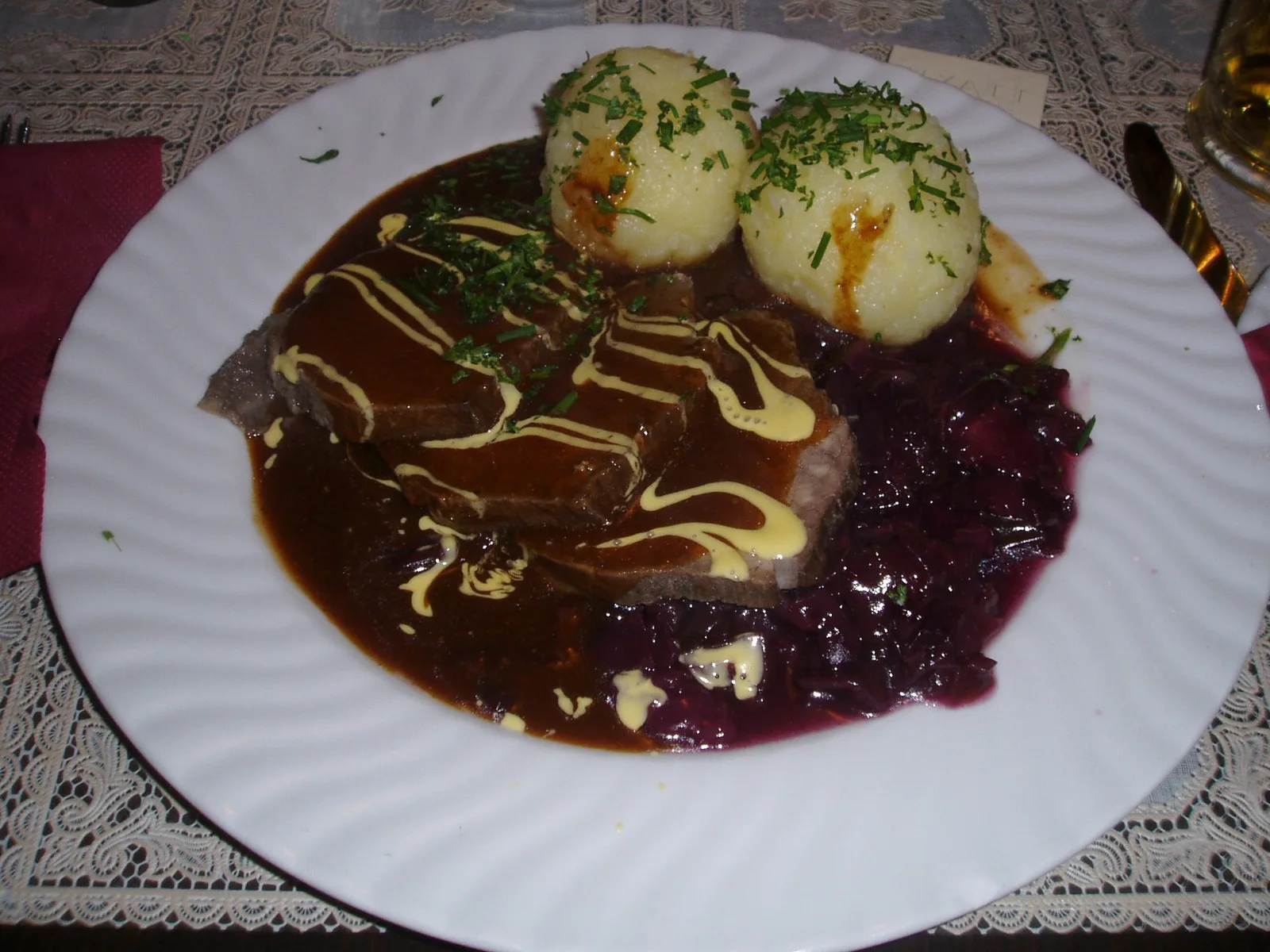
Let the roast rest for 10 minutes so the juices settle, then slice it across the grain into thick slices, about 1 cm. Arrange the slices on a warm platter, spoon the hot gravy and raisins over the top, and serve with potato dumplings and braised red cabbage.
Slice across the grain, not along it — the grain runs the length of the roast, and cutting across it keeps each slice tender.
Done when: Thick, even slices that hold together, glossy with gravy and steaming hot.
auto_awesome Finishing Touches & Plating
Serve the sliced sauerbraten on a warmed platter under a generous ladle of the dark gingersnap gravy, with potato dumplings to catch it and red cabbage on the side.
 Germany
2h 10m

 France

 Vietnam