Curated recipes from 193 countries  •  New seasonal Mediterranean issue out now

Overview

Brazo de Reina

Queen's Arm, Manjar Swiss Roll

This brazo de reina recipe makes Chile's beloved manjar-filled Swiss roll: a thin, flexible sponge baked in minutes, rolled while warm so it keeps its curl, then spread thickly with manjar and dusted with icing sugar. It is the cake of Chilean bakeries and birthday tables, sliced to show off the caramel spiral inside. One serving is about 91 g.

The rolled sponge came to Chile with Spanish baking, where the same cake is called brazo de gitano — the gypsy's arm. In Chile it took the name brazo de reina, the queen's arm, and the filling became manjar, the slow-cooked milk jam that Chileans spread on almost everything sweet. Bakeries across the country sell it by the slice, and home bakers make it for birthdays and once, the afternoon tea. The trick has never changed: bake the sponge thin, roll it while it is hot, and spread the manjar generously.

Pairs well with: Serve a slice of brazo de reina with black coffee or cafe con leche

Provenance

Chile flag Chile

Chilean Bakery Heritage

Latin America & Caribbean

Time Dedication

37m

25m prep • 12m cook

Batch Yield

8 Servings

263 kcal per serving

1 serving ≈ 91 g

Technical Skill

Intermediate

Medium (Rolled Sponge)

Meal Timing & Digestive Fit

Breakfast

Not Advised

Lunch

Inappropriate

Dinner

Inappropriate

Snack & Tea

Ideal Light Bite

Occasions: Afternoon tea (once), birthdays, family gatherings, bakery treats Cost: Low — about $1.50–2 per serving at home
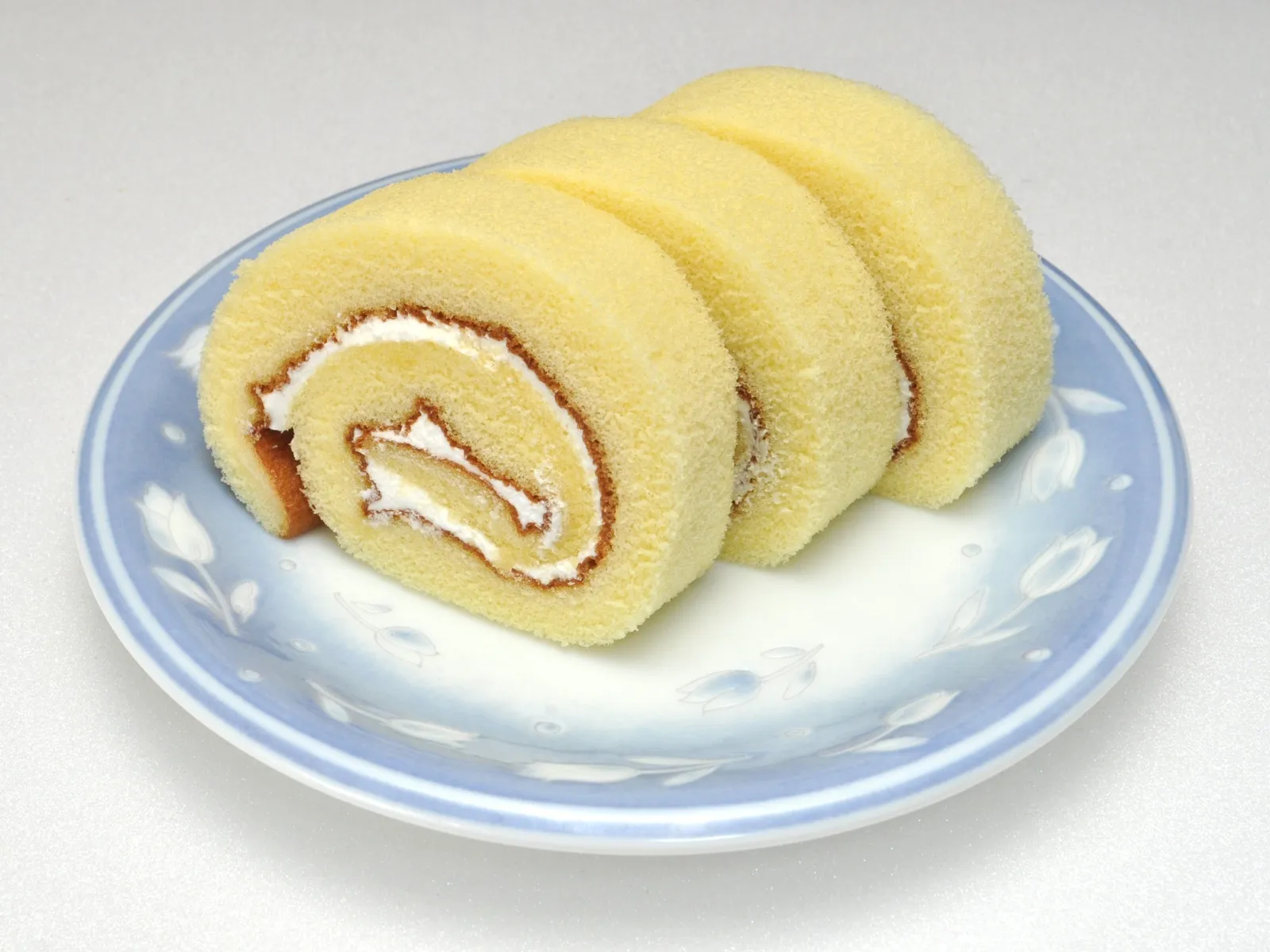
Three slices of golden sponge roll with a white cream spiral on a blue and white plate

Chilean Bakery Heritage

Photo: Ocdp, CC0, via Wikimedia Commons

The Heritage Formulary

Measured Ingredients

Estimated cost: Low — about $1.50–2 per serving at home (USD)

A good brazo de reina is soft and flexible, rolled without a single crack, with a generous manjar spiral in every slice — never dry or skimpy.

Execution Methodology & Culinary Technique

Step-by-Step Cooking Guide

Active 37m
P

Whip the Eggs and Line the Tray

25 Mins

Heat the oven to 180°C (350°F) and line a 30 x 40 cm (12 x 16 in) rimmed baking tray with baking paper, leaving a little overhang at the ends. Separate the eggs. Whisk the yolks with half the sugar and the vanilla until pale and thick, whip the whites with the salt and the rest of the sugar to soft peaks, then fold the two together with the sifted flour. Dust a clean tea towel with icing sugar and have it ready beside the oven.

Maestro Tip: The bowl for the whites must be spotlessly clean and dry — a trace of yolk or grease stops the whites from whipping.

  1. 1

    Whisk the Yolks Pale and Thick

    5 Mins Room temperature, about 20°C (68°F)

    Put the 5 egg yolks in a large bowl with 50g of the sugar and the vanilla. Whisk by hand or with an electric whisk for about 5 minutes until the mixture is pale yellow, thick enough to fall from the whisk in a ribbon, and roughly doubled in volume.

    The ribbon test is the guide — when the mixture drizzled from the whisk sits on the surface for a second before sinking, it is ready.

    Done when: Pale, thick and ribboning; the bowl feels light when lifted.

  2. 2

    Whip the Whites to Soft Peaks

    5 Mins Room temperature, about 20°C (68°F)

    In the second clean bowl, whisk the 5 egg whites with the pinch of salt until foamy, then add the remaining 50g of sugar a spoonful at a time, whisking until the whites form soft peaks that flop over at the tip when the whisk is lifted.

    Stop at soft peaks — stiff, dry whites are hard to fold in and make the sponge crack when rolled.

    Done when: Glossy white peaks that bend at the tip.

  3. 3

    Fold in the Whites and Flour

    5 Mins Room temperature, about 20°C (68°F)

    Spoon about a third of the whipped whites into the yolk mixture and stir to loosen it. Add the rest of the whites and the 100g of sifted flour, and fold gently with a spatula, cutting down the middle and lifting the batter over, until no streaks of flour or white remain. Work quickly and stop as soon as it is mixed.

    Every fold knocks air out, so fold only until combined — a few small streaks are better than a flat batter.

    Done when: An even, airy batter with no visible flour or egg white.

  4. 4

    Bake the Sponge

    12 Mins 180°C (350°F)

    Spread the batter evenly over the lined tray, right into the corners, in a layer about 1 cm thick. Bake for 10 to 12 minutes until the top is lightly golden and springs back when pressed gently in the centre.

    Do not overbake — a dry sponge cracks when rolled, and this thin layer goes from done to dry in about a minute.

    Done when: Lightly golden, springy to the touch, and pulling slightly away from the paper at the edges.

  5. 5

    Roll Warm and Cool

    10 Mins Room temperature, about 20°C (68°F)

    Turn the hot sponge out onto the icing-sugar-dusted tea towel, peel off the baking paper, and, starting from a short end, roll the sponge up snugly inside the towel. Leave the roll to cool completely, about 20 minutes, so it learns the curl and will not crack later.

    Roll it while it is still hot — a cold sponge resists and splits. The towel stops it sticking to itself.

    Done when: The roll holds its shape when unwrapped and feels cool to the touch.

  6. 6

    Fill with Manjar, Re-Roll and Slice

    10 Mins Room temperature, about 20°C (68°F)

    Unroll the cooled sponge gently and spread the 300g of manjar evenly over it, leaving a 2 cm border at the far end. Roll it up again, this time without the towel, seam-side down on a serving plate. Dust the top with the icing sugar, trim the ends if you like, and slice into 8 pieces with a sharp knife, wiping the blade between cuts.

    If the manjar is stiff, warm it for 10 seconds so it spreads without tearing the sponge.

    Done when: A neat log with a visible caramel spiral in every slice.

Finishing Touches & Plating

Dust the roll once more with icing sugar just before serving, and cut it at the table so each slice shows the manjar spiral.

Nutritional Physiology & Benefits

Nutrition

Energy

263

kcal / serving

Protein

7g

Complete AA

Carbs

43g

Complex

Fats

6g

Healthy

Per serving (8 servings · 1 serving ≈ 91 g)
Energy263 kcal
Protein7 g
Carbohydrates43 g
Fat6 g
Fibre0.3 g
Sugar32.7 g
Sodium138 mg
Per 100g
Energy289 kcal
Protein7.8 g
Carbohydrates47.2 g
Fat6.7 g
Fibre0.4 g
Sugar35.8 g
Sodium152 mg

Nutrition values are estimated — calculated from USDA FoodData Central values for the listed ingredients.

Vitamins & minerals: Vitamin A, riboflavin and vitamin B12 (eggs and manjar), plus calcium and phosphorus (manjar).

Quick Energy for the Afternoon

Each 91 g slice gives about 263 kcal, mostly from eggs, sugar and manjar — a satisfying lift with afternoon coffee.

Seven Simple Ingredients

Eggs, sugar, flour, manjar, vanilla, salt and icing sugar — no baking powder, no butter, nothing artificial.

Light, Not Heavy

A foam sponge with no butter or cream, so the slice feels light even with its sweet manjar filling.

Food Pairings

What to Eat With

To optimize nutrient absorption and elevate the sensory depth, pair with these authentic accompaniments:

Drinks

Black Coffee or Cafe con Leche

Coffee's bitterness balances the manjar's caramel sweetness, and it is how Chileans drink it at once — the afternoon tea break.

Tea

A plain black tea cleanses the palate between sweet slices without adding more sugar.

Sides

Fresh Berries

A few raspberries or strawberries on the side add tartness and freshness that cut through the rich manjar.

Full Menus

Chilean Once

Serve slices of brazo de reina as the sweet centre of once — Chilean afternoon tea — with coffee, bread, cheese and avocado on the table.

Complete menu

Serve a slice of brazo de reina with black coffee and a few fresh berries as the sweet end of a Chilean once, after bread, cheese and avocado.

Digestive Guardrails

What NOT to Combine

To prevent digestive distress, sluggishness, or palate clash, avoid pairing the dish with these elements:

Sugary Drinks Alongside

One slice already carries about 32.7 g of sugar, so a sweetened soft drink or sugary juice on top adds a fast sugar load — water, unsweetened tea or black coffee is the better partner. This is general information, not medical advice.

Leaving the Roll Unwrapped

The thin sponge dries out and turns brittle within hours in the open air, and a dry roll cracks when sliced — always wrap it tightly in cling film or keep it in a sealed container. This is general information, not medical advice.

General information only, not medical advice — consult a doctor for personal dietary decisions.

Who Should Eat It

Who Should Eat

  • General adultsOne 91 g slice is a satisfying sweet snack for most adults — two slices is a dessert portion.
  • ChildrenA soft, sweet slice children usually love — cut it small, and keep it to one slice because of the sugar.
  • ElderlySoft and easy to chew, with no nuts or hard pieces — serve at room temperature, not straight from the fridge.
  • Pregnant womenIt contains eggs, milk (manjar) and gluten, and about 32.7 g of sugar a slice — keep to one small slice and ask your clinician if you are unsure.
  • Breastfeeding womenA sweet treat between feeds is fine in a small portion, but it is high in sugar, so one slice is plenty.
  • AthletesAbout 263 kcal and 7.1 g of protein a slice — a quick energy top-up, not a recovery meal on its own.
  • Weight gainAt about 263 kcal a slice with eggs and manjar, it adds energy easily — a slice with coffee is a simple way to add calories.
  • Weight lossIt is sweet and energy-dense at 263 kcal for a small slice — enjoy one slice slowly with unsweetened coffee or tea rather than two.

Health Conditions — Adjust or Avoid

Conditions

  • DiabetesAbout 43.1 g of carbohydrate and 32.7 g of sugar a slice, so a half slice with unsweetened coffee is the safer choice; ask your clinician about a suitable serving.
  • High blood pressureSodium is only about 138 mg a slice, so salt is not the issue — the sugar is; keep the portion small and ask your clinician if you are unsure.
  • Kidney diseaseIt has about 7.1 g of protein a slice and is low in potassium, but it is very sweet — ask your clinician whether it fits your diet.
  • GoutEggs and milk are low-purine foods, so gout is not a particular concern with this cake; the sugar is the reason to keep portions small. Ask your clinician if you are unsure.
  • Stomach issuesA soft, plain sponge with no spice or acid — usually gentle on the stomach, but eat it slowly and in a small portion; ask your clinician if symptoms persist.
  • Cardiovascular diseaseAbout 6.1 g of fat a slice and no frying, so the fat load is modest — the sugar is the main thing to watch; ask your clinician if you are unsure.
  • Fatty liverIt is high in sugar and low in fibre, so a small slice occasionally is better than a large one; ask your clinician if you are unsure.
  • Food allergiesContains egg, milk (manjar) and gluten (wheat flour). No nuts, peanut, fish or shellfish.
  • Special therapeutic dietsThis is a sweet everyday cake, not a therapeutic food; anyone on a special diet should ask their clinician before eating it.

If you have a medical condition, consult your doctor before changing your diet.

Storage & Use

Storage & Use

How to store
Wrap the roll tightly in cling film or keep it in a sealed container.
In the fridge
3 days in a sealed container; bring slices to room temperature for 20 minutes before serving.
In the freezer
Up to 1 month, wrapped tightly in cling film and foil; thaw in the fridge overnight.
How to reheat
No reheating needed — serve at room temperature. If chilled, let it sit out for 20 minutes.
Freezing recommended
Yes — it freezes well, though the icing sugar melts on thawing, so dust it again before serving.
Signs it has spoiled
A sour smell, a slimy or sticky surface, or any mould.

More recipes to explore

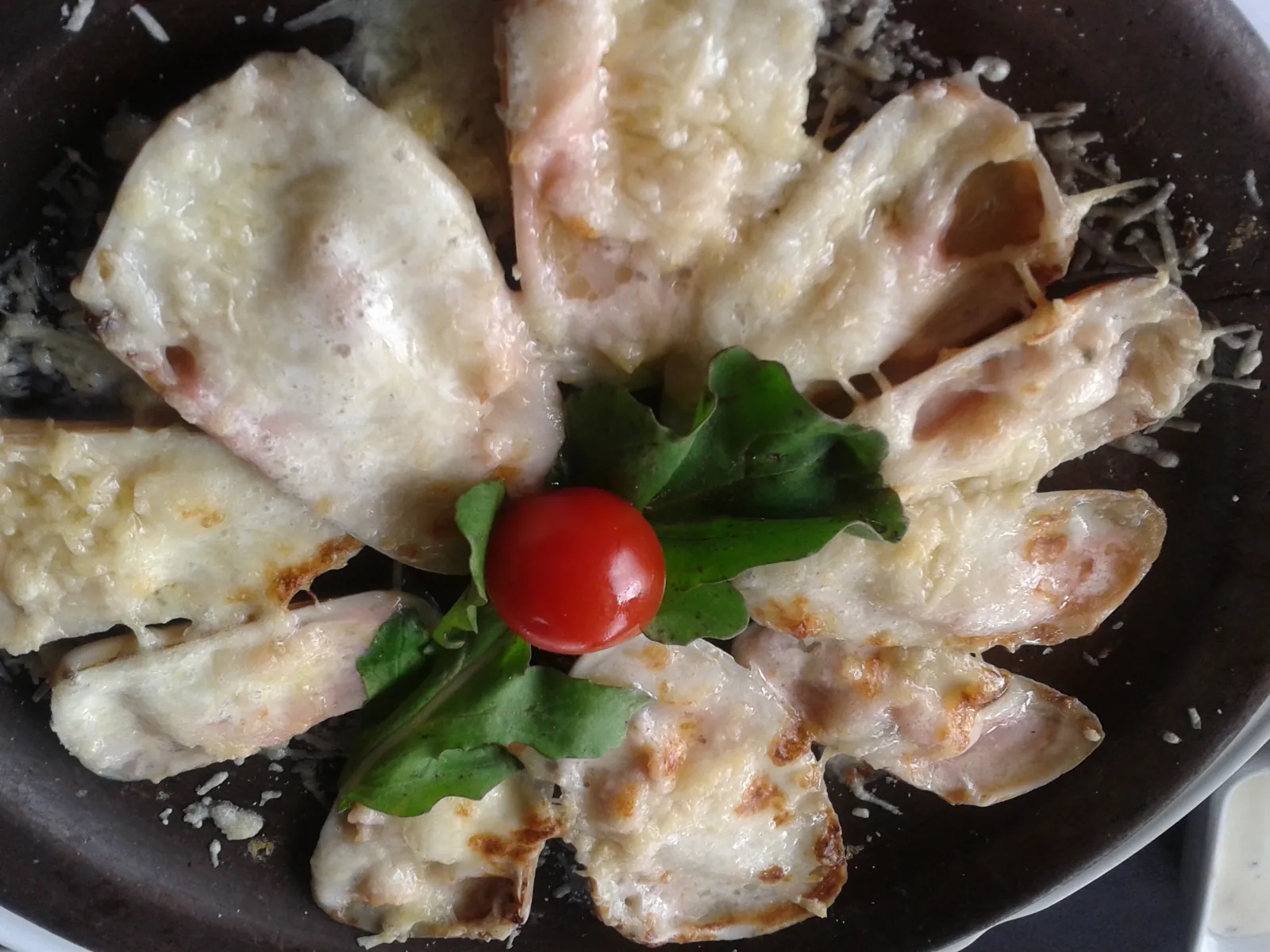
Machas a la parmesana — razor clams in their shells topped with melted golden Parmesan, garnished with greens and a cherry tomato Chile flag Chile 35m
Lunch •Valparaíso Coast Heritage

Machas a la Parmesana

This machas a la parmesana recipe bakes sweet Chilean razor clams in their own shells with garlic butter, a splash of dry white wine and a blanket of grated Parmesan that turns golden under the grill. It is the classic starter of the Valparaíso coast: briny, buttery and ready in minutes. One serving is about 200 g, six shells per person.

Coastal & Savory

Sweet razor clams baked in their shells with garlic butter, white wine and a golden Parmesan crust.

Pairs Well With
Crusty bread and lemon wedges, with a glass of dry white wine.
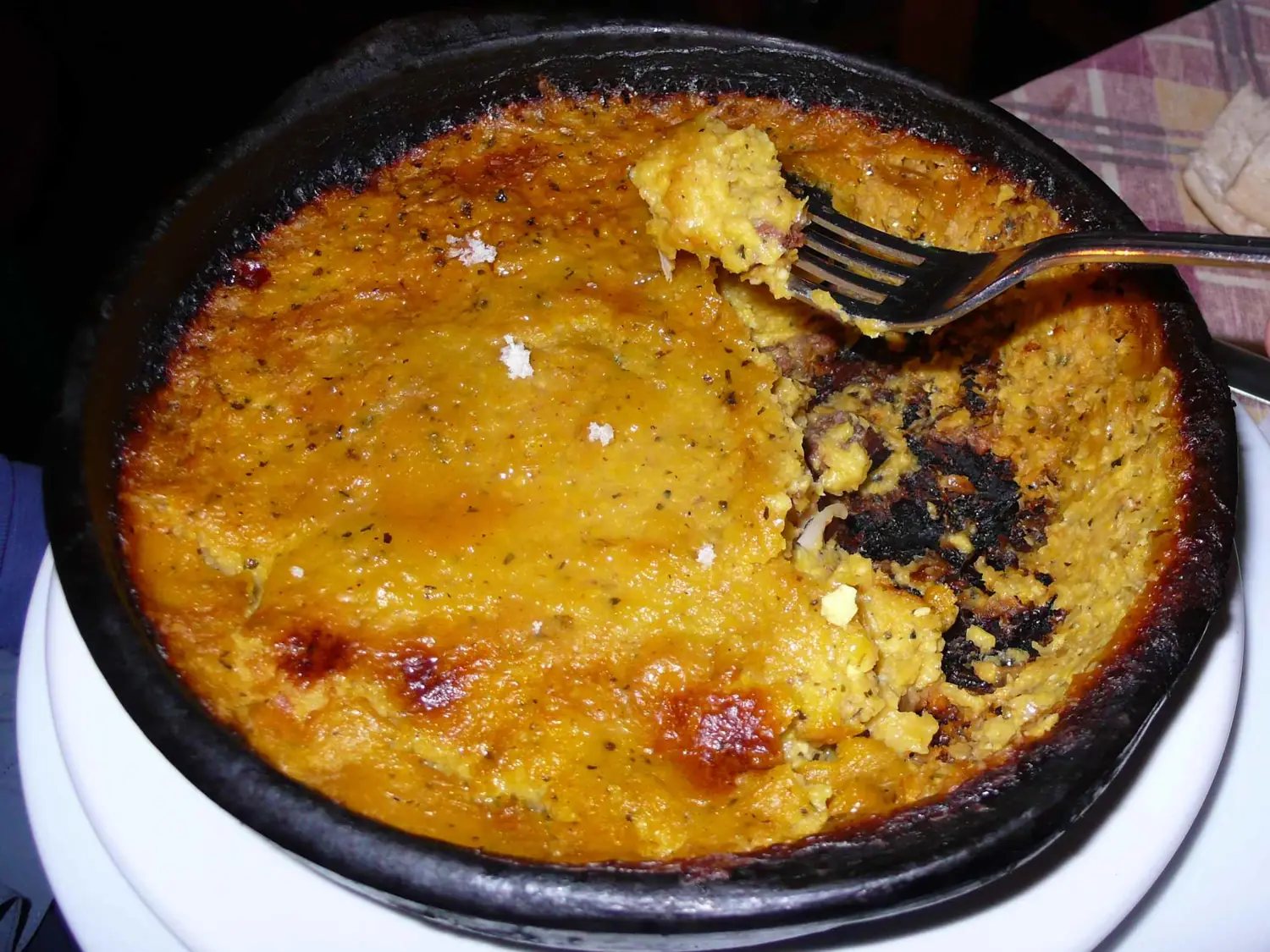
Pastel de choclo in a black clay dish, golden corn topping with a fork lifting a bite of the meat filling Chile flag Chile 1h 25m
Dinner •Chilean Countryside Heritage

Pastel de Choclo

This pastel de choclo recipe is Chile's beloved baked corn pie: a savoury filling of seasoned ground beef, chicken, hard-boiled egg, black olives and raisins, covered with a sweet, basil-flecked corn topping and baked until golden. Sweet meets savoury in every spoonful, and the clay dish it bakes in keeps it hot to the table. One serving is about 340 g.

Hearty & Satisfying

Sweet corn and basil topping over a savoury beef and chicken filling with egg, olives and raisins.

Pairs Well With
A fresh tomato salad and a glass of Chilean red wine.
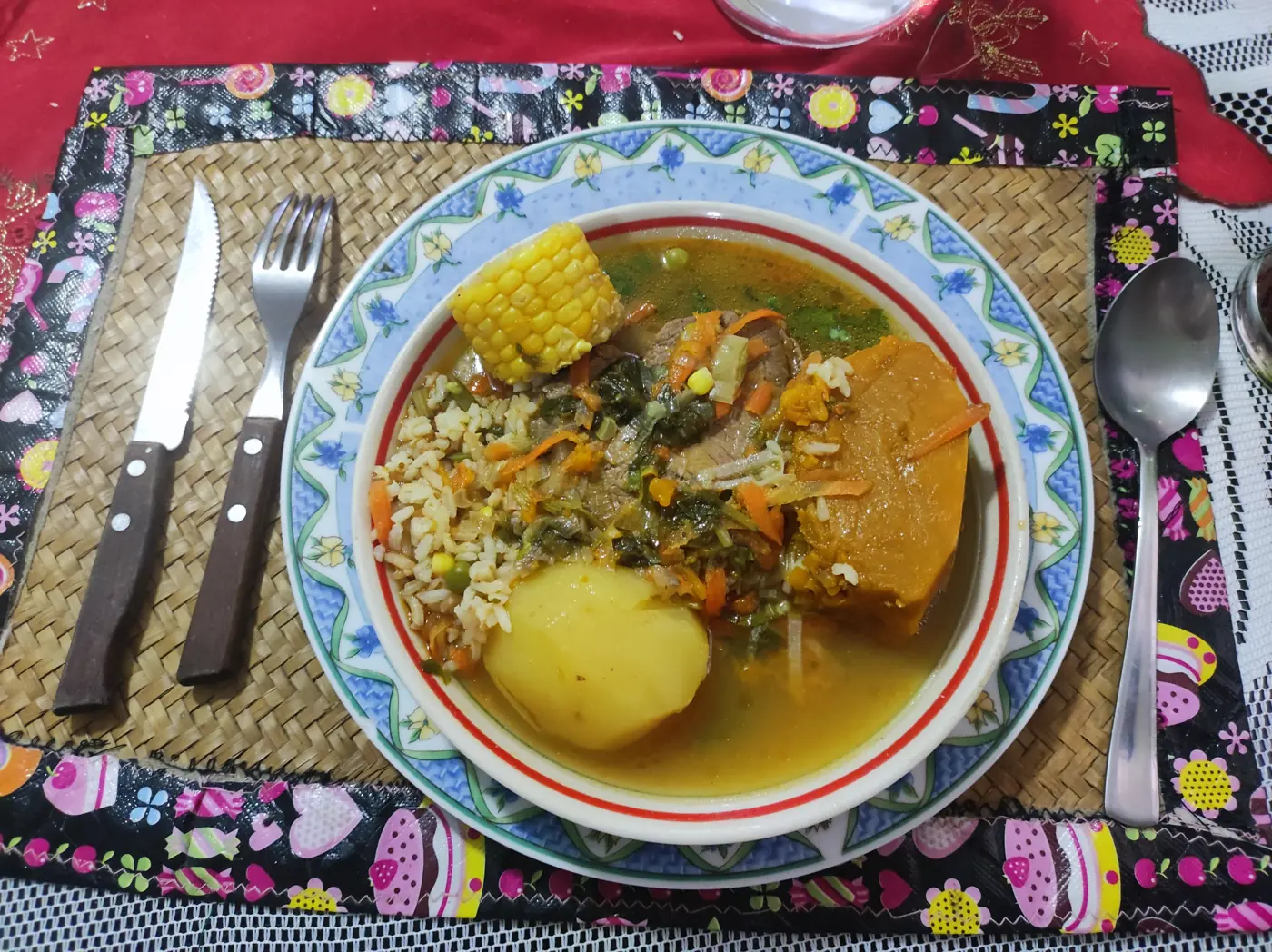
Cazuela chilena — a bowl of chicken soup with a whole potato, a piece of pumpkin, corn on the cob and rice in a golden broth Chile flag Chile 1h 20m
Lunch •Chilean Home Kitchen Heritage

Cazuela Chilena

This cazuela chilena recipe is Chile's home-cooked comfort soup, and its identity is unmistakable: a big piece of orange pumpkin, a chunk of corn on the cob, a potato and a scoop of rice, all simmered with chicken in a clear, savoury broth. The pumpkin sweetens the broth as it cooks, the corn stays sweet and firm, and the rice turns the soup into a full lunch. One serving is about 750 g, broth and all.

Comfort & Warmth

Chicken simmered with pumpkin, corn, potato and rice in a light, cilantro-scented broth.

Pairs Well With
Crusty bread and pebre salsa, with the rice spooned into the bowl.
Soups & Broths
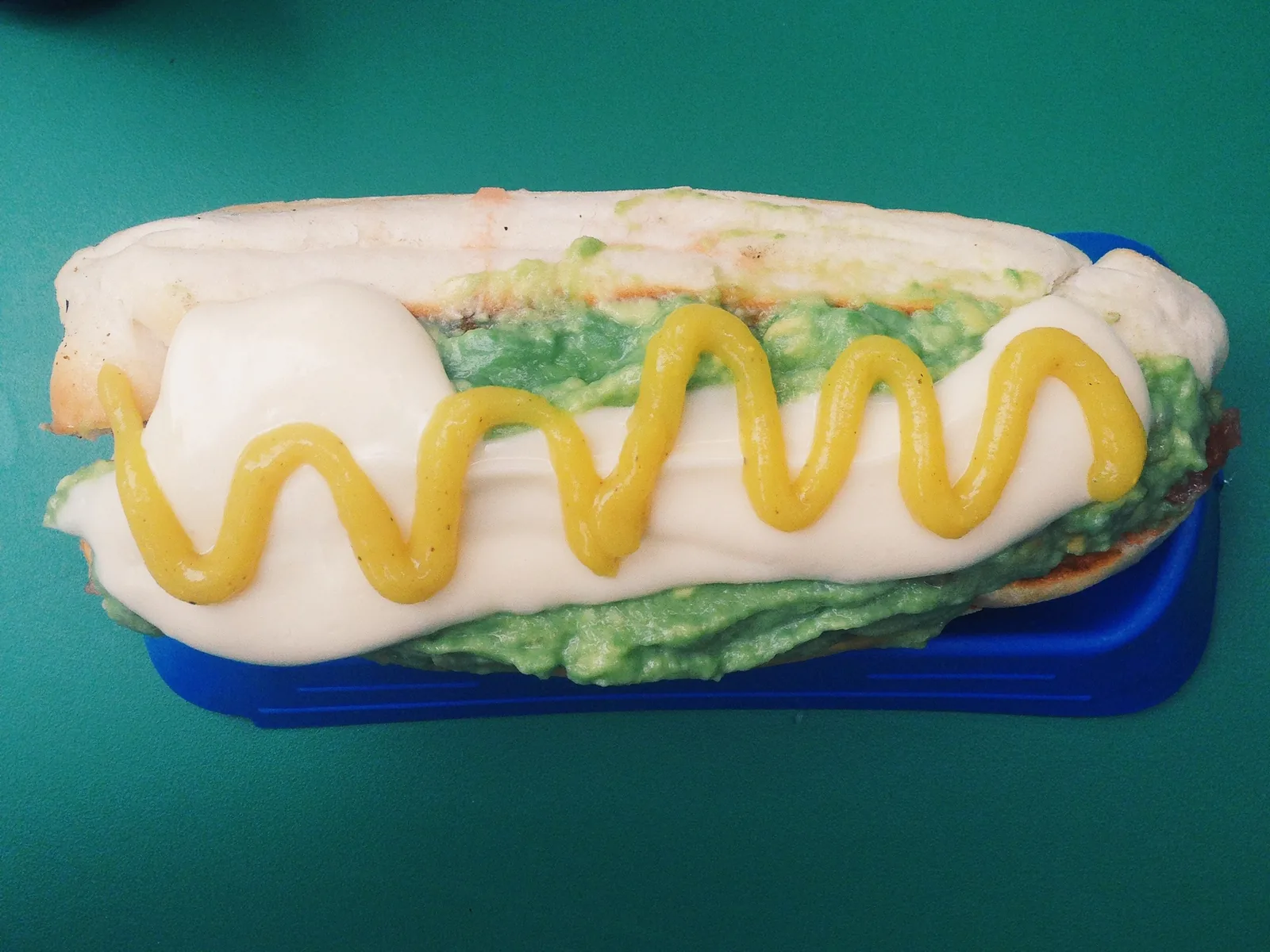
A completo chileno in a soft bun loaded with mashed avocado, mayonnaise and a mustard zigzag, with tomato peeking out at one end Chile flag Chile 25m
Snack & Tea •Chilean Street Food

Completo Chileno

A completo chileno is Chile's answer to the hot dog: a pork frankfurter in a soft bun, buried under diced tomato, a thick layer of mashed avocado and a generous ribbon of mayonnaise. It is salty, creamy and gloriously messy, and it is eaten standing up, with both hands and no cutlery. One serving is about 229 g.

Quick & Satisfying

A pork frankfurter in a soft bun, loaded with tomato, mashed avocado and mayonnaise.

Pairs Well With
Crispy fries, a cold lemonade or a lager

The Dinner Gazette

Never wonder what’s for dinner again

One email a week with easy dinner ideas from around the world — ingredients, steps and nutrition, tested in our kitchen first.

Delivered every Thursday morning. Unsubscribe anytime.