Curated recipes from 193 countries  •  New seasonal Mediterranean issue out now

Overview

Cocido Madrileño

Cocido madrileno

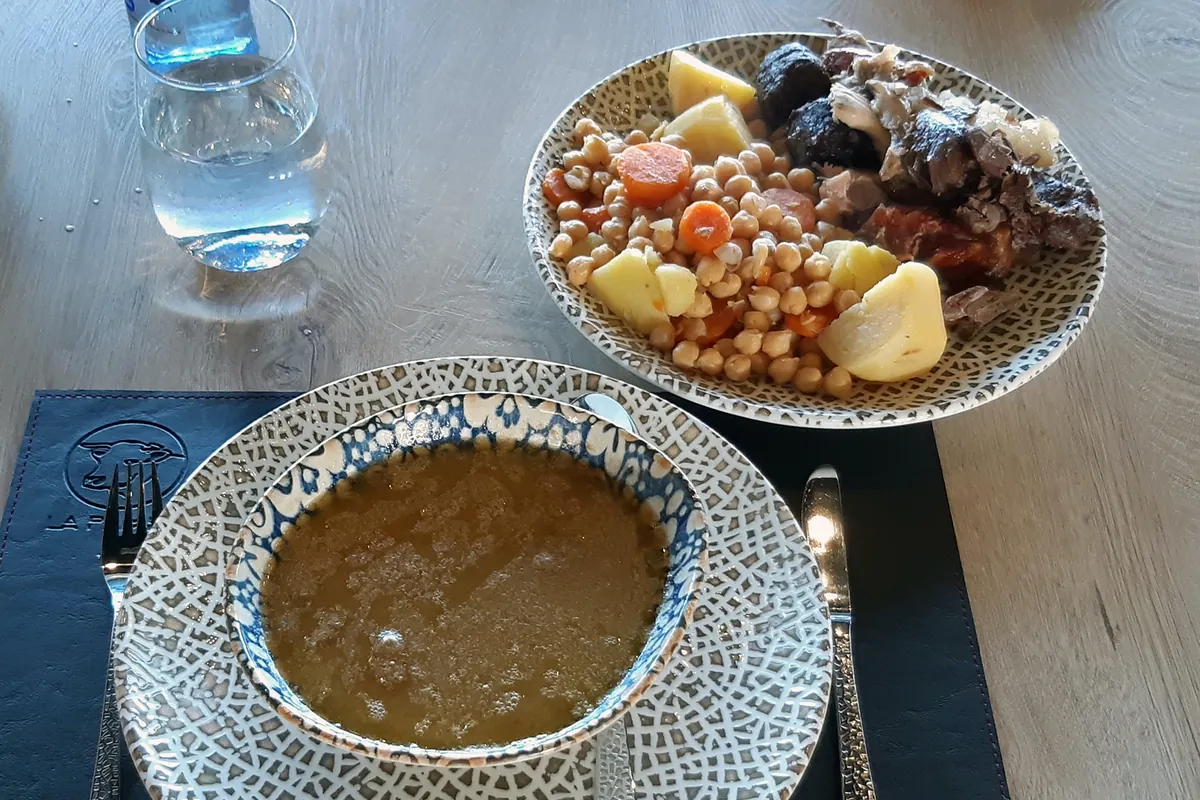
This cocido madrileno recipe soaks chickpeas overnight, then simmers them for hours with beef shank, pork belly, chicken, chorizo, morcilla and jamón until the broth is deep and golden. One serving is about 800 g — a bowl of noodle soup first, then chickpeas with vegetables, then the meats. It is Madrid's great winter meal, served in three courses called tres vuelcos.

Cocido madrileño is Madrid's great stew, and food historians trace its line back to adafina, the slow Sabbath stew of Spain's Sephardic Jews — chickpeas, vegetables and meat cooked slowly in a covered pot from Friday until Saturday, when no fire could be lit. After the expulsion of the Jews in 1492, converted families added pork — chorizo, morcilla and ham — to a dish that had once been kosher, and the stew took on its Castilian character. In Madrid it settled into its famous form, served in three courses called tres vuelcos, three turnings: first the broth with noodles, then the chickpeas and vegetables, then the meats.

Pairs well with: Crusty bread, a glass of red Rioja and a green salad

Provenance

Spain flag Spain

Madrid Classic

Mediterranean & Italy

Time Dedication

3h 30m

30m prep • 180m cook

Batch Yield

6 Servings

1121 kcal per serving

1 serving ≈ 800 g

Technical Skill

Intermediate

Medium (Long Simmer)

Meal Timing & Digestive Fit

Breakfast

Not Advised

Lunch

Hearty Midday Main

Dinner

Ideal Hearty Main

Snack & Tea

Inappropriate

Soups & Broths Occasions: Sunday lunch, winter dinner, celebration meal, cold-weather cooking Cost: Medium — about $5–6 per serving at home

Cocido madrileno served in courses: a bowl of golden broth and a plate of chickpeas with meats and vegetables

Madrid Classic

Photo: Smnt, CC BY-SA 4.0, via Wikimedia Commons

The Heritage Formulary

Measured Ingredients

Estimated cost: Medium — about $5–6 per serving at home (USD)
A real cocido is never stirred with a spoon once the chickpeas are in, and it is always served in three courses — soup, chickpeas and vegetables, then meats. Nutrition is estimated from USDA values.

Execution Methodology & Culinary Technique

Step-by-Step Cooking Guide

Active 3h 30m
P

Prep Stage: Soak the Chickpeas and Trim the Meats

30 Mins + Overnight Soak • Soaking & Trimming

The night before, cover the chickpeas with cold water and leave them to soak. In the morning, drain them and set them aside. Trim the meats, peel the vegetables, and put the biggest pot you own on the stove — everything cooks in one pot, and it needs room.

Maestro Tip: Do not skip the soak. Unsoaked chickpeas take hours longer and cook unevenly, and the broth never turns as golden.

  1. 1

    Start the pot

    15 Mins High heat, then a gentle simmer about 95°C (200°F)

    Put the beef, pork belly, chicken, ham and the whole onion and garlic in the pot with the chickpeas and cover with the cold water. Bring to the boil, skim off the grey foam for 10 minutes, then turn the heat down to the barest simmer.

    Skimming is not optional — the foam is what makes a broth cloudy and bitter.

    Done when: The surface is clear, the broth barely trembling, not boiling.

  2. 2

    Simmer the meats

    2 Hours Gentle simmer, about 95°C (200°F)

    Add the chorizo and morcilla and the bay leaves, and simmer gently for 2 hours, skimming now and then. Do not stir — shaking the pot or stirring breaks the chickpeas. The meats are done when they yield to a fork.

    A rolling boil breaks chickpeas into mush; the pot should barely move.

    Done when: Meats tender to a fork; chickpeas soft but whole.

  3. 3

    Add the vegetables

    40 Mins Gentle simmer, about 95°C (200°F)

    Lift the meats out onto a plate and keep them warm. Add the potatoes, carrots, cabbage and leek to the pot and simmer for 30–40 minutes until tender. Taste the broth and season with salt only now — the cured meats have been salting it all along.

    Salt at the end, never the start: the chorizo and ham make the broth saltier as they cook.

    Done when: Vegetables tender to a knife; broth golden and deeply flavoured.

  4. 4

    Cook the noodle soup

    10 Mins Boiling, 100°C (212°F)

    Strain about 1.5 litres of the broth into a second pot, bring it to the boil and cook the fideos for 6–8 minutes until tender. This is the first course.

    Strain the broth so the soup is clear and golden, not cloudy with chickpea skins.

    Done when: Noodles tender; broth clear, hot and golden.

  5. 5

    Serve in three courses

    10 Mins No heat — serve at once

    First, serve the noodle soup in bowls. Then bring the chickpeas and vegetables to the table on a platter. Finally, carve the meats, arrange them on a second platter, and serve with crusty bread.

    The three courses are the dish — serving everything in one bowl is a different stew.

    Done when: Three courses on the table: soup, chickpeas with vegetables, then meats.

Finishing Touches & Plating

Serve the three courses in order: first the broth with noodles, then the chickpeas and vegetables, then the meats on a platter with crusty bread. Put everything on the table at once and let people help themselves to the second and third courses.

Nutritional Physiology & Benefits

Nutrition

Energy

1121

kcal / serving

Protein

64g

Complete AA

Carbs

75g

Complex

Fats

62g

Healthy

Per serving (6 servings · 1 serving ≈ 800 g)
Energy1121 kcal
Protein64 g
Carbohydrates75 g
Fat62 g
Fibre16.1 g
Sugar12.8 g
Sodium1075 mg
Per 100g
Energy140 kcal
Protein8 g
Carbohydrates9.4 g
Fat7.8 g
Fibre2 g
Sugar1.6 g
Sodium134 mg

Nutrition values are estimated — calculated from USDA FoodData Central values for the listed ingredients.

Vitamins & minerals: Iron and B vitamins (chickpeas, meats, morcilla), vitamin A (carrots), vitamin C (cabbage, leek), folate (chickpeas). Nutrition is estimated.

Fibre-Rich Chickpeas

About 16.1 g of fibre per serving, mostly from the chickpeas — the backbone of the dish and the reason it keeps you full for hours.

Serious Protein

About 64.1 g of protein per serving from four meats and the chickpeas — a full meal that needs nothing else on the plate.

Iron from Meats and Beans

The beef, morcilla and chickpeas together bring iron and B vitamins, and the carrots and cabbage add vitamin A and vitamin C.

Food Pairings

What to Eat With

To optimize nutrient absorption and elevate the sensory depth, pair with these authentic accompaniments:

Sides

Crusty Bread

Crusty bread is essential — it soaks up the broth and is the traditional partner for the meats and chickpeas.

Drinks

Red Rioja

A medium red Rioja stands up to the cured meats and the rich broth without fighting the chickpeas.

Vegetables

Green Salad

A sharp green salad after the meats cuts the richness of the pork and chorizo and freshens the palate.

Full Menus

Pickled Guindilla Peppers

Mild pickled peppers add acidity and a little heat that the long, gentle stew does not have on its own.

Complete menu

Serve the cocido in its three courses with crusty bread and a green salad, and finish with fresh fruit and coffee.

Digestive Guardrails

What NOT to Combine

To prevent digestive distress, sluggishness, or palate clash, avoid pairing the dish with these elements:

Go Easy on the Cured Meats

The chorizo, morcilla and ham carry most of the salt and saturated fat in the pot, so a second helping of those — rather than the chickpeas and vegetables — is the heavy choice. This is general food information, not medical advice.

Do Not Pair with Another Heavy Main

Cocido is already three courses; adding another rich main dish makes the meal far too heavy. A salad and fruit are all it needs after. This is general food information, not medical advice.

General information only, not medical advice — consult a doctor for personal dietary decisions.

Who Should Eat It

Who Should Eat

  • General adultsA huge, satisfying meal — one full serving across three courses is a feast for most adults.
  • ChildrenChildren usually love the noodle soup and the chickpeas; serve the meats sliced and keep the morcilla optional.
  • ElderlyThe chickpeas and vegetables are soft and easy to eat; a smaller portion with more broth and vegetables suits older eaters.
  • Pregnant womenAll meats are cooked through for hours, which is the safe way to eat them; keep portions moderate and go light on the cured meats. Ask your clinician about cured meats in pregnancy.
  • Breastfeeding womenBreastfeeding mothers can enjoy the protein and iron; keep portions moderate and stay hydrated. Ask your clinician if you have concerns.
  • AthletesAbout 64.1 g of protein per serving makes this a very strong recovery meal; the chickpeas and noodles give the energy to go with it.
  • Weight gainAt about 1,121 kcal a serving, this is one of the most energy-dense meals on the site — a second helping is rarely needed.
  • Weight lossAbout 1,121 kcal a serving is a feast; a smaller portion weighted toward the soup and vegetables keeps it lighter. Ask your clinician about a plan that fits you.

Health Conditions — Adjust or Avoid

Conditions

  • DiabetesAbout 75.2 g of carbs per serving, mostly from the chickpeas and noodles. Keep the noodle soup modest and load the vegetables. Ask your clinician about portion size.
  • High blood pressureAbout 1,075 mg of sodium per serving, mostly from the cured meats and ham. Eat more chickpeas and vegetables and less chorizo and morcilla. Ask your clinician about sodium limits.
  • Kidney diseaseThe cured meats are salty and the meal is rich; a smaller portion weighted toward chickpeas and vegetables is kinder. Ask your clinician about your diet.
  • GoutChorizo, morcilla and pork belly are rich in saturated fat and purines; a small portion with mostly chickpeas and vegetables is the safer way to enjoy it. Ask your clinician about your diet.
  • Stomach issuesThe long-cooked chickpeas and vegetables are usually gentle, but the cured meats and rich broth can be heavy; keep the portion small. Ask your clinician if symptoms flare.
  • Cardiovascular diseaseThe cured meats and pork belly add saturated fat, so eat in moderation with mostly chickpeas and vegetables. Ask your clinician about your diet.
  • Fatty liverThe pork belly and cured meats add fat; a version built on chickpeas, chicken and vegetables is gentler. Ask your clinician about your diet.
  • Food allergiesContains wheat (gluten, in the fideos). The dish contains pork, beef and chicken. Check every label and ask your clinician about your allergies.
  • Special therapeutic dietsThis dish is rich, salty and contains gluten in the noodles. A gluten-free noodle and fewer cured meats are possible, but check the swaps with your clinician or dietitian first.

If you have a medical condition, consult your doctor before changing your diet.

Storage & Use

Storage & Use

How to store
Store the broth, chickpeas with vegetables, and meats in separate containers.
In the fridge
3 days, covered.
In the freezer
2 months for the broth and chickpeas; 1 month for the meats.
How to reheat
Reheat gently in a pan until steaming and 74°C (165°F) through; bring the broth to a full boil before serving.
Freezing recommended
Yes — the broth and chickpeas freeze very well.
Signs it has spoiled
Sour smell from the broth, slimy meats, or a sour tang on the chickpeas.

More recipes to explore

Pan con tomate with jamón ibérico on toasted bread Spain flag Spain 15m
Snack & Tea •Catalan Aperitivo

Pan con Tomate & Jamón Ibérico

Country bread rubbed with ripe Ramallet tomato, drizzled with cold-pressed Arbequina olive oil and topped with jamón ibérico.

Vascular Health

Toasted tomato bread with jamón ibérico, olive oil and olives.

Pairs Well With
Castelvetrano Olives & Sparkling Mineral Water
Quick Prep (<30m)
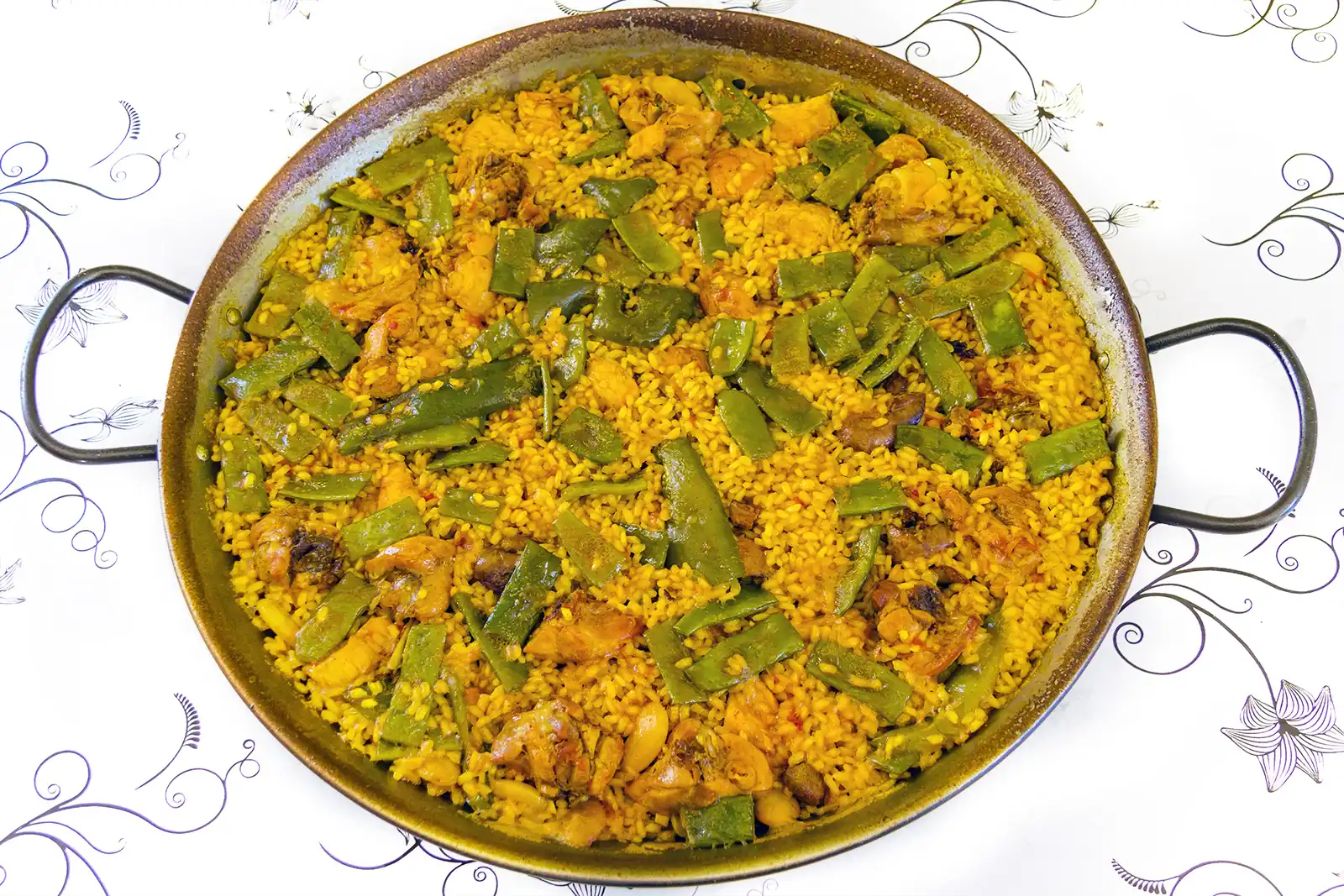
A wide paella pan of paella valenciana with saffron rice, green beans and chicken Spain flag Spain 1h 10m
Dinner •Valencia Rice Fields

Paella Valenciana

This paella valenciana recipe cooks Bomba rice in a wide, shallow pan with chicken, rabbit, green beans and garrofó beans, scented with saffron and rosemary. One serving is about 470 g.

Comfort & Warmth

Saffron rice cooked in a wide pan with chicken, rabbit and green beans.

Pairs Well With
A green salad and a glass of white wine
High Protein
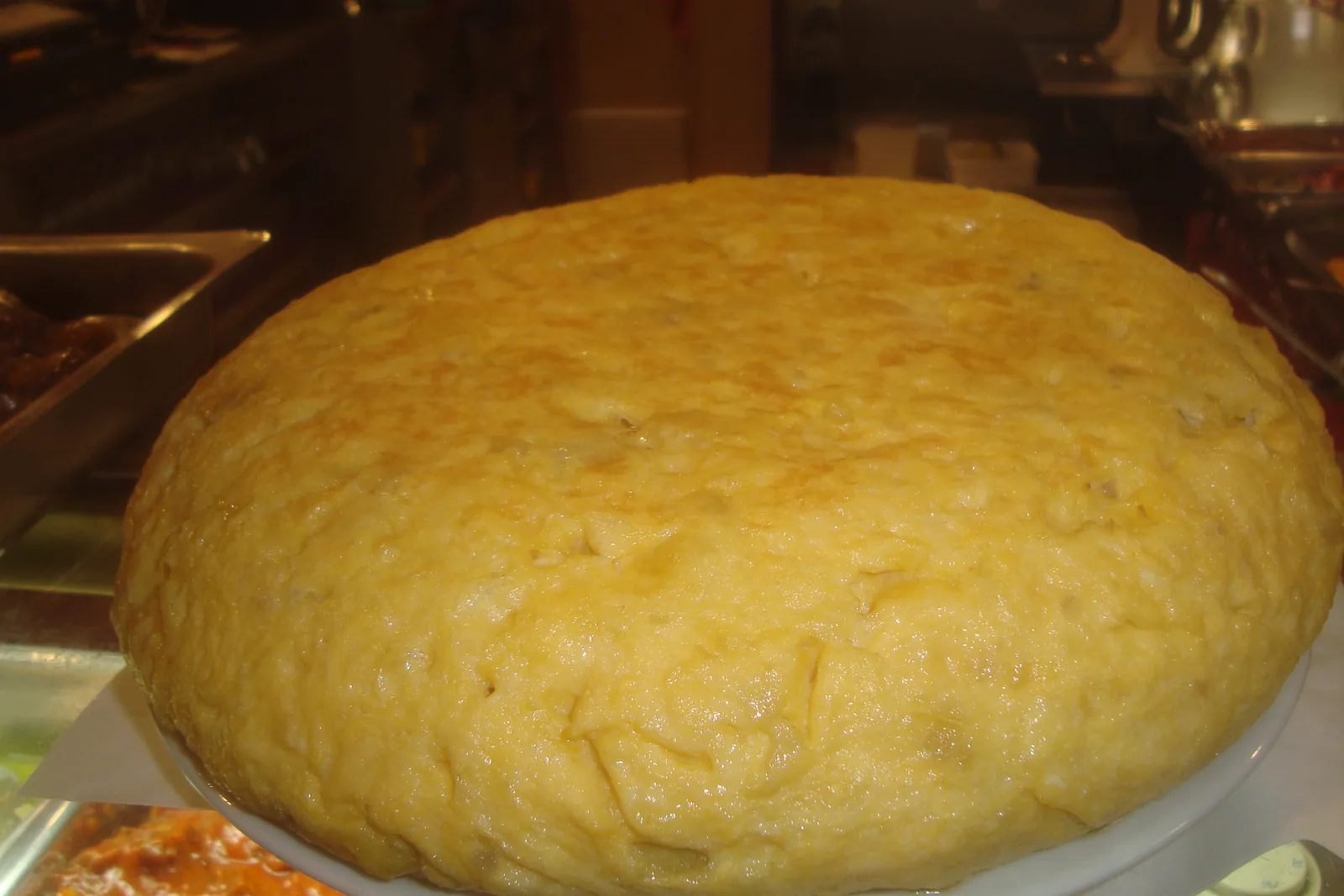
A whole golden tortilla española, a thick Spanish potato omelette, on a plate Spain flag Spain 55m
Snack & Tea •Navarre Bar Classic

Tortilla Española

This spanish tortilla recipe slowly cooks potatoes and onion in olive oil, folds them into beaten eggs, and turns out a thick, golden cake that is soft in the middle. One serving is about 220 g.

Comfort & Warmth

A thick, golden omelette of slow-cooked potatoes, onion and egg.

Pairs Well With
Pan con tomate and a glass of red wine
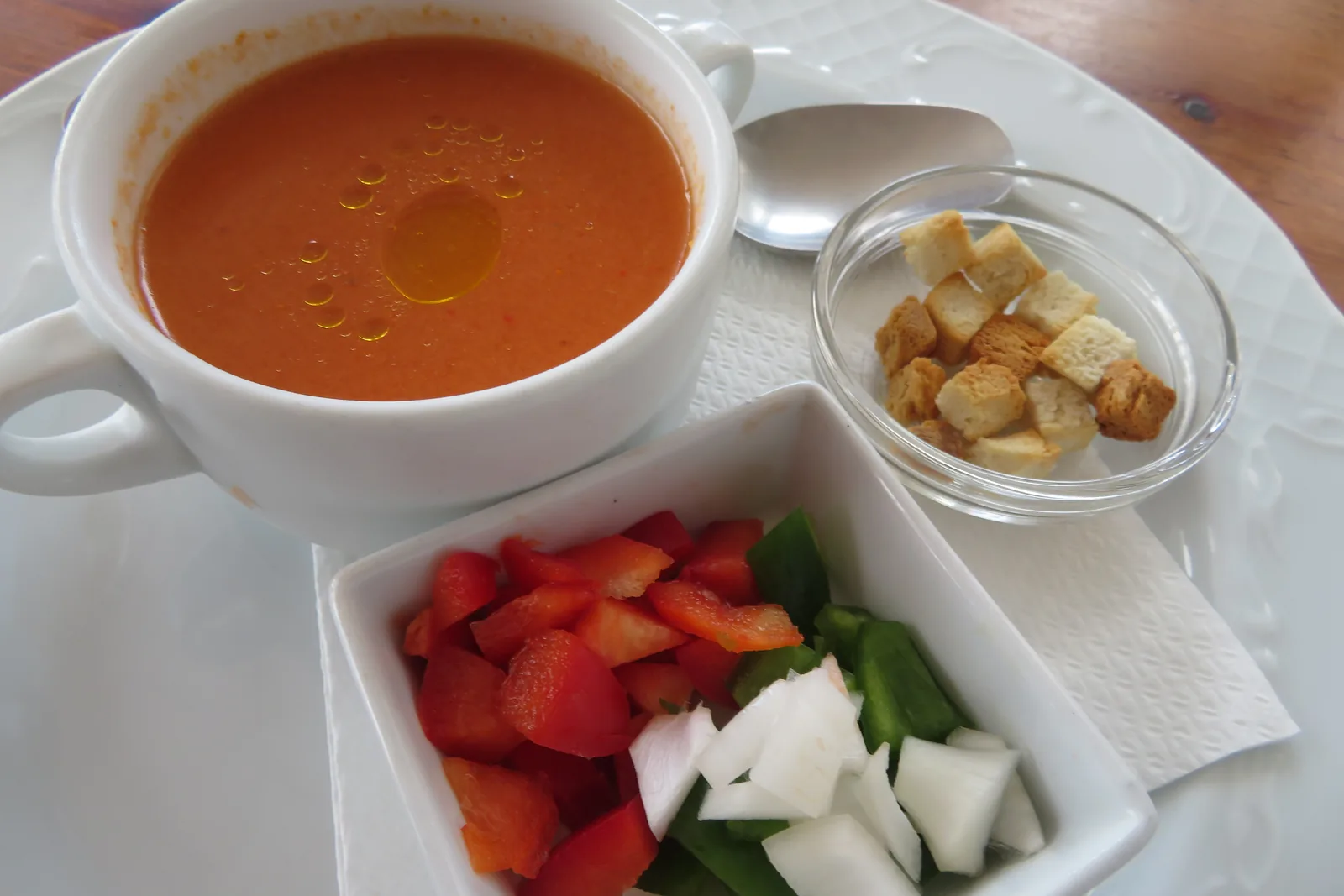
A cup of chilled orange-red gazpacho with olive oil, served with diced peppers and onion and a bowl of croutons Spain flag Spain 20m
Lunch •Andalusian Classic

Gazpacho

This gazpacho recipe is the Andalusian classic: ripe tomatoes, cucumber, green pepper, onion and garlic blended raw with bread, sherry vinegar and olive oil, then chilled until ice cold. One serving is about 395 g. It takes 20 minutes plus chilling, and there is no cooking at all.

Light & Refreshing

Chilled raw tomato soup blended with cucumber, pepper and olive oil, served cold with diced vegetables and croutons.

Pairs Well With
Croutons, diced vegetables & crusty bread
Soups & Broths • Quick Prep (<30m)

The Dinner Gazette

Never wonder what’s for dinner again

One email a week with easy dinner ideas from around the world — ingredients, steps and nutrition, tested in our kitchen first.

Delivered every Thursday morning. Unsubscribe anytime.