

Curated recipes from 193 countries  •  New seasonal Mediterranean issue out now

Overview

Paella Valenciana

Valencian Rice with Chicken, Rabbit and Beans

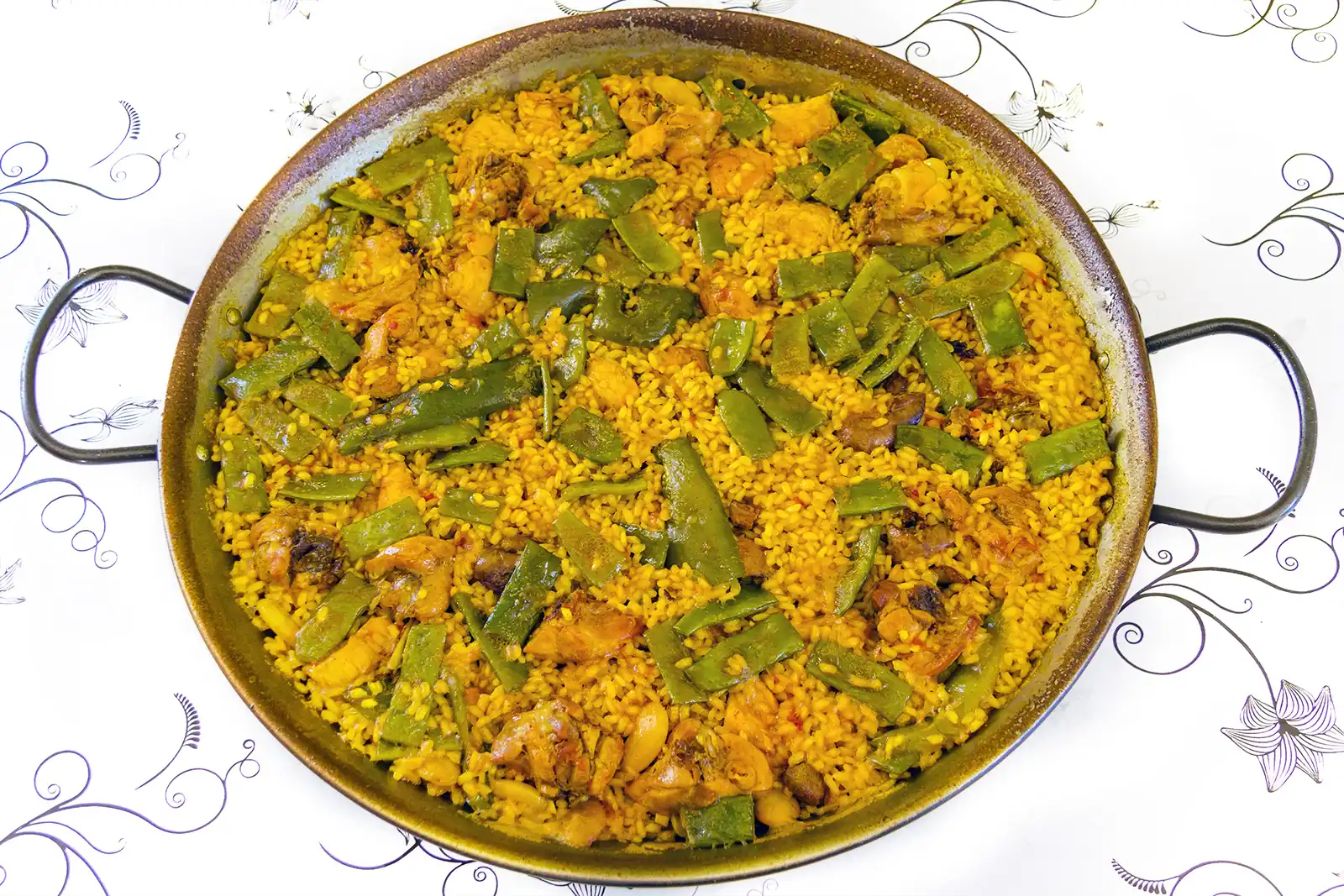
This paella valenciana recipe cooks Bomba rice in a wide, shallow pan with chicken, rabbit, green beans and garrofó beans, scented with saffron and rosemary. One serving is about 470 g.

Paella began as a farmworkers' lunch in the rice fields around the Albufera lagoon, south of Valencia, cooked over an open fire in the wide, shallow pan that gives the dish its name. The Valencian version uses chicken and rabbit with green beans and garrofó beans — never seafood — and in 2021 the Valencian government declared paella an asset of cultural interest, recognising it as the art of uniting and sharing.

Pairs well with: A green salad and a glass of white wine

Provenance

Spain flag Spain

Valencia Rice Fields

Mediterranean & Italy

Time Dedication

1h 10m

25m prep • 45m cook

Batch Yield

6 Servings

571 kcal per serving

1 serving ≈ 470 g

Technical Skill

Advanced

Advanced (Wide Pan)

Meal Timing & Digestive Fit

Breakfast

Not Advised

Lunch

Hearty Midday Main

Dinner

Ideal Hearty Main

Snack & Tea

Inappropriate

High Protein Occasions: Sunday family lunch, celebrations, feeding a crowd Cost: Medium — about $5–6 per serving at home
A wide paella pan of paella valenciana with saffron rice, green beans and chicken

Valencia Rice Fields

Photo: Jan Harenburg, CC BY-SA 4.0, via Wikimedia Commons

The Heritage Formulary

Measured Ingredients

Estimated cost: Medium — about $5–6 per serving at home (USD)

A good paella valenciana is judged by the rice: separate grains, golden with saffron, and a crisp socarrat underneath.

Execution Methodology & Culinary Technique

Step-by-Step Cooking Guide

Active 1h 10m
P

Prep Stage: Measure and Set Up

25 Mins • Knife Work

Cut the chicken and rabbit into bone-in pieces, grate the tomato, and measure the rice and water — the ratio matters, and once the rice goes in you do not stir it. Warm the stock with the saffron so the colour blooms.

Maestro Tip: Measure the water before you start: Bomba rice takes about three times its volume in liquid, and you cannot fix a watery paella later.

  1. 1

    Brown the Meat

    15 Mins Medium-high heat, ~190°C (375°F)

    Heat the olive oil in a paella pan over medium-high heat. Brown the chicken and rabbit pieces on all sides, about 10 minutes, then push them to the edges of the pan.

    Good browning is the flavour base — pale meat makes a pale paella.

    Done when: The meat is golden brown on all sides.

  2. 2

    Build the Sofrito

    10 Mins Medium heat, ~160°C (320°F)

    Add the onion and garlic to the centre and fry for 3 minutes. Stir in the grated tomato and paprika, then cook for 5 minutes until the mixture darkens and the oil separates.

    Take the pan off the heat for a moment when you add the paprika — it burns in seconds.

    Done when: The sofrito is dark, thick and smells sweet and smoky.

  3. 3

    Add the Beans and Stock

    5 Mins Simmer, ~95°C (203°F)

    Stir in the green beans and garrofó beans. Pour in 1.2 litres of water and the saffron stock, season with salt, and bring to a gentle simmer for 5 minutes.

    Taste the liquid now — it should be slightly too salty, because the rice will absorb it.

    Done when: The broth is golden, savoury and simmering gently.

  4. 4

    Add the Rice — and Do Not Stir

    20 Mins Simmer, ~95°C (203°F)

    Sprinkle the rice in a cross over the pan so it spreads in a thin, even layer. Simmer for 18–20 minutes without stirring. Add the rosemary sprig for the last 5 minutes.

    Do not stir from this point on — the rice must sit still to form the socarrat.

    Done when: The rice is tender, the liquid is absorbed, and the grains stand separate.

  5. 5

    Rest and Serve

    5 Mins Off the heat (resting, ~80°C / 176°F)

    Take the pan off the heat, cover with a clean cloth, and rest for 5 minutes. Listen for the faint crackle of the socarrat underneath, then serve from the pan.

    Resting lets the last steam finish the rice evenly.

    Done when: The rice is tender with a crisp, golden bottom layer.

Finishing Touches & Plating

Let the paella rest for 5 minutes off the heat, covered with a clean cloth. Listen for the faint crackle underneath — that is the socarrat, the crisp rice layer, forming.

Nutritional Physiology & Benefits

Nutrition

Energy

571

kcal / serving

Protein

37g

Complete AA

Carbs

64g

Complex

Fats

17g

Healthy

Per serving (6 servings · 1 serving ≈ 470 g)
Energy571 kcal
Protein37 g
Carbohydrates64 g
Fat17 g
Fibre4.0 g
Sugar3.0 g
Sodium482 mg
Per 100g
Energy121 kcal
Protein7.9 g
Carbohydrates13.6 g
Fat3.7 g
Fibre0.9 g
Sugar0.6 g
Sodium103 mg

Nutrition values are estimated — calculated from USDA FoodData Central values for the listed ingredients.

Vitamins & minerals: Vitamin C (tomato, green beans), B6 and niacin (chicken, rabbit), iron (rabbit), vitamin A (paprika).

A Proper Sunday Meal

Chicken, rabbit and rice together give about 37 g of protein per serving — a meal that genuinely fills a table of hungry people.

Beans and Vegetables

Green beans and garrofó beans add fibre and plant variety, so the pan is not just meat and rice.

Olive Oil and Saffron

Extra virgin olive oil and a pinch of saffron bring the Mediterranean character — the oil carries the flavour, the saffron brings the colour and aroma.

Food Pairings

What to Eat With

To optimize nutrient absorption and elevate the sensory depth, pair with these authentic accompaniments:

Sides

Green Salad with Lemon

A sharp, simple salad cuts through the rich, saffron rice and refreshes the palate between spoonfuls.

Vegetables

Grilled Artichokes

In season, artichokes are a traditional Valencian addition — their mild bitterness suits the sweet tomato and saffron.

Drinks

A Dry White Wine

A cold, dry white from Valencia suits the saffron and the chicken without overpowering the rice.

Full Menus

As a Sunday Lunch

Serve the pan in the middle of the table with salad and bread, and let everyone eat from the pan — that is how Valencia does it.

Complete menu

Serve the pan in the middle of the table with a green salad and crusty bread, and finish with oranges and a coffee.

Digestive Guardrails

What NOT to Combine

To prevent digestive distress, sluggishness, or palate clash, avoid pairing the dish with these elements:

Seafood or Chorizo in This Pan

Paella Valenciana never contains seafood or chorizo — they belong to other rice dishes, and their strong flavours hide the saffron and the rabbit. Keep this pan to the land. This is general guidance, not medical advice.

Stirring the Rice

Once the rice is in, do not stir it — stirring releases starch and turns the paella into a sticky risotto. The rice must sit still and form its crisp bottom layer.

General information only, not medical advice — consult a doctor for personal dietary decisions.

Who Should Eat It

Who Should Eat

  • General adultsA full, generous dinner — protein, rice and vegetables in one pan.
  • ChildrenSuitable from age 4+; the chicken and rabbit are tender, and the rice is soft. Serve without the rosemary sprig.
  • ElderlyVery suitable — a warm, complete meal in one pan; keep the portion moderate.
  • Pregnant womenGenerally suitable if the chicken and rabbit are fully cooked through; keep the salt moderate.
  • Breastfeeding womenGenerally suitable; the protein and iron support recovery — keep portions satisfying.
  • AthletesA strong post-workout meal: about 37 g of protein per serving with rice for glycogen.
  • Weight gainA good choice — take a generous second helping from the pan.
  • Weight lossA good choice if you keep the rice modest and load up on the beans and salad.

Health Conditions — Adjust or Avoid

Conditions

  • DiabetesThe rice is the main source of carbs — keep it to about a cup and ask your clinician about portion size.
  • High blood pressureMost of the sodium comes from added salt and stock; use low-sodium stock and season lightly. Ask your clinician about a suitable portion.
  • Kidney diseaseLimit the portion (potassium from the beans and tomato); ask your clinician about portion size.
  • GoutEat occasionally and in smaller portions — chicken and rabbit are moderately high in purines.
  • Stomach issuesThe dish is usually gentle, but tomato and paprika can irritate a sensitive stomach — use less paprika.
  • Cardiovascular diseaseA good choice — the dish is built on olive oil, lean meat and vegetables.
  • Fatty liverKeep the portion modest and favour the beans and salad over extra rice.
  • Food allergiesContains no common allergens except sulphites in wine served alongside. Check the stock label for celery or gluten.
  • Special therapeutic dietsIf you follow a prescribed low-sodium diet, use low-sodium stock and less salt, and check with your clinician.

If you have a medical condition, consult your doctor before changing your diet.

Storage & Use

Storage & Use

How to store
Cool quickly and store in an airtight container.
In the fridge
2 days.
In the freezer
2 months (the rice softens on thawing).
How to reheat
Reheat in a pan with a splash of water until steaming; reheat to 74°C (165°F). The socarrat will not survive reheating.
Freezing recommended
Only if needed — the rice texture softens after freezing.
Signs it has spoiled
Sour smell, slimy rice, or mould on the surface.

More recipes to explore

Pan con tomate with jamón ibérico on toasted bread Spain flag Spain 15m
Snack & Tea •Catalan Aperitivo

Pan con Tomate & Jamón Ibérico

Country bread rubbed with ripe Ramallet tomato, drizzled with cold-pressed Arbequina olive oil and topped with jamón ibérico.

Vascular Health

Toasted tomato bread with jamón ibérico, olive oil and olives.

Pairs Well With
Castelvetrano Olives & Sparkling Mineral Water
Quick Prep (<30m)
A whole golden tortilla española, a thick Spanish potato omelette, on a plate Spain flag Spain 55m
Snack & Tea •Navarre Bar Classic

Tortilla Española

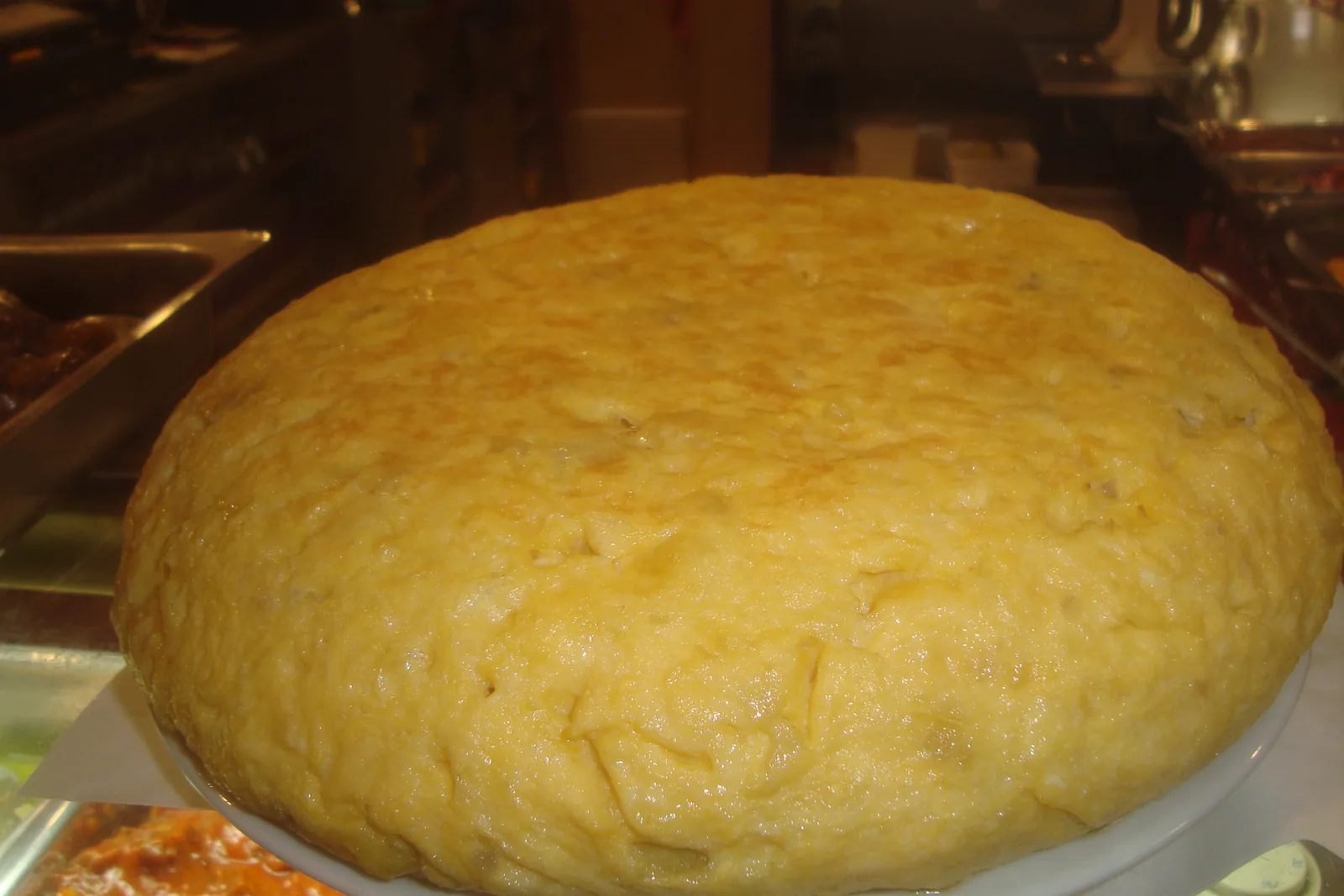
This spanish tortilla recipe slowly cooks potatoes and onion in olive oil, folds them into beaten eggs, and turns out a thick, golden cake that is soft in the middle. One serving is about 220 g.

Comfort & Warmth

A thick, golden omelette of slow-cooked potatoes, onion and egg.

Pairs Well With
Pan con tomate and a glass of red wine
Bœuf bourguignon — French beef braised in red wine France flag France 4h
Dinner •Burgundy Terroir

Bœuf Bourguignon

Beef braised gently in red wine until the connective tissue melts into a velvet, gelatin-rich sauce — the classic Burgundy Sunday dinner.

Cellular Repair

Beef braised in red wine until spoon-tender, with mushrooms and pearl onions.

Pairs Well With
Parsnip Purée & Steamed French Haricots Verts
High Protein
Vietnamese braised pork belly with golden eggs in caramel sauce Vietnam flag Vietnam 1h 45m
Dinner •One Pot

Vietnamese Braised Pork and Eggs

Pork belly slowly braised in coconut water and caramel until meltingly tender, with golden eggs that soak up the sweet-savoury sauce — the Vietnamese family dish that tastes better the next day.

Comfort & Sustained Energy

Slow-braised pork belly and eggs in coconut water and caramel.

Pairs Well With
Steamed rice & pickled mustard greens
High Protein

The Dinner Gazette

Never wonder what’s for dinner again

One email a week with easy dinner ideas from around the world — ingredients, steps and nutrition, tested in our kitchen first.

Delivered every Thursday morning. Unsubscribe anytime.



