Curated recipes from 193 countries  •  New seasonal Mediterranean issue out now

Overview

Cola de Mono

Colemono, Cola de Mono Chileno, Chilean Monkey's Tail

This cola de mono recipe makes Chile's Christmas milk drink: whole milk gently heated with cinnamon, cloves and nutmeg, sweetened, stirred with strong coffee, then cooled and finished with aguardiente. It is served ice-cold in small glasses, next to pan de Pascua, on Christmas Eve. One serving is about 231 g (a small glass).

Cola de mono means 'monkey's tail' in Spanish, and it has been part of Chilean Christmas for generations, poured ice-cold beside pan de Pascua on Christmas Eve. The exact origin of the name is not settled — one popular story links it to a bottle of aguardiente lost in a bet — but the drink itself is well documented: milk, coffee, sugar and spices, spiked with aguardiente, the grape spirit of Chile.

Pairs well with: Pan de Pascua (Chilean Christmas fruitcake) and Christmas cookies, with a glass of water alongside

Provenance

Chile flag Chile

Chilean Christmas Classic

Latin America & Caribbean

Time Dedication

30m

15m prep • 15m cook

Batch Yield

6 Servings

240 kcal per serving

1 serving ≈ 231 g

Technical Skill

Easy

Easy (Heat, Cool, Chill)

Meal Timing & Digestive Fit

Breakfast

Not Advised

Lunch

Inappropriate

Dinner

Inappropriate

Snack & Tea

Ideal Light Bite

Occasions: Christmas, New Year, holiday parties, family gatherings Cost: Low — about $2–3 per serving at home
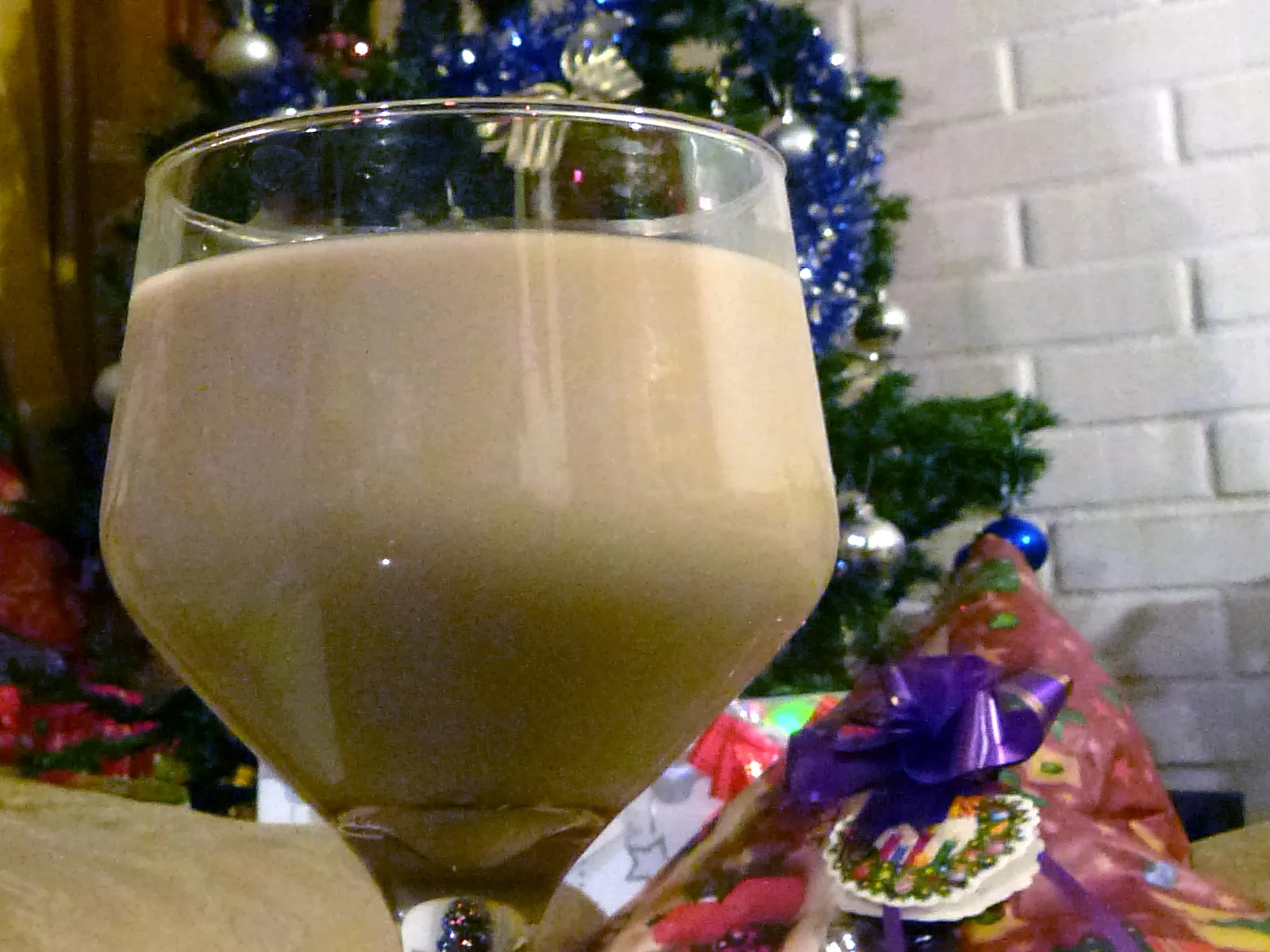
A glass of cola de mono, a creamy beige Chilean Christmas drink, in front of a Christmas tree

Chilean Christmas Classic

Photo: B1mbo, CC BY-SA 3.0, via Wikimedia Commons

The Heritage Formulary

Measured Ingredients

Estimated cost: Low — about $2–3 per serving at home (USD)

Cola de mono made with whole milk, coffee, cinnamon, cloves, nutmeg and aguardiente, served ice-cold.

Execution Methodology & Culinary Technique

Step-by-Step Cooking Guide

Active 30m
P

Prep Stage: Spice the Milk

15 Mins • Heating & Infusing

Put the 900 ml milk, 120 g sugar, 2 cinnamon sticks, 4 cloves, 1 g nutmeg and the strip of orange zest in a saucepan. The milk is the body of the drink, so use whole milk, and keep the heat gentle — milk scorches and boils over fast, and boiling also dulls the spices.

Maestro Tip: Have the coffee brewed and the aguardiente measured before you start, so the hot milk never waits around.

  1. 1

    Warm the Milk with Spices

    10 Mins Gentle heat, about 80°C (175°F) — do not boil

    Heat the milk, sugar, cinnamon, cloves, nutmeg and orange zest over medium-low heat, stirring often, until the sugar has dissolved and the milk is steaming and just starting to bubble at the edges. Keep it below a boil the whole time.

    If the milk does boil, take it off the heat at once — boiled milk can taste scorched and the spices turn bitter.

    Done when: Sugar dissolved, milk steaming, spices fragrant, no boiling.

  2. 2

    Stir in the Coffee and Vanilla

    5 Mins About 80°C (175°F)

    Take the pan off the heat and stir in the 150 ml strong hot coffee and the 5 ml vanilla extract. Stir until the colour is even — a pale coffee beige all through.

    If you use instant coffee instead, dissolve it in a little of the hot milk first so it leaves no gritty specks.

    Done when: An even pale beige colour, no coffee specks.

  3. 3

    Cool and Strain

    30 Mins Cool to room temperature, about 20°C (68°F)

    Let the milk cool for about 30 minutes, then strain it through a fine sieve into a clean jug or bottle to take out the cinnamon, cloves and orange zest. A quick way to cool it is to set the pan in a bowl of cold water and stir now and then.

    Do not add the aguardiente while the milk is still warm — heat drives off the alcohol and its aroma.

    Done when: Milk at room temperature, strained smooth.

  4. 4

    Add the Aguardiente

    5 Mins Room temperature, about 20°C (68°F)

    Stir the 180 ml aguardiente into the cold spiced milk. Taste it: add a little more sugar if you like it sweeter, or a splash more aguardiente if you like it stronger — but remember it tastes milder cold than it does now.

    The drink always tastes stronger warm than cold, so judge the sweetness now and the strength after chilling.

    Done when: Evenly mixed, seasoned to your taste.

  5. 5

    Chill and Serve

    2 Hours Serve ice-cold, about 4°C (39°F)

    Pour the cola de mono into a clean bottle or a covered jug and refrigerate for at least 2 hours — overnight is better, as the flavours settle and round out. Serve ice-cold in small glasses, with pan de Pascua on the side.

    Shake or stir the bottle gently before pouring, in case the spices have settled.

    Done when: Thoroughly cold, smooth and creamy in the glass.

Finishing Touches & Plating

Serve ice-cold in small glasses with pan de Pascua. For a no-alcohol version, simply leave out the aguardiente — the spiced coffee milk is still the drink Chilean families serve at Christmas.

Nutritional Physiology & Benefits

Nutrition

Energy

240

kcal / serving

Protein

5g

Complete AA

Carbs

28g

Complex

Fats

5g

Healthy

Per serving (6 servings · 1 serving ≈ 231 g)
Energy240 kcal
Protein5 g
Carbohydrates28 g
Fat5 g
Fibre0.2 g
Sugar27.9 g
Sodium67 mg
Per 100g
Energy104 kcal
Protein2.2 g
Carbohydrates12.1 g
Fat2.2 g
Fibre0.1 g
Sugar12.1 g
Sodium29 mg

Nutrition values are estimated — calculated from USDA FoodData Central values for the listed ingredients.

Vitamins & minerals: Calcium and vitamin B12 from the milk, with small amounts of vitamin B2 and potassium from the milk and coffee. Nutrition is estimated.

Calcium from the Milk

About 5.0 g of protein and a good share of calcium per glass, from the whole milk that makes up most of the drink.

A Gentle Coffee Lift

The strong coffee gives the drink its flavour and a mild lift, which is why it is served in small glasses rather than big mugs.

Real Spices, No Colouring

Cinnamon, cloves, nutmeg and vanilla give the colour and aroma — there is no caramel colour or flavouring in the classic version.

Food Pairings

What to Eat With

To optimize nutrient absorption and elevate the sensory depth, pair with these authentic accompaniments:

Full Menus

Pan de Pascua

Pan de Pascua is the classic partner — the dense, fruity Christmas cake soaks up the cold drink, and the drink's coffee and spice echo the cake's own flavours.

More Pairings

Christmas Cookies

Butter cookies and gingerbread are made for dunking in a cold, creamy drink, and their crunch contrasts with the smooth cola de mono.

Drinks

A Glass of Water

A glass of water on the side keeps the evening comfortable — the drink is sweet, creamy and alcoholic, so water between glasses is the sensible habit.

Sides

Toasted Almonds

A small bowl of toasted almonds gives a salty, crunchy bite that balances the drink's sweetness and richness.

Complete menu

Cola de mono with pan de Pascua and Christmas cookies.

Digestive Guardrails

What NOT to Combine

To prevent digestive distress, sluggishness, or palate clash, avoid pairing the dish with these elements:

Serving It to Children or in Pregnancy

This drink contains aguardiente, so it is not suitable for children, for pregnant or breastfeeding women, or for anyone avoiding alcohol — make the no-alcohol version for them instead. This is general food information, not medical advice.

Drinking and Driving

One small glass carries about 9.5 g of alcohol, so do not drive after drinking it. This is general food information, not medical advice.

Boiling the Milk

Boiling scorches the milk and turns the spices bitter, and the drink can boil over in seconds — keep it just below a simmer. This is general food information, not medical advice.

General information only, not medical advice — consult a doctor for personal dietary decisions.

Who Should Eat It

Who Should Eat

  • General adultsA festive drink for adults — one small glass with pan de Pascua is the classic serving.
  • ChildrenNot suitable as written, because it contains alcohol — make the no-alcohol version (spiced coffee milk) for children.
  • ElderlyA small glass is fine for most older adults, but the alcohol and sugar mean a small serving is the lighter choice.
  • Pregnant womenAvoid the alcoholic version entirely — alcohol in pregnancy is not safe at any amount; the no-alcohol version is the choice, and ask your clinician if you are unsure.
  • Breastfeeding womenAvoid the alcoholic version while breastfeeding; the no-alcohol version is the choice — ask your clinician if you are unsure.
  • AthletesSweet and creamy at about 240 kcal a glass, so it is a treat rather than a training drink — keep it to one small glass.
  • Weight gainEnergy-dense and easy to drink, which suits a higher-energy day.
  • Weight lossAbout 240 kcal and 27.9 g of sugar per glass; one small glass with water is the lighter choice.

Health Conditions — Adjust or Avoid

Conditions

  • DiabetesAbout 27.9 g of carbohydrate and 27.9 g of sugar per glass; a half glass is the lighter choice, and ask your clinician about portion size.
  • High blood pressureAbout 67 mg of sodium per glass, which is low; the alcohol is the bigger concern, so ask your clinician about alcohol.
  • Kidney diseaseMilk, sugar and alcohol all need care on a kidney plan; ask your clinician whether this drink suits your plan.
  • GoutAlcohol can raise uric acid and trigger flares, so people with gout should be cautious — ask your clinician.
  • Stomach issuesMilk, coffee and alcohol together can upset a sensitive stomach; a small glass with food is gentler, and ask your clinician if your stomach keeps bothering you.
  • Cardiovascular diseaseThe sugar and alcohol both matter for heart health; one small glass occasionally is the lighter way to enjoy it — ask your clinician about the right portion for you.
  • Fatty liverThis is an alcoholic drink, so people with fatty liver should avoid it — the no-alcohol version is the choice, and ask your clinician.
  • Food allergiesContains milk (the main allergen in this recipe); the aguardiente is a distilled grape spirit. If you have a food allergy, ask your clinician whether it is safe for you.
  • Special therapeutic dietsFollow your clinician's guidance on alcohol, sugar and milk portions; this is general information, not medical advice.

If you have a medical condition, consult your doctor before changing your diet.

Storage & Use

Storage & Use

How to store
Keep in a clean, sealed bottle or jug in the fridge.
In the fridge
3–4 days refrigerated; shake gently before pouring.
In the freezer
Not recommended — the milk separates and the texture turns grainy.
How to reheat
Do not reheat once the aguardiente is in — this drink is served cold.
Freezing recommended
No — the milk does not survive freezing.
Signs it has spoiled
Sour smell, curdling, or a sharp off taste — the milk has turned.

More recipes to explore

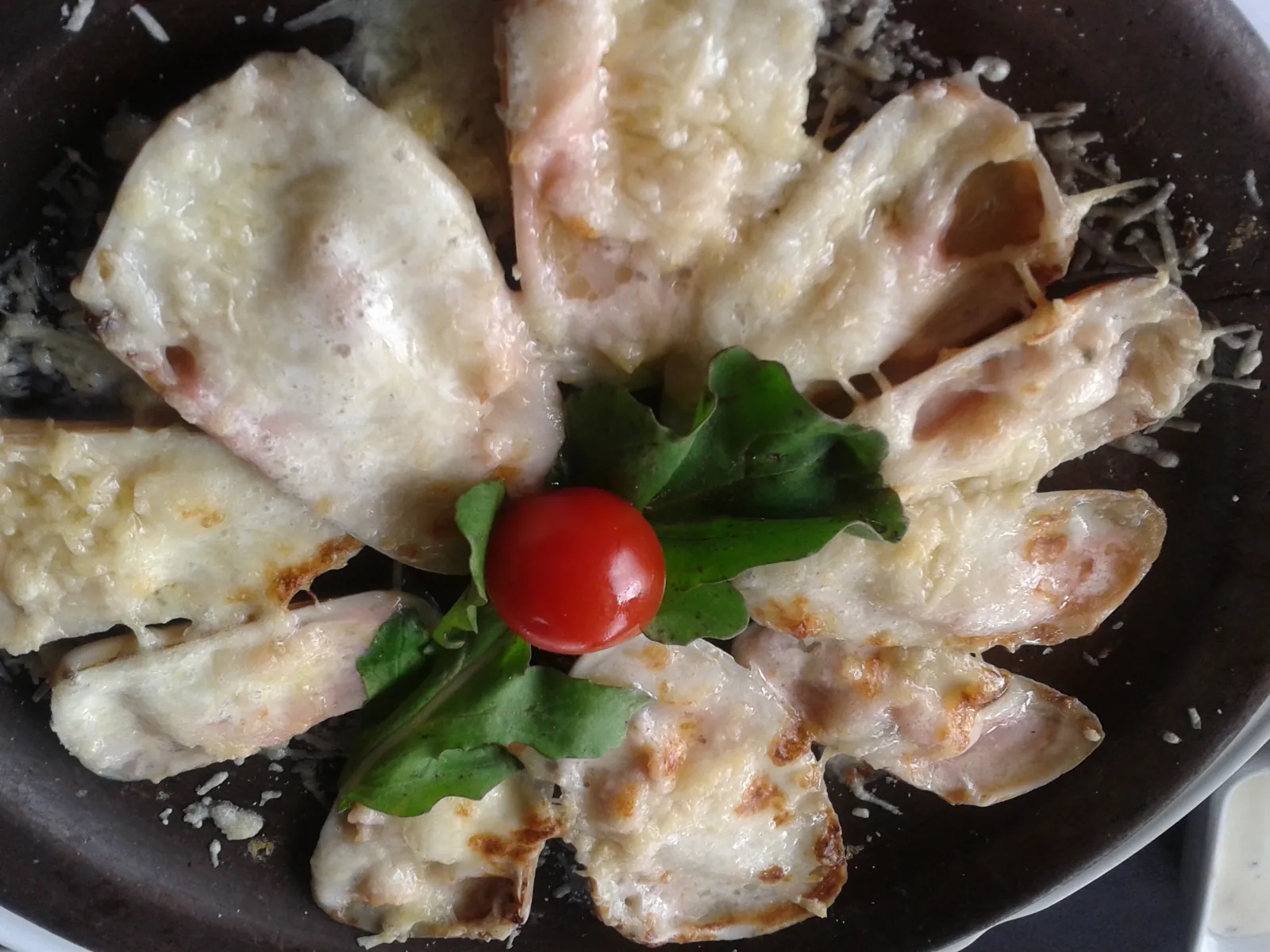
Machas a la parmesana — razor clams in their shells topped with melted golden Parmesan, garnished with greens and a cherry tomato Chile flag Chile 35m
Lunch •Valparaíso Coast Heritage

Machas a la Parmesana

This machas a la parmesana recipe bakes sweet Chilean razor clams in their own shells with garlic butter, a splash of dry white wine and a blanket of grated Parmesan that turns golden under the grill. It is the classic starter of the Valparaíso coast: briny, buttery and ready in minutes. One serving is about 200 g, six shells per person.

Coastal & Savory

Sweet razor clams baked in their shells with garlic butter, white wine and a golden Parmesan crust.

Pairs Well With
Crusty bread and lemon wedges, with a glass of dry white wine.
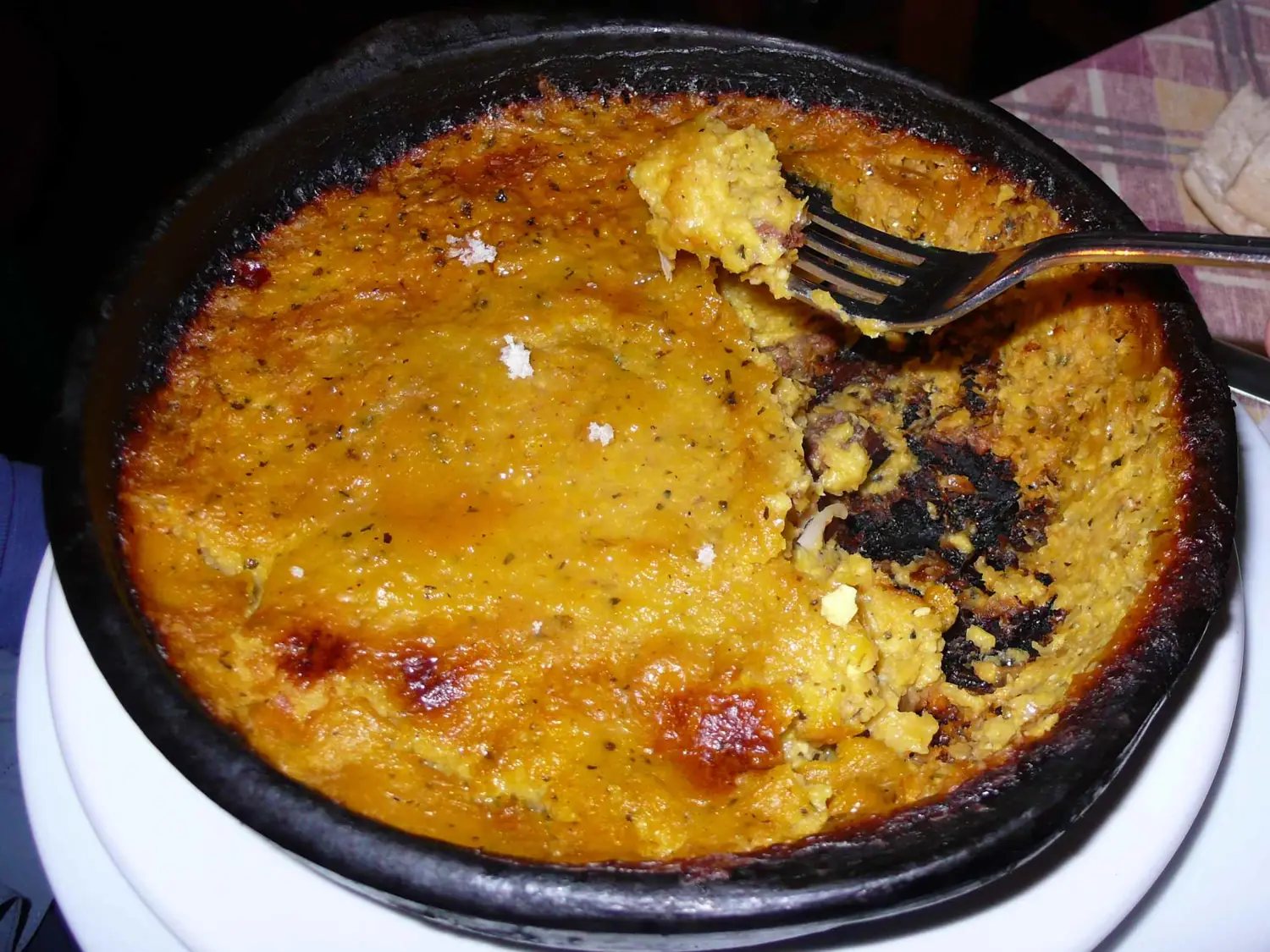
Pastel de choclo in a black clay dish, golden corn topping with a fork lifting a bite of the meat filling Chile flag Chile 1h 25m
Dinner •Chilean Countryside Heritage

Pastel de Choclo

This pastel de choclo recipe is Chile's beloved baked corn pie: a savoury filling of seasoned ground beef, chicken, hard-boiled egg, black olives and raisins, covered with a sweet, basil-flecked corn topping and baked until golden. Sweet meets savoury in every spoonful, and the clay dish it bakes in keeps it hot to the table. One serving is about 340 g.

Hearty & Satisfying

Sweet corn and basil topping over a savoury beef and chicken filling with egg, olives and raisins.

Pairs Well With
A fresh tomato salad and a glass of Chilean red wine.
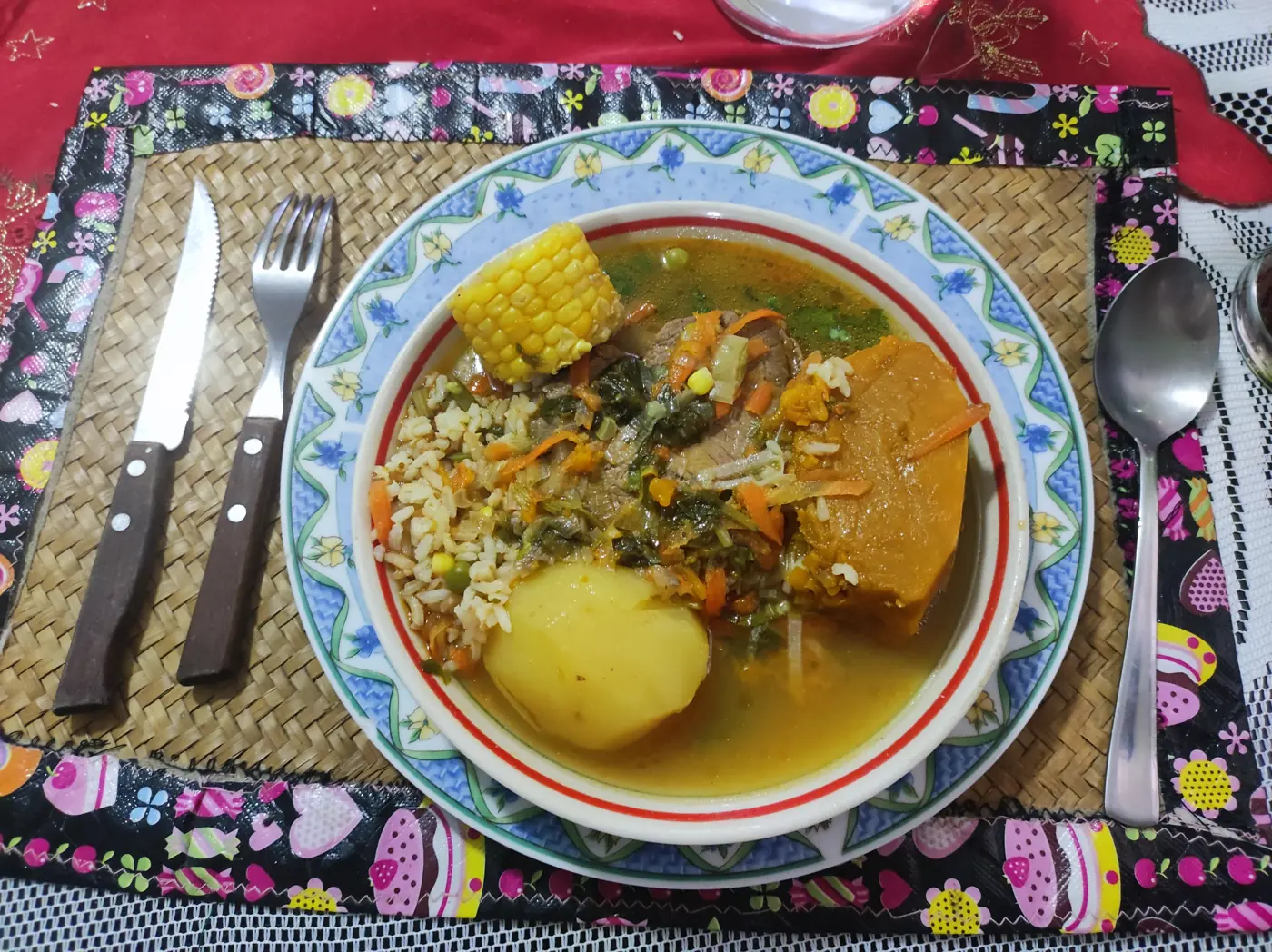
Cazuela chilena — a bowl of chicken soup with a whole potato, a piece of pumpkin, corn on the cob and rice in a golden broth Chile flag Chile 1h 20m
Lunch •Chilean Home Kitchen Heritage

Cazuela Chilena

This cazuela chilena recipe is Chile's home-cooked comfort soup, and its identity is unmistakable: a big piece of orange pumpkin, a chunk of corn on the cob, a potato and a scoop of rice, all simmered with chicken in a clear, savoury broth. The pumpkin sweetens the broth as it cooks, the corn stays sweet and firm, and the rice turns the soup into a full lunch. One serving is about 750 g, broth and all.

Comfort & Warmth

Chicken simmered with pumpkin, corn, potato and rice in a light, cilantro-scented broth.

Pairs Well With
Crusty bread and pebre salsa, with the rice spooned into the bowl.
Soups & Broths
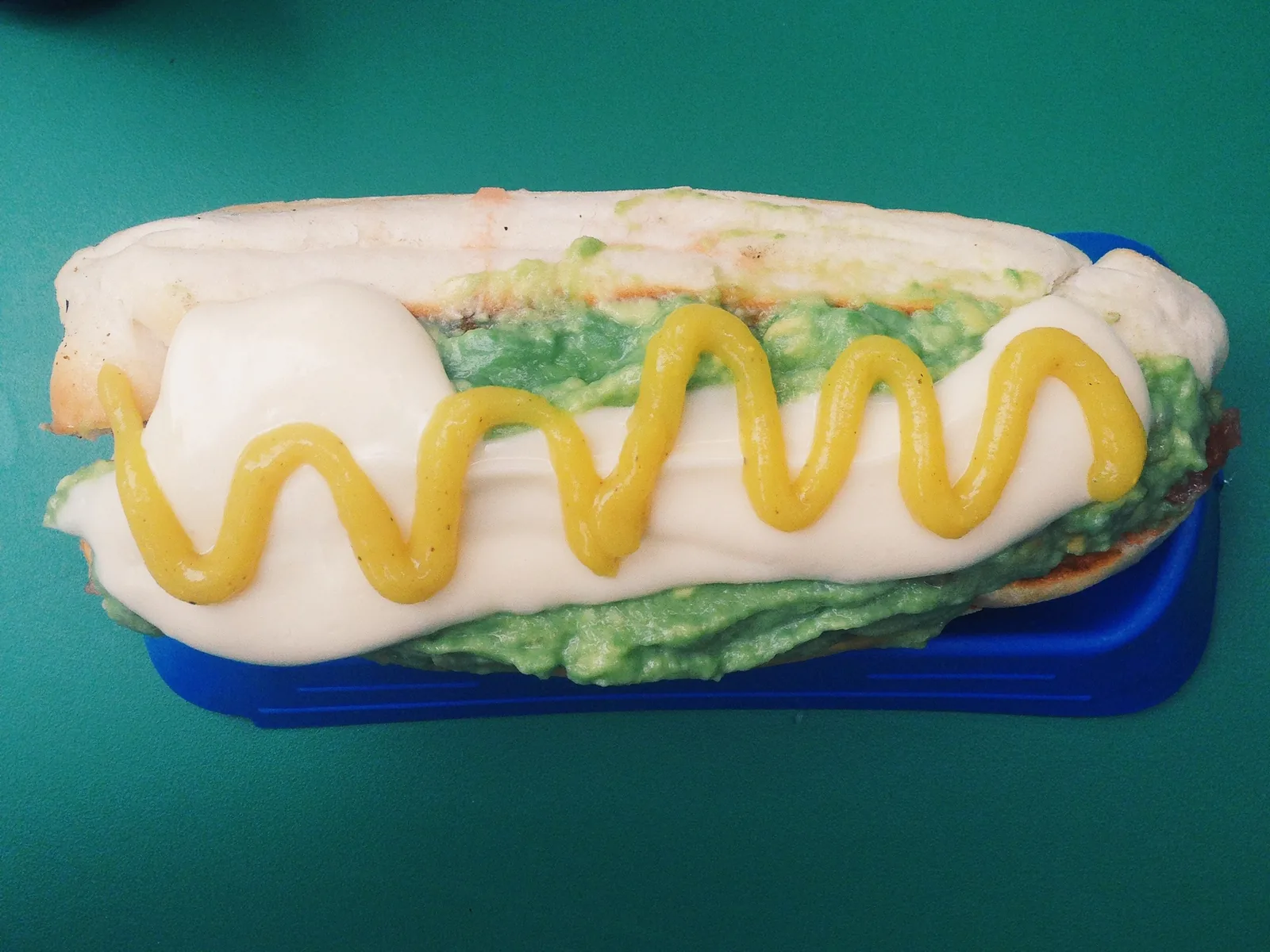
A completo chileno in a soft bun loaded with mashed avocado, mayonnaise and a mustard zigzag, with tomato peeking out at one end Chile flag Chile 25m
Snack & Tea •Chilean Street Food

Completo Chileno

A completo chileno is Chile's answer to the hot dog: a pork frankfurter in a soft bun, buried under diced tomato, a thick layer of mashed avocado and a generous ribbon of mayonnaise. It is salty, creamy and gloriously messy, and it is eaten standing up, with both hands and no cutlery. One serving is about 229 g.

Quick & Satisfying

A pork frankfurter in a soft bun, loaded with tomato, mashed avocado and mayonnaise.

Pairs Well With
Crispy fries, a cold lemonade or a lager

The Dinner Gazette

Never wonder what’s for dinner again

One email a week with easy dinner ideas from around the world — ingredients, steps and nutrition, tested in our kitchen first.

Delivered every Thursday morning. Unsubscribe anytime.