
Curated recipes from 193 countries  •  New seasonal Mediterranean issue out now

Overview

Cornish Pasty

Cornish Pasty, Pasty, Oggy

This cornish pasty recipe makes six D-shaped pasties the traditional Cornish way: a firm shortcrust case of flour, lard and butter, filled raw with diced beef skirt, potato, swede and onion, seasoned with nothing but salt and pepper, then folded, crimped along the side and baked slowly until the filling steams tender inside a golden crust. Unlike a Jamaican beef patty — a flaky, turmeric-yellow pastry wrapped around curried ground beef — the Cornish pasty uses pale shortcrust, raw diced beef with potato, swede and onion, and no curry spice at all. One serving is one pasty, about 320 g.

Cornish tin miners carried pasties underground as a complete meal in a pastry case, and the thick crimped edge gave them something to hold with dirty hands. The recipe stayed deliberately simple — beef, potato, swede and onion, seasoned with salt and pepper and nothing else — because it had to survive a shift in a pocket and still taste good cold. After a nine-year campaign by the Cornish Pasty Association, the name was awarded Protected Geographical Indication (PGI) status by the European Commission on 20 July 2011, so a pasty can only be sold as Cornish if it is made in Cornwall to the traditional recipe, D-shaped and crimped along the side. A home-baked version made elsewhere follows the same recipe but is best described as Cornish-style. The pasty even travelled: the Jamaican beef patty descends from pasties carried to the island under British rule, reshaped with curry powder, turmeric and scotch bonnet.

Pairs well with: A mug of tea & pickled onions

Provenance

United Kingdom flag United Kingdom

Cornish Heritage

Nordic & European

Time Dedication

1h 55m

60m prep • 55m cook

Batch Yield

6 Servings

891 kcal per serving

1 serving ≈ 320 g

Technical Skill

Intermediate

Intermediate (Shortcrust & Crimping)

Meal Timing & Digestive Fit

Breakfast

Not Advised

Lunch

Prime Metabolic Fit

Dinner

Ideal Hearty Main

Snack & Tea

Inappropriate

High Protein Occasions: Packed lunches, picnics, miners' lunches, road trips, casual lunches Cost: Low — about $2–3 per pasty at home
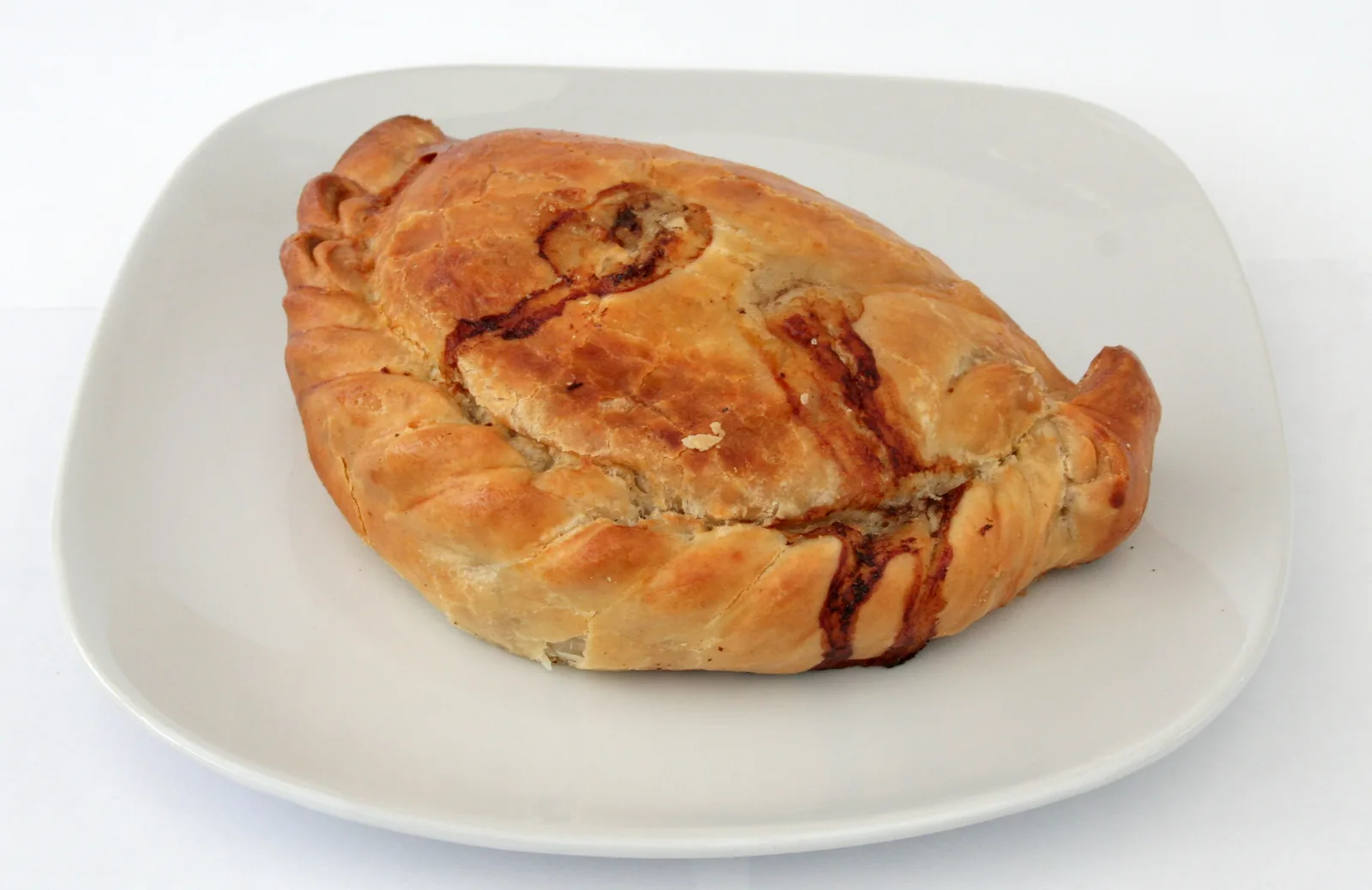
A golden-brown D-shaped Cornish pasty with a rope crimp along the side, on a white plate

Cornish Heritage

Photo: David Johnson, CC BY-SA 3.0, via Wikimedia Commons

The Heritage Formulary

Measured Ingredients

Estimated cost: Low — about $2–3 per pasty at home (USD)

A home-baked pasty made to the traditional Cornish recipe — beef, potato, swede and onion, seasoned with salt and pepper, in a D-shaped shortcrust case crimped along the side; the protected name is reserved for pasties made in Cornwall.

Execution Methodology & Culinary Technique

Step-by-Step Cooking Guide

Active 1h 55m
P

Prep Stage: Shortcrust Resting, Filling Diced Raw

60 Mins • Pastry, Filling

Rub the cold lard and butter into the flour and 6g of salt until the mixture looks like coarse breadcrumbs, then add the cold water a little at a time and knead briefly into a firm dough. Rest it, covered, for 30 minutes. Meanwhile, dice the beef skirt, potatoes and swede into pieces about 1 cm across and finely chop the onion — the filling goes in raw, never cooked first, so cut everything small and even or the potato will stay hard while the crust over-browns.

Maestro Tip: Keep the pastry cold and the filling pieces small: cold pastry holds its shape, and small dice cook through in the steam inside the pasty.

  1. 1

    Make the shortcrust pastry

    20 mins Room temperature, then chilled

    Put the flour and 6g of salt in a large bowl. Rub in the cold lard and butter with your fingertips until the mixture looks like coarse breadcrumbs with a few pea-sized pieces left. Add the cold water a tablespoon at a time and bring the dough together with your hands, kneading briefly — just until it forms a firm, smooth ball. Do not overwork it or the crust turns tough. Flatten into a disc, wrap, and rest in the fridge for 30 minutes.

    If the dough feels sticky, add a dusting of flour; if it cracks, add a teaspoon more water. Cold fat is the secret to a short crust.

    Done when: A firm, smooth dough that holds together without cracking when bent.

  2. 2

    Dice the filling raw

    15 mins Room temperature

    Peel the potatoes and swede and dice them, along with the beef skirt, into pieces about 1 cm (1/2 inch) across. Finely chop the onion. Put everything in a bowl and toss together with the remaining 5g of salt and the black pepper. Do not cook the filling first — a traditional Cornish pasty is always assembled with raw filling, which steams gently inside the pastry as it bakes.

    Keep the dice even: a single large chunk of potato is the usual reason a pasty comes out with a hard centre.

    Done when: Evenly sized dice, well mixed, with the seasoning spread through the whole bowl.

  3. 3

    Roll, fill and crimp

    20 mins Room temperature

    Heat the oven to 200°C (400°F). Divide the rested dough into 6 equal pieces and roll each one into a circle about 20 cm (8 inches) across. Pile one sixth of the filling in a mound down the centre of each circle, leaving a 2 cm (3/4 inch) border, and put a knob of butter on top. Brush the edge with a little water, fold the pastry over into a D shape, press the edges together firmly, then crimp along the curved side: fold and pinch the edge over in a rope pattern, working from one end to the other. This side crimp is the mark of a Cornish pasty — a crimp across the top belongs to a Devon pasty.

    Do not overfill: a pasty that is too full bursts open in the oven. If the edge will not stick, brush it with a little more water.

    Done when: Six D-shaped pasties with a tight rope crimp along the curved side and no gaps in the seal.

  4. 4

    Egg wash and bake

    55 mins 200°C (400°F), then 165°C (325°F)

    Set the pasties on a lined baking tray, brush each one all over with beaten egg, and cut a small slit in the top of each so steam can escape. Bake at 200°C (400°F) for 15 minutes until the crust starts to colour, then turn the oven down to 165°C (325°F) and bake for 40 minutes more. The slow second bake is what cooks the raw filling through without burning the crust.

    If the crimps brown too fast, lay a loose sheet of foil over the tray for the last 15 minutes.

    Done when: Deep golden crust, firm to the touch, with the filling steaming hot inside — at least 74°C (165°F) at the centre.

  5. 5

    Rest and serve

    10 mins Resting at room temperature

    Lift the pasties onto a wire rack and rest them for 10 minutes before eating. The filling settles as it rests, the juices thicken slightly, and the crust stays crisp instead of going soft. Eat warm, in your hands — a pasty needs no plate and no cutlery.

    Do not cut a pasty open straight from the oven: the steam inside is hot enough to burn, and the filling will spill out.

    Done when: Warm all the way through, crisp outside, with the filling tender and juicy when you bite in.

Finishing Touches & Plating

Rest the pasties for 10 minutes on a rack so the filling settles and the crust stays crisp, then eat them warm, in your hands, with a mug of tea.

Nutritional Physiology & Benefits

Nutrition

Energy

891

kcal / serving

Protein

25g

Complete AA

Carbs

83g

Complex

Fats

52g

Healthy

Per serving (6 servings · 1 serving ≈ 320 g)
Energy891 kcal
Protein25 g
Carbohydrates83 g
Fat52 g
Fibre5.2 g
Sugar3.7 g
Sodium787 mg
Per 100g
Energy278 kcal
Protein7.9 g
Carbohydrates25.8 g
Fat16.1 g
Fibre1.6 g
Sugar1.2 g
Sodium246 mg

Nutrition values are estimated — calculated from USDA FoodData Central values for the listed ingredients.

Vitamins & minerals: Vitamin B12, niacin and zinc (beef), vitamin C and potassium (potato, swede, onion), iron (beef).

Protein that keeps you full

One pasty carries about 25 g of protein from the beef and egg, which is why a single pasty works as a whole lunch rather than a snack.

Iron and B12 from the beef

Beef skirt is a source of iron and vitamin B12, nutrients the body uses to make red blood cells and keep energy levels steady.

Fibre and potassium from the roots

Potato, swede and onion bring fibre and potassium to the filling, and the potato cooks in the beef juices so nothing in the pasty goes to waste.

Food Pairings

What to Eat With

To optimize nutrient absorption and elevate the sensory depth, pair with these authentic accompaniments:

Sides

Chips and baked beans

The classic Cornish takeaway plate: salty chips and sweet beans next to a rich pasty turn a handheld lunch into a full meal.

Vegetables

Green salad with mustard dressing

A sharp, vinegary salad cuts through the buttery pastry and gives the plate something fresh and crisp.

Drinks

A mug of tea

Miners drank tea with their pasties underground, and it still fits: hot tea washes down the rich pastry better than anything cold and sweet.

Full Menus

Pasty, salad and a Cornish ale

One pasty with a green salad and a cold Cornish ale makes a complete pub lunch — the bitter ale stands up to the peppery beef filling.

Complete menu

Serve one warm Cornish pasty with a green salad and a mug of tea for a classic Cornish lunch, with a Cornish ale instead of tea if you prefer.

Digestive Guardrails

What NOT to Combine

To prevent digestive distress, sluggishness, or palate clash, avoid pairing the dish with these elements:

Sugary fizzy drinks

A pasty is already rich in refined carbohydrate and fat, so a sugary drink adds a fast sugar load on top of a heavy meal. Water or unsweetened tea is the kinder choice. This is general information, not medical advice.

Gravy poured over the pasty

Gravy soaks the crust soft and adds a lot of salt to a dish that is already well seasoned. If you want sauce, serve a small amount of brown sauce on the side instead. This is general information, not medical advice.

Two rich pastries in one meal

One pasty is about 891 kcal with about 52 g of fat, so a second pastry, pie or sausage roll in the same meal pushes the fat and energy far beyond what most people need at lunch. This is general information, not medical advice.

General information only, not medical advice — consult a doctor for personal dietary decisions.

Who Should Eat It

Who Should Eat

  • General adultsA satisfying, complete lunch as written — one pasty with a salad is a full meal.
  • ChildrenSuitable from school age, cut in half and cooled enough to hold; the pepper may be too strong for younger children, so season their pasty lightly.
  • ElderlySoft, steamed filling and no hard crust edges make it easy to chew; cut into pieces if grip is limited.
  • Pregnant womenSafe when baked right through so the beef is steaming hot at the centre (at least 74°C / 165°F); avoid if the filling is undercooked. Ask your clinician if unsure.
  • Breastfeeding womenA filling, energy-rich lunch that suits the higher energy needs of breastfeeding; no ingredient here is a concern in normal amounts.
  • AthletesAbout 25 g of protein and 83 g of carbohydrate per pasty makes it a useful post-training meal, though the fat slows digestion, so it suits a rest day better than a pre-session meal.
  • Weight gainEnergy-dense at about 891 kcal per pasty, so it fits a weight-gain plan well as a main lunch.
  • Weight lossBest as an occasional lunch rather than a daily one: eat half a pasty with a large salad, or save the second half for the next day.

Health Conditions — Adjust or Avoid

Conditions

  • DiabetesOne pasty carries about 83 g of carbohydrate, mostly from the pastry and potato, so count it as a full carbohydrate portion and pair it with salad rather than chips. Ask your clinician or dietitian for advice personal to you.
  • High blood pressureAbout 787 mg of sodium per pasty is a large share of a day's salt, so eat it occasionally and skip extra salty sides such as chips or pickles. Ask your clinician for advice personal to you.
  • Kidney diseaseThe pasty is high in protein, potassium and sodium, all of which some kidney diets limit, so it may not fit your plan. Ask your clinician or dietitian before eating it.
  • GoutBeef is a purine-rich meat, so a whole pasty may not suit you during a flare. Ask your clinician for advice personal to you.
  • Stomach issuesThe rich, buttery pastry and the onion can be hard on a sensitive stomach; eat a small portion, chew slowly, and avoid eating it late at night. Ask your clinician for advice personal to you.
  • Cardiovascular diseaseAbout 52 g of fat per pasty, much of it saturated from lard and butter, is a lot for one meal, so treat it as an occasional food rather than a regular lunch. Ask your clinician for advice personal to you.
  • Fatty liverThe pastry fat and the energy density work against a liver-friendly diet, so keep portions small and infrequent. Ask your clinician for advice personal to you.
  • Food allergiesContains gluten (wheat flour), milk (butter) and egg (egg wash), and the pastry fat is lard (pork). Do not eat it if you are allergic to any of these; a gluten-free flour and oil-based pastry changes the dish. Ask your clinician for advice personal to you.
  • Special therapeutic dietsNot suitable for gluten-free, dairy-free, vegetarian or low-fat therapeutic diets as written. Ask your clinician or dietitian about an adapted version.

If you have a medical condition, consult your doctor before changing your diet.

Storage & Use

Storage & Use

How to store
Cool completely on a wire rack, uncovered, so the crust stays crisp, then wrap each pasty individually.
In the fridge
3 days, wrapped, in the fridge.
In the freezer
Up to 3 months, wrapped individually; freeze unbaked for the best result and bake from frozen, adding 10–15 minutes.
How to reheat
Reheat in a 180°C (350°F) oven for 12–15 minutes until hot all the way through, to 74°C (165°F); the oven re-crisps the crust — the microwave makes it soft.
Freezing recommended
Yes — baked or unbaked pasties freeze well.
Signs it has spoiled
Sour or off smell, slimy or sticky pastry, mould, or a filling that smells stale — discard, do not taste to check.

More recipes to explore

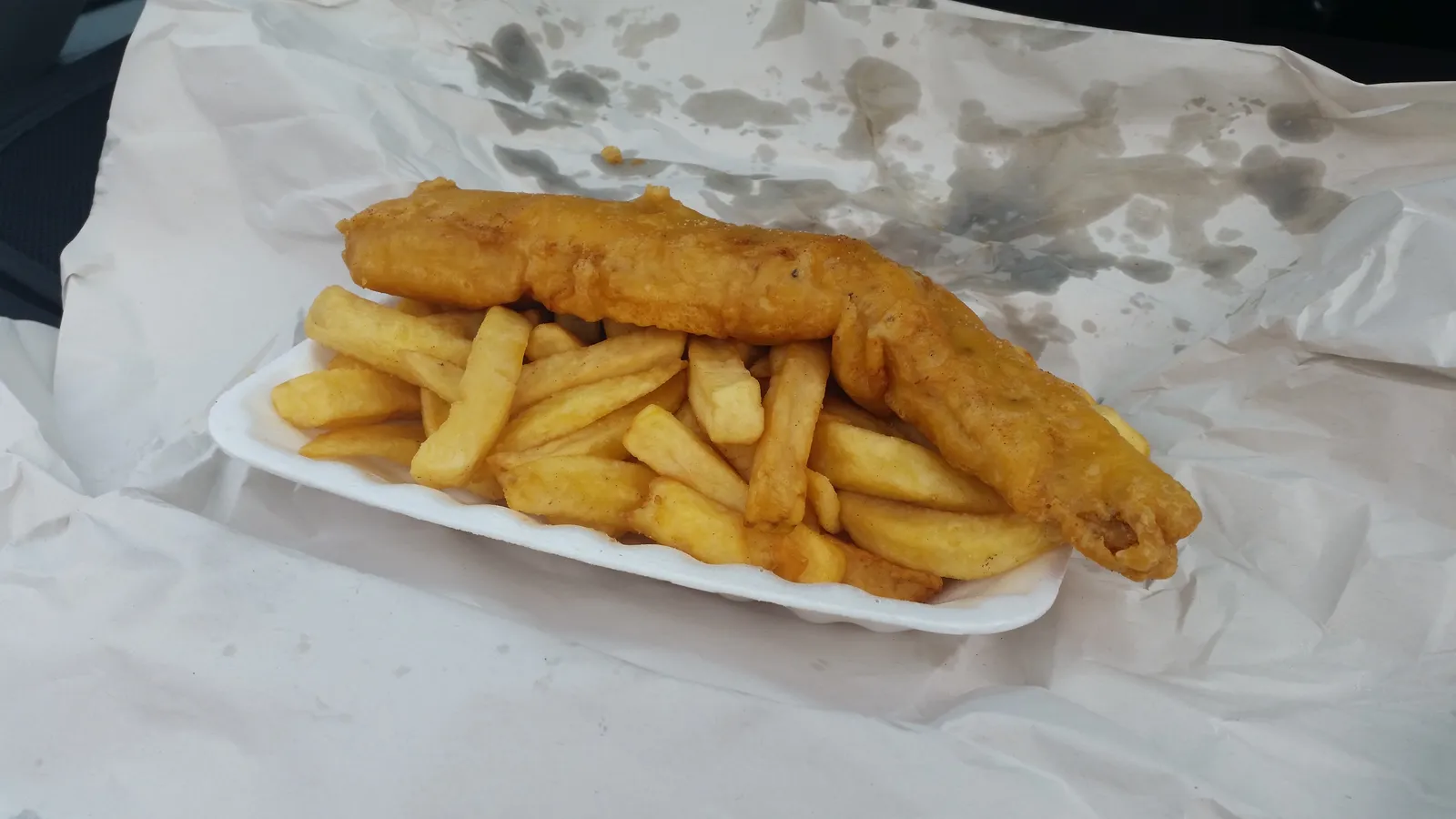
Golden battered fish on thick-cut chips in a takeaway tray United Kingdom flag United Kingdom 50m
Dinner •British Seaside Classic

Fish and Chips

Fish and chips is Britain's seaside icon: thick cod fillets in a crisp beer batter, fried golden, served with fat hand-cut chips, salt, malt vinegar and lemon. One serving is about 400 g.

Comfort & Satisfaction

Crisp beer-battered cod with golden thick-cut chips and lemon.

Pairs Well With
Mushy peas, tartar sauce and a wedge of lemon
High Protein
A golden shepherd's pie in a baking dish with a crisp mashed potato top United Kingdom flag United Kingdom 1h 20m
Dinner •British Farmhouse Classic

Shepherd's Pie

Shepherd's pie is Britain's great farmhouse bake: minced lamb simmered with onion, carrot and peas in a rich gravy, topped with buttery mashed potato and Cheddar, then baked until the top turns crisp and golden. One serving is about 350 g.

Comfort & Warmth

Rich lamb and vegetables under a golden cheesy mashed-potato crust.

Pairs Well With
Buttered green peas or steamed green beans on the side
High Protein
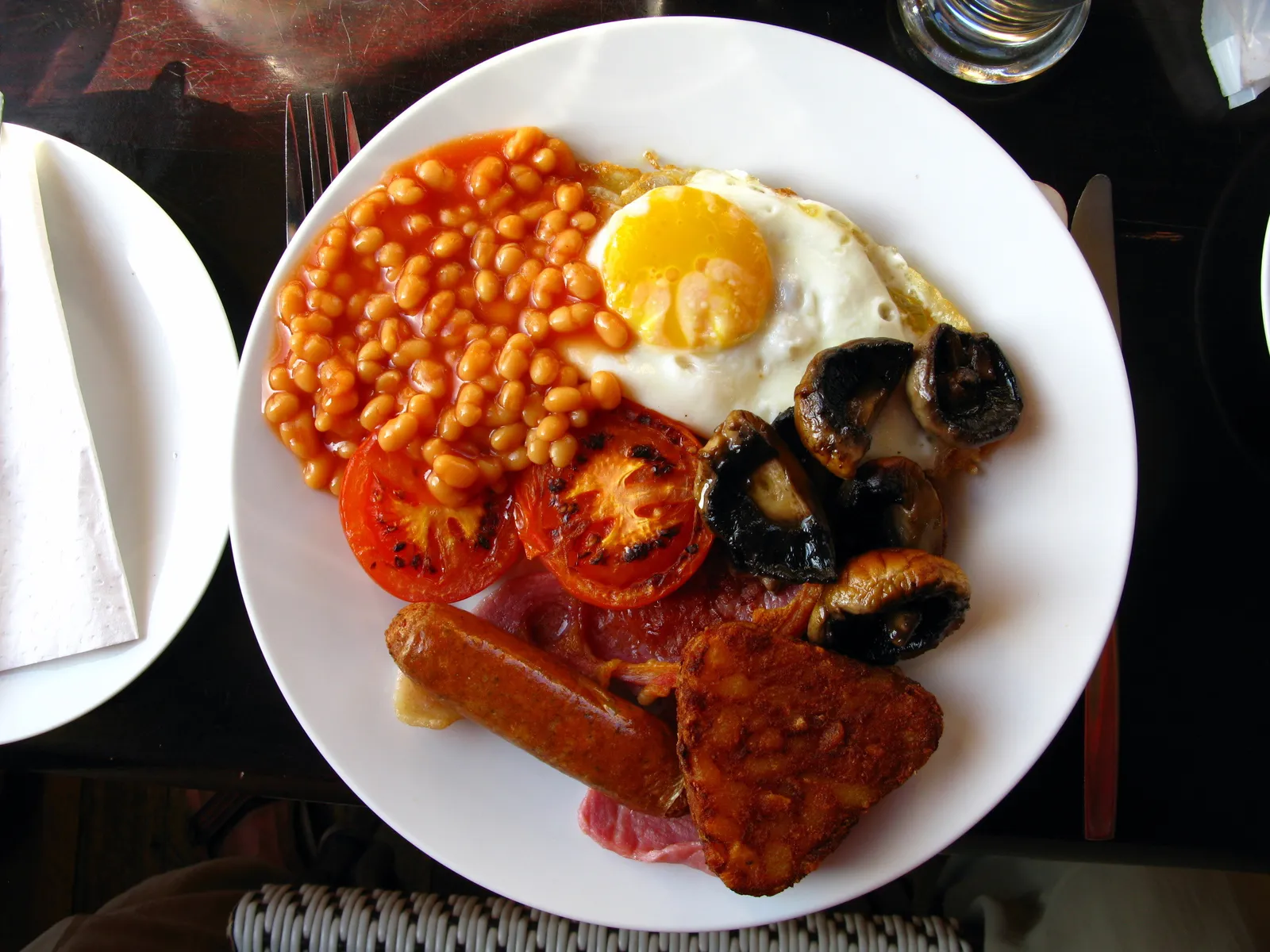
A full English breakfast plate with beans, fried egg, tomato, mushrooms, sausage and bacon United Kingdom flag United Kingdom 35m
Breakfast •British Breakfast Classic

Full English Breakfast

The Full English is Britain's great fry-up: pork sausages, back bacon, fried eggs, black pudding, baked beans, mushrooms and grilled tomato, with buttered toast on the side — all cooked in one pan and eaten hot. One serving is about 450 g.

Hearty & Filling

Sausages, bacon, eggs, black pudding, beans, mushrooms and tomato on one plate.

Pairs Well With
Buttered toast and a strong cup of tea
High Protein
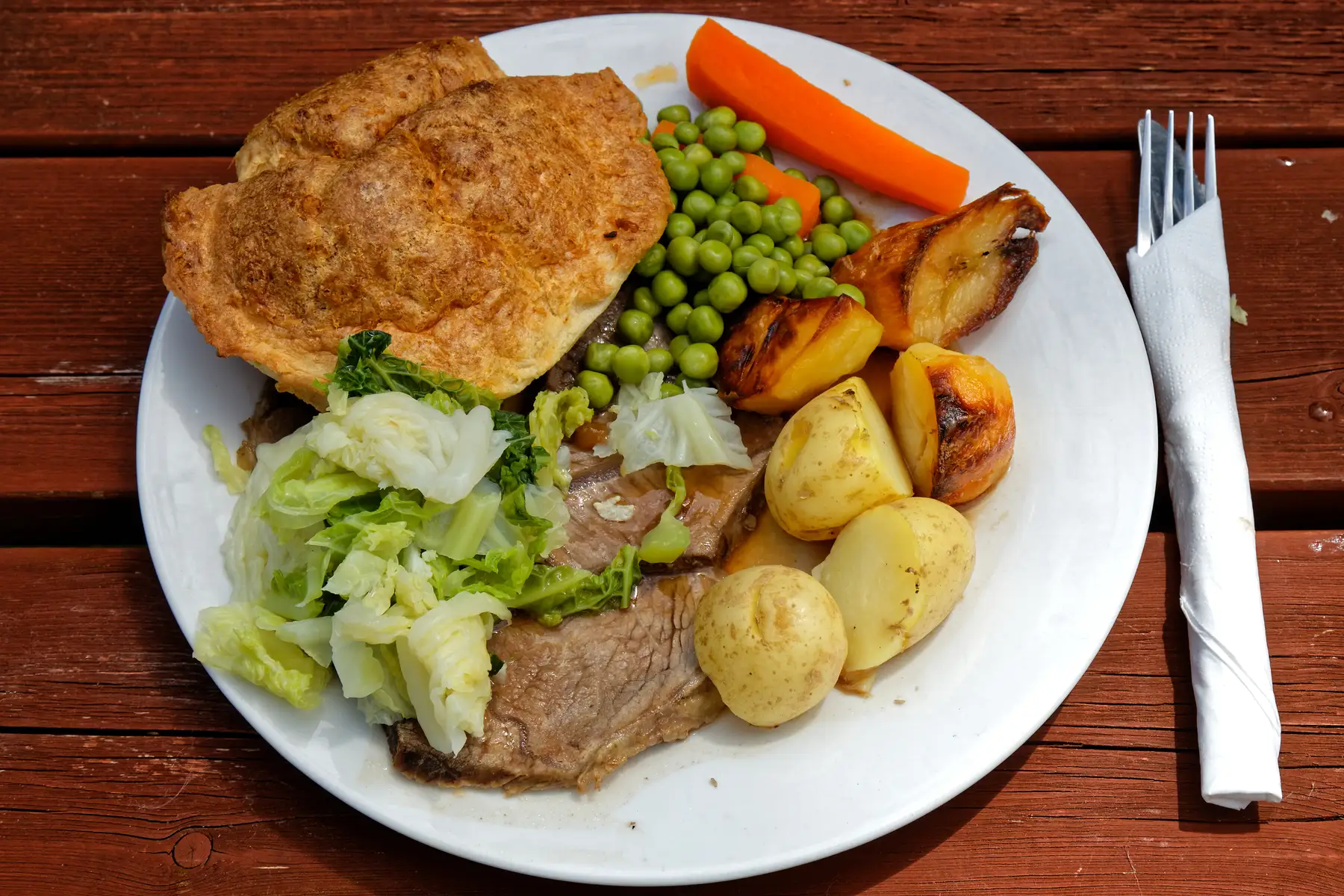
A plate of roast beef with a large Yorkshire pudding, roast potatoes, peas, carrots and cabbage on a wooden pub table United Kingdom flag United Kingdom 2h 40m
Dinner •English Sunday Roast

Roast Beef with Yorkshire Pudding

A topside joint roasted until blushing pink, served with golden Yorkshire puddings risen in beef dripping, crisp roast potatoes, carrots and peas, and a proper pan gravy. This roast beef with yorkshire pudding recipe is the full Sunday spread, built for a slow afternoon and a full table. One serving is about 660 g.

Comfort & Warmth

Pink roast beef, towering Yorkshire puddings, crisp roast potatoes and rich gravy — the Sunday dinner Britain is famous for.

Pairs Well With
Horseradish sauce, roast potatoes & a glass of red wine
High Protein

The Dinner Gazette

Never wonder what’s for dinner again

One email a week with easy dinner ideas from around the world — ingredients, steps and nutrition, tested in our kitchen first.

Delivered every Thursday morning. Unsubscribe anytime.