
Curated recipes from 193 countries  •  New seasonal Mediterranean issue out now

Overview

Roast Beef with Yorkshire Pudding

Sunday Roast Beef

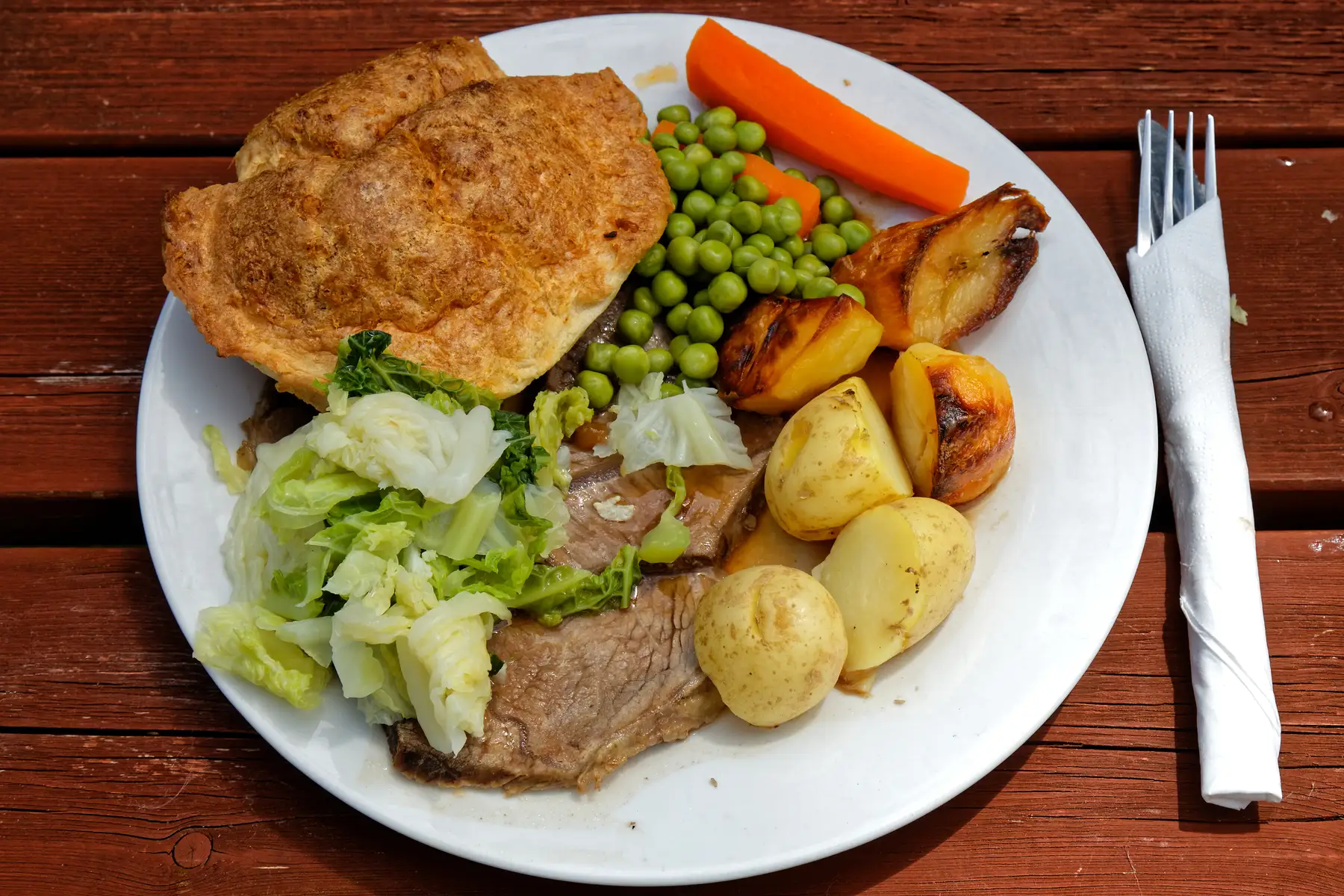
A topside joint roasted until blushing pink, served with golden Yorkshire puddings risen in beef dripping, crisp roast potatoes, carrots and peas, and a proper pan gravy. This roast beef with yorkshire pudding recipe is the full Sunday spread, built for a slow afternoon and a full table. One serving is about 660 g.

The Sunday roast grew out of the British habit of roasting a joint for the family meal after church, and roast beef became its most famous form — Henry Fielding's song 'The Roast Beef of Old England' was already celebrating it in 1731. Yorkshire pudding began as a batter pudding cooked under the roasting meat so the dripping fell into it; the first printed recipe appeared in 1737, and Hannah Glasse gave it the name Yorkshire pudding in her 1747 book 'The Art of Cookery'.

Pairs well with: Horseradish sauce, roast potatoes & a glass of red wine

Provenance

United Kingdom flag United Kingdom

English Sunday Roast

Nordic & European

Time Dedication

2h 40m

30m prep • 130m cook

Batch Yield

4 Servings

974 kcal per serving

1 serving ≈ 660 g

Technical Skill

Intermediate

Medium (Roast Dinner)

Meal Timing & Digestive Fit

Breakfast

Not Advised

Lunch

Hearty Midday Main

Dinner

Ideal Hearty Main

Snack & Tea

Inappropriate

High Protein Occasions: Sunday lunch, family gatherings, Christmas dinner, celebrations Cost: Moderate — about $6–7 per serving at home
A plate of roast beef with a large Yorkshire pudding, roast potatoes, peas, carrots and cabbage on a wooden pub table

English Sunday Roast

Photo: Acabashi, CC BY-SA 4.0, via Wikimedia Commons

The Heritage Formulary

Measured Ingredients

Estimated cost: Moderate — about $6–7 per serving at home (USD)

A good roast is judged by the beef — pink in the middle, rested properly — and by puddings that rise tall and stay crisp.

Execution Methodology & Culinary Technique

Step-by-Step Cooking Guide

Active 2h 40m
P

Prep Stage: Beef, Batter & Potatoes

30 Mins • Knife Work

Rub the beef with salt, pepper and mustard and leave it to come to room temperature. Whisk the flour, eggs, milk and a pinch of salt into a smooth batter and leave it to rest for at least 30 minutes. Peel and parboil the potatoes, then rough up their edges in the pan so they crisp up later.

Maestro Tip: Resting the batter is not optional — it lets the flour hydrate and the puddings rise tall and crisp.

  1. 1

    Roast the Beef

    1 Hour 20 Mins 220°C (425°F) then 180°C (350°F)

    Heat the oven to 220°C (425°F). Sit the beef on a rack in the roasting tin and roast for 20 minutes to brown the outside, then turn the oven down to 180°C (350°F) and roast for a further 60 minutes for medium-rare. Baste once halfway through with the pan juices.

    A meat thermometer takes the guesswork out — pull the beef at 55°C (131°F) for rare or 60°C (140°F) for medium.

    Done when: The outside is deeply browned and the centre reads 55–60°C (131–140°F) on a thermometer.

  2. 2

    Rest the Beef

    25 Mins Room temperature

    Lift the beef onto a warm plate, tent loosely with foil and rest for 25 minutes. Do not cut into it early — the juices need time to settle back into the meat, and the temperature will rise a few more degrees as it rests.

    Pour any juices from the resting plate into the gravy later; they are pure flavour.

    Done when: The meat feels relaxed when pressed and no juices run when you touch it with a knife tip.

  3. 3

    Crisp the Roast Potatoes

    50 Mins 200°C (400°F)

    While the beef roasts, heat the dripping in a roasting tin in the oven until shimmering. Tip in the parboiled potatoes, turn them to coat, season with salt, and roast at 200°C (400°F) for about 50 minutes, turning once, until deep golden and crunchy at the edges.

    The tin must be properly hot before the potatoes go in — cold fat makes soggy potatoes.

    Done when: The potatoes are deep gold all over, crackle when tapped, and are fluffy when pierced with a knife.

  4. 4

    Bake the Yorkshire Puddings

    25 Mins 220°C (425°F)

    Turn the oven up to 220°C (425°F). Put the oiled muffin tin in for 5 minutes until the oil is smoking hot, then pour the rested batter into the holes, filling each about half full. Bake for 20–25 minutes without opening the oven door.

    Cold batter into smoking-hot oil is the whole trick — it shocks the batter into rising tall.

    Done when: The puddings are risen high, deep golden brown and crisp on the outside, soft inside.

  5. 5

    Cook the Vegetables

    12 Mins Boiling water, 100°C (212°F)

    Boil the carrots in salted water for 8–10 minutes until just tender, then add the peas for the last 2 minutes. Drain well and toss with a knob of the butter and a pinch of salt.

    Do not overcook the peas — 2 minutes keeps them bright green and sweet.

    Done when: Carrots yield to a knife tip and the peas are bright green and hot through.

  6. 6

    Make the Gravy & Carve

    10 Mins Medium heat, simmering

    Set the roasting tin over medium heat, pour in the stock and scrape up all the browned bits from the base. Whisk in the cornflour paste and simmer for 5 minutes until it coats a spoon, then swirl in the butter and any resting juices. Season to taste. Carve the beef across the grain into thick slices.

    Taste the gravy before adding more salt — the stock and pan juices may already be salty enough.

    Done when: The gravy is glossy, coats the back of a spoon, and the beef slices are pink in the middle.

Finishing Touches & Plating

Pile the beef, puddings, potatoes, carrots and peas onto warm plates, pour over the gravy at the table, and put the horseradish sauce where everyone can reach it. Serve immediately while the puddings are still crisp.

Nutritional Physiology & Benefits

Nutrition

Energy

974

kcal / serving

Protein

84g

Complete AA

Carbs

80g

Complex

Fats

34g

Healthy

Per serving (4 servings · 1 serving ≈ 660 g)
Energy974 kcal
Protein84 g
Carbohydrates80 g
Fat34 g
Fibre9.1 g
Sugar9.3 g
Sodium911 mg
Per 100g
Energy148 kcal
Protein12.7 g
Carbohydrates12 g
Fat5.1 g
Fibre1.4 g
Sugar1.4 g
Sodium138 mg

Nutrition values are estimated — calculated from USDA FoodData Central values for the listed ingredients.

Vitamins & minerals: Vitamin B12, B6 and niacin (beef), vitamin A (carrots, butter), vitamin C (peas, carrots), iron and zinc (beef), potassium (potatoes).

Serious Protein

With about 83 g of protein per serving from the beef and eggs, this is one of the most filling dinners on the site — it genuinely keeps you full until the next meal.

Iron, Zinc & B12

Beef is one of the richest food sources of iron, zinc and vitamin B12, nutrients that support normal energy levels and the immune system.

Real Vegetables on the Plate

Carrots and peas bring vitamin A, vitamin C and fibre to an otherwise meat-heavy plate, and the potatoes add potassium and steady energy.

Food Pairings

What to Eat With

To optimize nutrient absorption and elevate the sensory depth, pair with these authentic accompaniments:

Sides

Horseradish Sauce

Sharp, nose-tingling horseradish cuts straight through the richness of the beef and dripping — it is the traditional partner for a reason, and a little goes a long way.

Vegetables

Buttered Cabbage

A pile of soft buttered cabbage adds a fresh green note and a little bitterness that balances the sweet carrots and the fatty potatoes.

Drinks

Red Wine

A medium-bodied red, such as a Bordeaux or a Rioja, has the tannin to stand up to roast beef and the fruit to match the gravy.

English Ale

A malty bitter or pale ale echoes the roasted, malty flavours of the beef and the puddings, and its bitterness cleanses the palate between bites.

Full Menus

Full Menu: Soup, Roast & Crumble

Start with a light vegetable soup, serve the roast as the centrepiece with all the trimmings, and finish with apple crumble and custard for the full Sunday lunch.

Complete menu

Start with a light vegetable soup, serve the roast beef with Yorkshire puddings, roast potatoes, carrots and peas as the centrepiece, and finish with apple crumble and custard.

Digestive Guardrails

What NOT to Combine

To prevent digestive distress, sluggishness, or palate clash, avoid pairing the dish with these elements:

Very Rich Desserts Straight After

This is already a large, fatty meal; a heavy cream-laden pudding on top can leave you uncomfortably full. A fruit-based dessert is the easier finish. This is general information, not medical advice.

Storing Leftover Beef Warm

Cooked beef left at room temperature for more than 2 hours can grow bacteria quickly. Cool and refrigerate it promptly, and reheat slices until steaming hot (74°C / 165°F). This is general food-safety information, not medical advice.

Extra Salt on the Gravy

Between the stock, the pan juices and the salted beef, the gravy is already salty — about 910 mg of sodium per serving. Taste before reaching for the salt. This is general information, not medical advice.

General information only, not medical advice — consult a doctor for personal dietary decisions.

Who Should Eat It

Who Should Eat

  • General adultsA big, satisfying Sunday dinner — one full serving with all the trimmings is plenty for most adults.
  • ChildrenVery suitable — children love the puddings and potatoes. Serve the beef well done for younger children and go easy on the horseradish.
  • ElderlyA good source of protein and iron, but the joint is rich — carve thin slices and keep the gravy light for easier chewing and digestion.
  • Pregnant womenFine when the beef is cooked through to at least 63°C (145°F) and rested, and the eggs in the batter are fully cooked. Avoid rare beef. Ask your clinician if unsure.
  • Breastfeeding womenA nourishing, energy-dense meal that supports the extra calories of breastfeeding — enjoy a full serving.
  • AthletesExcellent after a hard training day: about 83 g of protein and 79 g of carbohydrate per serving for recovery and glycogen.
  • Weight gainIdeal — at about 974 kcal per serving with generous protein and carbohydrate, it is one of the easiest ways to add calories.
  • Weight lossA smaller portion works: half a serving of beef, one pudding, fewer potatoes and extra vegetables, with the gravy kept light.

Health Conditions — Adjust or Avoid

Conditions

  • DiabetesAbout 79 g of carbohydrate per serving, mostly from potatoes and puddings — keep those portions modest and fill the plate with carrots and peas instead. Ask your clinician about portion sizes.
  • High blood pressureThis dish is high in sodium (about 910 mg per serving) from the stock, salt and gravy. Use low-salt stock and skip extra salt at the table. Ask your clinician about a suitable portion.
  • Kidney diseaseVery high in protein (about 83 g per serving) and potassium from the potatoes — both may need limiting. Ask your clinician before eating a full serving.
  • GoutBeef and rich gravy are high in purines, which can raise uric acid. Keep portions small and avoid seconds of beef. Ask your clinician for advice.
  • Stomach issuesThe fatty beef, dripping-roasted potatoes and horseradish can be heavy on a sensitive stomach. Choose lean slices, skip the horseradish and eat slowly. Ask your clinician if symptoms persist.
  • Cardiovascular diseaseHigh in saturated fat from the beef and dripping (about 33 g of fat per serving). Choose lean slices, use oil instead of dripping, and keep portions modest. Ask your clinician about a suitable portion.
  • Fatty liverA rich, fatty meal — limit the dripping-roasted potatoes and gravy, favour lean beef and extra vegetables. Ask your clinician about portion sizes.
  • Food allergiesContains gluten (flour, puddings), egg, milk and mustard. The gravy may contain celery from the stock — check the label. This is general information, not medical advice.
  • Special therapeutic dietsNot suitable for low-protein, low-sodium or gluten-free diets without changes. Ask your clinician or dietitian about adapting it.

If you have a medical condition, consult your doctor before changing your diet.

Storage & Use

Storage & Use

How to store
Cool the beef, potatoes and puddings separately within 2 hours and store in airtight containers in the fridge.
In the fridge
Beef and potatoes 3 days; Yorkshire puddings 2 days.
In the freezer
Beef up to 3 months; puddings freeze well for 1 month. Potatoes do not freeze well.
How to reheat
Reheat beef slices gently in gravy on the stove until steaming hot throughout (74°C / 165°F). Crisp puddings and potatoes in a hot oven at 200°C (400°F) for 5–8 minutes.
Freezing recommended
Yes for the beef and puddings; no for the roast potatoes, which go soggy.
Signs it has spoiled
Sour or off smell on the beef, a slimy surface, or grey discolouration — discard if any of these appear.

More recipes to explore

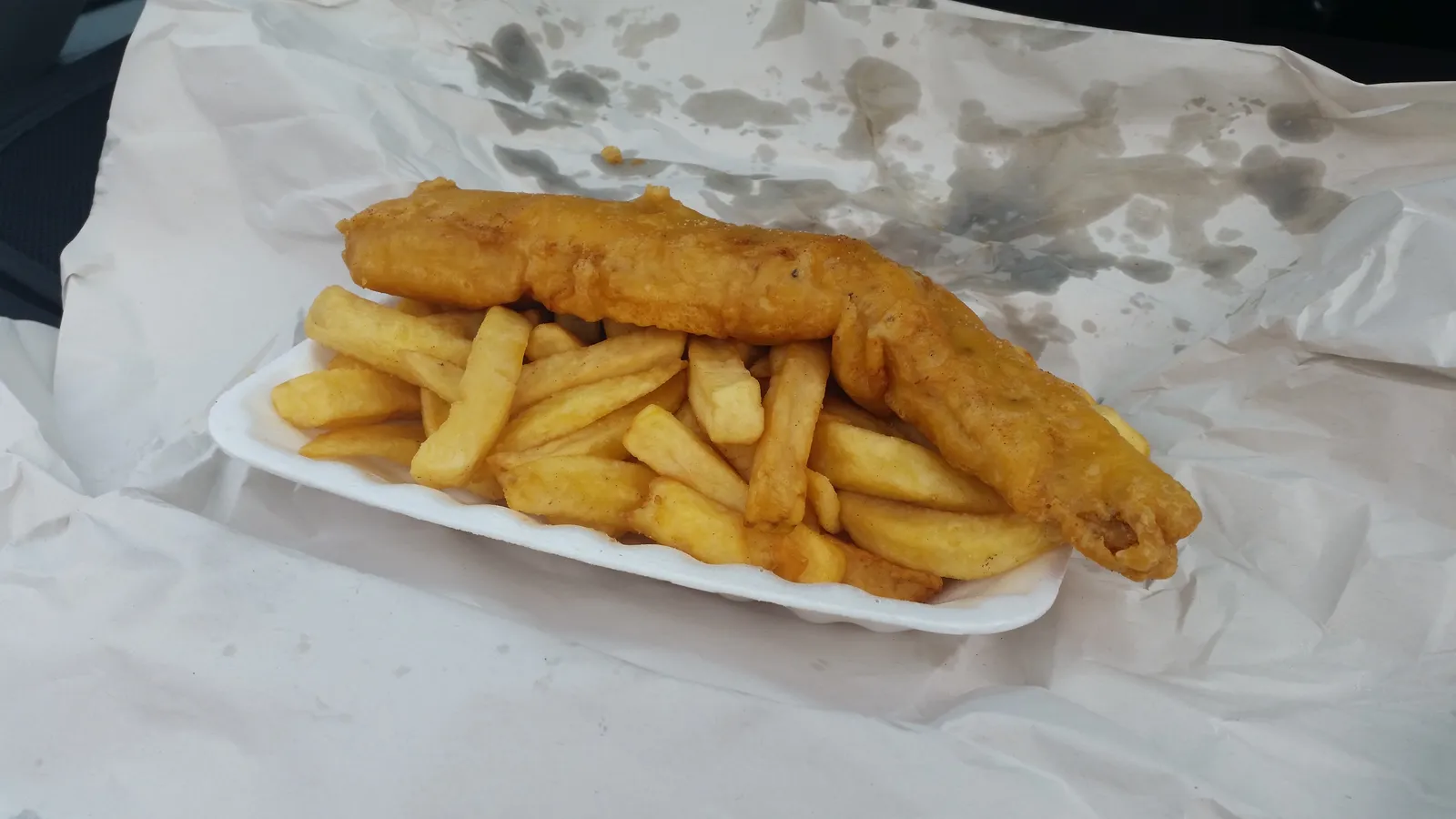
Golden battered fish on thick-cut chips in a takeaway tray United Kingdom flag United Kingdom 50m
Dinner •British Seaside Classic

Fish and Chips

Fish and chips is Britain's seaside icon: thick cod fillets in a crisp beer batter, fried golden, served with fat hand-cut chips, salt, malt vinegar and lemon. One serving is about 400 g.

Comfort & Satisfaction

Crisp beer-battered cod with golden thick-cut chips and lemon.

Pairs Well With
Mushy peas, tartar sauce and a wedge of lemon
High Protein
A golden shepherd's pie in a baking dish with a crisp mashed potato top United Kingdom flag United Kingdom 1h 20m
Dinner •British Farmhouse Classic

Shepherd's Pie

Shepherd's pie is Britain's great farmhouse bake: minced lamb simmered with onion, carrot and peas in a rich gravy, topped with buttery mashed potato and Cheddar, then baked until the top turns crisp and golden. One serving is about 350 g.

Comfort & Warmth

Rich lamb and vegetables under a golden cheesy mashed-potato crust.

Pairs Well With
Buttered green peas or steamed green beans on the side
High Protein
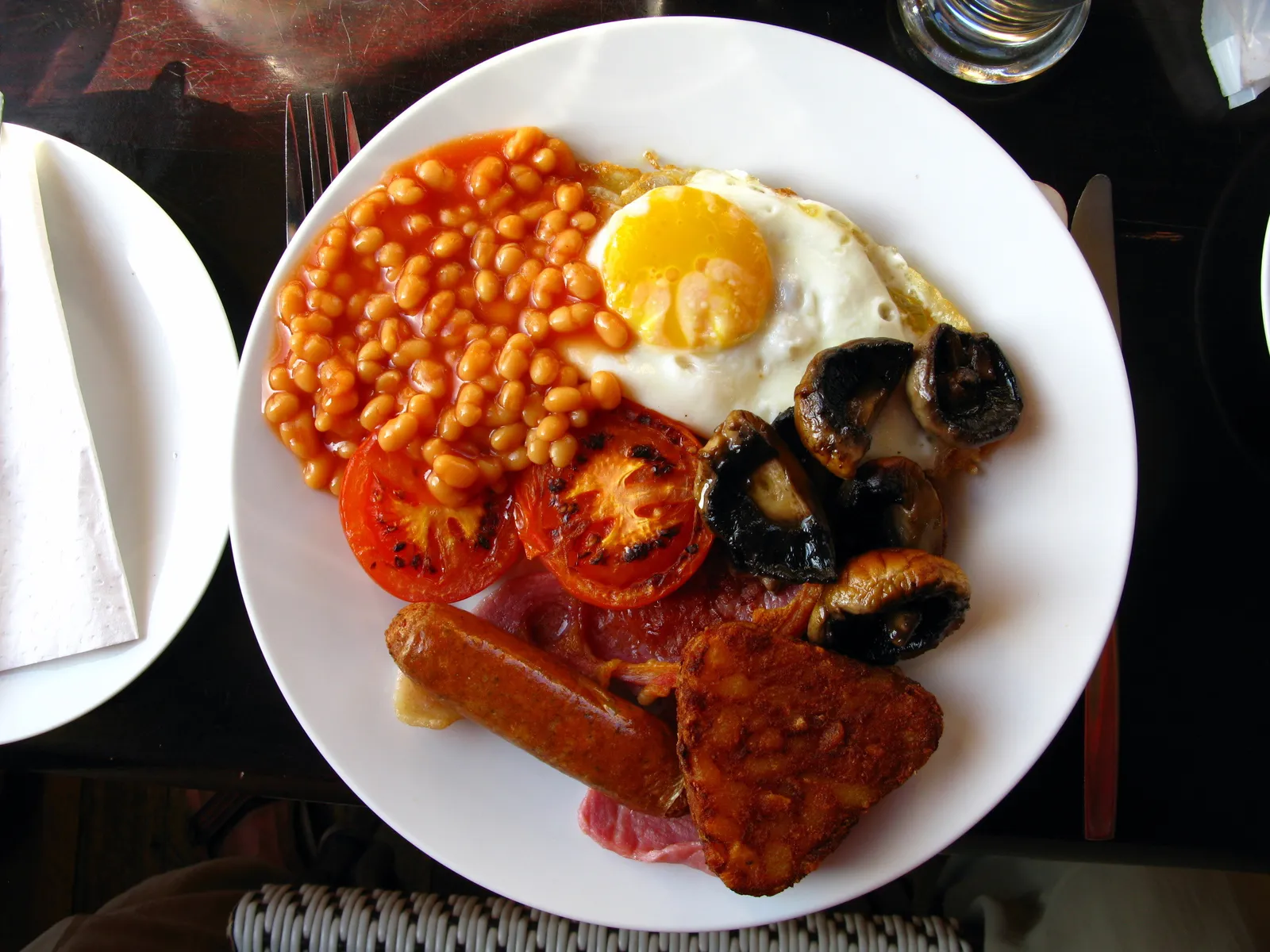
A full English breakfast plate with beans, fried egg, tomato, mushrooms, sausage and bacon United Kingdom flag United Kingdom 35m
Breakfast •British Breakfast Classic

Full English Breakfast

The Full English is Britain's great fry-up: pork sausages, back bacon, fried eggs, black pudding, baked beans, mushrooms and grilled tomato, with buttered toast on the side — all cooked in one pan and eaten hot. One serving is about 450 g.

Hearty & Filling

Sausages, bacon, eggs, black pudding, beans, mushrooms and tomato on one plate.

Pairs Well With
Buttered toast and a strong cup of tea
High Protein
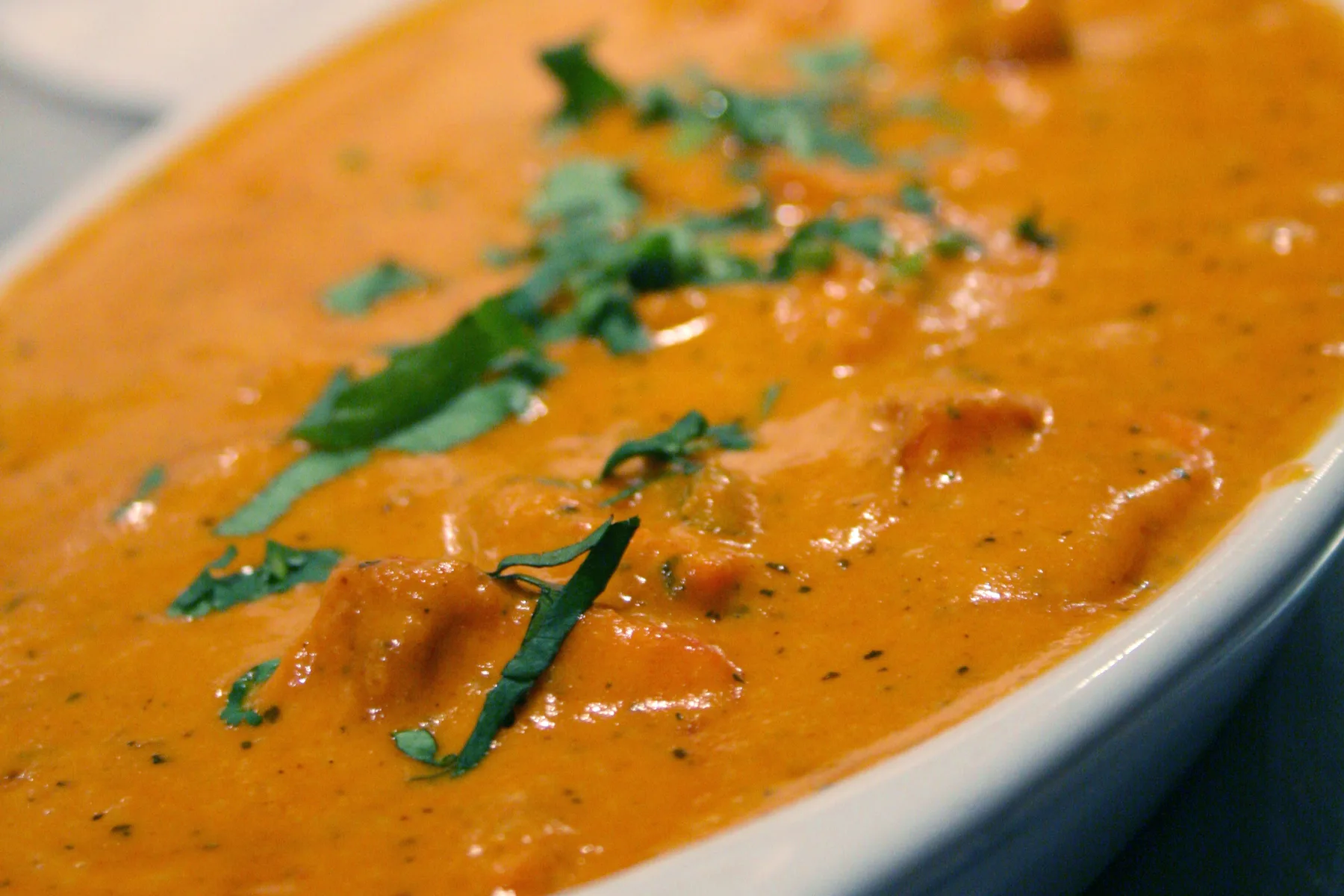
A bowl of creamy orange chicken tikka masala garnished with coriander, with naan bread behind it United Kingdom flag United Kingdom 1h 5m
Dinner •British Curry House Classic

Chicken Tikka Masala

Chicken marinated in yogurt, ginger, garlic and garam masala is grilled until charred at the edges, then simmered in a silky sauce of tomatoes, butter and cream. This chicken tikka masala recipe is mild, rich and deeply comforting, with the smoky edges that make the dish. One serving is about 420 g.

Comfort & Warmth

Charred, yogurt-marinated chicken folded into a creamy, gently spiced tomato sauce — Britain's favourite curry, made at home.

Pairs Well With
Basmati rice, butter naan & cucumber raita
High Protein

The Dinner Gazette

Never wonder what’s for dinner again

One email a week with easy dinner ideas from around the world — ingredients, steps and nutrition, tested in our kitchen first.

Delivered every Thursday morning. Unsubscribe anytime.