
Curated recipes from 193 countries  •  New seasonal Mediterranean issue out now

Overview

Crema de Calabaza

Cream of Pumpkin Soup, Cuban Pumpkin Soup

This crema de calabaza recipe is the Cuban pumpkin cream soup cooked in homes from Havana to Miami: calabaza and potato simmered in chicken stock with onion and garlic, then blended silky-smooth with milk and finished with olive oil. One serving is about 425 g. Serve it with toasted bread for dunking.

Calabaza is the Caribbean pumpkin that travelled with the Taíno people and became a staple of the Cuban kitchen, where it is simmered into soups, stews and potajes. Crema de calabaza is the island's everyday cream soup — pumpkin, onion and garlic in chicken stock, blended smooth and finished with milk — served as a starter in Havana homes and in Cuban restaurants in Miami, where cooks outside Cuba often use butternut or kabocha squash when Caribbean calabaza is hard to find.

Pairs well with: Toasted Cuban bread, a simple green salad and roast pork

Provenance

Cuba flag Cuba

Cuba Heritage

Latin America & Caribbean

Time Dedication

45m

15m prep • 30m cook

Batch Yield

4 Servings

221 kcal per serving

1 serving ≈ 425 g

Technical Skill

Easy

Easy (One Pot)

Meal Timing & Digestive Fit

Breakfast

Not Advised

Lunch

Prime Metabolic Fit

Dinner

Ideal Hearty Main

Snack & Tea

Inappropriate

Soups & Broths Occasions: Family lunches, light starters, cool evenings Cost: Low — about $1–2 per serving at home
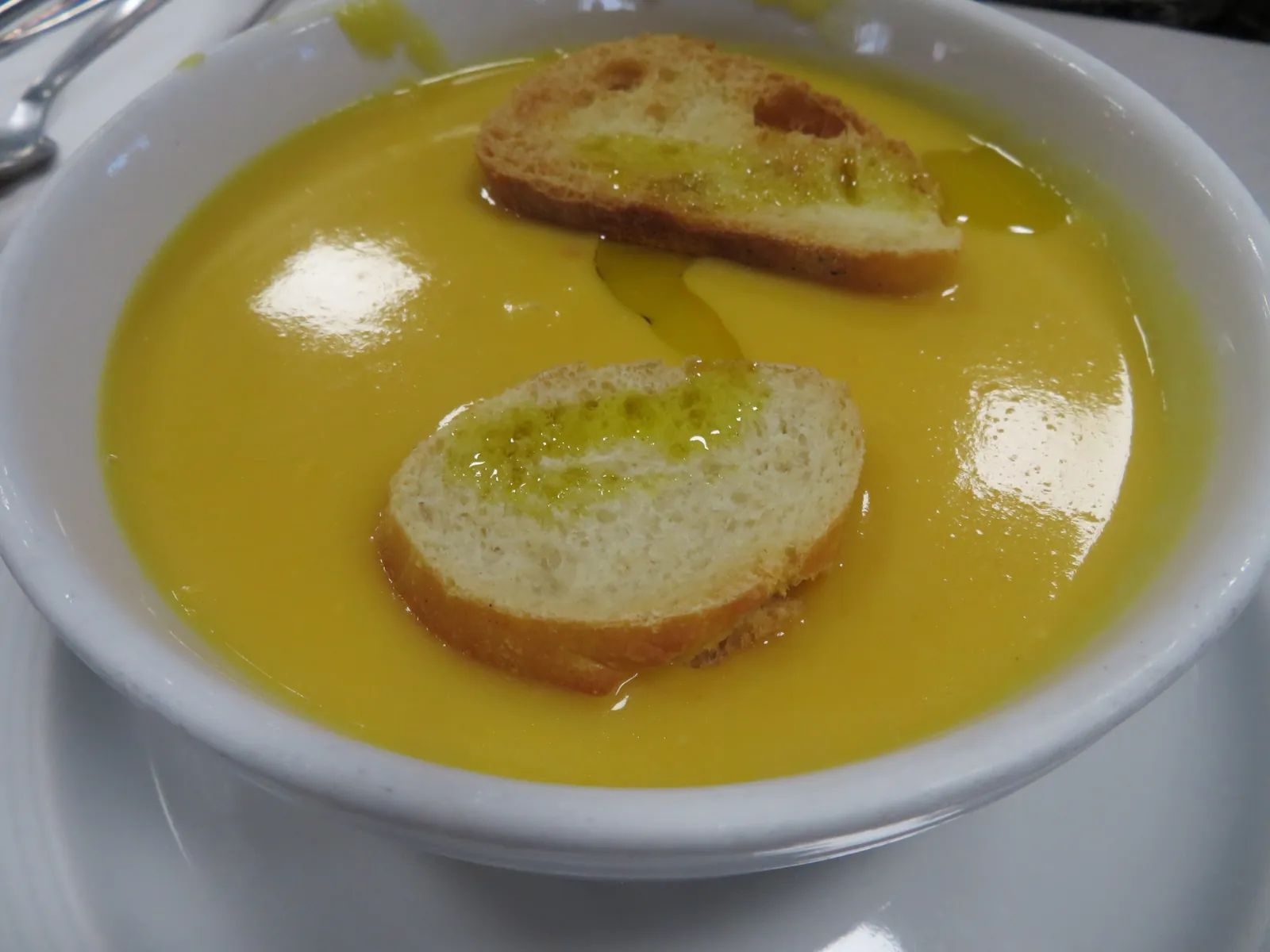
A bowl of golden Cuban pumpkin cream soup with two olive-oil-brushed toasted bread slices

Cuba Heritage

Photo: Juan Emilio Prades Bel, CC BY 4.0, via Wikimedia Commons

The Heritage Formulary

Measured Ingredients

Estimated cost: Low — about $1–2 per serving at home (USD)

The Cuban classic: calabaza and potato in chicken stock, blended silk-smooth with milk.

Execution Methodology & Culinary Technique

Step-by-Step Cooking Guide

Active 45m
P

Prep Stage: Peel and Cube the Calabaza

15 Mins

Peel the calabaza and potato and cut them into even 2 cm cubes so they cook at the same speed. Dice the onion, slice the garlic and measure the stock, milk, oil and spices so everything is within reach when the pot is hot.

Maestro Tip: Even cubes matter more than small cubes: uneven pieces leave hard lumps in a soup that should be silk.

  1. 1

    Soften the Onion and Garlic

    5 Mins Medium heat, about 160°C (320°F)

    Warm the olive oil in a large pot over medium heat. Add the onion and a pinch of salt and cook until soft and translucent, about 4 minutes. Stir in the garlic and cumin and cook 1 minute more, until fragrant.

    Do not let the garlic colour — browned garlic turns the whole soup bitter.

    Done when: Onion soft and translucent; garlic fragrant, not browned.

  2. 2

    Add the Calabaza and Stock

    5 Mins Bring to the boil at 100°C (212°F), then reduce

    Add the calabaza, potato and bay leaf to the pot, pour in the chicken stock and bring to a boil, scraping the bottom of the pot to lift up the browned bits.

    Cold stock straight from the fridge is fine — it just takes a minute longer to reach the boil.

    Done when: Stock at a rolling boil; vegetables fully submerged.

  3. 3

    Simmer Until Tender

    20 Mins Gentle simmer, about 95°C (200°F)

    Lower the heat, cover the pot partway and simmer until the calabaza and potato crush easily against the side of the pot with a spoon, about 20 minutes. Fish out the bay leaf and throw it away.

    If the soup looks too thick at this point, add a splash of water — it is easier to thin a soup than to thicken one.

    Done when: A cube of calabaza crushes with no resistance.

  4. 4

    Blend Silky-Smooth

    5 Mins Off the heat; milk warmed to about 70°C (160°F)

    Blend the soup in batches in a blender, or straight in the pot with an immersion blender, until completely smooth. Return it to the pot, stir in the milk and warm it through gently without letting it boil.

    Blend longer than you think — a full 2 minutes per batch is what makes the difference between smooth and silky.

    Done when: Soup coats the back of a spoon with no flecks or lumps.

  5. 5

    Season and Serve

    5 Mins Serving temperature about 70°C (160°F)

    Season with salt and black pepper, tasting as you go. Ladle into warm bowls, drizzle with a little olive oil and serve at once with toasted bread.

    Taste after the milk goes in — milk softens salt, so season last, not first.

    Done when: Hot, seasoned and glossy, with a thin sheen of oil on top.

Finishing Touches & Plating

Let the soup sit 5 minutes off the heat so the flavours settle, then serve it hot with olive-oil-brushed toasted bread — the bread is for dunking, not decoration.

Nutritional Physiology & Benefits

Nutrition

Energy

221

kcal / serving

Protein

8g

Complete AA

Carbs

29g

Complex

Fats

10g

Healthy

Per serving (4 servings · 1 serving ≈ 425 g)
Energy221 kcal
Protein8 g
Carbohydrates29 g
Fat10 g
Fibre2.6 g
Sugar9.6 g
Sodium561 mg
Per 100g
Energy52 kcal
Protein1.9 g
Carbohydrates6.7 g
Fat2.4 g
Fibre0.6 g
Sugar2.3 g
Sodium132 mg

Nutrition values are estimated — calculated from USDA FoodData Central values for the listed ingredients.

Vitamins & minerals: A serving provides vitamin A from the pumpkin, plus vitamin C and potassium, with calcium and vitamin D from the milk.

Vitamin A from Pumpkin

A serving carries a generous amount of beta-carotene from the calabaza, which the body turns into vitamin A, plus vitamin C and potassium.

Light but Filling

At about 221 kcal a serving, with fibre from the pumpkin and potato, it fills you up without weighing you down.

Gentle on the Stomach

Smooth, mild and low in fat, it is easy to digest — a kind starter or a light lunch on its own.

Food Pairings

What to Eat With

To optimize nutrient absorption and elevate the sensory depth, pair with these authentic accompaniments:

Sides

Toasted Cuban Bread

Crisp-edged bread brushed with olive oil is made for this soup — it soaks up the cream without falling apart.

Vegetables

Simple Green Salad

A sharp, lemony salad cuts the soup's richness and adds crunch to an otherwise soft meal.

Drinks

Café Cubano

A small, strong coffee after the soup is the Cuban way to finish lunch.

Full Menus

Roast Pork and White Rice

As a starter, the soup leads naturally into lechon asado with rice — the classic Cuban plate.

Complete menu

Start with the soup and toasted bread, then serve lechon asado with white rice and a green salad.

Digestive Guardrails

What NOT to Combine

To prevent digestive distress, sluggishness, or palate clash, avoid pairing the dish with these elements:

Boiling After Adding Milk

A hard boil once the milk is in can split the soup into grainy curds. Warm it gently and take it off the heat the moment it steams. This is general information, not medical advice.

Very Spicy Hot Sauce

Chilli heat overwhelms the soup's gentle pumpkin flavour; if you want warmth, a pinch of cumin or black pepper is enough. This is general information, not medical advice.

General information only, not medical advice — consult a doctor for personal dietary decisions.

Who Should Eat It

Who Should Eat

  • General adultsA light, balanced lunch for most adults at about 221 kcal a serving — add bread and a salad to make it a full meal.
  • ChildrenMild, smooth and naturally sweet — most children like it; serve warm, not hot, and go easy on the pepper.
  • ElderlySoft, easy to swallow and gentle on digestion; a good light lunch, with the bread softened in the soup if chewing is hard.
  • Pregnant womenGenerally suitable: the soup is fully cooked and the milk is pasteurised. Keep the portion moderate and the salt light.
  • Breastfeeding womenA light, hydrating lunch with calcium from the milk; eat it with bread and a protein main if you are hungry.
  • AthletesA light starter rather than a recovery meal — at about 8 g of protein a serving, pair it with roast pork or chicken.
  • Weight gainA gentle way to add calories: use cream instead of milk and serve with plenty of buttered toast.
  • Weight lossA good choice at about 221 kcal a serving — filling, high in fibre for its calories, and easy to keep to one bowl.

Health Conditions — Adjust or Avoid

Conditions

  • DiabetesAbout 29 g of carbohydrate per serving from pumpkin, potato and milk — count it in your meal plan, and watch the bread alongside. Ask your clinician about portion size.
  • High blood pressureAbout 561 mg of sodium per serving as written; use unsalted stock and less added salt to bring it down. Ask your clinician about portion size.
  • Kidney diseasePumpkin and potato are fairly high in potassium, so keep the portion modest if you limit potassium. Ask your clinician about portion size.
  • GoutLow in purines as written, with no meat in the soup itself. Ask your clinician about portion size.
  • Stomach issuesSmooth, mild and low in fat, so it usually sits well; skip the black pepper and the raw onion garnish if your stomach is sensitive. Ask your clinician about portion size.
  • Cardiovascular diseaseLow in saturated fat and free of added sugar; the olive oil drizzle adds unsaturated fat. Ask your clinician about portion size.
  • Fatty liverA light, low-fat soup that fits well in a lighter meal pattern; keep the bread portion modest. Ask your clinician about portion size.
  • Food allergiesContains milk (dairy). It is naturally gluten-free as written, but check your stock and bread labels. Ask your clinician about portion size.
  • Special therapeutic dietsEasy to adapt — use vegetable stock and oat milk for a dairy-free version. Ask your clinician about portion size.

If you have a medical condition, consult your doctor before changing your diet.

Storage & Use

Storage & Use

How to store
Cool quickly and store in sealed containers.
In the fridge
Up to 4 days in the fridge at 4°C (40°F) or below.
In the freezer
Up to 3 months frozen — freeze before adding the milk if possible, and stir the milk in when reheating.
How to reheat
Reheat gently to 74°C (165°F), stirring; do not boil once the milk is in.
Freezing recommended
Yes — it freezes well; add the milk fresh after thawing for the smoothest texture.
Signs it has spoiled
Sour smell, mould, or a separated, grainy texture — discard it.

More recipes to explore

A plate of ropa vieja, shredded beef in tomato sauce, with yellow rice, black beans and fried plantains Cuba flag Cuba 3h
Dinner •Cuba's National Dish

Ropa Vieja

This ropa vieja recipe braises flank steak low and slow until it falls into long shreds, then simmers it in a tomato, pepper and olive sauce. One serving is about 310 g. Serve it over white rice with black beans and fried plantains, the way Cuban families do.

Comfort & Warmth

Slow-braised shredded beef in a tomato and pepper sauce, served with rice and black beans.

Pairs Well With
White rice, black beans and fried plantains
High Protein
A pressed Cuban sandwich cut in half, with melted Swiss cheese and layers of ham and pork, served with pickle spears Cuba flag Cuba 25m
Lunch •Havana Classic

Cuban Sandwich

This cuban sandwich recipe layers mojo roast pork, ham, Swiss cheese, pickles and mustard on Cuban bread, then presses it flat until the crust crackles and the cheese melts. One serving is about 345 g. It is a great use for leftover roast pork and comes together in 25 minutes.

Comfort & Warmth

A pressed sandwich of roast pork, ham, Swiss cheese, pickles and mustard on Cuban bread.

Pairs Well With
Plantain chips and a cold lager or lime soda
A plate of dark moros y cristianos rice cooked with black beans, served with slices of roast pork and golden fried plantains Cuba flag Cuba 1h 30m
Lunch •Cuban Heritage

Moros y Cristianos

This moros y cristianos recipe cooks Cuban black beans and rice together in one pot: dried black beans simmered until tender, then long-grain rice cooked in the dark bean liquid with a sofrito of onion, green pepper and garlic, cumin, oregano and bay leaf. The grains come out dark, fragrant and fluffy, never pale or plain. One serving is about 272 g.

Comfort & Warmth

Cuban black beans and white rice cooked together in one pot with sofrito, cumin, oregano and bay leaf, until the grains turn dark.

Pairs Well With
Roast pork or ropa vieja with fried sweet plantains and a crisp cabbage salad, the classic Cuban plate.
A plate of Cuban lechon asado with shredded mojo pork, onions and lime, yellow rice with black beans and fried plantains Cuba flag Cuba 5h 30m
Dinner •Havana Heritage

Cuban Lechon Asado

This cuban lechon asado recipe marinates a pork shoulder overnight in mojo — sour orange juice, a whole head of garlic, oregano and cumin — then roasts it low and slow until the meat is so tender it pulls apart with a fork. It is the centrepiece of Nochebuena, the Cuban Christmas Eve feast, and it is nothing like Filipino lechon: there is no whole crispy-skinned pig here, just a mojo-soaked shoulder roast. One serving is about 250 g.

Celebration & Sharing

A whole pork shoulder marinated overnight in sour-orange mojo, then roasted low and slow until it pulls apart — the centrepiece of Nochebuena.

Pairs Well With
Shredded mojo pork with black beans, yellow rice and fried plantains
High Protein

The Dinner Gazette

Never wonder what’s for dinner again

One email a week with easy dinner ideas from around the world — ingredients, steps and nutrition, tested in our kitchen first.

Delivered every Thursday morning. Unsubscribe anytime.