Curated recipes from 193 countries  •  New seasonal Mediterranean issue out now

Overview

Cuban Lechon Asado

Mojo Roast Pork, Lechón Asado — Cuba's Nochebuena Roast

This cuban lechon asado recipe marinates a pork shoulder overnight in mojo — sour orange juice, a whole head of garlic, oregano and cumin — then roasts it low and slow until the meat is so tender it pulls apart with a fork. It is the centrepiece of Nochebuena, the Cuban Christmas Eve feast, and it is nothing like Filipino lechon: there is no whole crispy-skinned pig here, just a mojo-soaked shoulder roast. One serving is about 250 g.

Lechon asado is the roast pork of Cuba, brought by Spanish settlers and made Cuban by the mojo: sour orange, garlic, oregano and cumin. In Cuba the whole pig was once roasted over an open fire for Nochebuena, Christmas Eve, and the shoulder roast is the home version of that feast — marinated overnight, roasted low and slow until it pulls apart. It travelled with Cuban families to Miami and beyond, where it is still the dish that means a celebration is happening.

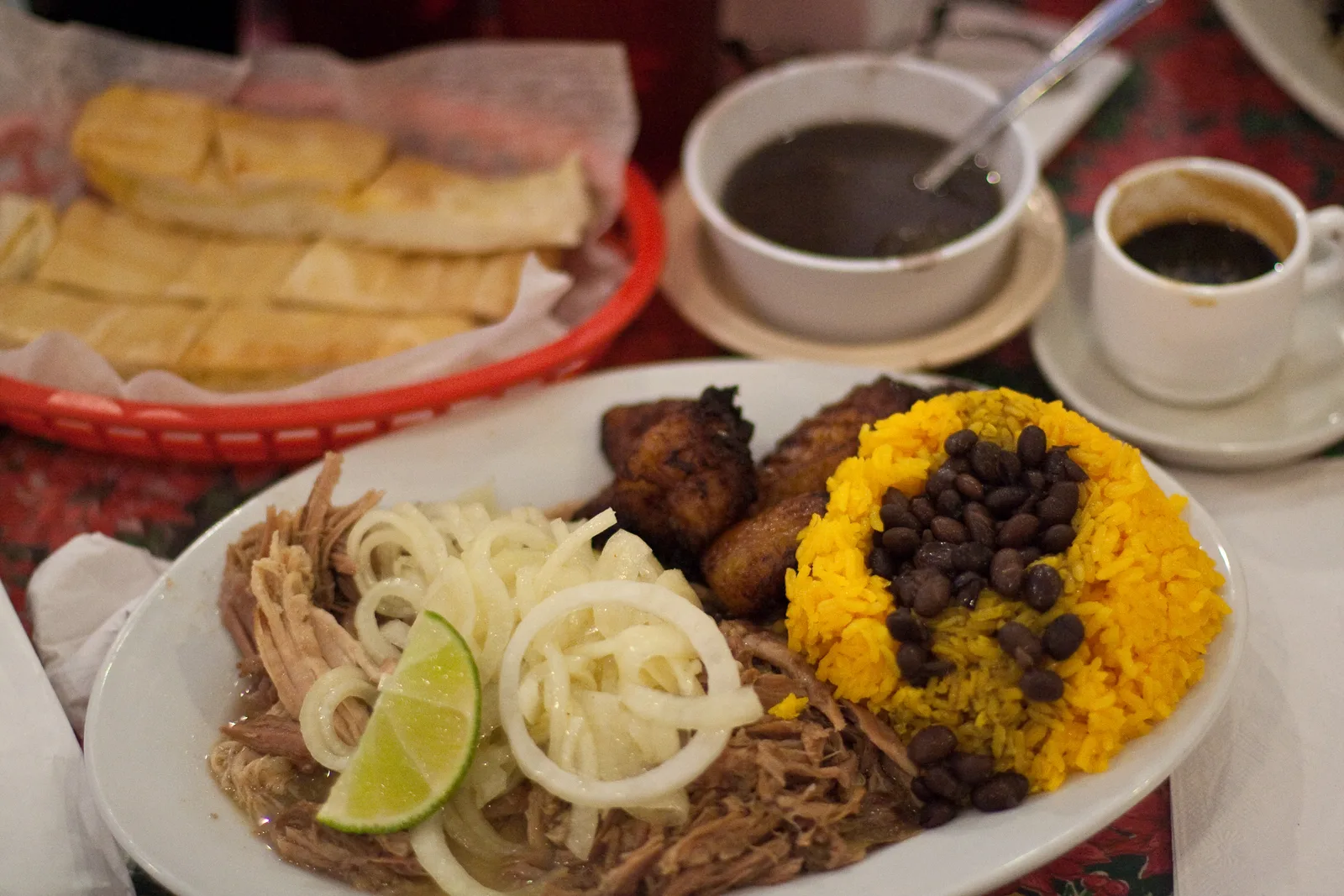
Pairs well with: Shredded mojo pork with black beans, yellow rice and fried plantains

Provenance

Cuba flag Cuba

Havana Heritage

Latin America & Caribbean

Time Dedication

5h 30m

30m prep • 300m cook

Batch Yield

8 Servings

697 kcal per serving

1 serving ≈ 250 g

Technical Skill

Intermediate

Medium (Slow Roast)

Meal Timing & Digestive Fit

Breakfast

Not Advised

Lunch

Hearty Midday Main

Dinner

Ideal Hearty Main

Snack & Tea

Inappropriate

High Protein Occasions: Nochebuena (Christmas Eve), festive family dinners, celebrations, Sunday lunch Cost: Medium — about $4–5 per serving at home
A plate of Cuban lechon asado with shredded mojo pork, onions and lime, yellow rice with black beans and fried plantains

Havana Heritage

Photo: Elizabeth Nicodemus, CC BY-SA 2.0, via Wikimedia Commons

The Heritage Formulary

Measured Ingredients

Estimated cost: Medium — about $4–5 per serving at home (USD)

A good lechon asado pulls apart with a fork, stays juicy under its crackling, and tastes of garlic and sour orange in every bite.

Execution Methodology & Culinary Technique

Step-by-Step Cooking Guide

Active 5h 30m
P

Prep Stage: Mojo First, Marinade Overnight

30 Mins • Mojo & Scoring

Lechon asado is a two-day dish: the mojo is made and the pork is marinated overnight, and the roast itself takes 5 hours the next day. The work on day one is only 30 minutes — crush the garlic, whisk the mojo, score the skin, rub everything in and leave the fridge to do the rest. Never marinate for less than 8 hours: the sour orange and garlic need time to reach the centre of a 2 kg shoulder.

Maestro Tip: Score the skin in a crosshatch and rub the mojo deep into the cuts — that is how the flavour gets past the fat cap.

  1. 1

    Make the Mojo

    10 Mins Room temperature

    Crush 8 of the garlic cloves and whisk them with the orange juice, lime juice, olive oil, oregano, cumin, salt and pepper in a bowl. Taste it — it should be bright, garlicky and punchy. If you can buy bottled sour orange juice (naranja agria), use 360ml of it instead of the orange and lime juice.

    The mojo should make your mouth water on its own; if it tastes flat, add more lime juice, not more salt.

    Done when: A cloudy, garlicky citrus marinade that smells strongly of garlic and orange.

  2. 2

    Score and Marinate Overnight

    20 Mins + 12 Hours Marinating Fridge, ~4°C (40°F)

    Cut 4 deep slits into the pork with a paring knife and push a whole garlic clove into each one. Put the shoulder in a large dish, pour the mojo over it and rub it into every cut and crevice, skin side up. Tuck the onion rings around the meat, cover tightly and refrigerate for at least 12 hours, turning the pork once halfway through.

    Keep the skin side up in the marinade so it stays dry — wet skin never crisps.

    Done when: The pork is coated in mojo on all sides; the slits are stuffed with garlic.

  3. 3

    Roast Low and Slow

    270 Mins 165°C (325°F); pork to 90°C (195°F)

    Heat the oven to 165°C (325°F). Put the pork skin-side up in a roasting pan with the marinade and onions underneath, cover loosely with foil and roast for about 4.5 hours, basting with the pan juices every hour. The pork is done when it is fork-tender and pulls apart easily — the internal temperature should reach about 90°C (195°F), well past the 63°C (145°F) food-safety minimum, because that high temperature is what melts the collagen.

    Do not rush the roast: a shoulder pulled at 74°C (165°F) is safe but tough; it needs the long, slow climb to 90°C (195°F) to fall apart.

    Done when: A fork twists easily in the meat and shreds come away without resistance.

  4. 4

    Crisp the Skin

    15 Mins 230°C (450°F)

    Take the foil off, raise the oven to 230°C (450°F) and roast for 15 minutes, watching closely, until the skin is golden and crackling. If the skin is still soft, give it 5 more minutes — but watch it, because it goes from crisp to burnt fast.

    Pat the skin dry with paper towel before the hot blast if it looks wet — dry skin crisps, wet skin steams.

    Done when: The skin is deep golden, blistered and crackly when tapped.

  5. 5

    Rest and Make the Pan Sauce

    30 Mins Resting, ~60°C (140°F)

    Lift the pork onto a board and rest it for 30 minutes before slicing or pulling — the juices need time to settle. Meanwhile, pour the pan juices into a small pan, skim off the excess fat, and warm them gently for 2 minutes. Slice or pull the pork and spoon the warm pan juices over it.

    Resting is not wasted time: a shoulder cut straight from the oven sheds its juices onto the board instead of keeping them.

    Done when: The pork slices cleanly or pulls into shreds, moist all the way through.

Finishing Touches & Plating

Serve the pork piled on a platter with the pan juices spooned over, the crackling broken into pieces on top. It is a dish for sharing: everyone takes what they want, with black beans, yellow rice and fried plantains on the side.

Nutritional Physiology & Benefits

Nutrition

Energy

697

kcal / serving

Protein

44g

Complete AA

Carbs

10g

Complex

Fats

53g

Healthy

Per serving (8 servings · 1 serving ≈ 250 g)
Energy697 kcal
Protein44 g
Carbohydrates10 g
Fat53 g
Fibre1.0 g
Sugar3.7 g
Sodium748 mg
Per 100g
Energy279 kcal
Protein17.7 g
Carbohydrates3.8 g
Fat21.1 g
Fibre0.4 g
Sugar1.5 g
Sodium299 mg

Nutrition values are estimated — calculated from USDA FoodData Central values for the listed ingredients.

Vitamins & minerals: B vitamins, especially thiamine and B12 (pork), vitamin C (citrus mojo), iron and zinc (pork), potassium (onion and garlic).

High-Protein Celebration Main

With about 44 g of protein per serving, lechon asado is a genuinely substantial main course that anchors a feast.

Thiamine and B Vitamins

Pork is one of the richest sources of thiamine (vitamin B1), which the body uses to turn food into energy, plus B12, iron and zinc.

Vitamin C From the Mojo

The sour-orange mojo brings vitamin C to the plate, and its acidity helps the rich pork feel lighter.

Food Pairings

What to Eat With

To optimize nutrient absorption and elevate the sensory depth, pair with these authentic accompaniments:

Sides

Black Beans and Yellow Rice (Moros y Cristianos)

Black beans and yellow rice are the classic partners: the beans add earthiness, the rice soaks up the mojo pan juices, and together they turn the roast into a full meal.

Vegetables

Fried Plantains (Tostones or Maduros)

Crisp tostones or sweet maduros give the plate the crunch and sweetness that balances the salty, garlicky pork.

Yuca con Mojo

Boiled yuca dressed with garlic mojo echoes the flavours of the roast and gives the plate a soft, starchy second anchor.

Drinks

Cuban Coffee and Cold Beer

A small, strong Cuban coffee after the meal — or a cold lager with it — is how Havana finishes a lechon asado feast.

Full Menus

The Nochebuena Table

Put the whole shoulder in the middle of the table with the beans, rice, plantains and yuca, and let everyone pull their own portion — that is Nochebuena.

Complete menu

Serve shredded lechon asado with black beans, yellow rice, fried plantains and yuca con mojo, with a cold lager to drink and Cuban coffee after.

Digestive Guardrails

What NOT to Combine

To prevent digestive distress, sluggishness, or palate clash, avoid pairing the dish with these elements:

Skipping the Overnight Marinade

A short marinade flavours only the surface of a 2 kg shoulder; the centre stays plain. Give it at least 12 hours in the fridge. This is general guidance, not medical advice.

Slicing Before Resting

A shoulder cut straight from the oven loses its juices onto the board and eats dry. Rest it for 30 minutes — the meat stays moist and the crackling stays crisp.

General information only, not medical advice — consult a doctor for personal dietary decisions.

Who Should Eat It

Who Should Eat

  • General adultsA rich, festive dinner — mojo pork with beans, rice and plantains in a generous portion.
  • ChildrenChildren usually enjoy the pulled pork; keep the crackling aside for adults and serve a mild portion.
  • ElderlySuitable in a modest portion — pull the meat soft and serve it with rice and beans.
  • Pregnant womenGenerally suitable; make sure the pork is cooked right through to 90°C (195°F) and served hot.
  • Breastfeeding womenGenerally suitable; the protein and iron support recovery — take a full portion with beans and rice.
  • AthletesA strong refuelling meal: about 44 g of protein per serving with beans and rice for slow carbs.
  • Weight gainA good choice — take a generous portion with all the sides.
  • Weight lossKeep the portion modest and load the plate with beans and salad; the pork is rich and fatty.

Health Conditions — Adjust or Avoid

Conditions

  • DiabetesThe mojo is low in sugar, but the rice and plantains are the main carbs — keep the starchy sides modest and ask your clinician about a suitable serving.
  • High blood pressureMost of the sodium comes from the added salt and the pan juices; use less salt and a smaller portion, and ask your clinician about portion size.
  • Kidney diseaseLimit the portion — pork is high in protein and the pan juices are high in potassium; ask your clinician about portion size.
  • GoutEat occasionally and in smaller portions — pork is moderate in purines; ask your clinician if you are unsure.
  • Stomach issuesUsually well tolerated, but the garlic and citrus mojo can irritate a sensitive stomach — eat a smaller portion and skip the raw onion garnish if needed.
  • Cardiovascular diseaseKeep the portion modest — the shoulder is high in saturated fat; balance it with beans and salad.
  • Fatty liverKeep the portion modest and favour the beans and salad over a second helping of pork; the dish is energy-dense.
  • Food allergiesContains pork. Naturally gluten-free — just check the mojo ingredients are certified gluten-free if you have coeliac disease.
  • Special therapeutic dietsIf you follow a prescribed low-sodium or low-fat diet, trim the visible fat and take a smaller portion, and check with your clinician.

If you have a medical condition, consult your doctor before changing your diet.

Storage & Use

Storage & Use

How to store
Cool the pork in its juices, then store in an airtight container with the pan juices poured over it.
In the fridge
4 days, covered.
In the freezer
3 months, in portions with pan juices; thaw overnight in the fridge.
How to reheat
Warm gently in a covered pan with a splash of water until the centre reaches 74°C (165°F); crisp the skin separately under the grill.
Freezing recommended
Yes, in portions — pulled pork reheats very well.
Signs it has spoiled
Sour smell, slimy surface, or grey discoloration.

More recipes to explore

A plate of ropa vieja, shredded beef in tomato sauce, with yellow rice, black beans and fried plantains Cuba flag Cuba 3h
Dinner •Cuba's National Dish

Ropa Vieja

This ropa vieja recipe braises flank steak low and slow until it falls into long shreds, then simmers it in a tomato, pepper and olive sauce. One serving is about 310 g. Serve it over white rice with black beans and fried plantains, the way Cuban families do.

Comfort & Warmth

Slow-braised shredded beef in a tomato and pepper sauce, served with rice and black beans.

Pairs Well With
White rice, black beans and fried plantains
High Protein
A pressed Cuban sandwich cut in half, with melted Swiss cheese and layers of ham and pork, served with pickle spears Cuba flag Cuba 25m
Lunch •Havana Classic

Cuban Sandwich

This cuban sandwich recipe layers mojo roast pork, ham, Swiss cheese, pickles and mustard on Cuban bread, then presses it flat until the crust crackles and the cheese melts. One serving is about 345 g. It is a great use for leftover roast pork and comes together in 25 minutes.

Comfort & Warmth

A pressed sandwich of roast pork, ham, Swiss cheese, pickles and mustard on Cuban bread.

Pairs Well With
Plantain chips and a cold lager or lime soda
A plate of dark moros y cristianos rice cooked with black beans, served with slices of roast pork and golden fried plantains Cuba flag Cuba 1h 30m
Lunch •Cuban Heritage

Moros y Cristianos

This moros y cristianos recipe cooks Cuban black beans and rice together in one pot: dried black beans simmered until tender, then long-grain rice cooked in the dark bean liquid with a sofrito of onion, green pepper and garlic, cumin, oregano and bay leaf. The grains come out dark, fragrant and fluffy, never pale or plain. One serving is about 272 g.

Comfort & Warmth

Cuban black beans and white rice cooked together in one pot with sofrito, cumin, oregano and bay leaf, until the grains turn dark.

Pairs Well With
Roast pork or ropa vieja with fried sweet plantains and a crisp cabbage salad, the classic Cuban plate.
Cuban picadillo — ground beef with tomato and pimiento-stuffed green olives Cuba flag Cuba 1h
Dinner •Havana Weeknight Classic

Cuban Picadillo

This cuban picadillo recipe browns ground beef with a sofrito of onion, green pepper and garlic, then simmers it in tomato sauce with pimiento-stuffed olives, raisins and capers until thick and glossy. One serving is about 540 g. It is Cuba's beloved weeknight hash, served over white rice with fried sweet plantains.

Comfort & Savory

Ground beef simmered in tomato sauce with briny olives, sweet raisins and capers — Cuba's weeknight dinner, spooned over white rice.

Pairs Well With
White rice, black beans and fried plantains, with a cold beer

The Dinner Gazette

Never wonder what’s for dinner again

One email a week with easy dinner ideas from around the world — ingredients, steps and nutrition, tested in our kitchen first.

Delivered every Thursday morning. Unsubscribe anytime.