Curated recipes from 193 countries  •  New seasonal Mediterranean issue out now

Overview

Cuban Bacalao a la Vizcaina

Bacalao a la Vizcaína, Biscayan Cod, Cuban Salt Cod Stew

This cuban bacalao vizcaina recipe simmers desalted salt cod in a tomato and roasted red pepper sauce with potatoes, green olives and capers. One serving is about 450 g. It is the Basque stew that became a Cuban Lent favourite, and it is best served with white rice.

Bacalao a la vizcaína comes from Vizcaya (Biscay) in the Basque Country, where salt cod in a red pepper and tomato sauce has been a staple since the days when dried cod was the fish that could travel. Spanish immigrants carried it to Cuba, where it became a Lent and Holy Week dish: the Cuban version layers potatoes under the cod and adds green olives, capers and vino seco, turning a Basque sauce into a one-pot Cuban family stew.

Pairs well with: White rice and crusty bread to mop up the sauce

Provenance

Cuba flag Cuba

Basque-Cuban Classic

Latin America & Caribbean

Time Dedication

1h 5m

20m prep • 45m cook

Batch Yield

4 Servings

425 kcal per serving

1 serving ≈ 450 g

Technical Skill

Intermediate

Medium (Soak Ahead)

Meal Timing & Digestive Fit

Breakfast

Not Advised

Lunch

Hearty Midday Main

Dinner

Ideal Hearty Main

Snack & Tea

Inappropriate

Occasions: Lent and Holy Week, Christmas Eve, family Sunday dinner Cost: Moderate — about $4–5 per serving at home
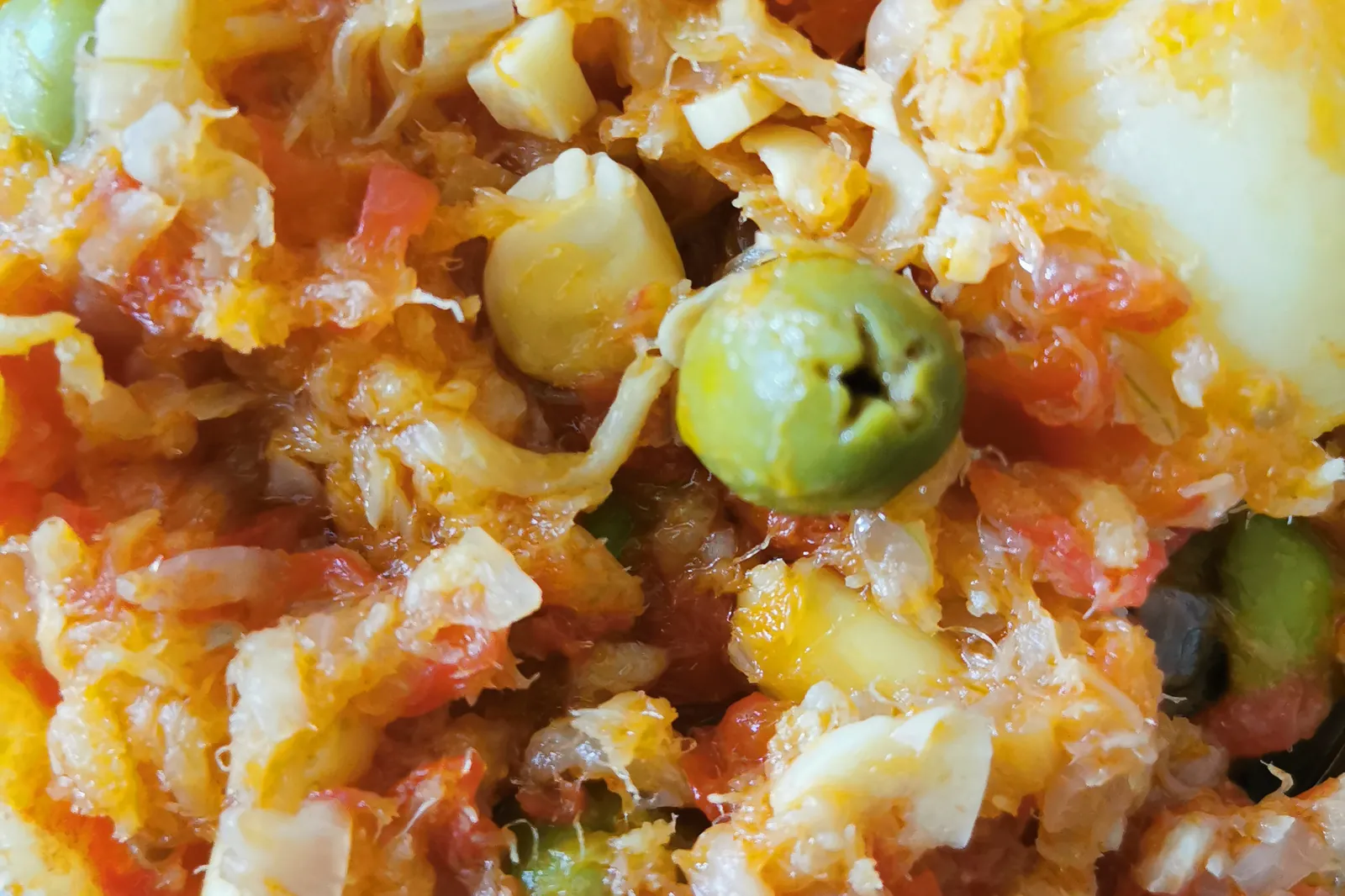
A close-up of shredded salt cod simmered in a red tomato and pepper sauce with green olives and potato

Basque-Cuban Classic

Photo: Wotancito, CC BY-SA 4.0, via Wikimedia Commons

The Heritage Formulary

Measured Ingredients

Estimated cost: Moderate — about $4–5 per serving at home (USD)

A good vizcaína is judged by the sauce: thick, brick-red and sweet from the peppers, never watery.

Execution Methodology & Culinary Technique

Step-by-Step Cooking Guide

Active 1h 5m
P

Prep Stage: Soak the Cod, Then Layer

20 Mins active • Plus 12–24 Hrs soaking

The day before, soak the salt cod in a large bowl of cold water in the fridge for 12 to 24 hours, changing the water 2 to 3 times. On the day, drain and rinse the cod and flake it into large chunks, then slice the potatoes, onion and peppers and measure out everything else. The layering order matters: potatoes at the bottom, cod in the middle, peppers and onions on top, with the sauce poured over — do not stir once it is layered.

Maestro Tip: Taste a tiny piece of the soaked cod before cooking. If it is still very salty, soak it for another few hours; if it tastes almost fresh, it is ready.

  1. 1

    Desalt and Flake the Cod

    Overnight + 10 Mins Cold water, fridge 0–4°C (32–39°F)

    The day before cooking, put the salt cod in a large bowl, cover with cold water and refrigerate for 12 to 24 hours, changing the water 2 to 3 times. On the day, drain, rinse well and pat dry. Flake the cod into large chunks, about 5 cm across, removing any bones or skin. Skipping the soak leaves the dish inedibly salty — this step cannot be rushed.

    Change the soaking water on a schedule, not when you remember: fresh water each time pulls out far more salt.

    Done when: The cod flakes easily and tastes pleasantly salty, not harsh.

  2. 2

    Build the Sofrito

    10 Mins Medium heat, ~175°C (350°F)

    Heat half the olive oil in a wide, heavy pot over medium heat. Add the onion, green pepper and garlic with the sweet paprika and cook for 6 to 8 minutes, stirring, until the onion is soft and the paprika smells sweet and toasty. Pour in the tomato sauce and cook for 2 minutes more until it darkens slightly.

    Keep the paprika moving in the oil — it burns in seconds if it sits still on the hot pot.

    Done when: The sofrito is soft, glossy and brick-red, with the raw onion smell gone.

  3. 3

    Layer the Potatoes and Cod

    5 Mins No heat

    Spread the sliced potatoes over the bottom of the pot in an even layer. Arrange the cod chunks on top, then scatter over the roasted red pepper strips, sliced olives and capers. Pour in the remaining olive oil, the water and the white wine, then the pimiento liquid, and tuck in the bay leaf. Do not stir from this point on.

    Potatoes on the bottom protect the cod from the direct heat and cook in the sauce below it.

    Done when: The pot is layered — potatoes, cod, peppers, olives and capers — with liquid just reaching the cod.

  4. 4

    Simmer Until Tender

    30 Mins Low simmer, ~95°C (200°F)

    Bring the pot to a gentle simmer over medium heat, then reduce to low, cover, and cook for 25 to 30 minutes without stirring, until the potatoes are fork-tender and the sauce has thickened. The cod is done when it flakes easily and reaches at least 63°C (145°F) in the thickest piece. Shake the pot gently by the handles now and then instead of stirring, so the cod does not break apart.

    Resist the spoon: stirring turns the cod to shreds and clouds the sauce. A gentle shake of the pot is all it needs.

    Done when: The potatoes are tender, the sauce coats a spoon, and the cod flakes at 63°C (145°F) or above.

  5. 5

    Rest and Serve

    5 Mins Off the heat

    Remove the bay leaf. Let the pot rest, covered, for 5 minutes so the sauce settles. Taste and adjust the salt only now — the cod, olives and capers already bring plenty. Spoon into wide bowls over white rice, sprinkle with the chopped parsley, and serve with crusty bread.

    Taste before adding any salt at all: most batches need none, and a salty vizcaína cannot be fixed.

    Done when: The stew holds its layers in the bowl, with red sauce, pale cod and green olives all visible.

Finishing Touches & Plating

Serve the stew hot in wide bowls, with the sauce spooned generously over the top. The pot is at its best the same day, but the flavours deepen overnight — it is one of the few fish stews that improves on the second day.

Nutritional Physiology & Benefits

Nutrition

Energy

425

kcal / serving

Protein

30g

Complete AA

Carbs

33g

Complex

Fats

18g

Healthy

Per serving (4 servings · 1 serving ≈ 450 g)
Energy425 kcal
Protein30 g
Carbohydrates33 g
Fat18 g
Fibre6.2 g
Sugar7.0 g
Sodium1114 mg
Per 100g
Energy94 kcal
Protein6.8 g
Carbohydrates7.3 g
Fat4 g
Fibre1.4 g
Sugar1.5 g
Sodium247 mg

Nutrition values are estimated — calculated from USDA FoodData Central values for the listed ingredients.

Vitamins & minerals: Vitamin B12 and selenium (cod), vitamin C (peppers, tomato), vitamin B6 and potassium (potato), vitamin E (olive oil).

High in Lean Protein

About 30 g of protein per serving from the cod, with very little fat from the fish itself.

Peppers and Tomatoes for Colour

Roasted red peppers and tomatoes bring vitamin C and a natural sweetness that balances the salty cod.

Olive Oil, Not Cream

The sauce gets its body from olive oil, tomato and peppers — rich without any cream or butter.

Food Pairings

What to Eat With

To optimize nutrient absorption and elevate the sensory depth, pair with these authentic accompaniments:

Sides

White Rice

Plain white rice soaks up the tomato-pepper sauce and turns the stew into a complete meal.

Vegetables

Avocado Salad

Cool, creamy avocado with a squeeze of lime balances the salty, briny stew.

Drinks

Dry White Wine or Lime Soda

A cold, dry white wine — or a lime soda for a non-alcoholic option — cuts through the richness of the sauce.

Full Menus

As a Cuban Family Dinner

Serve the stew with white rice, avocado salad and crusty bread, and finish with flan for a classic Cuban table.

Complete menu

Serve the stew over white rice with a simple avocado salad and crusty bread for the sauce.

Digestive Guardrails

What NOT to Combine

To prevent digestive distress, sluggishness, or palate clash, avoid pairing the dish with these elements:

Adding Salt Before Tasting

Salt cod, olives and capers already carry a lot of sodium; salting early almost always oversalts the pot. Taste at the end and add nothing if it is already seasoned. This is general information, not medical advice.

Cream or Cheese on Top

Cream or grated cheese would mask the clean tomato-pepper sauce and add a large amount of saturated fat for no flavour gain. This is general information, not medical advice.

General information only, not medical advice — consult a doctor for personal dietary decisions.

Who Should Eat It

Who Should Eat

  • General adultsA hearty, protein-rich dinner for most adults; one serving is a full meal with rice on the side.
  • ChildrenChildren may find the olives and capers too sharp; serve them the cod and potatoes with the sauce and pick out the olives.
  • ElderlySoft cod and tender potatoes are easy to chew; serve a smaller portion with well-cooked rice if a full one is too much.
  • Pregnant womenFine in pregnancy when the cod is cooked through to 63°C (145°F); the dish is high in sodium, so keep portions moderate and ask your clinician if unsure.
  • Breastfeeding womenA protein-rich, satisfying dinner that suits breastfeeding; pair with rice and salad for balance.
  • AthletesAbout 30 g of protein per serving supports muscle recovery; the potatoes and rice replace energy after training.
  • Weight gainEnergy-dense with rice and olive oil, so it suits anyone trying to gain weight.
  • Weight lossOne serving is a large meal, so take a smaller portion with extra salad and go easy on the rice if you are watching energy.

Health Conditions — Adjust or Avoid

Conditions

  • DiabetesAbout 33 g of carbohydrate per serving, mostly from the potatoes, plus rice on the side; count the rice as well, and ask your clinician.
  • High blood pressureOne serving carries about 1,112 mg of sodium from the cod, olives and capers, which is high; eat it occasionally and keep the rest of the day low in salt, and ask your clinician.
  • Kidney diseaseHigh in protein and sodium, so people with kidney disease should keep portions small and infrequent; ask your clinician.
  • GoutCod is low in purines compared with red meat, but the dish is salty; enjoy occasionally rather than daily if gout is a concern, and ask your clinician.
  • Stomach issuesThe tomato sauce and wine are acidic and can bother reflux; a smaller portion with less sauce is gentler, and ask your clinician if symptoms persist.
  • Cardiovascular diseaseLow in saturated fat and rich in lean protein, but the sodium is high, so treat it as an occasional food and ask your clinician.
  • Fatty liverLean protein with olive oil and no added sugar suits most people, but keep portions in check and ask your clinician.
  • Food allergiesContains fish (cod); the dish is otherwise free of gluten, milk, egg and nuts. Ask your clinician if you have a food allergy.
  • Special therapeutic dietsFits a high-protein plan as written; for low-sodium plans it is a poor fit because of the salt cod, olives and capers, and ask your clinician or dietitian.

If you have a medical condition, consult your doctor before changing your diet.

Storage & Use

Storage & Use

How to store
Cool quickly and store in a sealed container in the fridge.
In the fridge
Up to 2 days at 0–4°C (32–39°F). The flavours deepen overnight.
In the freezer
Up to 1 month, though the potatoes soften and turn grainy after thawing.
How to reheat
Warm gently in a covered pot over low heat until steaming hot, at least 74°C (165°F); avoid boiling, which toughens the cod.
Freezing recommended
Only if needed — the dish is best fresh or from the fridge the next day.
Signs it has spoiled
Sour or ammonia smell, slimy cod, or mould on the surface — discard if any of these appear.

More recipes to explore

A plate of ropa vieja, shredded beef in tomato sauce, with yellow rice, black beans and fried plantains Cuba flag Cuba 3h
Dinner •Cuba's National Dish

Ropa Vieja

This ropa vieja recipe braises flank steak low and slow until it falls into long shreds, then simmers it in a tomato, pepper and olive sauce. One serving is about 310 g. Serve it over white rice with black beans and fried plantains, the way Cuban families do.

Comfort & Warmth

Slow-braised shredded beef in a tomato and pepper sauce, served with rice and black beans.

Pairs Well With
White rice, black beans and fried plantains
High Protein
A pressed Cuban sandwich cut in half, with melted Swiss cheese and layers of ham and pork, served with pickle spears Cuba flag Cuba 25m
Lunch •Havana Classic

Cuban Sandwich

This cuban sandwich recipe layers mojo roast pork, ham, Swiss cheese, pickles and mustard on Cuban bread, then presses it flat until the crust crackles and the cheese melts. One serving is about 345 g. It is a great use for leftover roast pork and comes together in 25 minutes.

Comfort & Warmth

A pressed sandwich of roast pork, ham, Swiss cheese, pickles and mustard on Cuban bread.

Pairs Well With
Plantain chips and a cold lager or lime soda
A plate of dark moros y cristianos rice cooked with black beans, served with slices of roast pork and golden fried plantains Cuba flag Cuba 1h 30m
Lunch •Cuban Heritage

Moros y Cristianos

This moros y cristianos recipe cooks Cuban black beans and rice together in one pot: dried black beans simmered until tender, then long-grain rice cooked in the dark bean liquid with a sofrito of onion, green pepper and garlic, cumin, oregano and bay leaf. The grains come out dark, fragrant and fluffy, never pale or plain. One serving is about 272 g.

Comfort & Warmth

Cuban black beans and white rice cooked together in one pot with sofrito, cumin, oregano and bay leaf, until the grains turn dark.

Pairs Well With
Roast pork or ropa vieja with fried sweet plantains and a crisp cabbage salad, the classic Cuban plate.
A plate of Cuban lechon asado with shredded mojo pork, onions and lime, yellow rice with black beans and fried plantains Cuba flag Cuba 5h 30m
Dinner •Havana Heritage

Cuban Lechon Asado

This cuban lechon asado recipe marinates a pork shoulder overnight in mojo — sour orange juice, a whole head of garlic, oregano and cumin — then roasts it low and slow until the meat is so tender it pulls apart with a fork. It is the centrepiece of Nochebuena, the Cuban Christmas Eve feast, and it is nothing like Filipino lechon: there is no whole crispy-skinned pig here, just a mojo-soaked shoulder roast. One serving is about 250 g.

Celebration & Sharing

A whole pork shoulder marinated overnight in sour-orange mojo, then roasted low and slow until it pulls apart — the centrepiece of Nochebuena.

Pairs Well With
Shredded mojo pork with black beans, yellow rice and fried plantains
High Protein

The Dinner Gazette

Never wonder what’s for dinner again

One email a week with easy dinner ideas from around the world — ingredients, steps and nutrition, tested in our kitchen first.

Delivered every Thursday morning. Unsubscribe anytime.