
Curated recipes from 193 countries  •  New seasonal Mediterranean issue out now

Overview

Cuchuflí

Cuchuflí, Cuchuflis, Chilean Wafer Tubes

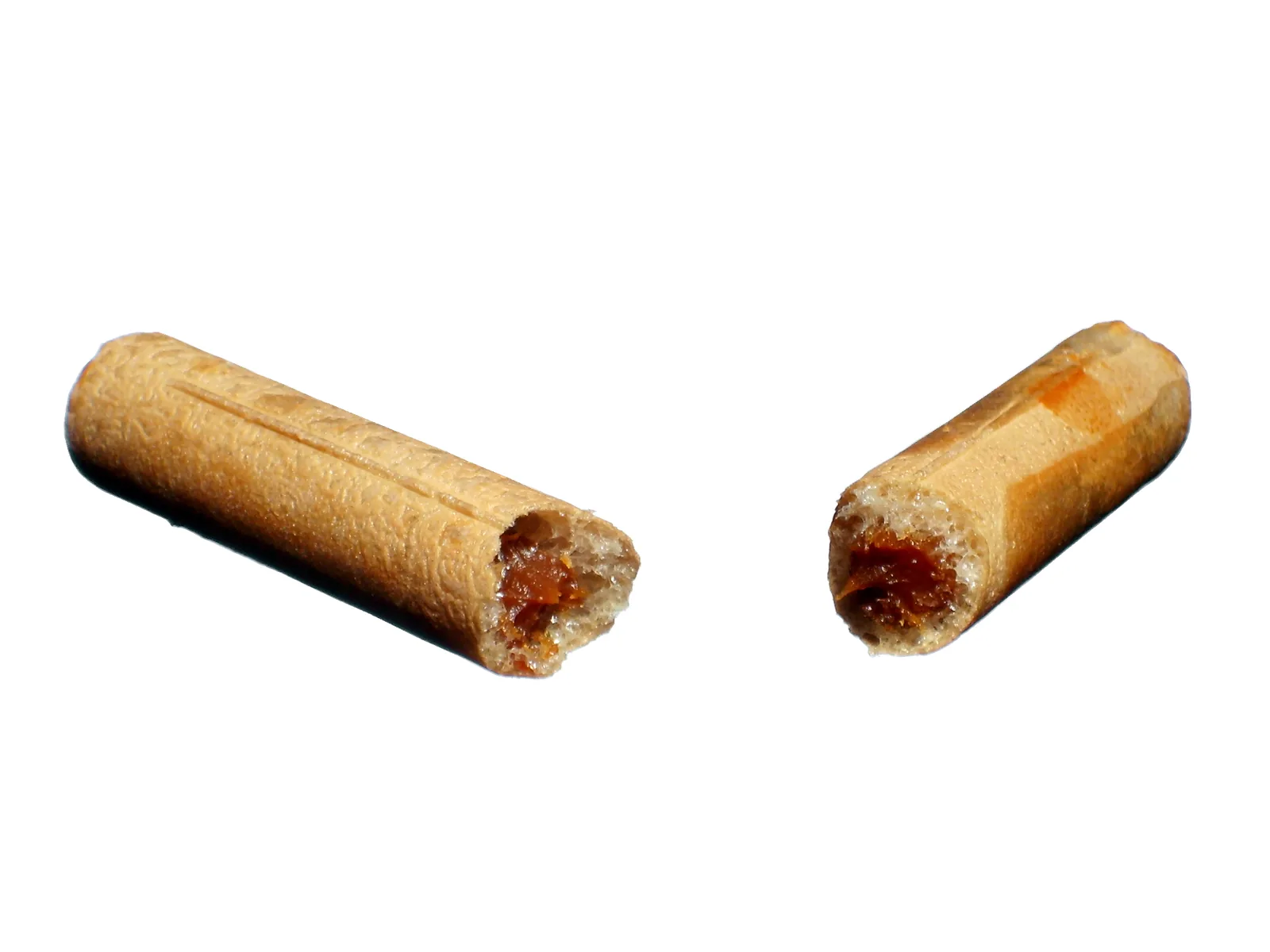
This cuchufli recipe makes Chile's crisp wafer tubes: a thin egg-white batter spread on a tray, baked until golden at the edges, rolled around a stick while still hot, then piped full of manjar (dulce de leche) until the caramel shows at both ends. They are the sweet sold by street vendors and beach kiosks all over Chile. One serving is about 66 g (two filled tubes).

Cuchuflí is Chile's street-corner sweet: a thin wafer rolled into a tube and filled end to end with manjar, sold by vendors at beaches, fairs and outside schools. The wafer is the same kind of batter as an ice-cream cone or a French tuile — egg whites, sugar, butter and flour, spread thin, baked until golden and rolled while it is still hot — and the filling is manjar, the thick caramelised milk that Chileans spread on almost everything sweet.

Pairs well with: A cup of tea, black coffee & a glass of cold milk

Provenance

Chile flag Chile

Chilean Street Sweet

Latin America & Caribbean

Time Dedication

45m

20m prep • 25m cook

Batch Yield

8 Servings

229 kcal per serving

1 serving ≈ 66 g

Technical Skill

Intermediate

Medium (Roll While Hot)

Meal Timing & Digestive Fit

Breakfast

Not Advised

Lunch

Inappropriate

Dinner

Inappropriate

Snack & Tea

Ideal Light Bite

Occasions: Afternoon tea, beach days, street fairs, children's parties Cost: Low — about $1–2 per serving at home
Two crisp cuchufli wafer tubes on a white background, one cut in half with dark golden manjar showing at the cut ends

Chilean Street Sweet

Photo: Jorge Barrios, CC BY 3.0, via Wikimedia Commons

The Heritage Formulary

Measured Ingredients

Estimated cost: Low — about $1–2 per serving at home (USD)

Cuchuflí with egg-white wafer tubes baked until golden, rolled while hot and filled with manjar.

Execution Methodology & Culinary Technique

Step-by-Step Cooking Guide

Active 45m
P

Prep Stage: A Thin Batter and a Hot Oven

20 Mins • Whisking & Resting

Whisk the egg whites with the powdered sugar and salt until foamy, whisk in the melted butter and vanilla, then fold in the sifted flour until the batter is smooth and runny, like thin cream. Let it rest for 10 minutes while the oven heats to 175°C (350°F) and you line the baking trays — the rest lets the flour hydrate so the wafers spread evenly.

Maestro Tip: The batter must be thin enough to spread with the back of a spoon; if it is too thick, the wafers come out heavy instead of crisp.

  1. 1

    Whisk the Batter

    10 Mins Room temperature, about 20°C (68°F)

    Put the 100 g egg whites, 120 g powdered sugar and 1 g salt in a bowl and whisk for about a minute until foamy. Whisk in the 45 g melted butter and 5 ml vanilla, then sift in the 60 g flour and whisk until you have a smooth, thin batter. Let it rest for 10 minutes.

    Do not whisk the whites to stiff peaks — foamy is enough, and stiff whites make the batter lumpy.

    Done when: A smooth, runny batter with no lumps.

  2. 2

    Heat the Oven and Line the Trays

    5 Mins Oven at 175°C (350°F)

    Heat the oven to 175°C (350°F) and line two baking trays with baking paper. Have a wooden spoon handle or a thin dowel ready — you will roll the hot wafers around it, and you only have about 15 seconds before each wafer sets hard.

    Work in small batches of two or three wafers at a time so none of them set before you can roll them.

    Done when: Oven at temperature, trays lined, rolling stick at hand.

  3. 3

    Bake and Roll the Wafers

    20 Mins Oven at 175°C (350°F)

    Spoon about 2 tablespoons of batter onto a lined tray and spread it with the back of the spoon into a thin oval about 12 cm by 10 cm. Bake at 175°C (350°F) for 6–8 minutes, until the wafer is pale gold with darker golden edges. Lift it off the tray at once and roll it tightly around the wooden spoon handle, seam side down, then slide it off and leave it to cool and crisp. Repeat until you have 16 tubes.

    If a wafer sets before you finish rolling it, put it back in the oven for 30 seconds to soften it again.

    Done when: Pale gold wafers that hold a crisp tube shape when cool.

  4. 4

    Fill with Manjar

    10 Mins Room temperature, about 20°C (68°F)

    When the tubes are completely cool, pipe the 240 g manjar into one end until the tube is half full, then fill from the other end so the two lots meet in the middle. The manjar should show at both ends. Serve at once, or keep the filled tubes in a dry place for a few hours — do not refrigerate them, or the wafer goes soft.

    Fill the tubes as close to serving as you can: the wafer stays crisp for hours, but the manjar slowly softens it.

    Done when: Tubes filled end to end, with manjar showing at both ends.

Finishing Touches & Plating

Serve the cuchuflí at room temperature with tea or coffee — eat them the same day, while the wafer is still crisp and the manjar is soft inside.

Nutritional Physiology & Benefits

Nutrition

Energy

229

kcal / serving

Protein

4g

Complete AA

Carbs

35g

Complex

Fats

7g

Healthy

Per serving (8 servings · 1 serving ≈ 66 g)
Energy229 kcal
Protein4 g
Carbohydrates35 g
Fat7 g
Fibre0.2 g
Sugar27.9 g
Sodium115 mg
Per 100g
Energy345 kcal
Protein6 g
Carbohydrates52.6 g
Fat10.4 g
Fibre0.3 g
Sugar42.1 g
Sodium174 mg

Nutrition values are estimated — calculated from USDA FoodData Central values for the listed ingredients.

Vitamins & minerals: Calcium (milk and manjar), B vitamins (egg white and enriched flour), small amounts of iron (flour).

Light, Crisp Energy

About 34.8 g of carbohydrate per serving of two tubes, mostly from the manjar and sugar — a quick sweet lift with tea.

Egg White, Not Yolk

The wafer uses egg whites only, so the fat stays low at about 6.9 g per serving while the protein comes from the whites and the manjar.

No Frying, No Cream

The wafers are baked, not fried, and the filling is just caramelised milk — there is no cream or chocolate in the classic version.

Food Pairings

What to Eat With

To optimize nutrient absorption and elevate the sensory depth, pair with these authentic accompaniments:

Drinks

Black Tea

Tea is the classic partner — the crisp wafer softens slightly as you eat it with a hot drink, and the tea cuts the sweetness of the manjar.

Black Coffee

Coffee's bitterness balances the caramel sweetness, and a cuchuflí is the perfect size to eat with a small cup.

A Glass of Cold Milk

Cold milk is the favourite pairing for children — it cools the sweetness and makes the wafer taste rounder.

More Pairings

Vanilla Ice Cream

A cuchuflí stuck into a scoop of vanilla ice cream is a classic Chilean serving — the warm-cold, crisp-creamy contrast works beautifully.

Complete menu

Cuchuflí with black tea and a scoop of vanilla ice cream.

Digestive Guardrails

What NOT to Combine

To prevent digestive distress, sluggishness, or palate clash, avoid pairing the dish with these elements:

Filling Them Too Early

Manjar slowly softens the wafer, so tubes filled a day ahead go limp; fill them within a few hours of serving. This is general food information, not medical advice.

Storing Them in the Fridge

Cold and damp air makes the crisp wafer go soft and chewy; keep filled tubes in a dry place at room temperature. This is general food information, not medical advice.

General information only, not medical advice — consult a doctor for personal dietary decisions.

Who Should Eat It

Who Should Eat

  • General adultsA sweet, crisp snack — two tubes with tea is a classic afternoon treat for most adults.
  • ChildrenChildren love the caramel filling, but the tubes are very sweet; one tube with milk is the lighter choice for younger children.
  • ElderlyCrisp and easy to eat, though the tubes are hard — break them into pieces if chewing is difficult.
  • Pregnant womenFine as an occasional sweet; the sugar is high, so one tube is the lighter choice — ask your clinician about sugar portions if you need to.
  • Breastfeeding womenA quick carbohydrate-rich snack for a busy day, best with a glass of milk for protein.
  • AthletesSweet and energy-dense at about 229 kcal for two tubes; one tube after training is the lighter choice.
  • Weight gainEnergy-dense and easy to carry, which suits a higher-energy day.
  • Weight lossAbout 229 kcal and 27.9 g of sugar for two tubes; one tube with black tea is the lighter choice.

Health Conditions — Adjust or Avoid

Conditions

  • DiabetesAbout 34.8 g of carbohydrate and 27.9 g of sugar per serving; one tube is the lighter choice, and ask your clinician about portion size.
  • High blood pressureAbout 155 mg of sodium per serving, which is modest; ask your clinician if you are on a low-sodium plan.
  • Kidney diseaseLow in protein and potassium; ask your clinician whether this portion suits your plan.
  • GoutLow in purines; a wafer sweet is not a major concern for most people with gout — ask your clinician.
  • Stomach issuesA crisp, sweet wafer that can feel heavy on a sensitive stomach; keep to one tube and eat it with tea, and ask your clinician if your stomach keeps bothering you.
  • Cardiovascular diseaseThe fat is low but the sugar is high; enjoy one tube occasionally, and ask your clinician about the right portion for you.
  • Fatty liverA sweet, energy-dense snack; one tube with black tea is the lighter way to enjoy it — ask your clinician about the right portion for you.
  • Food allergiesContains egg (egg white), wheat (gluten) and milk (butter and manjar) — the main allergens in this recipe; if you have a food allergy, ask your clinician whether it is safe for you.
  • Special therapeutic dietsFollow your clinician's guidance on sugar and carbohydrate portions; this is general information, not medical advice.

If you have a medical condition, consult your doctor before changing your diet.

Storage & Use

Storage & Use

How to store
Keep unfilled tubes in an airtight tin at room temperature; fill only what you will eat within a few hours.
In the fridge
Do not refrigerate filled tubes — the wafer goes soft. Unfilled tubes keep 2 weeks in a sealed tin.
In the freezer
Not recommended — the wafer shatters and goes soggy on thawing.
How to reheat
Not reheated — eat at room temperature.
Freezing recommended
No — the crisp wafer does not survive freezing.
Signs it has spoiled
Soft, chewy wafer, stale smell, or mould on the manjar.

More recipes to explore

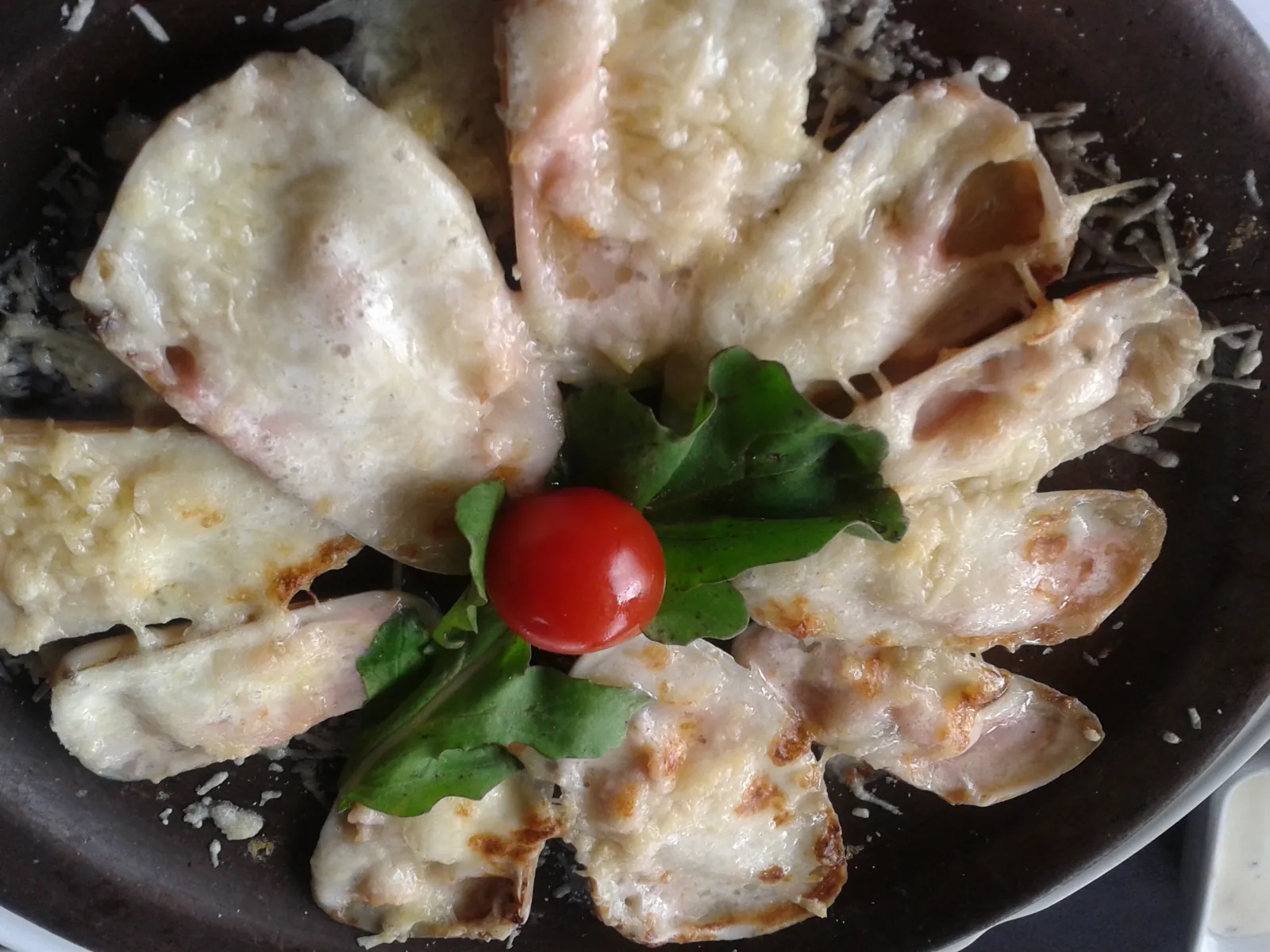
Machas a la parmesana — razor clams in their shells topped with melted golden Parmesan, garnished with greens and a cherry tomato Chile flag Chile 35m
Lunch •Valparaíso Coast Heritage

Machas a la Parmesana

This machas a la parmesana recipe bakes sweet Chilean razor clams in their own shells with garlic butter, a splash of dry white wine and a blanket of grated Parmesan that turns golden under the grill. It is the classic starter of the Valparaíso coast: briny, buttery and ready in minutes. One serving is about 200 g, six shells per person.

Coastal & Savory

Sweet razor clams baked in their shells with garlic butter, white wine and a golden Parmesan crust.

Pairs Well With
Crusty bread and lemon wedges, with a glass of dry white wine.
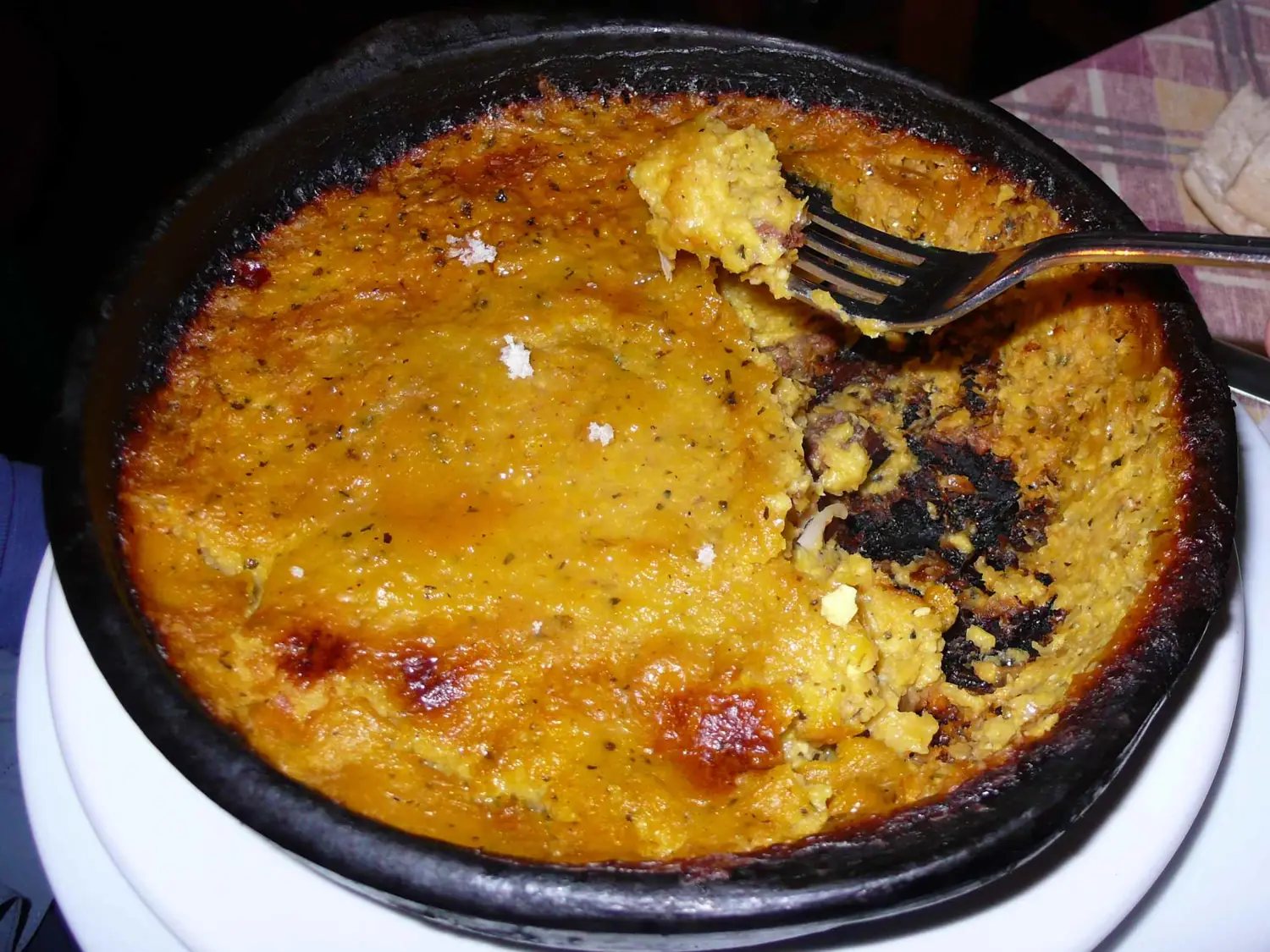
Pastel de choclo in a black clay dish, golden corn topping with a fork lifting a bite of the meat filling Chile flag Chile 1h 25m
Dinner •Chilean Countryside Heritage

Pastel de Choclo

This pastel de choclo recipe is Chile's beloved baked corn pie: a savoury filling of seasoned ground beef, chicken, hard-boiled egg, black olives and raisins, covered with a sweet, basil-flecked corn topping and baked until golden. Sweet meets savoury in every spoonful, and the clay dish it bakes in keeps it hot to the table. One serving is about 340 g.

Hearty & Satisfying

Sweet corn and basil topping over a savoury beef and chicken filling with egg, olives and raisins.

Pairs Well With
A fresh tomato salad and a glass of Chilean red wine.
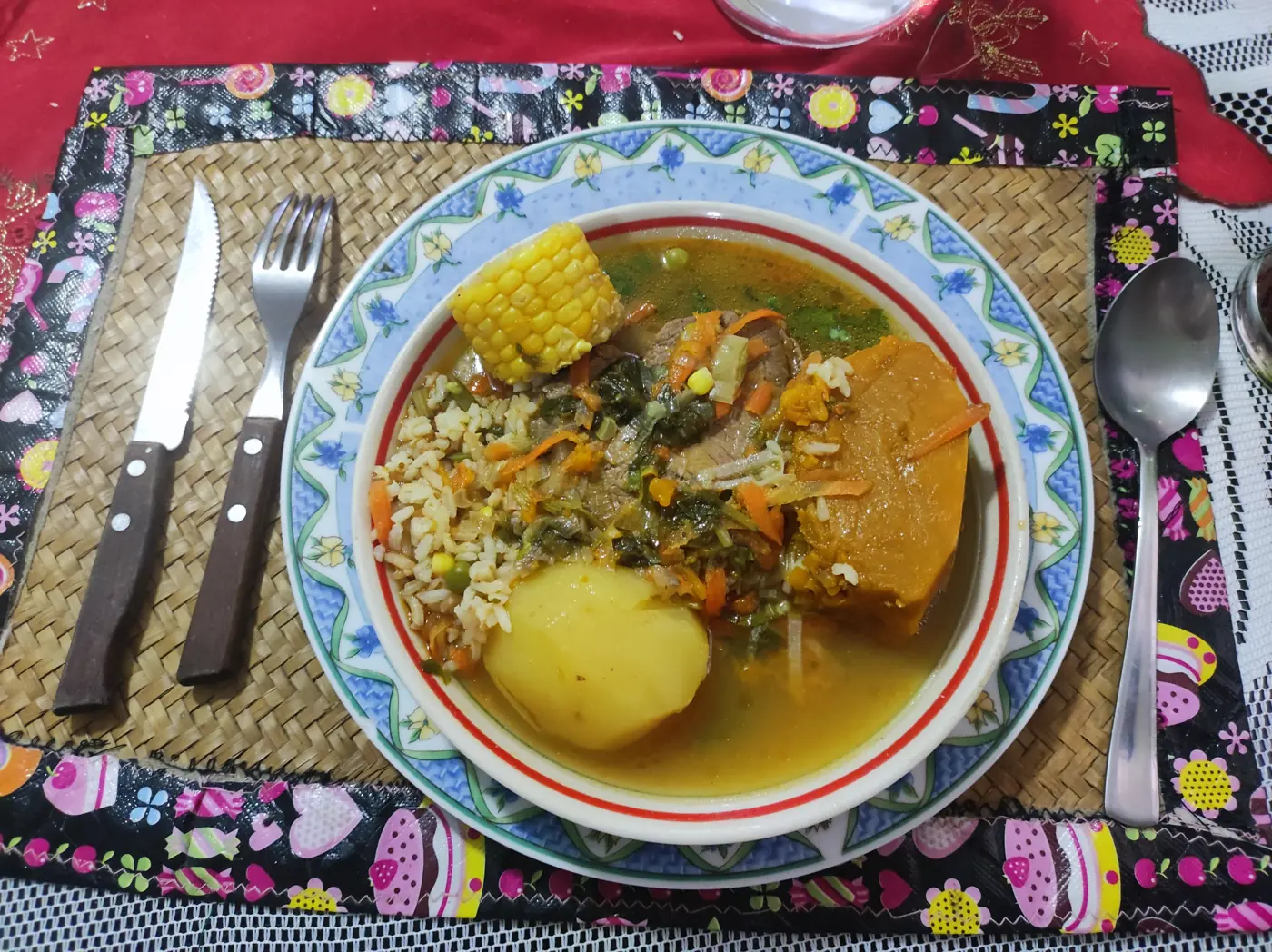
Cazuela chilena — a bowl of chicken soup with a whole potato, a piece of pumpkin, corn on the cob and rice in a golden broth Chile flag Chile 1h 20m
Lunch •Chilean Home Kitchen Heritage

Cazuela Chilena

This cazuela chilena recipe is Chile's home-cooked comfort soup, and its identity is unmistakable: a big piece of orange pumpkin, a chunk of corn on the cob, a potato and a scoop of rice, all simmered with chicken in a clear, savoury broth. The pumpkin sweetens the broth as it cooks, the corn stays sweet and firm, and the rice turns the soup into a full lunch. One serving is about 750 g, broth and all.

Comfort & Warmth

Chicken simmered with pumpkin, corn, potato and rice in a light, cilantro-scented broth.

Pairs Well With
Crusty bread and pebre salsa, with the rice spooned into the bowl.
Soups & Broths
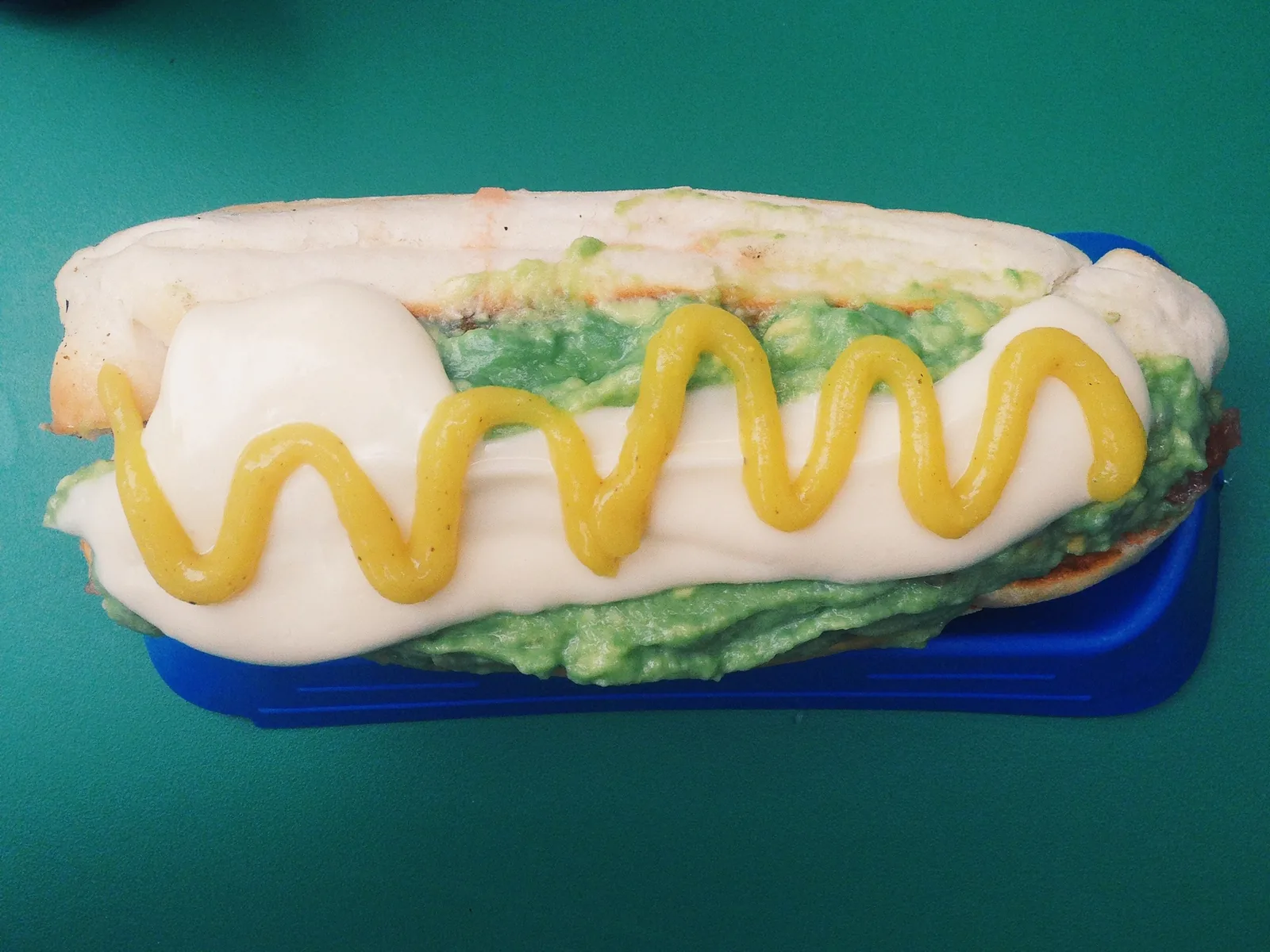
A completo chileno in a soft bun loaded with mashed avocado, mayonnaise and a mustard zigzag, with tomato peeking out at one end Chile flag Chile 25m
Snack & Tea •Chilean Street Food

Completo Chileno

A completo chileno is Chile's answer to the hot dog: a pork frankfurter in a soft bun, buried under diced tomato, a thick layer of mashed avocado and a generous ribbon of mayonnaise. It is salty, creamy and gloriously messy, and it is eaten standing up, with both hands and no cutlery. One serving is about 229 g.

Quick & Satisfying

A pork frankfurter in a soft bun, loaded with tomato, mashed avocado and mayonnaise.

Pairs Well With
Crispy fries, a cold lemonade or a lager

The Dinner Gazette

Never wonder what’s for dinner again

One email a week with easy dinner ideas from around the world — ingredients, steps and nutrition, tested in our kitchen first.

Delivered every Thursday morning. Unsubscribe anytime.