Curated recipes from 193 countries  •  New seasonal Mediterranean issue out now

Overview

Czech Goulash

Hovězí guláš, Czech Beef Goulash

This czech goulash recipe is a thick beef stew, not a soup: beef simmers slowly with a mountain of onion, sweet paprika and tomato until the sauce turns dark, glossy and rich. It is served with soft bread dumplings and a scatter of raw onion on top. One serving is about 475 g.

Goulash came to Bohemia from Hungary in the 19th century, and Czech cooks made it their own: where Hungarian goulash stayed a thinner, soup-like dish, the Czech version became a thick stew, with more onion, less liquid and bread dumplings to mop up the sauce. It became a staple of Czech pubs and canteens, served by the ladle with a scatter of raw onion, and it remains one of the dishes Czechs order first when they sit down in a hospoda.

Pairs well with: Bread dumplings, raw onion & Czech lager

Provenance

Czechia flag Czechia

Czech Heritage

Nordic & European

Time Dedication

2h 25m

25m prep • 120m cook

Batch Yield

4 Servings

848 kcal per serving

1 serving ≈ 475 g

Technical Skill

Intermediate

Medium (Slow Stew & Dumplings)

Meal Timing & Digestive Fit

Breakfast

Not Advised

Lunch

Hearty Midday Main

Dinner

Ideal Hearty Main

Snack & Tea

Inappropriate

High Protein Occasions: Weekend dinners, pub-style suppers, winter gatherings, family lunches Cost: Medium — about $4–5 per serving at home
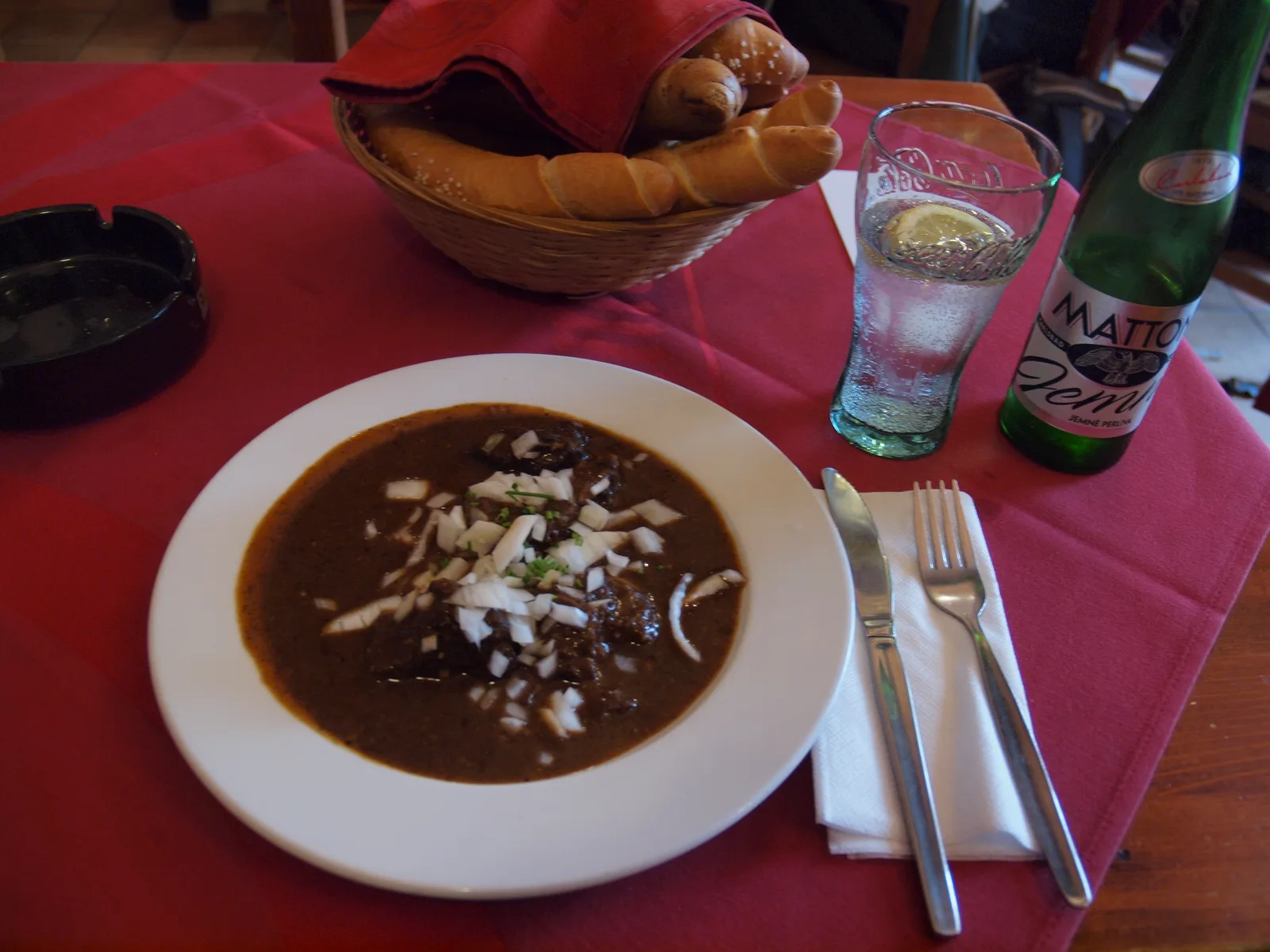
A bowl of dark Czech beef goulash topped with chopped raw onion, on a red tablecloth in a Prague restaurant

Czech Heritage

Photo: JIP, CC BY-SA 3.0, via Wikimedia Commons

The Heritage Formulary

Measured Ingredients

Estimated cost: Medium — about $4–5 per serving at home (USD)

Cooked the traditional Czech way: a thick beef stew with onion and paprika, never a soup, served with bread dumplings and raw onion.

Execution Methodology & Culinary Technique

Step-by-Step Cooking Guide

Active 2h 25m
P

Prep Stage: Cube, Chop & Mix the Dough

25 Mins • Chopping & Mixing

Cut the beef into even cubes and chop the onions fine. Stir the yeast and sugar into the lukewarm milk, leave 5 minutes until foamy, then mix with the 350 g flour, the egg and 4 g salt into a soft dough and knead for 5 minutes. Cover and leave to rise while the stew cooks.

Maestro Tip: Chop the onion really fine — it should melt away into the sauce, not stay in chunks.

  1. 1

    Brown the Beef

    12 Mins Medium-high heat, ~200°C (400°F)

    Melt the lard in a heavy pot over medium-high heat. Brown the beef cubes in batches, about 3 minutes per batch, until dark on the outside. Lift out and set aside; work in batches so the meat browns instead of steaming.

    Brown in batches — a crowded pot steams the meat grey and the stew loses its deep colour.

    Done when: Beef cubes dark brown on the outside, still pink inside.

  2. 2

    Build the Onion-Paprika Base

    10 Mins Medium heat, ~175°C (350°F)

    Add the chopped onion to the same pot and cook 8 minutes, stirring often, until soft and golden. Take the pot off the heat, stir in the paprika and tomato paste, then return to the heat and cook 1 minute. Pour in the broth, scraping the browned bits off the bottom.

    Always stir paprika in off the heat — it burns in seconds on a hot pan and turns bitter.

    Done when: A deep red, fragrant base with the onion softened and the paprika bloomed, not scorched.

  3. 3

    Simmer the Stew

    100 Mins Gentle simmer, ~95°C (200°F)

    Return the beef to the pot with the garlic, caraway, marjoram, salt and pepper. Bring to the barest simmer, cover, and cook on the lowest heat for about 100 minutes, stirring now and then, until the beef is tender and the sauce is thick and dark. Stir the flour paste in during the last 10 minutes if the sauce needs thickening.

    Keep the liquid at the barest simmer — a rolling boil toughens the beef and the sauce never turns glossy.

    Done when: Beef falls apart at a touch, sauce thick enough to coat a spoon, dark reddish-brown.

  4. 4

    Shape & Rise the Dumplings

    10 Mins No heat

    While the stew simmers, punch the risen dough down and shape it into 2 logs about 5 cm thick on a floured surface. Cover and leave to rise again for 20 minutes. The dough should feel light and spring back slowly when pressed.

    Flour your hands, not the dough — extra flour on the surface makes heavy dumplings.

    Done when: Two smooth logs, risen and puffy, springing back slowly when pressed.

  5. 5

    Boil the Dumplings & Serve

    20 Mins Boiling water, 100°C (212°F)

    Bring a large pot of salted water to a rolling boil. Lower in the dough logs, cover and boil 18 to 20 minutes, turning once halfway. Lift out, prick with a fork to let the steam out, and slice into 2 cm rounds. Ladle the thick stew into bowls, scatter the raw onion over the top, and serve with the dumplings.

    Pricking the dumplings as soon as they leave the water stops them collapsing as they cool.

    Done when: Dumplings pale, springy and cooked through; stew thick and glossy, beef tender, onion bright on top.

Finishing Touches & Plating

Serve the stew steaming hot with three dumpling slices per person and a generous scatter of raw onion — the sharp onion against the rich, dark sauce is the classic Czech finish.
Nutritional Physiology & Benefits

Nutrition

Energy

848

kcal / serving

Protein

53g

Complete AA

Carbs

96g

Complex

Fats

27g

Healthy

Per serving (4 servings · 1 serving ≈ 475 g)
Energy848 kcal
Protein53 g
Carbohydrates96 g
Fat27 g
Fibre8.7 g
Sugar12.1 g
Sodium1320 mg
Per 100g
Energy179 kcal
Protein11.2 g
Carbohydrates20.2 g
Fat5.8 g
Fibre1.8 g
Sugar2.5 g
Sodium278 mg

Nutrition values are estimated — calculated from USDA FoodData Central values for the listed ingredients.

Vitamins & minerals: Beef supplies vitamin B12, iron and zinc, onion and paprika add vitamin C and potassium, and the dumplings add B vitamins from the flour and egg. All nutrition values are estimated.

Steady Energy

One serving gives about 94 g of carbohydrate, mostly from the bread dumplings, with 52.9 g of protein from the beef — a full, slow-burning meal.

Onion-Rich Sauce

Four hundred grams of onion cook down into the sauce, adding fibre and sweetness without any cream or extra fat.

Iron & Vitamin B12

Beef is a useful source of iron and vitamin B12, and the paprika and tomato add vitamin C and lycopene to the plate.

Food Pairings

What to Eat With

To optimize nutrient absorption and elevate the sensory depth, pair with these authentic accompaniments:

Sides

Bread Dumplings

Soft dumplings are the point of the dish — they soak up the thick sauce in a way no spoon can, and every Czech pub serves them this way.

Vegetables

Raw Onion

Sharp raw onion scattered on top cuts through the rich stew and adds a fresh crunch that the slow-cooked sauce cannot give.

Pickled Cucumber

Cold, sharp pickles refresh the palate between spoonfuls of the dark, rich stew.

Cucumber Salad

Thin cucumber in a light vinegar dressing gives a cool, fresh contrast to the warm, paprika-rich plate.

Drinks

Czech Lager

A cold, light lager is the traditional pub partner — it cleanses the palate and matches the hearty, savoury stew.

Complete menu

Start with pickled cucumber, serve the goulash hot with bread dumplings and raw onion, and finish with a cold Czech lager.

Digestive Guardrails

What NOT to Combine

To prevent digestive distress, sluggishness, or palate clash, avoid pairing the dish with these elements:

Extra Cream or Sour Cream on Top

Czech goulash is a dark, paprika stew without cream; stirring cream in dulls its colour and flavour and adds fat the dish does not need. This is general food information, not medical advice.

Very Sweet Sides

Sweet chutneys or honeyed sauces clash with the savoury paprika base; the stew already carries a gentle sweetness from the onion. This is general food information, not medical advice.

General information only, not medical advice — consult a doctor for personal dietary decisions.

Who Should Eat It

Who Should Eat

  • General adultsA hearty, complete dinner — about 52.9 g protein per serving, best enjoyed as an occasional weekend meal rather than an everyday plate.
  • ChildrenChildren usually love the mild, sweet sauce and soft dumplings; leave the raw onion off their bowls and go easy on the paprika.
  • ElderlySoft, easy to chew once the beef is tender, but the dish is rich — serve a modest portion with extra pickled cucumber instead of a second helping of dumplings.
  • Pregnant womenFine as an occasional dinner; the beef is cooked right through and the sauce is mild, but keep the portion modest and skip extra salt. Ask your clinician about portions.
  • Breastfeeding womenA comforting, energy-rich dinner; the beef, egg and milk supply protein and B vitamins, but one serving is enough. Ask your clinician about portions.
  • AthletesGood post-training fuel for carbohydrate and protein, with onion and paprika for vitamin C — pair with pickled vegetables rather than extra dumplings.
  • Weight gainEnergy-dense and easy to eat in large amounts, so it suits weight gain when served with the full portion of dumplings.
  • Weight lossTasty but rich at 848 kcal a serving; keep to one modest bowl, go light on the dumplings, and fill half the plate with pickled cucumber.

Health Conditions — Adjust or Avoid

Conditions

  • DiabetesThe dumplings are starchy, so keep the serving to the stated 475 g and skip sweet toppings; ask your clinician about portions.
  • High blood pressureOne serving carries about 1319 mg sodium from the broth and salt, so keep other salty foods out of the same meal and do not add extra salt at the table. Ask your clinician about portions.
  • Kidney diseaseOnion and tomato are high in potassium, which matters for some kidney diets; portions should stay modest. Ask your clinician about portions.
  • GoutBeef is higher in purines than vegetables or dumplings, so the meat content is the main thing to watch; keep to one modest serving. Ask your clinician about portions.
  • Stomach issuesA rich, paprika stew can be heavy on a sensitive stomach; eat slowly, take a smaller portion, and skip the raw onion if it bothers you. Ask your clinician about portions.
  • Cardiovascular diseaseThe dish is rich in energy and the beef adds saturated fat, so one modest serving with a big plate of pickled vegetables is a better balance than a second helping. Ask your clinician about portions.
  • Fatty liverThe dish is energy-dense, so keep portions modest and avoid eating it late at night. Ask your clinician about portions.
  • Food allergiesContains wheat flour (gluten) and egg. People with wheat or egg allergy should not eat it unless a safe substitute is used. Ask your clinician about safe alternatives.
  • Special therapeutic dietsNot suitable for a low-fat therapeutic diet as written; a version without the lard changes the dish and should be discussed with a clinician.

If you have a medical condition, consult your doctor before changing your diet.

Storage & Use

Storage & Use

How to store
Cool quickly and store stew and dumplings in separate airtight containers.
In the fridge
Keeps 3 days in the fridge at 4°C (40°F) or below.
In the freezer
Up to 3 months; freeze the stew alone, well wrapped, dumplings separately.
How to reheat
Reheat the stew gently on the stove until steaming hot throughout, to 74°C (165°F); steam the dumplings for 5 minutes rather than microwaving them.
Freezing recommended
Yes — the stew freezes very well and tastes even better the next day.
Signs it has spoiled
Sour smell, slimy beef surface, or dumplings that smell sour or feel sticky.

More recipes to explore

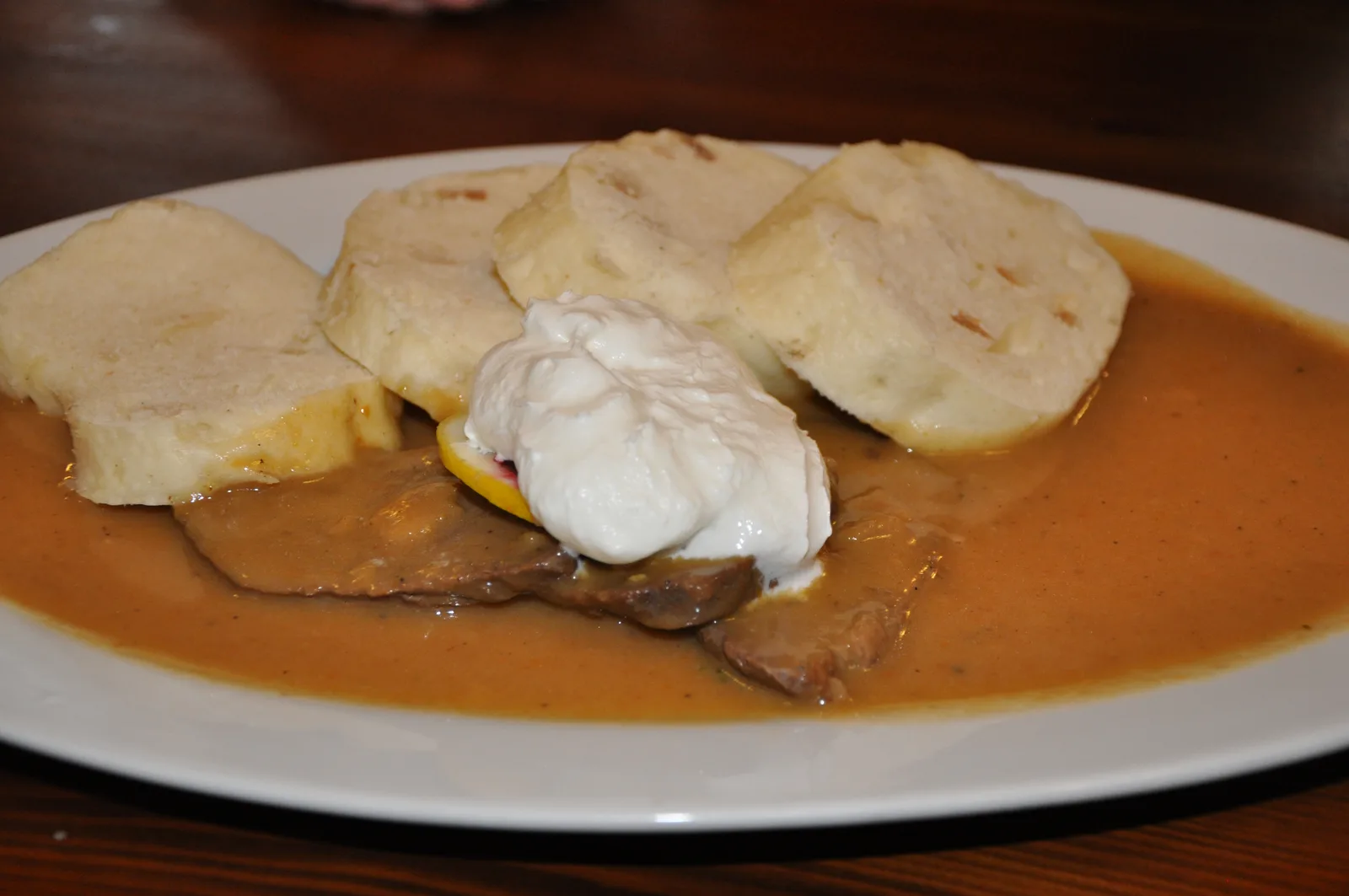
Sliced svickova beef in pale cream sauce with bread dumplings, whipped cream, lemon and cranberry on a white plate Czechia flag Czechia 3h
Dinner •Czech Heritage

Svíčková

This svickova recipe braises beef slowly with carrots, parsnip, celeriac and onion, then blends the vegetables into a smooth, pale cream sauce that is the soul of the dish. It is served in slices with bread dumplings, a spoonful of whipped cream, lemon and cranberry jam. One serving is about 475 g.

Comfort & Warmth

Tender beef in a silky root-vegetable cream sauce, served with soft bread dumplings, lemon and cranberry — the classic Czech Sunday lunch.

Pairs Well With
Bread dumplings, cranberry jam & lemon
High Protein
A finished trdelnik chimney cake filled with whipped cream and raspberries, held in a paper wrapper in Český Krumlov Czechia flag Czechia 1h 55m
Snack & Tea •Czech Heritage

Trdelník

This trdelnik recipe wraps a sweet yeasted dough around a spit and bakes it until the outside turns golden and crisp while the inside stays soft. It is rolled in cinnamon sugar while still hot, and Prague stalls often fill it with whipped cream and raspberries. One serving is about 150 g.

Comfort & Warmth

Warm, crisp-edged chimney cake rolled in cinnamon sugar, baked over heat until golden and eaten fresh from the stall.

Pairs Well With
Hot chocolate, coffee & fresh berries
Bœuf bourguignon — French beef braised in red wine France flag France 4h
Dinner •Burgundy Terroir

Bœuf Bourguignon

Beef braised gently in red wine until the connective tissue melts into a velvet, gelatin-rich sauce — the classic Burgundy Sunday dinner.

Cellular Repair

Beef braised in red wine until spoon-tender, with mushrooms and pearl onions.

Pairs Well With
Parsnip Purée & Steamed French Haricots Verts
High Protein
Vietnamese braised pork belly with golden eggs in caramel sauce Vietnam flag Vietnam 1h 45m
Dinner •One Pot

Vietnamese Braised Pork and Eggs

Pork belly slowly braised in coconut water and caramel until meltingly tender, with golden eggs that soak up the sweet-savoury sauce — the Vietnamese family dish that tastes better the next day.

Comfort & Sustained Energy

Slow-braised pork belly and eggs in coconut water and caramel.

Pairs Well With
Steamed rice & pickled mustard greens
High Protein

The Dinner Gazette

Never wonder what’s for dinner again

One email a week with easy dinner ideas from around the world — ingredients, steps and nutrition, tested in our kitchen first.

Delivered every Thursday morning. Unsubscribe anytime.