Curated recipes from 193 countries  •  New seasonal Mediterranean issue out now

Overview

Dutch Apple Pie

Appeltaart, Hollandse Appeltaart

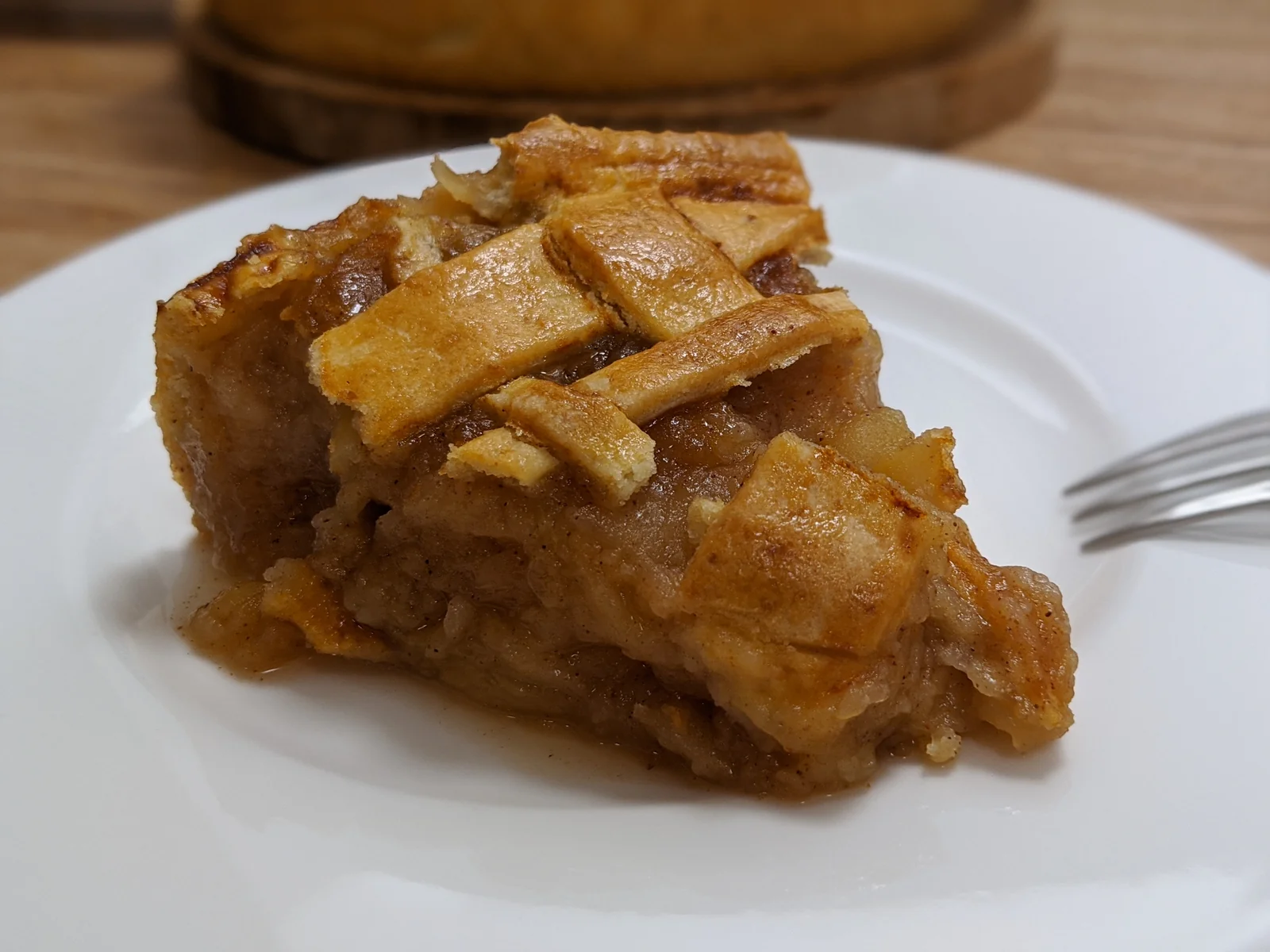
This dutch apple pie recipe is the real appeltaart: a tall, deep pie baked in a springform tin, with a buttery, cookie-like crust, a filling of cinnamon apples and plump raisins, and a lattice top brushed with apricot jam. It is nothing like the crumb-topped pie Americans call Dutch — the crust is thick and tender, the filling is piled high, and it is always served with a cloud of whipped cream. One serving is about 230 g.

Appeltaart appears in the first Dutch cookbook, Een notabel boecxken van cokeryen, printed in Brussels in 1514 — a century before the first English colony at Jamestown — and the recipe has barely changed since: shortcrust, tart apples, spices and sugar. The cook test for this recipe checked it against the American apple pie already on this site: the two are different dishes. The American pie uses a flaky double crust in a shallow pie dish; the Dutch appeltaart is baked tall in a springform tin with a thick, buttery, cookie-like crust that contains egg, chunky cinnamon apples with raisins, and a lattice top. In the United States, the name Dutch apple pie usually means the crumb-topped appelkruimeltaart instead — a third, different pie.

Pairs well with: Unsweetened whipped cream & black coffee

Provenance

Netherlands flag Netherlands

Dutch Classic

Nordic & European

Time Dedication

1h 45m

45m prep • 60m cook

Batch Yield

8 Servings

582 kcal per serving

1 serving ≈ 230 g

Technical Skill

Intermediate

Intermediate (Pastry)

Meal Timing & Digestive Fit

Breakfast

Not Advised

Lunch

Inappropriate

Dinner

Inappropriate

Snack & Tea

Ideal Light Bite

Occasions: Afternoon coffee, birthdays, Sinterklaas, family gatherings, bake sales Cost: Low — about $1–2 per serving at home
A slice of Dutch apple pie with a golden lattice crust and spiced apple filling on a white plate

Dutch Classic

Photo: Shisma, CC BY 4.0, via Wikimedia Commons

The Heritage Formulary

Measured Ingredients

Estimated cost: Low — about $1–2 per serving at home (USD)

A true appeltaart is tall, baked in a springform tin, with a buttery cookie-like crust containing egg, chunky cinnamon apples and a lattice top — unlike the American apple pie on this site, which has a flaky double crust in a shallow pie dish, and unlike the crumb-topped pie Americans call Dutch apple pie.

Execution Methodology & Culinary Technique

Step-by-Step Cooking Guide

Active 1h 45m
P

Prep Stage: Dough and Filling

45 Mins • Dough and Filling

Rub the cold butter into the flour, sugars, salt and baking powder until the mix looks like coarse crumbs, then work in the egg until a soft, cookie-like dough forms. Wrap and chill for 30 minutes. Meanwhile peel, core and chop the apples and toss them with the filling sugar, cinnamon, lemon juice and raisins.

Maestro Tip: Keep the butter cold and do not overwork the dough — appeltaart dough should be pressed into the tin like cookie dough, not rolled like flaky pastry.

  1. 1

    Make the Cookie Dough

    20 Mins Room temperature, about 20°C (68°F)

    Mix the flour, caster sugar, brown sugar, salt and baking powder in a large bowl. Rub in the cold butter cubes with your fingertips until the mix looks like coarse crumbs, then work in the egg with your hands until a soft dough forms. It will feel like cookie dough, not pastry.

    If the dough is too dry to hold together, add a teaspoon of cold water; if it is sticky, chill it for 10 minutes before handling.

    Done when: The dough holds together in a soft ball and feels smooth and slightly sticky, like shortbread dough.

  2. 2

    Chill the Dough and Prepare the Filling

    30 Mins Fridge, about 4°C (39°F)

    Wrap the dough in cling film and chill for 30 minutes. While it chills, peel, core and chop the apples into chunky 2 cm pieces and toss them with the filling sugar, cinnamon, lemon juice and raisins. Butter a 23 cm springform tin.

    Chunky apple pieces are the point of appeltaart — thin slices turn to mush and the tall pie loses its texture.

    Done when: The dough is firm and cold, and the apples are evenly coated in cinnamon sugar.

  3. 3

    Line the Tin, Fill and Lattice

    20 Mins Room temperature, about 20°C (68°F)

    Press two-thirds of the dough into the base and up the sides of the springform tin, building the sides about 6 cm high. Scatter the breadcrumbs over the base, pile in the apple mixture, mounding it high in the centre, and press it down gently. Roll the remaining dough into strips and lay them in a lattice over the top, pressing the ends to the sides. Brush the lattice with the beaten egg.

    Mound the apples high — they shrink as they cook, and a flat filling leaves a gap under the lattice.

    Done when: The tin is lined to the rim, the apples are mounded above the rim, and the lattice covers the top.

  4. 4

    Bake Until Golden and Bubbling

    60 Mins 180°C (350°F)

    Bake on the lowest oven rack at 180°C (350°F) for 55 to 60 minutes, covering the top loosely with foil after 40 minutes if it browns too fast. The pie is done when the crust is deep golden and the filling bubbles thickly between the lattice strips.

    Put a baking tray underneath to catch any bubbling juices; a pie that bubbles is a pie whose filling has set.

    Done when: Deep golden crust, thick juices bubbling through the lattice, and the apples tender when tested with a skewer.

  5. 5

    Glaze and Cool Before Slicing

    15 Mins Room temperature, about 20°C (68°F)

    Brush the warm lattice with the warmed apricot jam, then cool the pie in its tin for at least 1 hour before releasing the springform ring and slicing. Serve warm or at room temperature with whipped cream.

    Cooling in the tin is what lets the tall pie set — releasing the ring too early makes the sides slump.

    Done when: The pie holds its tall shape when the ring is released and a slice lifts out cleanly.

Finishing Touches & Plating

Serve slices warm or at room temperature with a generous spoonful of unsweetened whipped cream, as they do in every Dutch cafe. The contrast of warm, cinnamon-spiced apples, cool cream and crumbly golden crust is the whole point of the pie.

Nutritional Physiology & Benefits

Nutrition

Energy

582

kcal / serving

Protein

7g

Complete AA

Carbs

92g

Complex

Fats

22g

Healthy

Per serving (8 servings · 1 serving ≈ 230 g)
Energy582 kcal
Protein7 g
Carbohydrates92 g
Fat22 g
Fibre3.5 g
Sugar49.3 g
Sodium240 mg
Per 100g
Energy252 kcal
Protein3.2 g
Carbohydrates39.7 g
Fat9.7 g
Fibre1.5 g
Sugar21.3 g
Sodium104 mg

Nutrition values are estimated — calculated from USDA FoodData Central values for the listed ingredients.

Vitamins & minerals: Vitamin C (apples, lemon), vitamin A (butter, egg), potassium and fibre (apples, raisins), B vitamins (flour, egg).

Real Fruit Filling

Each slice carries about 125 g of apple, bringing fibre, vitamin C and potassium in a dessert that is mostly fruit.

Cinnamon Warmth

Cinnamon gives the pie its warm, sweet scent without adding sugar, and the spice is the traditional partner for apples.

Slow, Satisfying Energy

The buttery crust and fruit together provide steady, satisfying energy, making a slice a genuinely filling treat rather than a quick sugar hit.

Food Pairings

What to Eat With

To optimize nutrient absorption and elevate the sensory depth, pair with these authentic accompaniments:

Sides

Whipped Cream

The classic Dutch serving: a cloud of unsweetened whipped cream melts into the warm, spiced apples and softens the sweetness.

Aged Gouda

A thin slice of aged Gouda next to the warm pie adds salt and tang that make the apples taste sweeter — a Dutch habit worth trying.

Drinks

Black Coffee

Bitter, unsweetened black coffee cuts through the buttery crust and sugar, and the two have been a cafe pairing in the Netherlands for generations.

Spiced Chai

A cup of spiced chai echoes the pie's cinnamon and warms the whole serving on a cold afternoon.

Complete menu

Serve the pie as an afternoon treat with a pot of coffee and a bowl of whipped cream, or as dessert after a Dutch stamppot dinner; a slice with coffee is the classic Amsterdam cafe order.

Digestive Guardrails

What NOT to Combine

To prevent digestive distress, sluggishness, or palate clash, avoid pairing the dish with these elements:

Slicing While Piping Hot

Cutting the pie while it is still hot makes the filling run out and the slices collapse; wait at least 1 hour so the juices set. This is a cooking tip, not medical advice.

Very Sweet Drinks With the Pie

Sweet sodas or sugary lattes double up on the pie's sugar and dull the cinnamon; water, black coffee or unsweetened tea are the better match. This is general nutrition information, not medical advice.

General information only, not medical advice — consult a doctor for personal dietary decisions.

Who Should Eat It

Who Should Eat

  • General adultsA classic Dutch treat with coffee; one slice is generous, so enjoy it slowly.
  • ChildrenA family favourite — children love the cinnamon apples, and the raisins can be left out if they object.
  • ElderlySoft and easy to eat; serve a smaller slice with a little whipped cream.
  • Pregnant womenGenerally fine in a small slice; the eggs and fruit are fully baked through.
  • Breastfeeding womenGenerally fine in a small slice; keep the portion modest and enjoy it as an occasional treat.
  • AthletesAn energy-dense dessert after a long training session, though high in sugar and fat.
  • Weight gainA good choice: energy-dense, satisfying, and packed with real fruit.
  • Weight lossBest as an occasional treat; take a half slice, skip the whipped cream, and add fresh fruit on the side.

Health Conditions — Adjust or Avoid

Conditions

  • DiabetesHigh in sugar and refined carbohydrate (about 92 g carbs per slice); take a half slice and skip the whipped cream, and ask your clinician about portion size.
  • High blood pressureModerate in sodium (about 240 mg per slice); enjoy occasionally and skip the extra salt in the dough.
  • Kidney diseaseHigh in sugar and potassium from the apples and raisins; a small slice is safest, and ask your clinician about portion size.
  • GoutApples are low in purines, but the pie is rich in sugar; eat occasionally and in a small portion.
  • Stomach issuesThe cinnamon and fat can be heavy on a sensitive stomach; a small, well-cooled slice is usually easier than a hot one.
  • Cardiovascular diseaseHigh in saturated fat from the butter crust; enjoy occasionally and favour a smaller slice.
  • Fatty liverHigh in sugar and fat; keep it an occasional treat and favour a half slice.
  • Food allergiesContains gluten (wheat flour), milk (butter) and egg. Naturally free of nuts, but check the whipped cream or toppings if you serve them alongside.
  • Special therapeutic dietsIf you follow a prescribed low-sugar or low-fat diet, take a small slice and skip the cream, and check with your clinician.

If you have a medical condition, consult your doctor before changing your diet.

Storage & Use

Storage & Use

How to store
Cool completely, then cover loosely with foil or cling film; keep the pie in its springform tin or on a plate.
In the fridge
3 days in the fridge once sliced; whole pie keeps 2 days at cool room temperature.
In the freezer
Baked pie up to 3 months, wrapped well; unbaked assembled pie up to 2 months.
How to reheat
Reheat slices in an oven at 175°C (350°F) for 10 to 15 minutes until the centre is hot, about 74°C (165°F); microwave reheating softens the crust.
Freezing recommended
Yes — the baked pie freezes well for up to 3 months.
Signs it has spoiled
Sour or fermented smell, mould on the crust, or a slimy filling.

More recipes to explore

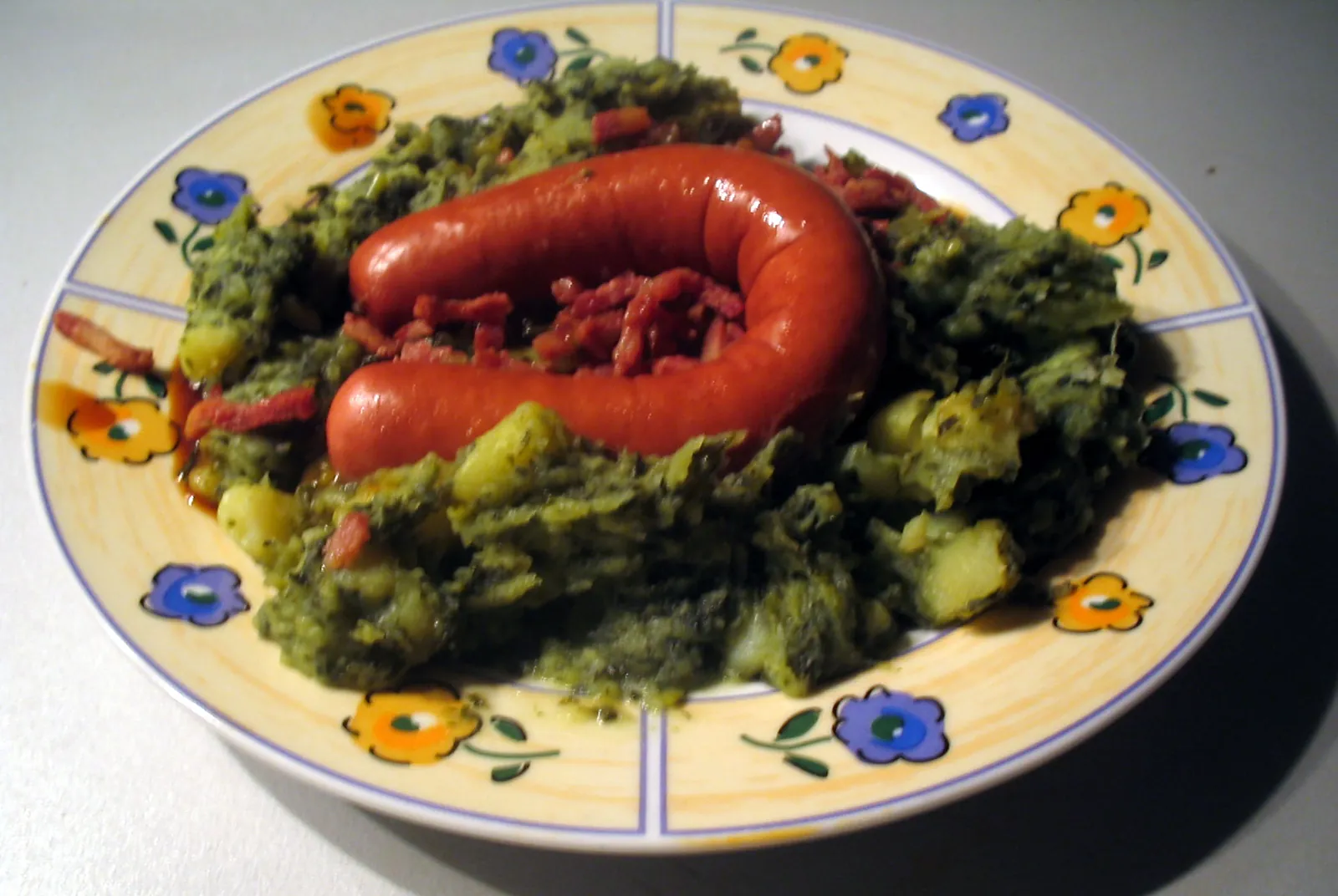
A plate of green boerenkool stamppot with a smoked sausage and bacon bits Netherlands flag Netherlands 45m
Dinner •Dutch Heritage

Stamppot

This stamppot recipe boils floury potatoes with curly kale, mashes them with butter and warm milk into a soft, green-flecked mash, and serves it with a smoked rookworst sausage, crisp bacon bits and mustard. One serving is about 480 g.

Comfort & Warmth

Floury potatoes mashed with kale, butter and milk, served with smoked sausage and bacon.

Pairs Well With
Smoked sausage, bacon bits & mustard
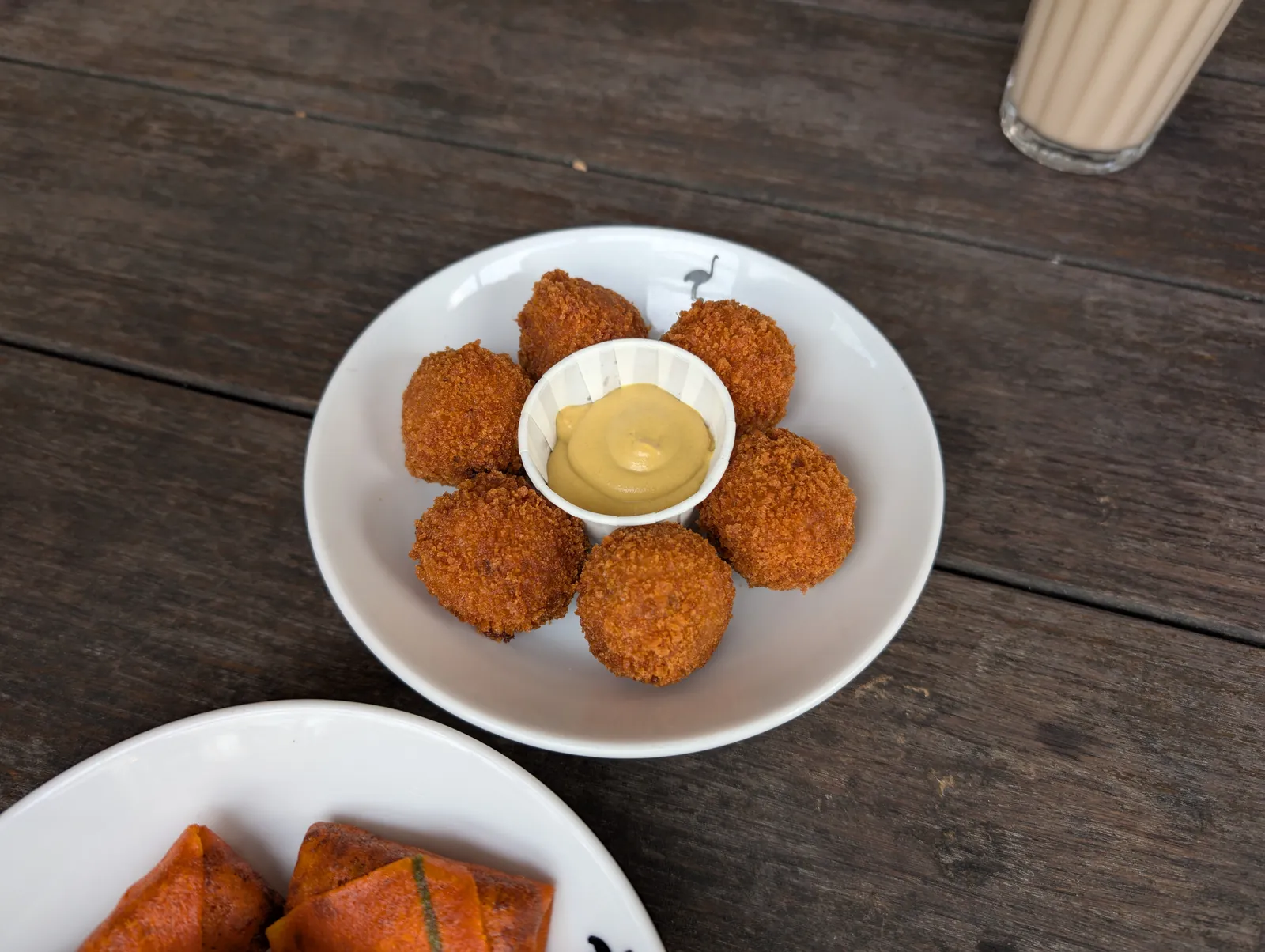
Six golden bitterballen with a small pot of mustard on a white plate Netherlands flag Netherlands 55m
Snack & Tea •Dutch Heritage

Bitterballen

This bitterballen recipe cooks beef slowly in stock until tender, binds it into a thick, creamy ragout with butter and flour, chills it firm, then rolls it into balls, crumbs them and fries them until the outside shatters and the inside turns molten. One serving is about 300 g, six bitterballen with mustard.

Comfort & Warmth

Crisp deep-fried balls of creamy beef ragout, served hot with mustard.

Pairs Well With
Dijon mustard & a cold beer
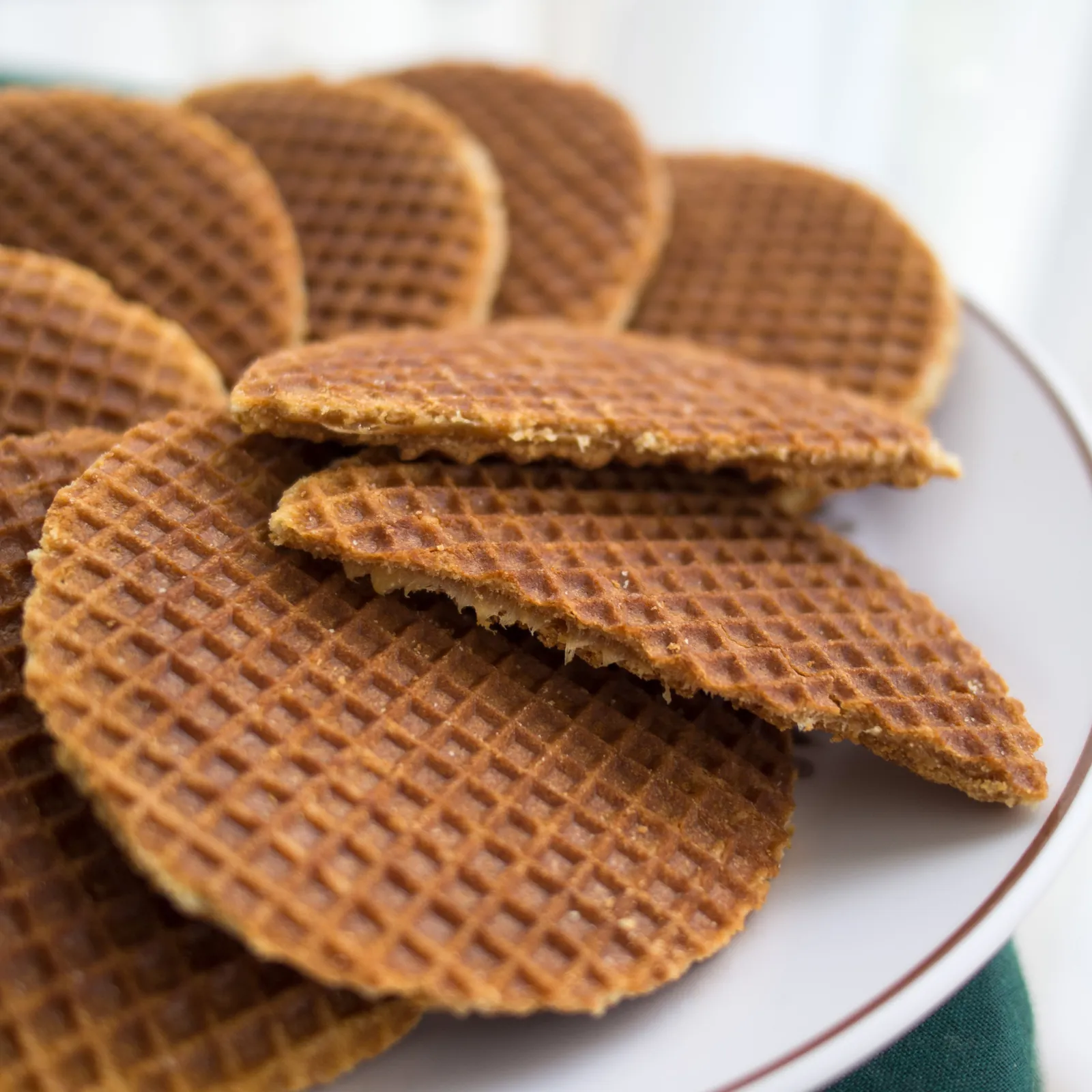
A plate of round golden stroopwafels showing their waffle pattern and syrup layer Netherlands flag Netherlands 1h
Snack & Tea •Dutch Heritage

Stroopwafels

This stroopwafels recipe bakes thin waffles in a hot iron, splits each one while it is still warm, and spreads it with a buttery caramel syrup spiced with cinnamon. The syrup softens the waffle just enough to make it chewy at the edges and crisp in the middle. One serving is about 155 g, three stroopwafels.

Comfort & Warmth

Thin, crisp waffle rounds split and filled with warm caramel syrup.

Pairs Well With
Coffee, tea & a glass of milk
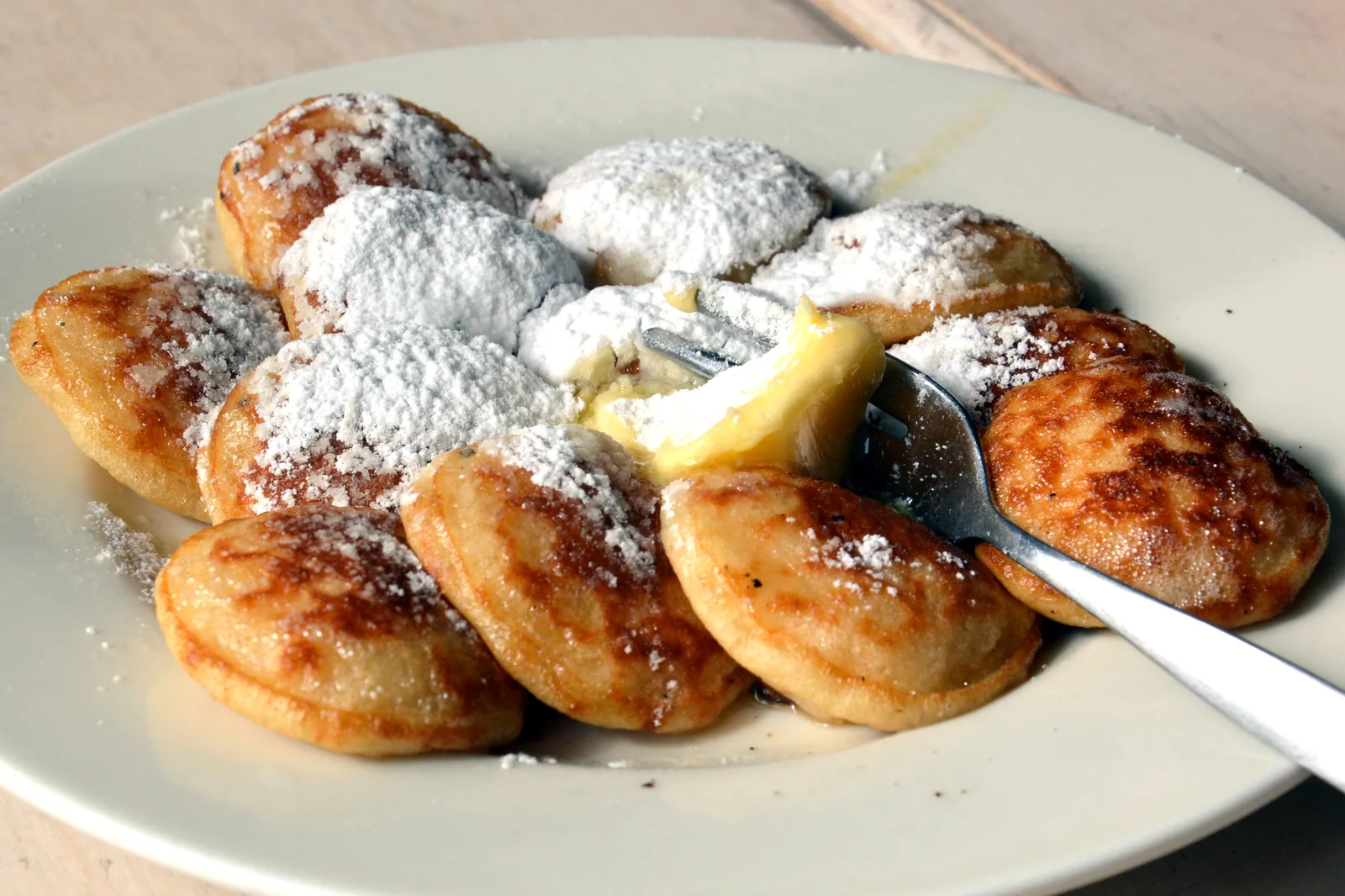
A plate of golden poffertjes dusted with powdered sugar, with melting butter and a fork. Netherlands flag Netherlands 1h 15m
Breakfast •Dutch Market Day Classic

Poffertjes

Poffertjes are the Netherlands' most beloved sweet snack: dozens of tiny, puffy yeast pancakes cooked in a dimpled pan, served hot with melting butter and a snowfall of powdered sugar. One serving is about 195 g, roughly 20 little pancakes.

Sweet Morning Treat

Tiny yeast-raised pancakes, golden outside and soft inside, served with butter and powdered sugar.

Pairs Well With
Serve hot with butter and powdered sugar, and a cup of coffee or hot chocolate.

The Dinner Gazette

Never wonder what’s for dinner again

One email a week with easy dinner ideas from around the world — ingredients, steps and nutrition, tested in our kitchen first.

Delivered every Thursday morning. Unsubscribe anytime.