
Curated recipes from 193 countries  •  New seasonal Mediterranean issue out now

Overview

Dutch Herring

Hollandse Nieuwe, Hollandse Haring, Dutch New Herring

This dutch herring recipe is the Netherlands' most famous fish snack: Hollandse Nieuwe — young herring, lightly salted and ripened, served raw as glossy fillets with finely diced onion and a sour pickle. It is eaten by hand, held by the tail and lowered into the mouth, or tucked into a soft roll. One serving is about 145 g.

Dutch herring is made by gibbing — the gills and guts are removed but the pancreas is left in, so its enzymes gently ripen the fish in salt. Dutch tradition credits the method to Willem Beukelszoon, a 14th-century fisherman from Biervliet, though historians note similar methods were used in Scandinavia earlier. True Hollandse Nieuwe is young herring caught between May and August with 15–20% fat. Every year the season opens with Vlaggetjesdag in Scheveningen, where the first barrel is auctioned for charity.

Pairs well with: Soft white roll, diced onion & pickles

Provenance

Netherlands flag Netherlands

Dutch Seaside Classic

Nordic & European

Time Dedication

25m

25m prep • 0m cook

Batch Yield

4 Servings

174 kcal per serving

1 serving ≈ 145 g

Technical Skill

Easy

Easy (No Cooking)

Meal Timing & Digestive Fit

Breakfast

Not Advised

Lunch

Prime Metabolic Fit

Dinner

Ideal Hearty Main

Snack & Tea

Inappropriate

Occasions: Summer lunches, seaside snacks, Dutch food nights, market days Cost: Moderate — about $4–5 per serving at home
Tags: Fish Savory Raw
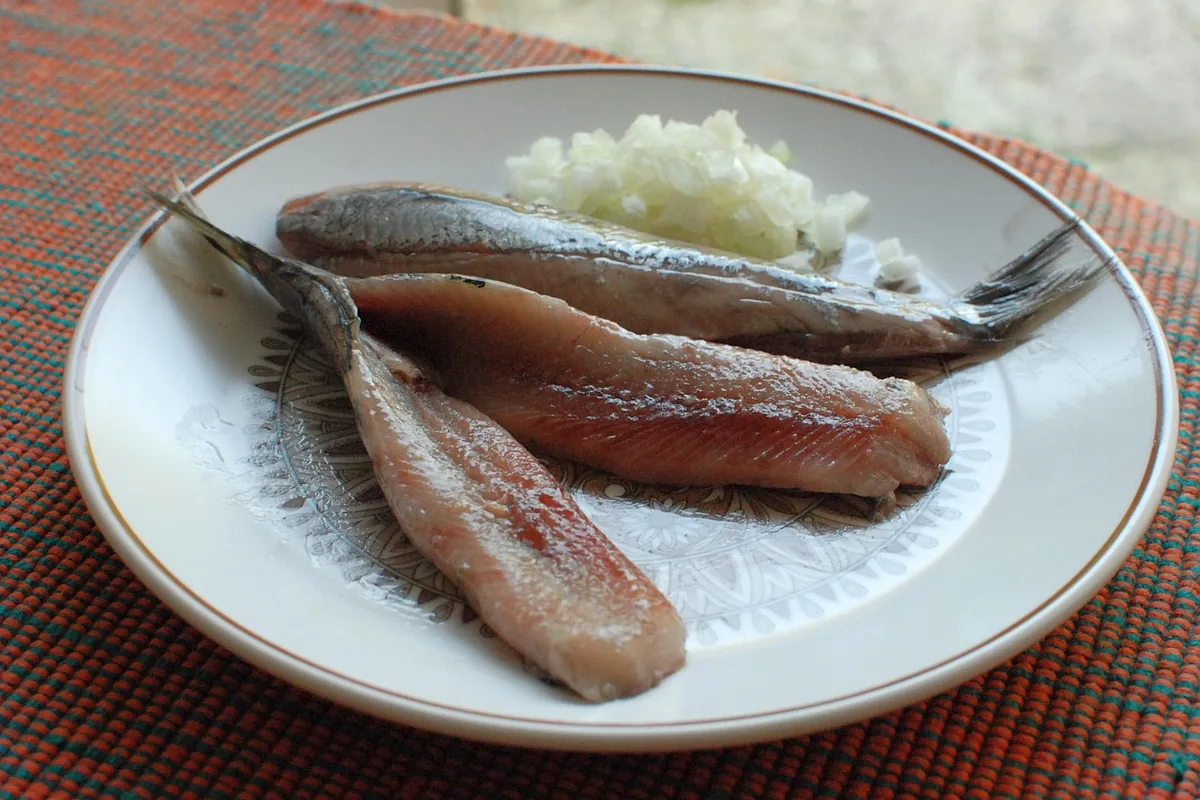
Three glossy raw Dutch herring fillets on a plate with a pile of finely diced onion

Dutch Seaside Classic

Photo: Takeaway, CC BY-SA 3.0, via Wikimedia Commons

The Heritage Formulary

Measured Ingredients

Estimated cost: Moderate — about $4–5 per serving at home (USD)

A classic Dutch herring plate with glossy raw fillets, finely diced onion and pickles.

Execution Methodology & Culinary Technique

Step-by-Step Cooking Guide

Active 25m
P

Prep Stage: Onion, Pickle and Lemon

25 Mins • No Cooking

Keep the herring chilled in the fridge until the last minute. Dice the onion very finely, slice the pickles into thin rounds, and cut the lemon into wedges. Chill the serving plates too — cold plates keep the raw fish at its best.

Maestro Tip: Dice the onion as finely as you can — big chunks overpower the delicate fish.

  1. 1

    Buy Safe, Ready-to-Eat Herring

    5 Mins Frozen at −20°C (−4°F); served chilled at 0–4°C (32–39°F)

    Buy Hollandse Nieuwe fillets from a reputable fishmonger and ask whether they have been deep-frozen. Under EU food-safety rules, raw herring sold for eating raw must be frozen at −20°C (−4°F) for at least 24 hours to kill parasites. Never eat raw herring that has not been frozen this way.

    A good fishmonger will tell you the catch date and the freezing — if they cannot, do not buy it.

    Done when: The fillets are glossy, cold and smell fresh, like the sea.

  2. 2

    Rinse and Pat Dry

    5 Mins Cold water, about 10°C (50°F)

    Rinse the fillets briefly under cold running water and pat them very gently dry with kitchen paper. Lay them flat on a chilled plate, skin-side down.

    Pat, do not rub — the fillets are delicate and tear easily.

    Done when: The fillets are clean, dry and lying flat without tearing.

  3. 3

    Dice the Onion

    5 Mins Room temperature, about 20°C (68°F)

    Peel the onion, cut it in half and dice it as finely as you can. Pile the diced onion in a small mound at the side of the plate.

    Soak the diced onion in cold water for 5 minutes and drain it if you want a milder bite.

    Done when: The onion is in a fine, even dice, with no large chunks.

  4. 4

    Slice the Pickle and Lemon

    5 Mins Room temperature, about 20°C (68°F)

    Slice the dill pickles into thin rounds and scatter them beside the fillets. Cut the lemon into wedges and chop the parsley.

    Thin pickle rounds give a sour crunch in every bite without dominating the fish.

    Done when: The pickles are in thin, even rounds and the lemon is ready to squeeze.

  5. 5

    Plate and Serve

    5 Mins Served chilled, 0–4°C (32–39°F)

    Arrange two fillets per person on chilled plates with the onion, pickles and a lemon wedge. Squeeze a little lemon over the fish, scatter the parsley, and serve at once — either eaten by hand, holding a fillet by the tail, or tucked into a soft roll.

    Serve immediately and do not leave raw herring standing at room temperature.

    Done when: The herring is cold, glossy and served at once, with the onion piled beside it.

Finishing Touches & Plating

Serve the herring ice-cold, straight from the fridge, with the onion and pickles beside it — it is at its best in the first few minutes on the plate.

Nutritional Physiology & Benefits

Nutrition

Energy

174

kcal / serving

Protein

19g

Complete AA

Carbs

4g

Complex

Fats

9g

Healthy

Per serving (4 servings · 1 serving ≈ 145 g)
Energy174 kcal
Protein19 g
Carbohydrates4 g
Fat9 g
Fibre0.7 g
Sugar1.6 g
Sodium922 mg
Per 100g
Energy120 kcal
Protein12.7 g
Carbohydrates2.5 g
Fat6.2 g
Fibre0.5 g
Sugar1.1 g
Sodium636 mg

Nutrition values are estimated — calculated from USDA FoodData Central values for the listed ingredients.

Vitamins & minerals: Vitamin D and vitamin B12 (herring), omega-3 fatty acids EPA and DHA (herring), vitamin C (onion, lemon).

Omega-3 Rich Fish

Oily herring is a natural source of omega-3 fatty acids EPA and DHA, which support normal heart function as part of a balanced diet.

Vitamin D and B12

About 18.5 g of protein per serving, plus vitamin D and B12 from the herring.

Light and Fresh

About 174 kcal a serving with no cooking and no added fat — a genuinely light lunch.

Food Pairings

What to Eat With

To optimize nutrient absorption and elevate the sensory depth, pair with these authentic accompaniments:

Sides

Soft White Roll (Broodje Haring)

A soft roll turns the snack into a sandwich — the classic broodje haring sold at every Dutch fish stand.

Dill Pickles

Sour pickles give the plate a sharp, crunchy contrast to the soft, buttery herring.

Vegetables

Diced Onion

Finely diced raw onion is the traditional partner — its sharp bite cuts the rich, oily fish.

Drinks

Cold Dutch Beer

A cold lager is the traditional drink with herring at a Dutch fish stand.

Complete menu

Dutch herring with a soft white roll, diced onion, pickles and a cold Dutch beer.

Digestive Guardrails

What NOT to Combine

To prevent digestive distress, sluggishness, or palate clash, avoid pairing the dish with these elements:

Eating Raw Herring That Was Never Frozen

Raw herring can carry parasites, so only eat fillets that were deep-frozen at −20°C (−4°F) for at least 24 hours, and keep them chilled until serving. This is general food-safety information, not medical advice.

Leaving It Out at Room Temperature

Raw fish spoils fast — serve it cold and straight away, and throw away anything left out for more than an hour. This is general food-safety information, not medical advice.

General information only, not medical advice — consult a doctor for personal dietary decisions.

Who Should Eat It

Who Should Eat

  • General adultsA light, classic Dutch lunch; two fillets with a roll is a full meal.
  • ChildrenServe a small portion, cut into pieces, and check carefully for any pin bones.
  • ElderlyRaw fish carries a higher food-safety risk for older people — buy from a trusted fishmonger and eat it the same day.
  • Pregnant womenRaw fish is not recommended in pregnancy — ask your clinician before eating it.
  • Breastfeeding womenRaw fish carries a food-safety risk; ask your clinician, or choose cooked herring instead.
  • AthletesAbout 18.5 g of protein per serving with omega-3 fats — a light, nutrient-dense lunch.
  • Weight gainLight on its own; add a roll and pickles for a more filling meal.
  • Weight lossOnly about 174 kcal a serving — a genuinely light, high-protein lunch.

Health Conditions — Adjust or Avoid

Conditions

  • DiabetesAbout 3.7 g of carbohydrate per serving; the fish itself has almost no effect on blood sugar — ask your clinician about the roll.
  • High blood pressureAbout 922 mg of sodium per serving, mostly from the brined fish and pickles; ask your clinician if you are on a low-sodium plan.
  • Kidney diseaseHigh in sodium and moderately high in protein; ask your clinician whether this portion suits your plan.
  • GoutHerring is high in purines and is a known trigger for many people with gout — ask your clinician.
  • Stomach issuesRaw fish and raw onion can be hard on a sensitive stomach; a small portion is the safer start.
  • Cardiovascular diseaseOily fish is a good source of omega-3 fats, but the sodium is high — keep the portion to one serving.
  • Fatty liverLow in calories and rich in omega-3 fats; a good light choice in a modest portion.
  • Food allergiesContains fish (herring) — the main allergen in this recipe.
  • Special therapeutic dietsFollow your clinician's guidance on raw fish and sodium; this is general information, not medical advice.

If you have a medical condition, consult your doctor before changing your diet.

Storage & Use

Storage & Use

How to store
Raw herring does not keep — buy it the day you eat it and keep it in the coldest part of the fridge, well wrapped.
In the fridge
Eat the same day; at most 1 day in the fridge at 0–4°C (32–39°F).
In the freezer
Do not freeze ready-to-eat herring again — it was already frozen once for safety and the texture suffers.
How to reheat
Do not reheat — this is a raw dish, served cold.
Freezing recommended
No — buy it already deep-frozen by the supplier and eat it fresh.
Signs it has spoiled
Sour or ammonia smell, slimy surface, or dull, grey flesh.

More recipes to explore

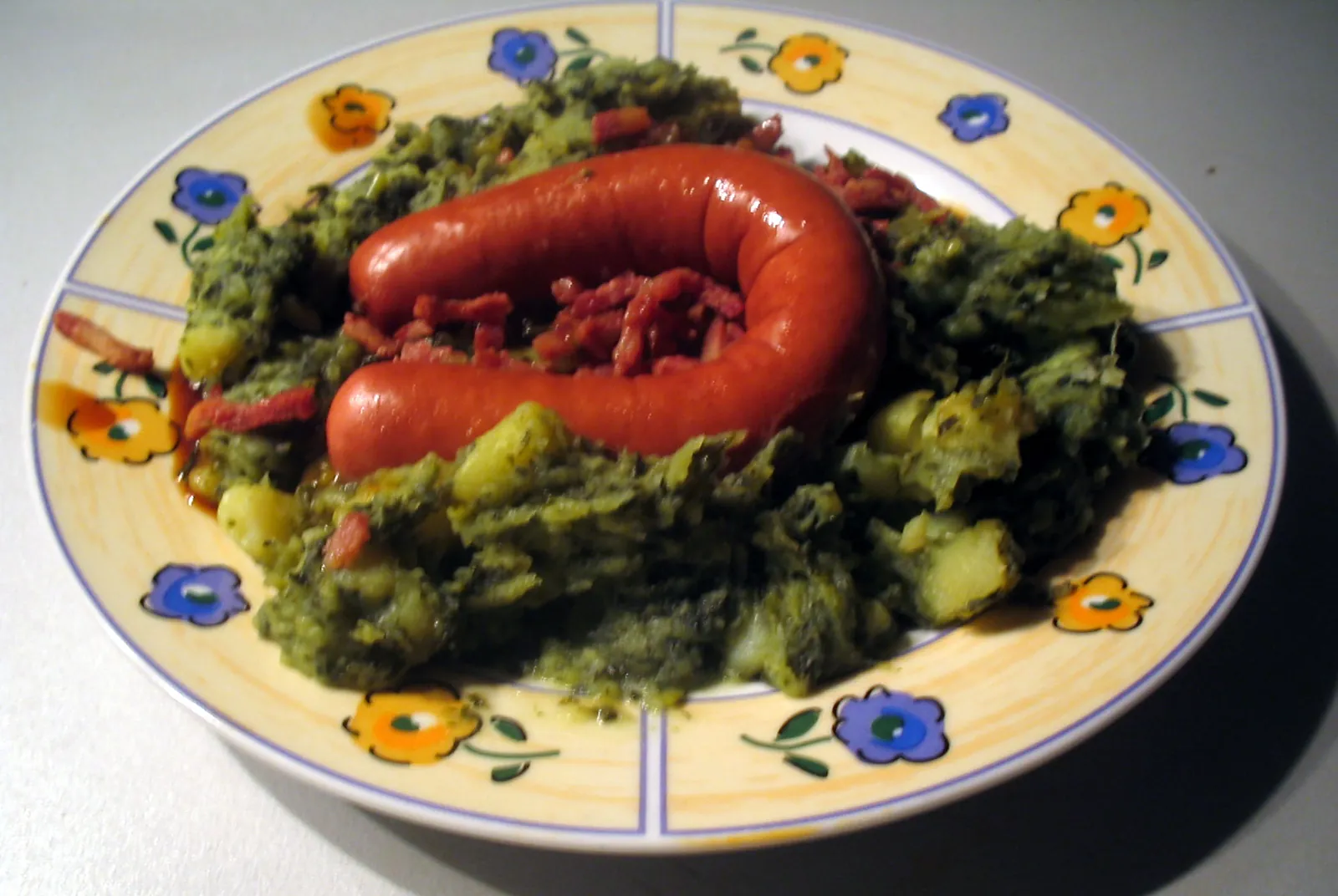
A plate of green boerenkool stamppot with a smoked sausage and bacon bits Netherlands flag Netherlands 45m
Dinner •Dutch Heritage

Stamppot

This stamppot recipe boils floury potatoes with curly kale, mashes them with butter and warm milk into a soft, green-flecked mash, and serves it with a smoked rookworst sausage, crisp bacon bits and mustard. One serving is about 480 g.

Comfort & Warmth

Floury potatoes mashed with kale, butter and milk, served with smoked sausage and bacon.

Pairs Well With
Smoked sausage, bacon bits & mustard

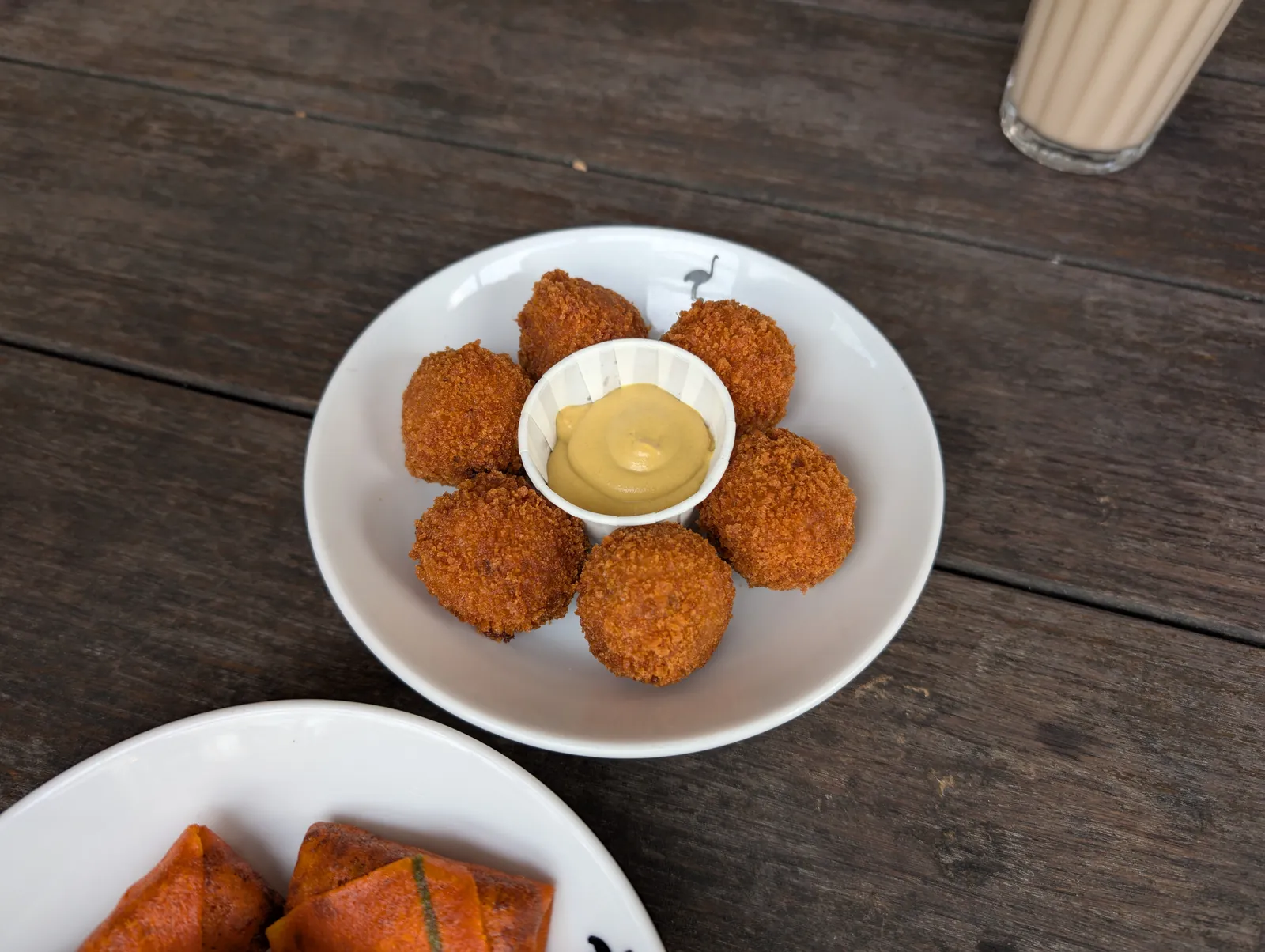
Six golden bitterballen with a small pot of mustard on a white plate Netherlands flag Netherlands 55m
Snack & Tea •Dutch Heritage

Bitterballen

This bitterballen recipe cooks beef slowly in stock until tender, binds it into a thick, creamy ragout with butter and flour, chills it firm, then rolls it into balls, crumbs them and fries them until the outside shatters and the inside turns molten. One serving is about 300 g, six bitterballen with mustard.

Comfort & Warmth

Crisp deep-fried balls of creamy beef ragout, served hot with mustard.

Pairs Well With
Dijon mustard & a cold beer
A plate of round golden stroopwafels showing their waffle pattern and syrup layer Netherlands flag Netherlands 1h
Snack & Tea •Dutch Heritage

Stroopwafels

This stroopwafels recipe bakes thin waffles in a hot iron, splits each one while it is still warm, and spreads it with a buttery caramel syrup spiced with cinnamon. The syrup softens the waffle just enough to make it chewy at the edges and crisp in the middle. One serving is about 155 g, three stroopwafels.

Comfort & Warmth

Thin, crisp waffle rounds split and filled with warm caramel syrup.

Pairs Well With
Coffee, tea & a glass of milk
A plate of golden poffertjes dusted with powdered sugar, with melting butter and a fork. Netherlands flag Netherlands 1h 15m
Breakfast •Dutch Market Day Classic

Poffertjes

Poffertjes are the Netherlands' most beloved sweet snack: dozens of tiny, puffy yeast pancakes cooked in a dimpled pan, served hot with melting butter and a snowfall of powdered sugar. One serving is about 195 g, roughly 20 little pancakes.

Sweet Morning Treat

Tiny yeast-raised pancakes, golden outside and soft inside, served with butter and powdered sugar.

Pairs Well With
Serve hot with butter and powdered sugar, and a cup of coffee or hot chocolate.

The Dinner Gazette

Never wonder what’s for dinner again

One email a week with easy dinner ideas from around the world — ingredients, steps and nutrition, tested in our kitchen first.

Delivered every Thursday morning. Unsubscribe anytime.