Curated recipes from 193 countries  •  New seasonal Mediterranean issue out now

Overview

Empanada Gallega

Empanada de Atun, Galician Tuna Pie

This empanada gallega recipe bakes a large tuna pie in a tray: a soft olive-oil crust filled with tuna, peppers, onion, tomato and chopped egg, then cut into squares. It is not like the small Argentine empanadas already on the site — those are hand-held half-moons, while the Galician version is a big flat pie shared from the tray. One serving is about 225 g.

Empanada gallega is the big pie of Galicia, in north-west Spain, where empanadas were baked in trays and sold by the slice at markets and festivals. The name comes from the Spanish empanar, to put in bread, and the Galician version is the oldest form of the dish — a large pie of bread dough and filling, cut into squares and eaten warm or cold. Tuna is the classic filling on the Galician coast, where the fishing boats come in, though octopus, cod and meat versions are just as traditional.

Pairs well with: A simple green salad and a glass of Albariño

Provenance

Spain flag Spain

Galician Classic

Mediterranean & Italy

Time Dedication

1h 45m

60m prep • 45m cook

Batch Yield

8 Servings

519 kcal per serving

1 serving ≈ 225 g

Technical Skill

Intermediate

Intermediate (Pastry & Filling)

Meal Timing & Digestive Fit

Breakfast

Not Advised

Lunch

Prime Metabolic Fit

Dinner

Ideal Hearty Main

Snack & Tea

Inappropriate

Occasions: Weekend lunch, picnic, market day, family gathering Cost: Low — about $2–3 per serving at home
Tags: Fish Savory Baked
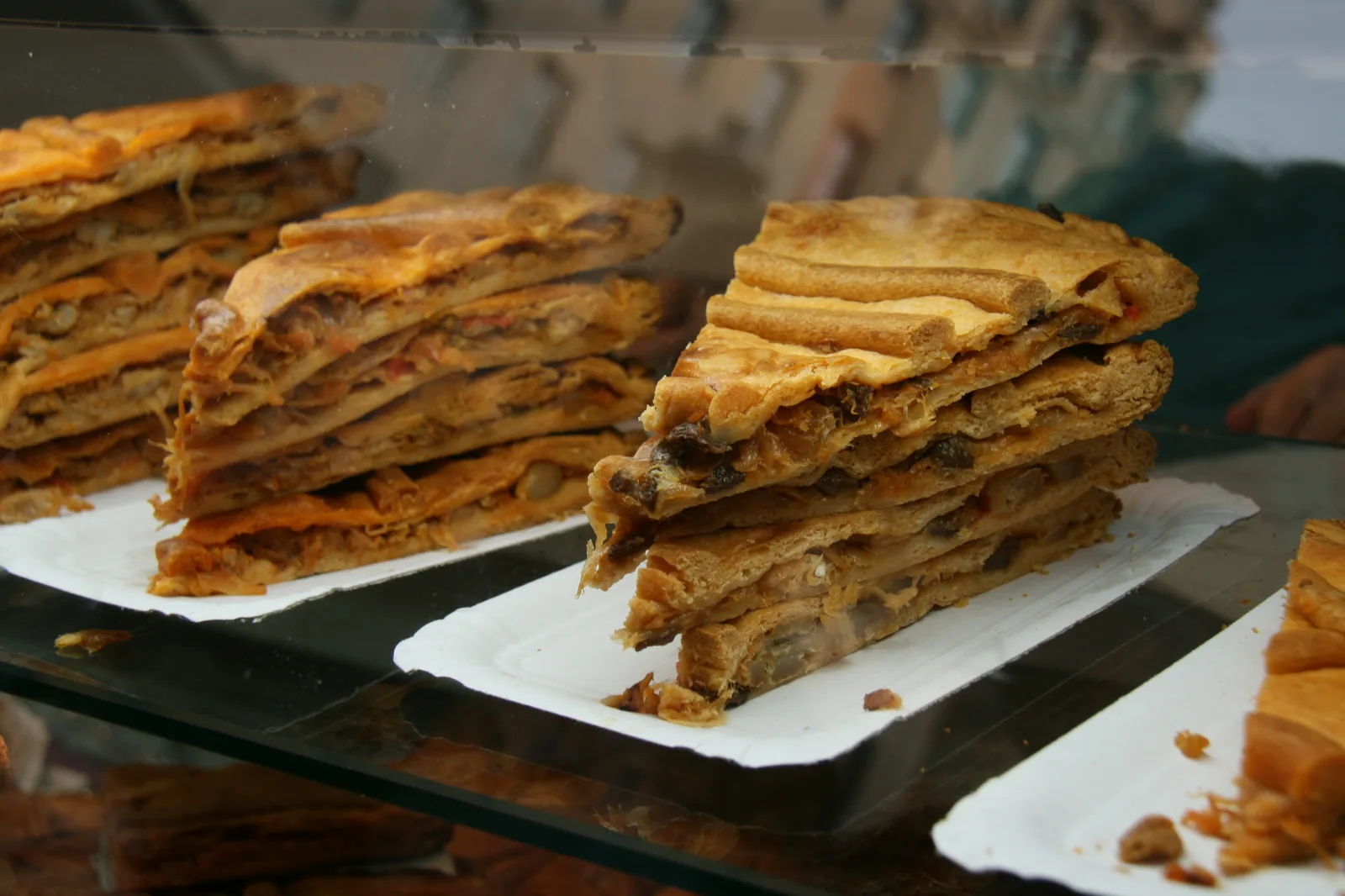
Slices of Galician empanada pie stacked on paper trays

Galician Classic

Photo: Tamorlan, CC BY 3.0, via Wikimedia Commons

The Heritage Formulary

Measured Ingredients

Estimated cost: Low — about $2–3 per serving at home (USD)

A good empanada gallega is judged by the crust: golden, flaky and tasting of olive oil, with a thick layer of filling inside.

Execution Methodology & Culinary Technique

Step-by-Step Cooking Guide

Active 1h 45m
P

Prep Stage: Make the Dough and the Filling

60 Mins • Dough Rises 1 Hour

Mix the flour, yeast water, wine, olive oil, paprika and salt into a soft dough, knead it for 10 minutes, and leave it to rise for 1 hour. While it rises, cook the onion, peppers, garlic and tomato into a thick sofrito, then fold in the tuna and chopped egg and let the filling cool completely.

Maestro Tip: The filling must be completely cold before it meets the dough — warm filling makes the base soggy.

  1. 1

    Make the Olive-Oil Dough

    15 Mins Room temperature, ~20°C (68°F)

    Dissolve the yeast in the lukewarm water, then mix in the flour, wine, olive oil, paprika and salt. Knead for about 10 minutes until the dough is smooth, soft and slightly tacky, then cover and leave to rise for 1 hour until doubled.

    If the dough feels stiff, add water a spoonful at a time — it should be soft, not firm.

    Done when: The dough is smooth, elastic, and about twice its original size.

  2. 2

    Cook the Sofrito Filling

    25 Mins Medium heat, ~175°C (350°F)

    Heat the olive oil in a wide pan, cook the onion and peppers over medium heat for about 15 minutes until soft and sweet, then add the garlic and tomato and cook for 10 minutes more until the mixture is thick and almost dry. Take it off the heat, fold in the flaked tuna, chopped egg and pepper, and leave the filling to cool completely.

    Cook the sofrito until it is thick — a wet filling leaks and sogs the crust.

    Done when: The filling is thick, glossy and fragrant, and holds its shape on a spoon.

  3. 3

    Roll Out the Base

    10 Mins Room temperature, ~20°C (68°F)

    Heat the oven to 200°C (400°F). Divide the dough into two pieces, one slightly larger than the other, and roll the larger piece out to fit a 30 x 20 cm baking tray. Line the oiled tray with it, leaving the edges hanging over the sides.

    Roll from the centre outwards and turn the dough a quarter-turn between rolls to keep it even.

    Done when: The base covers the tray with an even thickness and a little overhang all round.

  4. 4

    Fill and Close the Pie

    10 Mins Room temperature, ~20°C (68°F)

    Spread the cold filling evenly over the base, leaving a 2 cm border. Roll out the second piece of dough, lay it over the top, and fold the overhanging edges up and over to seal. Crimp the edges with your fingers or a fork, and cut a small steam hole in the centre.

    Press the seal firmly all the way round — any gap will leak filling in the oven.

    Done when: The pie is sealed all round with a neat crimped edge and a small hole in the middle.

  5. 5

    Glaze and Bake

    35 Mins 200°C (400°F)

    Brush the top generously with the beaten egg and bake at 200°C (400°F) for 30 to 35 minutes, until the crust is deep golden and the filling is bubbling at the edges. The internal temperature should reach at least 74°C (165°F).

    If the top browns too fast, cover it loosely with foil for the last 10 minutes.

    Done when: The crust is deep golden and crisp, and the filling bubbles at the edges.

  6. 6

    Rest and Cut into Squares

    10 Mins Warm, ~60°C (140°F)

    Rest the pie in its tray for 10 minutes, then cut it into 8 squares and serve warm or at room temperature.

    Cut with a sharp knife in one firm motion — sawing drags the filling out.

    Done when: The squares hold their shape, with the layers of crust and filling clearly visible.

Finishing Touches & Plating

Rest the pie for 10 minutes, cut it into 8 squares, and serve warm or at room temperature with a green salad.

Nutritional Physiology & Benefits

Nutrition

Energy

519

kcal / serving

Protein

25g

Complete AA

Carbs

55g

Complex

Fats

21g

Healthy

Per serving (8 servings · 1 serving ≈ 225 g)
Energy519 kcal
Protein25 g
Carbohydrates55 g
Fat21 g
Fibre3.8 g
Sugar3.6 g
Sodium587 mg
Per 100g
Energy231 kcal
Protein11 g
Carbohydrates24.6 g
Fat9.2 g
Fibre1.7 g
Sugar1.6 g
Sodium261 mg

Nutrition values are estimated — calculated from USDA FoodData Central values for the listed ingredients.

Vitamins & minerals: Vitamin D and selenium (tuna), vitamin C (peppers), vitamin B12 (tuna and egg), iron (egg).

Protein from Tuna and Egg

About 25 g of protein per serving from the tuna and egg — a lunch that keeps you going all afternoon.

Peppers, Onion and Tomato

Sweet peppers, onion and tomato bring vitamin C and fibre, and the sofrito is cooked in olive oil.

Travels Beautifully

This pie is just as good cold as warm, so it packs for picnics, work lunches and long journeys.

Food Pairings

What to Eat With

To optimize nutrient absorption and elevate the sensory depth, pair with these authentic accompaniments:

Sides

Simple Green Salad

A sharp, lemony salad cuts through the rich pastry and oily tuna and keeps the meal feeling light.

Vegetables

Roasted Red Peppers

Extra roasted peppers echo the filling and add a smoky sweetness that suits the Galician flavours.

Drinks

Albariño or Sparkling Water

A crisp Galician white wine matches the tuna, and sparkling water with lemon does the same job without alcohol.

Full Menus

Gazpacho to Start

A small bowl of cold gazpacho starts the meal with something fresh before the warm, rich pie.

Complete menu

Serve the pie in squares with a simple green salad and roasted red peppers, starting with a small bowl of gazpacho.

Digestive Guardrails

What NOT to Combine

To prevent digestive distress, sluggishness, or palate clash, avoid pairing the dish with these elements:

Do Not Fill It Warm

Warm filling steams the base from the inside and turns it soggy — let it cool completely before assembling. This is general guidance, not medical advice.

Skip the Puff Pastry Shortcut

Puff pastry turns this into a different dish — the soft olive-oil crust is what makes an empanada gallega, so give the dough its hour to rise.

General information only, not medical advice — consult a doctor for personal dietary decisions.

Who Should Eat It

Who Should Eat

  • General adultsA hearty lunch — one or two squares with salad is a full meal.
  • ChildrenSuitable from age 4+ — the tuna and egg filling is mild and the pastry is soft; cut their square small.
  • ElderlyVery suitable — soft filling, easy to chew; keep the portion moderate.
  • Pregnant womenGenerally suitable; the tuna is cooked and the pie is served hot. Keep to one or two squares a week because of the tuna's mercury.
  • Breastfeeding womenGenerally suitable; the protein and omega-3 support recovery — keep portions satisfying.
  • AthletesA strong post-workout lunch: about 25 g of protein per serving, plus the pastry for glycogen.
  • Weight gainA good choice — take a generous second square with extra salad.
  • Weight lossKeep to one square and load the plate with salad instead of a second helping.

Health Conditions — Adjust or Avoid

Conditions

  • DiabetesThe pastry is the main source of carbs — keep to one square and favour the salad. Ask your clinician about portion size.
  • High blood pressureMost of the sodium comes from the tuna and added salt; use low-sodium tuna and season lightly. Ask your clinician about a suitable portion.
  • Kidney diseaseLimit the portion — tuna and egg are high in protein and the dish is fairly salty. Ask your clinician about portion size.
  • GoutEat occasionally and in smaller portions — tuna is moderately high in purines.
  • Stomach issuesThe peppers and onion can be hard on a sensitive stomach — cook the sofrito longer until very soft.
  • Cardiovascular diseaseThe tuna brings omega-3, but the pastry adds saturated fat; keep the portion modest and favour the salad. Ask your clinician about a suitable portion.
  • Fatty liverKeep the portion modest and favour the salad over a second square.
  • Food allergiesContains fish (tuna), wheat (flour) and egg. The dough contains alcohol from the wine, most of which bakes off.
  • Special therapeutic dietsIf you follow a prescribed low-sodium diet, use low-sodium tuna and less salt, and check with your clinician.

If you have a medical condition, consult your doctor before changing your diet.

Storage & Use

Storage & Use

How to store
Cool completely and store the pie in its tray, covered, or in an airtight container.
In the fridge
3 days.
In the freezer
2 months.
How to reheat
Reheat squares in a 180°C (350°F) oven for 10 minutes until hot; reheat to 74°C (165°F).
Freezing recommended
Yes — freeze cut squares wrapped well; reheat from frozen in the oven.
Signs it has spoiled
Sour smell, slimy filling, or mould on the crust.

More recipes to explore

Pan con tomate with jamón ibérico on toasted bread Spain flag Spain 15m
Snack & Tea •Catalan Aperitivo

Pan con Tomate & Jamón Ibérico

Country bread rubbed with ripe Ramallet tomato, drizzled with cold-pressed Arbequina olive oil and topped with jamón ibérico.

Vascular Health

Toasted tomato bread with jamón ibérico, olive oil and olives.

Pairs Well With
Castelvetrano Olives & Sparkling Mineral Water
Quick Prep (<30m)
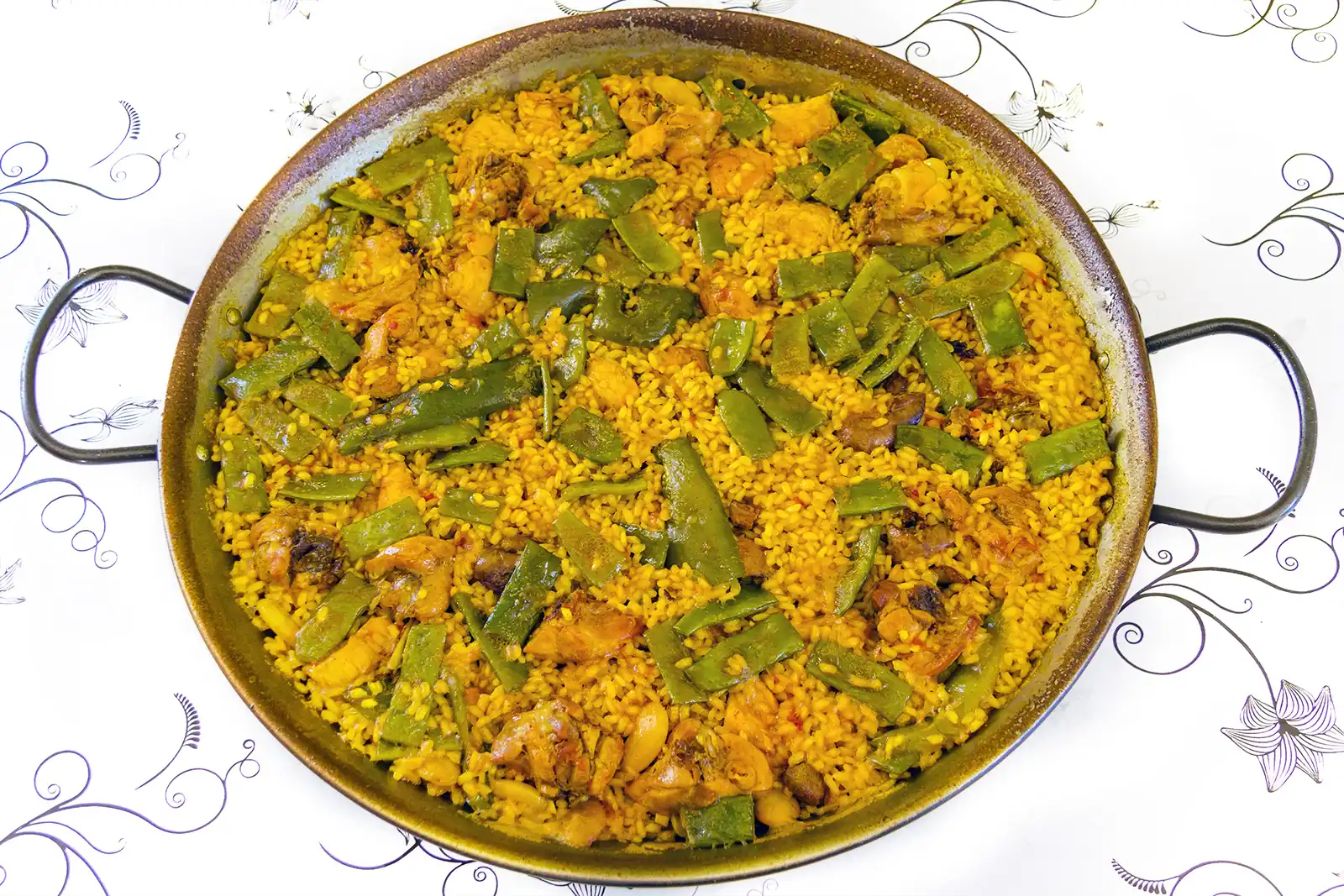
A wide paella pan of paella valenciana with saffron rice, green beans and chicken Spain flag Spain 1h 10m
Dinner •Valencia Rice Fields

Paella Valenciana

This paella valenciana recipe cooks Bomba rice in a wide, shallow pan with chicken, rabbit, green beans and garrofó beans, scented with saffron and rosemary. One serving is about 470 g.

Comfort & Warmth

Saffron rice cooked in a wide pan with chicken, rabbit and green beans.

Pairs Well With
A green salad and a glass of white wine
High Protein
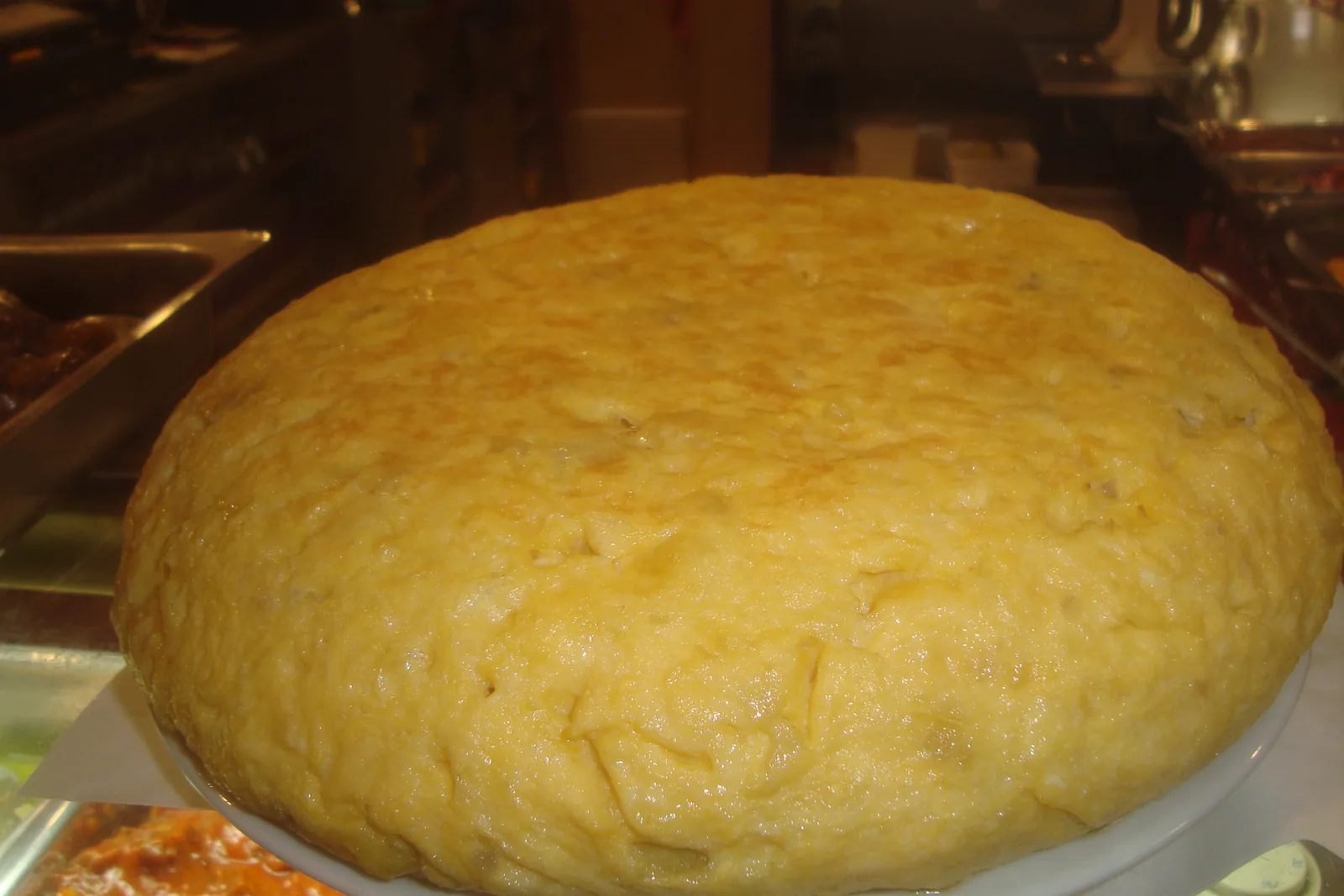
A whole golden tortilla española, a thick Spanish potato omelette, on a plate Spain flag Spain 55m
Snack & Tea •Navarre Bar Classic

Tortilla Española

This spanish tortilla recipe slowly cooks potatoes and onion in olive oil, folds them into beaten eggs, and turns out a thick, golden cake that is soft in the middle. One serving is about 220 g.

Comfort & Warmth

A thick, golden omelette of slow-cooked potatoes, onion and egg.

Pairs Well With
Pan con tomate and a glass of red wine
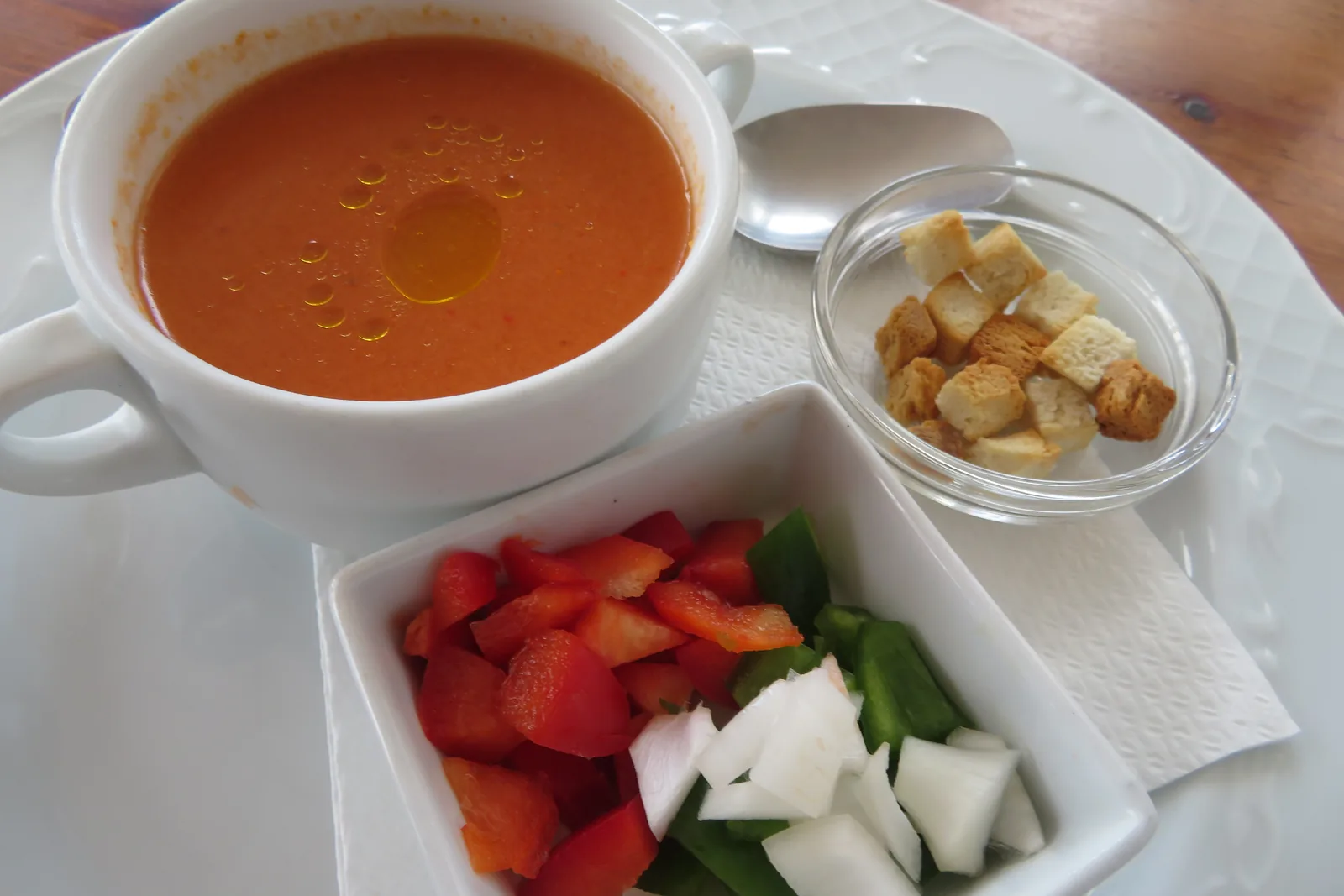
A cup of chilled orange-red gazpacho with olive oil, served with diced peppers and onion and a bowl of croutons Spain flag Spain 20m
Lunch •Andalusian Classic

Gazpacho

This gazpacho recipe is the Andalusian classic: ripe tomatoes, cucumber, green pepper, onion and garlic blended raw with bread, sherry vinegar and olive oil, then chilled until ice cold. One serving is about 395 g. It takes 20 minutes plus chilling, and there is no cooking at all.

Light & Refreshing

Chilled raw tomato soup blended with cucumber, pepper and olive oil, served cold with diced vegetables and croutons.

Pairs Well With
Croutons, diced vegetables & crusty bread
Soups & Broths • Quick Prep (<30m)

The Dinner Gazette

Never wonder what’s for dinner again

One email a week with easy dinner ideas from around the world — ingredients, steps and nutrition, tested in our kitchen first.

Delivered every Thursday morning. Unsubscribe anytime.