Curated recipes from 193 countries  •  New seasonal Mediterranean issue out now

Overview

Enchilado de Camarones

Cuban Shrimp Creole, Camarones Enchilados

Enchilado de camarones is Cuba's coastal classic: shrimp simmered in a rich tomato sauce built on a sofrito of onion, green pepper and garlic, with pimentos, white wine, cumin and just enough heat to keep things interesting. Despite the name it has nothing to do with Mexican enchiladas — enchilado means cooked in a chile-tomato sauce — and it is always served over white rice to catch every drop. One serving is about 561 g.

In Cuban cooking, enchilado means food cooked in a chile-tomato sauce, and the island's shrimp version is a child of the Spanish sofrito and the Caribbean pantry: onion, pepper and garlic cooked down with tomato, vino seco and pimentos, then finished with shrimp caught off the Cuban coast. It is a Friday and Lent favourite in Cuban homes, and the dish Cuban restaurants abroad are asked for first — always over white rice.

Pairs well with: Steamed white rice, fried plantains and a green salad

Provenance

Cuba flag Cuba

Cuban Heritage

Latin America & Caribbean

Time Dedication

45m

15m prep • 30m cook

Batch Yield

4 Servings

498 kcal per serving

1 serving ≈ 561 g

Technical Skill

Intermediate

Intermediate (One-Pan Shrimp)

Meal Timing & Digestive Fit

Breakfast

Not Advised

Lunch

Hearty Midday Main

Dinner

Ideal Hearty Main

Snack & Tea

Inappropriate

Occasions: Family dinners, Friday suppers, coastal celebrations, weeknight dinners Cost: Moderate — about $5–6 per serving at home
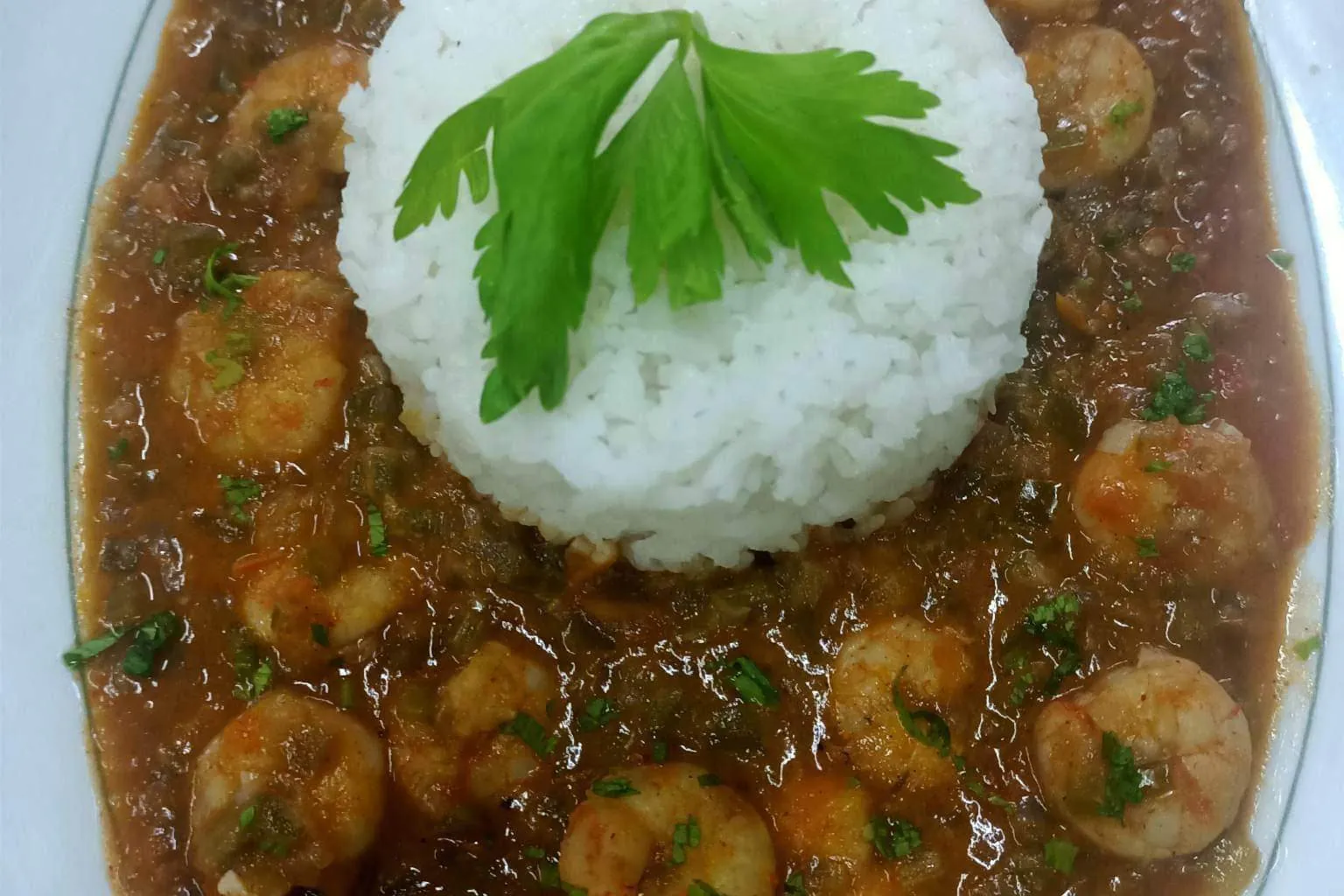
Shrimp in a rich red tomato sauce around a mound of white rice, garnished with parsley, on a white plate

Cuban Heritage

Photo: ChristianCelestial, CC BY-SA 4.0, via Wikimedia Commons

The Heritage Formulary

Measured Ingredients

Estimated cost: Moderate — about $5–6 per serving at home (USD)

A good enchilado de camarones is bright red and glossy: the sauce thick enough to coat a spoon, the shrimp just pink and juicy, and the heat warm rather than punishing.

Execution Methodology & Culinary Technique

Step-by-Step Cooking Guide

Active 45m
P

Prep Stage: Peel, Chop & Measure

15 Mins • Shrimp Ready, Sofrito Chopped

Peel and devein the shrimp and pat them dry. Chop the onion and green pepper, mince the garlic, drain and chop the pimentos, and measure out the tomatoes, paste, wine, vinegar and spices. Put the rice on — the sauce comes together fast once the pan is hot.

Maestro Tip: Pat the shrimp very dry: wet shrimp steam instead of searing and never pick up any colour.

  1. 1

    Season the Shrimp

    5 Mins Room temperature

    Toss the shrimp with the cumin, paprika, half the salt and a pinch of black pepper if you like. Set them aside while you make the sauce — 5 minutes is enough for the seasoning to cling.

    Season just before cooking: salt left on raw shrimp for long draws out moisture.

    Done when: Shrimp evenly coated in spices, still raw and translucent.

  2. 2

    Cook the Sofrito

    8 Mins Medium heat, about 160°C (320°F)

    Heat the olive oil in a large, deep skillet over medium heat. Add the onion and green pepper and cook for 5 minutes until soft. Add the garlic and cook for 1 minute more, then stir in the tomato paste and cook for 2 minutes until it darkens a shade and smells sweet.

    Fry the tomato paste until it darkens — raw paste tastes tinny, fried paste tastes rich.

    Done when: Vegetables soft and sweet-smelling; paste deep red and fragrant.

  3. 3

    Build and Simmer the Sauce

    15 Mins Gentle simmer, about 90°C (195°F)

    Pour in the white wine and scrape up any browned bits from the pan. Add the crushed tomatoes, pimentos, vinegar, hot sauce, oregano and the remaining salt. Bring to a simmer, then lower the heat, cover, and cook for 15 minutes, stirring now and then, until the sauce has thickened slightly.

    Let the sauce simmer the full time: it is the sauce that carries the dish, and a rushed sauce tastes thin.

    Done when: Sauce thick enough to coat a spoon, flavours blended, oil just starting to separate at the edges.

  4. 4

    Add the Shrimp

    5 Mins Medium heat; shrimp to 63°C (145°F)

    Raise the heat to medium, stir the shrimp into the sauce in a single layer, and cook uncovered for about 5 minutes, turning once, until they are pink, opaque and curled. Do not walk away — shrimp go from perfect to rubbery in a minute.

    Pull the pan off the heat the moment the last shrimp turns opaque; the sauce keeps cooking them.

    Done when: Shrimp pink, opaque and curled, cooked through to 63°C (145°F).

  5. 5

    Serve Over Rice

    2 Mins Serve hot, above 63°C (145°F)

    Spoon a mound of hot rice onto each plate, ladle the shrimp and sauce over and around it, and scatter the parsley on top. Serve at once.

    Serve it fast: shrimp in hot sauce keep cooking, so it should reach the table while it is still juicy.

    Done when: Hot plates, red sauce glossy over pink shrimp, rice steaming, parsley bright on top.

Finishing Touches & Plating

Serve it hot over white rice, the sauce still glossy and the shrimp just pink — and keep a little extra rice nearby, because the sauce is too good to leave in the pan.

Nutritional Physiology & Benefits

Nutrition

Energy

498

kcal / serving

Protein

43g

Complete AA

Carbs

60g

Complex

Fats

9g

Healthy

Per serving (4 servings · 1 serving ≈ 561 g)
Energy498 kcal
Protein43 g
Carbohydrates60 g
Fat9 g
Fibre4.7 g
Sugar8.4 g
Sodium578 mg
Per 100g
Energy89 kcal
Protein7.6 g
Carbohydrates10.7 g
Fat1.6 g
Fibre0.8 g
Sugar1.5 g
Sodium103 mg

Nutrition values are estimated — calculated from USDA FoodData Central values for the listed ingredients.

Vitamins & minerals: Shrimp is rich in selenium, iodine, vitamin B12 and lean protein; tomato and green pepper add vitamin C and vitamin A. All nutrition values are estimated.

Very High in Lean Protein

About 42 g of protein per serving from shrimp alone, with very little fat — a plate built to keep you full without weighing you down.

Tomato, Pepper and Garlic

The sofrito brings vitamin C from tomato and green pepper, and garlic for depth — the sauce is where the goodness lives.

One Pan, Thirty Minutes

One skillet and half an hour from chopping board to table — a weeknight dinner that tastes like a coastal holiday.

Food Pairings

What to Eat With

To optimize nutrient absorption and elevate the sensory depth, pair with these authentic accompaniments:

Sides

Steamed White Rice

The rice is not optional: it soaks up the spiced tomato sauce and turns a saucy shrimp dish into a complete plate.

Vegetables

Fried Plantains (Tostones)

Crisp, salty tostones are the classic Cuban partner — their crunch and sweetness play against the soft shrimp and tangy sauce.

Green Salad with Lime

A sharp green salad with lime keeps the plate fresh and cuts through the richness of the sauce.

Drinks

Cold Lager or White Wine

A cold lager or a crisp white wine cools the heat and lifts the sweetness of the shrimp.

Full Menus

Full Menu: Black Beans, Then Enchilado

Start with black bean soup, then serve enchilado over rice with tostones — a full Cuban table in two courses.

Complete menu

A plate of enchilado de camarones over white rice with fried plantains and a green salad, and a cold lager — a classic Cuban dinner.

Digestive Guardrails

What NOT to Combine

To prevent digestive distress, sluggishness, or palate clash, avoid pairing the dish with these elements:

Overcooking the Shrimp

Shrimp cooked past opaque turn rubbery and small. Pull the pan off the heat the moment they turn pink — the hot sauce finishes the job. This is general food information, not medical advice.

Adding the Shrimp Before the Sauce Is Ready

Shrimp dropped into a thin, uncooked sauce boil instead of braising and never pick up the flavour. Simmer the sauce first, then add the shrimp for the last 5 minutes. This is general food information, not medical advice.

Using Tomato Sauce with Added Herbs

Jarred tomato sauce with basil or Italian herbs fights the Cuban seasoning. Use plain crushed tomatoes so the sofrito stays in charge. This is general food information, not medical advice.

General information only, not medical advice — consult a doctor for personal dietary decisions.

Who Should Eat It

Who Should Eat

  • General adultsA light but satisfying dinner for most adults; the portion is generous, so a lighter lunch earlier in the day balances it.
  • ChildrenKids usually love the sweet shrimp and tomato sauce — use no hot sauce for their plates and serve extra rice.
  • ElderlySoft shrimp and a smooth sauce are easy to eat; the dish is fairly salty, so keep the portion as stated.
  • Pregnant womenThe shrimp is cooked through to 63°C (145°F) and the sauce is served hot, which is the safe way to eat shellfish in pregnancy. Ask your clinician if unsure.
  • Breastfeeding womenA filling, protein-rich dinner for nursing mothers; keep the chilli as stated or use less if your baby seems sensitive to spicy food.
  • AthletesAbout 42 g of protein with rice for carbohydrate makes it a strong recovery dinner, light enough to eat the night before training.
  • Weight gainA light plate at 498 calories; a second spoon of rice or more sauce raises it further.
  • Weight lossA good weight-loss dinner — high in protein, modest in calories — as long as the rice portion stays as stated.

Health Conditions — Adjust or Avoid

Conditions

  • DiabetesThe rice carries most of the carbohydrate, about 60 g per serving; keep the rice portion as stated and skip a second helping. Ask your clinician about portions.
  • High blood pressureSodium is about 560 mg per serving, mostly from the shrimp, pimentos and salt; use no-salt-added tomatoes and less salt if you need to. Ask your clinician about portions.
  • Kidney diseaseShrimp is high in protein and phosphorus; keep the portion small and infrequent. Ask your clinician.
  • GoutShrimp is high in purines; a smaller portion now and then is usually better than a full plate. Ask your clinician.
  • Stomach issuesThe tomato, wine and chilli can irritate a sensitive stomach; use less hot sauce and eat a small portion. Ask your clinician if unsure.
  • Cardiovascular diseaseShrimp is low in saturated fat, but the dish is salty; a modest portion with extra salad is the lighter choice. Ask your clinician about portions.
  • Fatty liverA light, low-fat plate as written; keep the rice portion as stated. Ask your clinician about portions.
  • Food allergiesContains shellfish (shrimp) — do not serve it to anyone with a shellfish allergy. The wine cooks off almost entirely, but a trace may remain.
  • Special therapeutic dietsGluten-free and dairy-free as written. It is not suitable for a shellfish-free diet, and the shrimp cannot be swapped without changing the dish; ask your clinician.

If you have a medical condition, consult your doctor before changing your diet.

Storage & Use

Storage & Use

How to store
Store the shrimp in its sauce, and the rice in a separate sealed container in the fridge.
In the fridge
Up to 2 days at 4°C (40°F) or below in a sealed container; eat shrimp the next day if you can.
In the freezer
Not recommended — reheated shrimp turn rubbery.
How to reheat
Reheat gently in a covered pan over low heat until steaming and 74°C (165°F) throughout; do not boil it, or the shrimp will toughen.
Freezing recommended
No — make it fresh and eat it the same day.
Signs it has spoiled
Sour or ammonia smell, slimy shrimp, or any mould — throw it away.

More recipes to explore

A plate of ropa vieja, shredded beef in tomato sauce, with yellow rice, black beans and fried plantains Cuba flag Cuba 3h
Dinner •Cuba's National Dish

Ropa Vieja

This ropa vieja recipe braises flank steak low and slow until it falls into long shreds, then simmers it in a tomato, pepper and olive sauce. One serving is about 310 g. Serve it over white rice with black beans and fried plantains, the way Cuban families do.

Comfort & Warmth

Slow-braised shredded beef in a tomato and pepper sauce, served with rice and black beans.

Pairs Well With
White rice, black beans and fried plantains
High Protein
A pressed Cuban sandwich cut in half, with melted Swiss cheese and layers of ham and pork, served with pickle spears Cuba flag Cuba 25m
Lunch •Havana Classic

Cuban Sandwich

This cuban sandwich recipe layers mojo roast pork, ham, Swiss cheese, pickles and mustard on Cuban bread, then presses it flat until the crust crackles and the cheese melts. One serving is about 345 g. It is a great use for leftover roast pork and comes together in 25 minutes.

Comfort & Warmth

A pressed sandwich of roast pork, ham, Swiss cheese, pickles and mustard on Cuban bread.

Pairs Well With
Plantain chips and a cold lager or lime soda
A plate of dark moros y cristianos rice cooked with black beans, served with slices of roast pork and golden fried plantains Cuba flag Cuba 1h 30m
Lunch •Cuban Heritage

Moros y Cristianos

This moros y cristianos recipe cooks Cuban black beans and rice together in one pot: dried black beans simmered until tender, then long-grain rice cooked in the dark bean liquid with a sofrito of onion, green pepper and garlic, cumin, oregano and bay leaf. The grains come out dark, fragrant and fluffy, never pale or plain. One serving is about 272 g.

Comfort & Warmth

Cuban black beans and white rice cooked together in one pot with sofrito, cumin, oregano and bay leaf, until the grains turn dark.

Pairs Well With
Roast pork or ropa vieja with fried sweet plantains and a crisp cabbage salad, the classic Cuban plate.
A plate of Cuban lechon asado with shredded mojo pork, onions and lime, yellow rice with black beans and fried plantains Cuba flag Cuba 5h 30m
Dinner •Havana Heritage

Cuban Lechon Asado

This cuban lechon asado recipe marinates a pork shoulder overnight in mojo — sour orange juice, a whole head of garlic, oregano and cumin — then roasts it low and slow until the meat is so tender it pulls apart with a fork. It is the centrepiece of Nochebuena, the Cuban Christmas Eve feast, and it is nothing like Filipino lechon: there is no whole crispy-skinned pig here, just a mojo-soaked shoulder roast. One serving is about 250 g.

Celebration & Sharing

A whole pork shoulder marinated overnight in sour-orange mojo, then roasted low and slow until it pulls apart — the centrepiece of Nochebuena.

Pairs Well With
Shredded mojo pork with black beans, yellow rice and fried plantains
High Protein

The Dinner Gazette

Never wonder what’s for dinner again

One email a week with easy dinner ideas from around the world — ingredients, steps and nutrition, tested in our kitchen first.

Delivered every Thursday morning. Unsubscribe anytime.