

Curated recipes from 193 countries  •  New seasonal Mediterranean issue out now

Overview

Ensaladilla Rusa

Spanish Potato Salad

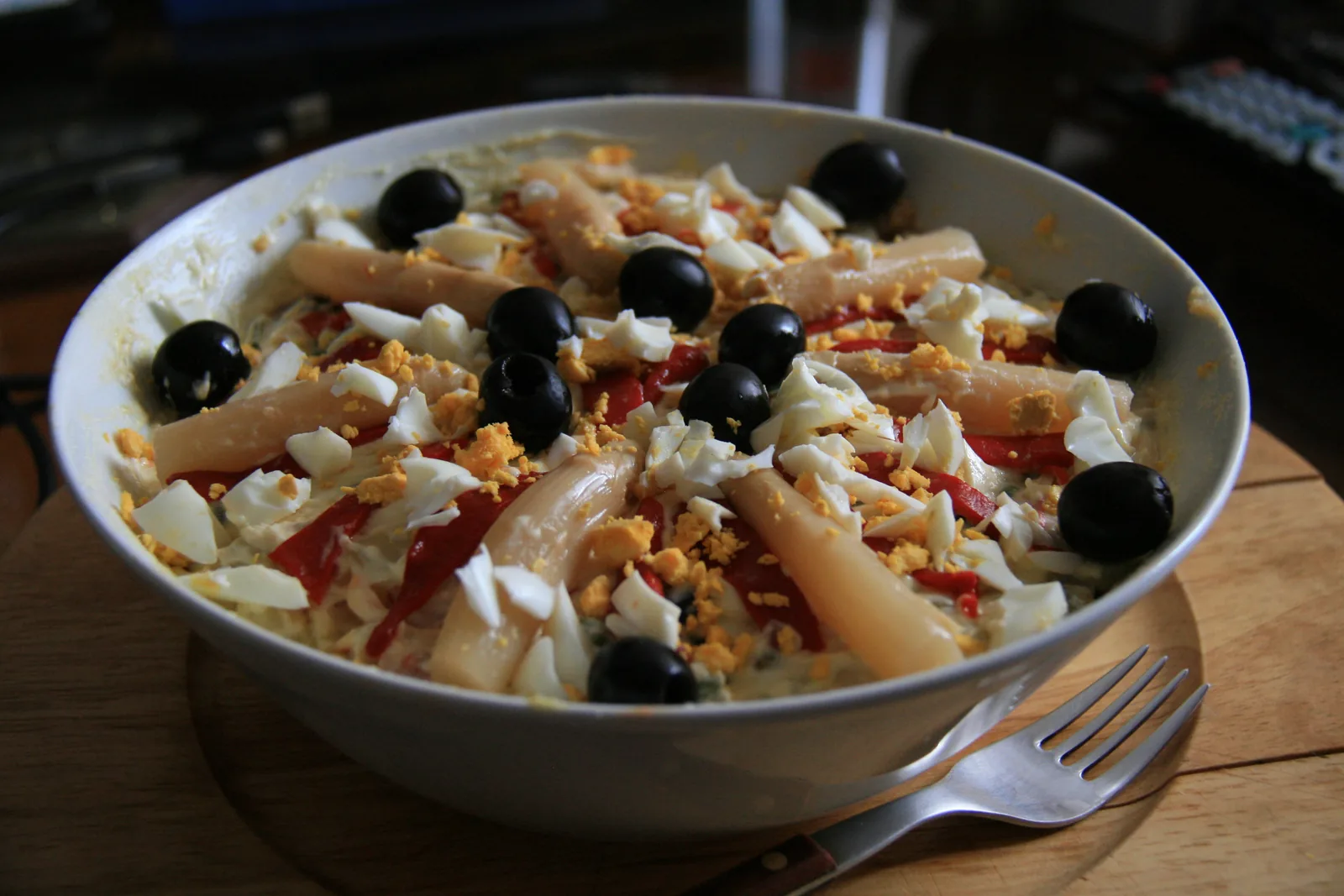
This ensaladilla rusa recipe makes Spain's creamy potato salad — waxy potatoes, carrots, peas, tuna and egg bound in mayonnaise and crowned with white asparagus, piquillo peppers and olives. Unlike the German potato salad, which is dressed in vinegar and broth, or the American version, which has no fish, the Spanish one is defined by tuna and a cool, creamy dressing. One serving is about 360 g.

Ensaladilla rusa means 'little Russian salad', and it is Spain's version of the Olivier salad — the potato salad created by the French chef Lucien Olivier at the Hermitage restaurant in Moscow in the 1860s. While the Russian original uses chicken or ham and pickles, the Spanish version took tinned tuna, olives and peppers to suit Spanish tastes and what was available after the war, and it became a fixture of every tapas bar in the country. Most Spanish versions share the same base — potato, carrot, peas, egg and mayonnaise — with tuna as the defining addition.

Pairs well with: Crusty bread, pan con tomate and a cold beer

Provenance

Spain flag Spain

Tapas Bar Classic

Mediterranean & Italy

Time Dedication

50m

20m prep • 30m cook

Batch Yield

5 Servings

501 kcal per serving

1 serving ≈ 360 g

Technical Skill

Easy

Easy (Boil and Mix)

Meal Timing & Digestive Fit

Breakfast

Not Advised

Lunch

Prime Metabolic Fit

Dinner

Ideal Hearty Main

Snack & Tea

Inappropriate

Occasions: Tapas spreads, summer lunches, picnics, make-ahead meals, festive gatherings Cost: Low — about $3–4 per serving at home
A bowl of ensaladilla rusa topped with white asparagus, black olives, chopped egg and red pepper

Tapas Bar Classic

Photo: Tamorlan, CC BY-SA 3.0, via Wikimedia Commons

The Heritage Formulary

Measured Ingredients

Estimated cost: Low — about $3–4 per serving at home (USD)

A true ensaladilla rusa uses waxy potatoes that hold their shape, tuna in olive oil, and a cool mayonnaise dressing — and it is always served cold.

Execution Methodology & Culinary Technique

Step-by-Step Cooking Guide

Active 50m
P

Prep Stage: Start the Vegetables Boiling

20 Mins • Knife Work

Put the potatoes and carrots in a large pot, cover with cold salted water and bring to a boil. Boil the eggs in a separate small pot so their timing stays exact. While everything cooks, whisk the mayonnaise with the lemon juice and mustard for the dressing.

Maestro Tip: Start the vegetables in cold water — they cook evenly from the outside in, instead of going mushy outside and raw inside.

  1. 1

    Boil the Potatoes, Carrots and Peas

    25 Mins Boiling water, 100°C (212°F)

    Put the potatoes and carrots in a large pot, cover with cold salted water and bring to a boil. Simmer for 20–25 minutes until the potatoes are just tender when pierced with a knife — firm, not floury. Add the frozen peas for the last 3 minutes. Drain and leave to cool completely.

    Cool the vegetables completely before mixing — warm potatoes drink up the mayonnaise and turn the salad greasy.

    Done when: The potatoes are tender but still firm; a knife slides in with slight resistance.

  2. 2

    Boil the Eggs

    10 Mins Boiling water, 100°C (212°F)

    Put the eggs in a small pot, cover with cold water and bring to a boil. Boil for 10 minutes, then plunge into cold water. Peel 2 eggs and chop them; keep the third whole for garnish.

    A grey ring around the yolk means overcooking — 10 minutes is enough for a large egg.

    Done when: The yolks are fully set and pale yellow, with no grey ring.

  3. 3

    Dice and Mix the Vegetables

    10 Mins Room temperature

    Peel the cooled potatoes and carrots and dice them into small, even cubes of about 1 cm. Put them in a large bowl with the peas and the 2 chopped eggs. Season lightly with the salt — remember the tuna and olives are salty already.

    Dice small and even — big chunks fall apart when mixed and small ones turn to mash.

    Done when: The dice are even and the vegetables are cool to the touch.

  4. 4

    Fold in the Tuna and Mayonnaise

    5 Mins Room temperature

    Whisk the mayonnaise with the lemon juice and mustard. Add it to the bowl with the flaked tuna, then fold everything together gently with a large spoon until just coated. Do not stir hard or the potatoes will break.

    Fold, do not stir — a few gentle turns from the bottom of the bowl are enough.

    Done when: Every piece is coated in a thin, even layer of dressing and the potatoes are still in cubes.

  5. 5

    Chill and Garnish

    60 Mins Chilled, at or below 4°C (39°F)

    Cover and chill for at least 1 hour. To serve, spoon the salad into a shallow dish, smooth the top, and garnish with the sliced third egg, the white asparagus, piquillo strips and black olives. Serve cold, straight from the fridge.

    Chilling is not optional — the flavours need the hour to marry, and the salad is meant to be eaten cold.

    Done when: The salad is cold all the way through and holds its shape on a fork.

Finishing Touches & Plating

Chill for at least 1 hour, then garnish and serve cold with crusty bread — the salad should be cool, creamy and just firm enough to hold its shape on a fork.

Nutritional Physiology & Benefits

Nutrition

Energy

501

kcal / serving

Protein

20g

Complete AA

Carbs

38g

Complex

Fats

30g

Healthy

Per serving (5 servings · 1 serving ≈ 360 g)
Energy501 kcal
Protein20 g
Carbohydrates38 g
Fat30 g
Fibre6.9 g
Sugar6.0 g
Sodium678 mg
Per 100g
Energy139 kcal
Protein5.6 g
Carbohydrates10.6 g
Fat8.4 g
Fibre1.9 g
Sugar1.7 g
Sodium188 mg

Nutrition values are estimated — calculated from USDA FoodData Central values for the listed ingredients.

Vitamins & minerals: Vitamin C and vitamin A (carrots, peas, peppers), vitamin B12 and vitamin D (tuna, egg), potassium (potatoes) and iron (egg, tuna).

Vegetables and Fish Together

Potatoes, carrots and peas bring fibre, potassium and vitamin C, while the tuna adds protein and omega-3 fats.

Protein from Tuna and Egg

About 20 g of protein per serving from tuna and egg — the salad eats like a proper lunch, not a side dish.

Cool and Make-Ahead

Served cold and made ahead, it is a calm, no-cook lunch for hot days — the fridge does the work.

Food Pairings

What to Eat With

To optimize nutrient absorption and elevate the sensory depth, pair with these authentic accompaniments:

Sides

Crusty Bread

Crusty bread is made for scooping — the salad is halfway between a salad and a spread, and bread is the best way to eat it.

Vegetables

A Green Salad with Sherry Vinegar

A bitter green salad with sherry vinegar cuts through the rich mayonnaise and refreshes the palate between bites.

Drinks

A Cold Beer

An ice-cold beer is the classic tapas-bar partner — its bitterness and fizz balance the creamy, salty salad.

Full Menus

As Part of a Tapas Spread

Serve it as one of several small plates with pan con tomate, olives and jamón — the ensaladilla is the creamy anchor of the spread.

Complete menu

Serve the ensaladilla as part of a tapas spread with pan con tomate, olives and a cold beer, or as a light lunch with crusty bread and a green salad.

Digestive Guardrails

What NOT to Combine

To prevent digestive distress, sluggishness, or palate clash, avoid pairing the dish with these elements:

Leaving the Salad Warm

Mayonnaise is an emulsion that splits when it warms, and a mayonnaise salad left in the sun becomes a food-safety risk as well as a greasy one. Keep the salad chilled at or below 4°C (39°F) and never leave it out for more than 2 hours. This is general guidance, not medical advice.

Using Floury Potatoes

Floury potatoes break apart when mixed and turn the salad into mash. Use waxy potatoes and mix gently, folding rather than stirring hard.

General information only, not medical advice — consult a doctor for personal dietary decisions.

Who Should Eat It

Who Should Eat

  • General adultsA creamy, satisfying lunch — potatoes, tuna, egg and vegetables in one cold, make-ahead bowl.
  • ChildrenSuitable from age 2+; soft, mild and easy to eat. Skip the olives and peppers for small children, and keep the portion modest.
  • ElderlyVery suitable — soft, cold and easy to chew; serve it well chilled on a warm day.
  • Pregnant womenGenerally suitable when made with shop-bought mayonnaise from pasteurised eggs and kept properly chilled; do not use homemade raw-egg mayonnaise.
  • Breastfeeding womenGenerally suitable; the tuna, egg and potatoes support everyday nutrition — keep the portion modest because of the tuna.
  • AthletesA good post-training lunch — about 20 g of protein and 38 g of carbohydrate per serving, with salt to replace what sweat takes.
  • Weight gainA good choice — energy-dense from the mayonnaise; take a second helping with bread.
  • Weight lossA rich dish at about 501 kcal a serving; take a smaller portion, use a lighter mayonnaise, and fill the plate with salad.

Health Conditions — Adjust or Avoid

Conditions

  • DiabetesThe potatoes are the main carbohydrate — keep the portion to about 300 g and fill the rest of the plate with salad. Ask your clinician about a suitable portion.
  • High blood pressureTuna, mayonnaise and olives are all salty — keep the portion modest and skip the extra olives. Ask your clinician about a suitable portion.
  • Kidney diseaseHigh in protein, sodium and potassium from the potatoes and tuna — keep the portion small and ask your clinician whether it fits your plan.
  • GoutTuna is high in purines, so this is a dish to enjoy occasionally and in a modest portion.
  • Stomach issuesUsually gentle, but the mayonnaise and raw onion family flavours can bother sensitive stomachs — use a lighter mayonnaise and skip the mustard if needed.
  • Cardiovascular diseaseThe tuna brings omega-3 fats, but the mayonnaise is high in fat — a modest portion with a light mayonnaise is the sensible way to enjoy it.
  • Fatty liverA rich dish — keep the portion small, use a light mayonnaise, and follow it with vegetables rather than bread.
  • Food allergiesContains fish (tuna), egg (mayonnaise and boiled eggs) and mustard (Dijon). Naturally gluten-free — check the mayonnaise label if you have a soy allergy.
  • Special therapeutic dietsIf you follow a prescribed low-sodium diet, use low-sodium tuna and a light mayonnaise, and check with your clinician.

If you have a medical condition, consult your doctor before changing your diet.

Storage & Use

Storage & Use

How to store
Cool completely before covering and refrigerate in an airtight container; keep the garnish separate until serving.
In the fridge
3–4 days, covered, at or below 4°C (39°F).
In the freezer
Do not freeze — mayonnaise splits and the potatoes turn grainy.
How to reheat
Do not reheat — this is a cold salad. If it has been out of the fridge, return it to the fridge at once; do not leave it at room temperature for more than 2 hours.
Freezing recommended
No — mayonnaise-based salads do not freeze well.
Signs it has spoiled
Sour or off smell, a watery layer on top, or a slimy texture.

More recipes to explore

Pan con tomate with jamón ibérico on toasted bread Spain flag Spain 15m
Snack & Tea •Catalan Aperitivo

Pan con Tomate & Jamón Ibérico

Country bread rubbed with ripe Ramallet tomato, drizzled with cold-pressed Arbequina olive oil and topped with jamón ibérico.

Vascular Health

Toasted tomato bread with jamón ibérico, olive oil and olives.

Pairs Well With
Castelvetrano Olives & Sparkling Mineral Water
Quick Prep (<30m)
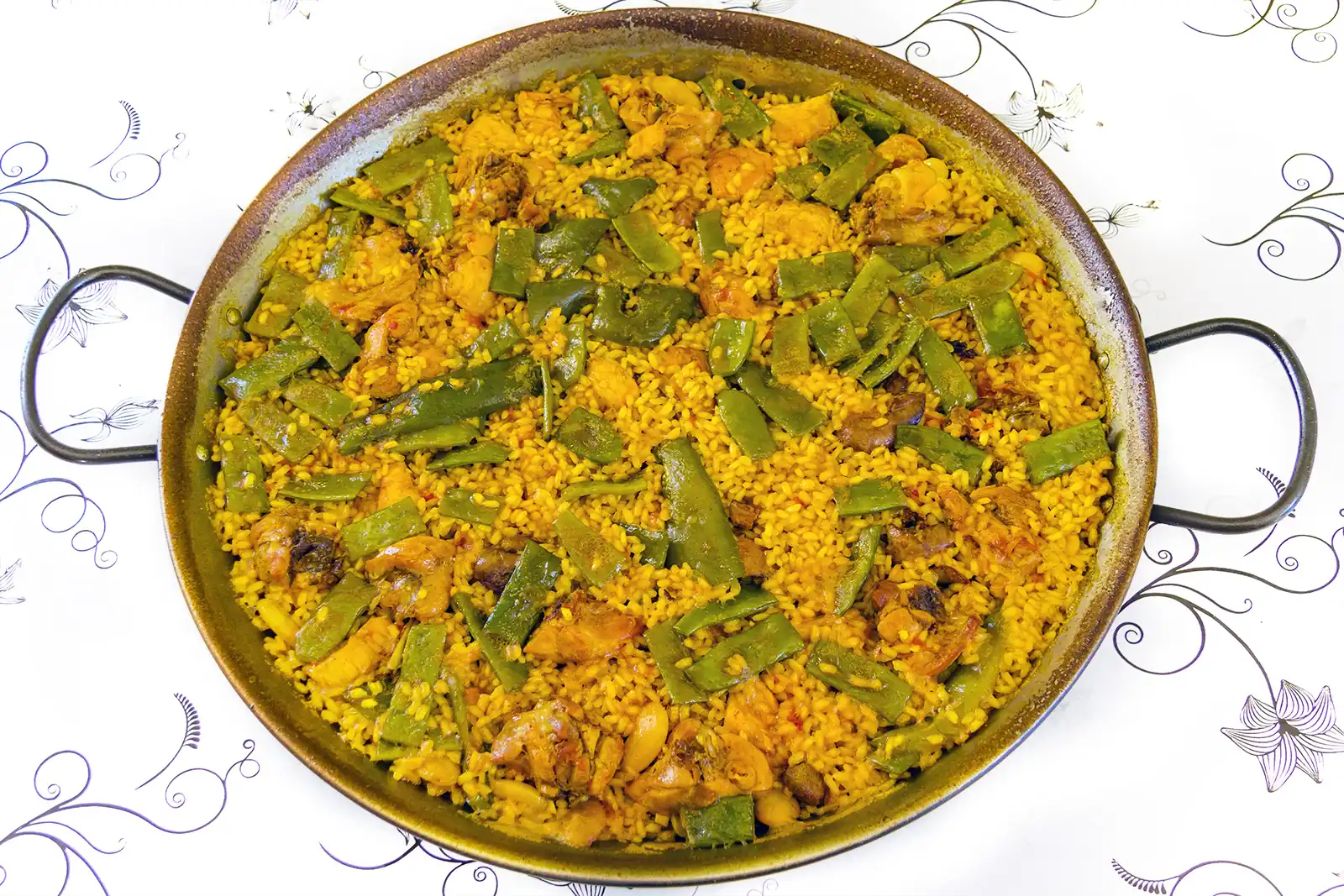
A wide paella pan of paella valenciana with saffron rice, green beans and chicken Spain flag Spain 1h 10m
Dinner •Valencia Rice Fields

Paella Valenciana

This paella valenciana recipe cooks Bomba rice in a wide, shallow pan with chicken, rabbit, green beans and garrofó beans, scented with saffron and rosemary. One serving is about 470 g.

Comfort & Warmth

Saffron rice cooked in a wide pan with chicken, rabbit and green beans.

Pairs Well With
A green salad and a glass of white wine
High Protein
A whole golden tortilla española, a thick Spanish potato omelette, on a plate Spain flag Spain 55m
Snack & Tea •Navarre Bar Classic

Tortilla Española

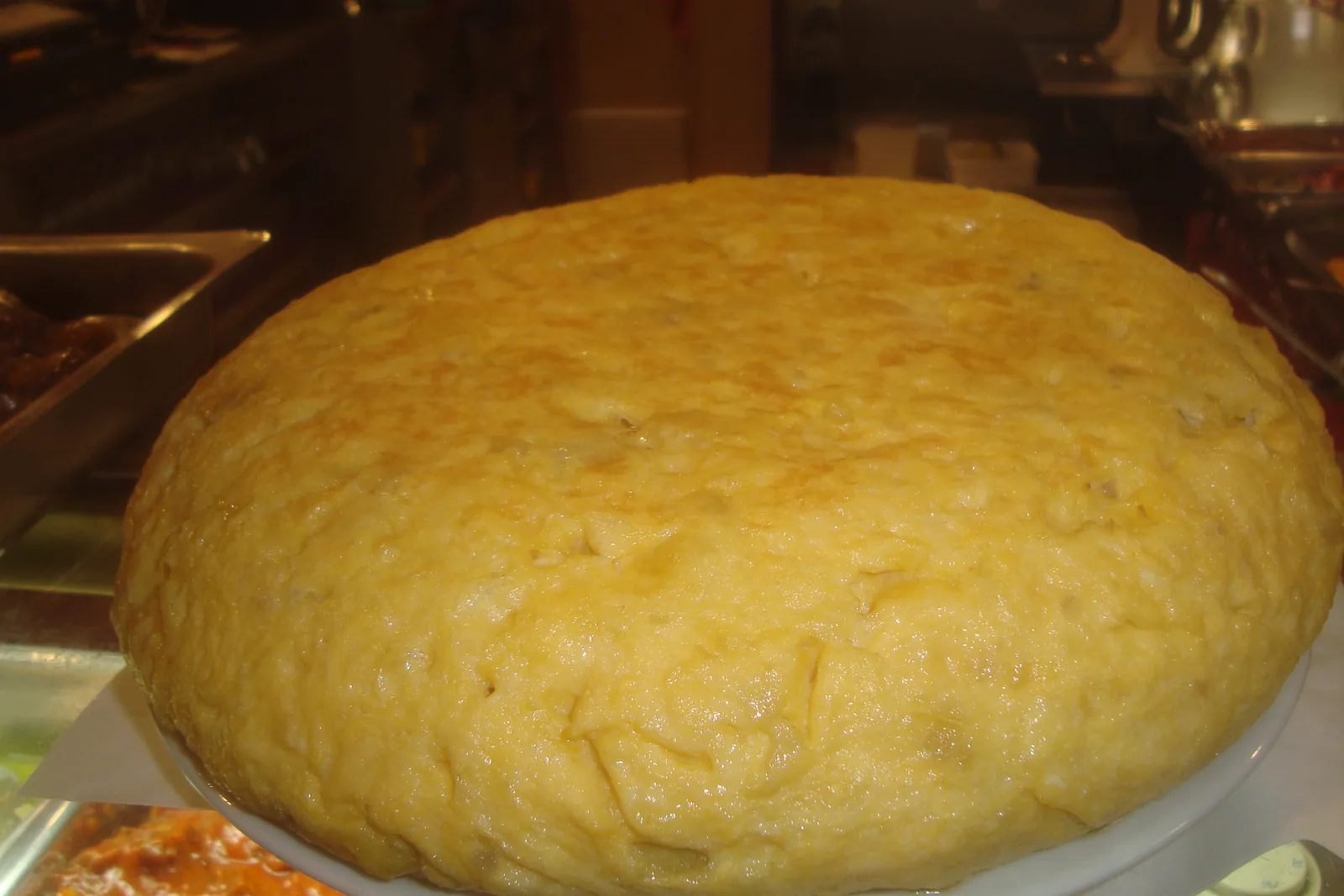
This spanish tortilla recipe slowly cooks potatoes and onion in olive oil, folds them into beaten eggs, and turns out a thick, golden cake that is soft in the middle. One serving is about 220 g.

Comfort & Warmth

A thick, golden omelette of slow-cooked potatoes, onion and egg.

Pairs Well With
Pan con tomate and a glass of red wine
A cup of chilled orange-red gazpacho with olive oil, served with diced peppers and onion and a bowl of croutons Spain flag Spain 20m
Lunch •Andalusian Classic

Gazpacho

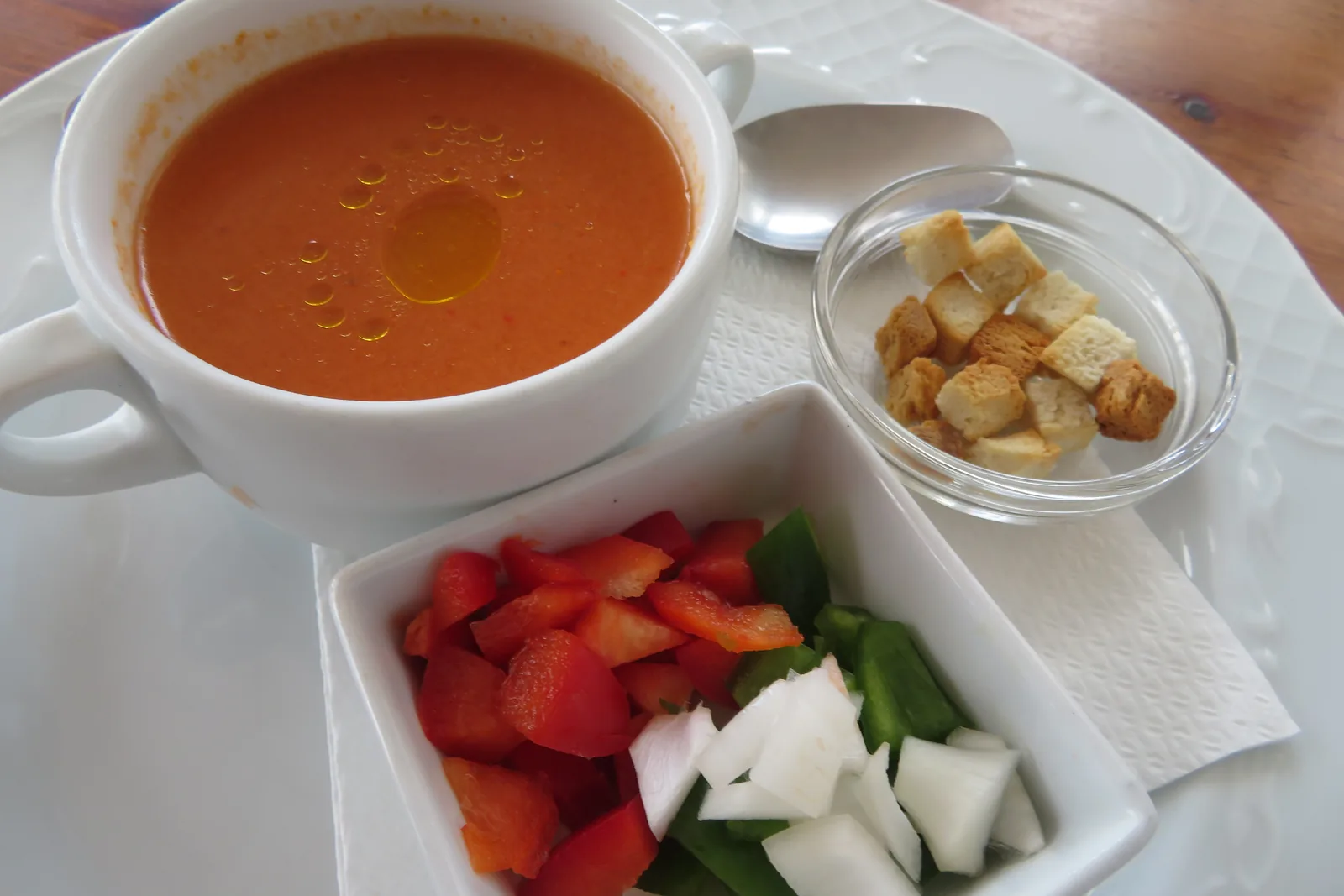
This gazpacho recipe is the Andalusian classic: ripe tomatoes, cucumber, green pepper, onion and garlic blended raw with bread, sherry vinegar and olive oil, then chilled until ice cold. One serving is about 395 g. It takes 20 minutes plus chilling, and there is no cooking at all.

Light & Refreshing

Chilled raw tomato soup blended with cucumber, pepper and olive oil, served cold with diced vegetables and croutons.

Pairs Well With
Croutons, diced vegetables & crusty bread
Soups & Broths • Quick Prep (<30m)

The Dinner Gazette

Never wonder what’s for dinner again

One email a week with easy dinner ideas from around the world — ingredients, steps and nutrition, tested in our kitchen first.

Delivered every Thursday morning. Unsubscribe anytime.