
Curated recipes from 193 countries  •  New seasonal Mediterranean issue out now

Overview

Fideuà

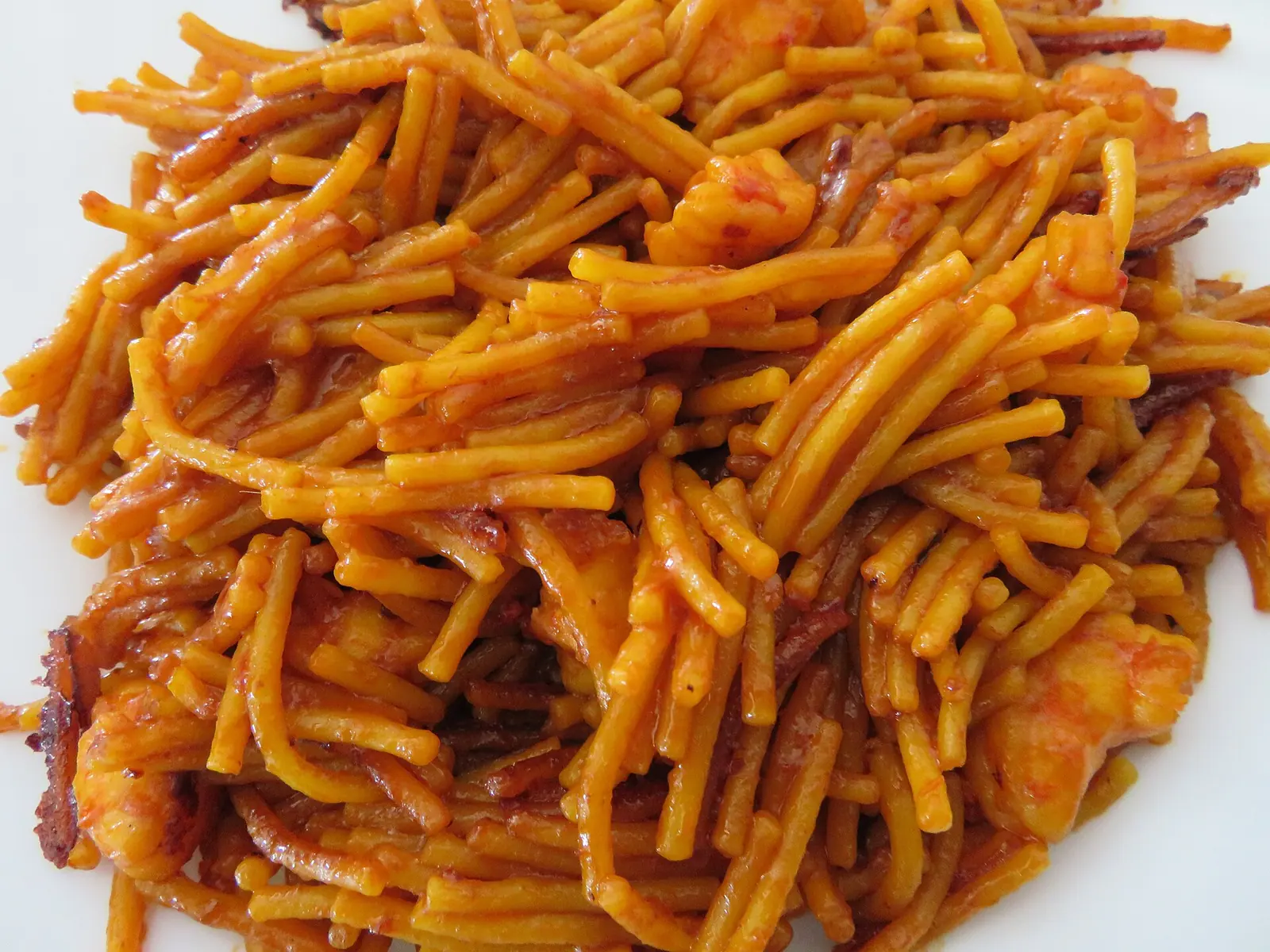
Fideua, Valencian seafood noodle paella

This fideua recipe toasts short fideo noodles in olive oil until golden, then cooks them in a saffron seafood stock with prawns, squid, mussels and monkfish in a wide, shallow pan — the same pan as a paella, but with noodles instead of rice. One serving is about 430 g. The noodles drink up the stock, crisp a little at the edges, and come out saffron-gold and full of the sea.

Fideua comes from Gandia, on the Valencian coast, and tradition says it was born on a fishing boat: the cook, Gabriel Rodriguez Pastor, ran out of rice for the crew's paella and used the ship's noodles instead. The fishermen liked it so much that the noodle version became a dish in its own right, and Gandia still holds a fideua competition every year. The defining difference is the noodle itself — toasted first, so it stays separate and takes on a nutty, golden edge.

Pairs well with: Allioli, lemon wedges and a green salad

Provenance

Spain flag Spain

Gandia Heritage

Mediterranean & Italy

Time Dedication

55m

20m prep • 35m cook

Batch Yield

4 Servings

640 kcal per serving

1 serving ≈ 430 g

Technical Skill

Intermediate

Medium (One Pan)

Meal Timing & Digestive Fit

Breakfast

Not Advised

Lunch

Hearty Midday Main

Dinner

Ideal Hearty Main

Snack & Tea

Inappropriate

Pasta & Noodles Occasions: Weekend lunch, seaside dinner, family gathering, dinner party main Cost: Medium — about $6–7 per serving at home
A plate of fideua with golden toasted noodles and prawns

Gandia Heritage

Photo: Juan Emilio Prades Bel, CC BY 4.0, via Wikimedia Commons

The Heritage Formulary

Measured Ingredients

Estimated cost: Medium — about $6–7 per serving at home (USD)

A proper fideua toasts the noodles in oil before any stock goes in, and the stock is never stirred once it is added — the noodles cook undisturbed, like paella rice. Nutrition is estimated from USDA values.

Execution Methodology & Culinary Technique

Step-by-Step Cooking Guide

Active 55m
P

Prep Stage: Stock, Seafood and Sofrito

20 Mins • Cleaning & Chopping

Warm the fish stock in a pan and keep it hot — cold stock shocks the noodles and stalls the cooking. Clean the squid and cut it into rings, peel the prawns, scrub the mussels and pull off their beards, and cut the monkfish into chunks. Dice the onion and red pepper, mince the garlic, grate the tomato, and crush the saffron into a little warm stock so its colour wakes up before it meets the pan.

Maestro Tip: Throw away any mussel that stays open when tapped, and any that stays shut after cooking — both are rules worth keeping.

  1. 1

    Toast the noodles

    8 Mins Medium heat, about 175°C (350°F)

    Warm half the olive oil in a wide, shallow paella pan over medium heat. Add the broken fideo noodles and toast, stirring often, for about 6 minutes until they turn an even golden brown. Lift them out onto a plate — they finish cooking in the stock, so do not cook them now.

    Golden, not dark: noodles that go brown in the pan taste bitter in the finished dish.

    Done when: Evenly golden, nutty-smelling, still hard and dry.

  2. 2

    Build the sofrito

    10 Mins Medium heat, about 175°C (350°F)

    Warm the remaining oil in the same pan, soften the onion and red pepper for 5 minutes until sweet, then add the garlic and paprika and cook 1 minute more. Stir in the grated tomato and the saffron stock and cook for about 4 minutes until the sofrito darkens and the oil separates at the edges.

    The sofrito is ready when the oil separates — before that, the tomato still tastes raw.

    Done when: Thick, dark red, oil glistening at the edges, smelling of saffron and garlic.

  3. 3

    Add the noodles and stock

    5 Mins Medium-high heat, about 190°C (375°F)

    Scatter the toasted noodles evenly over the sofrito, then pour in the hot fish stock and the salt. Shake the pan once to settle the noodles, and do not stir again — the noodles cook undisturbed, like paella rice. Bring to a lively simmer.

    No stirring from here on: stirring breaks the noodles and turns the pan to mush.

    Done when: Noodles settled in a single layer, stock bubbling gently around them.

  4. 4

    Add the seafood

    12 Mins Medium heat, about 175°C (350°F)

    After about 8 minutes, when the noodles have drunk up most of the stock, nestle in the monkfish chunks and the squid rings, then the mussels and prawns on top. Cover the pan loosely with foil and cook 8 minutes more until the prawns are pink, the fish flakes and the mussels are open. Fish must reach 63°C (145°F) and the prawns must be opaque right through.

    Seafood goes in late on purpose: prawns and squid turn rubbery in minutes if they are overcooked.

    Done when: Prawns pink and opaque, fish flaking, mussels open, noodles tender with a little bite.

  5. 5

    Rest and serve

    5 Mins Resting, cooling from about 95°C (200°F)

    Take the pan off the heat, cover it and rest for 5 minutes so the noodles finish absorbing the stock and the flavours settle. Scatter the parsley over the top and serve straight from the pan at the table, with lemon wedges and allioli on the side.

    Resting is not optional — noodles served straight off the heat are wet on top and firm underneath.

    Done when: Noodles saffron-gold and separate, seafood bright on top, no puddles of stock.

Finishing Touches & Plating

Serve the fideua straight from its pan, making sure every plate gets noodles, a prawn, a mussel and a piece of fish, with a lemon wedge to squeeze over and a spoonful of allioli on the side. The crisped noodles at the bottom of the pan are the cook's reward.

Nutritional Physiology & Benefits

Nutrition

Energy

640

kcal / serving

Protein

47g

Complete AA

Carbs

78g

Complex

Fats

16g

Healthy

Per serving (4 servings · 1 serving ≈ 430 g)
Energy640 kcal
Protein47 g
Carbohydrates78 g
Fat16 g
Fibre4.9 g
Sugar6.0 g
Sodium769 mg
Per 100g
Energy149 kcal
Protein10.9 g
Carbohydrates18.1 g
Fat3.6 g
Fibre1.1 g
Sugar1.4 g
Sodium179 mg

Nutrition values are estimated — calculated from USDA FoodData Central values for the listed ingredients.

Vitamins & minerals: Iodine and selenium (seafood), vitamin B12 (mussels, prawns), vitamin C (red pepper, lemon, tomato), iron (mussels). Nutrition is estimated.

Seafood, Saffron and Olive Oil

Prawns, squid, mussels and monkfish bring lean protein, iodine and vitamin B12, cooked in olive oil with tomato, pepper and saffron — the flavours of the Valencian coast.

High in Protein

About 640 kcal per serving with about 46.8 g of protein from the seafood, which supports normal muscle maintenance and keeps the meal filling.

One Pan, 55 Minutes

Everything happens in a single wide pan — toast, sofrito, stock, seafood — and the pan goes straight to the table.

Food Pairings

What to Eat With

To optimize nutrient absorption and elevate the sensory depth, pair with these authentic accompaniments:

Sauces

Allioli

A spoonful of garlicky allioli is the classic partner: its creamy richness softens the saffron noodles and the garlic echoes the sofrito.

Vegetables

Green Salad

A sharp, lemony green salad cuts the richness of the seafood stock and resets the palate between spoonfuls of noodles.

Drinks

Dry White Wine

A crisp, dry white wine matches the seafood and the saffron without overwhelming them, and its acidity lifts the whole pan.

Full Menus

Fresh Fruit to Finish

For a full menu, end with fresh fruit: its clean sweetness follows the salty, savoury noodles the way Valencian meals do.

Complete menu

Start with a green salad, serve the fideua as the main with allioli and lemon wedges, and finish with fresh fruit.

Digestive Guardrails

What NOT to Combine

To prevent digestive distress, sluggishness, or palate clash, avoid pairing the dish with these elements:

Do Not Add Extra Salt at the Table

One serving carries about 769 mg of sodium, mostly from the stock and the shellfish, so extra salt pushes one meal far past a reasonable amount. Taste first. This is general food information, not medical advice.

Do Not Pair with a Heavy Cream Soup First

A creamy starter before a rich seafood noodle pan makes the meal very heavy; start with a light salad instead. This is general food information, not medical advice.

General information only, not medical advice — consult a doctor for personal dietary decisions.

Who Should Eat It

Who Should Eat

  • General adultsA satisfying seafood dinner — one serving with salad and allioli is a balanced plate for most adults.
  • ChildrenChildren usually love the noodles and prawns; serve the mussels and squid on the side for picky eaters and keep the paprika mild.
  • ElderlySoft noodles and tender fish are easy to eat; serve a smaller portion and skip the crisped bottom if it is too chewy.
  • Pregnant womenThe seafood must be cooked right through and served hot; avoid raw or undercooked shellfish entirely. Ask your clinician about seafood in pregnancy.
  • Breastfeeding womenA nourishing, protein-rich dinner; drink water alongside, as with any salty seafood meal.
  • AthletesAbout 46.8 g of protein and 78.0 g of carbs per serving make this good recovery food after training.
  • Weight gainEnergy-dense at about 640 kcal a serving, with noodles and seafood — a second helping is an easy way to raise the calories.
  • Weight lossAbout 640 kcal a serving is a full dinner; a smaller portion with a big salad keeps it lighter. Ask your clinician about a plan that fits you.

Health Conditions — Adjust or Avoid

Conditions

  • DiabetesAbout 78.0 g of carbs per serving, mostly from the noodles. Keep the noodle portion modest and add extra salad. Ask your clinician about portion size.
  • High blood pressureAbout 769 mg of sodium per serving, mostly from the stock and shellfish. Use low-salt stock and do not add salt at the table. Ask your clinician about sodium limits.
  • Kidney diseaseShellfish are high in potassium and phosphorus, so keep the portion as stated and do not eat large second helpings. Ask your clinician about your diet.
  • GoutShellfish and fish carry purines; a single serving with plenty of salad is the safer way to enjoy it. Ask your clinician about seafood in your diet.
  • Stomach issuesRich seafood and saffron can be heavy on a sensitive stomach; eat slowly and keep the portion small. Ask your clinician if symptoms flare.
  • Cardiovascular diseaseCooked in olive oil with lean seafood, this fits a heart-conscious pattern when the salt is kept as measured. Ask your clinician about your diet.
  • Fatty liverLow in fat at about 15.7 g per serving, with lean seafood and no cream; a smaller portion with extra salad is gentler still. Ask your clinician about your diet.
  • Food allergiesContains shellfish (prawns, mussels), molluscs (squid), fish (monkfish) and wheat (gluten, in the noodles). The allioli served alongside contains egg and garlic. Check every label and ask your clinician about your allergies.
  • Special therapeutic dietsThis dish contains gluten, fish and shellfish. A gluten-free noodle is possible, but there is no safe swap for the shellfish, so discuss it with your clinician or dietitian first.

If you have a medical condition, consult your doctor before changing your diet.

Storage & Use

Storage & Use

How to store
Cool quickly, within 2 hours, and store in a sealed container; keep the lemon wedges and allioli separate.
In the fridge
1 day, covered, at 4°C (40°F) or below — seafood noodles are best eaten the same day.
In the freezer
Not recommended — the noodles turn mushy and the seafood toughens on thawing.
How to reheat
Reheat gently in a pan over low heat with a splash of stock until steaming hot throughout, to 74°C (165°F); do not overcook or the prawns turn rubbery.
Freezing recommended
No — best eaten fresh; freezing ruins the noodles and the seafood.
Signs it has spoiled
Fishy or sour smell, slimy noodles, or mussels that were shut after cooking.

More recipes to explore

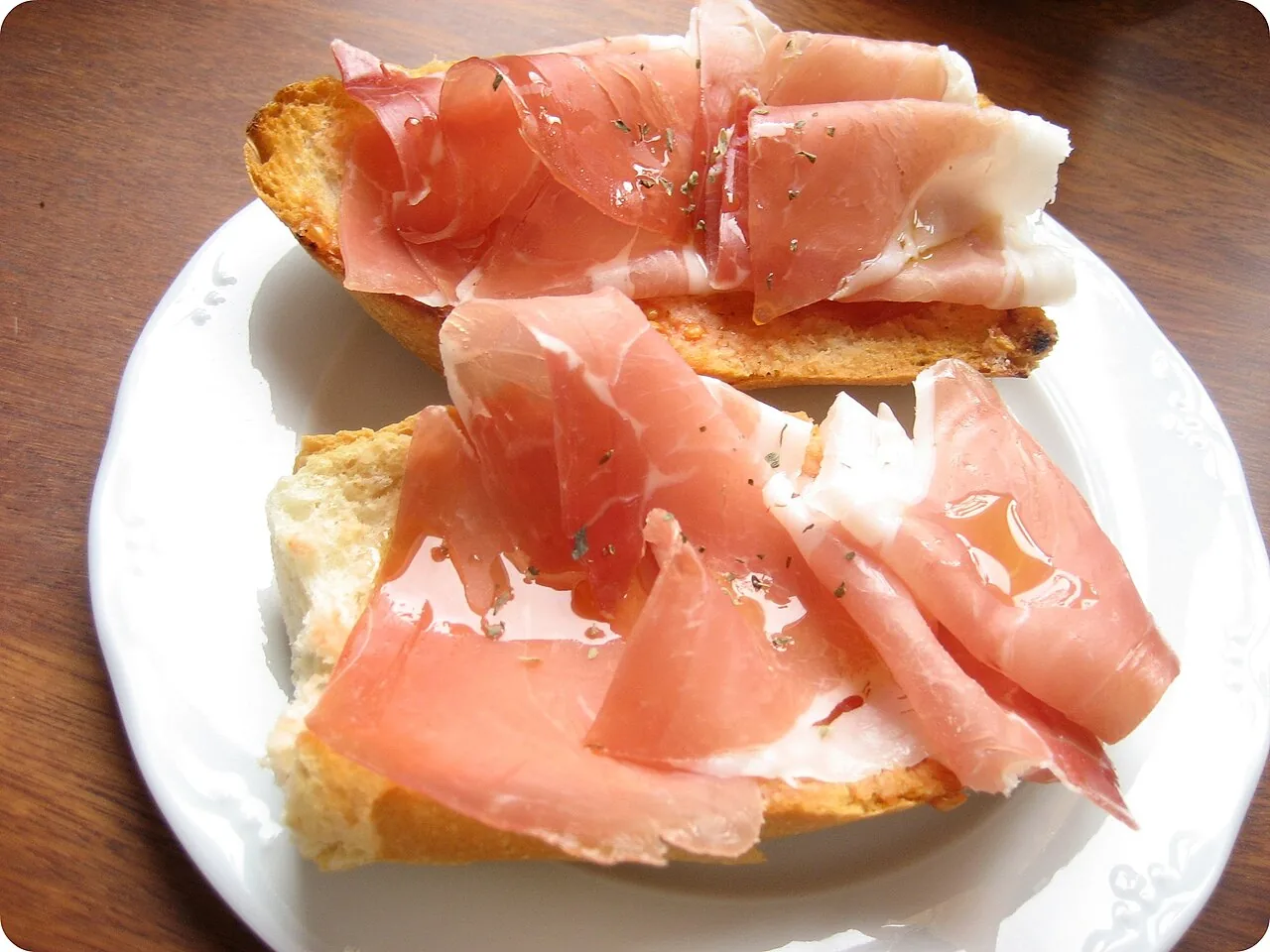
Pan con tomate with jamón ibérico on toasted bread Spain flag Spain 15m
Snack & Tea •Catalan Aperitivo

Pan con Tomate & Jamón Ibérico

Country bread rubbed with ripe Ramallet tomato, drizzled with cold-pressed Arbequina olive oil and topped with jamón ibérico.

Vascular Health

Toasted tomato bread with jamón ibérico, olive oil and olives.

Pairs Well With
Castelvetrano Olives & Sparkling Mineral Water
Quick Prep (<30m)
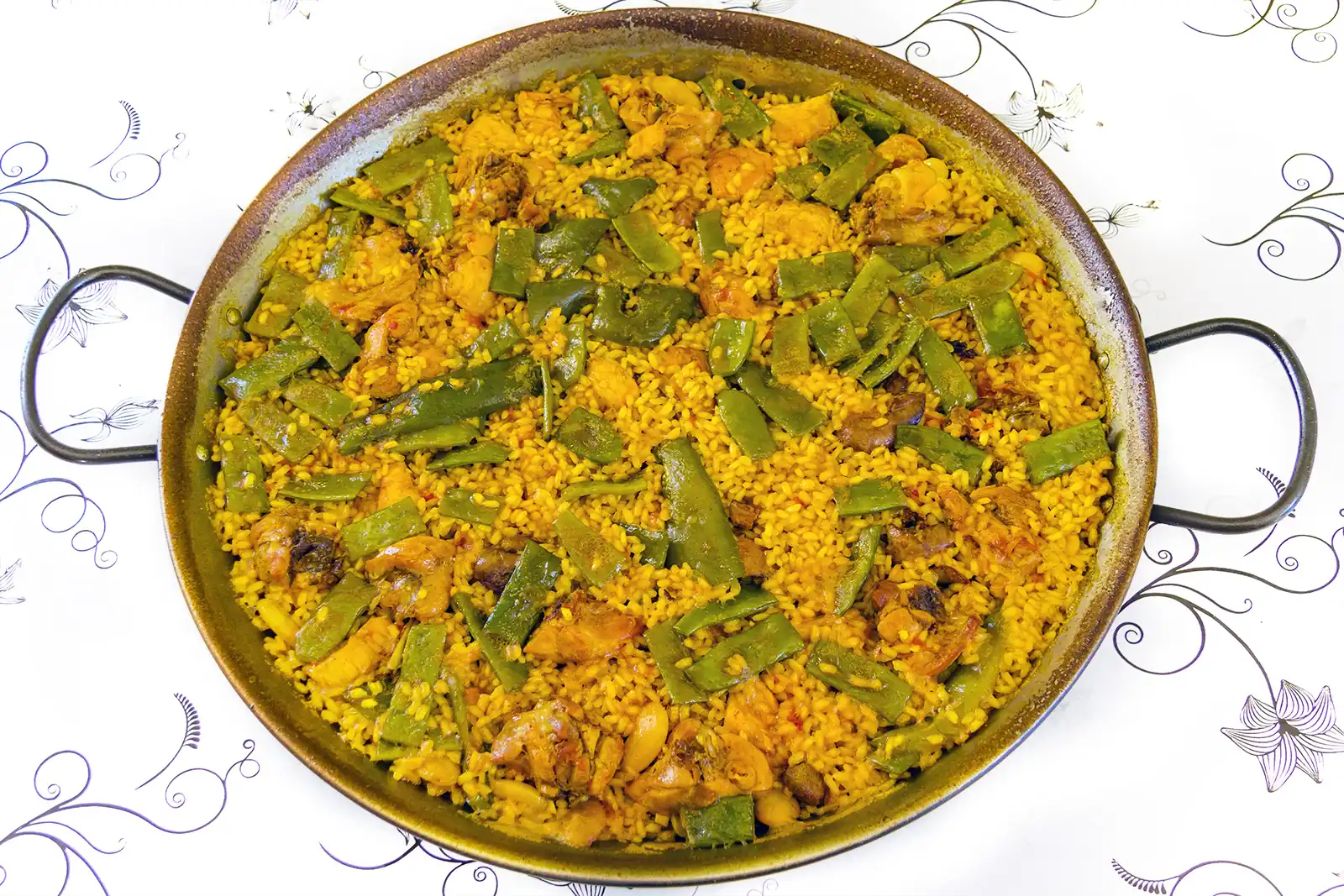
A wide paella pan of paella valenciana with saffron rice, green beans and chicken Spain flag Spain 1h 10m
Dinner •Valencia Rice Fields

Paella Valenciana

This paella valenciana recipe cooks Bomba rice in a wide, shallow pan with chicken, rabbit, green beans and garrofó beans, scented with saffron and rosemary. One serving is about 470 g.

Comfort & Warmth

Saffron rice cooked in a wide pan with chicken, rabbit and green beans.

Pairs Well With
A green salad and a glass of white wine
High Protein
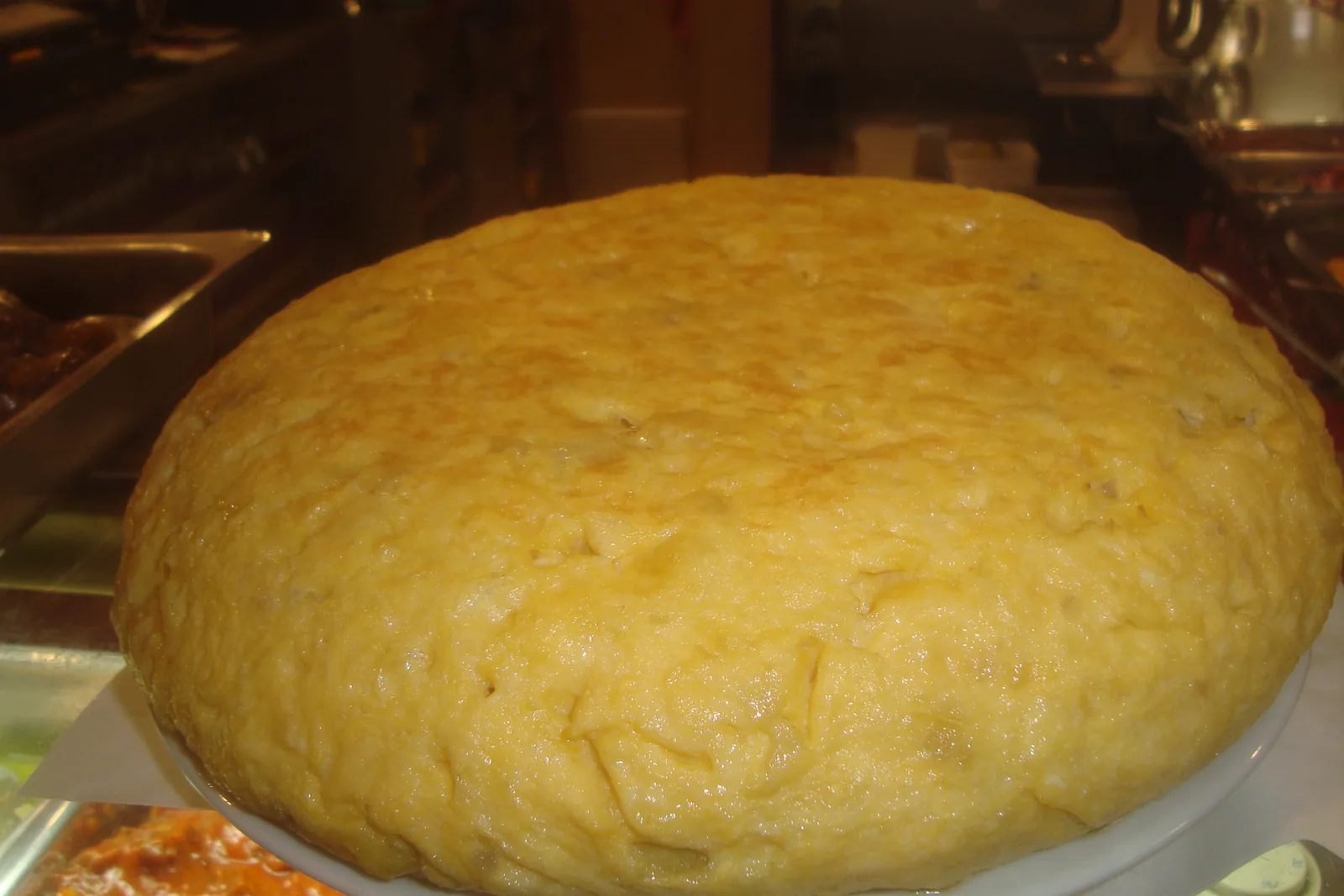
A whole golden tortilla española, a thick Spanish potato omelette, on a plate Spain flag Spain 55m
Snack & Tea •Navarre Bar Classic

Tortilla Española

This spanish tortilla recipe slowly cooks potatoes and onion in olive oil, folds them into beaten eggs, and turns out a thick, golden cake that is soft in the middle. One serving is about 220 g.

Comfort & Warmth

A thick, golden omelette of slow-cooked potatoes, onion and egg.

Pairs Well With
Pan con tomate and a glass of red wine
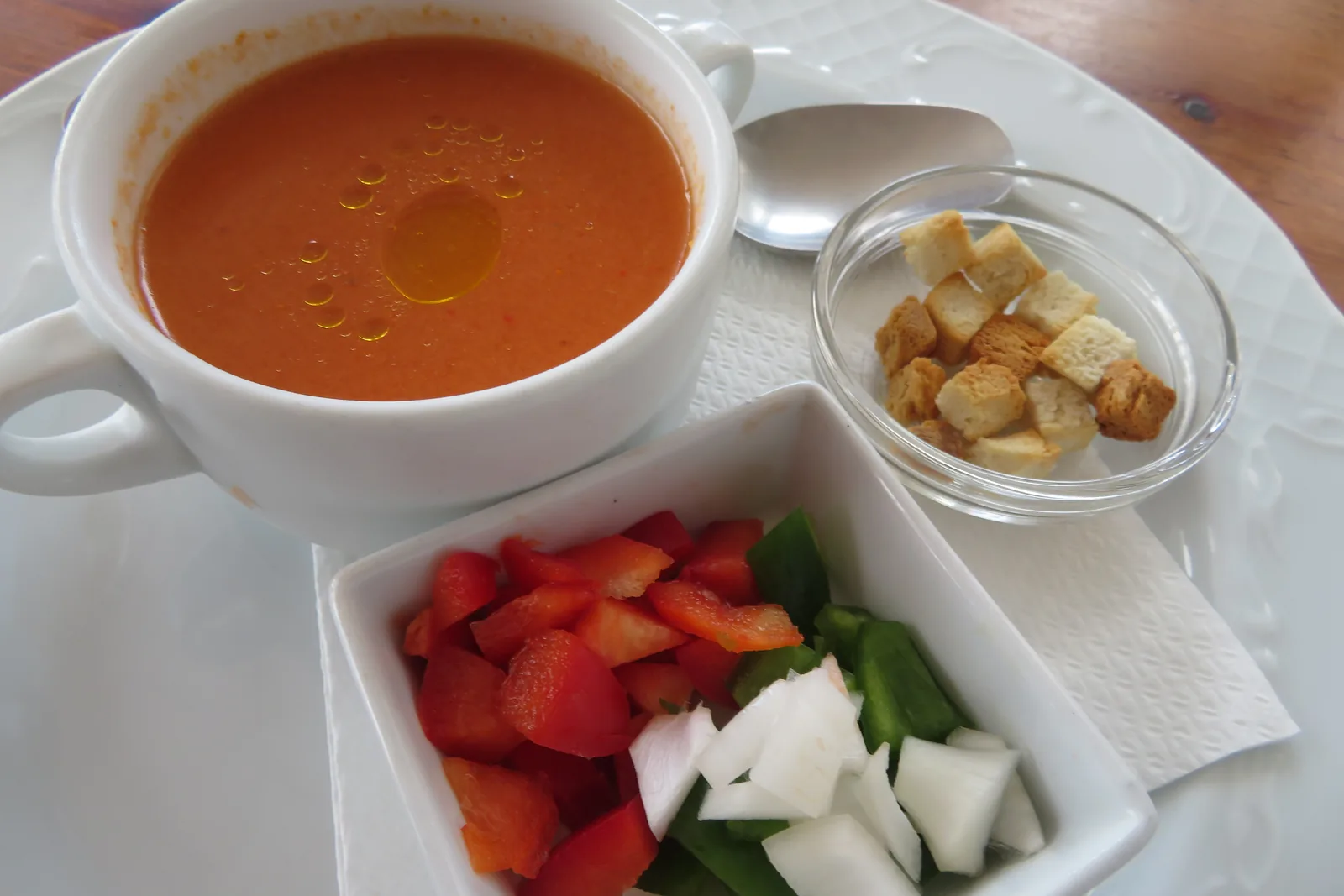
A cup of chilled orange-red gazpacho with olive oil, served with diced peppers and onion and a bowl of croutons Spain flag Spain 20m
Lunch •Andalusian Classic

Gazpacho

This gazpacho recipe is the Andalusian classic: ripe tomatoes, cucumber, green pepper, onion and garlic blended raw with bread, sherry vinegar and olive oil, then chilled until ice cold. One serving is about 395 g. It takes 20 minutes plus chilling, and there is no cooking at all.

Light & Refreshing

Chilled raw tomato soup blended with cucumber, pepper and olive oil, served cold with diced vegetables and croutons.

Pairs Well With
Croutons, diced vegetables & crusty bread
Soups & Broths • Quick Prep (<30m)

The Dinner Gazette

Never wonder what’s for dinner again

One email a week with easy dinner ideas from around the world — ingredients, steps and nutrition, tested in our kitchen first.

Delivered every Thursday morning. Unsubscribe anytime.