-
1
Make the Caramel
10 minutes
Medium heat, about 160°C (320°F)
Put the sugar and water in a small, heavy saucepan over medium heat. Stir once to wet the sugar, then leave it alone — swirl the pan gently instead of stirring — until it turns a deep amber, about 8 to 10 minutes. The moment it reaches the colour of honey, pour it straight into a 1-litre flan mould or 8 ramekins and tilt to coat the base. Set aside to harden.
Do not walk away from caramel: it goes from amber to burnt in under a minute. If it smokes or smells bitter, start again — burnt caramel cannot be saved.
Done when: Deep amber, the colour of honey, with no dark or smoking patches.
-
2
Blend the Custard
5 minutes
Room temperature, about 20°C (68°F)
Put the eggs, condensed milk, evaporated milk, cream cheese, vanilla and salt in a blender and blend on medium for 30 seconds until completely smooth. Pour the mixture through a fine sieve into a jug — this catches any flecks of egg or cream cheese and is what gives the flan its silk.
Blend briefly, not for minutes: over-blending whips in air, and air bubbles become holes in the finished flan.
Done when: Perfectly smooth and lump-free after sieving.
-
3
Fill the Mould and Set the Water Bath
5 minutes
Boiling water, 100°C (212°F)
Pour the strained custard over the set caramel. Put the mould inside a deep roasting tin and pour boiling water into the tin until it comes halfway up the sides of the mould. Cover the mould loosely with foil, shiny side down.
The water bath is what keeps the custard gentle — it stops the eggs from curdling and the top from cracking.
Done when: Mould sitting steady in the tin, water halfway up its sides.
-
4
Bake in the Water Bath
55 minutes
175°C (350°F)
Bake for 50 to 55 minutes, until the edges are set but the centre still trembles slightly when you nudge the tin — it will finish setting as it cools. Take the mould out of the water bath carefully and leave it on a rack until it reaches room temperature.
A flan that is fully firm in the oven is already overbaked. The trembling centre is correct.
Done when: Edges set, centre trembling like jelly when nudged.
-
5
Cool, Then Chill
4 hours chilling
Fridge, 4°C (40°F)
Once at room temperature, cover the mould and refrigerate for at least 4 hours, or overnight. The chill is not optional: it lets the custard firm up fully and lets the caramel soften into sauce. Chilling time is extra, on top of the 80 minutes of active cooking.
Overnight chilling gives the cleanest slices and the glossiest caramel.
Done when: Cold right through, firm to the touch, caramel loosened into sauce.
-
6
Unmould and Serve
5 minutes
Serve chilled, about 4°C (40°F)
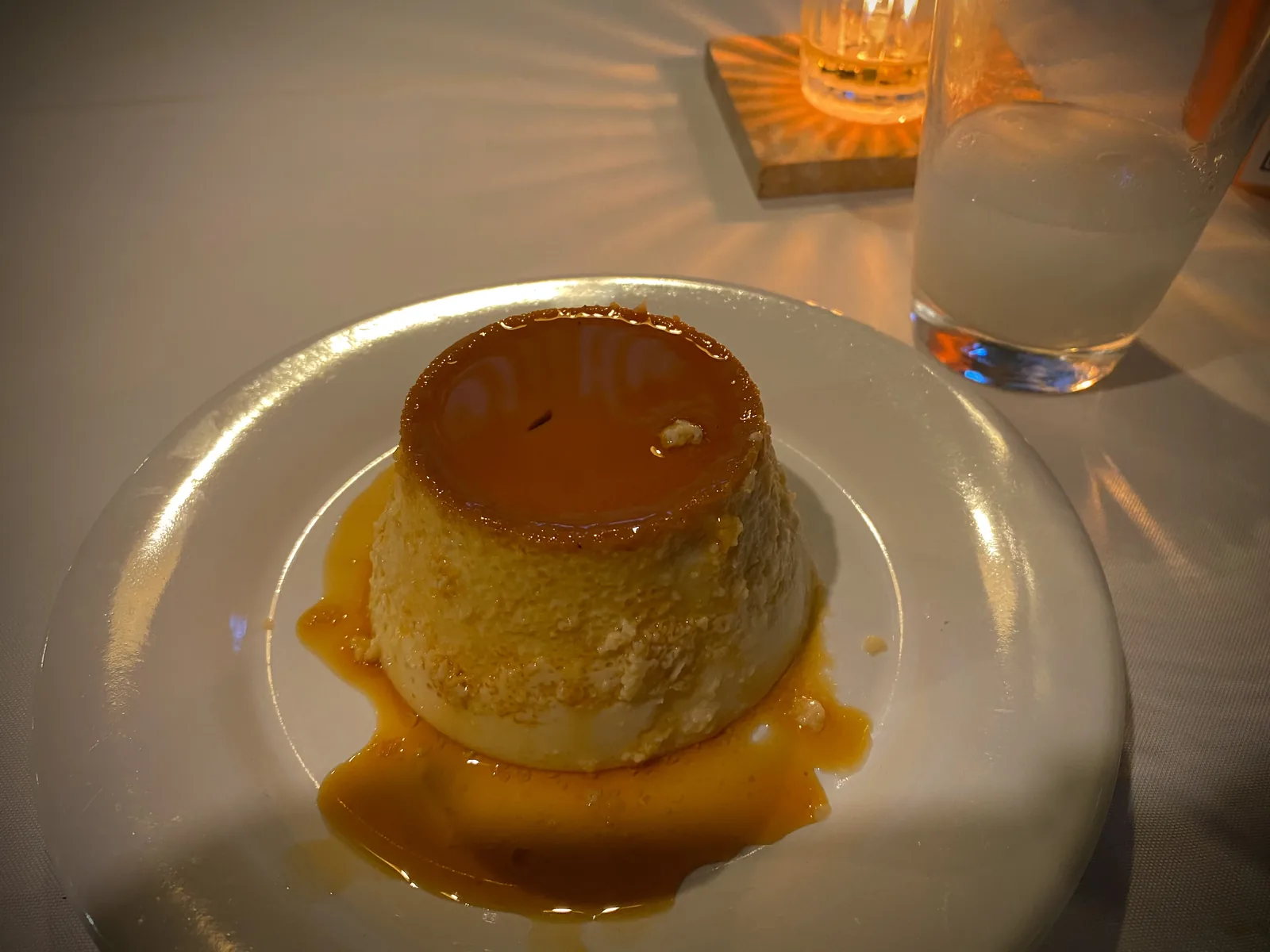
Run a thin knife around the edge of the mould, set a plate over the top and flip it in one confident movement. Lift the mould away slowly and let the caramel run down over the flan. Slice with a hot, dry knife and serve chilled.
If the flan will not drop, dip the base of the mould in hot water for 10 seconds and try again.
Done when: Flan standing whole and glossy, caramel pooling on the plate.
auto_awesome Finishing Touches & Plating
Serve the flan well chilled, straight from the fridge, with the caramel spooned over each slice. A spoonful of lightly whipped cream or a few berries on the side is all it needs.


 Mexico
35m