Curated recipes from 193 countries  •  New seasonal Mediterranean issue out now

Overview

Frankfurter Grune Sosse

Grüne Soße, Grie Soß, Frankfurt Green Sauce

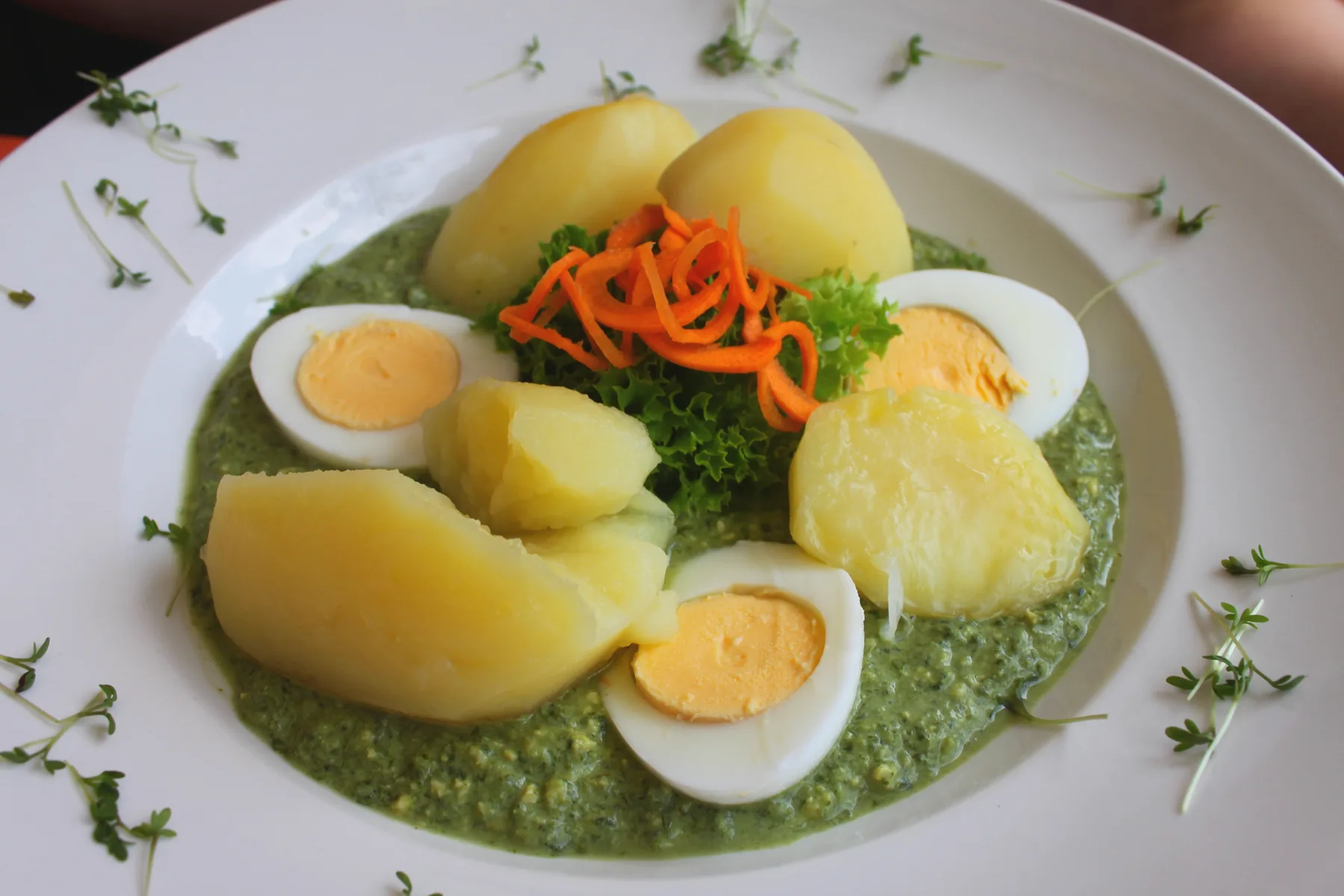
This frankfurter grune sosse recipe makes Frankfurt's cold seven-herb sauce: parsley, chives, dill, cress and chervil stirred into sour cream and yogurt, spooned over warm boiled potatoes with hard-boiled eggs. The sauce is never cooked — it is mixed cold and chilled, so the herbs stay bright. One serving is about 420 g.

Frankfurter Grune Sosse is the signature dish of Frankfurt am Main: a cold sauce of seven fresh herbs — borage, chervil, cress, parsley, salad burnet, sorrel and chives — stirred into sour cream, traditionally served with boiled potatoes and hard-boiled eggs. An herb sauce was already mentioned in a Frankfurt innkeeper's cookbook in 1768, and the dish still opens the herb season every year on Maundy Thursday. Frankfurt celebrates it with a Grune Sosse festival each May, where a jury crowns the city's best sauce, and a monument to the sauce stands in the Oberrad district. Outside Frankfurt the three hardest herbs to find are borage, sorrel and salad burnet, so this version uses dill alongside the other four — the spirit of the dish is the same: seven kinds of green, chopped fine, never cooked.

Pairs well with: Warm boiled new potatoes and halved hard-boiled eggs, with the chilled green sauce spooned over.

Provenance

Germany flag Germany

Frankfurt Spring Classic

Nordic & European

Time Dedication

45m

25m prep • 20m cook

Batch Yield

4 Servings

436 kcal per serving

1 serving ≈ 420 g

Technical Skill

Easy

Easy (No-Cook Sauce)

Meal Timing & Digestive Fit

Breakfast

Not Advised

Lunch

Prime Metabolic Fit

Dinner

Ideal Hearty Main

Snack & Tea

Inappropriate

Occasions: Spring lunches, Maundy Thursday, Easter week, garden meals Cost: Low — about $3–4 per serving at home

Frankfurter Grune Sosse — green herb sauce with halved boiled eggs and boiled potatoes on a white plate

Frankfurt Spring Classic

Photo: Benreis, CC BY 3.0, via Wikimedia Commons

The Heritage Formulary

Measured Ingredients

Estimated cost: Low — about $3–4 per serving at home (USD)
A true Grune Sosse is judged by the herbs: several kinds, chopped fine, in a cool creamy base — never cooked, never blended smooth.

Execution Methodology & Culinary Technique

Step-by-Step Cooking Guide

Active 45m
P

Prep Stage: Boil the Eggs and Potatoes, Chop the Herbs

25 Mins • Knife Work

Put the eggs on to boil, then the potatoes, while you wash and finely chop the five herbs. The sauce itself needs no cooking at all — it is mixed cold and chilled while the potatoes finish.

Maestro Tip: Chop the herbs as finely as you can; the sauce should be speckled green, not leafy.

  1. 1

    Boil the Eggs

    10 Mins Boiling water, 100°C (212°F)

    Lower 6 eggs into a pan of boiling water and cook for 10 minutes until hard-boiled. Lift them out, cool under cold running water, peel, then chop 2 finely for the sauce and halve the other 4 for serving.

    Start the eggs in boiling water, not cold — the shells peel more cleanly.

    Done when: The yolks are fully set and pale yellow, with no grey ring.

  2. 2

    Boil the Potatoes

    20 Mins Boiling water, 100°C (212°F)

    Put the scrubbed new potatoes in a pan of salted water, bring to a boil and cook for 18–20 minutes until a knife slides in easily. Drain and keep warm; peel them while warm if you prefer them peeled.

    Start the potatoes while the eggs cool — they take the longest.

    Done when: A knife slides into the centre of the largest potato with no resistance.

  3. 3

    Chop the Herbs

    10 Mins No heat, room temperature ~22°C (72°F)

    Wash the parsley, chives, dill, cress and chervil, shake them dry, strip off any coarse stems and chop everything very finely — the finer the chop, the greener and smoother the sauce.

    A mezzaluna or a sharp knife and a steady rocking motion beats a food processor, which bruises the herbs.

    Done when: The herbs form a fine, even green confetti with no long stalks left.

  4. 4

    Mix and Chill the Sauce

    10 Mins No heat; chill at ~4°C (39°F)

    Stir the sour cream and yogurt together until smooth, then fold in all the chopped herbs, the 2 chopped eggs, the lemon juice, the Dijon mustard, the salt and the pepper. Taste and adjust the lemon and salt, then chill for at least 30 minutes so the flavours marry.

    Chilling matters — a cold sauce against warm potatoes is the whole point of the dish.

    Done when: The sauce is thick, pale green and evenly speckled, and tastes bright and lemony.

  5. 5

    Plate and Serve

    5 Mins Off the heat, serving at ~60°C (140°F)

    Divide the warm potatoes between 4 plates, lay 2 egg halves on each, and spoon the chilled green sauce generously over the top. Scatter a little extra chopped chive over each plate and serve at once.

    Serve the sauce cold and the potatoes hot — the contrast is traditional.

    Done when: Each plate has hot potatoes, bright egg halves and a generous blanket of cold green sauce.

Finishing Touches & Plating

Serve the sauce cold and the potatoes hot, with lemon wedges on the side for anyone who wants a sharper edge — the contrast between cold sauce and warm potatoes is what makes the dish.

Nutritional Physiology & Benefits

Nutrition

Energy

436

kcal / serving

Protein

18g

Complete AA

Carbs

43g

Complex

Fats

22g

Healthy

Per serving (4 servings · 1 serving ≈ 420 g)
Energy436 kcal
Protein18 g
Carbohydrates43 g
Fat22 g
Fibre5.0 g
Sugar7.4 g
Sodium572 mg
Per 100g
Energy104 kcal
Protein4.2 g
Carbohydrates10.3 g
Fat5.3 g
Fibre1.2 g
Sugar1.8 g
Sodium136 mg

Nutrition values are estimated — calculated from USDA FoodData Central values for the listed ingredients.

Vitamins & minerals: Eggs add vitamin B12, vitamin D and choline; potatoes add potassium and vitamin C; the fresh herbs add vitamin K, folate and vitamin C. Nutrition is estimated.

Five Fresh Herbs in Every Spoonful

Parsley, chives, dill, cress and chervil bring vitamin K, folate and vitamin C, plus the fresh green flavour that defines the sauce.

17.7 g of Protein per Serving

Six eggs across four servings give the plate real staying power, so a meat-free lunch still fills you up.

Potatoes for Potassium and Fibre

Boiled new potatoes add potassium, vitamin C and 5.0 g of fibre per serving, and they carry the sauce beautifully.

Food Pairings

What to Eat With

To optimize nutrient absorption and elevate the sensory depth, pair with these authentic accompaniments:

Sides

Boiled New Potatoes

Warm, floury potatoes are the classic partner — the cold sauce melts slightly against them and every bite is creamy.

Dark Rye Bread

A slice of rye bread mops up the sauce left on the plate and adds a malty note to the meal.

Vegetables

A Simple Green Salad

Crisp lettuce and cucumber with a lemon dressing echo the sauce's freshness without competing with the herbs.

Drinks

Chilled White Wine or Sparkling Water

A dry, cold white wine is the Frankfurt tavern match; sparkling water with lemon does the same job without alcohol.

Complete menu

Serve the green sauce over warm boiled potatoes with halved eggs, rye bread and a simple green salad, and a chilled white wine or sparkling water on the table.

Digestive Guardrails

What NOT to Combine

To prevent digestive distress, sluggishness, or palate clash, avoid pairing the dish with these elements:

A Heavy, Spicy Sauce Over the Herbs

Hot sauce or chilli would bulldoze the delicate herb flavour that the whole dish is built on — the sauce is meant to taste green and fresh. This is general guidance, not medical advice.

Serving the Sauce Warm

Warming the sauce dulls the fresh herbs and thins the sour cream, so the sauce loses its character; keep it chilled until the moment it meets the potatoes. This is general guidance, not medical advice.

General information only, not medical advice — consult a doctor for personal dietary decisions.

Who Should Eat It

Who Should Eat

  • General adultsA light, complete lunch — cold herb sauce, warm potatoes and eggs in one plate.
  • ChildrenSuitable from age 5+; the sauce is mild and the eggs are fully cooked, so it is an easy way to serve herbs to children.
  • ElderlyVery suitable — the potatoes and eggs are soft and easy to eat, and the sauce needs no chewing effort.
  • Pregnant womenGenerally suitable; the eggs are hard-boiled right through and the sauce is made from pasteurised dairy. Ask your clinician if you are unsure about soft herbs or dairy.
  • Breastfeeding womenGenerally suitable; the protein from the eggs and the fluids from the yogurt support recovery.
  • AthletesA reasonable light lunch, though athletes may want a second helping of potatoes or bread for extra energy.
  • Weight gainA generous portion with extra potatoes and rye bread adds energy without extra cooking.
  • Weight lossThe sauce itself is light; keep the potatoes to about a cup and skip the bread. Ask your clinician about a portion that fits your plan.

Health Conditions — Adjust or Avoid

Conditions

  • DiabetesPotatoes are the main source of carbs — keep them to about a cup per serving and ask your clinician about portion size.
  • High blood pressureMost of the sodium comes from the added salt; use a light hand and let the lemon do the work. Ask your clinician about a suitable portion.
  • Kidney diseasePotatoes add potassium and phosphorus, so keep portions moderate and ask your clinician about portion size.
  • GoutEggs and dairy contain little purine, so this dish is usually a safe choice; still, ask your clinician about how often it fits your diet.
  • Stomach issuesThe sauce is cool, mild and easy on the stomach; if raw onion or strong mustard bothers you, leave the mustard out. Ask your clinician if symptoms persist.
  • Cardiovascular diseaseA meat-free plate with unsaturated fats from the dairy fits well; keep added salt low. Ask your clinician about a suitable portion.
  • Fatty liverA light, egg-based lunch with no frying fits well; skip extra bread and butter. Ask your clinician about a suitable portion.
  • Food allergiesContains egg and milk (sour cream, yogurt). This dish is naturally gluten-free and vegetarian as written.
  • Special therapeutic dietsFits a gluten-free and vegetarian diet; for a low-sodium diet, halve the salt. Ask your clinician or dietitian before changing a prescribed diet.

If you have a medical condition, consult your doctor before changing your diet.

Storage & Use

Storage & Use

How to store
Cool the sauce quickly and store it in a sealed container; keep the potatoes and eggs separate.
In the fridge
Sauce 2 days; potatoes and eggs 2 days.
In the freezer
Not recommended — the sauce splits and the potatoes turn grainy.
How to reheat
Reheat the potatoes gently in a pan or microwave until steaming, and make sure they reach 74°C (165°F); serve the sauce cold, never reheated. Do not reheat more than once.
Freezing recommended
No — the sauce is best eaten fresh and chilled.
Signs it has spoiled
Sour or sharp smell beyond the usual tang, watery separation, or a dull grey-green colour.

More recipes to explore

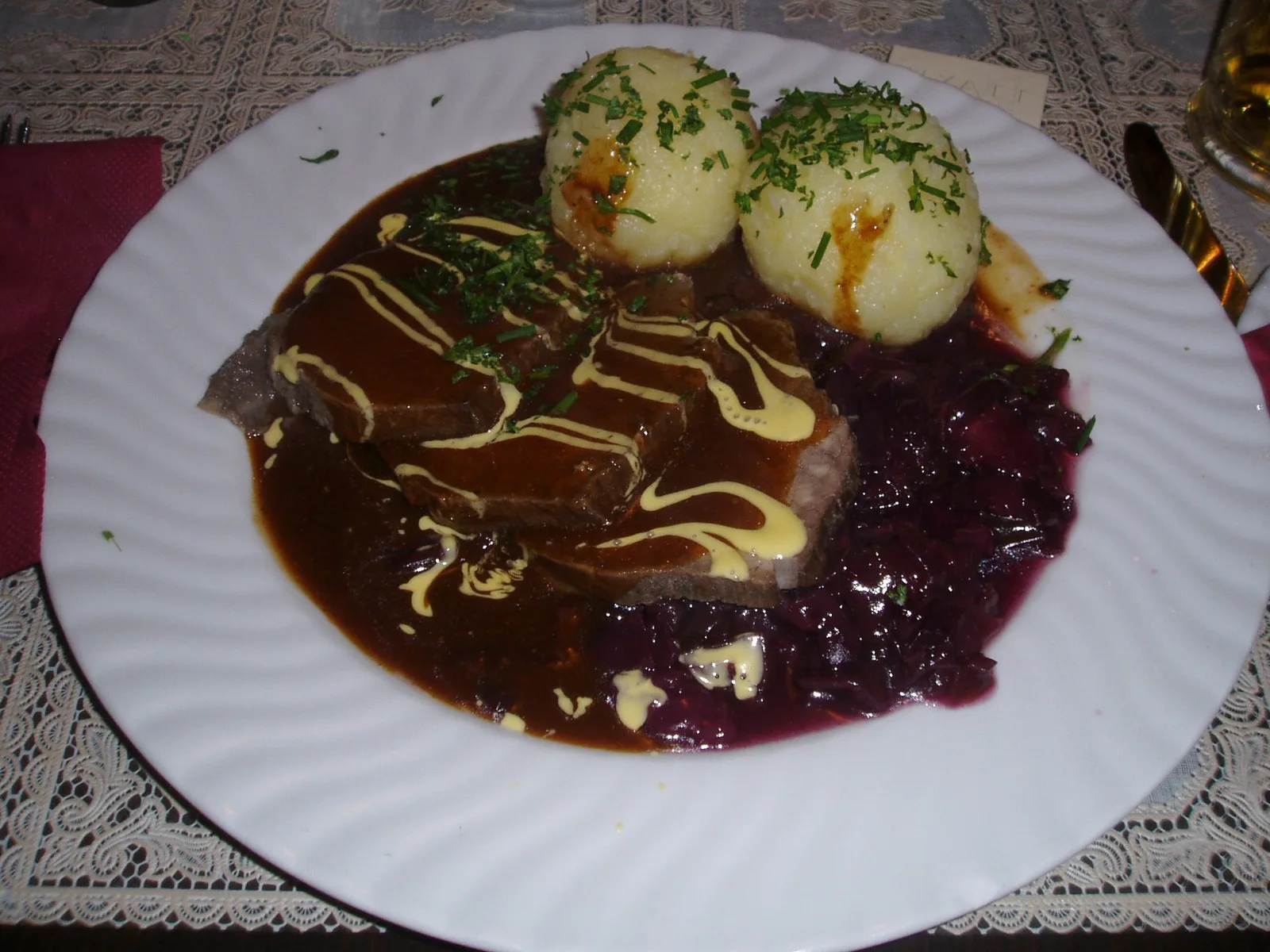
Sliced sauerbraten in dark sweet-sour gravy with potato dumplings and braised red cabbage on a white plate Germany flag Germany 3h 30m
Dinner •Rhineland Heritage

Sauerbraten

This sauerbraten recipe starts with a beef chuck roast steeped for three days in red wine vinegar, red wine and warm spices, then braised slowly until it slices like butter. The marinade becomes a dark, sweet-sour gravy thickened with crushed gingersnaps and studded with raisins, the Rhineland way. One serving is about 300 g, with gravy.

Comfort & Warmth

A slow-braised German pot roast in a sweet-sour vinegar gravy, sliced thick and served hot with potato dumplings and red cabbage.

Pairs Well With
Potato dumplings, braised red cabbage & a glass of Spätburgunder
High Protein
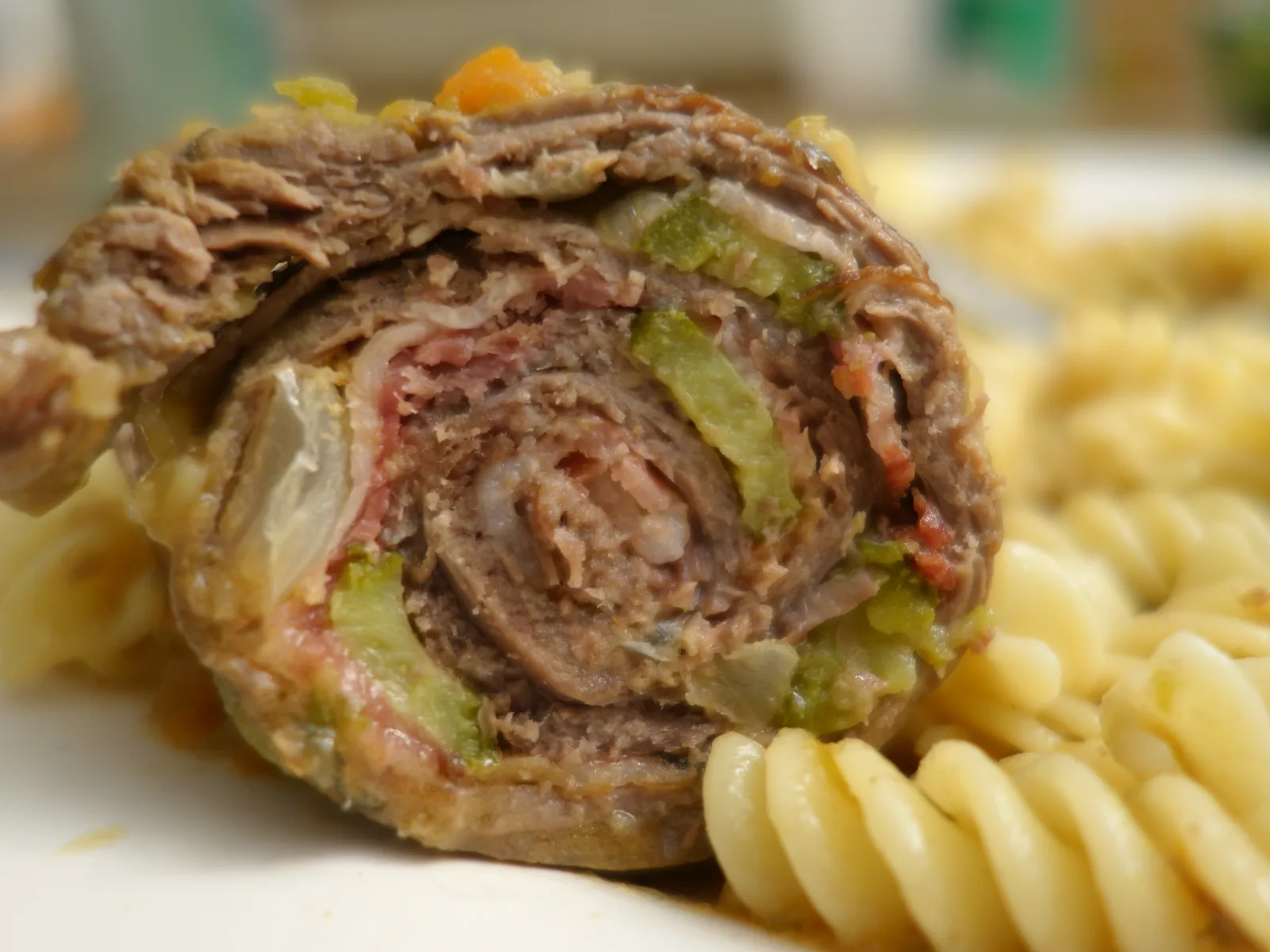
A sliced German beef roulade showing the spiral of beef, bacon and dill pickle, served with pasta Germany flag Germany 2h 10m
Dinner •German Sunday Heritage

Rouladen

This rouladen recipe spreads thin slices of top round with mustard, then rolls them around smoky bacon, dill pickles and onion into neat parcels. The rolls are browned, then braised slowly in red wine and beef stock until tender, and the braising liquid becomes a rich gravy. One serving is about 375 g — two rolls with gravy.

Comfort & Warmth

Thin beef rolls stuffed with bacon, dill pickle and onion, braised in red wine gravy and served hot with dumplings.

Pairs Well With
Potato dumplings, braised red cabbage & a German lager
High Protein
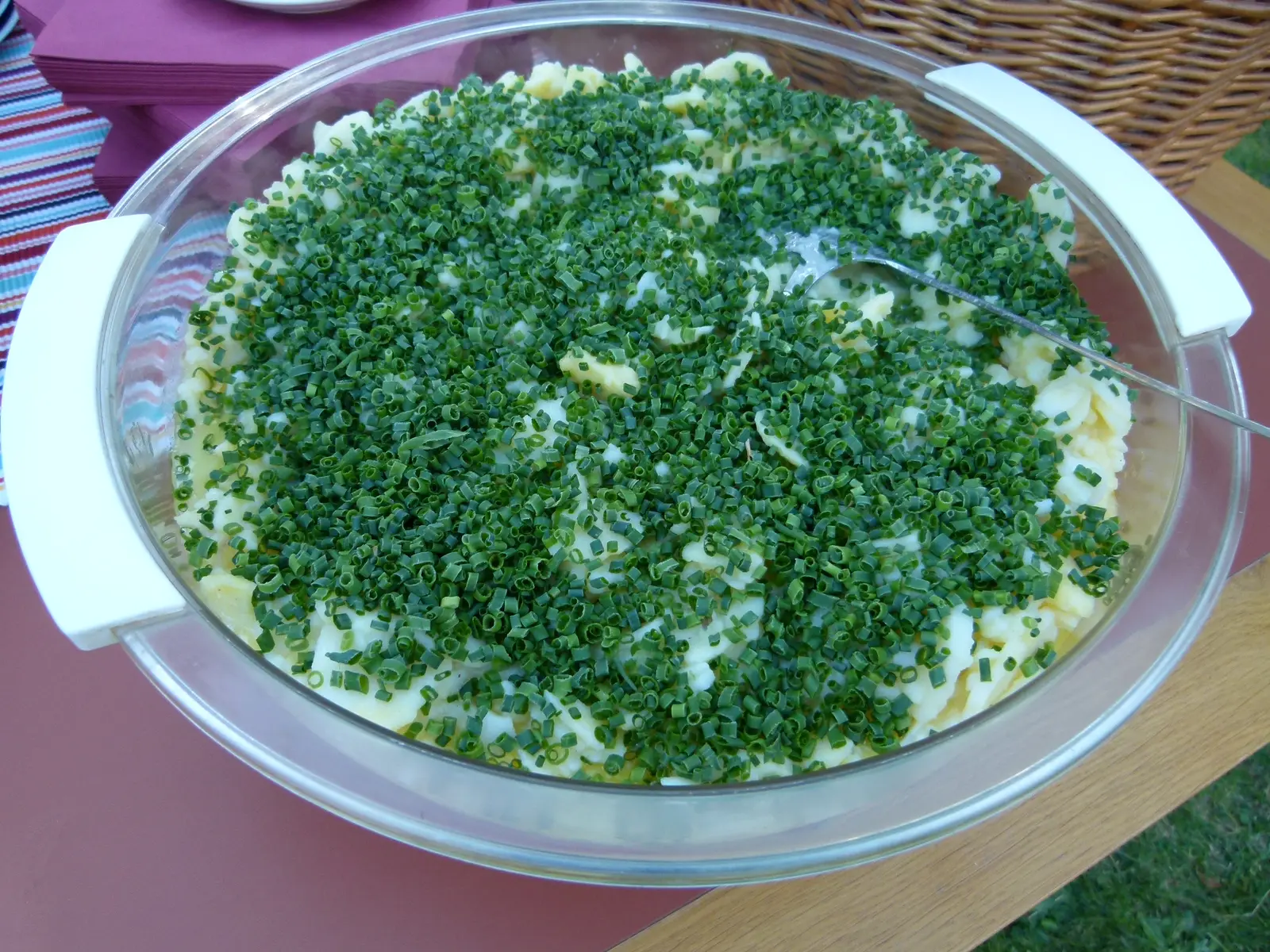
A glass bowl of warm Swabian potato salad topped with chopped chives Germany flag Germany 45m
Lunch •Swabian Heritage

German Potato Salad

This german potato salad recipe is the warm Swabian kind: waxy potatoes sliced while still hot, tossed with crisp bacon, soft onion and sliced egg, then dressed with hot beef stock, vinegar and mustard so every slice drinks up the tangy dressing. No mayonnaise anywhere — the potatoes stay light, glossy and warm. One serving is about 292 g.

Comfort & Warmth

Warm waxy potatoes in a bacon, mustard and vinegar dressing, served straight from the bowl while still steaming.

Pairs Well With
Grilled sausages, schnitzel & a cold German lager
Quick Prep (<30m)
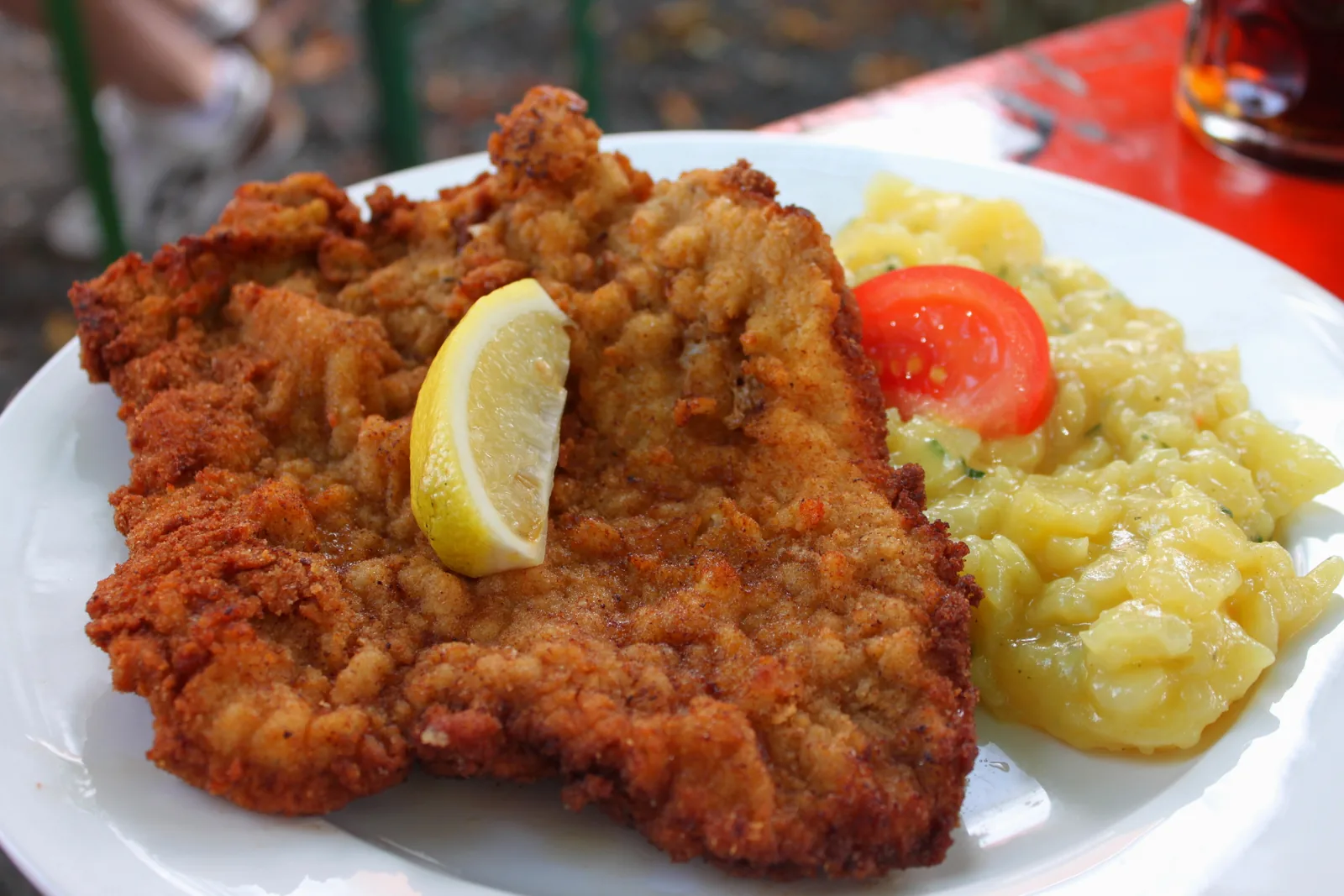
Golden breaded pork schnitzel with a lemon wedge and potato salad on a white plate Germany flag Germany 40m
Dinner •German Heritage

German Pork Schnitzel

German pork schnitzel is the everyday hero of German cooking: a pork cutlet pounded thin, coated in flour, egg and breadcrumbs, and fried in butter until it turns deep golden and crisp. This german schnitzel recipe follows the German way — real pork, a loose crumb, and a wedge of lemon on the side, with potato salad to mop up. One serving is about 200 g.

Classic Comfort

A golden, crisp pork cutlet with lemon and potato salad — a satisfying, protein-rich German dinner.

Pairs Well With
Warm potato salad, cucumber salad and a cold lager.
High Protein

The Dinner Gazette

Never wonder what’s for dinner again

One email a week with easy dinner ideas from around the world — ingredients, steps and nutrition, tested in our kitchen first.

Delivered every Thursday morning. Unsubscribe anytime.