
Curated recipes from 193 countries  •  New seasonal Mediterranean issue out now

Overview

Frituras de Malanga

Malanga Fritters, Cuban Taro Fritters

Frituras de Malanga are Cuba's crisp little fritters: grated malanga bound with egg, garlic and parsley, fried until golden outside and soft inside. One serving is about 250 g. This frituras de malanga recipe makes about 24 fritters in 40 minutes and serves four as a snack, best with a garlic mojo dip.

Malanga, also called yautía blanca, is a starchy tropical root that came to Cuba through the foodways of West Africa and the Caribbean, where grated-root fritters are an old tradition — Haiti makes accra de malanga and Puerto Rico makes frituras de yautía from the same root. In Cuba the fritter took its own form: grated malanga bound with egg, garlic and parsley, fried crisp and eaten as a snack or appetizer, often with garlic mojo for dipping. They are a fixture of Cuban cafeterias and family kitchens, and the recipe needs only five ingredients.

Pairs well with: Garlic mojo dip and a cold drink, or a small green salad.

Provenance

Cuba flag Cuba

Cuban Heritage

Latin America & Caribbean

Time Dedication

40m

20m prep • 20m cook

Batch Yield

4 Servings

426 kcal per serving

1 serving ≈ 250 g

Technical Skill

Easy

Easy (Quick Fry)

Meal Timing & Digestive Fit

Breakfast

Not Advised

Lunch

Inappropriate

Dinner

Inappropriate

Snack & Tea

Ideal Light Bite

Occasions: Afternoon snack, family gatherings, party appetizers, game-day snacks Cost: Low — about $1–2 per serving at home
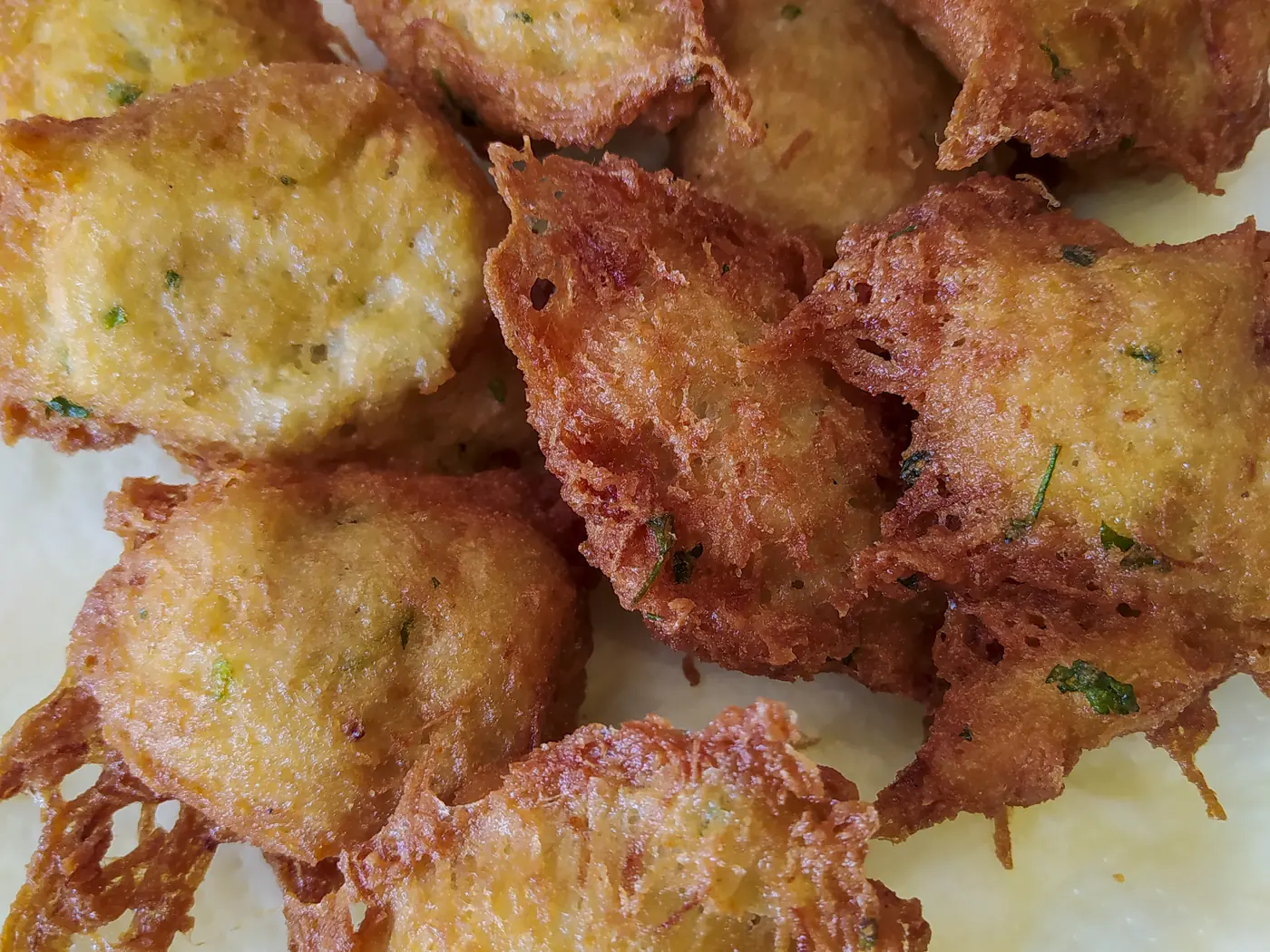
Golden-brown frituras de malanga fritters flecked with parsley, piled on white paper

Cuban Heritage

Photo: El Mono Español, CC BY-SA 4.0, via Wikimedia Commons

The Heritage Formulary

Measured Ingredients

Estimated cost: Low — about $1–2 per serving at home (USD)

A home-style Cuban fritura: grated malanga, egg, garlic and parsley, fried at 190°C (375°F) until deep golden.

Execution Methodology & Culinary Technique

Step-by-Step Cooking Guide

Active 40m
P

Prep Stage: Malanga Grated, Batter Mixed, Oil Heating

20 Mins • Grating & Mixing

Peel the malanga, rinse and pat it dry, then grate it finely on the small holes of a box grater. Mash the garlic to a paste, chop the parsley, and beat the eggs in a large bowl. Pour the oil into a deep, heavy pan and set it over the heat.

Maestro Tip: Grate the malanga at the last minute — it darkens quickly once cut — and hold it with a paper towel, as it can be slippery.

  1. 1

    Peel and Grate the Malanga

    10 Mins • Hands On No heat — prep only

    Peel the malanga, rinse it and pat it completely dry, then grate it finely on the small holes of a box grater, holding the root with a paper towel for grip. Work quickly, as grated malanga darkens within minutes. Mash the garlic to a paste and chop the parsley.

    Wear thin gloves if raw malanga irritates your skin — it can itch, and the itch disappears once the fritters are cooked.

    Done when: The malanga is finely grated and pale, the garlic is a smooth paste and the parsley is chopped.

  2. 2

    Mix the Batter

    5 Mins • Hands On No heat — mixing only

    Beat the eggs in a large bowl, then stir in the garlic, parsley, vinegar, salt and pepper. Add the grated malanga and mix with a spoon until everything is evenly distributed and the mixture looks like thick, stringy mashed potato. Let it rest for 5 minutes so the starch binds.

    Do not add flour — a true fritura de malanga needs none, and flour makes the centres heavy.

    Done when: The batter is thick, even and stringy, and holds together when scooped.

  3. 3

    Heat the Oil

    5 Mins • Hands On Oil at 190°C (375°F)

    Pour the oil into a deep, heavy pan to a depth of about 2.5 cm (1 inch) and heat it over medium-high heat until it reaches 190°C (375°F). Test with a pinch of batter — it should sizzle at once and float within seconds.

    Too cool and the fritters drink oil and turn greasy; too hot and they brown before the centres cook.

    Done when: The oil shimmers and a pinch of batter sizzles hard and floats.

  4. 4

    Fry the Fritters

    15 Mins • Hands On Frying oil 190°C (375°F)

    Drop heaped tablespoonfuls of batter into the hot oil, 4 or 5 at a time, and fry for 2 to 3 minutes on each side until deep golden brown and crisp at the edges. Turn once with tongs and do not crowd the pan, or the oil temperature drops. Lift out with a slotted spoon.

    Fry in small batches and let the oil come back to temperature between batches — that is what keeps them crisp, not greasy.

    Done when: Deep golden brown all over, crisp at the edges, and steaming hot and soft in the centre.

  5. 5

    Drain and Serve

    5 Mins • Hands On Serve hot

    Drain the fritters on paper towels for a minute and sprinkle lightly with salt while they are still hot. Serve at once, piled on a plate with a bowl of garlic mojo for dipping.

    Frituras wait for no one — they are at their best in the first ten minutes, while the crust is still crackling.

    Done when: The fritters are drained, salted and hot, with the mojo on the side.

Finishing Touches & Plating

Pile the fritters on a plate lined with paper, sprinkle with a little extra chopped parsley, and serve hot with garlic mojo for dipping.

Nutritional Physiology & Benefits

Nutrition

Energy

426

kcal / serving

Protein

7g

Complete AA

Carbs

61g

Complex

Fats

18g

Healthy

Per serving (4 servings · 1 serving ≈ 250 g)
Energy426 kcal
Protein7 g
Carbohydrates61 g
Fat18 g
Fibre9.5 g
Sugar1.1 g
Sodium547 mg
Per 100g
Energy170 kcal
Protein2.7 g
Carbohydrates24.4 g
Fat7.2 g
Fibre3.8 g
Sugar0.4 g
Sodium219 mg

Nutrition values are estimated — calculated from USDA FoodData Central values for the listed ingredients.

Vitamins & minerals: Malanga brings potassium, vitamin C and fibre; parsley adds vitamin K and vitamin C; the egg adds vitamin B12 and selenium. All nutrition values are estimated.

Real Energy from Malanga

Each serving carries about 60.9 g of carbohydrate from the malanga — steady, real-food energy for an afternoon snack.

Potassium and Fibre in Every Bite

Malanga brings potassium and vitamin C, and each serving carries about 9.5 g of fibre from the root, parsley and garlic.

Nothing Artificial

Five real ingredients — malanga, egg, garlic, parsley and salt — fried crisp, with nothing artificial in the batter.

Food Pairings

What to Eat With

To optimize nutrient absorption and elevate the sensory depth, pair with these authentic accompaniments:

Sauces

Garlic Mojo Dip

Sharp, garlicky mojo cuts through the richness of the fried fritters and is the classic Cuban dip for them.

Vegetables

Small Green Salad

A crisp, lightly dressed green salad gives a fresh, cool contrast to the hot, crunchy fritters.

Sides

White Rice and Black Beans

White rice and black beans turn the snack into a full Cuban plate, with the beans adding protein the fritters lack.

Drinks

Cold Lager or Lime Soda

An ice-cold lager or a lime soda refreshes the palate between bites of fried food.

Complete menu

Start with a small green salad, then serve the frituras hot with garlic mojo for dipping, and finish with fresh tropical fruit and a cold drink.

Digestive Guardrails

What NOT to Combine

To prevent digestive distress, sluggishness, or palate clash, avoid pairing the dish with these elements:

Never Eat Malanga Raw

Raw malanga contains calcium oxalate crystals that irritate the mouth and throat, so it must never be eaten raw or undercooked — the fritters must be fried until the centres are fully cooked and steaming. This is general food-safety information, not medical advice.

Egg Allergy and Hot Oil

This recipe contains egg, a common allergen — anyone with an egg allergy must not eat these fritters. The frying oil is also very hot, so keep children away from the pan. This is general food information, not medical advice.

General information only, not medical advice — consult a doctor for personal dietary decisions.

Who Should Eat It

Who Should Eat

  • General adultsA crisp, satisfying snack — about 426 kcal with roughly 6.8 g of protein per serving of six fritters.
  • ChildrenSoft inside and fun to dip, so most children enjoy them; serve them cooled a little and cut one open to check it is not too hot inside.
  • ElderlySoft inside and easy to chew once the crisp crust is bitten through; serve a modest portion, as they are fried.
  • Pregnant womenSafe when the fritters are cooked right through and served hot; make sure the centres are steaming, and ask your clinician if unsure.
  • Breastfeeding womenFilling and energy-rich; the malanga and parsley keep it wholesome, but keep the portion moderate because they are fried.
  • AthletesA handy carbohydrate snack for quick energy, with a little protein from the egg — good before a workout, less so as a recovery meal.
  • Weight gainEnergy-dense and easy to eat — a natural fit for weight gain, especially with a second helping.
  • Weight lossFried and calorie-dense for their size — enjoy a small portion with salad and skip the second helping.

Health Conditions — Adjust or Avoid

Conditions

  • DiabetesAbout 60.9 g of carbohydrate per serving, mostly starchy malanga — count it in your meal plan and ask your clinician.
  • High blood pressureSodium is about 547 mg per serving — keep the added salt light and ask your clinician if salt is a concern.
  • Kidney diseasePotassium from the malanga is significant; people with kidney disease should ask their clinician about portion size.
  • GoutLow in purines, so this is not a gout trigger food; the fried oil is the main thing to watch, and ask your clinician if unsure.
  • Stomach issuesFried food can be heavy on a sensitive stomach; eat a small portion with salad and ask your clinician if symptoms persist.
  • Cardiovascular diseaseFried in oil, so this is a sometimes food; keep the portion modest, drain the fritters well, and ask your clinician about overall intake.
  • Fatty liverDeep-fried and calorie-dense — a small serving with salad is the safer choice, and ask your clinician.
  • Food allergiesContains egg — a listed allergen. Anyone with an egg allergy should not eat this dish; ask your clinician if unsure.
  • Special therapeutic dietsNot suitable for low-fat, egg-free or low-potassium therapeutic diets without changes; ask your clinician or dietitian before adapting it.

If you have a medical condition, consult your doctor before changing your diet.

Storage & Use

Storage & Use

How to store
Cool completely, then store in a sealed container lined with paper towel; keep the mojo dip separate.
In the fridge
Keeps 2 days refrigerated.
In the freezer
The raw batter freezes for up to 1 month in spoonfuls; fried fritters freeze for up to 1 month but lose some crispness.
How to reheat
Reheat in a hot oven at 200°C (400°F) for 5 to 8 minutes until crisp and hot right through to 74°C (165°F); do not microwave, or they go soft.
Freezing recommended
Yes for the raw batter — freeze in spoonfuls and fry from frozen, adding about 1 minute per side.
Signs it has spoiled
A sour smell, a slimy texture or a grey colour — discard if any of these appear.

More recipes to explore

A plate of ropa vieja, shredded beef in tomato sauce, with yellow rice, black beans and fried plantains Cuba flag Cuba 3h
Dinner •Cuba's National Dish

Ropa Vieja

This ropa vieja recipe braises flank steak low and slow until it falls into long shreds, then simmers it in a tomato, pepper and olive sauce. One serving is about 310 g. Serve it over white rice with black beans and fried plantains, the way Cuban families do.

Comfort & Warmth

Slow-braised shredded beef in a tomato and pepper sauce, served with rice and black beans.

Pairs Well With
White rice, black beans and fried plantains
High Protein
A pressed Cuban sandwich cut in half, with melted Swiss cheese and layers of ham and pork, served with pickle spears Cuba flag Cuba 25m
Lunch •Havana Classic

Cuban Sandwich

This cuban sandwich recipe layers mojo roast pork, ham, Swiss cheese, pickles and mustard on Cuban bread, then presses it flat until the crust crackles and the cheese melts. One serving is about 345 g. It is a great use for leftover roast pork and comes together in 25 minutes.

Comfort & Warmth

A pressed sandwich of roast pork, ham, Swiss cheese, pickles and mustard on Cuban bread.

Pairs Well With
Plantain chips and a cold lager or lime soda
A plate of dark moros y cristianos rice cooked with black beans, served with slices of roast pork and golden fried plantains Cuba flag Cuba 1h 30m
Lunch •Cuban Heritage

Moros y Cristianos

This moros y cristianos recipe cooks Cuban black beans and rice together in one pot: dried black beans simmered until tender, then long-grain rice cooked in the dark bean liquid with a sofrito of onion, green pepper and garlic, cumin, oregano and bay leaf. The grains come out dark, fragrant and fluffy, never pale or plain. One serving is about 272 g.

Comfort & Warmth

Cuban black beans and white rice cooked together in one pot with sofrito, cumin, oregano and bay leaf, until the grains turn dark.

Pairs Well With
Roast pork or ropa vieja with fried sweet plantains and a crisp cabbage salad, the classic Cuban plate.
A plate of Cuban lechon asado with shredded mojo pork, onions and lime, yellow rice with black beans and fried plantains Cuba flag Cuba 5h 30m
Dinner •Havana Heritage

Cuban Lechon Asado

This cuban lechon asado recipe marinates a pork shoulder overnight in mojo — sour orange juice, a whole head of garlic, oregano and cumin — then roasts it low and slow until the meat is so tender it pulls apart with a fork. It is the centrepiece of Nochebuena, the Cuban Christmas Eve feast, and it is nothing like Filipino lechon: there is no whole crispy-skinned pig here, just a mojo-soaked shoulder roast. One serving is about 250 g.

Celebration & Sharing

A whole pork shoulder marinated overnight in sour-orange mojo, then roasted low and slow until it pulls apart — the centrepiece of Nochebuena.

Pairs Well With
Shredded mojo pork with black beans, yellow rice and fried plantains
High Protein

The Dinner Gazette

Never wonder what’s for dinner again

One email a week with easy dinner ideas from around the world — ingredients, steps and nutrition, tested in our kitchen first.

Delivered every Thursday morning. Unsubscribe anytime.