Curated recipes from 193 countries  •  New seasonal Mediterranean issue out now

Overview

Gado-Gado

Gado Gado; Indonesian Peanut Salad; Lotek (Sundanese cousin)

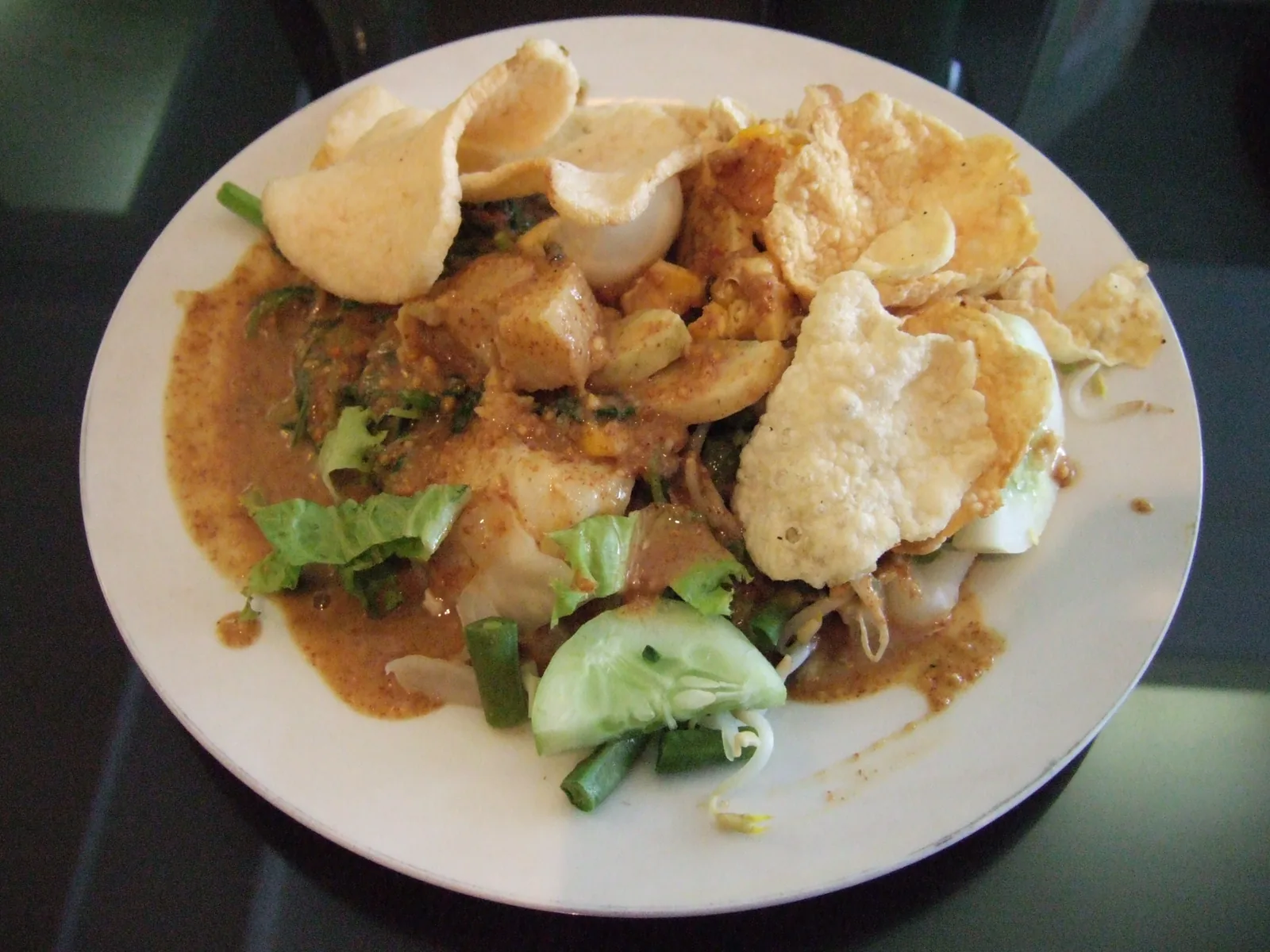
Gado-gado is Indonesia's best-loved salad: warm potatoes, green beans, cabbage, bean sprouts, cucumber and carrot, with fried tofu, boiled egg and crunchy prawn crackers, all coated in a thick, sweet-savoury peanut sauce. One serving is about 584 g.

Gado-gado grew out of the vegetable and peanut dishes of Java and is now counted among Indonesia's five official national dishes. Street vendors traditionally grind the peanut sauce fresh in a stone mortar and toss it with whatever vegetables are in season, which is why no two stalls serve exactly the same plate.

Pairs well with: Serve warm with prawn crackers on the side and a glass of iced tea.

Provenance

Indonesia flag Indonesia

Jakarta Street Food Classic

East & South Asia

Time Dedication

45m

25m prep • 20m cook

Batch Yield

4 Servings

733 kcal per serving

1 serving ≈ 584 g

Technical Skill

Intermediate

Easy (Blanch & Blend)

Meal Timing & Digestive Fit

Breakfast

Not Advised

Lunch

Prime Metabolic Fit

Dinner

Ideal Hearty Main

Snack & Tea

Inappropriate

Occasions: Weekday lunch, meat-free Monday, potluck sharing, warm-weather meals Cost: Low — about $3–4 per serving at home
A plate of gado-gado: mixed vegetables, tofu and boiled egg coated in peanut sauce, topped with prawn crackers and cucumber slices.

Jakarta Street Food Classic

Photo: Sakurai Midori, CC BY-SA 3.0, via Wikimedia Commons

The Heritage Formulary

Measured Ingredients

Estimated cost: Low — about $3–4 per serving at home (USD)

The sauce is ground fresh and poured over warm vegetables, never cooked with them.

Execution Methodology & Culinary Technique

Step-by-Step Cooking Guide

Active 45m
P

Prep Stage: Vegetables Blanched, Sauce Ground

25 Mins • Knife Work

Boil the potatoes until just tender, blanch the green beans, cabbage, bean sprouts and carrots in the same water, and drain everything well. Fry the tofu cubes until golden and boil the eggs. Grind the peanuts with garlic, chili and palm sugar, then loosen with water, lime juice and soy sauce to a thick pouring sauce.

Maestro Tip: Blanch each vegetable separately so none goes soft — everything should still have a little bite.

  1. 1

    Boil the Potatoes

    12 Mins • Hands On Boiling water, 100°C (212°F)

    Put the potato chunks in a large pot of salted boiling water and cook for about 12 minutes until a knife slides in easily but the pieces still hold their shape. Lift them out with a slotted spoon and set aside — keep the water boiling for the other vegetables.

    Start testing at 10 minutes; overcooked potatoes fall apart in the sauce.

    Done when: Potatoes are tender through but not crumbling.

  2. 2

    Blanch the Vegetables

    6 Mins • Hands On Boiling water, 100°C (212°F)

    Blanch the green beans for 2 minutes, the carrots for 2 minutes, the cabbage for 1 minute and the bean sprouts for 30 seconds, lifting each batch out into a colander as it is done. Rinse briefly under cold water to stop the cooking, then drain well — wet vegetables thin the sauce.

    Work in small batches so the water stays at a rolling boil.

    Done when: Vegetables are bright, just tender, and still crisp at the centre.

  3. 3

    Fry the Tofu and Boil the Eggs

    10 Mins • Hands On Medium-high heat, about 180°C (355°F) oil

    Heat the oil in a frying pan and fry the tofu cubes in a single layer, turning, until golden on all sides — about 8 minutes. Drain on paper towel. Meanwhile boil the eggs for 10 minutes, cool under cold water, peel and halve.

    Do not crowd the pan or the tofu steams instead of crisping.

    Done when: Tofu is golden and crisp outside; eggs are fully set with no grey ring.

  4. 4

    Grind the Peanut Sauce

    10 Mins • Hands On No heat

    Grind the peanuts, garlic, chili and palm sugar in a food processor or stone mortar to a coarse, slightly chunky paste — gado-gado sauce is not silky smooth. Add the water a little at a time, then the lime juice, soy sauce and salt, blending until the sauce ribbons off a spoon. Taste and balance: sweet first, then salty, then sour, with heat behind it.

    If the sauce is too thick it will sit in lumps; too thin and it slides off the vegetables.

    Done when: Sauce is thick enough to coat a spoon and tastes sweet, salty, sour and gently hot.

  5. 5

    Assemble and Serve

    5 Mins • Hands On Serve warm, about 60°C (140°F)

    Arrange the potatoes, green beans, cabbage, bean sprouts, cucumber, carrots and tofu on a wide plate or in a shallow bowl. Lay the egg halves on top, spoon the warm peanut sauce generously over everything, and finish with the prawn crackers. Serve immediately.

    Sauce the plate at the table if you can — the crackers stay crisp that way.

    Done when: The plate is colourful, the sauce coats every piece, and the crackers are still crisp.

Finishing Touches & Plating

Spoon the warm peanut sauce generously over the arranged vegetables, scatter the crackers on top, and serve at once while the vegetables are still warm and the crackers crisp.

Nutritional Physiology & Benefits

Nutrition

Energy

733

kcal / serving

Protein

38g

Complete AA

Carbs

63g

Complex

Fats

42g

Healthy

Per serving (4 servings · 1 serving ≈ 584 g)
Energy733 kcal
Protein38 g
Carbohydrates63 g
Fat42 g
Fibre12.7 g
Sugar19.3 g
Sodium906 mg
Per 100g
Energy125 kcal
Protein6.5 g
Carbohydrates10.8 g
Fat7.1 g
Fibre2.2 g
Sugar3.3 g
Sodium155 mg

Nutrition values are estimated — calculated from USDA FoodData Central values for the listed ingredients.

Vitamins & minerals: Vitamin C and folate (cabbage, bean sprouts), vitamin A (carrots), iron and calcium (tofu), vitamin B6 (peanuts).

Plenty of Vegetables

Each serving carries about 325 g of mixed vegetables, giving fibre, vitamin C and folate with very few calories for the volume.

Plant Protein That Fills

Tofu, egg and peanuts together supply about 38 g of protein per serving, which is why this salad works as a full lunch rather than a side.

Healthy Fats From Peanuts

Most of the fat comes from peanuts, which are rich in monounsaturated fat — the kind of fat that fits well in a balanced diet.

Food Pairings

What to Eat With

To optimize nutrient absorption and elevate the sensory depth, pair with these authentic accompaniments:

Drinks

Iced Tea With Lime

Cold, lightly sweet tea with lime cuts through the rich peanut sauce and refreshes the palate between bites.

Coconut Water

Chilled coconut water is lightly sweet and mineral-rich, a natural match for a warm, spicy Indonesian lunch.

Vegetables

Extra Cucumber and Tomato

A simple side of sliced cucumber and tomato adds cool crunch and acidity that balances the sweet, thick sauce.

Sides

Steamed Rice or Lontong

A small mound of steamed rice or compressed rice cake (lontong) soaks up the extra sauce and turns the salad into a heartier meal.

Complete menu

Start with a small bowl of soto ayam, follow with gado-gado as the main plate, and finish with fresh mango and iced tea.

Digestive Guardrails

What NOT to Combine

To prevent digestive distress, sluggishness, or palate clash, avoid pairing the dish with these elements:

Peanut Allergy — A Serious Risk

This dish is built on peanuts and cannot be made safe for someone with a peanut allergy by leaving them out — the sauce is the dish. Do not serve it to anyone with a peanut allergy. This is general food-safety information, not medical advice.

Raw Eggs Are Not a Substitute

The eggs must be fully boiled; soft or raw eggs carry a salmonella risk, especially for young children, older adults and pregnant women. This is general food-safety information, not medical advice.

General information only, not medical advice — consult a doctor for personal dietary decisions.

Who Should Eat It

Who Should Eat

  • General adultsA complete, satisfying meat-free lunch — about 733 kcal with good protein and fibre.
  • ChildrenA friendly way to eat vegetables: the sweet peanut sauce makes the plate appealing, but go light on the chili for young children.
  • ElderlySoft vegetables and egg are easy to chew; serve the sauce warm, not hot, and break the crackers into small pieces.
  • Pregnant womenA good source of folate and iron, but keep the chili mild and make sure the eggs are fully boiled.
  • Breastfeeding womenProtein and healthy fats support milk production; the peanuts and egg are nutritious, provided there is no family peanut allergy to consider.
  • AthletesAbout 24 g of protein per serving with a good mix of vegetables — a solid recovery lunch, especially with added rice.
  • Weight gainEnergy-dense from peanuts and palm sugar, so it suits a weight-gain goal; add rice or extra tofu for more calories.
  • Weight lossFilling for its calories thanks to the vegetables and protein, but the sauce is rich — use half the sauce and skip the crackers to lighten it.

Health Conditions — Adjust or Avoid

Conditions

  • DiabetesAbout 63 g of carbohydrate per serving, mostly from potatoes and palm sugar — keep the potato portion modest and ask your clinician about portion size.
  • High blood pressureSodium is about 906 mg per serving, a large share of a daily limit, mostly from the soy sauce and salted peanuts — use low-sodium soy sauce if salt is a concern and ask your clinician.
  • Kidney diseaseProtein is high and potassium-rich from the vegetables; people with kidney disease should ask their clinician about portion size.
  • GoutPeanuts and tofu are moderate in purines; the dish is not especially high in purines, but anyone managing gout should ask their clinician.
  • Stomach issuesThe sauce is rich and the chili can irritate a sensitive stomach — use less chili and a thinner sauce if you have stomach issues, and ask your clinician if symptoms persist.
  • Cardiovascular diseasePeanuts provide mostly unsaturated fat, but the sauce is energy-dense; keep portions moderate and ask your clinician about overall fat intake.
  • Fatty liverThe dish is high in calories for its volume because of the peanut sauce; a smaller portion with extra vegetables fits better — ask your clinician.
  • Food allergiesContains peanuts, egg, soy and prawn crackers (shellfish) — major allergens. Do not serve to anyone with a peanut, egg, soy or shellfish allergy.
  • Special therapeutic dietsThis is a general-information recipe, not a therapeutic diet. Anyone on a prescribed diet should ask their clinician or dietitian before making it a regular meal.

If you have a medical condition, consult your doctor before changing your diet.

Storage & Use

Storage & Use

How to store
Keep the vegetables, sauce and crackers in separate containers.
In the fridge
Vegetables and sauce keep 2–3 days refrigerated in sealed containers.
In the freezer
The peanut sauce freezes well for up to 1 month; the vegetables do not freeze well.
How to reheat
Warm the sauce gently in a saucepan to 74°C (165°F); serve the vegetables at room temperature or lightly warmed.
Freezing recommended
Sauce only — freeze the sauce, not the finished plate.
Signs it has spoiled
Sour smell, slimy vegetables, or oil separating and smelling rancid — discard if any of these appear.

More recipes to explore

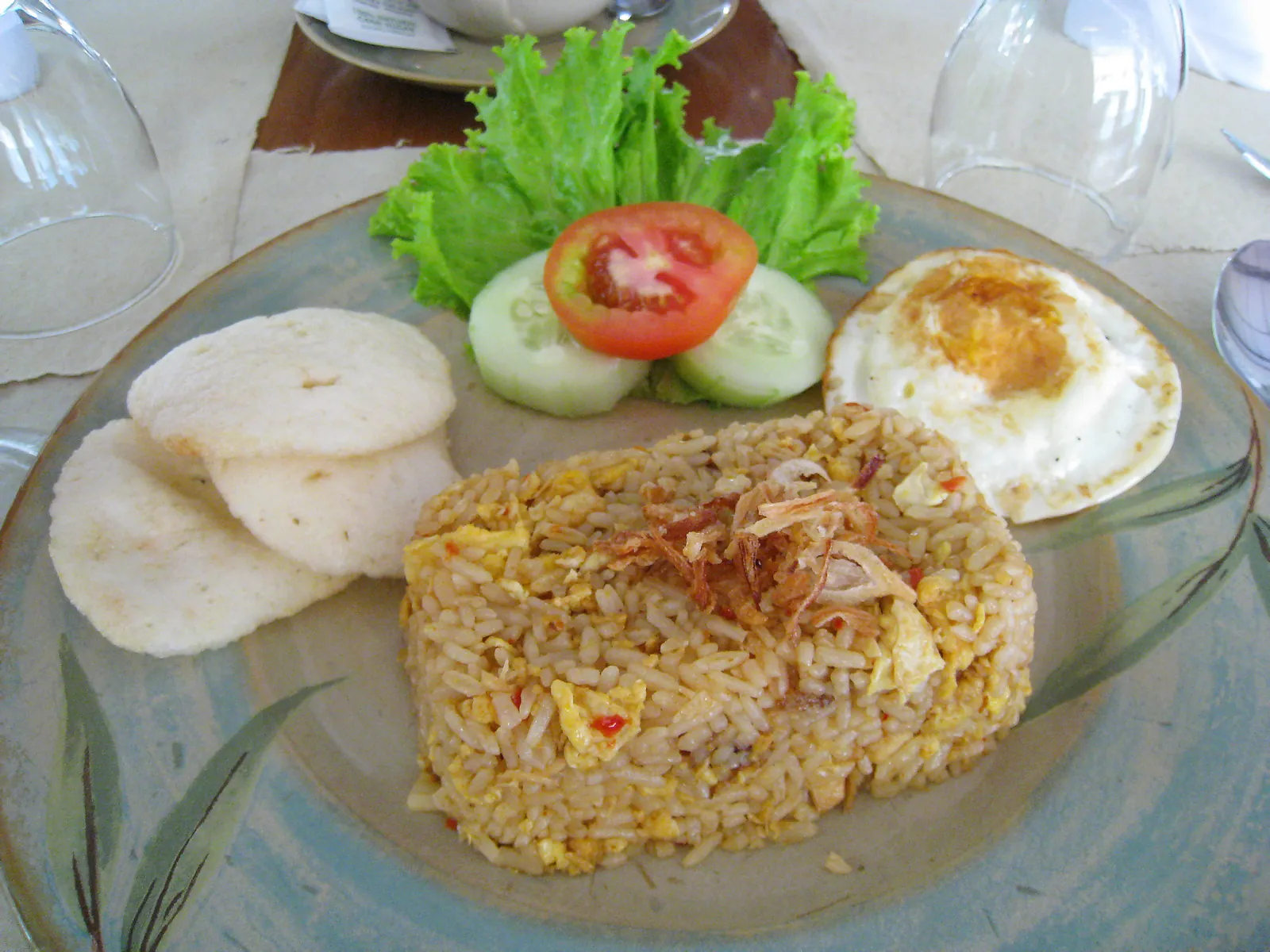
Indonesian nasi goreng — a mound of fried rice with egg and fried shallots, a fried egg, prawn crackers, cucumber, tomato and lettuce Indonesia flag Indonesia 35m
Dinner •Jakarta Street Classic

Indonesian Nasi Goreng

This Indonesian nasi goreng recipe turns a bowl of day-old rice into something far better than the sum of its parts: smoky, sweet-savoury grains coated in kecap manis, tossed with chicken, carrot and peas, and crowned with a fried egg and crunchy prawn crackers. It is the kind of dinner that comes together in one wok in about half an hour, and it tastes like a Jakarta street stall at its best. One serving is about 470 g.

Comfort & Satisfying

A one-wok dinner of sweet-savoury fried rice, chicken and a fried egg, served the Indonesian way with cucumber, tomato and prawn crackers.

Pairs Well With
A fried egg on top, cool cucumber and tomato, and a handful of prawn crackers, with iced tea to drink.
Quick Prep (<30m)
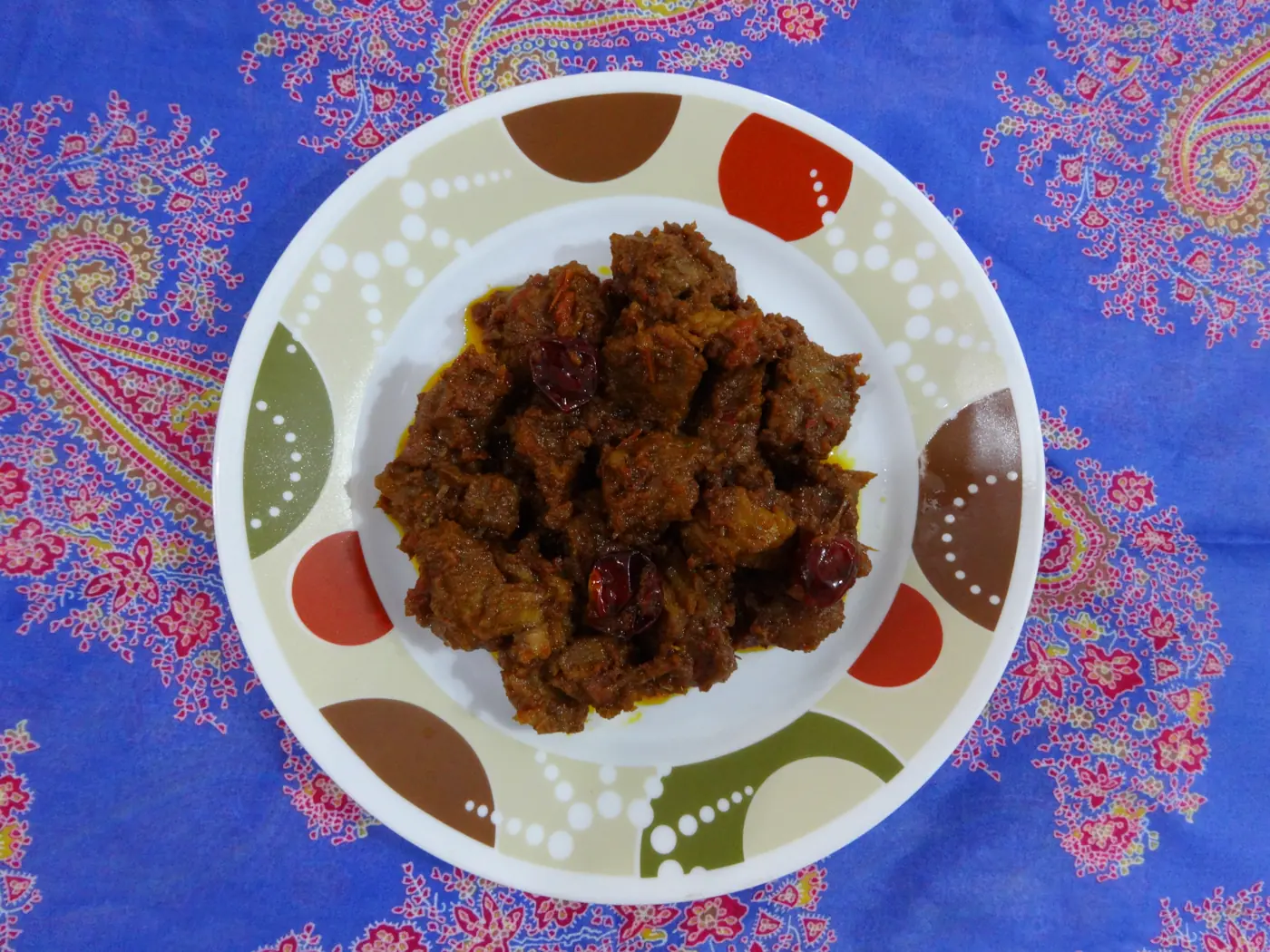
A plate of beef rendang — dark brown beef chunks coated in a dry, caramelised spice paste Indonesia flag Indonesia 4h
Dinner •West Sumatra Heritage

Beef Rendang

This beef rendang recipe slow-braises beef chuck in coconut milk with lemongrass, galangal, chillies and warm spices for about four hours, until the sauce has almost disappeared and the meat is coated in a dark, dry, caramelised spice paste. It is the Minangkabau dish from West Sumatra that sits at the heart of Padang cooking: deeply savoury, gently hot, and rich without being saucy. One serving is about 380 g.

Rich & Satisfying

Slow-braised beef in spiced coconut milk, reduced until the meat is coated in a dark, caramelised spice paste.

Pairs Well With
Steamed jasmine rice & pickled cucumber (acar timun)
High Protein
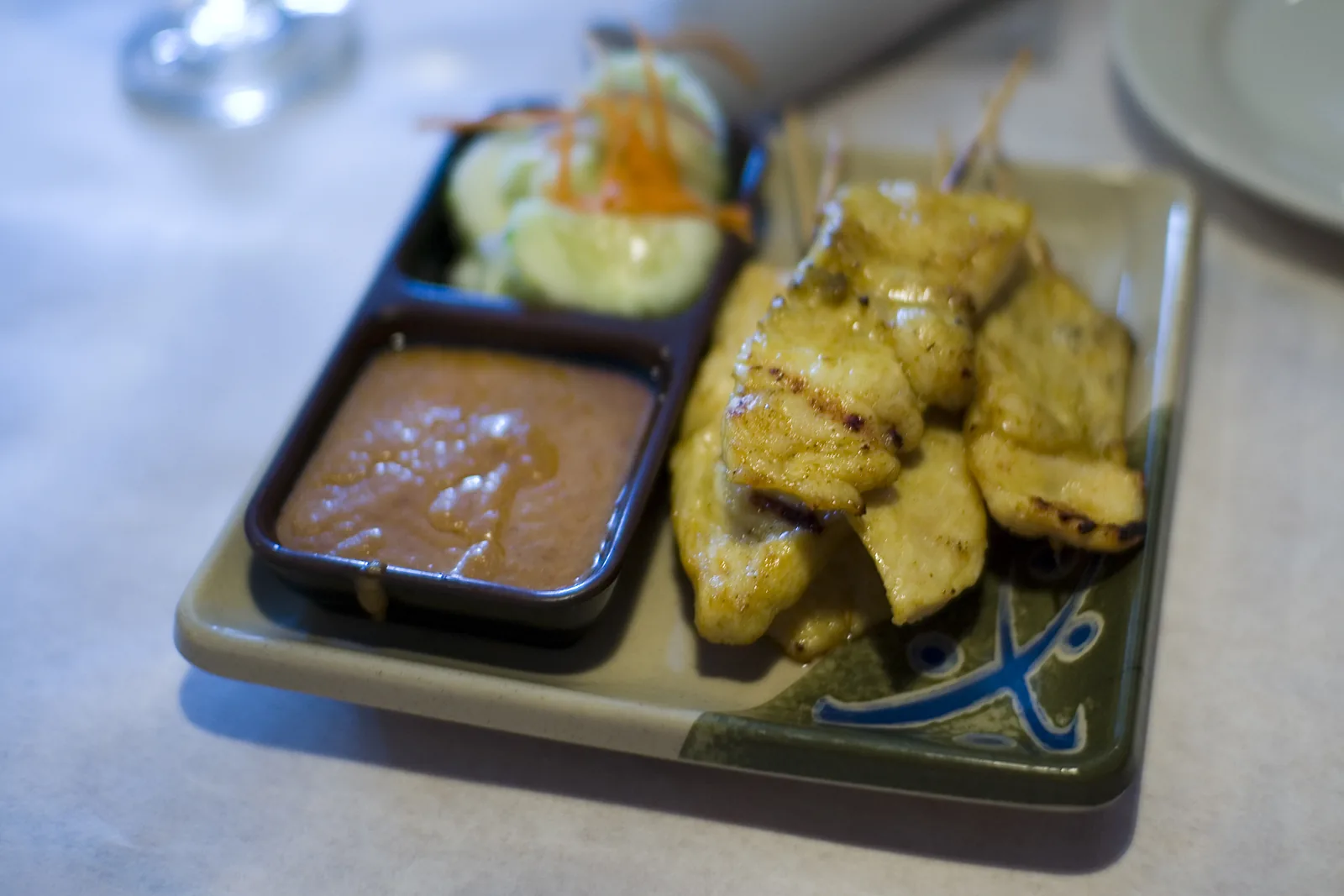
Grilled chicken satay skewers with peanut sauce and cucumber salad on a plate Indonesia flag Indonesia 45m
Dinner •Java Street Food

Chicken Satay

This chicken satay recipe turns chicken breast into golden, char-edged skewers marinated in turmeric, coconut milk, garlic and sweet soy sauce, then grilled and served with a warm, creamy peanut sauce. One serving is about 290 g: three skewers, a generous spoonful of peanut sauce and a cool cucumber-shallot salad. It is the Indonesian street-food classic — sate ayam — made for a weeknight grill.

High-Protein Grilling

Grilled chicken skewers in a turmeric-coconut marinade, served with a homemade peanut sauce — high in protein and cooked fast over high heat.

Pairs Well With
Lontong rice cakes and a cool cucumber-shallot salad balance the rich peanut sauce.
High Protein • Quick Prep (<30m)
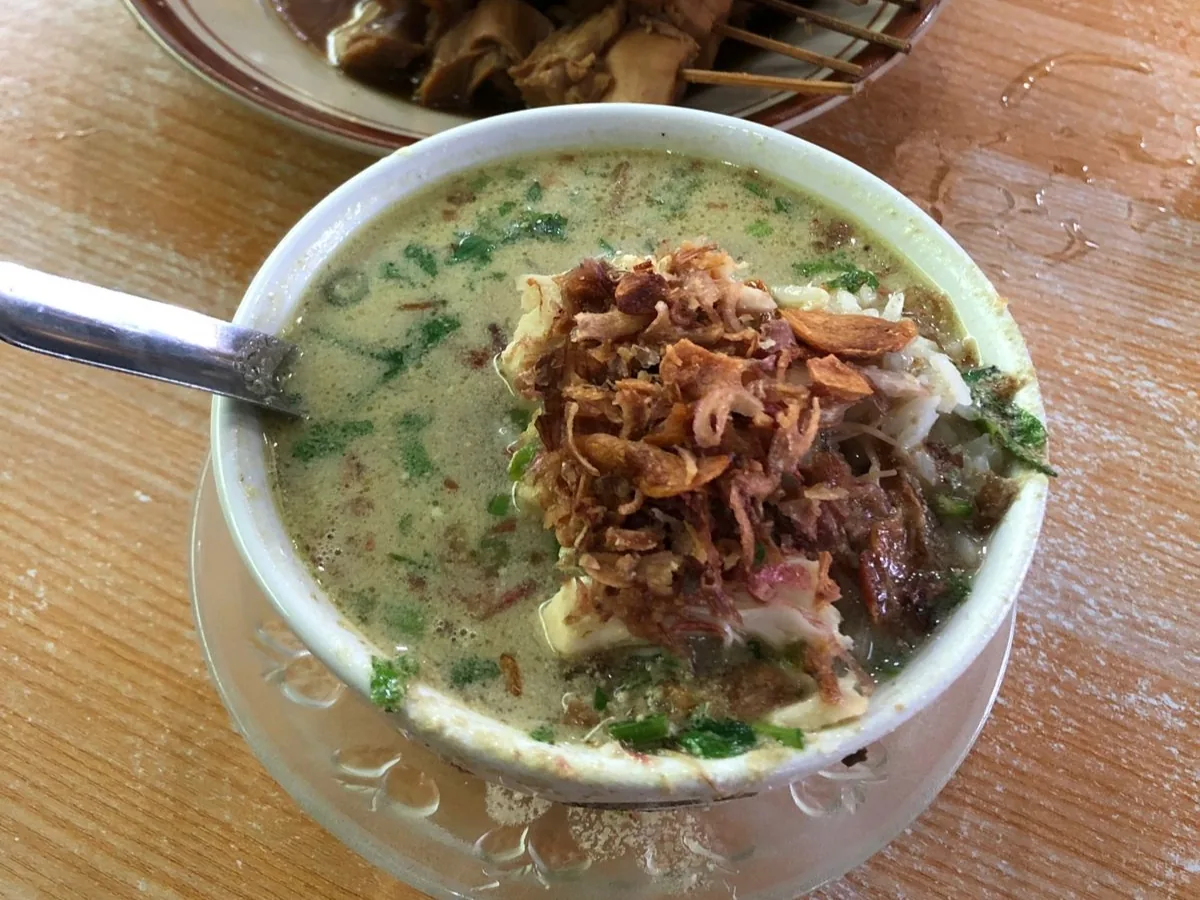
A bowl of golden soto ayam chicken soup topped with crisp fried shallots and herbs, with a spoon in the bowl and a plate of satay behind it Indonesia flag Indonesia 1h 5m
Lunch •Indonesian Street-Food Classic

Soto Ayam

This soto ayam recipe makes Indonesia's best-loved chicken soup: shredded chicken in a clear golden turmeric broth, ladled over rice vermicelli with cabbage, bean sprouts, a halved egg and a shower of crisp fried shallots. A squeeze of lime and a spoon of sambal at the table wake the whole bowl up. One serving is about 560 g.

Comfort & Warmth

A golden turmeric chicken soup with rice vermicelli, egg and crisp fried shallots, served hot with lime and chilli.

Pairs Well With
Steamed rice, prawn crackers & sambal
Soups & Broths

The Dinner Gazette

Never wonder what’s for dinner again

One email a week with easy dinner ideas from around the world — ingredients, steps and nutrition, tested in our kitchen first.

Delivered every Thursday morning. Unsubscribe anytime.