Curated recipes from 193 countries  •  New seasonal Mediterranean issue out now

Overview

German White Asparagus with Hollandaise

Weisser Spargel mit Sauce Hollandaise, Spargel mit Hollandaise

German white asparagus with hollandaise is the dish Germany waits all winter for: pale, delicately sweet spears, peeled and gently steamed, drowned in a warm, lemony hollandaise and served with buttery new potatoes. It is the centrepiece of Spargelzeit, the short spring asparagus season. One serving is about 450 g.

White asparagus is the same plant as green asparagus, grown under mounds of earth so the spears never see sunlight and stay pale and mild. Germans celebrate its short harvest, Spargelzeit, from mid-April until 24 June, St John the Baptist Day, when the season traditionally ends so the plants can recover. During those weeks restaurants print special asparagus menus, and the classic plate is simply steamed spears with hollandaise, boiled potatoes and ham.

Pairs well with: Serve with boiled new potatoes, a little chopped parsley and, if you like, slices of cooked ham on the side.

Provenance

Germany flag Germany

German Spargelzeit Classic

Nordic & European

Time Dedication

45m

20m prep • 25m cook

Batch Yield

4 Servings

427 kcal per serving

1 serving ≈ 450 g

Technical Skill

Intermediate

Medium (Hollandaise)

Meal Timing & Digestive Fit

Breakfast

Not Advised

Lunch

Hearty Midday Main

Dinner

Ideal Hearty Main

Snack & Tea

Inappropriate

Occasions: Spring dinners, Spargelzeit celebrations, Easter lunch, family gatherings Cost: Medium — about $4–5 per serving at home
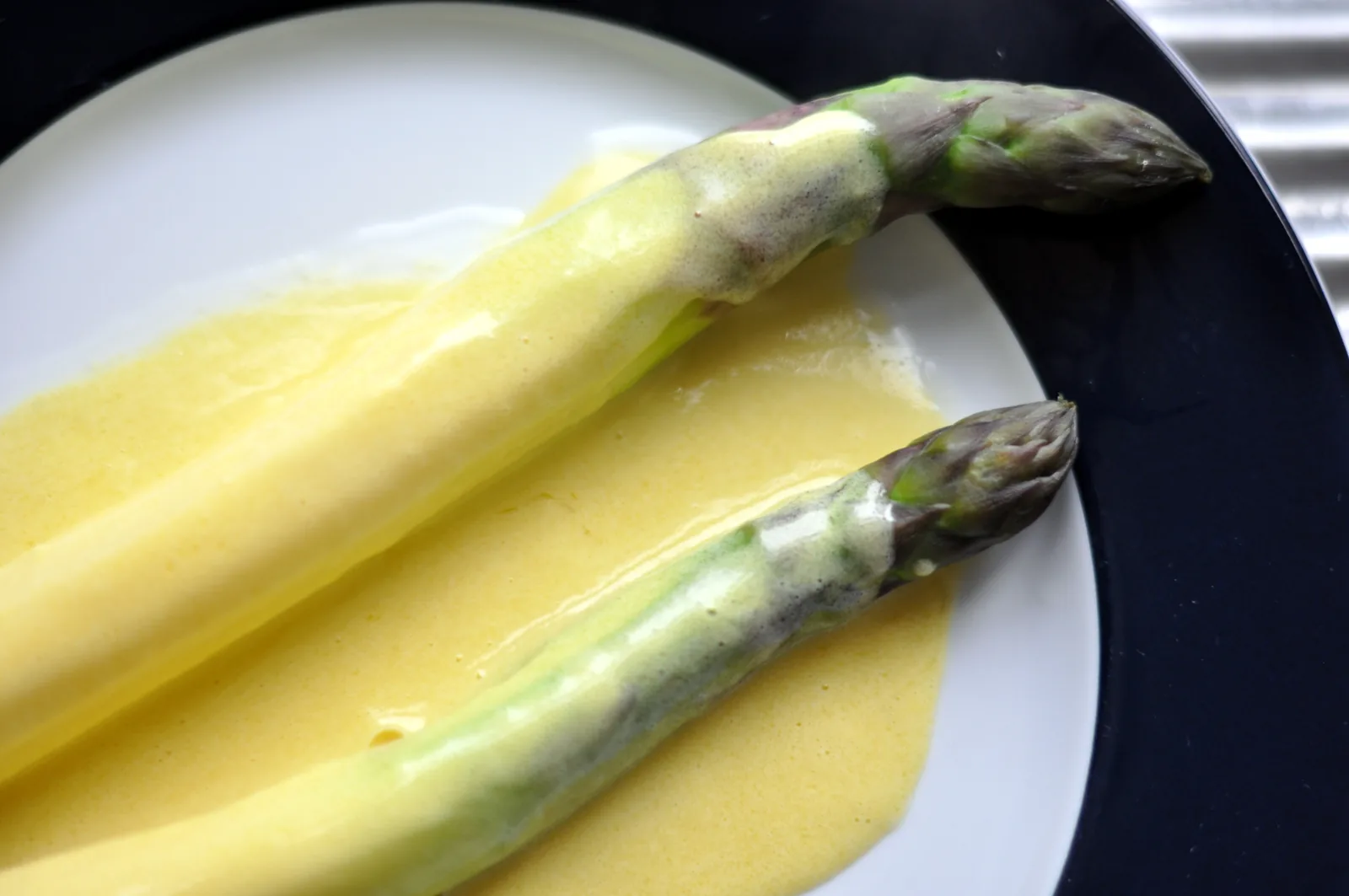
Two pale white asparagus spears on a white plate under a glossy pool of golden hollandaise sauce

German Spargelzeit Classic

Photo: cyclonebill, CC BY-SA 2.0, via Wikimedia Commons

The Heritage Formulary

Measured Ingredients

Estimated cost: Medium — about $4–5 per serving at home (USD)

This recipe follows the classic German method: white asparagus peeled and gently steamed, served with a warm lemon hollandaise and boiled new potatoes.

Execution Methodology & Culinary Technique

Step-by-Step Cooking Guide

Active 45m
P

Prep Stage: Peel the Asparagus and Set Up the Sauce

20 Mins

Snap the woody ends off the asparagus and peel each spear from just below the tip downwards with a vegetable peeler, turning the spear as you go. Scrub the new potatoes. Separate the egg yolks, melt the butter gently and skim off the foam, and squeeze the lemon so the hollandaise comes together without a pause.

Maestro Tip: Peel white asparagus thoroughly: the skin is fibrous and woody, and any strip left on stays tough after cooking.

  1. 1

    Peel and Trim the Asparagus

    10 Mins No heat — prep at room temperature, about 20°C (68°F)

    Hold each spear by the tip and peel from just below the tip to the cut end, turning the spear a quarter-turn after each stroke so the whole spear is peeled. Snap off the bottom 2 to 3 cm (about 1 in) where the spear feels woody. Lay the peeled spears in a single layer and keep them in cold water until you are ready to cook.

    Peel over a bowl: the peelings come off in long ribbons and are easy to tidy away.

    Done when: The spears are smooth, pale and free of any fibrous strips; the tips are intact.

  2. 2

    Boil the New Potatoes

    20 Mins Boiling water, 100°C (212°F)

    Put the scrubbed new potatoes in a saucepan, cover with cold salted water and bring to a boil over high heat. Turn the heat down and simmer for 18 to 20 minutes until a knife slides in easily. Drain, return to the warm pan with a knob of the measured butter if you like, and toss with the chopped parsley.

    Start the potatoes first: they take the longest, and they hold their heat well under a lid while you finish the sauce.

    Done when: A knife slides into the centre of the largest potato with no resistance.

  3. 3

    Steam the Asparagus

    12 Mins Steaming over simmering water, about 100°C (212°F)

    Set a steamer basket over a pan of simmering water with the pinch of sugar and a pinch of salt in the water. Lay the asparagus in the basket in a single layer, cover with a tight lid and steam for 10 to 12 minutes for thick spears, 8 minutes for thin ones. The spears should bend a little when lifted but still hold their shape.

    Do not let the water touch the spears: steaming keeps their delicate flavour, while boiling can waterlog them.

    Done when: A spear bends gently when lifted by the tip and a knife meets only slight resistance in the thickest part.

  4. 4

    Make the Hollandaise

    8 Mins Bain-marie, about 60°C (140°F); never let the bowl touch boiling water

    While the asparagus steams, whisk the egg yolks with the lemon juice, white wine vinegar and a pinch of salt in a heatproof bowl. Set the bowl over a pan of barely simmering water and whisk constantly for 2 to 3 minutes until the yolks turn pale, thick and frothy. Take the bowl off the heat and drizzle in the warm melted butter very slowly, whisking all the time, until the sauce is thick, glossy and coats a spoon. Season with white pepper and a little more lemon if it needs it, and keep warm.

    If the sauce starts to look grainy, whisk in a teaspoon of cold water at once; it usually brings the emulsion back.

    Done when: The sauce is thick enough to coat the back of a spoon and falls in a slow ribbon from the whisk.

  5. 5

    Plate and Serve

    2 Mins Serve hot, about 60°C (140°F)

    Lay the warm asparagus spears side by side on warmed plates, spoon the hollandaise generously over the middle of the spears, and scatter the snipped chives over the top. Serve at once with the parsley potatoes on the side.

    Warm the plates first: hollandaise cools and thickens fast on a cold plate.

    Done when: The spears are hot, the sauce is glossy and flowing, and the plates are warm to the touch.

Finishing Touches & Plating

Serve the asparagus the moment the sauce is made, with the potatoes on the side and extra hollandaise in a small jug for anyone who wants more.

Nutritional Physiology & Benefits

Nutrition

Energy

427

kcal / serving

Protein

11g

Complete AA

Carbs

38g

Complex

Fats

28g

Healthy

Per serving (4 servings · 1 serving ≈ 450 g)
Energy427 kcal
Protein11 g
Carbohydrates38 g
Fat28 g
Fibre8.3 g
Sugar6.6 g
Sodium316 mg
Per 100g
Energy95 kcal
Protein2.4 g
Carbohydrates8.3 g
Fat6.3 g
Fibre1.9 g
Sugar1.5 g
Sodium70 mg

Nutrition values are estimated — calculated from USDA FoodData Central values for the listed ingredients.

Vitamins & minerals: Vitamin K and folate (asparagus), vitamin C and potassium (potato), vitamin A and vitamin D (egg yolk). Nutrition values are estimated.

Fibre and Folate

About 8.3 g of fibre per serving, mostly from the asparagus and potatoes, plus folate and vitamin K from the spears.

Satisfying Spring Dinner

At about 427 kcal a serving with potatoes and a rich sauce, this is a proper dinner that still leaves room for dessert.

Gentle and Wholesome

Simply steamed vegetables, eggs and butter, with nothing processed and no added sugar beyond a pinch in the water.

Food Pairings

What to Eat With

To optimize nutrient absorption and elevate the sensory depth, pair with these authentic accompaniments:

Sides

Boiled New Potatoes

Buttery new potatoes are the classic partner: they soak up the hollandaise and turn the spears into a full dinner.

Cooked Ham

A few slices of mild cooked ham add a salty, savoury note that balances the sweet asparagus and the rich sauce.

Drinks

Dry White Wine

A crisp, dry white wine cuts through the butter in the hollandaise and refreshes the palate between bites.

Vegetables

Green Salad

A simple salad with a sharp lemon dressing gives a fresh, acidic contrast to the creamy sauce.

Full Menus

Full Menu: Asparagus, Ham, Potatoes

Start with a light soup, serve the asparagus with hollandaise, ham and new potatoes, and finish with strawberries and cream for a classic Spargelzeit dinner.

Complete menu

Start with a light soup, serve the asparagus with hollandaise, ham and new potatoes, and finish with strawberries and cream.

Digestive Guardrails

What NOT to Combine

To prevent digestive distress, sluggishness, or palate clash, avoid pairing the dish with these elements:

Boiling the Hollandaise

If the yolks get hotter than about 65°C (150°F) they scramble and the sauce splits into butter and curds. Keep the water at a bare simmer and lift the bowl off the heat often. This is general information, not medical advice.

Skipping the Peeling

White asparagus skin is fibrous and woody, and it does not soften in cooking; unpeeled spears are stringy and unpleasant to eat. Peel every spear from tip to base. This is general information, not medical advice.

General information only, not medical advice — consult a doctor for personal dietary decisions.

Who Should Eat It

Who Should Eat

  • General adultsA rich but balanced spring dinner as written; one serving with potatoes makes a full meal for most adults.
  • ChildrenSuitable from age 3+; the spears are soft and mild, though the rich sauce is best in a small spoonful for little ones.
  • ElderlyGood in a modest portion; the steamed spears are soft and easy to eat, and the sauce can be served on the side.
  • Pregnant womenGenerally suitable when made with very fresh eggs and served hot; hollandaise is an egg sauce, so use fresh eggs and eat it straight away. Ask your clinician about portion size.
  • Breastfeeding womenGenerally suitable; the asparagus, potatoes and eggs supply steady energy and folate. Ask your clinician if you have dietary concerns.
  • AthletesA useful post-training dinner: about 37.5 g of carbohydrate per serving from the potatoes, with protein from the egg yolks.
  • Weight gainA good choice: the butter sauce and potatoes add energy easily, and a second helping of potatoes adds more.
  • Weight lossKeep to one serving and go lighter on the sauce; the asparagus itself is very low in calories, so the hollandaise is where the energy sits.

Health Conditions — Adjust or Avoid

Conditions

  • DiabetesOne serving has about 37.5 g of carbohydrate, mostly from the potatoes; a smaller portion of potatoes with more asparagus helps. Ask your clinician about portions.
  • High blood pressureOne serving has about 316 mg of sodium, mostly from the added salt; use half the salt in the water and the sauce. Ask your clinician about your daily sodium limit.
  • Kidney diseaseAsparagus is moderately high in potassium, so keep the portion modest if your clinician has advised a potassium limit, and ask about portion size.
  • GoutAsparagus and potatoes are low in purines, so this dish is generally a safe choice; drink plenty of water with the meal. Ask your clinician if you are unsure.
  • Stomach issuesThe rich butter sauce can be heavy for a sensitive stomach; a smaller spoonful of hollandaise with plenty of plain asparagus is usually easier. Ask your clinician if symptoms persist.
  • Cardiovascular diseaseThe sauce is rich in saturated fat from the butter; enjoy the hollandaise in a modest spoonful and fill the plate with asparagus. Ask your clinician about your overall fat intake.
  • Fatty liverThe butter sauce adds fat and energy; serving the asparagus with plain melted butter thinned with lemon, or a lighter spoonful of hollandaise, lightens the dish. Ask your clinician about dietary changes.
  • Food allergiesContains egg and milk (butter); free of gluten, nuts and seafood as written. Ask your clinician before serving to someone with a food allergy.
  • Special therapeutic dietsSuitable as written for vegetarian diets; it is not vegan or dairy-free because of the butter and egg yolks. Ask your clinician or dietitian before adapting it.

If you have a medical condition, consult your doctor before changing your diet.

Storage & Use

Storage & Use

How to store
Cool leftovers quickly and store the asparagus and potatoes separately from the sauce in airtight containers.
In the fridge
2 days in the fridge in an airtight container.
In the freezer
Not recommended; cooked asparagus turns limp and hollandaise splits when frozen and thawed.
How to reheat
Reheat the asparagus and potatoes gently in a steamer for 3 to 4 minutes until steaming hot throughout, to 74°C (165°F); make the hollandaise fresh.
Freezing recommended
No, freezing ruins both the asparagus and the sauce.
Signs it has spoiled
Sour smell, slimy spears, or a sauce that has separated and smells stale.

More recipes to explore

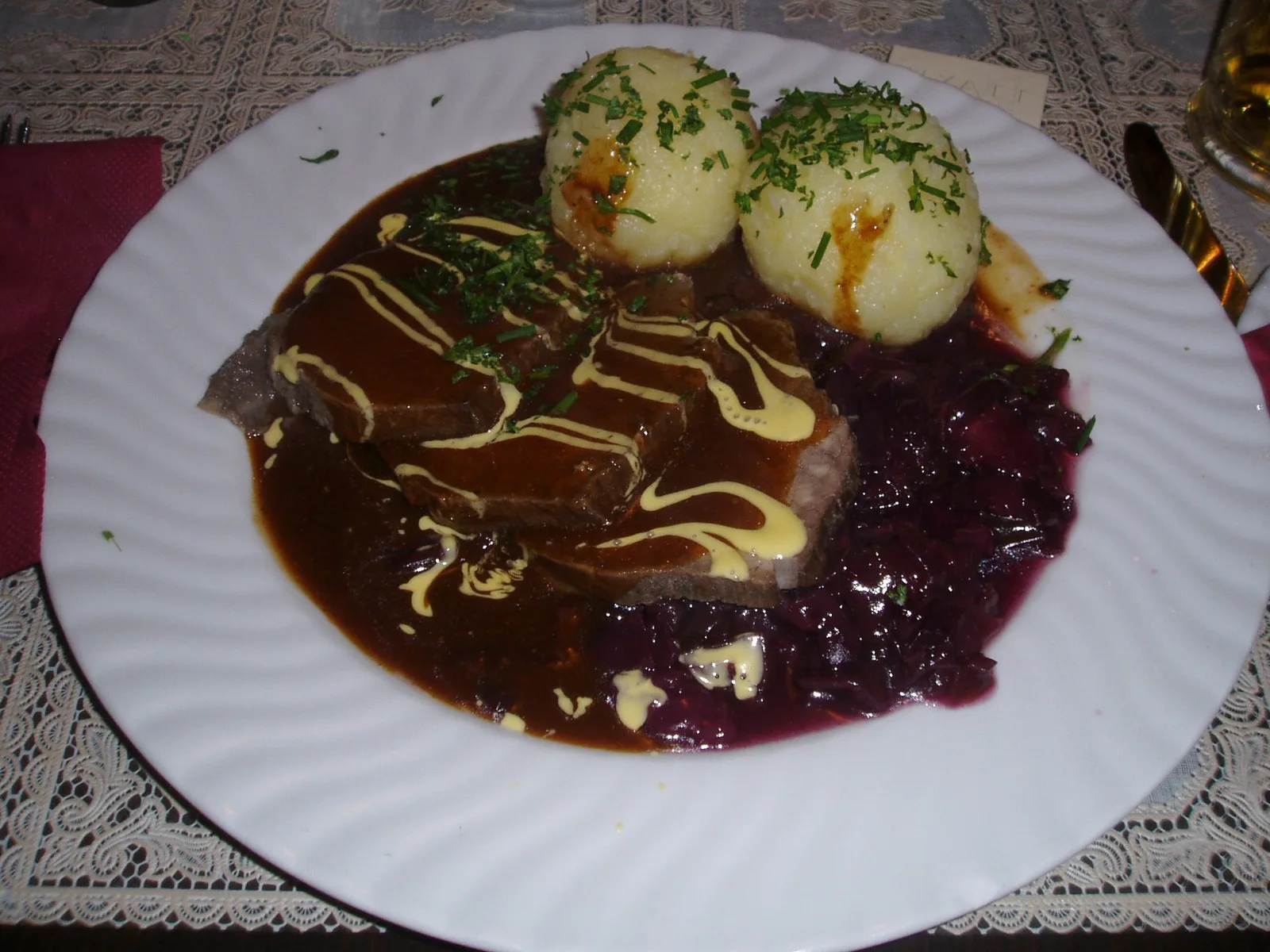
Sliced sauerbraten in dark sweet-sour gravy with potato dumplings and braised red cabbage on a white plate Germany flag Germany 3h 30m
Dinner •Rhineland Heritage

Sauerbraten

This sauerbraten recipe starts with a beef chuck roast steeped for three days in red wine vinegar, red wine and warm spices, then braised slowly until it slices like butter. The marinade becomes a dark, sweet-sour gravy thickened with crushed gingersnaps and studded with raisins, the Rhineland way. One serving is about 300 g, with gravy.

Comfort & Warmth

A slow-braised German pot roast in a sweet-sour vinegar gravy, sliced thick and served hot with potato dumplings and red cabbage.

Pairs Well With
Potato dumplings, braised red cabbage & a glass of Spätburgunder
High Protein
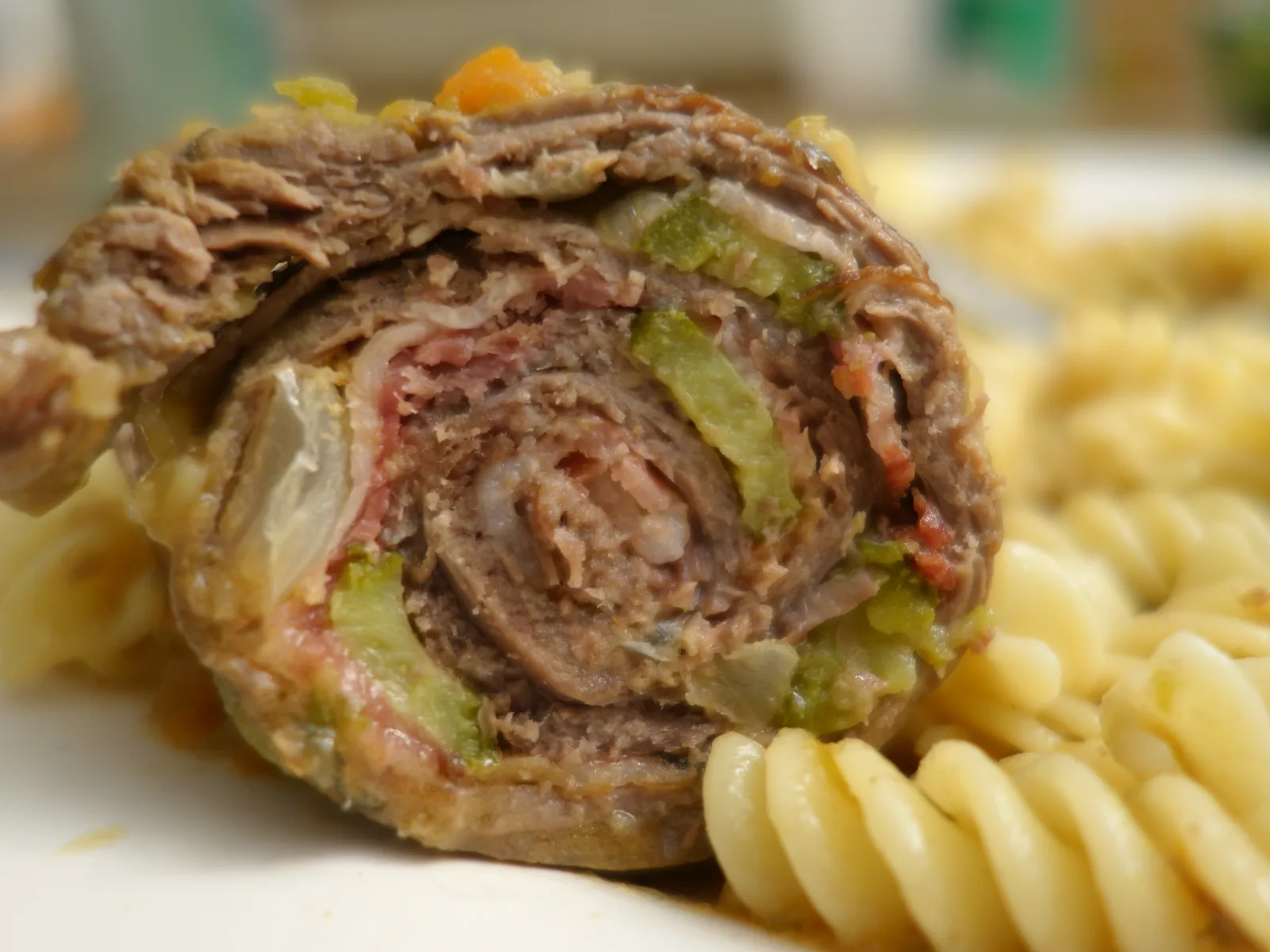
A sliced German beef roulade showing the spiral of beef, bacon and dill pickle, served with pasta Germany flag Germany 2h 10m
Dinner •German Sunday Heritage

Rouladen

This rouladen recipe spreads thin slices of top round with mustard, then rolls them around smoky bacon, dill pickles and onion into neat parcels. The rolls are browned, then braised slowly in red wine and beef stock until tender, and the braising liquid becomes a rich gravy. One serving is about 375 g — two rolls with gravy.

Comfort & Warmth

Thin beef rolls stuffed with bacon, dill pickle and onion, braised in red wine gravy and served hot with dumplings.

Pairs Well With
Potato dumplings, braised red cabbage & a German lager
High Protein
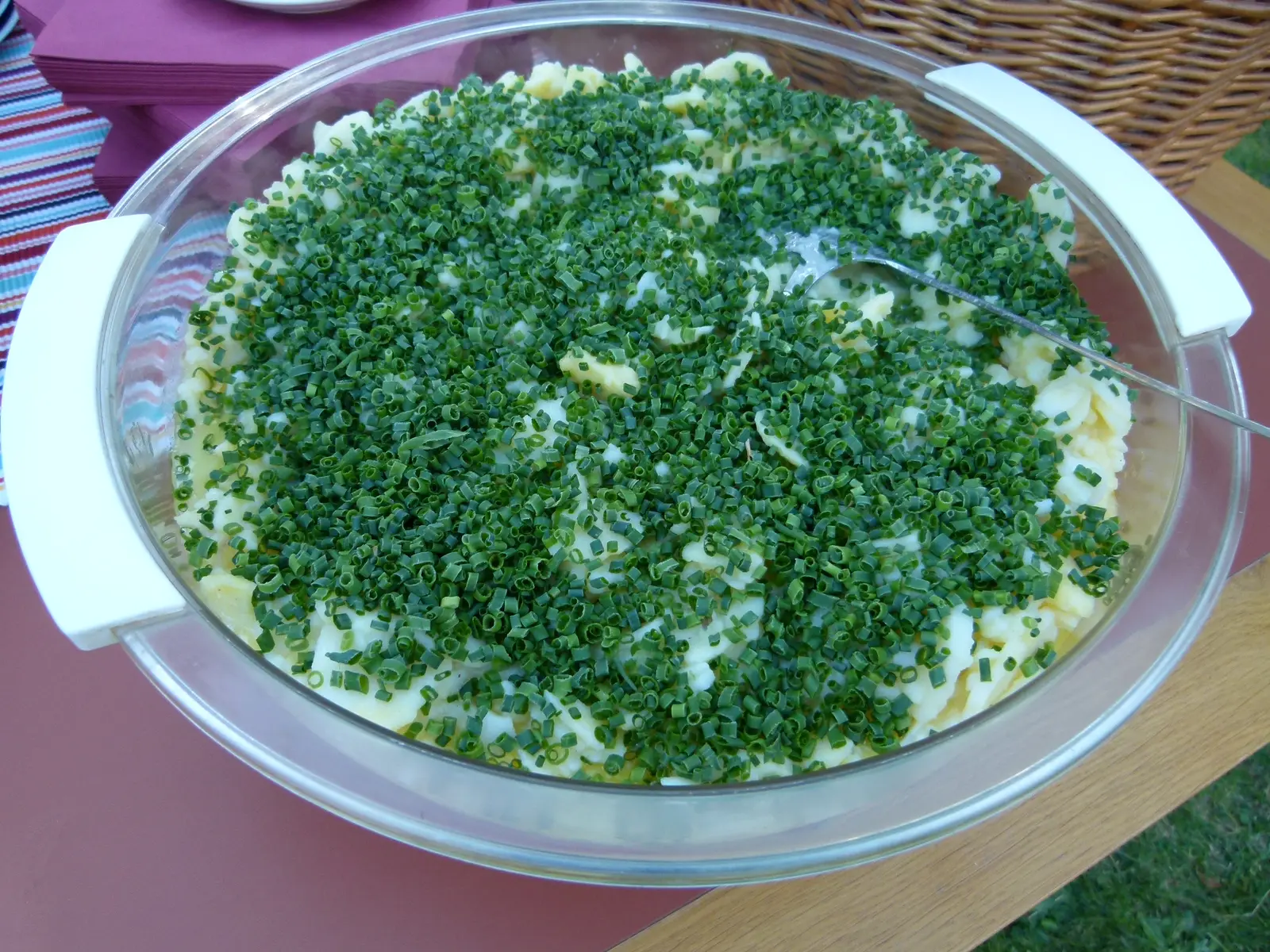
A glass bowl of warm Swabian potato salad topped with chopped chives Germany flag Germany 45m
Lunch •Swabian Heritage

German Potato Salad

This german potato salad recipe is the warm Swabian kind: waxy potatoes sliced while still hot, tossed with crisp bacon, soft onion and sliced egg, then dressed with hot beef stock, vinegar and mustard so every slice drinks up the tangy dressing. No mayonnaise anywhere — the potatoes stay light, glossy and warm. One serving is about 292 g.

Comfort & Warmth

Warm waxy potatoes in a bacon, mustard and vinegar dressing, served straight from the bowl while still steaming.

Pairs Well With
Grilled sausages, schnitzel & a cold German lager
Quick Prep (<30m)
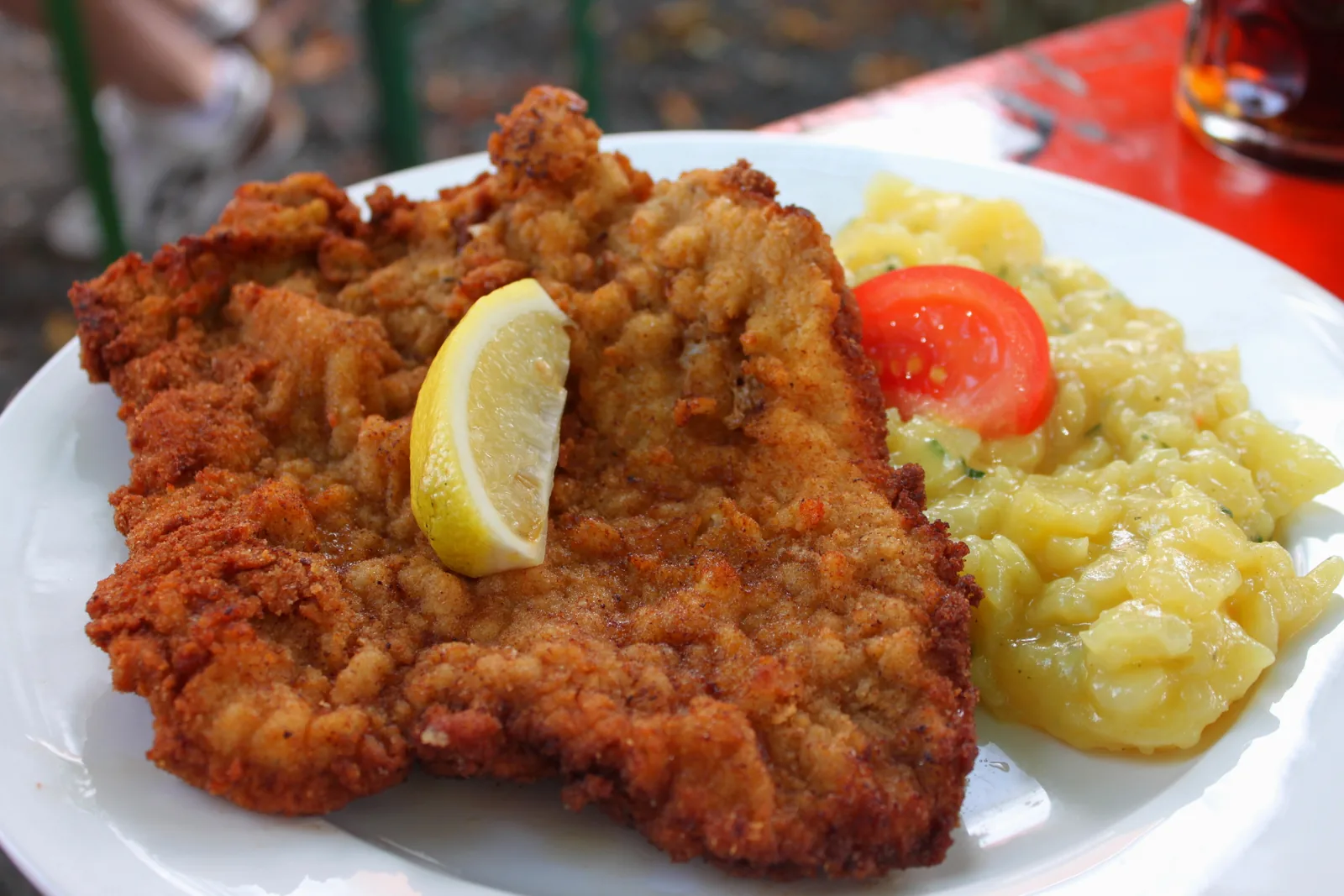
Golden breaded pork schnitzel with a lemon wedge and potato salad on a white plate Germany flag Germany 40m
Dinner •German Heritage

German Pork Schnitzel

German pork schnitzel is the everyday hero of German cooking: a pork cutlet pounded thin, coated in flour, egg and breadcrumbs, and fried in butter until it turns deep golden and crisp. This german schnitzel recipe follows the German way — real pork, a loose crumb, and a wedge of lemon on the side, with potato salad to mop up. One serving is about 200 g.

Classic Comfort

A golden, crisp pork cutlet with lemon and potato salad — a satisfying, protein-rich German dinner.

Pairs Well With
Warm potato salad, cucumber salad and a cold lager.
High Protein

The Dinner Gazette

Never wonder what’s for dinner again

One email a week with easy dinner ideas from around the world — ingredients, steps and nutrition, tested in our kitchen first.

Delivered every Thursday morning. Unsubscribe anytime.