Curated recipes from 193 countries  •  New seasonal Mediterranean issue out now

Overview

Greek Moussaka

Mousakas

Greek moussaka is a layered bake of fried aubergine and potato, a cinnamon-spiced beef sauce, and a thick bechamel that turns deep gold in the oven. It is the dish most Greek tavernas are judged by, and it is made for sharing at a slow family dinner. One serving is about 412 g.

Aubergine and meat bakes were eaten across the Balkans and the Middle East for centuries, and the name comes from the Arabic musaqqa'a, meaning chilled, because the dish was often served at room temperature. The modern Greek version, with its thick bechamel topping and warm cinnamon, was created in the 1920s by the chef Nikolaos Tselementes, who had trained in French cooking and gave the older dish a French-style sauce. His version became the one Greek tavernas serve today.

Pairs well with: Serve with a crisp Greek salad, warm bread and a glass of red wine.

Provenance

Greece flag Greece

Greek Classic

Mediterranean & Italy

Time Dedication

2h

45m prep • 75m cook

Batch Yield

8 Servings

527 kcal per serving

1 serving ≈ 412 g

Technical Skill

Intermediate

Medium (Layered Bake)

Meal Timing & Digestive Fit

Breakfast

Not Advised

Lunch

Hearty Midday Main

Dinner

Ideal Hearty Main

Snack & Tea

Inappropriate

Occasions: Sunday family dinners, festive gatherings, make-ahead weekend cooking, dinner parties Cost: Moderate — about $4–5 per serving at home
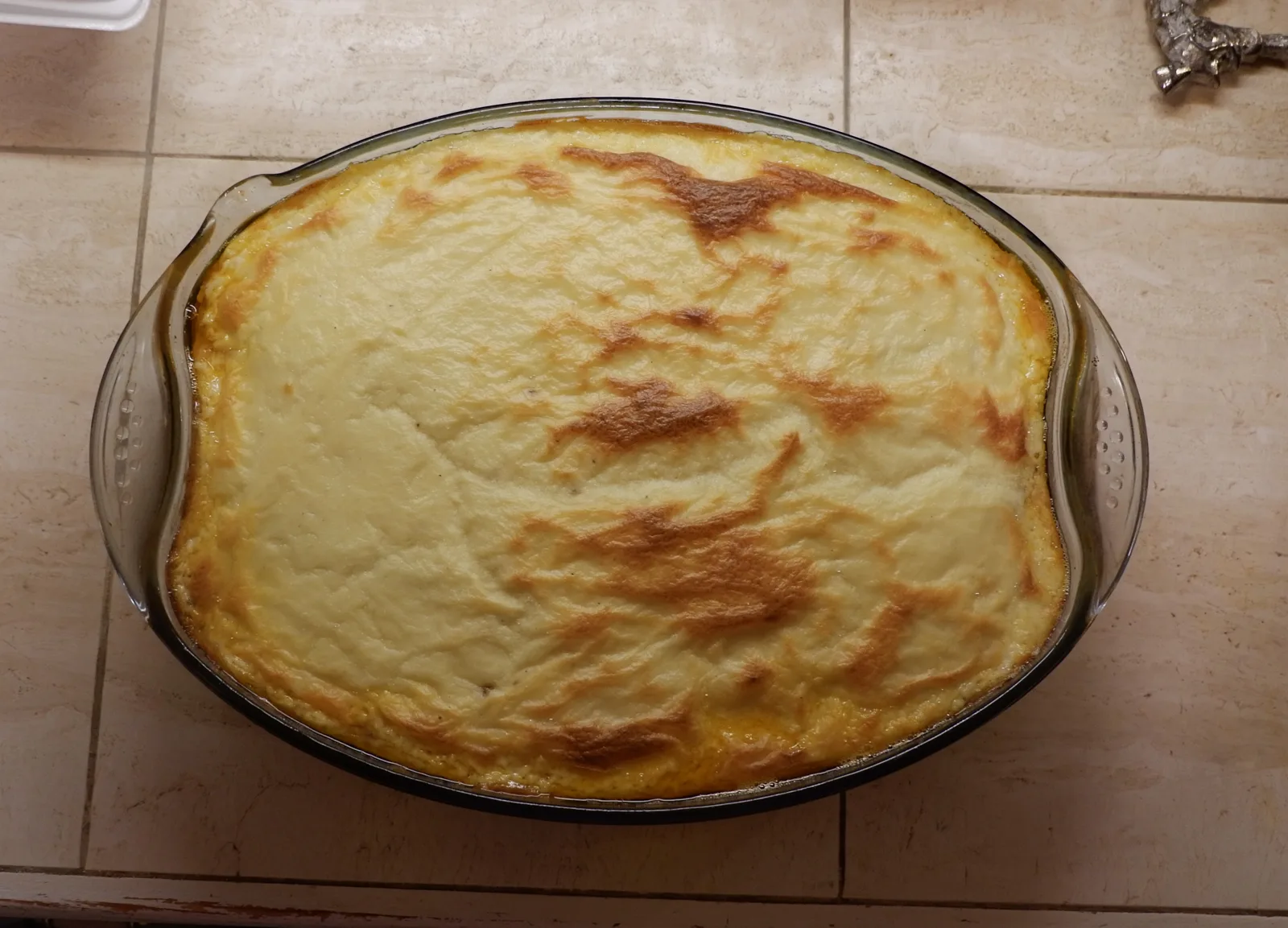
A whole Greek moussaka in a glass baking dish, its bechamel top baked golden brown with darker patches

Greek Classic

Photo: Key West Wedding Photography, CC BY 2.0, via Wikimedia Commons

The Heritage Formulary

Measured Ingredients

Estimated cost: Moderate — about $4–5 per serving at home (USD)

This recipe follows the classic layered Greek method: salted and fried aubergine, a thick cinnamon-spiced meat sauce, and a set bechamel topping.

Execution Methodology & Culinary Technique

Step-by-Step Cooking Guide

Active 2h
P

Prep Stage: Salt the Aubergine and Gather the Layers

45 Mins (30 Mins Salting, Mostly Hands-Off)

Slice the aubergines lengthways, salt them and leave for 30 minutes while you peel and slice the potatoes, chop the onion and garlic, and measure out the tomato paste, wine, milk, butter, flour, eggs and Parmesan. Pat the aubergine dry before frying — this one step decides whether the bake is rich or greasy.

Maestro Tip: Work in this order and the salting time does the work for you: by the time the vegetables are ready, the aubergine is too.

  1. 1

    Salt and Fry the Aubergine and Potato

    35 Mins Medium-high heat, oil about 180°C (350°F)

    Lay the aubergine slices in a colander, sprinkle with most of the salt, and leave for 30 minutes until beads of moisture appear. Pat every slice very dry with kitchen paper — wet aubergine soaks up oil and turns soggy. Heat a wide frying pan with a generous layer of olive oil and fry the aubergine in batches, about 2 minutes a side, until golden at the edges. Drain on kitchen paper. Fry the potato rounds the same way until pale gold, about 3 minutes a side, and drain well.

    Do not crowd the pan: slices that touch steam instead of frying, and pale aubergine never browns later.

    Done when: Aubergine is golden at the edges and bendable, not stiff; potato rounds are pale gold and tender at the edges.

  2. 2

    Cook the Spiced Meat Sauce

    30 Mins Medium heat; meat must reach 71°C (160°F)

    Heat 1 tablespoon of the remaining olive oil in a large pan and soften the onion for 5 minutes until translucent. Add the garlic and cook 1 minute more. Add the ground beef and break it up with a wooden spoon, cooking until no pink remains and the meat reaches 71°C (160°F). Stir in the tomato paste and cook 1 minute, then pour in the red wine and let it bubble for 2 minutes. Add the chopped tomatoes, cinnamon, oregano, pepper and the remaining salt, then simmer uncovered for 20 minutes until thick — the sauce should mound on a spoon, not run.

    A watery meat sauce is the most common moussaka failure: if it still runs after 20 minutes, keep simmering — the layers depend on it.

    Done when: The sauce is thick, dark and glossy, with oil just starting to show at the edges; no pink meat remains.

  3. 3

    Make the Bechamel Topping

    15 Mins Medium-low heat; milk warmed to about 60°C (140°F)

    Melt the butter in a medium saucepan, stir in the flour and cook for 1 minute, stirring constantly, until it smells nutty — do not let it brown. Take the pan off the heat and whisk in the warm milk a little at a time until smooth, then return to medium-low heat and stir for 5 to 7 minutes until the sauce coats the back of a spoon. Take off the heat, season with a pinch of salt and the nutmeg, then whisk in the beaten eggs and half the grated Parmesan. The sauce should be thick but pourable.

    Adding the milk off the heat, a splash at a time, is what keeps the sauce lump-free. If lumps appear, whisk hard or pass it through a sieve.

    Done when: The sauce coats a spoon in a thick, even layer and falls in a slow ribbon; it holds its shape for a second before settling.

  4. 4

    Layer the Moussaka

    10 Mins Oven preheated to 180°C (350°F); assembly at room temperature

    Heat the oven to 180°C (350°F). Lightly oil a deep baking dish about 30 x 20 cm (12 x 8 in). Lay the potato rounds in a single layer across the bottom. Cover with half the aubergine slices, then spread all of the meat sauce evenly over them. Lay the remaining aubergine on top in a neat layer, then pour the bechamel over everything and smooth it to the edges so no aubergine pokes through. Scatter the remaining Parmesan over the top.

    Press each layer down gently with the back of a spoon as you go — a compact bake slices cleanly, a loose one falls apart on the plate.

    Done when: The dish is full to about 1 cm (1/2 in) below the rim, the bechamel covers the top completely, and the layers are level.

  5. 5

    Bake Until Golden

    45 Mins 180°C (350°F)

    Bake on the middle shelf for 40 to 45 minutes until the top is deep golden brown with darker patches and the edges bubble gently. If the top browns too fast, lay a loose sheet of foil over it for the last 10 minutes. The centre should be steaming hot and the meat layer at least 71°C (160°F).

    Resist opening the oven in the first 25 minutes — the bechamel needs steady heat to puff and set.

    Done when: The top is deep golden with browned patches, the edges bubble, and a knife in the centre comes out hot to the touch.

  6. 6

    Rest and Serve

    20 Mins Resting No heat — rest at room temperature, about 20°C (68°F)

    Leave the moussaka to rest for at least 20 minutes before cutting — this is when the layers firm up and the bechamel sets, so a slice holds its shape. Cut into 8 generous squares with a sharp knife, wiping the blade between cuts, and lift each piece out with a wide spatula.

    Cutting into a hot moussaka is the second most common mistake: the bechamel runs and the layers slide apart. Twenty minutes of patience is worth it.

    Done when: A cut slice stands upright on the plate with clear layers of potato, aubergine, meat and golden bechamel.
Finishing Touches & Plating

Rest the baked moussaka for at least 20 minutes, then cut into 8 squares and serve warm with Greek salad and bread to mop up the juices.

Nutritional Physiology & Benefits

Nutrition

Energy

527

kcal / serving

Protein

25g

Complete AA

Carbs

33g

Complex

Fats

32g

Healthy

Per serving (8 servings · 1 serving ≈ 412 g)
Energy527 kcal
Protein25 g
Carbohydrates33 g
Fat32 g
Fibre6.8 g
Sugar11.6 g
Sodium637 mg
Per 100g
Energy128 kcal
Protein6 g
Carbohydrates8 g
Fat7.9 g
Fibre1.7 g
Sugar2.8 g
Sodium154 mg

Nutrition values are estimated — calculated from USDA FoodData Central values for the listed ingredients.

Vitamins & minerals: Vitamin B12 and iron (beef), vitamin B6 and potassium (potato), vitamin K and folate (aubergine), calcium (milk, Parmesan and eggs). Nutrition values are estimated.

Vegetables at the Centre

Aubergine and potato make up nearly half the dish by weight, giving about 6.8 g of fibre per serving along with potassium and folate.

Filling Protein

About 24.7 g of protein per serving from the beef, eggs, milk and Parmesan, which helps a dinner feel satisfying for hours.

Olive Oil and Tomato Base

The sauce is built on olive oil and tomatoes, a combination that keeps the dish rich in flavour without relying on heavy cream.

Food Pairings

What to Eat With

To optimize nutrient absorption and elevate the sensory depth, pair with these authentic accompaniments:

Sides

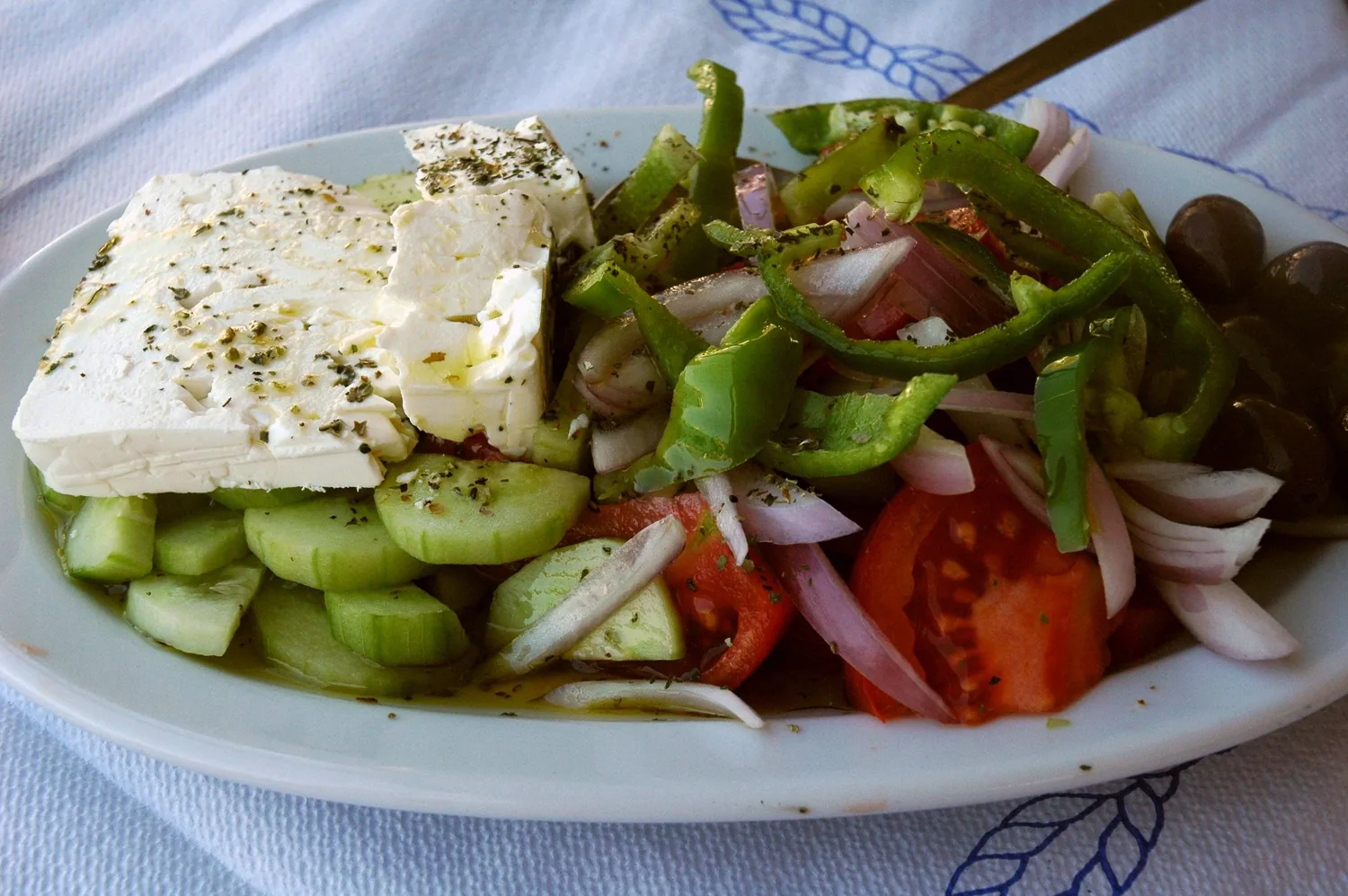
Greek Salad

Cool tomato, cucumber, onion and feta cut through the richness of the bechamel and refresh the palate between bites.

Warm Crusty Bread

Bread is made for the juices that gather at the bottom of the dish — it turns what would be left behind into the best part.

Vegetables

Steamed Green Beans with Lemon

A simple green vegetable adds colour and a bright, sharp note that balances the warm cinnamon and the creamy topping.

Drinks

Dry Red Wine

A medium-bodied dry red, such as Agiorgitiko, matches the spiced beef and stands up to the rich bechamel without overwhelming it.

Full Menus

Full Menu: Tzatziki, Moussaka, Baklava

Start with tzatziki and bread, serve the moussaka as the main event, and finish with baklava — a classic taverna progression from cool to rich to sweet.

Complete menu

Start with tzatziki and warm bread, serve the moussaka with Greek salad, and finish with baklava and Greek coffee.

Digestive Guardrails

What NOT to Combine

To prevent digestive distress, sluggishness, or palate clash, avoid pairing the dish with these elements:

Skipping the Aubergine Salting

Unsalted aubergine holds bitter moisture and soaks up frying oil, which can make the finished bake greasy and heavy. Salting and patting dry first keeps the layers firm. This is general information, not medical advice.

Cutting It While Piping Hot

A moussaka cut straight from the oven has not set, so the bechamel runs and the layers slide apart. Resting for 20 minutes lets it firm up and also avoids burning your mouth on very hot filling. This is general information, not medical advice.

General information only, not medical advice — consult a doctor for personal dietary decisions.

Who Should Eat It

Who Should Eat

  • General adultsA satisfying dinner as written — one square with salad is a full meal for most adults.
  • ChildrenSuitable from age 3+; the cinnamon is mild, but cut a smaller piece and let it cool well, as the centre stays hot for a long time.
  • ElderlyGood in a modest portion; the layers are soft and easy to eat, but the dish is rich, so a smaller square with salad suits most older diners.
  • Pregnant womenGenerally suitable when the beef is cooked through to 71°C (160°F) and the dish is served freshly baked and hot; the eggs in the bechamel are fully cooked. Ask your clinician about portion size.
  • Breastfeeding womenGenerally suitable; the protein, calcium and iron are useful, and one serving with salad makes a complete meal.
  • AthletesA solid post-training dinner — about 24.7 g of protein and 32.9 g of carbohydrate per serving; add bread if you need more energy.
  • Weight gainA good choice — the dish is energy-dense, so a full square with bread and an extra drizzle of olive oil adds calories easily.
  • Weight lossKeep to one smaller square with a large salad and skip the bread; at 527 kcal a serving it is rich, so portion size matters.

Health Conditions — Adjust or Avoid

Conditions

  • DiabetesThe potato layer and flour in the bechamel supply most of the 32.9 g of carbohydrate per serving; a smaller square with extra salad helps keep the meal lighter. Ask your clinician about portions.
  • High blood pressureOne serving has about 637 mg of sodium, mostly from the salt and Parmesan; use half the Parmesan on top and go easy on added salt. Ask your clinician about your daily sodium limit.
  • Kidney diseaseThe dish is fairly high in protein, potassium and sodium, so keep the portion small if your clinician has advised limits, and ask about portion size.
  • GoutBeef is moderately high in purines; a smaller serving with plenty of salad and water is a safer way to enjoy it. Ask your clinician about how often red meat fits your diet.
  • Stomach issuesThe fried aubergine, cinnamon and tomato sauce can be heavy for a sensitive stomach; a smaller portion, well rested and not too hot, is usually easier. Ask your clinician if symptoms persist.
  • Cardiovascular diseaseThe dish is rich in saturated fat from the butter, cheese and beef; a smaller portion with salad, or swapping half the beef for lentils, lightens it. Ask your clinician about your overall fat intake.
  • Fatty liverFrying the aubergine and potato adds a lot of fat; brushing them with oil and roasting instead cuts the fat considerably. Ask your clinician about dietary changes.
  • Food allergiesContains milk, egg, wheat (gluten) and beef. The bechamel contains milk, butter, flour and egg, and the topping is Parmesan. Ask your clinician before serving to someone with a food allergy.
  • Special therapeutic dietsNot suitable as written for gluten-free, dairy-free or egg-free diets; a gluten-free flour and dairy-free milk can be used, but the result will differ. Ask your clinician or dietitian before adapting it.

If you have a medical condition, consult your doctor before changing your diet.

Storage & Use

Storage & Use

How to store
Cool the moussaka to room temperature within 2 hours, then cover the dish tightly or move slices to airtight containers.
In the fridge
3–4 days in the fridge.
In the freezer
Up to 2 months; freeze in single portions wrapped well.
How to reheat
Reheat in the oven at 180°C (350°F) until steaming hot throughout, to 74°C (165°F), about 20–25 minutes; cover with foil so the top does not over-brown.
Freezing recommended
Yes, in single portions for up to 2 months; the bechamel softens slightly after freezing but the flavour holds.
Signs it has spoiled
Sour or off smell, slimy surface, mould, or a grey, watery layer on top.

More recipes to explore

Greek salad (horiatiki) with a slab of feta sprinkled with oregano, Kalamata olives, tomato wedges, cucumber and red onion on a white plate Greece flag Greece 20m
Lunch •Aegean Table Classic

Greek Salad

This Greek salad recipe is the real horiatiki: chunky ripe tomatoes, peeled cucumber, red onion and green pepper, with Kalamata olives and a whole slab of feta on top, dressed with extra-virgin olive oil and dried Greek oregano. There is no lettuce and no heavy dressing — just summer vegetables at their best, ready in twenty minutes. One serving is about 411 g.

Fresh Summer Lunch

Crisp garden vegetables, salty feta and Kalamata olives under good olive oil — a bright, satisfying lunch with no cooking at all.

Pairs Well With
Crusty bread & grilled fish
Quick Prep (<30m)
Golden spanakopita triangles sprinkled with fresh dill, served on a white plate with a small bowl of tzatziki Greece flag Greece 1h 20m
Lunch •Greek Bakery Classic

Spanakopita

This spanakopita recipe is the Greek spinach pie found in every bakery in Greece: paper-thin filo brushed with olive oil, layered over a filling of wilted spinach, salty feta, ricotta, leeks and a generous handful of fresh dill, then baked until the top shatters and the inside stays soft and savoury. It is the pie Greeks eat for lunch, take on picnics and set out on a mezze table. One serving is about 220 g.

Crisp Filo, Spinach & Feta

Layers of olive-oil-brushed filo wrapped around a spinach, feta, dill and leek filling, baked until golden and crisp.

Pairs Well With
Greek salad, tzatziki & lemon wedges
Bœuf bourguignon — French beef braised in red wine France flag France 4h
Dinner •Burgundy Terroir

Bœuf Bourguignon

Beef braised gently in red wine until the connective tissue melts into a velvet, gelatin-rich sauce — the classic Burgundy Sunday dinner.

Cellular Repair

Beef braised in red wine until spoon-tender, with mushrooms and pearl onions.

Pairs Well With
Parsnip Purée & Steamed French Haricots Verts
High Protein
Vietnamese braised pork belly with golden eggs in caramel sauce Vietnam flag Vietnam 1h 45m
Dinner •One Pot

Vietnamese Braised Pork and Eggs

Pork belly slowly braised in coconut water and caramel until meltingly tender, with golden eggs that soak up the sweet-savoury sauce — the Vietnamese family dish that tastes better the next day.

Comfort & Sustained Energy

Slow-braised pork belly and eggs in coconut water and caramel.

Pairs Well With
Steamed rice & pickled mustard greens
High Protein

The Dinner Gazette

Never wonder what’s for dinner again

One email a week with easy dinner ideas from around the world — ingredients, steps and nutrition, tested in our kitchen first.

Delivered every Thursday morning. Unsubscribe anytime.