Curated recipes from 193 countries  •  New seasonal Mediterranean issue out now

Overview

Spanakopita

Greek Spinach Pie, Spanakopita Triangles

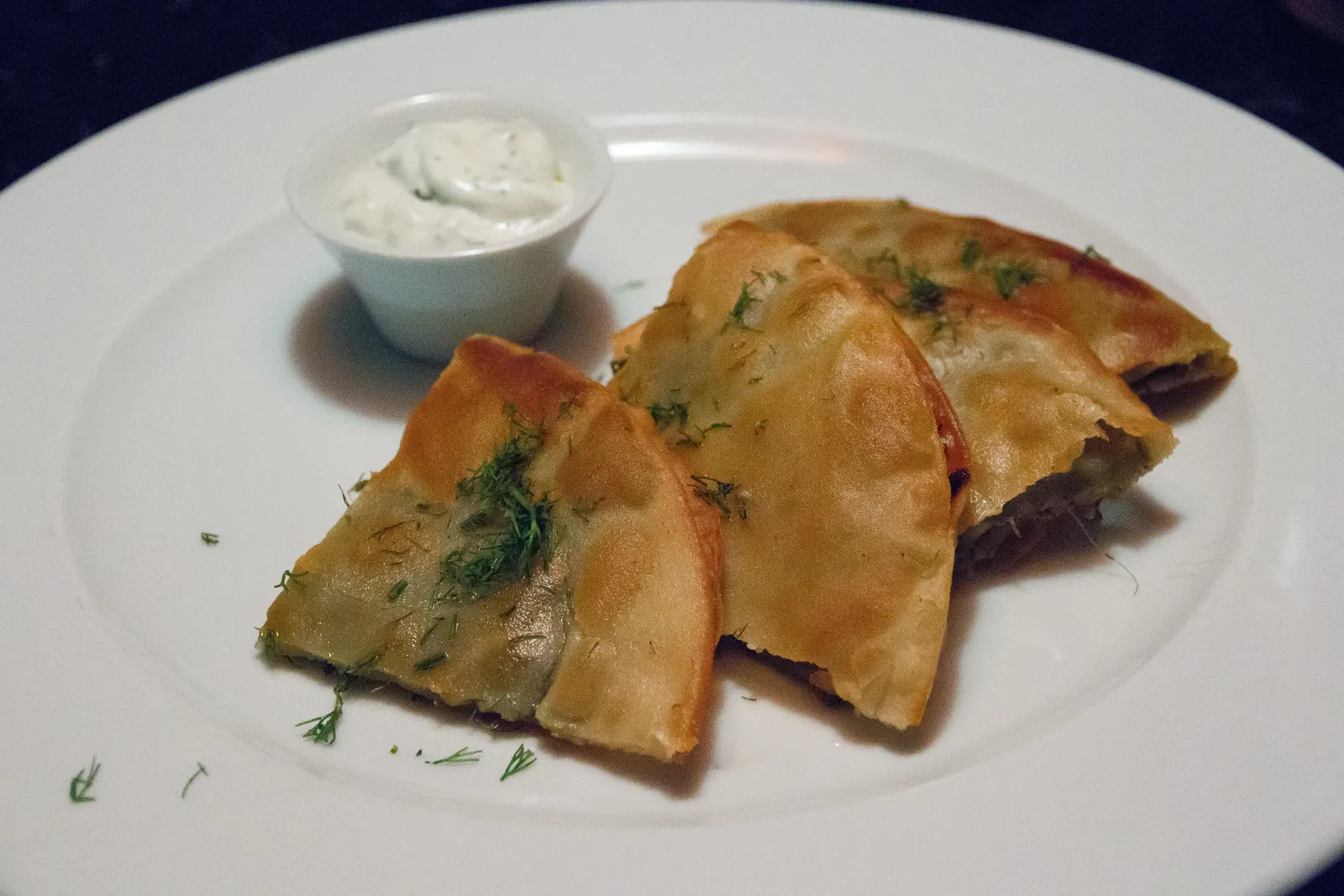
This spanakopita recipe is the Greek spinach pie found in every bakery in Greece: paper-thin filo brushed with olive oil, layered over a filling of wilted spinach, salty feta, ricotta, leeks and a generous handful of fresh dill, then baked until the top shatters and the inside stays soft and savoury. It is the pie Greeks eat for lunch, take on picnics and set out on a mezze table. One serving is about 220 g.

Pies of wild greens wrapped in thin pastry have been eaten in Greece for centuries, and the name says exactly what it is: spanaki, spinach, and pita, pie. The modern version — spinach and salty feta bound with egg, scented with dill and leeks, and layered in olive-oil-brushed filo — became the pie of Greek home cooking and of every neighbourhood bakery, sold by the square for lunch or cut into triangles for a mezze table. Unlike the spinach pies of neighbouring countries, the Greek one is defined by its dill and leeks and by olive oil, never butter, between the layers.

Pairs well with: Greek salad, tzatziki & lemon wedges

Provenance

Greece flag Greece

Greek Bakery Classic

Mediterranean & Italy

Time Dedication

1h 20m

30m prep • 50m cook

Batch Yield

8 Servings

487 kcal per serving

1 serving ≈ 220 g

Technical Skill

Intermediate

Intermediate (Filo Pastry)

Meal Timing & Digestive Fit

Breakfast

Not Advised

Lunch

Prime Metabolic Fit

Dinner

Ideal Hearty Main

Snack & Tea

Inappropriate

Occasions: Family lunches, picnic spreads, mezze tables, make-ahead weekday meals Cost: Low — about $3–4 per serving at home
Golden spanakopita triangles sprinkled with fresh dill, served on a white plate with a small bowl of tzatziki

Greek Bakery Classic

Photo: Jaume Escofet, CC BY 2.0, via Wikimedia Commons

The Heritage Formulary

Measured Ingredients

Estimated cost: Low — about $3–4 per serving at home (USD)

A good spanakopita is deeply golden and shatteringly crisp on top, with a moist, well-seasoned spinach and feta filling that holds its shape when cut.

Execution Methodology & Culinary Technique

Step-by-Step Cooking Guide

Active 1h 20m
P

Prep Stage: Wilt the Spinach & Mix the Filling

30 Mins

Wilt the spinach in a large dry pan until it collapses, then tip it into a colander and press out every drop of water you can — wet spinach is the one thing that makes a soggy pie. Soften the sliced leeks and spring onions in a little olive oil until sweet and tender, then leave them to cool. Mix the cooled spinach and leeks with the crumbled feta, ricotta, beaten eggs, dill, parsley, pepper and nutmeg, and taste before adding any salt. Meanwhile, heat the oven to 190°C (375°F) and brush a 23 x 33 cm (9 x 13 in) baking dish with olive oil.

Maestro Tip: Squeeze the spinach in batches inside a clean tea towel and twist hard — you want it almost dry. A wet filling steams the filo instead of crisping it.

  1. 1

    Wilt & Squeeze the Spinach

    10 Mins Medium heat

    Put the washed spinach into a large dry pan over medium heat, a handful at a time, and stir until every leaf has collapsed — about 3–4 minutes. Tip it into a colander, leave it for 2 minutes, then squeeze it in batches inside a clean tea towel until almost no water comes out. Chop the squeezed spinach roughly.

    Do not add water to the pan — the water clinging to the washed leaves is enough to wilt the spinach.

    Done when: Spinach is dark green, compact and almost dry to the touch; the towel wrings out only a few drops.

  2. 2

    Soften the Leeks & Spring Onions

    10 Mins Medium heat

    Warm 2 tablespoons of the olive oil in the same pan over medium heat. Add the sliced leeks and spring onions with a pinch of salt and cook, stirring, for 6–8 minutes until soft, sweet and translucent, but not browned. Tip into a bowl and leave to cool for 5 minutes.

    Cool the leeks before they meet the eggs, or the heat will start to set the eggs and the filling will turn lumpy.

    Done when: Leeks are soft, glossy and sweet-smelling, with no browned edges.

  3. 3

    Mix the Filling

    5 Mins Room temperature

    Add the chopped spinach to the cooled leeks, then fold in the crumbled feta, ricotta, beaten eggs, dill, parsley, pepper and nutmeg. Mix until everything is evenly combined, then taste a little and add salt only if it needs it — feta varies a lot in saltiness.

    Taste before salting. Some feta is so salty the filling needs no added salt at all.

    Done when: Filling is evenly mixed, holds together when pressed, and tastes well seasoned with a clear dill note.

  4. 4

    Layer the Filo Base

    10 Mins Room temperature

    Brush the baking dish with olive oil. Lay in 8 filo sheets one at a time, brushing each lightly with olive oil and letting the edges overhang the dish. Work quickly and keep the unused sheets under the damp tea towel so they stay pliable.

    A light brush is enough — puddles of oil make the base greasy instead of crisp. If a sheet tears, patch it with the next one; nobody will see it.

    Done when: Eight sheets are in the dish, each brushed, with even overhang on all sides.

  5. 5

    Fill & Top the Pie

    5 Mins Room temperature

    Spread the spinach and feta filling evenly over the filo base and level it with the back of a spoon. Fold the overhanging edges in over the filling, then lay the remaining 8 sheets on top one at a time, brushing each with olive oil. Brush the top generously, scatter over the sesame seeds, and score the top layers lightly into 8 squares with a sharp knife — cut through the top sheets only, not the filling.

    Scoring now means clean squares later: the crisp top would shatter if you cut it after baking.

    Done when: Filling is level, the top is evenly brushed and glossy, and the score marks divide the pie into 8 pieces.

  6. 6

    Bake Until Golden & Set

    45–50 Mins 190°C (375°F)

    Bake in the centre of the oven at 190°C (375°F) for 45–50 minutes, until the top is deeply golden and crisp and the filling is set. Check that the centre of the filling has reached at least 74°C (165°F) with a thermometer — the eggs must be fully set. If the top browns too fast, cover it loosely with foil for the last 10 minutes.

    Do not open the oven in the first 20 minutes — the rush of cool air can make the filo sink and lose its lift.

    Done when: Top is deep golden brown and crackles when tapped; the centre is hot and set, not wobbly, and reads at least 74°C (165°F).

  7. 7

    Rest & Cut

    10 Mins Room temperature

    Leave the pie in the dish for 10 minutes so the filling firms up and the steam settles. Cut along the score marks into 8 squares and lift them out with a wide spatula. Serve warm, with a wedge of lemon if you like.

    Cutting too soon lets the filling spill — ten minutes of patience is what keeps the squares neat.

    Done when: Squares lift out cleanly and hold their shape; the filling is hot and the base is crisp underneath.

Finishing Touches & Plating

Serve the squares warm, while the filo is still crisp, with a Greek salad and a spoonful of tzatziki on the side. Leftovers are good cold the next day, tucked into a lunchbox.
Nutritional Physiology & Benefits

Nutrition

Energy

487

kcal / serving

Protein

18g

Complete AA

Carbs

43g

Complex

Fats

28g

Healthy

Per serving (8 servings · 1 serving ≈ 220 g)
Energy487 kcal
Protein18 g
Carbohydrates43 g
Fat28 g
Fibre4.6 g
Sugar4.0 g
Sodium1090 mg
Per 100g
Energy221 kcal
Protein8 g
Carbohydrates19.6 g
Fat12.7 g
Fibre2.1 g
Sugar1.8 g
Sodium496 mg

Nutrition values are estimated — calculated from USDA FoodData Central values for the listed ingredients.

Vitamins & minerals: Vitamin K, folate and vitamin A (spinach), calcium (feta and ricotta), vitamin B12 (eggs), vitamin C (leeks and parsley). Nutrition values are estimated.

Spinach in Every Bite

About 900 g of fresh spinach goes into the pie, so each serving carries a good share of the leafy greens — folate, vitamin K and vitamin A — that most diets fall short on.

17.6 g of Protein per Serving

Feta, ricotta and eggs give about 17.6 g of protein per serving, which makes a slice of pie a genuinely filling lunch rather than a snack.

Olive Oil, Not Butter

The filo is brushed with olive oil instead of butter, so the fat in the pie is mostly monounsaturated — the same fat that anchors the traditional Greek diet.

Food Pairings

What to Eat With

To optimize nutrient absorption and elevate the sensory depth, pair with these authentic accompaniments:

Vegetables

Greek Salad

Tomato, cucumber, red onion and olives with a little feta on top echo the pie's own flavours, and the cool crunch cuts through the rich, salty pastry.

Sauces

Tzatziki

Cool, garlicky yoghurt sauce is the classic companion — its acidity and chill balance the warm, salty filo and keep each bite from feeling heavy.

Sides

Lemon Roast Potatoes

Crisp potatoes roasted with lemon and oregano turn a slice of pie into a full plate lunch, and their sharpness lifts the spinach filling.

Drinks

Chilled White Wine or Sparkling Water

A cold Assyrtiko or a glass of sparkling water with lemon cleanses the palate between bites of buttery-crisp pastry and salty cheese.

Complete menu

Serve one square of spanakopita with a Greek salad, a spoonful of tzatziki and lemon roast potatoes, and finish with a chilled glass of white wine or sparkling water with lemon.

Digestive Guardrails

What NOT to Combine

To prevent digestive distress, sluggishness, or palate clash, avoid pairing the dish with these elements:

Undercooked Egg Filling

The filling contains raw egg, so the pie must bake until the centre is fully set and reaches at least 74°C (165°F). A wobbly, cool centre is not safe to eat. This is general information, not medical advice.

Extra Salty Sides in the Same Meal

Feta is a high-sodium cheese — one serving already carries about 1,090 mg of sodium — so piling on olives, cured meats or salty dips in the same meal can push sodium very high. Keep the sides fresh and light if you watch your salt. This is general information, not medical advice.

General information only, not medical advice — consult a doctor for personal dietary decisions.

Who Should Eat It

Who Should Eat

  • General adultsA satisfying lunch — one square with a salad covers the main course.
  • ChildrenSuitable from age 5+; the spinach is hidden in a cheesy filling most children accept, and the squares are easy to hold.
  • ElderlyGood in a modest portion; the filling is soft and easy to chew, and the pie is best served warm, not piping hot.
  • Pregnant womenGenerally suitable when the pie is baked right through so the egg filling is fully set, and served hot.
  • Breastfeeding womenGenerally suitable; the protein, calcium and iron are useful, and the spinach adds folate.
  • AthletesA handy post-training lunch — about 17.6 g of protein per serving with carbs from the filo.
  • Weight gainA good choice — two squares with lemon potatoes and tzatziki make an energy-dense meal.
  • Weight lossKeep to one square and fill the rest of the plate with Greek salad; the filo and feta make the pie energy-dense.

Health Conditions — Adjust or Avoid

Conditions

  • DiabetesThe filo is the main carbohydrate here, so keep to one square and fill the rest of the plate with salad; ask your clinician about portions.
  • High blood pressureThe dish is salty from the feta; keep the added salt low, use a lower-salt feta if you can find one, and skip extra salty sides. Ask your clinician about your daily sodium limit.
  • Kidney diseaseFeta and ricotta are sources of potassium and phosphorus; keep the portion modest if your clinician has advised limits, and ask about portion size.
  • GoutSpinach is moderate in purines; eat in moderate portions and drink water with the meal. Ask your clinician if gout flares are frequent.
  • Stomach issuesUsually gentle, but the rich filo and raw onion notes can bother a sensitive stomach; eat a modest portion and skip the spring onions if needed.
  • Cardiovascular diseaseFeta and filo add saturated fat and salt; keep the portion modest and balance the plate with salad. Ask your clinician about how often this fits your diet.
  • Fatty liverKeep the portion modest and fill half the plate with Greek salad rather than a second square. Ask your clinician about cheese portions.
  • Food allergiesContains wheat (filo), milk (feta and ricotta), egg and sesame — do not serve to anyone with one of these allergies without a suitable substitute. No nuts or shellfish in the dish.
  • Special therapeutic dietsIf you follow a prescribed low-sodium or low-saturated-fat diet, use less salt, choose a lower-fat feta, and check with your clinician.

If you have a medical condition, consult your doctor before changing your diet.

Storage & Use

Storage & Use

How to store
Cool the leftover squares quickly and store in an airtight container, separate from any salad or tzatziki.
In the fridge
3–4 days in an airtight container.
In the freezer
Baked squares up to 2 months, wrapped well; thaw overnight in the fridge.
How to reheat
Reheat in an oven at 190°C (375°F) for 10–12 minutes until crisp and steaming hot throughout, to 74°C (165°F); the microwave makes the filo soggy.
Freezing recommended
Yes for baked squares, up to 2 months.
Signs it has spoiled
Sour or off smell, slimy filling, or mould on the pastry.

More recipes to explore

A whole Greek moussaka in a glass baking dish, its bechamel top baked golden brown with darker patches Greece flag Greece 2h
Dinner •Greek Classic

Greek Moussaka

Greek moussaka is a layered bake of fried aubergine and potato, a cinnamon-spiced beef sauce, and a thick bechamel that turns deep gold in the oven. It is the dish most Greek tavernas are judged by, and it is made for sharing at a slow family dinner. One serving is about 412 g.

Comfort & Warmth

A hearty layered bake built around aubergine, potatoes and a spiced meat sauce under a creamy bechamel topping.

Pairs Well With
Serve with a crisp Greek salad, warm bread and a glass of red wine.
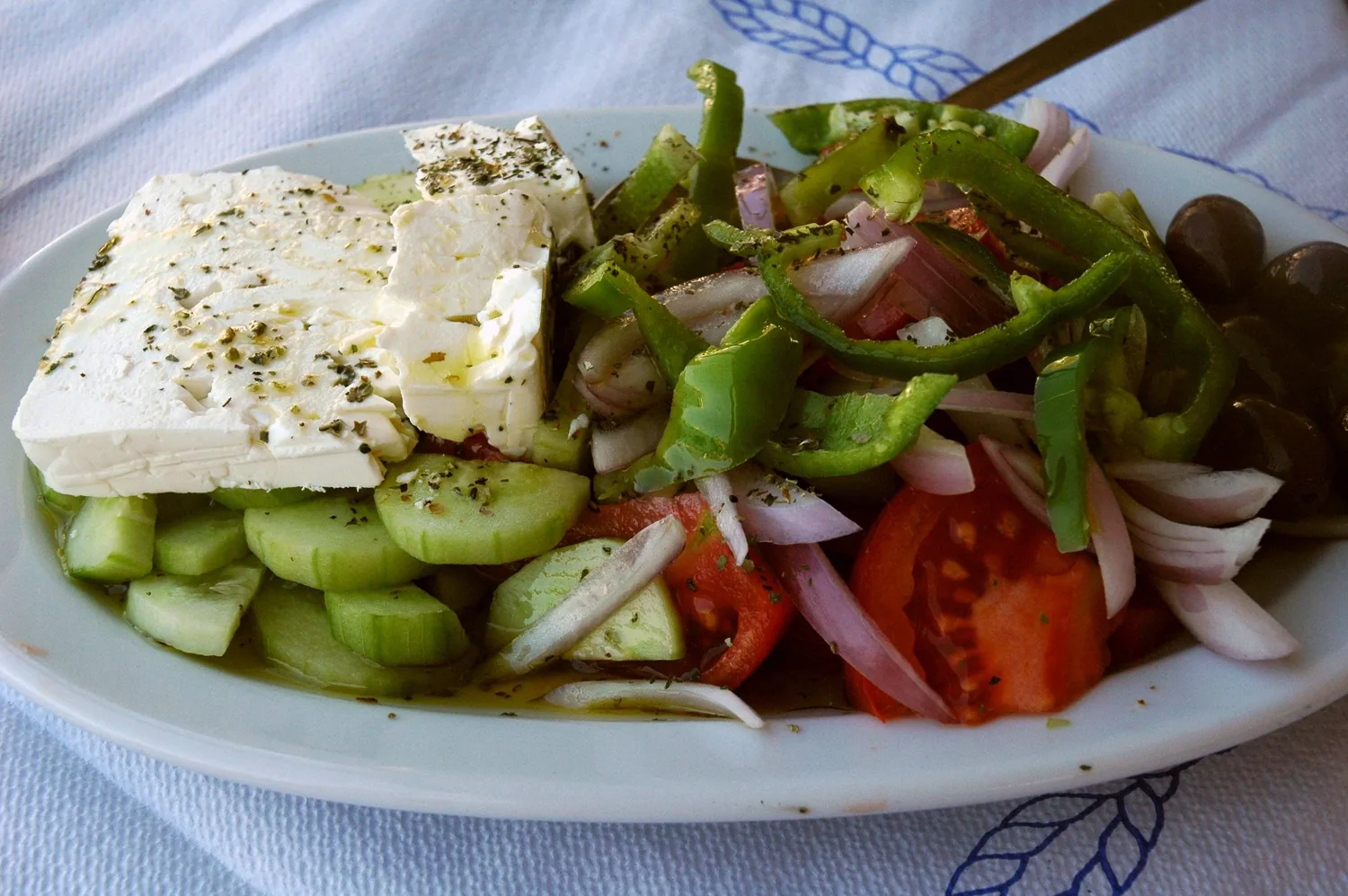
Greek salad (horiatiki) with a slab of feta sprinkled with oregano, Kalamata olives, tomato wedges, cucumber and red onion on a white plate Greece flag Greece 20m
Lunch •Aegean Table Classic

Greek Salad

This Greek salad recipe is the real horiatiki: chunky ripe tomatoes, peeled cucumber, red onion and green pepper, with Kalamata olives and a whole slab of feta on top, dressed with extra-virgin olive oil and dried Greek oregano. There is no lettuce and no heavy dressing — just summer vegetables at their best, ready in twenty minutes. One serving is about 411 g.

Fresh Summer Lunch

Crisp garden vegetables, salty feta and Kalamata olives under good olive oil — a bright, satisfying lunch with no cooking at all.

Pairs Well With
Crusty bread & grilled fish
Quick Prep (<30m)
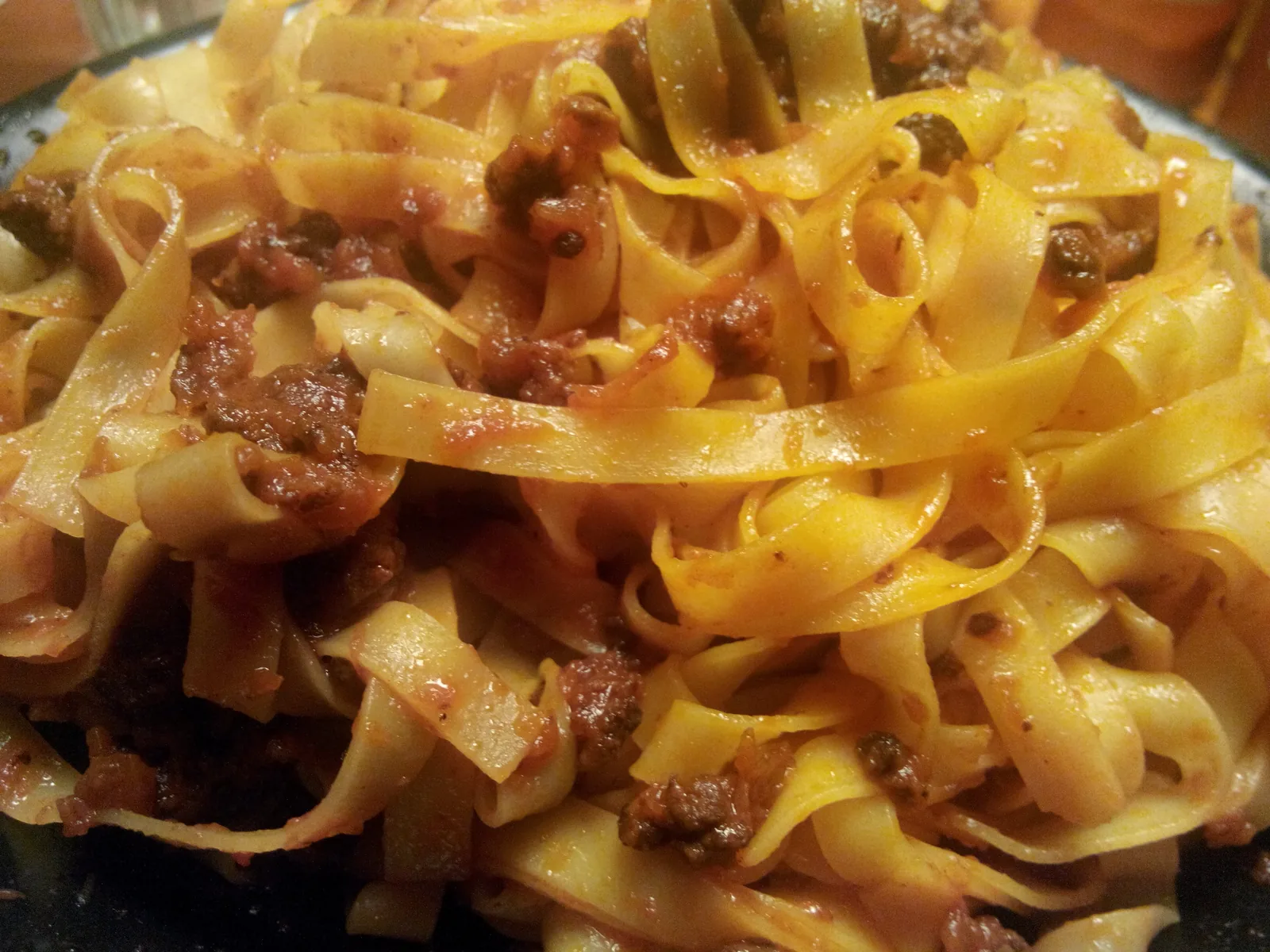
Tagliatelle al ragù Bolognese in a bowl with Parmigiano-Reggiano Italy flag Italy 4h 25m
Lunch •Emilia-Romagna

Tagliatelle al Ragù Bolognese

Slow-braised soffritto and coarse ground heritage meats layered over handmade egg yolk dough for mid-day stamina.

Lean Protein

Slow-simmered beef ragù tossed through fresh egg tagliatelle.

Pairs Well With
Bitter Radicchio & Aged Balsamico di Modena
Pasta & Noodles • High Protein
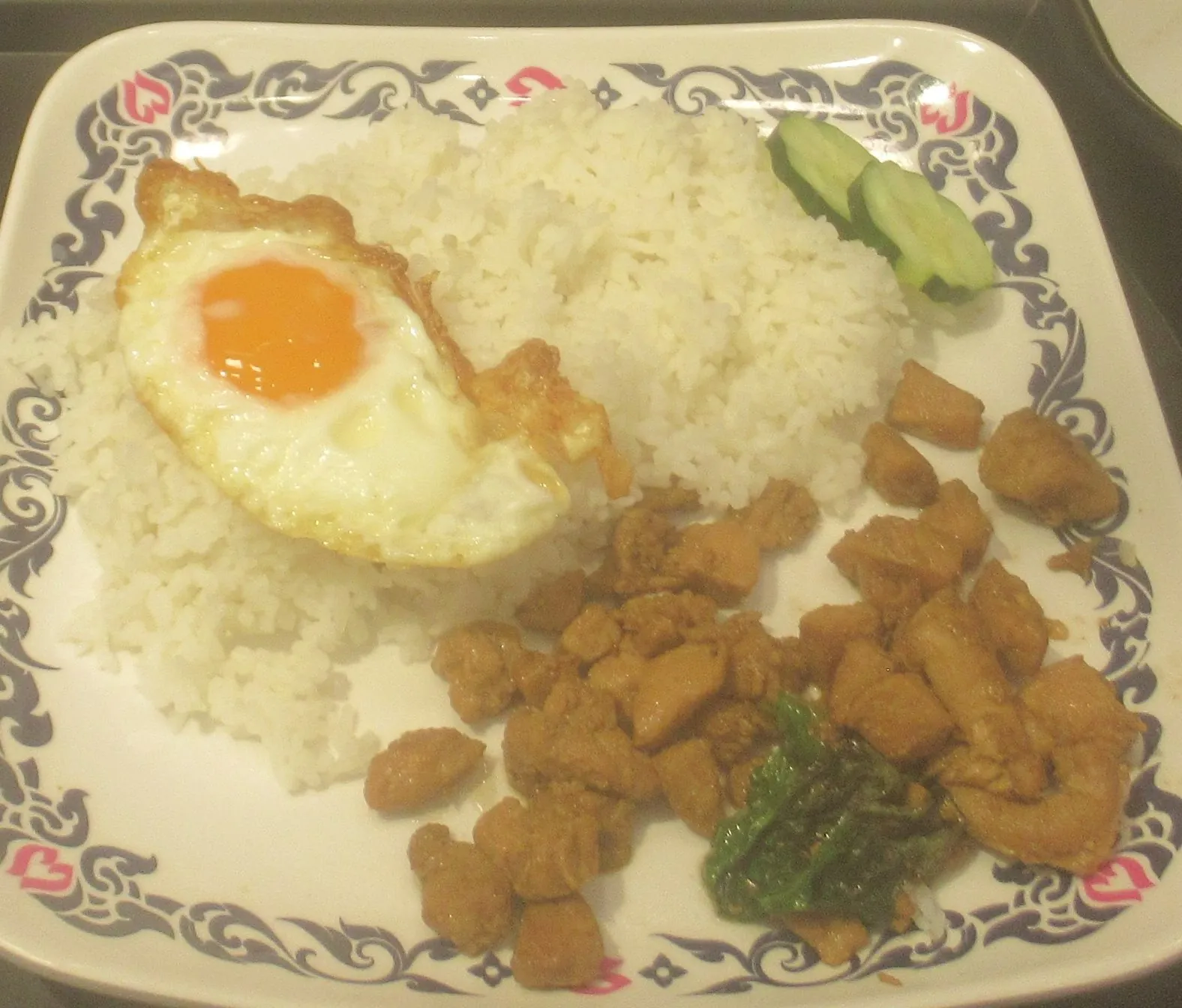
Pad kra pao gai — Thai holy basil chicken with fried egg and rice Thailand flag Thailand 30m
Lunch •Bangkok Street Flame

Pad Kra Pao Gai

High-heat wok flash of holy basil and crushed chillies over minced chicken, served over jasmine rice with a crispy-edged fried egg.

High Energy

Capsaicin brings the heat; holy basil adds a peppery, clove-like aroma.

Pairs Well With
Chilled Cucumber Salad & Fish Sauce Lime Dip
High Protein • Quick Prep (<30m)

The Dinner Gazette

Never wonder what’s for dinner again

One email a week with easy dinner ideas from around the world — ingredients, steps and nutrition, tested in our kitchen first.

Delivered every Thursday morning. Unsubscribe anytime.