Curated recipes from 193 countries  •  New seasonal Mediterranean issue out now

Overview

Hainanese Chicken Rice

Hainan Chicken, Chicken Rice, Nasi Ayam

This hainanese chicken rice recipe poaches a whole chicken at a bare simmer, then cooks jasmine rice in the fragrant stock with chicken fat, ginger and pandan. It is served with fresh chilli sauce, ginger-scallion sauce and dark soy, plus cucumber and a bowl of the poaching broth. One serving is about 660 g.

Hainanese chicken rice was created by immigrants from Hainan in southern China, adapted from Wenchang chicken and its rice cooked in chicken stock. In Singapore it became a hawker-centre staple: the chicken is poached at sub-boiling temperatures, dipped in ice for a jelly-like skin, and the rice is cooked in the stock with chicken fat, ginger, garlic and pandan. It is widely considered one of Singapore's national dishes, and Singapore's hawker culture was inscribed on UNESCO's Representative List of the Intangible Cultural Heritage of Humanity in 2020.

Pairs well with: Cucumber, a bowl of the poaching broth, and iced lime tea

Provenance

Singapore flag Singapore

Singaporean Heritage

East & South Asia

Time Dedication

1h 30m

30m prep • 60m cook

Batch Yield

4 Servings

888 kcal per serving

1 serving ≈ 660 g

Technical Skill

Intermediate

Intermediate (Poaching)

Meal Timing & Digestive Fit

Breakfast

Not Advised

Lunch

Hearty Midday Main

Dinner

Ideal Hearty Main

Snack & Tea

Inappropriate

High Protein Occasions: Family dinners, weekend cooking projects, hawker-style meals at home, when you want a complete one-plate dinner Cost: Moderate — about $4–5 per serving at home
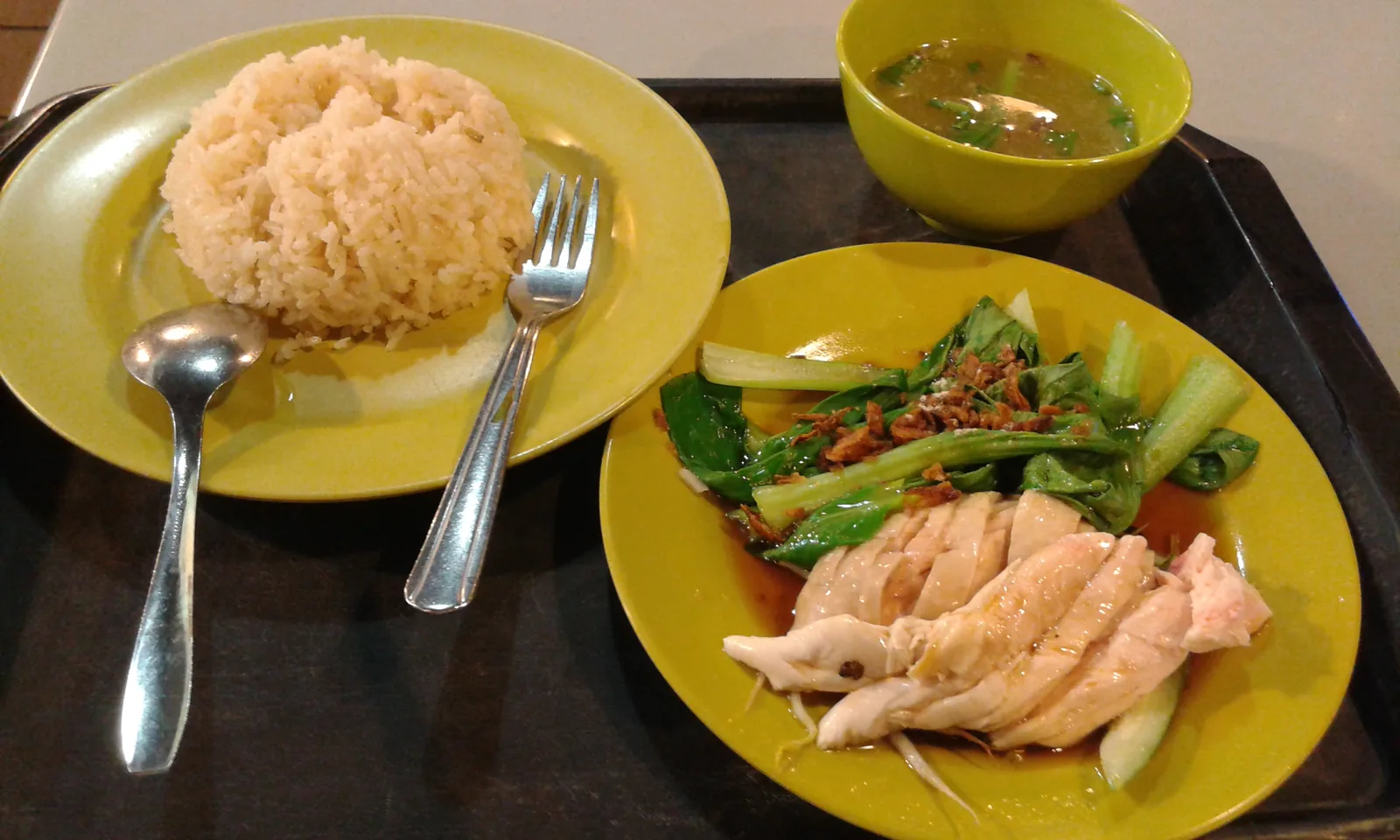
A hawker-centre tray of Hainanese chicken rice with sliced poached chicken, a mound of fragrant rice, greens and a bowl of clear soup

Singaporean Heritage

Photo: Pauloleong2002, CC BY-SA 4.0, via Wikimedia Commons

The Heritage Formulary

Measured Ingredients

Estimated cost: Moderate — about $4–5 per serving at home (USD)

A good chicken rice is judged by the rice: glossy, fragrant and savoury, with silky chicken and sauces that taste fresh, not flat.

Execution Methodology & Culinary Technique

Step-by-Step Cooking Guide

Active 1h 30m
P

Prep Stage: Sauces, Aromatics and Cucumber

30 Mins • Knife Work

Trim the chicken fat and set it aside. Peel and divide the ginger and garlic as listed, chop the spring onions, slice the cucumber, and blend the chillies with lime juice, sugar and a pinch of salt for the chilli sauce. Rinse the rice and tie the pandan leaves into a knot.

Maestro Tip: Make both sauces before the chicken goes in the pot — once it is poached, everything moves fast.

  1. 1

    Poach the Chicken

    35 Mins Bare simmer, 85–90°C (185–194°F)

    Put the chicken in a large pot with 2 litres of cold water, 20g of sliced ginger, 3 spring onion stalks and 3g of salt. Bring slowly to a bare simmer — small bubbles, never a rolling boil — and poach for 30–35 minutes, skimming any foam. The chicken is done when the thickest part of the thigh reaches 74°C (165°F) and the juices run clear.

    A rolling boil toughens the meat and clouds the stock; keep the water just shivering.

    Done when: Thigh reaches 74°C (165°F); juices run clear; skin is smooth and unbroken.

  2. 2

    Ice Bath and Rest

    15 Mins Ice water, 0–4°C (32–39°F)

    Lift the chicken into a large bowl of ice water for 10 minutes — this stops the cooking and gives the skin its smooth, jelly-like finish. Pat dry, brush lightly with sesame oil, and rest for 5 minutes before carving into neat slices.

    Do not skip the ice bath: it is what keeps the skin silky instead of wrinkled.

    Done when: Skin is cool, smooth and glossy; meat is just warm when sliced.

  3. 3

    Make the Oily Rice

    25 Mins Medium heat, then low simmer, about 95°C (203°F)

    Fry the chopped chicken fat in a saucepan over medium heat until it renders, about 3 minutes, then add 20g of minced ginger and 20g of minced garlic and fry for 1 minute. Add the drained rice and the knotted pandan, stir to coat, then pour in 480 ml of the hot strained poaching stock. Bring to a boil, cover, and cook on the lowest heat for 18 minutes, then rest off the heat for 5 minutes.

    The rice should smell of ginger and chicken before the lid goes on — if it does not, add a little more stock.

    Done when: Grains are separate, glossy and tender; no water pools at the bottom.

  4. 4

    Make the Ginger-Scallion Sauce

    5 Mins Oil heated to about 180°C (350°F)

    Mix the grated ginger with 30g of chopped spring onion and a pinch of salt in a small heatproof bowl. Heat the vegetable oil until it shimmers, about 180°C (350°F), and pour it over the ginger mixture — it should sizzle hard. Stir and set aside.

    Pour the oil while it is properly hot; lukewarm oil makes a flat, raw-tasting sauce.

    Done when: The mixture sizzles on contact and smells warmly of ginger.

  5. 5

    Season the Soup

    5 Mins Gentle simmer, about 95°C (203°F)

    Strain the remaining poaching liquid and return 600 ml to the pot. Season with the light soy sauce and the remaining salt, bring to a gentle simmer, and keep hot. Taste: it should be light and clean, not as salty as the rice.

    Skim any fat from the surface so the soup stays clear and light.

    Done when: Broth is clear, golden and lightly seasoned.

  6. 6

    Plate and Serve

    5 Mins Serve hot; rice and soup at about 75°C (167°F)

    Mound the rice on each plate and fan the sliced chicken beside it with the cucumber rounds. Drizzle with dark soy sauce and scatter with spring onion and coriander. Serve the chilli sauce and ginger-scallion sauce in small dishes on the side, with a bowl of hot soup per person.

    Serve the sauces on the side, not on the chicken — everyone seasons their own plate.

    Done when: Chicken is sliced and glossy, rice is mounded, soup is steaming.

Finishing Touches & Plating

Serve the chicken rice the hawker way: rice mounded, chicken fanned beside it, sauces on the side and a bowl of clear soup to sip between bites. Eat while the rice is hot and the chicken is just warm.

Nutritional Physiology & Benefits

Nutrition

Energy

888

kcal / serving

Protein

59g

Complete AA

Carbs

82g

Complex

Fats

34g

Healthy

Per serving (4 servings · 1 serving ≈ 660 g)
Energy888 kcal
Protein59 g
Carbohydrates82 g
Fat34 g
Fibre2.9 g
Sugar5.4 g
Sodium1554 mg
Per 100g
Energy135 kcal
Protein8.9 g
Carbohydrates12.4 g
Fat5.2 g
Fibre0.4 g
Sugar0.8 g
Sodium235 mg

Nutrition values are estimated — calculated from USDA FoodData Central values for the listed ingredients.

Vitamins & minerals: B vitamins and selenium (chicken), vitamin C (chilli, lime, cucumber), vitamin K (cucumber, coriander), iron (chicken).

High in Protein

A serving carries about 59 g of protein from the chicken, which supports muscle maintenance as part of a balanced diet.

Fresh Sauces, No Cream

The flavour comes from ginger, garlic, chilli and lime rather than butter or cream, so the plate stays rich without being heavy.

A Complete One-Plate Meal

Chicken, rice, cucumber and soup in one serving cover protein, carbohydrate and vegetables without needing extra dishes.

Food Pairings

What to Eat With

To optimize nutrient absorption and elevate the sensory depth, pair with these authentic accompaniments:

Vegetables

Extra Cucumber and Bean Sprouts

Cool, crisp vegetables cut through the oily rice and refresh the palate between bites of chicken.

Soups

The Poaching Broth

The light, clear soup balances the rich rice — sipping it cleanses the palate and makes the meal feel complete.

Drinks

Iced Lime Tea

Cold, tart lime tea cuts the richness of the chicken fat in the rice and pairs naturally with the chilli sauce.

Sides

Acar Pickles

Sharp pickled cucumber, carrot and pineapple add acidity that lifts the savoury rice and chicken.

Complete menu

Serve the chicken rice with a bowl of the poaching broth, extra cucumber and acar pickles, and finish with iced lime tea — the classic hawker-centre set.

Digestive Guardrails

What NOT to Combine

To prevent digestive distress, sluggishness, or palate clash, avoid pairing the dish with these elements:

Extra Dark Soy on Top of Salty Soup

The rice, the sauces and the soup are all salted; pouring on more dark soy on top of a full bowl of soup can push sodium very high in one meal. Season lightly and taste first. This is general guidance, not medical advice.

A Heavy Fried Side with the Oily Rice

The rice is already cooked in chicken fat, so adding another fried dish makes the meal very high in fat and slow to digest. Keep the sides light and fresh. This is general guidance, not medical advice.

General information only, not medical advice — consult a doctor for personal dietary decisions.

Who Should Eat It

Who Should Eat

  • General adultsA complete, satisfying dinner — protein, rice and vegetables in one plate.
  • ChildrenSuitable from age 4+; serve the chilli sauce on the side and keep it mild for younger children.
  • ElderlySoft, easy-to-chew chicken and rice; keep the soup lightly salted and the chilli sauce mild.
  • Pregnant womenSafe when the chicken is fully cooked to 74°C (165°F); keep the chilli sauce mild if it causes heartburn.
  • Breastfeeding womenA nourishing, protein-rich meal; no restriction, but keep spicy sauces moderate if the baby is unsettled.
  • AthletesAbout 59 g of protein and 82 g of carbohydrate per serving make it a solid post-training meal.
  • Weight gainEnergy-dense at about 888 kcal a serving; a generous portion with extra rice suits a higher-energy diet.
  • Weight lossKeep the portion modest: use skinless breast meat, halve the chicken fat in the rice and go light on the sauces.

Health Conditions — Adjust or Avoid

Conditions

  • DiabetesThe rice is the main source of carbohydrate — keep the rice portion modest and load up on cucumber instead. Ask your clinician about portion size.
  • High blood pressureThe sauces and soup are salty; use the dark soy sparingly and drink less of the soup. Ask your clinician about sodium limits.
  • Kidney diseaseHigh in protein and sodium, so portions matter; discuss frequency and portion size with your clinician.
  • GoutChicken is moderate in purines; a modest portion is usually fine, but ask your clinician if you have frequent flares.
  • Stomach issuesThe chilli sauce and ginger can irritate a sensitive stomach — serve the sauces on the side and keep them mild. Ask your clinician if symptoms persist.
  • Cardiovascular diseaseThe oily rice and chicken skin are high in saturated fat; choose skinless meat and less chicken fat in the rice. Ask your clinician about fat intake.
  • Fatty liverKeep the rice portion moderate and skip the extra chicken fat; the lean chicken itself is a reasonable choice. Ask your clinician for personal advice.
  • Food allergiesContains soy (soy sauces) and sesame (sesame oil). The dish is gluten-free if tamari replaces the soy sauces — check every label.
  • Special therapeutic dietsNot suitable as written for a low-sodium or low-fat therapeutic diet; adapt the salt, fat and sauces and ask your clinician or dietitian.

If you have a medical condition, consult your doctor before changing your diet.

Storage & Use

Storage & Use

How to store
Cool quickly, then store the chicken, rice, sauces and soup in separate airtight containers.
In the fridge
Chicken and rice 2 days; sauces 4 days; soup 3 days.
In the freezer
Cooked chicken (sliced, without skin) 2 months; rice 1 month; soup 2 months. Sauces do not freeze well.
How to reheat
Reheat the chicken and rice until steaming throughout, to 74°C (165°F); bring the soup to a rolling boil. Use a splash of stock to loosen the rice.
Freezing recommended
Chicken and soup freeze well; rice is acceptable; fresh sauces are best made fresh.
Signs it has spoiled
Sour or off smell, slimy chicken or rice, or soup that has turned cloudy with a sour taste.

More recipes to explore

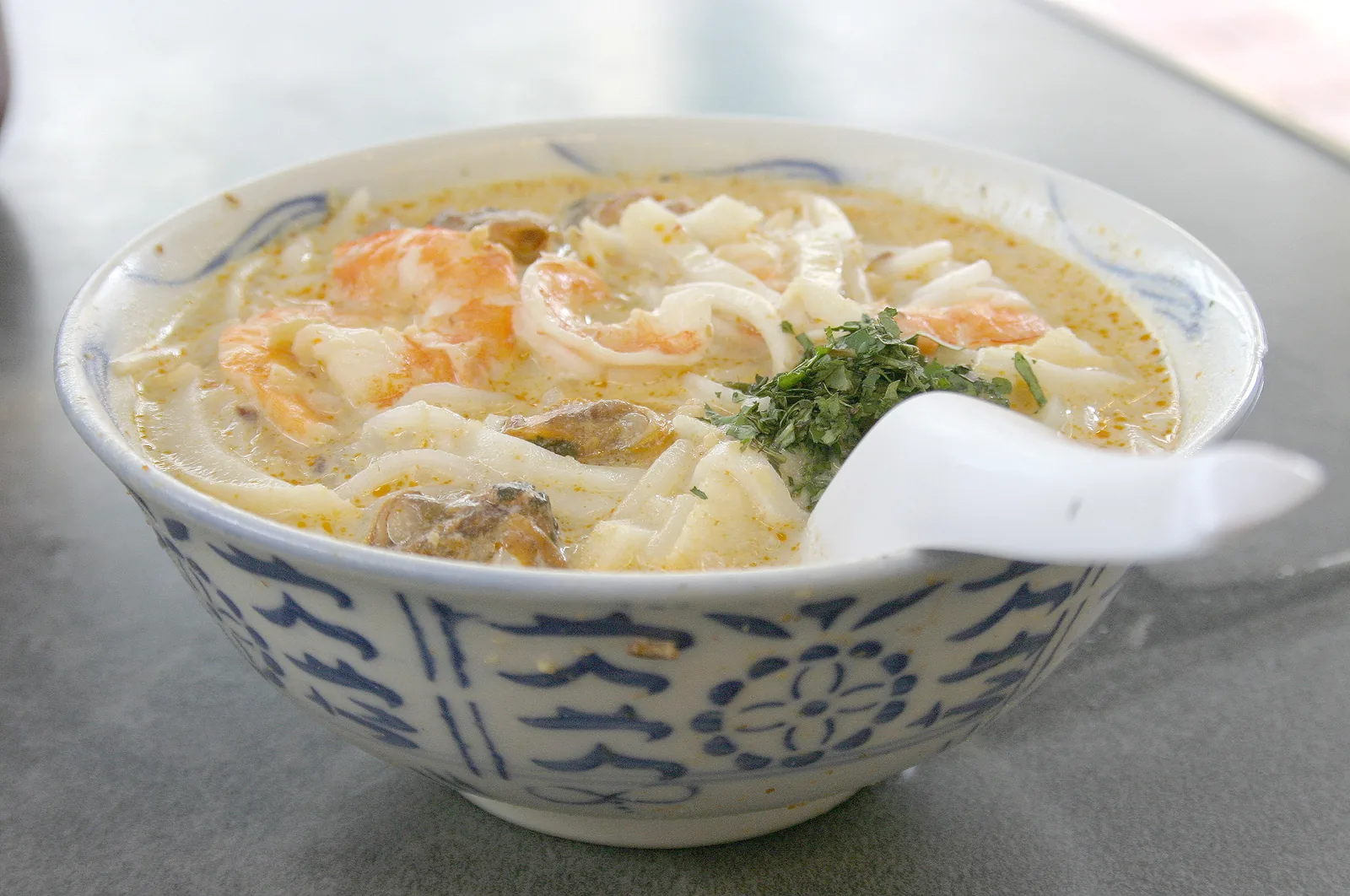
A bowl of Katong laksa with short-cut rice noodles in a creamy coconut broth, topped with prawns, cockles and chopped laksa leaf, with a spoon Singapore flag Singapore 1h
Lunch •Katong Laksa Heritage

Singapore Laksa

This singapore laksa recipe makes Katong-style laksa: thick rice noodles cut short so the bowl is eaten with a spoon, in a rich coconut broth thickened with ground dried shrimp, with prawns, cockles and fish cake. One serving is about 620 g.

Comfort & Warmth

A rich coconut laksa broth with short-cut noodles, prawns and cockles — a warming, spoon-only bowl.

Pairs Well With
Otah, cucumber salad and iced lime tea
Soups & Broths • Pasta & Noodles
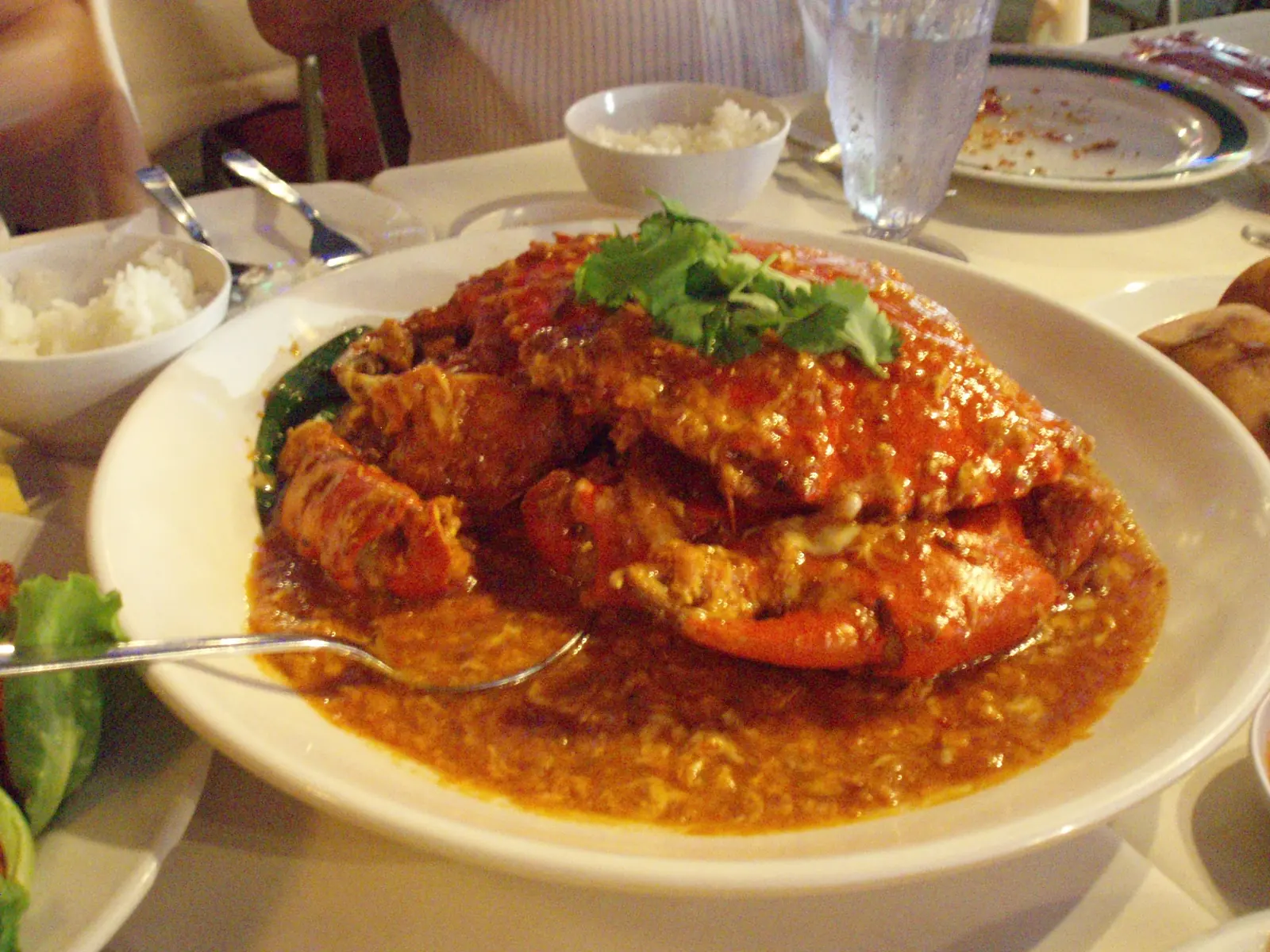
A whole chilli crab in a glossy red-orange tomato-chilli sauce with egg ribbons and coriander, served with mantou buns Singapore flag Singapore 55m
Dinner •Singaporean Heritage

Chilli Crab

This chilli crab recipe stir-fries mud crab in a sweet-spicy tomato-chilli sauce, finished with beaten egg ribbons, and serves it with steamed and fried mantou buns for mopping up the sauce. One serving is about 420 g.

Celebration & Sharing

Whole mud crab in a sweet-spicy tomato-chilli sauce with egg ribbons — a hands-on feast built for sharing.

Pairs Well With
Mantou buns, steamed rice and iced lime tea
High Protein
Bœuf bourguignon — French beef braised in red wine France flag France 4h
Dinner •Burgundy Terroir

Bœuf Bourguignon

Beef braised gently in red wine until the connective tissue melts into a velvet, gelatin-rich sauce — the classic Burgundy Sunday dinner.

Cellular Repair

Beef braised in red wine until spoon-tender, with mushrooms and pearl onions.

Pairs Well With
Parsnip Purée & Steamed French Haricots Verts
High Protein
Vietnamese braised pork belly with golden eggs in caramel sauce Vietnam flag Vietnam 1h 45m
Dinner •One Pot

Vietnamese Braised Pork and Eggs

Pork belly slowly braised in coconut water and caramel until meltingly tender, with golden eggs that soak up the sweet-savoury sauce — the Vietnamese family dish that tastes better the next day.

Comfort & Sustained Energy

Slow-braised pork belly and eggs in coconut water and caramel.

Pairs Well With
Steamed rice & pickled mustard greens
High Protein

The Dinner Gazette

Never wonder what’s for dinner again

One email a week with easy dinner ideas from around the world — ingredients, steps and nutrition, tested in our kitchen first.

Delivered every Thursday morning. Unsubscribe anytime.