Curated recipes from 193 countries  •  New seasonal Mediterranean issue out now

Overview

Huevos a la Habanera

Huevos Habaneros, Eggs Havana Style

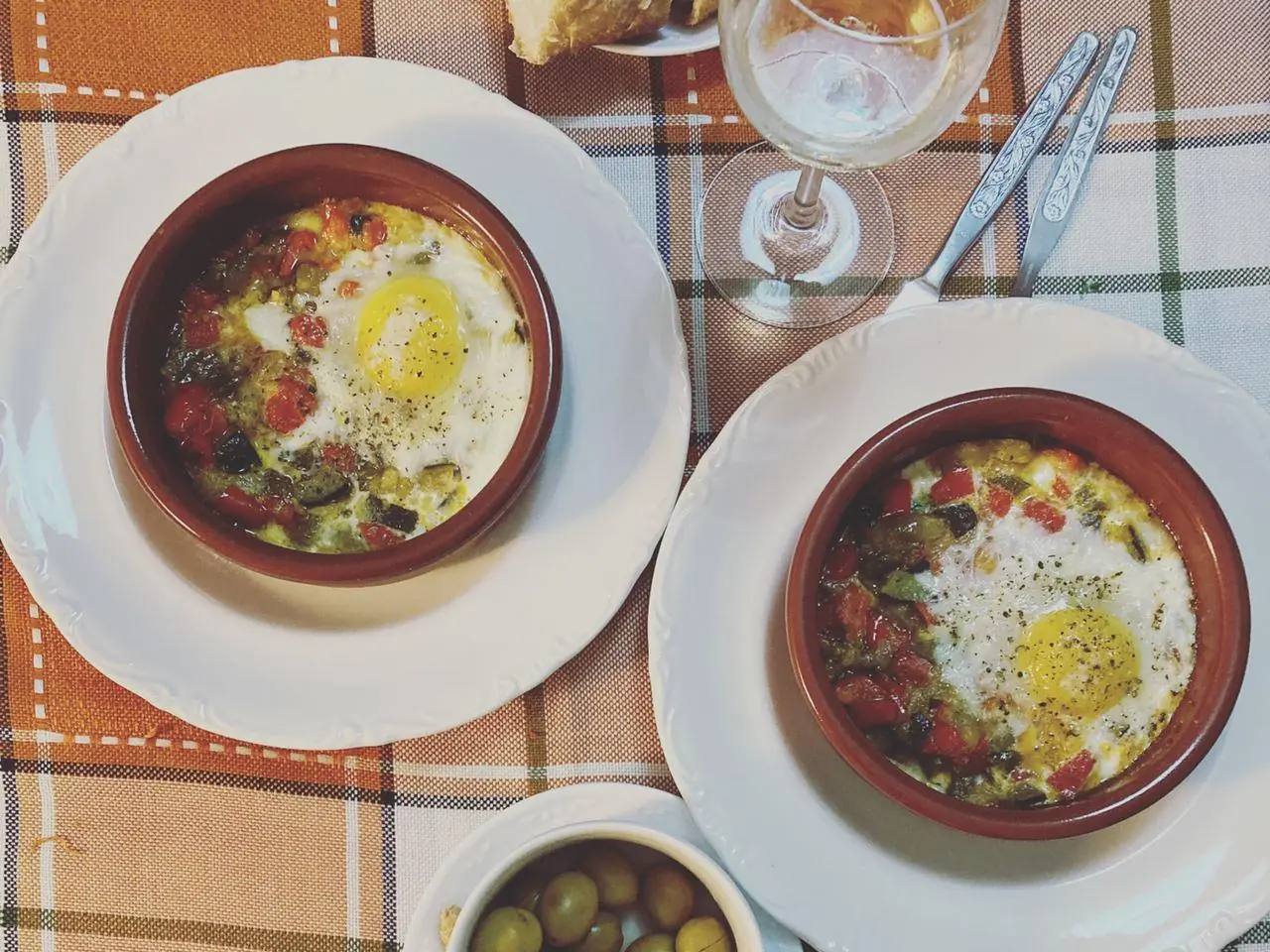
This huevos a la habanera recipe is Havana's answer to baked eggs: a thick sauce of onion, green pepper, tomato, pimiento and dry sherry, spooned into individual dishes, with two eggs cracked on top of each and baked until the whites set and the yolks stay soft. One serving is about 270 g. Serve it straight from the dish, with crusty bread for the sauce. Photo note: the photo shows Spanish huevos a la flamenca — eggs baked in tomato sauce in earthenware dishes — as a visual equivalent for the Cuban eggs.

Huevos habaneros — eggs Havana style — is the breakfast Mary Urrutia recorded in Memories of a Cuban Kitchen, the cookbook of Havana home cooking: a tomato, pimiento and sherry sauce spooned into individual dishes, eggs cracked on top and baked until the whites set. The name means Havana style, not hot pepper — the classic version has no habanero at all, though some cooks add one for heat. It is the Cuban cousin of the Spanish huevos a la flamenca, reshaped with a Cuban sofrito and a splash of sherry.

Pairs well with: Crusty bread, white rice and fried plantains

Provenance

Cuba flag Cuba

Havana Heritage

Latin America & Caribbean

Time Dedication

50m

15m prep • 35m cook

Batch Yield

4 Servings

420 kcal per serving

1 serving ≈ 270 g

Technical Skill

Intermediate

Medium (Oven-Baked)

Meal Timing & Digestive Fit

Breakfast

Prime Morning Fit

Lunch

Inappropriate

Dinner

Inappropriate

Snack & Tea

Inappropriate

Occasions: Weekend breakfasts, brunch with friends, slow Havana mornings Cost: Low — about $2–3 per serving at home
Two baked eggs with bright yellow yolks in brown earthenware dishes over a tomato and pepper sauce, served with bread and olives

Havana Heritage

Photo: Gini10, CC BY-SA 4.0, via Wikimedia Commons

The Heritage Formulary

Measured Ingredients

Estimated cost: Low — about $2–3 per serving at home (USD)

The Havana classic: eggs baked in ramekins over a thick tomato, pimiento and sherry sauce, yolks left soft.

Execution Methodology & Culinary Technique

Step-by-Step Cooking Guide

Active 50m
P

Prep Stage: Heat the Oven and Chop the Sauce Vegetables

15 Mins

Heat the oven to 175°C (350°F) and lightly oil four ramekins or small ovenproof dishes. Chop the onion and green pepper fine, chop the garlic, drain and chop the tomatoes and pimientos, melt the butter, and chop the parsley. Crack each egg into a small bowl or saucer so you can slide it onto the sauce without breaking the yolk.

Maestro Tip: Chop everything before the pan gets hot: the sauce moves fast once it starts, and the eggs wait for no one.

  1. 1

    Make the Sofrito Base

    10 Mins Medium-low heat, about 160°C (320°F)

    Heat the olive oil in a medium skillet over medium-low heat until it shimmers. Add the onion, green pepper and garlic and cook, stirring often, for 8 to 10 minutes until completely tender and sweet. Do not let the garlic brown — browned garlic turns bitter and the whole sauce follows it.

    Low heat is the point: the vegetables should soften and sweeten, not fry.

    Done when: Vegetables soft, translucent and sweet; garlic pale gold, not brown.

  2. 2

    Build and Thicken the Sauce

    18 Mins Simmer at 85–95°C (185–203°F)

    Stir in the drained tomatoes, the pimientos and the dry sherry. Cook, stirring now and then, for about 15 minutes until the sauce is thick enough to hold a spoon upright — it should look like a chunky relish, not a soup. Season with the salt, black pepper and chilli flakes, then taste: it should be savoury, a little sweet and just warm with heat.

    If the sauce is still watery, cook it 3 minutes longer; a thin sauce makes the eggs slide and the dish soggy.

    Done when: Thick, glossy sauce that mounds on the spoon; sherry smell cooked away.

  3. 3

    Fill the Dishes and Add the Eggs

    5 Mins Oven preheated to 175°C (350°F)

    Set the four oiled ramekins on a baking tray and divide the hot sauce evenly among them. Make a small well in the centre of each with the back of a spoon. Slide two eggs into each dish from their bowls, keeping the yolks whole, and drizzle 1 tablespoon of melted butter over each one.

    Cracking into a bowl first is what saves the yolks — one broken yolk and the dish loses its finish.

    Done when: Two whole yolks sitting on the sauce in each dish; butter drizzled over.

  4. 4

    Bake Until the Whites Set

    12 Mins Bake at 175°C (350°F)

    Bake for 10 to 12 minutes, until the egg whites are fully set and opaque but the yolks are still soft and runny when pressed. The whites must be completely set all the way through — that is the food-safety line for eggs — while the yolk can stay soft. Do not bake longer: the yolks firm up fast after 12 minutes.

    Ovens vary, so watch the last 2 minutes through the door rather than the clock.

    Done when: Whites fully set and opaque; yolks soft and jiggly, not firm.

  5. 5

    Season and Serve from the Dish

    5 Mins Serve hot, about 70°C (158°F)

    Take the tray out and let the dishes rest for 2 minutes so the sauce settles. Sprinkle each with salt, black pepper and chopped parsley, set each ramekin on a plate to protect the table, and serve immediately while the yolks are still runny.

    Warn the table that the dishes are hot — ramekins hold their heat far longer than they look.

    Done when: Eggs glistening, parsley bright, dishes too hot to touch bare-handed.

Finishing Touches & Plating

Let the dishes rest 2 minutes off the heat so the sauce settles, then carry each one to the table on a plate — the ramekin is the serving dish, and the bread is for chasing the sauce.

Nutritional Physiology & Benefits

Nutrition

Energy

420

kcal / serving

Protein

14g

Complete AA

Carbs

11g

Complex

Fats

35g

Healthy

Per serving (4 servings · 1 serving ≈ 270 g)
Energy420 kcal
Protein14 g
Carbohydrates11 g
Fat35 g
Fibre2.5 g
Sugar5.2 g
Sodium602 mg
Per 100g
Energy156 kcal
Protein5.3 g
Carbohydrates4.1 g
Fat13 g
Fibre0.9 g
Sugar1.9 g
Sodium223 mg

Nutrition values are estimated — calculated from USDA FoodData Central values for the listed ingredients.

Vitamins & minerals: Good source of vitamin A and choline from the eggs, vitamin C from the peppers and tomatoes, and selenium from the eggs. All nutrition values are estimated.

Protein That Keeps You Full

About 14 g of protein per serving from the eggs, with choline and vitamin A — a breakfast that holds you until lunch.

Peppers and Tomatoes Bring Vitamin C

The sauce is mostly vegetables: green pepper and tomato give you a solid dose of vitamin C and lycopene in a small, rich dish.

A Slow, Satisfying Start

Eggs, olive oil and vegetables digest slowly, so this breakfast gives steady energy rather than a quick spike and crash.

Food Pairings

What to Eat With

To optimize nutrient absorption and elevate the sensory depth, pair with these authentic accompaniments:

Sides

Crusty Bread

The essential partner: torn bread mops up the sherry tomato sauce and the runny yolk — the best part of the dish.

White Rice

Spooned beside the ramekin, plain rice soaks up the sauce and turns a breakfast dish into a full Havana lunch.

Fried Plantains (Tostones)

Crisp, salty tostones against the soft eggs and rich sauce give the plate the crunch it needs.

Drinks

Cafe con Leche

Strong Cuban coffee with hot milk is the traditional morning drink with this dish — the bitterness cuts the richness of the butter and yolk.

Complete menu

Serve one ramekin per person with crusty bread, white rice and fried plantains, with cafe con leche to drink — a full Havana breakfast.

Digestive Guardrails

What NOT to Combine

To prevent digestive distress, sluggishness, or palate clash, avoid pairing the dish with these elements:

Undercooked Egg Whites

The whites must be fully set and opaque before serving; runny whites can carry salmonella, so never serve the eggs early to keep the yolks soft. This is general information, not medical advice.

Alcohol in the Sauce

The sauce contains dry sherry; most of the alcohol cooks off during the 15-minute simmer, but a small amount may remain. If you avoid alcohol entirely, use vegetable stock instead. This is general information, not medical advice.

General information only, not medical advice — consult a doctor for personal dietary decisions.

Who Should Eat It

Who Should Eat

  • General adultsA rich, satisfying breakfast for most adults — one dish with bread is a complete meal.
  • ChildrenCook the yolks a little firmer for young children and serve in a bowl rather than a hot ramekin.
  • ElderlySoft, easy to eat and rich in protein; serve the eggs well set and let the dish cool a little first.
  • Pregnant womenEggs must be fully cooked — whites set and yolks firm, not runny — during pregnancy. Ask your clinician about eggs in pregnancy.
  • Breastfeeding womenA nourishing, protein-rich breakfast; the chilli flakes can be left out if they upset the baby. Ask your clinician if unsure.
  • AthletesAbout 14 g of protein and 11 g of carbohydrate per serving, plus bread for extra fuel — a solid post-training breakfast.
  • Weight gainAdd extra bread and fried plantains to raise the calories easily.
  • Weight lossRich for its size — use one egg per dish, half the butter and extra sauce vegetables to lighten it.

Health Conditions — Adjust or Avoid

Conditions

  • DiabetesAbout 11 g of carbohydrate per serving without bread — count the bread or rice you eat with it in your meal plan. Ask your clinician about portion size.
  • High blood pressureAbout 602 mg of sodium per serving, mostly from the salted butter, canned tomatoes and added salt; use unsalted butter and low-sodium tomatoes. Ask your clinician about portion size.
  • Kidney diseaseEggs add protein and phosphorus; a smaller portion may be needed. Ask your clinician first.
  • GoutEggs are low in purines, so this dish is usually well tolerated; keep the portion modest. Ask your clinician about frequency.
  • Stomach issuesRich butter and oil can be heavy on a sensitive stomach — use less butter and eat slowly. Ask your clinician if symptoms persist.
  • Cardiovascular diseaseAbout 35 g of fat per serving, part of it saturated fat from butter; use less butter and more olive oil if you eat this often. Ask your clinician about portion size.
  • Fatty liverA rich dish — keep the portion to one ramekin, use less butter and skip the fried plantains. Ask your clinician about portion size.
  • Food allergiesContains egg and milk (butter); the sherry may contain sulphites. Ask your clinician if you have any food allergy.
  • Special therapeutic dietsIf you follow a low-sodium or low-fat diet, this dish needs care — less salt, unsalted butter and low-sodium tomatoes help. Ask your clinician before eating it regularly.

If you have a medical condition, consult your doctor before changing your diet.

Storage & Use

Storage & Use

How to store
Cook and serve fresh; store only the sauce on its own.
In the fridge
The sauce alone keeps up to 3 days in the fridge at 4°C (40°F) or below; baked eggs do not keep well.
In the freezer
Freeze the sauce alone for up to 2 months; do not freeze the baked eggs.
How to reheat
Reheat the sauce gently to 74°C (165°F), then add fresh eggs and bake as written.
Freezing recommended
No for the finished dish — freeze the sauce only, and bake fresh eggs when you serve it.
Signs it has spoiled
Sour smell or mould on the sauce, or eggs left at room temperature for more than 2 hours — discard them.

More recipes to explore

A plate of ropa vieja, shredded beef in tomato sauce, with yellow rice, black beans and fried plantains Cuba flag Cuba 3h
Dinner •Cuba's National Dish

Ropa Vieja

This ropa vieja recipe braises flank steak low and slow until it falls into long shreds, then simmers it in a tomato, pepper and olive sauce. One serving is about 310 g. Serve it over white rice with black beans and fried plantains, the way Cuban families do.

Comfort & Warmth

Slow-braised shredded beef in a tomato and pepper sauce, served with rice and black beans.

Pairs Well With
White rice, black beans and fried plantains
High Protein
A pressed Cuban sandwich cut in half, with melted Swiss cheese and layers of ham and pork, served with pickle spears Cuba flag Cuba 25m
Lunch •Havana Classic

Cuban Sandwich

This cuban sandwich recipe layers mojo roast pork, ham, Swiss cheese, pickles and mustard on Cuban bread, then presses it flat until the crust crackles and the cheese melts. One serving is about 345 g. It is a great use for leftover roast pork and comes together in 25 minutes.

Comfort & Warmth

A pressed sandwich of roast pork, ham, Swiss cheese, pickles and mustard on Cuban bread.

Pairs Well With
Plantain chips and a cold lager or lime soda
A plate of dark moros y cristianos rice cooked with black beans, served with slices of roast pork and golden fried plantains Cuba flag Cuba 1h 30m
Lunch •Cuban Heritage

Moros y Cristianos

This moros y cristianos recipe cooks Cuban black beans and rice together in one pot: dried black beans simmered until tender, then long-grain rice cooked in the dark bean liquid with a sofrito of onion, green pepper and garlic, cumin, oregano and bay leaf. The grains come out dark, fragrant and fluffy, never pale or plain. One serving is about 272 g.

Comfort & Warmth

Cuban black beans and white rice cooked together in one pot with sofrito, cumin, oregano and bay leaf, until the grains turn dark.

Pairs Well With
Roast pork or ropa vieja with fried sweet plantains and a crisp cabbage salad, the classic Cuban plate.
A plate of Cuban lechon asado with shredded mojo pork, onions and lime, yellow rice with black beans and fried plantains Cuba flag Cuba 5h 30m
Dinner •Havana Heritage

Cuban Lechon Asado

This cuban lechon asado recipe marinates a pork shoulder overnight in mojo — sour orange juice, a whole head of garlic, oregano and cumin — then roasts it low and slow until the meat is so tender it pulls apart with a fork. It is the centrepiece of Nochebuena, the Cuban Christmas Eve feast, and it is nothing like Filipino lechon: there is no whole crispy-skinned pig here, just a mojo-soaked shoulder roast. One serving is about 250 g.

Celebration & Sharing

A whole pork shoulder marinated overnight in sour-orange mojo, then roasted low and slow until it pulls apart — the centrepiece of Nochebuena.

Pairs Well With
Shredded mojo pork with black beans, yellow rice and fried plantains
High Protein

The Dinner Gazette

Never wonder what’s for dinner again

One email a week with easy dinner ideas from around the world — ingredients, steps and nutrition, tested in our kitchen first.

Delivered every Thursday morning. Unsubscribe anytime.